


Plot Summary
Prologue
An unidentified voice opens the story from the moral grey zone — acknowledging that some see them as a hero, a martyr of the fallen, while others call them the villain. They accept both labels without apology. They speak of cutting ties with people, noting that sometimes those ties are arteries.
The passage refuses self-categorization, establishing that in this world, labels like innocent and guilty are luxuries no one can afford. Whoever speaks has lived in the grey long enough to stop pretending the world operates in black and white, and they've made peace with being whatever others need them to be — monster included.
Murder Gets a Second Chance
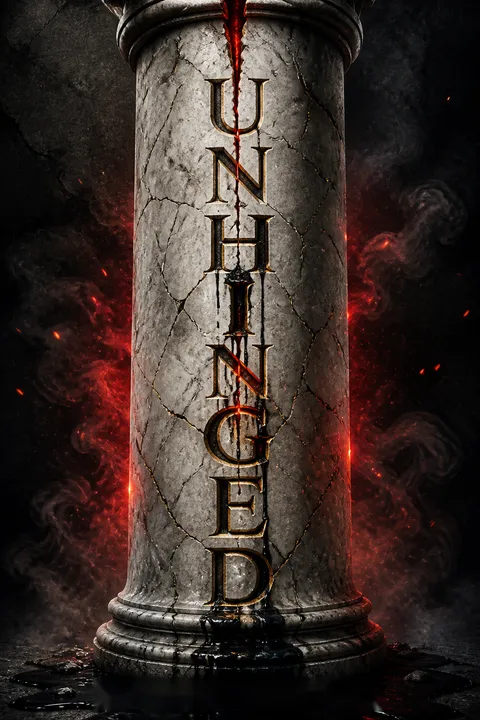
Twenty-year-old Avery White,1 diagnosed with borderline personality disorder and PTSD, arrives at Lilydale Foundation Center — a marble-columned institution ringed by armed guards and suffocated by roses.
Her social worker Margaret delivers her with forced optimism, but Avery1 sees through the veneer: dual-access keypads on every door, guards with tasers and guns, and her room is a bolted cell numbered 213. She's here because an ambitious attorney argued her mental health warranted rehabilitation instead of prison.
Her crime: setting fire to her house in a suicide attempt, not knowing her abusive father was asleep in the basement. He burned to death. In her first session, psychiatrist Dr. Smith5 probes her childhood trauma. She gives him nothing, convinced no institution can save what's already broken.
Rulers of the Asylum
During her first free period, the crowd surges and Avery1 gets trampled — feet on her hands, her calf, her scarred back. A tattooed, six-foot-four blonde named Damon3 hauls the bodies off her, then pulls her into the moldering library where Grey2 waits grinning.
Grey2 is a sharp-eyed brunette with a slashed-throat scar, black nail polish, and an unnerving fascination with Avery1 since he caught her gripping a pen like a weapon in class. Together they explain Lilydale's real power structure: the staff don't care about patients, so Damon's3 circle runs everything — contraband, discipline, privileges.
Whatever they command, the population obeys. They warn her that learning the system's intimate details could be the last thing she ever learns. Avery1 leaves the dusty stacks knowing she's entered something far worse than prison.
Finger in the Rose
Sam Hallman7 — boyfriend of Vivian,6 a fellow patient who gave Avery1 her initial orientation tour — publicly humiliates Avery1 in the dining hall, smacking her food tray airborne and shoving her into spilled mashed potatoes while everyone watches and no one helps.
She continues eating silently with Theo Ashwood,4 the violent loner everyone fears, who tolerates her presence at his table without a word of acknowledgment. That evening she returns from her shower to find a horror on her desk: a severed human finger cradled inside a plucked rose, blood pooling on the surface.
She wraps it in toilet paper and hides it under her mattress. Certain Grey2 is responsible, she confronts him. He denies it with genuine surprise, then offers to dispose of the evidence — reminding her she'll owe him one.
Theo's Blade, Theo's Message
Grey2 retrieves the grisly package using a stolen staff access card and notes the flower's deliberate placement — someone's idea of romance. He finds Sam7 in the infirmary, nursing a bandaged hand on liquid Tylenol, denied real painkillers due to his addiction history. Grey2 dangles a single pill until Sam7 cracks: Theo Ashwood4 severed the finger. The math clicks immediately.
Theo4 — who once threw a fork at a newcomer for trying to share his table — has let Avery1 eat beside him every day without protest. The severed finger was retaliation for Sam's7 bullying, delivered to Avery's1 room as a gruesome declaration of protection. Grey2 decides to keep this from Damon,3 recognizing that both he and Theo4 have staked their interest in the same girl.
The Circus After Dark
Grey2 slips a blood-tipped lily into Avery's1 room — the only lily in a facility drowning in roses — with instructions to meet after dark. He leads her through pitch-black corridors to the library, now transformed with candles, curtained alcoves, and a table laden with strawberries, chocolate, and alcohol.
This is Cirque des Morts, Damon's3 exclusive biweekly gathering of handpicked patients who receive privileges in exchange for loyalty and tasks. Behind black curtains, couples use a glory hole connecting to an adjacent room. In a private aisle, Grey2 gently asks about Avery's1 experience.
She admits she's never had consensual sex — her father lost a bet, and she was the prize handed to one of his friends. Grey2 swears no one at Lilydale will touch her without consent. She kisses him, and for the first time, the choice is entirely hers.
Lockdown, Then His Mouth
Vivian6 ambushes Avery1 in the corridor, clawing three gashes across her cheek, screaming that Avery1 caused Sam's7 severed finger, his withdrawal spiral, his punishment. Guards drag Vivian6 to solitary, but Mr. Whittingham8 punishes the entire population: three days of total isolation, lights extinguished, meals delivered cold, showers running ice-water.
In pitch darkness on the first night, Grey2 slips into Avery's1 room. He insists the punishment isn't her burden, then asks permission to touch her. Talking her through each movement, he gives her her first orgasm — patient, deliberate, letting her body dictate every escalation.
In the lightless room where she can't see her own scars or his watching eyes, Avery1 feels safe enough to come undone. Grey2 leaves knowing something between them has permanently shifted.
Ink Over the Burns
Terrified by Damon's3 private threat to destroy her if she hurts Grey,2 Avery1 avoids the library and stumbles on Theo4 in an empty room, tattooing his own forearm with a sterilized needle, black ink, and moonshine. He invites her to stay.
When she fidgets with the filthy bandage hiding her burns, he unwraps it, exposing the scarred skin she's shown no one. She cries. He doesn't offer comfort — he picks up a second needle and begins inking over the damaged tissue, transforming her worst memory into intricate black designs.
For the first time, the pain on her body is chosen, controlled, productive. He bandages the fresh tattoo and tells her to keep it dry. Those few gruff, practical words tug at her harder than anything Grey2 has whispered in the dark.
The Fake Key Gambit
At a formal Cirque des Morts meeting, Damon3 orders Avery1 to steal Dr. Smith's5 filing cabinet key, granting access to every patient's confidential records. She protests on ethical grounds; Grey2 sides with Damon.3
In their next session, Dr. Smith5 — secretly Damon's3 own cousin — reads Avery's1 nervous glances toward the cabinet and slides the key across his desk without being asked. He warns her to watch for reckless behavior. Betrayed by a professional she was learning to trust, Avery1 slams the key in front of Damon3 at lunch.
But the key is fake. Dr. Smith5 anticipated the power grab and provided a decoy. When Damon3 discovers the deception, he corners Avery,1 accusing her of complicity. She slaps him across the face — the first person at Lilydale who's dared strike him.
Every Secret on the Floor
Avery1 walks into the hall for free time and stops dead. The floor, walls, and tables are papered with printed pages bearing her name. Her patient file — every detail of her father's abuse, her sexual assault, her suicide-by-arson, her involuntary manslaughter conviction, her permanent injuries — has been distributed to every patient at Lilydale.
A hundred gray-clad figures stand reading her most guarded pain in silence. Across the room, Grey2 and Damon3 hold bundles of the pages, watching her. Tears break through despite everything she's survived.
She cannot move, cannot breathe, the room spiraling as her identity is flayed open for public consumption. Someone grabs her elbow and pulls — Theo,4 steering her out of the hall while she's too shattered to resist, heading toward a part of the facility she's never seen.
Inside the Mortuary Drawer
Theo4 punches through security keypads and leads Avery1 underground to an abandoned morgue — cold metal, mortuary cabinets, dim fluorescence. When guards approach, he pulls her onto a sliding tray and shuts them both inside a refrigerated drawer, sealing out light and sound.
He kisses her to stop her spiraling. She kisses back and refuses to stop. Someone stole her story upstairs; now she's reclaiming her body on her own terms. She initiates sex, lowering herself onto him in the cramped, freezing space, dictating the rhythm.
Afterward, Theo4 sends her back upstairs alone, then smashes a window to draw the guards' attention onto himself. He's caught. She escapes. The facility's cameras, already taken offline by Damon's3 hacker Jillian,12 cannot place them together — but the administration detains Theo.4
Footage Shatters Grey
Jillian's12 recovered surveillance footage reveals two devastations: Vivian6 stole Avery's file from Dr. Smith's5 office as revenge for Sam's7 punishment — and the morgue cameras captured Avery1 and Theo4 together.
By the time Damon3 plays the footage, Grey2 has already consummated his own relationship with Avery1 in the library stacks, books cascading around them. The juxtaposition obliterates him. He enters Avery's1 room cold-eyed and furious. She confesses. She says the word love for the first time in her life.
He answers in past tense — he loved her, but doesn't anymore. Damon3 arrives to revoke her Cirque des Morts membership and threatens her life if she approaches Grey2 again. The door slams. Avery1 sinks to the floor of her cell, sobbing, every wall she rebuilt now rubble.
Handcuffs for the Wrong Crime
The morning after Grey2 walks away, screams pierce the corridor: Sam Hallman7 has been found dead in his room, strangled by his own bedsheets. The facility splits between those who call it suicide and those who whisper murder, most naming Theo4 or Damon's3 circle as the obvious culprits.
Police arrive to investigate. Just the previous evening, Sam7 had approached Avery1 with a robotic, clearly coerced apology — his face permanently marked with the black-ink outline of Theo's4 fist, tattooed by force. That branded submission was the last anyone saw of him alive.
When officers approach Avery1 in the crowded hall, she expects them to arrest Theo.4 Instead, the constable spins her into the wall, cuffs her wrists, and reads her rights. Avery White1 is charged with Sam's7 murder. The real killer remains unnamed.
Analysis
Unhinged interrogates the paradox of institutional care as control — and what happens when the controlled refuse to cooperate with the fiction. Lilydale Foundation Center is simultaneously a rehabilitation facility and a panopticon, its marble columns and roses disguising the same power dynamics Avery1 fled at home: surveillance, punishment, arbitrary authority exercised by those who claim to know what's best. The novel's central insight is that trauma survivors don't simply need safety — they need agency, and the two are perpetually in conflict. Every authority figure in Avery's1 life has demanded compliance in exchange for protection, from her father's isolation to the court's conditional mercy to Damon's3 hierarchical rule.
The reverse-harem romantic structure functions here as a psychological map of competing survival strategies. Grey2 represents the seductive promise of being chosen — praise, patience, someone who identifies her worth before she can. Theo4 represents the raw assertion of selfhood — control through action, pain transformed into art, desire initiated rather than permitted. That Avery1 needs both illuminates the complexity of borderline attachment patterns: the simultaneous craving for devotion and autonomy that turns every relationship into a potential trap.
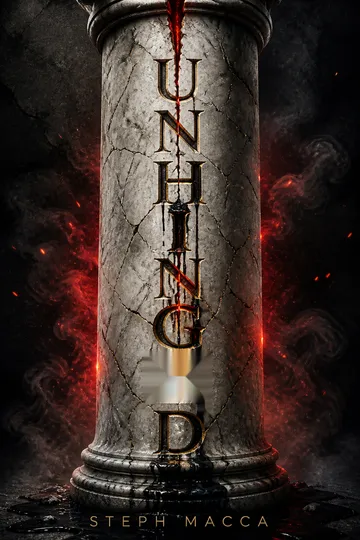
Steph Macca embeds a sharp institutional critique through Dr. Smith's5 compromised position — a psychiatrist delivering genuine therapeutic insight about 'favorite person' dynamics while secretly navigating family loyalties and handing over decoy keys. The novel argues that healing cannot be administered by systems treating patients as charity publicity. Real transformation occurs exclusively through unauthorized acts: illicit food, unsanctioned intimacy, amateur tattoos, smashed access pads. Every meaningful moment of growth happens in spaces the institution didn't build and can't monitor.
The cliffhanger arrest completes a devastating structural loop. Avery1 arrived at Lilydale because someone argued she deserved rehabilitation over punishment. She exits in handcuffs, accused of a murder she almost certainly didn't commit — suggesting the system was never designed to liberate her, only to recycle her through increasingly elaborate forms of captivity, each wearing a different philanthropic mask.
Review Summary
Unhinged receives mixed reviews, with an average rating of 4.05 out of 5. Many praise the audiobook narration and the dark, thrilling atmosphere. Readers appreciate the unhinged characters and intriguing plot set in a mental institution. Some find it too light for dark romance, while others enjoy the slow-burn romance and mystery. The book ends on a cliffhanger that leaves readers eager for the sequel. Common criticisms include underdeveloped characters and a rushed plot. Overall, it's recommended for those new to dark romance or fans of reverse harem stories.
Characters
Avery White
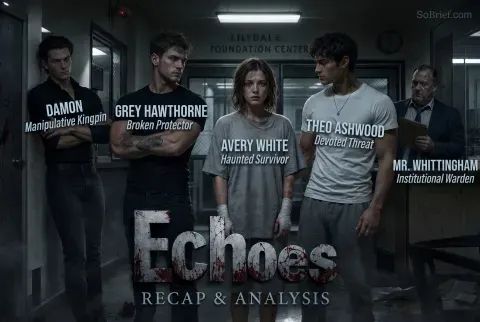
Scarred survivor seeking agencyA twenty-year-old survivor of chronic parental abuse, sexual assault, and neglect, Avery carries BPD and PTSD diagnoses that barely scratch the surface of her psychological landscape. Her core wound is abandonment—her mother chose suicide over staying, her father chose violence over love, and her best friend Paige was murdered by her own brother. These losses calcified into a belief that she is fundamentally unworthy of connection, manifesting as emotional volatility, defensive sarcasm, and a desperate hunger for praise she was never given. Beneath her walls lies a woman starving for belonging but terrified it will be weaponized. She gravitates toward dangerous people not despite their darkness but because their damage mirrors her own, making her feel less alien. Her relationships with Grey2 and Theo4 represent two competing survival strategies: vulnerability through surrender, and power through control.
Grey Hawthorne
Charismatic enforcer, possessive loverDamon's3 right-hand man within Lilydale's underground hierarchy, Grey operates through theatrical charm and predatory observation. His father slit his throat during a schizophrenic episode, leaving both a physical scar and a psychological imprint: Grey processes intimacy through performance, masking profound attachment wounds behind witty banter and dramatic gestures. He reads body language with surgical precision, using observation as both weapon and bridge. His fixation on Avery1 begins as fascination—recognizing her craving for praise, her resilience beneath fragility—and escalates into genuine possessiveness disguised as devotion. He calls her 'little killer' as prophecy, believing she'll be his undoing. His patience with Avery's1 sexual trauma reveals rare tenderness, but his capacity for cold fury when betrayed reveals the raw, unhealed wound beneath the showmanship.
Damon
Cold architect of controlThe self-appointed ruler of Lilydale's patient population, Damon governs through fear, strategic intelligence, and family connections that give him leverage over the administration—Mr. Whittingham8 defers to him, and Dr. Smith5 is his cousin. His psychology is defined by an obsessive need for structural control: he builds hierarchies, enforces rules, and views every relationship as transactional. He treats Grey2 as a brother and sole emotional anchor, making anyone who threatens that bond an existential threat. Beneath his authoritarianism lies a calculating mind that paradoxically respects audacity—Avery1 slapping him earns more of his attention than months of compliance from others. He isn't cruel for pleasure the way Grey2 can be, but for architecture: every punishment, every threat serves the system he's built to make chaos survivable.
Theo Ashwood
Violent protector, artist of painThe most feared patient at Lilydale, Theo is a convicted killer who openly admits he enjoyed watching his victim die. He carries himself with brutal simplicity—few words, no pretense, direct violence when provoked. Yet his relationship with Avery1 reveals fault lines in his monster persona. He allows her to sit with him when he's thrown forks at others who tried. He severs Sam's7 finger as retribution for her humiliation. He tattoos her scars into art. His protective instincts suggest someone in his past—possibly someone Avery1 reminds him of—was lost to similar circumstances. Theo expresses care through action rather than language: cutting, inking, shielding, sacrificing himself as a distraction. His tenderness is inseparable from his violence, both flowing from the same fierce, possessive loyalty.
Dr. Christopher Smith
Compromised psychiatrist, Damon's cousinAvery's1 psychiatrist and secretly Damon's3 cousin, Dr. Smith walks an impossible ethical line. He genuinely helps Avery1 process her trauma—introducing concepts like 'favorite person' attachment in BPD—while navigating the facility's corrupt power dynamics. His decision to provide a fake filing cabinet key reveals both his awareness of Damon's3 schemes and his willingness to protect patients through deception rather than direct confrontation. He represents the tension between institutional duty and familial entanglement.
Vivian
Orientation guide turned avengerInitially Avery's1 assigned orientation guide, Vivian presents as world-weary and pragmatic, offering survival tips while keeping emotional distance. Her true allegiance is to her boyfriend Sam7 and her own freedom. When Sam7 suffers escalating consequences for bullying Avery1—a severed finger, withdrawal from contraband, social punishment—Vivian's pragmatism curdles into vengeful fury. She physically attacks Avery1 and later commits the story's most devastating act of psychological warfare by stealing and distributing Avery's confidential file.
Sam Hallman
Addict bully, escalating targetVivian's6 boyfriend, an opioid addict imprisoned for driving through a shopping mall while high. Sam serves as a recurring antagonist—publicly humiliating Avery1, threatening her sexually, and provoking escalating retaliation from Theo4 and Damon's3 circle. His drug withdrawal amplifies his aggression and instability. His trajectory from bully to mutilation victim to apologetic broken figure drives the plot toward its most shocking conclusion.
Mr. Arthur Whittingham
Facility head, compromised authorityLilydale's administrator who projects warmth during Avery's1 arrival but reveals authoritarian cruelty during crises, punishing the entire population for individual infractions with isolation and darkness. His power is real but compromised—Damon3 holds leverage through family connections, and Whittingham's affair with his receptionist further weakens his moral standing. He embodies the institution's fundamental hollowness: polished architecture housing systematic neglect.
Dr. Markel
Cheerful, oblivious facility doctorThe facility's medical doctor who hums nursery rhymes while examining trauma scars. His warmth is genuine but naive, representing institutional care that treats physical symptoms while remaining blind to the systemic rot surrounding his patients.
Charmaine
Permissive classroom teacherLilydale's teacher who maintains a thin veneer of authority while quietly enabling Grey's2 provocations and broader dysfunction. She lends Grey2 her staff access card, making her a passive accomplice to the underground power structure.
Siobhan
Blunt truth-teller among patientsA bipolar patient grieving her brother's suicide who provides Avery1 with unfiltered honesty about Vivian's6 motivations and the facility's internal dynamics, serving as an occasional voice of raw candor.
Jillian
Hacker controlling the camerasA cybercrime convict who controls Lilydale's surveillance systems for Cirque des Morts, giving Damon3 leverage over both staff and patients by manipulating what footage exists and who can access it.
Byrone
Damon's logistics lieutenantDamon's3 other right-hand operative who handles recruitment, candidate vetting, and logistical coordination for Cirque des Morts operations alongside Grey2.
Plot Devices
Cirque des Morts
Underground shadow governmentA secret society operated by Damon3 within Lilydale, meeting biweekly in the library after hours. Members receive genuine privileges—real food, alcohol, sexual freedom, contraband—in exchange for absolute loyalty and task completion. The society functions as both a shadow government and a dark mirror of the institution: where Lilydale pretends to rehabilitate through therapy and paperwork, Cirque des Morts actually provides community through hierarchy and threat. It gives Avery1 her first taste of belonging, her first consensual kiss, and her first experience of being wanted—making the stakes of her involvement both intoxicating and existentially dangerous. Membership is invitation-only, revocable, and carries consequences that extend far beyond social exclusion.
The Severed Finger in a Rose
Violent love letter, catalystAfter Sam7 publicly humiliates Avery1, someone severs his finger and places it inside a plucked rose on her desk. The gesture operates on multiple levels: a warning to anyone who harms her, a territorial marking, and—through the flower's romantic framing—an oblique declaration from someone who expresses tenderness only through violence. The finger catalyzes Avery's1 relationship with Grey2, as she turns to him for disposal help, creating an obligation that pulls her deeper into his orbit. When Grey2 traces the finger to its source, the discovery reveals that both he and Theo4 have simultaneously staked their claim on the same woman, setting the story's central romantic tension into motion.
Avery's Patient File
Weapon of total exposureThe confidential psychiatric file becomes both the story's central MacGuffin and its most devastating weapon. Damon3 wants access to patient records for control; Dr. Smith5 provides a fake key to block him; but a third party—Vivian6, motivated by personal revenge rather than politics—independently steals Avery's1 individual file and distributes it throughout the facility. The printed pages expose her abuse history, sexual assault, suicide attempt, and manslaughter conviction to a hundred strangers, stripping away every psychological defense she spent years constructing. This act of exposure directly triggers the morgue sequence and, consequently, the discovery that shatters her relationship with Grey2—making private information the single catalyst for every major relationship collapse in the final act.
The Underground Morgue
Sanctuary of rebirth and agencyAn abandoned mortuary beneath the facility that Theo4 accesses by physically destroying security keypads. The morgue inverts its intended purpose: designed to house the dead, it becomes the site where Avery1 feels most alive—where she chooses intimacy for the first time, on her terms, after her identity has been publicly destroyed. The refrigerated mortuary cabinet, built for preserving corpses, becomes a space of reclamation and bodily autonomy. Its underground location means different surveillance coverage, which Damon's3 hacker Jillian12 later recovers. The space embodies the novel's recurring theme: that genuine transformation happens in unauthorized places, beyond institutional reach, through acts the system never sanctioned.
Theo's Tattoo Needle
Healing instrument and branding ironTheo's4 homemade tattooing kit—a sterilized needle, black ink, matches, and moonshine—serves as both his creative outlet and his primary language of connection. He tattoos himself in isolation, then begins inking over Avery's1 burn scars, transforming reminders of her father's violence into art she can bear to see. The needle reframes pain radically: rather than something inflicted upon her, this pain is chosen, controlled, and productive. The device reveals its dual nature when the same tool is used punitively—proving that in Theo's4 hands, the needle is simultaneously a healing instrument for those he protects and a weapon of permanent marking for those who cross him. It literalizes the novel's central question: whether pain can be repurposed into something that saves rather than destroys.
Dance With My Demons Series


About the Author
Other books by Steph Macca





Download PDF
Download EPUB
.epub digital book format is ideal for reading ebooks on phones, tablets, and e-readers.








































