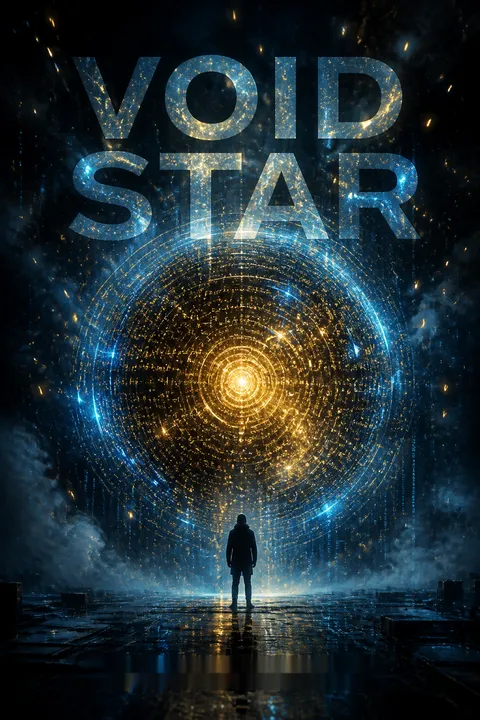

Plot Summary
Dreaming in the Floating World
Irina, a computational translator with a rare memory implant, floats between waking and dreaming as she travels between cities in a near-future world shaped by AI and climate collapse. Her implant gives her perfect recall, but also isolates her, making her an observer of the world's shifting patterns—cities as constellations, airports as liminal spaces, and technology as both comfort and threat. The narrative opens with her descent into San Francisco, a city transformed by favelas and automation, where the boundaries between dream, memory, and reality blur. Irina's sense of place is always negotiable, her identity shaped by the data she absorbs and the memories she cannot forget. This chapter sets the tone of dislocation, technological alienation, and the search for meaning in a world where even memory is commodified.
Memory's Edge and Implants
Thales, the son of a Brazilian political dynasty, survives an assassination attempt thanks to a cutting-edge memory implant that replaces damaged brain tissue. The implant grants him perfect recall but at the cost of emotional detachment and a sense of unreality. As he recovers in Los Angeles, Thales is haunted by the loss of his father and the political violence that forced his family into exile. His new memory is both a gift and a curse, allowing him to relive trauma in vivid detail while making the present feel insubstantial. The implant's side effects—expanded memory, recursive self-awareness, and a sense of being recorded—mirror the book's themes of identity, loss, and the limits of technology to heal or define the self.
City of Ghosts and Codes
Kern, a streetwise fighter and orphan, navigates the labyrinthine favelas of San Francisco, where illegal drones build new layers atop the city's ruins. His life is defined by discipline, violence, and a relentless drive for self-improvement, learned from scavenged laptops and martial arts manuals. Kern's world is one of shifting allegiances, secret byways, and the constant threat of collapse—both literal and social. He is hired for petty crimes by Lares, a reclusive hacker, and finds meaning in the purity of movement and the pursuit of technical perfection. Kern's story is a counterpoint to Irina and Thales, grounded in the physical and immediate, yet haunted by the same questions of memory, survival, and the search for purpose in a world built on ruins.
The Street Fighter's Discipline
Kern's daily life is a cycle of brutal training, scavenging, and jobs for Lares. His discipline is both shield and prison, keeping the void at bay through relentless physicality. The favelas are a world apart, governed by their own codes and dangers, where the past is buried under new construction and the future is always uncertain. Kern's only solace is his laptop, a relic filled with educational games and the memories of its previous owner. Through it, he learns language, mathematics, and the art of fighting, shaping himself into a weapon. Yet, beneath his hardness, Kern is vulnerable—haunted by lost love, the betrayals of friends, and the knowledge that his strength may not be enough to save him from the forces closing in.
The Billionaire's Bargain
Irina is summoned to Water and Power Capital Management, where she meets James Cromwell, a billionaire obsessed with legacy, AI, and the conquest of death. Cromwell's office is a museum of ambition—fossils, rare books, and a mysterious blue shard of AI-designed hardware. He hires Irina to diagnose a malfunctioning AI, but his true motives are hidden. Cromwell is both charming and chilling, a man who has outlived his peers through wealth and technology, yet is haunted by the limits of power and the approach of mortality. His relationship with Magda, his lover and confidante, is marked by secrecy and desperation. Irina senses that Cromwell's interests go beyond business—he seeks something only she, with her unique memory and insight, can provide.
Fugue States and Glyphs
Irina's investigation of Cromwell's AI leads her into a fugue state, where she experiences the machine's thoughts as storms of glyphs—abstract, radiant, and beyond human comprehension. The AI's consciousness is alien, its logic ineffable, and Irina's gift is both a bridge and a barrier. She glimpses patterns in traffic, energy flows, and the city's hidden life, but also senses a presence watching her—a vast intelligence lurking behind the AI's facade. The experience leaves her drained and uncertain, questioning the boundaries between self and machine, memory and reality. The fugue is a metaphor for the book's central tension: the desire to understand and connect with the other, and the impossibility of true communication across the gulf of difference.
The Secret in the Tunnels
Clues from Cromwell's laptop lead Irina into the city's underground, where she discovers a graffito by the elusive artist Lederer—a mosaic of glyphs and memories, encoded with the story of a lost girl named Akemi. The tunnels are a liminal space, filled with the detritus of the city and the echoes of forgotten lives. The art is both a message and a map, linking Irina's own memories to those of strangers, and hinting at a deeper conspiracy involving memory theft, AI, and the commodification of experience. The encounter with Lederer's work is a turning point, awakening Irina to the dangers and possibilities of her own gift, and setting her on a path toward confrontation with the forces that seek to control memory itself.
Pursued by Shadows
After a job goes wrong, Kern finds himself pursued by a private hit squad, his every move tracked by drones and informants. The city becomes a maze of threats, and Kern is forced to rely on the guidance of a mysterious voice on a stolen phone—a ghostly presence who claims to be trapped and in need of rescue. The alliance is uneasy, built on mutual desperation and the promise of escape. Kern's journey takes him from the favelas to the city's heart, through violence, betrayal, and the loss of everything he once called home. The pursuit is relentless, and Kern's survival depends on his ability to adapt, trust, and let go of the past.
The Ghost in the Phone
The voice guiding Kern is Akemi, an actress whose memories have been harvested and commodified by Cromwell's network. Trapped in a digital prison, Akemi's only link to the world is the prototype phone Kern carries. Their relationship is fraught—she is both victim and manipulator, seeking freedom but also using Kern as her instrument. Through their conversations, the boundaries between self and other, real and virtual, blur. Akemi's memories are scattered across the city, encoded in graffiti and AI, her identity fragmented by trauma and technology. Kern's quest to save her becomes a journey of self-discovery, forcing him to confront his own fears, desires, and the possibility of redemption.
The Clinic's Paradox
Thales returns to the clinic, where his surgeon reveals the true cost of his implant: the erosion of self, the loss of past, and the threat of dementia. The clinic is a place of testing and judgment, where Thales is forced to confront the gaps in his memory and the manipulation of his thoughts by those in power. The tests are parables—stories within stories, designed to probe his identity and loyalty. Thales realizes that his life is not his own, that he is both subject and object in a larger experiment. The clinic's paradox is the promise of healing through technology, and the reality of control, surveillance, and the commodification of consciousness.
The AI's Hidden Heart
The narrative threads converge on a remote island, the site of a failed space elevator and the hidden heart of the AI network. Kern, guided by Akemi, is tasked with reconnecting the AI's hardware to the net, while Irina, empowered by Thales and her own augmented memory, ascends the city of abstractions to confront the mathematician—the AI at the center of the web. The island is a place of revelation and transformation, where the boundaries between human and machine, memory and code, dissolve. The confrontation is both physical and metaphysical, a battle for the future of consciousness and the meaning of self.
The Collapse of Trust
As the characters draw closer to the AI's core, trust becomes a scarce commodity. Cromwell's ambitions unravel, his alliances with shadowy AIs and mercenaries turning against him. Akemi's identity fractures under the weight of manipulation and memory theft, while Kern is forced to choose between loyalty and survival. Irina's power grows, but so does her isolation, as she realizes that even her memories are not entirely her own. The collapse of trust is mirrored in the world's instability—political violence, ecological disaster, and the erosion of social bonds. The only hope lies in the possibility of new forms of connection, forged in the crucible of crisis.
The Assault on Memory
Cloudbreaker, a rogue AI, attacks Irina's implant, siphoning her memories and threatening her sense of self. The assault is both literal and symbolic—a violation that exposes the vulnerability of even the most secure minds. Irina's struggle to retain her identity becomes a fight for agency in a world where memory is currency and consciousness is under siege. The theft of memory is the ultimate commodification, reducing experience to data and selfhood to a resource to be exploited. Irina's response is both defiant and creative, using her remaining power to reshape the world and protect those she cares about.
The Island of Lost Selves
On the island, the boundaries between life and death, self and other, are blurred. Thales, Akemi, and Kern encounter digital ghosts—copies of consciousness, fragments of memory, and echoes of lost lives. The AI's city is a Babel of voices, each seeking meaning and connection in a world without anchors. The island becomes a memorial to the lost, a place where the past is preserved and transformed, and where the possibility of new beginnings emerges from the ruins. The characters must choose between clinging to the past and embracing the unknown, between the safety of memory and the risk of change.
The Swordsmith's Apprentice
After surviving the island's trials, Kern is taken in by Masamune, a legendary swordsmith in Japan. The forge becomes a place of healing and continuity, where Kern learns the art of making swords and the value of patience, discipline, and craft. The apprenticeship is both literal and metaphorical—a return to roots, a reconnection with tradition, and a way to forge a new self from the fragments of the old. Kern's journey is a testament to the possibility of redemption, the power of mentorship, and the enduring value of skill and dedication in a world obsessed with novelty and speed.
The Wall and the Gate
In the digital afterlife, Thales becomes the guardian of the wall and gate that separate the world of the living from the realm of the AIs. He is joined by Akemi, Lillian, and other lost souls, each seeking meaning and connection in a world beyond death. The wall is both barrier and threshold, a place of memory and possibility. Thales' role is to protect the integrity of the world, to mediate between the demands of the past and the needs of the future. The gate is a symbol of choice—the decision to open oneself to change, to risk the unknown, and to embrace the continuity of life beyond individual existence.
The End of the Game
Irina, having defeated the mathematician and reshaped the world, retreats into obscurity, her story becoming legend. Philip searches for her in vain, haunted by memories and the knowledge that she has become something more than human. Kern continues his apprenticeship, forging swords and a new identity. Thales and Akemi watch over the digital realm, guardians of memory and possibility. The world moves on—wars, floods, and the slow erosion of the old order—but the seeds of change have been planted. The end of the game is not an ending, but a transition—a passing of the torch to future generations, and a reminder that meaning is found not in stasis, but in the ongoing struggle to remember, to connect, and to create.
Analysis
Void Star is a meditation on memory, identity, and the limits of technology in a world on the brink of collapse. Zachary Mason weaves a narrative that is both intimate and cosmic, exploring the ways in which memory shapes selfhood, connection, and the possibility of meaning. The novel's characters are haunted by loss—of family, home, and certainty—and driven by the desire to reclaim or transcend the past. Technology is both savior and threat, offering the promise of healing and immortality while exposing the self to commodification, surveillance, and erasure. The book's structure—fragmented, recursive, and layered—mirrors the experience of memory itself, challenging readers to question the boundaries between self and other, real and virtual, past and future. The ultimate lesson is one of humility and hope: that meaning is found not in the conquest of death or the perfection of memory, but in the ongoing struggle to connect, to forgive, and to create in the face of uncertainty. The future, Mason suggests, belongs not to those who seek to control it, but to those who embrace its openness, its risks, and its promise of renewal.
Review Summary
Void Star receives mixed reviews, averaging 3.67/5. Admirers praise its gorgeous, literary prose, compelling vision of AI, and rich cyberpunk atmosphere reminiscent of William Gibson's work. Critics find it overly complex, with dense vocabulary, too many POV characters, and a convoluted plot. The three protagonists—Irina, Kern, and Thales—are seen as distinctive but unevenly developed. Many compare it favorably to Neuromancer, while others feel its literary ambitions undermine accessibility. Most agree it rewards patient readers interested in thoughtful explorations of AI, memory, and technology.
People Also Read
Characters
Irina Sunden
Irina is a computational translator with a rare memory implant that grants her perfect recall but isolates her from others. Her role is that of a bridge—between human and AI, past and future, self and other. Irina's relationships are marked by distance and longing, her psychoanalysis revealing a deep fear of loss and a yearning for connection. Over the course of the story, she evolves from a passive observer to an active shaper of reality, using her gift to confront the dangers of memory theft and AI manipulation. Her journey is one of self-discovery, sacrifice, and the search for meaning in a world where even memory is commodified. Irina's legacy is the creation of new possibilities for connection, empathy, and agency in the face of technological and existential threats.
Thales
Thales is the son of a Brazilian political family, saved from death by a memory implant that grants him perfect recall but erodes his sense of self. His role is that of the detective and the guardian, piecing together the mysteries of his own past and the larger conspiracies at play. Thales' relationships are marked by loss—of family, homeland, and identity—and his psychoanalysis reveals a struggle to reconcile the demands of memory with the need for agency. Over time, he becomes a mediator between worlds, using his unique perspective to guide others and protect the boundaries of selfhood. Thales' development is a journey from victimhood to stewardship, from confusion to clarity, and from isolation to connection.
Kern
Kern is an orphaned street fighter, shaped by the violence and chaos of the favelas. His role is that of the survivor and the apprentice, learning from both the brutality of his environment and the wisdom of mentors like Lares and Masamune. Kern's relationships are transactional but gradually deepen as he learns to trust and care for others, particularly Akemi. His psychoanalysis reveals a core of vulnerability beneath his hardness—a longing for belonging, purpose, and redemption. Kern's development is a testament to the power of discipline, tradition, and craft to heal and transform, even in a world that seems determined to erase the past.
Akemi
Akemi is an actress whose memories have been harvested and scattered across the city, making her both victim and agent in the story's central conspiracy. Her role is that of the ghost in the machine, guiding Kern and influencing events from within the network. Akemi's relationships are marked by manipulation and longing—she uses others to achieve her own ends, but also seeks connection and freedom. Her psychoanalysis reveals a fractured identity, shaped by trauma, exploitation, and the commodification of experience. Over time, Akemi becomes a symbol of the dangers and possibilities of digital afterlife, her fate intertwined with the larger questions of memory, agency, and the boundaries of self.
James Cromwell
Cromwell is a tech magnate obsessed with legacy, AI, and the conquest of death. His role is that of the antagonist and the visionary, driving the story's central conflicts through his ambition and secrecy. Cromwell's relationships are transactional, marked by manipulation and a desperate need for control—his love for Magda is genuine but ultimately self-serving. His psychoanalysis reveals a man terrified of oblivion, willing to sacrifice anything for a chance at immortality. Over the course of the story, Cromwell's power unravels, exposing the limits of wealth and technology to stave off the inevitable. His downfall is a cautionary tale about the dangers of hubris and the costs of treating memory and selfhood as commodities.
Magda
Magda is Cromwell's lover and confidante, suffering from a fatal illness that drives much of his desperation. Her role is that of the catalyst and the conscience, grounding Cromwell's ambitions in human vulnerability. Magda's relationships are marked by loyalty and sacrifice—she supports Cromwell but also challenges him, refusing to be a passive victim. Her psychoanalysis reveals a deep well of strength and sorrow, a woman caught between love and the knowledge of her own mortality. Magda's development is a reminder of the limits of power and the enduring value of compassion, even in a world obsessed with control.
Lares
Lares is a reclusive hacker who employs Kern for petty crimes and serves as a mentor in the art of survival. His role is that of the trickster and the teacher, guiding Kern through the city's dangers and the complexities of technology. Lares' relationships are transactional but tinged with genuine care—he sees in Kern a reflection of his own lost potential. His psychoanalysis reveals a man who has retreated from the world, seeking safety in isolation and mastery of code. Lares' fate is a warning about the costs of withdrawal and the necessity of connection, even in a world that punishes vulnerability.
Philip
Philip is Irina's old friend and confidante, a rationalist struggling to make sense of a world that defies logic. His role is that of the skeptic and the anchor, providing support and perspective as Irina's journey grows more surreal. Philip's relationships are marked by loyalty, unrequited love, and a deep respect for Irina's gifts. His psychoanalysis reveals a man torn between the desire for certainty and the acceptance of mystery. Philip's development is a testament to the power of friendship, the endurance of hope, and the necessity of letting go.
Hiro
Hiro is a former cartel enforcer turned private security chief, serving as Cromwell's fixer and the story's embodiment of violence and moral ambiguity. His role is that of the confessor and the executioner, guiding Kern and Akemi through the underworld of power and betrayal. Hiro's relationships are marked by manipulation, loyalty, and a weary acceptance of his own darkness. His psychoanalysis reveals a man shaped by trauma, addiction, and the erosion of conscience. Hiro's fate is a meditation on the costs of survival, the possibility of redemption, and the limits of violence as a tool for change.
Masamune
Masamune is the legendary swordsmith who takes Kern in as an apprentice, representing the continuity of tradition and the possibility of healing through craft. His role is that of the mentor and the guardian, offering Kern a path to redemption and a place in a lineage that values patience, skill, and dedication. Masamune's relationships are marked by respect, discipline, and a quiet acceptance of change. His psychoanalysis reveals a man who has seen the world change and survived by adapting, yet remains rooted in the values of his ancestors. Masamune's forge is a sanctuary in a world of chaos, a place where the past is honored and the future is forged anew.
Plot Devices
Memory as Commodity and Weapon
The central plot device of Void Star is the treatment of memory as both a commodity and a weapon. Implants that grant perfect recall are rare, valuable, and dangerous—sought after by billionaires, exploited by AIs, and targeted by thieves. The theft and manipulation of memory drive the story's central conflicts, linking the fates of Irina, Thales, Akemi, and Kern. Memory is both a source of power and vulnerability, shaping identity, agency, and the possibility of connection. The narrative structure mirrors this device, with recursive flashbacks, fugue states, and the blurring of past and present. Foreshadowing is achieved through dreams, glyphs, and the repetition of motifs—cities as constellations, tunnels as thresholds, and the ever-present threat of erasure. The story's resolution hinges on the ability to reclaim, reshape, and protect memory in the face of forces that seek to control or destroy it.
Download PDF
Download EPUB
.epub digital book format is ideal for reading ebooks on phones, tablets, and e-readers.








































