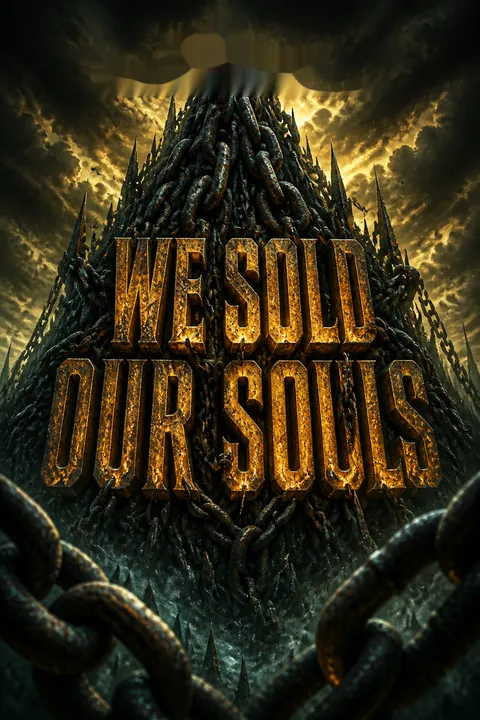

Plot Summary
Basement Riffs and Broken Dreams
In the cold, cramped basement of her childhood home, Kris Pulaski clings to her guitar, using music to drown out the suffocating pressures of her working-class life. Her family's dysfunction and the bleakness of her Pennsylvania town press down on her, but the power chords she struggles to master offer a fleeting sense of control and hope. Music is her lifeline, a way to assert her identity against a world that wants her small and silent. Even as her fingers bleed and her confidence falters, Kris's stubbornness and anger fuel her determination. This is the crucible where her dreams are forged, and where the seeds of both her future triumphs and failures are sown.
The Blind King Returns
Years after the collapse of her band, Kris's life is a shadow of what it once was. Working the night shift at a Best Western, she's haunted by the omnipresent image of Terry Hunt—her former bandmate, now the global rock icon known as the Blind King. His face looms over her town on billboards, advertising Koffin's comeback tour. The contrast between his mythic success and her daily grind is unbearable. Old wounds reopen as she's forced to confront the betrayal that destroyed her band and her sense of self. The past refuses to stay buried, and Kris's anger, long suppressed by medication and resignation, begins to smolder anew.
Dürt Würk: Origins and Betrayal
Flashbacks reveal the formation of Dürt Würk, a band of outcasts united by their love of heavy metal. Kris and Terry's creative partnership is the band's heart, but their dynamic is fraught with rivalry and unspoken longing. The group's chemistry is electric, but egos and insecurities simmer beneath the surface. As they chase the dream of musical immortality, the pressures of the industry and personal ambition begin to erode their unity. The seeds of betrayal are planted as Terry's hunger for fame grows, setting the stage for the band's eventual implosion.
The Band Fractures
Dürt Würk's journey is marked by relentless touring, near-misses with success, and the corrosive effects of disappointment. Terry's ambition becomes toxic, driving a wedge between him and the rest of the band. Manipulated by their new manager, Rob Anthony, and seduced by the promise of stardom, Terry orchestrates a coup—seizing control of the band's music and future. The others are left reeling, their trust shattered. Kris, once the band's backbone, is scapegoated and isolated, her anger weaponized against her. The fracture is complete, and the band's soul is sold for a shot at the big time.
The Witch House Contract
At the Witch House, a decrepit Kentucky hideout, the band is lured into signing contracts that will haunt them forever. The night is a blur of drugs, manipulation, and supernatural dread. Hours vanish from their memories, and something monstrous is unleashed. Terry, with Rob's help, sells not just his own soul but those of his bandmates to a shadowy force—Black Iron Mountain. The price is creative sterility, addiction, and a gnawing emptiness that will follow them for decades. Kris's sense of violation is profound; she knows something was taken from her, but the details are lost in a fog of trauma.
Black Iron Mountain Awakens
As Terry's fame grows, the other members of Dürt Würk spiral into paranoia, addiction, and despair. Scottie Rocket, once Kris's closest ally, becomes convinced that Terry is surveilling and controlling them through technology and occult means. The mythology of Black Iron Mountain—once just a metaphor in their lyrics—takes on a terrifying reality. Kris is drawn back into the band's orbit by a series of violent events, culminating in Scottie's tragic suicide and the murder of his family by mysterious UPS men. The sense of being hunted by an inhuman force becomes inescapable.
Scottie's Descent and Death
Kris's attempt to reconnect with Scottie ends in horror. Driven mad by the influence of Black Iron Mountain and Terry's manipulations, Scottie tries to kill Kris before turning the gun on himself. The trauma is compounded when the UPS men—agents of the supernatural conspiracy—arrive to erase all evidence and murder Scottie's family. Kris narrowly escapes, but the guilt and terror leave her shattered. The loss of her friend is a turning point, galvanizing her to seek answers and justice, even as the world brands her a fugitive and a killer.
The UPS Men Arrive
The UPS men, faceless and identical, are the enforcers of Black Iron Mountain's will. They appear wherever the conspiracy's secrets are threatened, silencing witnesses and eliminating threats with clinical efficiency. Their presence signals that the struggle is no longer just personal or psychological—it is existential. Kris realizes that the forces arrayed against her are vast, inhuman, and relentless. The world itself seems complicit, with media narratives twisted to paint her as a villain. Survival now means embracing paranoia, living off the grid, and trusting no one.
The Well in the Woods
Seeking refuge, Kris is betrayed by her old bandmates and committed to Well in the Woods, a luxury rehab facility run by Bill, Dürt Würk's former drummer. The center is a front for psychological reprogramming, using drugs and cult-like therapy to erase dissent and enforce compliance. Kris is drugged, gaslit, and nearly broken, but she clings to the memory of Troglodyte—the lost album—as a lifeline. The facility's butterfly motif is revealed as a symbol of transformation through annihilation. Kris's escape is harrowing, a rebirth through filth, darkness, and pain.
Escape and Exile
Kris's flight from Well in the Woods is a descent into the American underclass. Homeless, penniless, and pursued by both supernatural and human enemies, she survives by her wits and the kindness of strangers. The world is revealed as a network of surveillance, exploitation, and despair. Yet, in the margins, she finds solidarity with other outcasts—buskers, addicts, and dreamers. The myth of Black Iron Mountain is everywhere, a metaphor for systemic oppression and the commodification of hope. Kris's journey becomes a pilgrimage, seeking redemption and a way to fight back.
The Road to Hellstock
As Hellstock '19 approaches—a massive desert festival where Terry plans his ultimate ritual—Kris gathers unlikely allies, including JD, Dürt Würk's original drummer, and Melanie, a young fan desperate for escape. The journey is fraught with betrayals, paranoia, and violence. The media brands Kris a terrorist, and the Hundred Handed Eye—the surveillance state—closes in. JD is torn apart by a mob, Melanie is nearly destroyed by predatory men, and Kris is forced to confront the limits of her own resilience. The road becomes a crucible, forging her into a weapon.
Melanie's Crossroads
Melanie's story runs parallel to Kris's, embodying the generational despair and longing for transcendence that Koffin's music once promised. Trapped in dead-end jobs and toxic relationships, she pins her hopes on Hellstock as a chance for reinvention. Her journey is one of awakening—first to the emptiness of consumer culture, then to the predatory nature of those in power. Melanie's encounter with Kris is transformative, forcing her to choose between complicity and resistance. Her survival becomes a testament to the power of solidarity and the possibility of change.
The Great Hunt
As Kris and her allies draw closer to Hellstock, the machinery of Black Iron Mountain mobilizes against them. Media campaigns, social media mobs, and literal crowds are weaponized to hunt and destroy dissenters. The boundaries between reality and conspiracy blur, as the world itself seems to conspire to crush anyone who resists. The festival becomes a microcosm of a society addicted to spectacle, violence, and self-destruction. Kris's struggle is no longer just personal—it is a battle for the soul of everyone trapped beneath the wheel.
Hellstock: The Gathering
Hellstock '19 is a bacchanal of excess, violence, and occult ritual. Terry, desperate to reclaim his lost creativity and appease Black Iron Mountain, prepares to sacrifice the souls of his fans in a final act of betrayal. The festival descends into chaos—fires, riots, and mass assaults. The supernatural and the mundane collide as the Special Ones, the soul-eating entities, emerge to feed. Kris, disguised and determined, infiltrates the heart of the ritual, ready to confront Terry and reclaim what was stolen.
The Final Showdown
In a surreal backstage confrontation, Kris faces Terry and Rob, demanding the return of her soul and the truth about what happened at the Witch House. Terry, hollowed out by his bargains, pleads for her creative spark, but Kris refuses to be used again. The confrontation is both physical and metaphysical—a battle of wills, memories, and music. Kris's refusal to play by their rules is an act of defiance, a rejection of the system that commodifies pain and rebellion. The stage is set for one last, desperate act.
Troglodyte Unleashed
Kris seizes the stage at Hellstock, forcing Terry and the world to bear witness as she resurrects Troglodyte. The lost album becomes a weapon, its songs a spell to break the chains of Black Iron Mountain. The crowd, at first bewildered, is swept up in the raw power of the music. The performance is chaotic, imperfect, and transcendent—a collective exorcism of trauma, betrayal, and despair. For a moment, the possibility of freedom flickers. The myth is rewritten, and the cycle of exploitation is broken, if only for a night.
Aftermath and Legends
The aftermath of Hellstock is devastation—fires, arrests, and the disappearance of both Kris and Terry. The media spins conflicting narratives: Kris as martyr or monster, Terry as victim or villain. Survivors are left to pick up the pieces, haunted by what they witnessed. Rumors spread of Kris's survival, her music echoing in underground scenes around the world. The legend of Troglodyte grows, inspiring new acts of resistance and creativity. The story refuses to end, becoming a living myth.
One Pebble at a Time
In the novel's coda, the focus shifts to those left behind—Tuck, Melanie, and countless others touched by Kris's defiance. The struggle against Black Iron Mountain is revealed as endless, but not hopeless. Change comes not through grand gestures, but through small acts of courage and creativity. The sparrow cannot destroy the mountain in a day, but with each pebble carried away, the possibility of freedom grows. The story ends as it began: with a girl, a guitar, and the stubborn belief that music can change the world.
Analysis
Grady Hendrix's We Sold Our Souls is a blistering allegory about the cost of creativity in a world that commodifies rebellion and crushes dissent. Through the lens of heavy metal, the novel explores how systems—capitalism, addiction, trauma, and supernatural evil—conspire to strip individuals of their agency, their dreams, and ultimately their souls. The story's supernatural elements are inseparable from its social critique: Black Iron Mountain is both a literal monster and a metaphor for the machinery of exploitation that haunts every artist, worker, and dreamer. Kris Pulaski's journey is a testament to the power of anger, solidarity, and art as acts of resistance. The novel refuses easy redemption; victory is fleeting, and the struggle is endless. Yet, in its final moments, it offers a hard-won hope: that even the smallest act of defiance—a song, a riff, a pebble carried away—can chip away at the mountain. In a world that demands silence and compliance, We Sold Our Souls insists that the fight for meaning, memory, and music is worth everything.
Review Summary
We Sold Our Souls receives mostly positive reviews, averaging 3.69/5 across nearly 35,000 ratings. Fans, particularly metalheads, praise its authentic portrayal of heavy metal culture, strong female protagonist Kris Pulaski, and creative chapter titles using real album names. Many highlight the engaging horror elements, clever plot twists, and emotional resonance as a love letter to rock music. Common criticisms include an underwhelming ending, underdeveloped mythology, and tonal inconsistency. Readers consistently commend Hendrix's writing style, though some found the plot confusing or the second half weaker than the first.
People Also Read


Characters
Kris Pulaski
Kris is the heart of the novel—a woman battered by betrayal, addiction, and the grinding machinery of the music industry. Her journey is one of reclamation: of her music, her anger, and her sense of self. Psychoanalytically, Kris embodies the trauma of creative exploitation and the struggle to maintain agency in a world that punishes dissent. Her relationships—with Terry, Scottie, and the rest of Dürt Würk—are fraught with love, resentment, and loss. Over the course of the story, Kris transforms from a victim into a fighter, channeling her pain into a final act of defiance that inspires others to resist.
Terry Hunt (The Blind King)
Terry is both Kris's mirror and her nemesis—a talented musician whose ambition curdles into monstrous self-interest. He sells not only his own soul but those of his friends, becoming the figurehead of a global cult of personality. Psychologically, Terry is driven by a bottomless hunger for validation and immortality, willing to sacrifice anything and anyone for a taste of legend. His relationship with Kris is complex: part rivalry, part longing, part mutual destruction. By the end, Terry is revealed as both victim and perpetrator, a warning about the cost of unchecked ambition.
Scottie Rocket
Scottie is Kris's closest ally and the emotional core of Dürt Würk. His descent into paranoia and madness is both a symptom of supernatural manipulation and a metaphor for the psychological toll of betrayal and loss. Scottie's unwavering loyalty to Kris is his undoing, but also his redemption—he dies resisting the forces that would erase his identity. His suicide is a turning point, galvanizing Kris to action and underscoring the novel's themes of sacrifice and solidarity.
Rob Anthony
Rob is the band's manager and the architect of their downfall. He embodies the seductive, rationalizing voice of the system—always ready with a contract, a justification, a smile. Rob's psychoanalytic function is that of the superego gone wrong: he enforces conformity, punishes rebellion, and gaslights dissenters. His relationship with Terry is symbiotic, each using the other to climb higher. Rob's ultimate allegiance is to Black Iron Mountain, and his fate is to become as hollow as the system he serves.
Bill
Bill, once Dürt Würk's drummer, becomes the director of Well in the Woods, a rehab center that is actually a mind-control facility. His transformation from bandmate to jailer is a study in the corrupting influence of power and the desire for control. Bill's relationship with Kris is one of betrayal and resentment—he blames her for his injuries and his lost dreams. Psychologically, Bill represents the internalization of oppression: he enforces the rules that destroyed him, believing it will bring him peace.
Tuck Merryweather
Tuck is the band's bassist and the most emotionally stable of the group. He seeks peace and normalcy, but is haunted by the events of contract night and the loss of his friends. Tuck's relationship with Kris is complicated by guilt and affection—he wants to help her, but is afraid of being dragged back into chaos. Psychologically, Tuck represents the desire to move on, to forget, but also the cost of denial. In the end, he is a witness to both the band's destruction and its fleeting redemption.
JD (Jefferson Davis)
JD, the band's original drummer, is dismissed as crazy, but his paranoia proves prescient. Living in his mother's basement, he becomes Kris's unlikely ally in the final act. JD's obsession with Viking mythology and conspiracy is both a coping mechanism and a genuine insight into the novel's supernatural reality. His death at the hands of a mob is a brutal commentary on the fate of those who see too much and are believed by too few.
Melanie Gutiérrez
Melanie is the novel's lens on a younger generation—trapped by debt, dead-end jobs, and the false promises of pop culture. Her journey from hopeful fan to traumatized survivor mirrors Kris's arc, but with a different outcome. Melanie's relationship with Kris is transformative: she learns to see through the lies of the system and to value her own agency. Psychologically, Melanie represents the possibility of change, the hope that the cycle of exploitation can be broken.
The UPS Men / Special Ones
The UPS men are the physical manifestation of Black Iron Mountain's will—identical, relentless, and inhuman. They erase inconvenient truths, silence dissent, and enforce conformity. Psychologically, they represent the machinery of systemic oppression, the way institutions crush individuality and resistance. Their presence signals that the struggle is not just personal, but existential.
Black Iron Mountain
Black Iron Mountain is both a literal and symbolic presence—a supernatural entity that feeds on souls, creativity, and hope. It is the embodiment of everything that crushes the spirit: capitalism, addiction, trauma, and despair. Its influence is everywhere, shaping the world to its will. Psychologically, it is the shadow that haunts every character, the hole in the center of the world that can never be filled.
Plot Devices
Music as Magic and Weapon
The novel uses music not just as a backdrop, but as a literal source of power. Troglodyte, the lost album, is both a prophecy and a weapon—its songs can shape reality, resist supernatural oppression, and inspire collective action. The act of playing music becomes an act of resistance, a way to reclaim agency and identity. This device blurs the line between art and magic, suggesting that creativity is both dangerous and redemptive.
Unreliable Memory and Missing Time
The characters' memories are fractured by trauma, addiction, and supernatural interference. The pivotal night at the Witch House is a black hole in their histories, its details obscured by drugs and dark forces. This device creates suspense and ambiguity, forcing both characters and readers to question what is real. The search for lost time becomes a metaphor for the struggle to reclaim agency and confront the past.
Supernatural Conspiracy and Surveillance
The novel weaves together real-world anxieties about surveillance, media manipulation, and systemic oppression with supernatural horror. The UPS men, the Hundred Handed Eye, and the omnipresence of Black Iron Mountain create a sense of inescapable threat. Foreshadowing is achieved through recurring motifs—billboards, media broadcasts, and dreams—that hint at the larger forces at work. The narrative structure alternates between personal struggle and cosmic horror, reinforcing the theme that the personal is political, and the political is supernatural.
Cyclical Structure and Mythic Resonance
The story is structured as a cycle—beginning and ending with a girl and her guitar, struggling to play the music that will set her free. The myth of Troglodyte is rewritten through each character's journey, suggesting that the fight against Black Iron Mountain is never truly over. The use of recurring symbols (the Blue Door, the butterfly, the wheel) creates a sense of mythic resonance, inviting readers to see the story as both specific and universal.
About the Author

Download PDF
Download EPUB
.epub digital book format is ideal for reading ebooks on phones, tablets, and e-readers.








































