Plot Summary
Shifted World, Bound Fates
After the mysterious and catastrophic Shift merged realms, the once-familiar world is fractured and run by monsters. Humans eke out an existence on the fringes, bartering themselves for safety, food, and family survival. This is the world May, poor and starving, is born into—a world where monster-kind dominate, and humans find themselves at the mercy of monstrous rulers and arbitrary fates. The essence of hope here lies in arranged mating through temple DNA matches, a system that promises protection for girls while often delivering them into the unknown. The setting is harsh yet threaded with longing—for safety, warmth, and a place to belong. May submits herself to this system, desperate to escape poverty and abuse, accepting an arranged match to a monster she's never seen.
The Monster Marriage Lottery
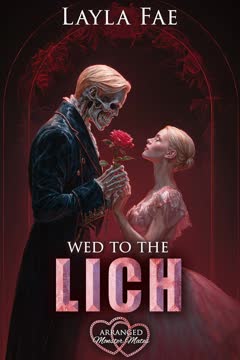
Virgil is a lich, a near-immortal monster rarely able to connect with the living. His kind are solitary and dying out; only a union with a human bride can stave off his species' extinction and his own loneliness. May, meanwhile, is frail, broken by years of neglect and emotional manipulation. Selected by the monster marriage lottery, she is prepared for something brutal or indifferent, expecting only to be useful. When Virgil arrives, the world's terror for monsters and especially for him, the undead lich, is palpable—thick with the air of prejudice and ancient wounds on both sides. Yet in the midst of mistrust, Virgil and May's fated meeting stirs something unexpected in both: curiosity, a glimmer of impossible hope.
Shadows and First Meetings
The first encounter between May and Virgil is colored by trembling anticipation—hers for survival, his for companionship. Darkness wraps the temple chamber, and Virgil, imposing and otherworldly, surprises himself with how eagerly he wants May to see him, not the horror. For May, the moment is a blur of weakness and nervousness, but Virgil offers the unlikely balm of his shadow, a power felt as living warmth. Its touch soothes her cold, brittle body, coaxing out a little trust. In this meeting, both reveal their vulnerabilities: May's physical and psychological hunger, Virgil's desperate need not just for a wife, but for someone unafraid to touch his shadows.
A Bride's Hidden Wounds
May is not merely underfed—she is the survivor of deliberate, ongoing starvation and manipulation. Her guardian's cruelty has left deep scars: advanced anorexia, night blindness, and a constant refrain of shame and self-hate. Recognizing her fragility, she worries Virgil will reject her as unfit. Yet, in Virgil's steadiness, May glimpses a strange kind of mercy. Virgil is blunt: "You are barely alive." Instead of condemnation, he offers honest curiosity and gentleness. May's hunger for acceptance wars with her self-loathing, but hope flickers that this monster might see her differently.
The Marriage Rite
Despite mutual uncertainties, the marriage proceeds beneath the watchful eyes of a fearful priestess. The ancient lich vows are spoken—May associates it with the poetry of fate, while Virgil's shadow entwines her protectively. The ritual is transformative: both are changed by the bond, feeling an uncommon tenderness. Virgil's alien affection and May's trust form the fragile foundation of their union. The priestess is frightened, but Virgil's control and May's composure move things swiftly—finally, they leave together, carrying with them both hope and uncertainty for the journey ahead as newlyweds.
Chilling Kindness, Draught of Warmth
Leaving the ceremony, Virgil reveals his caring side, physically supporting May and feeding her warmth from his own power—even if it shocks her with its ferocity. The sensation is overwhelming, a blend of fear and comfort, burning away her chill while raising new uncertainties about his nature. She realizes, fully, that her new husband does not breathe, does not have a heartbeat, and is unlike any living creature. Yet, in his arms, she feels safer than she ever has. Her decision to trust this warmth foreshadows the coming intimacy and challenges of their life together.
Strange Home, Tender Touches
Virgil's grand, cold mansion bears the emptiness of centuries, accented by art, marble, and shadows. May is simultaneously awed and intimidated by her splendid new surroundings and overwhelmed by her lack of self-worth. Virgil continues to surprise with tenderness: asking consent for physical closeness, promising to care for her every need. May's internal struggles with eating surface—old voices and shame resurface around food, but Virgil is patient, buying delicacies and showing her, through persistent care, that she deserves nourishment and comfort. The careful, consistent physical touch and respect begin to offer May the first sense of agency she has known.
Learning to Live Again
Daily routines form. Virgil's mansion feels less like a mausoleum as May explores, guided by Virgil and his invisible servants. Despite external grandeur, she fights internalized abuse, enduring a chorus of toxic thoughts that threaten to erode her small gains. Virgil's presence becomes a steady anchor—he never leaves her side for long and offers warmth through his shadow, granting her a nightly peace that soothes her nightmares. May's slow acclimation shows the resilience of the human spirit, even while she continues to starve herself unconsciously, caught between old demons and new possibilities.
Hungry Shadows, Human Needs
May and Virgil develop a tenuous trust, expressed in uncertain kisses, shared meals, and attempts at normalcy. Their relationship is laced with mutual curiosity and longing—they are, in many ways, each other's first genuine connection. Virgil is fascinated by May's shame around food, determined to replace her self-loathing with acceptance. The pair's interactions are physically charged yet gentle, as May learns to interpret his emotions through the shifting colors of his eyes and their shared touch. Their journey is one of halting openness, each slowly revealing personal pain and desire.
Dance of Longing and Trust
When May dons a ballerina's dress and dances for Virgil, she signals both readiness for vulnerability and her need to reclaim agency. The act becomes a silent invitation—her body expressing what words cannot. Virgil is entranced, seeing her pain but also her strength and hope. Their longing climaxes in an act of mutual offering, shadow and flesh intermingling. For May, the dance is both rebellion against her past and a plea for a future in which she is valued, not destroyed. This chapter marks the consummation of their relationship and a turning point in their bond.
Intimacy and Insecurities Unmasked
As they make love, May and Virgil face their mutual fears—the monstrous reality of his undead form and her terror of being found unlovable or ugly. Yet, as Virgil bares himself (literally and emotionally), May is awed by his otherworldly beauty, not frightened. Their lovemaking is an act of acceptance; Virgil is gentle, letting May set the pace, powerful yet always attuned to her comfort. The experience is transformative for both, a union that mends wounds and transcends shame. They discover that vulnerability—physical and emotional—is not fatal, but healing, and that their union can offer both sanctuary and renewed life.
Lifeblood, Sacrifice, and Healing
May's condition deteriorates due to starvation. Virgil is forced to confront the true cost of her survival: to save her, he must feed her not human food, but lifeforce stolen from a living creature. In a harrowing scene, Virgil kills a fawn to transfer its vitality to May, horrifying her but saving her life. The moment lays bare the monstrous realities Virgil lives with—survival demands sacrifice, and for May to live, something else must die. The aftermath is one of pain and sorrow, yet also cleansing: May realizes the deadliest monsters are the voices in her own head, and Virgil reveals his own torment at what he must do to feed them both.
Demons Within, Monsters Without
May is tormented not by the monster she married, but the legacy of abuse—voices that demand she starve and shrink. Her near-death forces a confrontation with Virgil and with herself. He urges her to value her own life and health; she struggles to believe she is worth saving. The emotional climax is not a battle of power, but a reckoning with her self-hatred. Virgil shows her, with honesty and pain, that loving him includes loving herself. The true victory is not defeating external monsters, but turning inward compassion to heal psychic wounds inflicted by others.
Flight and Betrayal
May's recuperation is interrupted by the misguided interference of townsfolk who believe themselves her rescuers. They kidnap her, convinced she is mentally manipulated by the lich. Virgil, believing May has run voluntarily, is plunged into heartbreak. When he discovers the truth—that she was taken—his wrath is terrifying, and he confronts the townspeople, shattering any pretense that he is a benign presence. The cost of betrayal is made clear: an explicit demand for loyalty and gratitude from the humans in his care—a transformation of roles from outcast caretaker to rightful ruler, asserted for May's safety.
Grief, Rescue, and Reunion
Virgil unleashes all his might to retrieve May, disregarding human fears and expectations. May, for her part, must choose where she belongs—and she claims Virgil publicly, affirming their bond even as the people of the town fearfully cower. The couple understands now that their love is something to be fought for against external threats and internal doubts alike. Virgil reclaims his authority, banishing May's captors and declaring the town a protectorate under his rule. Their reunion—tender, raw, and charged—centers around mutual forgiveness, and the acceptance that healing is a continual process.
Healing Tears and True Belonging
May and Virgil, each having slayed external and internal demons, settle into a deeper phase of their relationship. They find joy in mutual care—sharing both pain and pleasure, healing and ordinary domesticity. May, at last, faces her childhood trauma; Virgil stands by her side as she reclaims her story and her worth. These scenes reaffirm that home and belonging are built not through bargains or desperation, but through hard-won honesty and love. Virgil learns to accept May's needs (and his own), while May learns to eat, rest, and be loved—defying the trauma that tried to starve her spirit.
Festival of Gratitude
Virgil, with May's support, claims his place as a protector and lord, demanding both respect and gratitude from the human town that previously barely tolerated him. He institutes a festival of gratitude—a ritual that cements his rule but also offers celebration and hope, inviting humans to find joy and belonging under his watch. May's presence becomes a beacon, not just for Virgil but for other girls like her: she returns to her old orphanage to rescue its inhabitants, confronting the evil matron and offering the children a new life. It is a redemption—not just for herself, but for others who suffered as she did.
A New Dawn Together
The story closes with May and Virgil at peace, building a family and a community. Their union, once fraught with fear and uncertainty, is now a source of warmth, celebration, and rebirth. In their home, surrounded by children and friends, they create a new tradition of safety, art, music, and love. Both May and Virgil have transformed: she from a starving, self-hating girl to a mother and leader; he from lonely lich to loving husband and community head. Their lives illustrate that healing is possible—not by denying one's nature, but by forging connection and accepting The Other, within and without.
Analysis
"Wed to the Lich" is a genre-blending romance that transforms the familiar 'arranged marriage with a monster' trope into a meditation on trauma, otherness, and healing
At its heart, the novel is an exploration of what it means to truly belong: to oneself, to another, and to a community. Through the parallel stories of May—haunted by eating disorders and childhood shame—and Virgil—an immortal monster, burdened with loneliness and the potential for harm—the book asks whether wounds born of violence, neglect, or fear can ever fully heal. It posits that genuine transformation is possible not through the destruction or denial of monstrousness, but through vulnerable connection, continuous honesty, and mutual care. The narrative champions the idea that love—rooted in honest self-reckoning, not denial—can forge safety and joy, even for those taught that they are unlovable, dangerous, or broken. By intertwining psychological realism (in the depiction of May's anorexia and self-loathing) with lush, almost fairy-tale worldbuilding, the book delivers a story that resonates as both comforting romance and cathartic healing journey. Its ultimate lesson: monsters are made not by form but by action; redemption is possible for those who dare to name and confront their shadows, both literal and figurative.
Review Summary
Characters
May
May is a nineteen-year-old human orphan, selected for forced marriage to a monster to escape a life of starvation, abuse, and anonymity. Years of emotional manipulation, especially around her body and eating, have left her fragile in both body and mind—the legacy of an abusive guardian is advanced anorexia, night-blindness, and a gnawing, ever-present shame. Psychologically, May is a bundle of contradictions: desperate to be loved but certain it's impossible, clinging to hope but hounded by self-hate. Her journey is a gradual unfolding from numb survival to cautious hope, then passionate agency, discovered through Virgil's gentleness and unwavering care. Her relationship with food is both literal and metaphorical—representing trust, worth, and the possibility of transformation. Over time, May's vulnerability becomes her greatest strength; in facing monstrous truths and accepting love, she finds both healing and self-acceptance and, ultimately, the power to rescue others in turn.
Virgil
Virgil is a member of a fading lineage of undead, existing on a threshold between life and death. Outcast among monsters and horrified by the fear he inspires, he is driven by loneliness and a deep responsibility to keep his kind from extinction. Unlike the monsters humans fear, Virgil's primary traits are gentleness, rationality, and self-restraint—yet he is also deeply alien, bereft of many human instincts. His shadow (an extension of his being) functions as both a bridge and a barrier to connection. The story examines his complex psychology: the tension between craving intimacy and fearing he will harm those he loves. Virgil's courtship of May is one of steady patience, unwavering support, and the slow facing of his own monstrous nature. Through loving May, he learns not only to protect, but also to accept love and to claim power—in both domestic and communal spheres.
Madame Sundara
May's childhood villain, Sundara enforces strict, dehumanizing discipline, weaponizing food, shame, and harsh words to keep her charges pliant and self-loathing. While not the central antagonist, her presence shapes May's inner world, reinforcing cycles of disordered eating and self-blame. She embodies the cruelty of an unjust world that values only compliance and production, stifling individual hope and ambition. In the story's conclusion, May faces and overcomes the grip of Sundara's venom, enacting true closure for herself and others.
The Priestess
The unnamed priestess represents the weight of tradition and the human terror of the monstrous. She is deeply uncomfortable with Virgil's presence and May's apparent frailty, torn between duty, fear, and pity. Her nervous authority and the rituals she upholds act as both barriers and facilitators for May and Virgil's union. Though her role is brief, she illustrates the climate of suspicion and misunderstanding that defines relationships between humans and monsters post-Shift.
The Townsfolk
The humans of Virgil's nearby town are complex as a group—simultaneously victims, oppressors, and objects of protection. Their rescue of May is born from a misguided sense of duty, but their fear turns quickly to violence and exclusion. Yet, under May and Virgil's guidance, they are also capable of transformation—becoming proactive participants in a new community built on gratitude and respect rather than suspicion. The arc from hostility to tentative celebration embodies the central theme: that healing and coexistence require courage, accountability, and empathy on both sides.
The Invisible Servants (Sussunni)
Virgil's invisible servants are non-human spirits who feed on the dust of his lifeforce, existing in symbiosis with him. Though almost unseen, they perform acts of care, adjusting May's environment, clothing, and aiding daily life at the mansion. They symbolize not only Virgil's connection to another world, but also the possibility that even the most alien presences can be nurturing rather than harmful.
The Fawn
The young deer is a heart-wrenching symbol for the cost of survival in a world where lifeforce is always bartered. Its death is both necessary and devastating—a literalization of the story's themes of sacrifice, guilt, and the choices required of those who love. The fawn's fate stands as a mirror to May's experience, questioning what it means to survive and who must be sacrificed for others to heal.
Caspian
Though appearing only briefly in the epilogue, Caspian, the child of May and Virgil, embodies hope and the union of two worlds, proof that love and life can spring from even the darkest origins. His presence suggests the possibility of a future defined not by trauma, but by continuity, community, and joy.
The Three Human Rescuers
These townspeople enact May's kidnapping out of misplaced concern and ignorance, embodying both the dangers of prejudice and the complexities of 'rescue'. They represent the external obstacles to May and Virgil's happiness and the internalized narratives humans create about monsters, showing how fear can be just as damaging as indifference or cruelty.
The Orphan Ballerinas
The girls May saves from the orphanage symbolize her own lost childhood and offer a vision of redemption—both for herself and others. By intervening in their lives, May transforms her pain into compassion and leadership, breaking the cycle of abuse and modeling a future where vulnerability and difference are strengths, not weaknesses.
Plot Devices
The Shift and Monster Dominion
The story's foundation is the Shift—a cataclysmic event blending worlds, installing monsters as overlords, and reducing humans to a barely-tolerated minority. This backdrop establishes the primal dichotomy driving the plot: fear of the Other, and the struggle for power, safety, and community. The world-building channels both traditional post-apocalyptic fiction and gothic fantasy, using societal disarray as a crucible for the protagonists' personal transformation.
The Arranged Marriage and Temple Lottery
Marriage as both salvation and peril drives the narrative: for May, marriage to a monster is the only escape from mortal peril; for Virgil, it is a last chance at staving off extinction. The temple's matching process—impersonal and transactional—becomes a frame for examining fate, agency, and the complex realities of consent under duress. The plot leverages, then subverts, the "forced proximity" trope, transforming it into a vehicle for mutual recognition, growth, and rescue.
Shadow Magic as Emotional Metaphor
Virgil's shadow both endangers and heals: it is his lifeline, an extension of his being, and the link through which he and May express physical and emotional need. The shadow functions as protection, warmth, and, crucially, a literal transfer of energy and affection. Its ambiguous, semi-sentient nature blurs the line between comfort and threat, serving as a constant reminder of the thin lines between life and death, desire and destruction.
Body and Eating as Battleground
May's relationship with her own body and food is a recurring plot device, used to mirror and heighten every other struggle in the novel—self-worth, intimacy, trust, and autonomy. The cycles of starvation and shame are counterposed to Virgil's overwhelming hunger and life-draining power; healing arrives slowly, only as both protagonist and monster learn new forms of giving and taking.
Rescue, Betrayal, and Community Transformation
The arc from private healing to communal belonging is traveled through external crisis: May's kidnapping, Virgil's public reclaiming, and the social consequences. What begins as an individual struggle transforms into broader change—May rescues girls from her past, Virgil secures leadership over a human town, and together they model new forms of coexistence. The hope for belonging once denied to both becomes available to others through their courage and choices.
Rituals and Transformation
From the initial marriage rite to festivals of gratitude and ballroom rescues, the narrative leverages ritual as a device for marking personal and collective change. Each ceremony—whether official or private, joyous or painful—serves as a narrative pivot, allowing the characters to step into new identities, challenge old traumas, and redefine themselves and their community.