
Key Takeaways
1. Generational trauma and discipline are often passed down under the guise of protection
“All’s I want’s a switch! Why?” asked my father, almost childlike. “Ma’am! Please listen! Was a boy in Mississippi. Crackers said he whistled at a white woman. They beat him. Shot him. Cut his penis off. Tied a fan ‘round his neck and drowned him. All’s I wanna do is protect the boy.”
The cycle of fear. Parents in marginalized communities often resort to harsh physical discipline out of a desperate, terror-induced desire to prepare their children for a hostile world. In The Switchin' Tree, the father's violence is driven by the historical trauma of Emmett Till's murder, showing how systemic racism forces parents to become the first agents of violence to prevent a worse fate.
The illusion of control. This dynamic is mirrored in Owen, where a father uses physical discipline on his son, believing that a man's physicality is necessary to teach "act right" before the white-dominated world teaches it with permanent, lethal consequences.
- Physical discipline as a shield against societal racism
- The internalization of systemic terror by parental figures
- The tragic irony of hurting children to keep them safe
Breaking the cycle. Ultimately, these stories reveal that using violence to teach survival only fractures the family sanctuary, leaving children to carry the weight of both parental abuse and societal oppression.
2. Performative activism and white savior complexes often exploit and silence black pain
“If you really a ally, the first thing you can do is shut up and listen. Being a black woman is hard. Living in a world where your only expectation is to give white men babies ain’t hard.”
The savior complex. In Triggered, the character of Tif represents the toxic nature of middle-class white activists who co-opt radical spaces to soothe their own existential crises. Her performative allyship masks a deep-seated narcissism that ultimately leads to the exploitation and silencing of D, a black mother and activist who is later murdered.
Exploitation of struggle. White allies often treat marginalized struggles as a playground for self-discovery or a "mosh pit" of rebellion, while black and brown individuals face the real-world, lethal consequences of systemic violence.
- The co-opting of radical terminology to justify personal selfishness
- The displacement of black voices in activist collectives
- The disparity in consequences between white and black activists
The cost of silence. When marginalized individuals challenge these performative dynamics, they are often gaslit and labeled as "aggressive" or "divisive," proving that even within radical spaces, white supremacy maintains its grip through emotional manipulation.
3. Surrealism and magical realism serve as coping mechanisms for systemic oppression
“In its frail and piecemeal canopy, moldering oranges hung like a baby mobile constructed from doom-blighted moons.”
Surrealism as truth. Throughout the collection, surreal and magical realist elements—such as a tree that demands whippings, detaching hands, and talking bathrooms—are used to externalize the bizarre, illogical, and horrific nature of systemic racism. By bending reality, the characters are able to articulate traumas that are too heavy for literal language.
Externalizing internal dread. In Reunion, the surreal occurrences, like a prince of ferrets and words falling into a sink, mirror the characters' internal fragmentation and the absurdity of navigating a world where their humanity is constantly questioned.
- Bending physical laws to represent psychological fractures
- Using monstrous entities to symbolize historical atrocities
- Creating alternative realities where marginalized voices hold power
A shield against despair. These fantastical elements do not represent an escape from reality, but rather a confrontation with it, allowing the characters to survive the otherwise unbearable weight of their daily existence.
4. Queer black identity and intimacy require navigating deep-seated vulnerability and shared memory
“Because gay men can’t have kids, we make ancestry through mother figures.”
Vulnerability and memory. In Things I Never Learned..., the protagonist experiences temporal slips into his partner Leroy's past, highlighting how queer black intimacy is deeply intertwined with shared historical and personal memory. To love another queer black man is to carry the weight of their past struggles, rejections, and triumphs.
Reclaiming queer lineage. The narrative explores how queer black men construct their own lineages and ancestries through "diva worship" and cultural icons, creating a sense of belonging in a world that often seeks to erase their existence.
- The intersection of racial and sexual marginalization
- The use of cultural icons to build alternative family structures
- The fear of vulnerability in a hostile, heteronormative society
Healing through connection. By navigating these shared memories and vulnerabilities, the characters find a rare sanctuary of mutual understanding, proving that intimacy can be a powerful tool for healing historical wounds.
5. Nostalgia and escapism provide a sanctuary for marginalized identities
“More than a foreign art, anime was not white, precisely what I needed at the moment I discovered it.”
Escapism as survival. In Tournament Arc, the characters find refuge in anime and nerd culture, specifically because it offers a non-white space of imagination and heroism. For black youth growing up in post-industrial, segregated environments, these subcultures provide a vital sanctuary from the harsh realities of systemic neglect.
Reimagining the self. Escapism allows marginalized individuals to cast themselves as the heroes of their own epics, rather than the tokens or victims of white-dominated narratives.
- The appeal of non-western media to marginalized youth
- The creation of alternative communities through shared fandoms
- The tension between childhood innocence and adult realities
Sanctuary in the margins. Ultimately, these spaces of nostalgia and play are not childish distractions, but essential survival strategies that allow marginalized individuals to preserve their joy and humanity.
6. The complexities of modern black-white relationships are fraught with microaggressions and historical baggage
“Anything about race Kim said with a mix of apology and defensiveness, wanting to balance being a “good” white person with her veneer of Noo Yawk tough.”
The racial divide. In Reunion and Weird Black Girls, relationships between black and white characters are depicted as minefields of microaggressions, defensiveness, and unacknowledged privilege. White characters often struggle to balance their desire to be "good" allies with their inherent discomfort when confronted with actual black pain.
The burden of education. Black characters are often forced to carry the emotional labor of educating their white partners or friends, while navigating the subtle cruelties and condescension that stem from racial disparities.
- The performative nature of white guilt and allyship in personal relationships
- The exhaustion of navigating microaggressions in intimate spaces
- The historical baggage that colors every cross-racial interaction
The illusion of intimacy. These stories suggest that true intimacy is impossible without a radical confrontation of privilege, leaving cross-racial relationships fraught with a quiet, persistent tension.
7. Maternal and paternal legacies shape our capacity for love, survival, and self-destruction
“I search the mirror for my mother before realizing I never saw her this old, and even days I lived through become a void behind me, like the unknowable hour before that hour I first opened my eyes to the sun.”
The weight of legacy. Throughout the collection, the specter of parental influence looms large, shaping how characters navigate their own adulthoods. Whether through the violent protection of a father or the anxious, critical love of a mother, these legacies dictate the characters' capacity for intimacy and self-destruction.
The search for approval. In Owen, the father's military-style discipline is a direct reflection of his own father's harshness, showing how generational patterns are repeated even when they cause immense psychological harm.
- The repetition of parental trauma in subsequent generations
- The desperate search for parental approval and validation
- The tension between honoring legacy and forging a unique identity
Breaking the mold. To survive, the characters must eventually confront these parental ghosts, deciding which parts of their legacy to carry forward and which to bury in the ground.
8. True liberation requires reclaiming historical narratives and rejecting systemic erasure
“Republicans figured, in erasing our triumphs, they could write their own narrative of the inhuman horde besieging their civilization, justification for their sins against us.”
Reclaiming history. In Tournament Arc and Weird Black Girls, the narrative emphasizes the vital importance of history as a tool for liberation. When systemic forces attempt to erase or sanitize black triumphs and struggles, reclaiming these stories becomes an act of radical resistance.
The power of narrative. By preserving the stories of maroons, Panthers, and ancient African kingdoms, marginalized individuals are able to reject the dehumanizing narratives imposed upon them by the dominant culture.
- The systemic erasure of black history in public education
- The use of historical narratives to build collective pride and resistance
- The danger of allowing the oppressor to write the history of the oppressed
A blueprint for the future. Ultimately, these stories suggest that we cannot build a liberated future without first reclaiming our past, proving that memory is our most powerful weapon against systemic erasure.
Review Summary
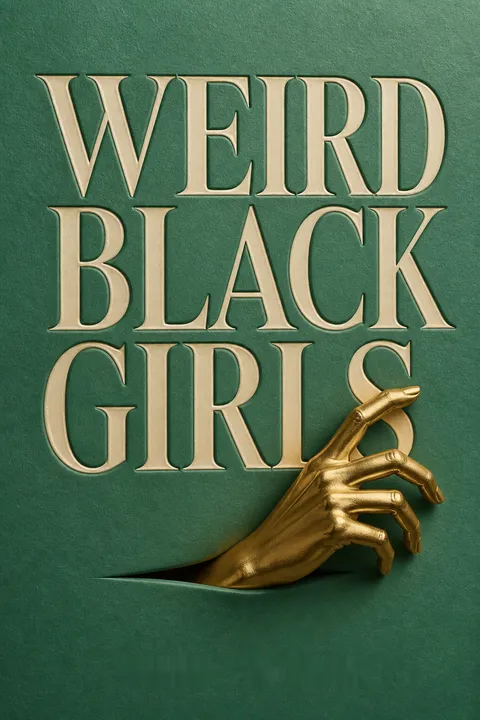
Reviews for Weird Black Girls are mixed, averaging 3.05/5. Many readers feel the title is misleading, as most stories center on Black men rather than Black girls. Standout stories frequently cited include "The Switchin' Tree," "Things I Never Learned in Caitlin Clarke's Intro to Acting Class," and "Tournament Arc." Praise highlights Cotman's imaginative, genre-bending writing and rich characters, while criticism points to overly long stories, uneven quality, misogynistic undertones in some narratives, and dense prose that impedes flow.
Download PDF
Download EPUB
.epub digital book format is ideal for reading ebooks on phones, tablets, and e-readers.








































