Plot Summary
Faith's Farewell Kiss
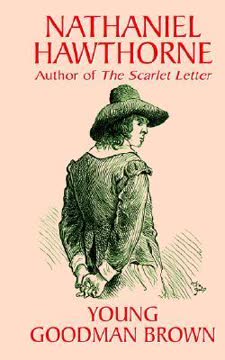
Young Goodman Brown, a newlywed in Puritan Salem, bids a tender but uneasy goodbye to his wife, Faith, whose pink ribbons and anxious words betray her fears for his mysterious nighttime journey. Though she pleads for him to stay, Goodman Brown insists he must go, promising to return by sunrise. The parting is heavy with foreshadowing, as Faith's sadness and talk of troubling dreams unsettle him. As he steps into the darkening street, he is haunted by guilt for leaving her alone, vowing that after this one errand, he will never stray from her side again. The warmth of home and the innocence of love linger behind him, soon to be tested by the shadows he is about to enter.
Into the Gloomy Woods
Goodman Brown's path leads him into a dense, foreboding forest, where the trees seem to close behind him, swallowing him in darkness. The solitude is oppressive, and every shadow hints at hidden dangers—perhaps even the Devil himself. As he ventures deeper, his mind races with fear and suspicion, imagining evil lurking behind every trunk. The woods become a symbol of the unknown and the forbidden, a place where the boundaries between reality and nightmare blur. Brown's resolve wavers as he senses the weight of ancestral sin and the possibility that his journey may lead him to a confrontation with evil itself.
The Devil's Companion
In the heart of the forest, Goodman Brown encounters a man of grave appearance, bearing an uncanny resemblance to himself—perhaps a father or an older brother. This stranger, carrying a serpent-like staff, greets Brown as if expecting him. Their conversation reveals the stranger's deep knowledge of Brown's family and the community's hidden sins. He claims to have aided Brown's ancestors in acts of cruelty and wickedness, suggesting that evil is woven into the very fabric of their heritage. Brown is unsettled by the stranger's familiarity and the ease with which he exposes the hypocrisy of those Brown reveres, hinting that the Devil's influence is closer than anyone dares admit.
Shadows of Salem
As they walk, Brown sees familiar figures from Salem—pious women, revered ministers, and upright deacons—moving through the forest on the same dark path. He overhears conversations that suggest secret complicity in evil deeds. The most shocking revelation comes when Goody Cloyse, his childhood catechism teacher, is revealed as a witch, conversing openly with the Devil. Brown's faith in the goodness of his community is shaken as he realizes that those he trusted most may be participants in a hidden world of sin. The forest becomes a stage where the true natures of Salem's citizens are unmasked, and Brown's innocence begins to crumble.
The Witch's Sabbath
Drawn deeper into the forest, Brown stumbles upon a hellish congregation gathered around a blazing altar. The assembly includes the most respected members of Salem—ministers, deacons, and even the governor's wife—mingling with known sinners and outcasts. At the center stands a dark figure, presiding over a ritual that welcomes new converts into the "communion of your race." Brown is horrified to see his wife, Faith, among the initiates, her pink ribbons now a symbol of lost innocence. The ceremony blurs the line between reality and nightmare, as Brown is forced to confront the possibility that evil is universal and inescapable.
The Mark of Sin
In the fiery glow of the witches' sabbath, Brown is told that all people harbor secret sins, and that the distinction between saint and sinner is an illusion. The dark figure offers to reveal the hidden guilt of every soul, promising knowledge that will destroy all hope of virtue. Brown and Faith stand together at the altar, on the verge of being marked as initiates into this dark fellowship. In a moment of desperate resistance, Brown calls on Faith to look to heaven and reject the Devil. The vision shatters, and Brown finds himself alone in the silent, moonlit forest, uncertain whether what he witnessed was real or a terrible dream.
The Awakening and Return
Emerging from the forest at dawn, Goodman Brown walks back into Salem village, but the world he knew is irrevocably altered. He recoils from the minister's blessing, shuns Deacon Gookin's prayers, and snatches a child away from Goody Cloyse as if she were a fiend. When Faith greets him with joy, he responds with coldness and suspicion. The memory of the night's revelations—real or imagined—haunts him, casting a shadow over every relationship. Brown's trust in human goodness is destroyed, and he becomes a man estranged from his community and his own heart.
A Changed Man
From that night forward, Goodman Brown lives in a state of perpetual gloom and distrust. He cannot pray with his family, listen to sermons, or find comfort in the company of others. The vision of universal depravity has poisoned his soul, making him see hypocrisy and sin in every face. Even in old age, surrounded by children and grandchildren, Brown remains aloof and joyless. His dying hour is marked by a lack of hope, and his tombstone bears no comforting verse. The journey into the forest has left him spiritually dead, unable to find peace or redemption.
The Veil Between Hearts
The story's emotional core is the barrier that secret guilt and suspicion erect between individuals. Brown's inability to trust Faith, and by extension anyone in his community, mirrors the isolation of the minister in "The Minister's Black Veil." The veil—whether literal or metaphorical—prevents true intimacy and understanding, leaving each person alone with their doubts and fears. The tale suggests that the refusal to acknowledge the complexity of human nature, and the insistence on absolute purity, leads only to alienation and despair.
The Burden of Doubt
Hawthorne deliberately leaves unresolved whether Brown's night in the forest was a supernatural encounter or a fevered dream. This ambiguity forces both Brown and the reader to grapple with the nature of evil and the limits of perception. The story becomes a meditation on the dangers of certainty and the corrosive power of doubt. Brown's inability to reconcile his vision with the reality of everyday life traps him in a state of perpetual suspicion, unable to accept either the innocence or the guilt of those around him.
The Enduring Dream
"Young Goodman Brown" operates on multiple levels—as a historical tale, a psychological study, and a self-reflexive allegory about the act of storytelling itself. The narrative's dreamlike quality invites readers to question the boundaries between fiction and reality, and to consider the ways in which belief shapes experience. Hawthorne's use of ambiguity and shifting perspectives challenges the reader to become an active participant in the creation of meaning, blurring the line between supposing and believing.
The Loss of Innocence
Brown's journey is a classic fall from innocence, echoing the biblical story of Adam and Eve. The knowledge he gains—of the potential for evil in himself and others—cannot be unlearned. This loss of innocence is both a personal tragedy and a commentary on the human condition. Hawthorne suggests that the quest for absolute certainty or purity is doomed to failure, and that the refusal to accept ambiguity leads only to misery.
The Weight of History
The story is steeped in the history of Salem and the legacy of the witch trials. Brown's encounter with the Devil, who claims to have guided his forebears, reflects the burden of inherited sin and the dangers of moral absolutism. Hawthorne uses the setting and historical references to explore the ways in which the past shapes the present, and how collective guilt can haunt individuals and communities across generations.
The Power of Perception
Throughout the tale, Hawthorne plays with the idea that perception is subjective and easily deceived. The narrator's distance from the events, the use of ambiguous language, and the shifting point of view all contribute to a sense of uncertainty. Brown's experiences in the forest may be hallucinations, dreams, or supernatural realities—but the effect on his psyche is real. The story invites readers to question the evidence of their own senses and the authority of any single perspective.
The Unforgiving Community
In the end, Brown's inability to forgive or trust those around him leads to his own spiritual death. The community of Salem, with its emphasis on outward piety and hidden sin, becomes a place of suspicion and loneliness. Hawthorne critiques the rigidity and hypocrisy of Puritan society, suggesting that true faith requires compassion and humility. Brown's fate serves as a warning against the dangers of self-righteousness and the refusal to accept the complexity of human nature.
Analysis
A modern parable of doubt, faith, and the complexity of evil"Young Goodman Brown" endures as one of Hawthorne's most powerful and enigmatic tales because it refuses easy answers and confronts readers with the ambiguity at the heart of the human experience. The story's exploration of hidden sin, the unreliability of perception, and the dangers of moral absolutism resonates across time and culture. Hawthorne's nuanced portrayal of Goodman Brown's psychological descent invites us to question the nature of evil—not as an external force, but as an inescapable part of ourselves and our communities. The tale warns against the corrosive effects of suspicion and the refusal to accept the complexity of human nature, suggesting that the quest for absolute purity or certainty leads only to isolation and despair. In a world where public virtue often masks private vice, and where the boundaries between reality and imagination are porous, "Young Goodman Brown" challenges us to embrace humility, compassion, and the courage to live with uncertainty. Its lessons remain urgent in any age marked by judgment, fear, and the longing for reassurance in the face of the unknown.
Review Summary
Reviews for Young Goodman Brown are largely positive, averaging 3.64/5. Many praise its dark allegorical exploration of hypocrisy, religious faith, and humanity's capacity for evil, set in Puritan Salem. The deliberate ambiguity — whether Brown's forest encounter was real or a dream — is frequently highlighted as a strength. Readers appreciate the symbolism, particularly Brown's wife Faith, and the tragic irony of Brown's bitter, joyless life afterward. Some find the religious themes overly dense or the narrative style tedious.
People Also Read



Characters
Goodman Brown
Goodman Brown is the protagonist, a newly married man whose journey into the forest becomes a symbolic descent into the darker regions of the human soul. Initially confident in his own virtue and the goodness of his community, Brown is shaken to the core by the revelations—real or imagined—of universal hypocrisy and sin. His psychological journey is marked by fear, guilt, and a growing sense of alienation. Brown's inability to reconcile his ideals with the reality he perceives leads to a life of suspicion, despair, and emotional isolation. His character embodies the struggle between faith and doubt, innocence and experience, and the tragic consequences of losing trust in oneself and others.
Faith
Faith is Goodman Brown's young wife, whose pink ribbons and gentle demeanor represent purity and domestic happiness. She is both a literal character and an allegorical figure—her name and appearance evoke the spiritual faith that Brown ultimately loses. Faith's vulnerability and her plea for her husband to stay reflect the emotional stakes of the story. Her presence at the witches' sabbath, whether real or imagined, becomes the final blow to Brown's trust and hope. Faith's role is central to the story's exploration of the costs of suspicion and the longing for reassurance in a world of uncertainty.
The Devil (Stranger)
The mysterious man in the forest, often interpreted as the Devil, serves as Brown's guide and antagonist. He is urbane, persuasive, and disturbingly familiar—bearing a resemblance to Brown himself and claiming intimate knowledge of his ancestors and community. The Devil's role is to expose the hidden sins and hypocrisies of Salem, challenging Brown's assumptions and leading him to the brink of despair. He represents the seductive power of doubt and the ease with which evil can be rationalized or disguised as ordinary.
Goody Cloyse
Goody Cloyse is Brown's childhood catechism instructor, a figure of piety and moral authority in Salem. Her appearance in the forest as a witch shatters Brown's faith in the integrity of those he once revered. Goody Cloyse's dual identity highlights the theme of hidden sin and the dangers of judging by outward appearances. Her character serves as a catalyst for Brown's growing disillusionment and the collapse of his moral certainties.
Deacon Gookin
Deacon Gookin is another pillar of the Salem community, whose presence at the witches' sabbath further undermines Brown's trust in religious authority. His participation in the dark ritual suggests that even the most outwardly righteous are susceptible to corruption. Gookin's character reinforces the story's critique of hypocrisy and the complexity of human nature.
The Minister
The minister, like Deacon Gookin and Goody Cloyse, is revealed to be part of the secret congregation in the forest. His involvement in the sabbath blurs the line between sanctity and sin, challenging Brown's—and the reader's—assumptions about the reliability of religious leaders. The minister's dual role as both a source of comfort and a figure of suspicion reflects the story's central tension between faith and skepticism.
The Dark Figure
The dark figure presiding over the ritual in the forest is both a literal and symbolic presence. He welcomes Brown and Faith into the "communion of your race," declaring the universality of sin and the futility of seeking purity. The dark figure's authority and charisma make him a powerful force in the narrative, representing the seductive allure of forbidden knowledge and the dangers of moral absolutism.
The Salem Community
The townspeople of Salem, from the governor's wife to the humblest villagers, are depicted as participants in the secret rites of the forest. Their dual identities—pious by day, wicked by night—underscore the story's themes of hypocrisy, repression, and the complexity of human nature. The community's role is to reflect and amplify Brown's growing sense of alienation and mistrust.
Brown's Ancestors
The references to Brown's forebears, who participated in acts of persecution and violence, serve to connect the personal drama of the story to the broader history of Salem and Puritan New England. The ancestral legacy of sin and self-righteousness haunts Brown, shaping his perceptions and fueling his doubts. The ancestors' presence in the narrative highlights the enduring influence of the past on the present.
The Narrator
The narrator of "Young Goodman Brown" occupies a shifting position between omniscience and limited perspective, often blurring the line between objective reporting and subjective interpretation. The narrative voice invites readers to question the reality of events, the reliability of perception, and the nature of belief. The narrator's role is to guide, challenge, and ultimately implicate the reader in the story's moral and psychological dilemmas.
Plot Devices
Allegory and Symbolism
"Young Goodman Brown" is rich in allegorical meaning, with characters like Faith, the Devil, and the Salem townsfolk representing abstract concepts such as innocence, temptation, and hypocrisy. The forest serves as a symbol of the unconscious, the unknown, and the realm of temptation. The pink ribbons, the serpent staff, and the witches' sabbath are all loaded with symbolic significance, inviting readers to interpret the narrative as both a literal tale and a meditation on the human condition.
Ambiguity and Unreliable Narration
Hawthorne employs a narrative structure that withholds certainty, leaving both Brown and the reader unsure whether the events in the forest were real, imagined, or supernatural. This ambiguity is reinforced by the narrator's shifting perspective and the use of qualified language ("it seemed," "perhaps," "as if"). The story's open-endedness forces readers to grapple with the limits of perception and the dangers of dogmatic belief.
Foreshadowing and Irony
From Faith's anxious farewell to the Devil's revelations about Brown's ancestors, the story is laced with foreshadowing that prepares the reader for the collapse of Brown's certainties. Irony abounds, as the most pious characters are revealed as secret sinners, and Brown's quest for truth leads only to despair. The use of dramatic irony—where the reader is aware of possibilities that Brown cannot see—heightens the story's tension and emotional impact.
Psychological Realism
Hawthorne delves deeply into Brown's fears, doubts, and desires, using the journey into the forest as a metaphor for psychological exploration. The story anticipates modern psychological fiction in its attention to the complexities of motivation, perception, and self-deception. Brown's experience becomes a case study in the corrosive effects of suspicion and the difficulty of reconciling ideals with reality.
Historical Context and Intertextuality
References to the witch trials, ancestral guilt, and the legacy of religious persecution ground the narrative in a specific historical moment while also inviting broader reflection on the nature of evil and the dangers of moral absolutism. Hawthorne's use of historical detail and allusion enriches the story's allegorical and psychological dimensions, making it both a critique of the past and a timeless meditation on human nature.








































