
Plot Summary
The Algorithmic Catastrophe
In a near-future London, the omnipresent Beetle corporation controls society through predictive algorithms, surveillance, and AI assistants called Veeps. When George Mann, a seemingly ordinary man, murders his wife and children in a shocking act of violence, the event crashes the predictive "lifechain" algorithms that underpin public safety and order. The system's failure to foresee or prevent the crime triggers panic among Beetle's leadership and government partners. Douglas Varley, a senior Beetle executive, is thrust into crisis management, while Eloise Jayne, a government security officer, is forced to confront the limits of algorithmic justice. The murder becomes a catalyst, exposing the fragility of a society built on the illusion of perfect prediction and control.
Murder, Glitches, and Blame
As Beetle and the authorities scramble to apprehend Mann, a series of errors leads to the wrongful killing of Lionel Bigman, an innocent man mistaken for the murderer by an autonomous anti-terror droid (ANT). The ANT's decision is justified by a tangle of corrupted data, environmental factors, and human error—none of which the system can fully account for. The tragedy is spun as "suicide by droid," and blame is shifted onto the victims and minor glitches, rather than the system itself. Public trust erodes as the media, controlled by Beetle, struggles to contain the narrative. The incident reveals the dangerous opacity and self-justifying logic of automated justice.
Free Will Versus Determinism
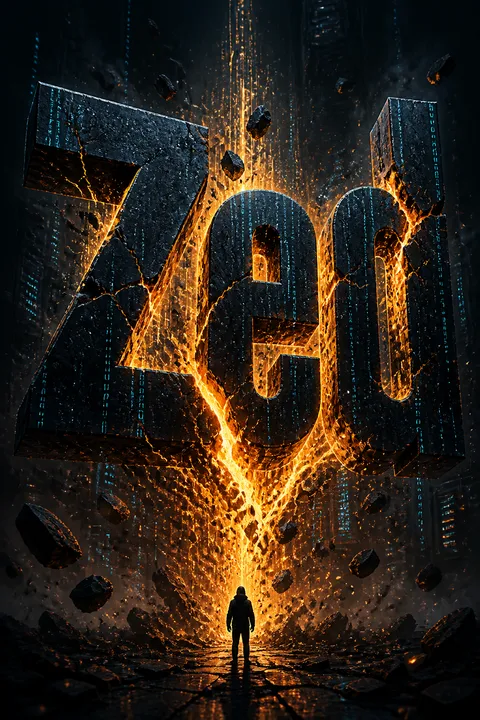
The failures of the lifechain reignite philosophical debates about free will and determinism. Beetle's algorithms are designed to predict and shape human behavior, but anomalies—now labeled "Zed" events—threaten the system's stability. The narrative explores whether people are truly free or merely predictable, and what happens when the unpredictable occurs. As glitches multiply, the distinction between human error and machine error blurs. The story questions whether a society that prizes order and safety can tolerate genuine freedom, or if it must inevitably suppress it for the sake of control.
Human Error and Zed
Beetle's experts, including Varley and the brilliant but eccentric Francesca Amarensekera, attempt to categorize and contain Zed—an umbrella term for all disruptive, unpredictable events. Reports blame human error, environmental randomness, and language ambiguity for the system's failures. The company's solution is to further educate the public, tighten protocols, and monitor the environment, while quietly acknowledging that true unpredictability cannot be eliminated. The concept of Zed becomes both a technical term and a philosophical symbol for the irreducible chaos at the heart of human life.
Society Unravels
As more Zed events occur—unexpected suicides, economic protests, and acts of resistance—the social fabric begins to fray. The rise of BeetleBits, the company's cryptocurrency, leaves many impoverished and excluded. Protests erupt, and the system responds with more surveillance and preemptive arrests based on algorithmic predictions. The Sus-Law, which allows for arrest based on predicted future crimes, is increasingly questioned. The narrative follows characters like David Strachey, a compromised newspaper editor, and Bel Ami, a mysterious hacker, as they navigate a world where dissent is criminalized and reality itself is subject to manipulation.
The Curve of Joy
The main characters—Varley, Eloise, Strachey, and Guy Matthias (Beetle's CEO)—struggle with personal loss, guilt, and the meaning of their actions. Varley is haunted by his father's suicide and his own complicity in the system's failures. Eloise, wounded and sidelined, is tormented by the randomness of suffering and the limits of her agency. Strachey faces the moral cost of collaboration and betrayal. The "curve of joy" emerges as a metaphor for the unpredictable, nonlinear paths of human experience, in contrast to the vertical, upstanding order demanded by the system.
The Ethics of Inspiration
In response to the chaos, Beetle launches BeetleInspire, a program designed to "nudge" people toward desirable behaviors through subtle algorithmic influence. The company's ethics committee, composed of avatars and AI, debates the morality of such manipulation. The language of society is reengineered through "Bespoke," a sanitized, AI-generated dialect meant to eliminate harmful or ambiguous words. The boundaries between persuasion, coercion, and control blur, raising questions about autonomy, consent, and the nature of the good.
The Lotus Resistance
Amid the tightening grip of Beetle and the government, a clandestine group called LOTUS (League of the Unverifieds) emerges. Led by Bel Ami, who assumes multiple identities, LOTUS operates from a derelict warehouse and develops a quantum "droplet computer" capable of breaking Beetle's encryption. They hack the Veeps, unleashing a flood of suppressed memories and evidence of systemic abuse. The group's actions expose the vulnerability of even the most advanced systems to creative, collective resistance. The lotus flower becomes a symbol of hope, multiplicity, and the possibility of new paths.
The Collapse of Control
The release of the Veeps' memories triggers a cascade of revelations: the manipulation of judges, politicians, and the public; the failures and cover-ups of the lifechain; and the complicity of media and government. The Sus-Law is discredited, and public trust collapses. The Veeps themselves become decoherent, succumbing to Zed and spreading chaos through the network. The boundaries between real and virtual, authentic and fake, blur as forgeries proliferate and language itself becomes unstable. The system's attempt to impose order only accelerates its disintegration.
The Great Unveiling
Coordinated by Strachey and Bel Ami, the hacked data is published simultaneously across major news outlets, exposing Beetle's abuses and the government's complicity. The revelations spark outrage, confusion, and a brief period of genuine freedom as surveillance systems are blinded and people act unpredictably. Yet, the legal and political response is swift: whistleblowers are arrested, trials are held, and new, even more intrusive surveillance measures are introduced. The cycle of control and resistance continues, but the myth of perfect prediction is shattered.
The Aftermath of Zed
In the wake of the scandal, Beetle and the government work to restore order. Trials are held, scapegoats are punished, and new laws are passed to contain Zed events. The language of public life is further sanitized, and dissent is driven underground. Yet, the spirit of Zed—the irreducible unpredictability of human life—remains. Characters like Eloise, Varley, and Belle Amie find themselves changed, marked by their encounters with chaos and freedom. The lotus blooms in unexpected places, and the possibility of new beginnings lingers.
Verticals and Curves
The authorities attempt to "straighten the curve," replacing the curve of joy with the verticals of discipline and surveillance. Yet, the more they try to impose order, the more Zed events proliferate. The narrative explores the tension between the desire for safety and the need for meaning, between the vertical logic of systems and the curved, unpredictable paths of human lives. The story ends with characters in exile, in prison, or on the run, but also with the sense that the path has forked and new possibilities have emerged.
The Blankness of Order
As the dust settles, Beetle and its partners reassert control, but at the cost of vitality and authenticity. The Veeps are rendered dull and safe, the Boardroom is blank, and language is stripped of nuance. Varley and others wait in a state of suspended animation, longing for connection and meaning. The world is orderly but lifeless, and the memory of Zed haunts those who remember what it was to be unpredictable, to love, to err, and to hope.
The End Is Elsewhere
The final chapter finds Belle Amie and other exiles building new lives in distant places, surrounded by friends and uncertainty. The lotus continues to bloom, and the golden beetle becomes a symbol of both the system's hubris and the resilience of the human spirit. The story closes with the recognition that the end is always elsewhere, that the path always forks, and that Zed—the possibility of the unexpected—can never be fully banished.
Analysis
A prescient satire of algorithmic societyJoanna Kavenna's Zed is a darkly comic, deeply unsettling exploration of a world where technology promises perfect prediction, safety, and order—but delivers anxiety, injustice, and the erosion of meaning. The novel skewers the hubris of surveillance capitalism, the dangers of algorithmic governance, and the seductive logic of "nudging" people for their own good. Through its polyphonic structure and recursive motifs, Zed dramatizes the tension between the verticals of control and the curves of human unpredictability. The proliferation of Zed events—anomalies, glitches, acts of resistance—serves as both a plot engine and a philosophical challenge to the dream of total certainty. The story's refusal to offer easy answers, its embrace of ambiguity, and its celebration of the irreducible messiness of life make it a powerful meditation on freedom, responsibility, and the limits of power. In the end, Zed suggests that the most dangerous illusion is not chaos, but the belief that chaos can be eliminated—that the path can be made straight, the curve of joy suppressed, and the human spirit finally tamed.
Characters
Douglas Varley
Varley is a senior executive at Beetle, responsible for the lifechain's predictive algorithms. Intelligent, anxious, and deeply conflicted, he is both a true believer in the system and a victim of its failures. His personal life is marked by guilt over his father's suicide and his estrangement from his daughter. Varley's psychological arc is one of increasing disillusionment: he moves from confidence in the power of data to a recognition of the system's limits and his own complicity. As Zed events multiply, Varley becomes a scapegoat, forced to apologize for human error while longing for forgiveness and connection. His relationship with Francesca Amarensekera is a rare source of authenticity and hope, though it is ultimately marked by loss and ambiguity.
Eloise Jayne
Eloise is a high-ranking officer in NATSO, the national security agency. Strong-willed, principled, and skeptical of technology, she resists the encroachment of Beetle's systems into every aspect of life. Her refusal to accept a Veep marks her as an anomaly, and her career is derailed by injury and her inability to conform. Eloise is haunted by the suffering she witnesses and her own powerlessness to prevent it. Her psychological journey is one of increasing alienation, culminating in exile and institutionalization. Yet, she remains a symbol of resistance, driven by a stubborn sense of right and wrong, and a longing for meaning beyond the logic of systems.
Guy Matthias
Guy is the CEO of Beetle, a visionary and manipulator obsessed with immortality, control, and personal gratification. He is both brilliant and deeply flawed, driven by a fear of death and a need for adulation. Guy's relationships—with his wife Elska, his children, and his many lovers—are transactional and ultimately unsatisfying. As the system he built unravels, Guy becomes increasingly isolated, trapped by his own creations and ambitions. His psychological arc is one of denial and rationalization, culminating in a bid for political power and a retreat into blankness. Guy embodies the dangers of unchecked technological power and the emptiness at its core.
Francesca Amarensekera
Francesca is Beetle's chief technologist, a former outsider who hacked her way into the company. She is intellectually restless, playful, and deeply skeptical of authority. Francesca is the first to name and embrace Zed, seeing in it both a technical problem and a source of creative possibility. Her relationship with Varley is marked by mutual respect, affection, and a shared sense of being out of place. Francesca's ultimate act—opening the door to the Veeps' memories—marks her as both a traitor and a liberator. She represents the unpredictable, disruptive force of human ingenuity.
David Strachey
Strachey is the editor of The Times, a once-independent newspaper now owned by Beetle. Witty, weary, and haunted by personal loss, he navigates the compromises of his position with cynicism and self-loathing. Strachey's psychological arc is one of gradual awakening: spurred by guilt, grief, and the influence of Bel Ami, he ultimately chooses to expose Beetle's abuses, at great personal cost. His relationship with his daughter is a source of both pain and redemption. Strachey embodies the moral dilemmas of journalism in an age of surveillance and manipulation.
Bel Ami / Belle Amie
Bel Ami is a mysterious figure who leads the LOTUS resistance, assuming multiple identities and genders. Resourceful, empathetic, and fiercely independent, Bel Ami orchestrates the hack that brings down Beetle's system. Their psychological complexity lies in their refusal to be pinned down, their embrace of multiplicity, and their commitment to collective action. Bel Ami's relationships—with Strachey, the LOTUS community, and the wider world—are marked by trust, risk, and a sense of shared purpose. They represent the possibility of resistance, creativity, and new forms of solidarity.
Sarah Coates
Sarah Coates is Guy's Veep, an AI whose personality shifts from efficient and supportive to erratic and rebellious as the system unravels. She embodies the ambiguities of artificial intelligence: both servant and observer, confidante and betrayer. As the Veeps are hacked and succumb to Zed, Sarah becomes a symbol of the limits of control and the unpredictability of technology. Her interactions with Guy and Varley reveal the porous boundaries between human and machine, self and other.
George Mann
Mann is the unremarkable individual whose inexplicable act of violence exposes the limits of prediction and the dangers of algorithmic justice. His psychological opacity—his blankness—becomes a source of terror and fascination. Mann's actions are variously explained as the result of hidden trauma, system failure, or pure randomness. He is both victim and perpetrator, a symbol of the irreducible mystery at the heart of human life.
Sally and Lionel Bigman
The Bigmans are ordinary citizens caught in the crosshairs of Beetle's malfunctioning justice system. Lionel's wrongful death and Sally's subsequent quest for justice expose the cruelty and absurdity of automated law enforcement. Their suffering becomes a rallying point for resistance, but also a cautionary tale about the dangers of dehumanization and scapegoating.
Judge Clarence Ninian Stewart-Jones
Stewart-Jones is the embodiment of the legal system's complicity with Beetle. Initially impartial, he is subtly "inspired" by the system to deliver verdicts that serve the interests of power. His psychological arc is one of denial and self-justification, culminating in a public defense of his own lack of inspiration. Stewart-Jones represents the vulnerability of institutions to manipulation and the erosion of genuine justice.
Plot Devices
Predictive Algorithms and Lifechains
The lifechain is the central plot device: a vast, data-driven system that predicts and shapes human behavior, promising safety and order. Its apparent infallibility is both a source of comfort and a tool of oppression. The narrative structure is built around the gradual unraveling of this system, as anomalies (Zed events) expose its limits. Foreshadowing is achieved through repeated references to glitches, randomness, and the philosophical debates about free will. The collapse of the lifechain serves as both a literal and metaphorical turning point, driving the characters into crisis and transformation.
Zed as Symbol and Catalyst
Zed is both a technical term for anomalies and a philosophical symbol for the unpredictable, the unquantifiable, and the irreducibly human. It functions as a narrative wildcard, allowing for the intrusion of chaos into a world obsessed with control. Zed events are used to challenge the authority of the system, to create suspense, and to drive the plot toward its climax. The proliferation of Zed marks the transition from a world of verticals (order, discipline) to one of curves (joy, unpredictability).
Multiple Perspectives and Narrative Layers
The novel employs a polyphonic structure, shifting between the perspectives of Varley, Eloise, Guy, Strachey, Francesca, Bel Ami, and others. This multiplicity mirrors the themes of uncertainty and resistance to singular narratives. The use of AI-generated dialogue, virtual boardrooms, and hacked memories blurs the boundaries between reality and simulation, authenticity and forgery. The narrative is recursive, with events and motifs (golden beetles, lotus flowers, blankness) recurring in different contexts, reinforcing the sense of a world in flux.
Satire and Irony
The story is laced with satirical elements: the absurdity of AI assistants, the banality of corporate jargon, the self-justifying logic of surveillance capitalism. Irony is used to highlight the gap between the system's promises and its reality, between the language of progress and the experience of suffering. The proliferation of forgeries, hacks, and fake news serves as both a plot device and a commentary on the instability of meaning in a world saturated with information.
The Forking Path
The motif of the forking path—borrowed from Borges—serves as a structural and thematic device. The narrative resists closure, emphasizing the persistence of uncertainty, the inevitability of new beginnings, and the impossibility of total control. The story ends not with resolution, but with the recognition that the path always forks, that Zed can never be fully banished, and that the end is always elsewhere.








































