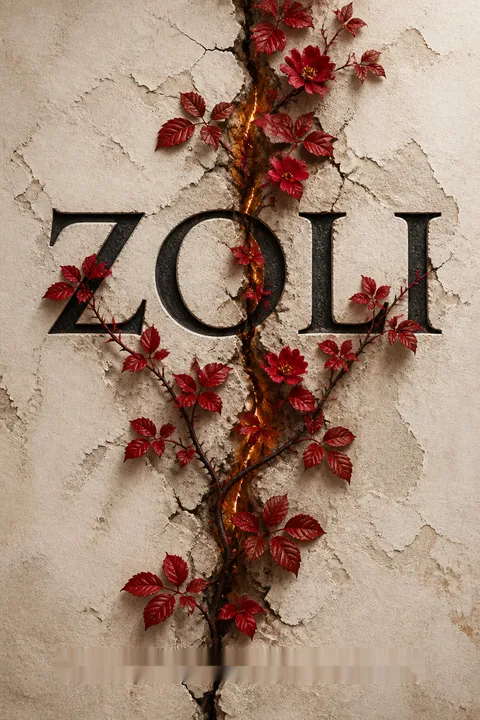

Plot Summary
Shattered Ice, Shattered Childhood
Zoli's earliest memory is of loss: her family forced onto a frozen lake by fascist guards, the ice cracking beneath them, and only she and her grandfather surviving. This trauma shapes her, instilling a sense of perpetual exile and the knowledge that safety is always fragile. The world is hostile to her people, the Roma, and childhood is a brief, bright moment before the darkness of history descends. Zoli's journey begins with this rupture, her innocence shattered, and her life forever marked by the violence that claims her family and sets her on the road with her grandfather, who becomes her sole protector and teacher.
Grandfather's Lessons in Silence
Grandfather teaches Zoli the old ways: how to read the signs of the road, how to keep secrets, and above all, how to survive by silence and cunning. He is a man of contradictions—proud of his Marxist ideals, yet wary of outsiders; a lover of books, but cautious about the written word among his people. He teaches Zoli to read and write in secret, knowing that literacy is both a gift and a danger. Their life is one of constant movement, shaped by the rhythms of nature and the ever-present threat of persecution. Through stories, songs, and small acts of rebellion, Grandfather instills in Zoli a sense of identity that is both fiercely Roma and quietly revolutionary.
Songs in the Shadow of War
As Zoli grows, the world darkens with the approach of war. The Roma are hunted, their music silenced, their traditions threatened by new laws and old hatreds. Zoli finds solace and strength in song, learning from the women who play harps and sing laments for the lost. Music becomes a way to remember, to mourn, and to resist. The war brings unimaginable suffering—torture, displacement, and death—but also moments of fierce community and fleeting joy. Zoli's voice, shaped by sorrow and hope, begins to emerge as something unique: a bridge between the oral traditions of her people and the written world beyond.
The Weight of Words
Zoli's secret literacy sets her apart. When her grandfather dies, she is left with the burden of memory and the power of words. She marries Petr, a violinist, and continues to write and sing, her poems capturing the pain and resilience of her people. The Communist regime, eager for symbols of progress, discovers her talent and elevates her as a poet of the proletariat. But the written word, once a private solace, becomes a public weapon—her songs are appropriated, her image used to justify policies that will ultimately destroy her way of life. Zoli learns that to speak is to risk everything, and that words can both save and betray.
Becoming the Voice
Zoli's poetry brings her fame and a measure of security, but also isolates her from her own people. She becomes a symbol—the literate Gypsy, the voice of the voiceless—celebrated by intellectuals and bureaucrats, but increasingly mistrusted by the Roma elders. Her relationship with Stephen Swann, an English translator, deepens her sense of being between worlds. Swann is captivated by her, but cannot fully understand the cost of her visibility. Zoli's songs, once fluid and changing, are fixed in print and broadcast on the radio, making her both powerful and vulnerable. She stands at the center of a storm she cannot control.
Love and Betrayal
Zoli's love affair with Swann is passionate but doomed. Their connection is real, but the gulf between their worlds is unbridgeable. Swann, for all his empathy, is still an outsider, and his desire to "save" Zoli is both touching and naive. When Zoli's poems are published without her full consent, and her relationship with Swann becomes known, she is accused of betraying her people. The elders judge her harshly, blaming her for the suffering brought by assimilation policies and the loss of tradition. Love, which promised escape, instead brings exile. Zoli is cast out, marime—unclean, untouchable.
The Price of Speaking
Banished from her community, Zoli wanders the roads of Eastern Europe, stripped of family, home, and identity. Her songs are now forbidden, her name erased from memory. She survives by her wits, enduring hunger, violence, and the indifference of strangers. The world she once knew is gone—her people resettled in concrete towers, their wagons burned, their music silenced. Zoli's exile is both literal and spiritual: she is a ghost, haunting the margins of a society that has no place for her. Yet even in isolation, she clings to the fragments of her past, the memory of song, and the hope that words might still matter.
Exile and Judgment
Zoli's journey takes her across borders—Slovakia, Hungary, Austria, Italy—each crossing a test of endurance and will. She is hunted, assaulted, and betrayed, but also encounters moments of unexpected kindness. In Austria, she is detained in a refugee camp, forced to invent a new identity. In Italy, she finds a measure of peace with Enrico, a smuggler who becomes her husband. The years pass, and Zoli learns to live with her pollution, her outsider status. She raises a daughter, Francesca, and builds a quiet life in the mountains, far from the noise of history. Exile becomes a kind of home, and survival itself a form of resistance.
Walking the Borders
Zoli's life is defined by movement—across landscapes, languages, and identities. She is always on the threshold, never fully at rest. The borders she crosses are both physical and psychological: the line between memory and forgetting, between speech and silence, between self and other. Her story is one of perpetual negotiation, of adapting and enduring in a world that demands assimilation but punishes difference. The act of walking—of putting one foot in front of the other—becomes a metaphor for her resilience and her refusal to disappear.
The Valley of Silence
In the quiet of the Italian mountains, Zoli finally finds a measure of peace. She is no longer a poet, a symbol, or a traitor—just a woman, a mother, a survivor. The past lingers, but no longer dominates. She tends to her home, remembers her lost ones, and watches her daughter grow into a new world. The silence of the valley is both a balm and a reminder of all that has been lost. Zoli's story, once so public, becomes private again—a secret she shares only with those she loves. The wheel has turned, and she is content to let others carry the burden of memory.
The Wheel Burns
The Communist regime's campaign to "modernize" the Roma culminates in the burning of the wagon wheels—the literal and symbolic end of nomadism. The Roma are forced into settlements, their culture fragmented, their autonomy destroyed. Zoli witnesses the devastation from afar, powerless to intervene. Her poems, once a source of pride, are now used to justify the very policies that erase her people's history. The wheel, once a symbol of freedom and movement, becomes a relic, its ashes scattered on the wind. Zoli mourns, but also understands that survival requires adaptation, and that memory is both a blessing and a curse.
Paris, Daughter, Memory
Years later, Zoli travels to Paris to visit her daughter, Francesca, now a social worker and advocate for Roma rights. The city is a mosaic of cultures, a place where the past and present collide. Zoli is both proud and bewildered by her daughter's world—so different from her own, yet shaped by the same struggles. At a conference on Romani memory, Zoli is confronted by her own legacy, her poems rediscovered and celebrated by a new generation. The encounter is bittersweet: recognition comes too late, and the wounds of exile still ache. Yet in her daughter's embrace, Zoli finds a measure of healing.
The Return of Swann
At the Paris conference, Zoli is reunited with Stephen Swann, now an aging, broken man. Their meeting is awkward, filled with unspoken regrets and unresolved longing. Swann confesses his sorrow, his sense of failure, and his enduring love for Zoli. She listens, but cannot offer the absolution he seeks. Their lives have diverged too far, and the past cannot be undone. Yet in this encounter, there is a recognition of shared pain and the possibility of forgiveness. The wheel of history turns, and what was once unbearable becomes, if not bearable, at least comprehensible.
The Conference of Ghosts
The Paris conference is a gathering of survivors, scholars, and activists—all seeking to make sense of the Romani past and imagine a different future. Zoli is both honored and haunted by the attention: her poems, once burned in shame, are now celebrated as cultural treasures. She is asked to speak, to become again the voice of her people, but hesitates—knowing the cost of such visibility. The ghosts of the past crowd the room: lost friends, vanished worlds, the weight of history pressing down. In the end, Zoli chooses silence, letting her daughter and others carry the story forward.
The Last Song Begins
In the final moments, Zoli sits with her daughter, surrounded by music and laughter. The world has changed, but the old struggles remain. Yet there is hope: Francesca and her peers are building something new, drawing on the memory of the past but not bound by it. Zoli, once the voice of her people, is now content to listen, to witness, and to bless. The last song is not an ending, but a beginning—a promise that the story will continue, in new forms, with new voices, as long as there are those willing to remember and to sing.
Analysis
Zoli is a novel about the costs and possibilities of voice—personal, cultural, and political. Through the life of its protagonist, Colum McCann explores the tension between tradition and modernity, the dangers of visibility, and the enduring need for memory and song. The story is rooted in the specific history of the Roma in Eastern Europe, but its themes are universal: exile, survival, the search for home, and the burden of representation. Zoli's journey—from orphaned child to celebrated poet to exiled outcast and finally to quiet survivor—mirrors the fate of her people, caught between worlds and always on the move. The novel interrogates the power of art: words can liberate, but also betray; songs can preserve, but also fossilize. In the end, Zoli's refusal to speak at the Paris conference is an act of agency, a recognition that survival sometimes requires silence as much as speech. The novel's lesson is both sobering and hopeful: history wounds, but does not wholly destroy; memory endures, but must be carried forward by new voices. Zoli's story is unfinished, as all stories are, but in its telling, it offers a vision of resilience, dignity, and the quiet heroism of those who endure.
Review Summary
Zoli receives generally positive reviews, averaging 3.7/5 stars. Readers praise McCann's lush, poetic prose and rich portrayal of Romani culture in mid-20th century Czechoslovakia. The novel, loosely based on real-life Romani poet Papusza, follows a gifted woman navigating fascism, communism, and cultural exile. Many admire its exploration of identity, language, and persecution. Common criticisms include pacing issues, a slow middle section, and occasional narrative confusion from shifting perspectives. Most recommend it as an illuminating, beautifully written window into an often-overlooked culture and history.
People Also Read




Characters
Zoli Novotna
Zoli is the heart of the novel—a Roma woman whose life is shaped by trauma, resilience, and the tension between tradition and change. Orphaned by violence, raised by a fiercely independent grandfather, she becomes both a keeper and a breaker of her people's laws. Her literacy, rare among the Roma, is both a gift and a curse, enabling her to give voice to her people's suffering but also marking her as an outsider. Zoli's journey is one of perpetual negotiation: between silence and speech, belonging and exile, love and betrayal. Her relationships—with her grandfather, her husband Petr, her lover Swann, and her daughter Francesca—reveal her complexity: proud yet vulnerable, stubborn yet compassionate. Over time, Zoli evolves from a symbol to a human being, finding peace not in recognition, but in the quiet endurance of survival.
Grandfather (Stanislaus)
Stanislaus is Zoli's protector and mentor, a man shaped by hardship and idealism. He embodies the contradictions of Roma life: fiercely proud of his heritage, yet open to new ideas; a believer in revolution, yet wary of outsiders. He teaches Zoli to read and write, knowing the dangers, and instills in her a sense of dignity and cunning. His death marks the end of Zoli's childhood and the beginning of her exile. Psychologically, he represents the weight of memory and the necessity of adaptation—a figure both comforting and demanding, whose lessons echo throughout Zoli's life.
Stephen Swann
Swann is an English translator and intellectual, drawn to Zoli by her talent and her difference. He is both empathetic and naive, seeking to bridge the gap between cultures but ultimately unable to understand the full cost of Zoli's visibility. His love for Zoli is genuine, but also tinged with a desire to possess and "save" her. Swann's greatest act—publishing Zoli's poems—becomes his greatest betrayal, leading to her exile. Over time, he is haunted by guilt and longing, his own sense of displacement mirroring Zoli's. In the end, he is a figure of regret, seeking forgiveness that can never fully be granted.
Petr
Petr is Zoli's first husband, a violinist chosen for her by her grandfather. Their marriage is one of necessity rather than passion, but there is genuine affection and respect. Petr represents the old world—rooted in tradition, wary of change, yet capable of tenderness. His illness and death mark a turning point for Zoli, freeing her to pursue her own path but also deepening her sense of loss. Psychologically, Petr is a figure of comfort and constraint, embodying both the security and the limitations of communal life.
Conka
Conka is Zoli's childhood friend and later her judge. Their relationship is marked by intimacy and rivalry, shared songs and shared suffering. Conka's loyalty is tested by Zoli's choices, and in the end, she participates in Zoli's banishment. Yet there is also compassion: Conka does not spit on Zoli during her exile, a small act of mercy that lingers in Zoli's memory. Conka represents the pull of community, the pain of betrayal, and the possibility of forgiveness.
Vashengo
Vashengo is a leader among the Roma, responsible for upholding tradition and passing judgment. He is both stern and compassionate, torn between loyalty to his people and affection for Zoli. His role in her banishment is fraught with ambivalence—he delivers the sentence, but his slap is gentle, and his actions are marked by sorrow. Vashengo embodies the tension between justice and mercy, the difficulty of leadership in a world of shifting boundaries.
Francesca
Francesca is Zoli's daughter, raised in Italy and later working as a social advocate in Paris. She represents the new generation: educated, cosmopolitan, committed to justice but not bound by the old taboos. Her relationship with Zoli is loving but complicated, shaped by the weight of history and the desire for autonomy. Francesca's work with Roma communities and her efforts to honor her mother's legacy suggest the possibility of renewal and reconciliation. She is both a continuation and a transformation of Zoli's story.
Enrico
Enrico is an Italian smuggler who becomes Zoli's partner in exile. He offers her a home, stability, and acceptance without judgment. Their relationship is marked by mutual respect and a shared understanding of what it means to be an outsider. Enrico's presence allows Zoli to find peace and to build a new life, free from the burdens of fame and shame. He is a figure of quiet resilience, embodying the possibility of happiness after suffering.
Martin Stränsky
Stränsky is a Slovak poet and editor who champions Zoli's work and believes in the power of literature to change society. He is both a mentor and a cautionary figure—his idealism is ultimately crushed by the realities of Communist repression. Stränsky's fate—a victim of purges and betrayals—serves as a warning about the dangers of power and the limits of art. His relationship with Zoli is complex: he admires her, shapes her work, but also uses her for his own purposes.
The Journalist
The unnamed journalist who frames the novel represents the contemporary gaze—curious, sympathetic, but ultimately limited in understanding. His encounters with the Roma settlements reveal both the persistence of prejudice and the resilience of culture. He is a seeker, searching for Zoli and for meaning, but always at a remove. Psychologically, he embodies the tension between empathy and voyeurism, the desire to witness and the inability to fully belong.
Plot Devices
Framing Narrative and Shifting Perspectives
The novel employs a complex narrative structure, alternating between first-person accounts (Zoli, Swann) and third-person observations (the journalist, Francesca). This multiplicity of voices creates a tapestry of memory, allowing the reader to see events from different angles and to question the reliability of any single perspective. The use of a framing narrative—beginning and ending with the journalist's search—situates Zoli's story within a broader context of historical erasure and recovery. The shifting timelines, from prewar Slovakia to postwar Paris, underscore the persistence of trauma and the difficulty of closure.
Symbolism of the Wheel and the Song
The wheel is a central symbol—representing both the freedom of nomadism and its destruction under modernity. Its burning marks the end of an era, the forced settlement of the Roma, and the loss of autonomy. Songs and poems function as both memory and prophecy, carrying the weight of history but also offering the possibility of renewal. The act of singing—private, communal, public—becomes a metaphor for survival, adaptation, and the risks of visibility.
Foreshadowing and Recurrence
The novel is rich in foreshadowing: the early trauma of the frozen lake prefigures later exiles; the secret lessons in literacy anticipate both Zoli's rise and her fall. Recurring motifs—ice, fire, song, silence—create a sense of inevitability, as if history is always threatening to repeat itself. The return of Swann, the rediscovery of Zoli's poems, and the final gathering in Paris all suggest that the past is never fully past, and that the work of memory is ongoing.
The Trial and Banishment
The ritual of judgment—Zoli's trial and banishment—serves as a dramatic climax, crystallizing the tensions between individual and community, tradition and change. The process is both intimate and brutal, marked by ritual gestures and deep emotion. It exposes the costs of speaking out, the dangers of being different, and the difficulty of forgiveness. The trial is not just a plot device, but a meditation on the nature of belonging and the price of dissent.
Download PDF
Download EPUB
.epub digital book format is ideal for reading ebooks on phones, tablets, and e-readers.








































