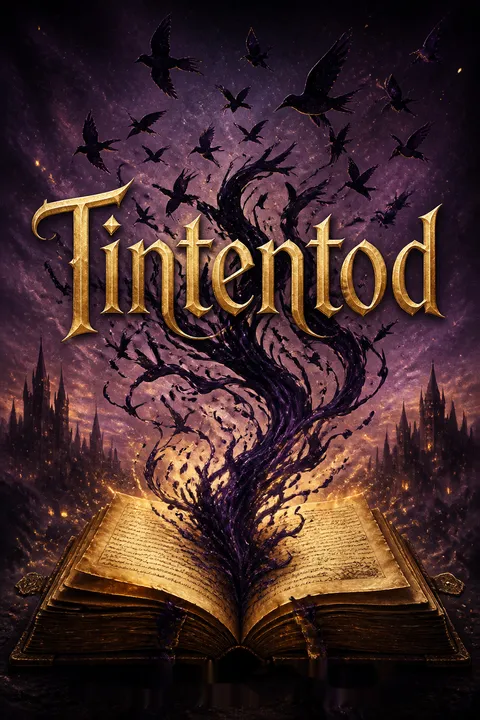

Handlungszusammenfassung
Loss and Longing
The story begins with Elinor, left behind in the real world, grieving the loss of Meggie, Mo, and Resa, who vanished into the Inkworld months ago. Elinor's life is hollowed by their absence; books that once gave her solace now seem empty or deceitful, unable to bring back what she loves most. In her longing she grows ill and withdrawn, only Darius and the dog Orpheus left behind as silent companions. Despite her despair, she refuses to give up hope—driven by the ache for reunion and the stubborn belief that stories have not ended yet. The ache for lost loved ones and an unreachable world shapes her days and gives new urgency to the acts of remembering, reading, and believing in magic. Every lost connection, every failed attempt at escape, renders her more vulnerable and defiant.
The Bluejay's Shadow
Within the Inkworld, Mo, now known as the Bluejay, struggles with the persona that folklore has forced upon him. As the leader of a ragtag group protecting the poor and opposing the Adderhead's cruel regime, he is idolized and feared—but inside feels alienated from this legendary mask. He is haunted by his violence, the lines between Mo and the Bluejay blurring further every day. Meggie and Resa sense the toll of living in danger; Meggie tries to balance the wonders of Inkworld with the anxiety of Mo's nighttime disappearances. Even as Resa reveals she is pregnant, the shadow of violence and loss pervades their new shelter. The gravity of war, poverty, and storytelling itself weighs on every daily act, and the family bond strains under the cost of heroism and secrets.
Words That Change Worlds
Orpheus, would-be rival to Fenoglio, wields his gift to alter the world by writing riches and oddities into existence. Obsessed with his own status and jealous of Mo's legend, he manipulates Farid into menial servitude, promising to use words to bring Dustfinger back from the land of the dead. Farid is tormented by guilt, loss, and hopeless loyalty, his grief sharpened by Orpheus's contempt. As Orpheus grows richer by exploiting Fenoglio's original story, the ethical weight of manipulating fiction becomes a central motif. Orpheus's artistry is revealed not as creation, but exploitation, leaving the world increasingly distorted, filled with garish fairies and tragedy. His disregard for actual suffering—human and magical—underscores the dangers of unchecked power over narrative.
Omens in Ombra
Resa, Meggie, and Mo's fragile peace is further strained by sickness and simmering unease. Ombra, the city, is now under the shadow of the Adderhead's tyranny and the cruelty of his minions. Mo, compelled by curiosity and longing for another life, cannot resist entering Ombra to see the famous illuminator Balbulus and the treasures of the castle. Despite warnings from Meggie and others, Mo's compulsion to connect with beauty and his own past craftsman's origins drives him into greater danger. Meanwhile, Fenoglio, crippled by writer's block and regret at the chaos he unleashed, witnesses his world slipping beyond his control while Orpheus flourishes. Hard choices and misunderstandings grow; dangers for Mo and his family tighten as Ombra's rulers, Sootbird and the Piper, prowl the city.
Rivals for the Story
The struggle for control of the Inkworld intensifies as Fenoglio, the original author, is crushed by guilt over the unpredictability and violence unleashed by his words. Orpheus, meanwhile, is determined to displace Fenoglio's role—writing himself into the story's center and twisting it to suit his whims. Farid, desperate to resurrect Dustfinger, is caught in-between, manipulated for his devotion and unwanted by either "author." As plots unfold in parallel, both Fenoglio and Orpheus confront the limits and risks of narrative power: Fenoglio his impotence, Orpheus his arrogance and lies. The conflict foregrounds the story's meta-theme: Who has the right or capacity to shape destiny, and at what human cost?
Chains of Destiny
Mo's ill-fated journey to the castle exposes him to danger, as the carefully constructed legend of the Bluejay becomes both shield and snare. Violante, the Adderhead's daughter, uses his fame to lure him for a secret alliance—her own thirst for vengeance against her father overriding any compassion. The song of the Bluejay has become prophecy and curse, its narrative chains binding Mo to an impossible fate: kill the Adderhead, or be destroyed. In the dungeons and vaults of Ombra, Mo confronts violence, betrayal, and the full burden of being a symbol greater than himself. His capture sets in motion alternating wheels of violence and hope, as others band together to attempt a rescue—and the web grows tighter around them all.
Bargains with Death
Dustfinger's death for Farid, and his later return, crystallizes the story's core: the cost of cheating death and the price stories exact from their characters. Mo, forced to summon the White Women (Death's daughters), enters a trance-like state between worlds, where he bargains for Dustfinger's return. Every negotiation is double-edged: Mo and Dustfinger gain another chance, yet Death demands two lives for breaking her laws. The scene is suffused with the beauty and terror of mortality, longing, and sacrifice—marking each as forever altered. Farid's loyalty is rewarded, but at the cost of happiness; love for Dustfinger is both gift and perpetual ache. The living return changed, the balance between power and submission forever shaken.
Secret Alliances
As power imbalances shift, secret alliances form across rival camps. Violante's offer to Mo—in exchange for assistance destroying her father—exposes the fluidity of alliances where justice and power are unstable. Snapper, jealous of Mo, plans betrayal; Resa, determined to save her family, seeks help from anyone who can offer hope. Roxane's wisdom and Brianna's silent pain show how everyone, from children to warriors, suffers as shadows close in. The theme of bargaining runs through these pages—bargains with words, with Death, with one another, as the threat of the Piper's child-collecting escalates and sacrifice is required of all.
The Children's Price
The Piper's ultimatum—"the Bluejay or your children"—forces the people of Ombra, especially the women, into impossible positions. Mothers must choose between turning in a hero or condemning their own children to the mines. Hope and betrayal are kin: the myth of the Bluejay, once salvation, now threatens everyone; trust fractures. Doria and young spies risk their lives to gather information and defend children. Robbers quarrel over strategy, weighed down by the grim knowledge that sacrifice is inevitable whatever choice is made. The fate of the Inkworld's children becomes a microcosm of the costs wrought by stories and war.
Poison and Betrayal
In the robbers' camp, Mortola returns in a magpie's body, seeking revenge. The Black Prince, linchpin of hope, is poisoned—a nearly-successful assassination that exposes the camp's vulnerability to internal betrayal. Resa, resourceful as ever, identifies the poison and seeks an antidote, while Snapper's ambitions threaten everything. At the same time, Snapper and bandits seek their fortune by trying to capture Mo or the White Book for themselves, falling prey to trickery and the Adderhead's henchmen. Poison runs through every relationship: literal, narrative, emotional. The question of who to trust—and who manipulates the telling—becomes more urgent as the cost of betrayal mounts.
Fire and Reunion
Fenoglio, under Elinor's prodding, finds the words that save the Black Prince. Dustfinger's defeat of the Night-Mare, the literal incarnation of fear and guilt, inspires both awe and fear among friends and enemies. Roxane's singing comforts the lost, while the rescued children and Doria's recovery offer a moment of peace. However, even in victory, wounds, griefs, and longing remain. Dustfinger's and Brianna's tentative reconciliation, the ongoing tension between Farid and Meggie, and the shifting allegiances of the robbers reflect the story's relentless insistence: every gain comes with new burdens.
Imprisonment and Escape
At the Castle in the Lake, Violante's plan falters when the Piper and Orpheus, via treachery and violence, seize control. Mo is subjected to psychological torment, forced to bind a new White Book while Orpheus's rewritten words gnaw at his mind. Brianna is held hostage to force Dustfinger's hand; Resa shape-shifts into a swift to engineer rescue. Old friendships and enmities are tested, and Dustfinger risks all to save his daughter—while Mo's ingenuity and refusal to let stories dictate his final act become the axis of the climax. The siege of the castle, the burning walls, and the return of the White Women place all hope and future on the thinnest of threads.
The Unraveling Castle
As Mo and Resa reunite during the storm of revenge and betrayal at the castle, the Adderhead, his immortality finally undone as Mo writes the three fatal words, succumbs to Death itself. The Piper is killed in the ensuing chaos. Dustfinger, rekindled to heroism, and Resa, scarred by her bird-form, help Mo break free. Jacopo's unlikely agency, swapping the White Book and bringing about his grandfather's end, hints at redemption even among the cruellest. Villains scatter; the castle, painted with stories, becomes a tomb for past cruelty. Victory feels hollow, every happiness bartered for pain, but the chains are at last broken.
Orpheus Ascendant
Orpheus, sensing his time is up, attempts last-minute manipulations with rewritten songs and dangerous magic, but fails to overcome the will of the story itself. As his allies perish or flee and his Night-Mare is defeated by Dustfinger's true-named fire, he is forced to abscond north into unwritten country, a desolate exile tormented by his own failures. Despite his gifts, Orpheus's downfall embodies the dangers of art practiced without heart, the vanity of those who treat words as mere weapons. No "happily ever after" rewards his cleverness, only loneliness and futility.
A Labyrinth of Plots
As order slowly returns, Ombra is reclaimed under Violante's reign—though she remains a complex figure, shaped by pain, ambition, and private grief. The children return. The Black Prince lives. Mo and Resa, longing for home but forever changed by the Inkworld, find new joy in their growing family. Elinor adapts to the fantastic; Fenoglio and Darius each find purpose. Meggie, now self-possessed, must choose between Farid and Doria, settling ambiguously at the threshold of adulthood. Every character is left with scars and gifts unique to this world. The threat of war remains, but the community rebuilds, mourning what cannot be undone.
The Night-Mare's Name
At the climax, Dustfinger defeats Orpheus's Night-Mare by giving it its true name—Basta—the villain from the story's beginning, now resurrected as the spirit of all consuming fear. Only through confronting the deepest scars and calling them out can healing begin; Dustfinger and Brianna are reunited, and the Night-Mare's end foreshadows the death of narrative evil. Naming the threat allows the story to move forward—a meta-commentary on the necessity of facing and speaking the worst parts of ourselves before hope can flourish.
Words That Liberate
With the death of the Adderhead, Mo's family, Dustfinger's circle, and their found community are finally able to build a new peace. The Inkworld is reshaped not by force, but by the compassionate, creative, and even sometimes reckless impulses of the storytellers. Fenoglio, rejuvenated by Elinor's faith, writes healing and possibility back into the world. The family's new child, born into this place of wonder, connects worlds and promises new adventures. The enduring magic of reading, storytelling, and love echoes through every homecoming, every recovery, and every song by the fire.
White Night, Red Ink
In the aftermath, the narrative closes not with the restoration of what was lost, but with enduring transformation: the survivors are marked, changed, unexpectedly rebuilt by both joy and sorrow. Mo, Resa, Meggie, and others find meaning in a "white night"—a world where the darkness has passed, yet not everything can be made right. Their adventures—their story—becomes legend, sung by players and written into fresh books. Elinor plans, someday, to return with the next generation to the old world; Fenoglio, ever forgetful, remains a vital force. Inkworld settles—for now—into a hopeful but uncertain dawn, a place where doors between stories are never entirely closed.
Analysis
Inkdeath is a profound meditation on power and responsibility in art, the porous border between fiction and reality, and the cost and necessity of stories in forming identity, hope, and trauma. Cornelia Funke's concluding volume is, at heart, a story about storytelling: the ways narrative can imprison as much as liberate; how creativity, used thoughtlessly, can become violence; and how only by confronting the darkness within ourselves and our communities—by naming it, and accepting loss—can we achieve healing or transformation. The narrative's metafictional structure, with adventures that rewrite themselves and characters conscious of their roles, bears witness to the anxieties and gifts of both reader and writer. Every triumph is shadowed by grief, each birth by a death or a threat, and no act of heroism comes without personal cost. Yet the novel closes on ambiguous hope: the power of words persists, new stories will always arise, and the future is promised—but never guaranteed. By leaving the doors between worlds slightly ajar, Funke invites us to remain vigilant, compassionate, and, above all, active participants in the making (and remaking) of meaning.
Rezensionsübersicht
Reviews for Tintentod are mixed, averaging 3.98/5. Many praise it as a satisfying, epic conclusion with strong character development, compelling plot twists, and rich world-building. Fans particularly celebrate Mo's transformation into the Bluejay and Dustfinger's return. Critics note the book's excessive length, slow pacing, and Meggie's reduced role. Some feel the ending is rushed or overly happy, while others found certain plot devices cheap. Multilingual reviewers across German, English, Spanish, Polish, and other languages generally agree it surpasses the second installment but divides opinion on whether it matches the first.
Andere lasen auch
Characters
Mo (Mortimer "Silvertongue" Folchart)
Mo is the bookbinder-turned-outlaw whose voice can bring words to life. Initially striving only for his family's safety, he is inexorably drawn into the legend of the Bluejay—a folkloric Robin Hood whose deeds, written by Fenoglio, become indistinguishable from Mo's real actions. This double life stains him: every victory is shadowed by violence and growing detachment from his original self. Mo's love for Resa, Meggie, and his unborn child motivates his riskiest acts, from bargains with Death to the ultimate sacrifice of himself in exchange for Dustfinger's return. Psychologically, Mo is the story's epicenter: passive yet driven by craft, lost in the dance between duty, love, and myth. His triumph is not in defeating villains, but instead in humbling himself to the power of stories and embracing the responsibility—sometimes burdensome, sometimes miraculous—of choosing his own ending.
Meggie Folchart
Meggie's journey parallels Mo's, but her arc is one of adolescence—of learning the cost and the wonder of changing the world with words. She is compassionate, sharp-witted, and torn between loves (Farid, then Doria), but her greatest struggle is realizing she both belongs to the story and can change it. Meggie's reading, more than any sword or spell, becomes a means of hope and restoration even as she mourns, rebels, and forgives. Her psycho-emotional growth is seen in her eventual choice to remain with her parents and embrace the Inkworld, not out of longing for wonder, but clear-eyed acceptance of its meaning and hardship.
Resa (Theresa) Folchart
Once voiceless, Resa has her own odyssey in Inkdeath. Her role as mother and wife is deepened by her capacity for independent action—venturing into danger, using Magpie's seeds to turn into a bird, and risking sanity to save her family. She is both witness and actor, quietly the story's moral axis: she forgives, investigates, schemes, delivers antidotes, and ultimately saves Mo at cost to herself. Her love is not naïve but tenacious, buffeted by both Mo's transformation and the Inkworld's demands on her identity. Through her trauma, resilience, and tenderness, Resa reflects the story's vision of womanly power and steadfastness.
Dustfinger
Dustfinger is defined by loneliness and longing: scarred by displacement, compelled by guilt, filled with conflicting fatherly and romantic loves. His return from the dead is symbolic—a soul who bargains life for another, then must find a new purpose in a world both familiar and alien. He is acutely aware of his flaws, his past betrayals, and the limited time granted by Death. It is through confronting his deepest fears—the Night-Mare in Basta's guise, the risk of losing Brianna—that he achieves redemption and reconnection. Dustfinger's arc is a meditation on forgiveness, the cyclical nature of loss and return, and the possibility of healing even after death.
Farid
Farid embodies yearning and the complexity of adolescent love. His devotion to Dustfinger and need for belonging are the engines for his every dangerous choice. He struggles to carve his own place and voice amid more powerful and willful characters. Farid is equally part observer, catalyst, and sometimes tragic actor—caught between worlds, never quite at home in either. His arc, including his often-fraught love for Meggie and growing rivalry with Doria, is a quiet exploration of how love can empower, limit, or even blind us.
Orpheus
Orpheus represents the dangers and seductions of narrative power wielded without conscience. A foil for Fenoglio, he is clever, charming, and utterly without empathy: using words as weapons and weaving tragedy into the world for personal satisfaction. Orpheus's psychological makeup is defined by envy, vanity, and a hollow desire for recognition. His inability to empathize or care for others dooms his attempts at supremacy—he wins allies only by threat and trickery and ends in lonely exile, undone by his own storytelling.
Fenoglio
Once the proud inventor of the Inkworld, Fenoglio spends much of Inkdeath paralyzed by guilt and impotence. His arc is one of learning humility: accepting that stories, once released, live and change beyond a single author's control. Pushed by Elinor's tough love and the dire needs around him, Fenoglio finds his gift again—not to play God, but to heal, encourage, and question. His development is flagrant with self-doubt, pride, and anxiety, but, in the end, he serves as conscience and guide, embodying the responsibilities and failings of every creator.
Violante (Her Ugliness)
Violante emerges from the shadows of her monstrous father, the Adderhead, and manipulative mother, growing into power by embracing her own pain. Her physical "ugliness" is the mask for her deep isolation, careful ambition, and capacity for conspiracy. She is brilliant but never fully trusted, her desire for both revenge and love making her unpredictable. Her alliances are always conditional, and even her help to Mo is tinged with self-interest and unresolved longing. In exile and in triumph, she remains a figure both inspiring and frightening: a child who learned too well from her captors.
Black Prince
The Black Prince embodies a quiet heroism—strength, kindness, and pragmatism. He inspires loyalty and hope even as he nurses his own fatigue and sorrow. His survival against poison, giants, and politics is as much testament to his resilience as to the luck and faith of those who surround him. As a character, he is the story's ever-longing, unapologetically moral voice: a man who knows both the power and limits of legend.
Brianna
Brianna is shaped by resentment, loss, and the struggle to define herself outside her inheritance from Dustfinger and Roxane. She initially shuns her father, then suffers and survives betrayal, captivity, and heartbreak. Her gradual reconnection with Dustfinger and solidarity with Violante and other women underscores the story's affirmation that pain can be transformed and that reconciliation, though costly, is possible.
Plot Devices
Story within a Story / Metafictional Framing
Throughout Inkdeath, the central device is the existence and consciousness of story itself. Mo, Meggie, Orpheus, and Fenoglio all reach through the fabric of Inkworld by reading or writing words given literal, magical force. The consequences of storytelling are both a source of hope and a threat: narrative can resurrect heroes, break chains, or bring forth nightmares. The characters struggle with (and suffer for) participating in a living fiction: stories can be comforting, but also violent, unpredictable, and irrevocable. The device foregrounds themes of authorial intention, reader agency, and the sometimes-tenuous boundary between creation and control.
Doubling and Legend-Making
Mo's transformation into the Bluejay—embracing, resisting, and finally outwitting his own legend—typifies how character identity is deformed by public narrative. Songs, rumors, and stories shape actions, destinies, and self-image, often to tragic effect. The narrative doubles itself through repetition, inversion, and irony (e.g., Dustfinger's return from the dead, Meggie reenacting her parents' sacrifices). The plot exploits the danger and necessity of "living a story," and constantly questions whether people invent stories, or stories invent people.
Foreshadowing and Prophecy
Future dangers are frequently broadcast in songs, ballads, and the books' own self-referential clues. The Piper's threats, Orpheus's rewritten texts, Fenoglio's writer's block—all foreshadow coming violence and reversal. Likewise, bargains with Death, recurring symbols (the White Women, the White Book), and the ongoing debate of pen versus sword continually warn both the characters and reader that all victories are tenuous and may carry a price.
Convergence of Real and Magical Worlds
The ability to cross worlds—by reading, writing, or believing—challenges not only spatial and narrative boundaries, but emotional ones. Real losses and loves acquire mythic weight, and magical events (shape-shifting, the raising and banishing of the dead, creative acts) are experienced as personal traumas or triumphs. This device explores the solace and risk in escape, nostalgia, and creative desire, with the final chapters implying that the "story" is never really over—even in peace, the dream of returning (or rewriting) remains alive.
Tintenwelt Series Buchreihe
PDF herunterladen
EPUB herunterladen
.epub digital book format is ideal for reading ebooks on phones, tablets, and e-readers.








































