
Ideas clave
1. El conflicto es una parte natural de la vida, ni bueno ni malo
El conflicto simplemente existe.
El conflicto es inevitable. Impulsa el progreso, desde el nivel celular hasta las interacciones sociales. Sin conflicto, no habría música, avances tecnológicos ni crecimiento personal. La clave no está en evitar el conflicto, sino en comprenderlo y responder adecuadamente.
La percepción del conflicto importa. Muchas personas ven todos los conflictos como igualmente amenazantes o malinterpretan las situaciones, lo que genera estrés innecesario y respuestas ineficaces. Al reconocer que los conflictos varían en importancia y naturaleza, podemos abordarlos con mayor racionalidad.
Resolver conflictos de manera saludable es esencial. En lugar de ver los conflictos como situaciones de ganar o perder, debemos buscar soluciones que restauren la armonía y beneficien a todas las partes involucradas. Este cambio de perspectiva permite interacciones más productivas y menos estresantes en todos los ámbitos de la vida.
2. Reconoce y replantea los conflictos para evitar la mentalidad de ganar-perder
No hay nada de malo en ganar, siempre que lo que ganes sea una competencia.
No todo es una competencia. Muchos aspectos de la vida, como las relaciones, el crecimiento personal y las actividades creativas, no son juegos de suma cero. Tratar estos ámbitos como si lo fueran genera estrés innecesario y daña las relaciones.
Replantea los conflictos como oportunidades. En lugar de enfocarte en "ganar", considera cómo lograr el mejor resultado para todas las partes involucradas. Este enfoque suele conducir a soluciones más satisfactorias y duraderas.
Examina los problemas subyacentes. Muchos conflictos no son lo que parecen en la superficie. Al profundizar y abordar las causas raíz, a menudo encontramos soluciones más efectivas y prevenimos futuros conflictos.
3. Domina seis opciones para responder al conflicto: Luchar, Retirarse, Negociar, No hacer nada, Engañar y Aiki
Tienes muchas opciones y las llevas contigo en todo momento. No te quedes atrapado en un solo modo excluyendo los demás.
Amplía tu repertorio para enfrentar conflictos. Cada respuesta tiene su lugar y puede ser efectiva en distintas situaciones:
- Luchar: Cuando se trata de una prioridad seria o de vida o muerte
- Retirarse: Cuando el momento o lugar no son adecuados o para ganar tiempo
- Negociar: En situaciones sin ganadores claros o para encontrar un compromiso
- No hacer nada: Para recopilar información o dejar que la situación se resuelva sola
- Engañar: Para ganar tiempo o desviar la atención
- Aiki: Para armonizar y redirigir la energía del atacante
Elige tus respuestas conscientemente. Evalúa cada situación de conflicto y selecciona la respuesta más adecuada según las circunstancias, tus objetivos y el estado mental de la otra parte.
Practica la flexibilidad. Poder cambiar entre respuestas a medida que la situación evoluciona es clave para manejar el conflicto eficazmente. Evita quedarte atrapado en un solo modo, especialmente si no está funcionando.
4. Centrarte es crucial para manejar el conflicto eficazmente
Tu centro te sostendrá firme.
Encuentra tu centro físico. Localiza tu centro de gravedad aproximadamente dos pulgadas debajo del ombligo. Practica enfocar tu atención en este punto para lograr equilibrio físico y mental.
Utiliza técnicas de centrado. Respirar profundamente, relajar los músculos y visualizar tu centro te ayudan a mantener la compostura en situaciones estresantes. La práctica regular facilita que centrarte sea más fácil y automático.
Aplica el centrado en los conflictos. Un estado centrado permite pensar con claridad, controlar mejor las emociones y responder eficazmente a los ataques. También proyecta confianza y estabilidad, lo que puede desactivar situaciones tensas antes de que escalen.
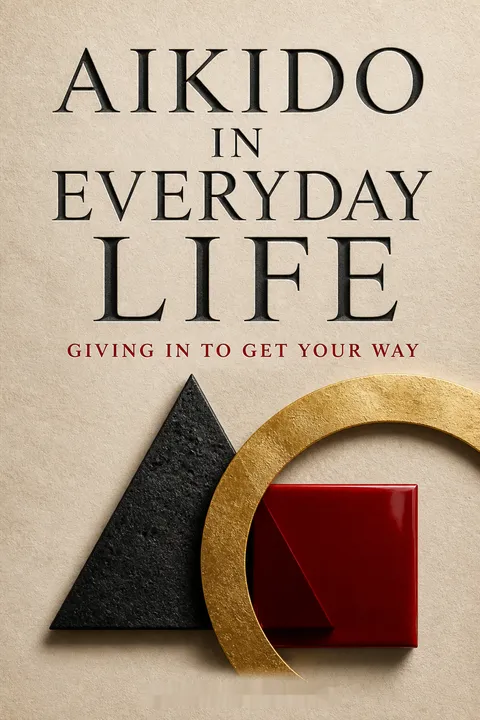
5. Usa formas geométricas para visualizar y responder a los conflictos
La geometría es una forma de observar lo que sucede en nuestros conflictos diarios. Aclara y define las dinámicas de interacción, señalando la forma que debemos adoptar y el camino a seguir para sobrevivir.
Comprende las formas:
- Triángulo: Representa energía focalizada, ataque o defensa
- Cuadrado: Representa estabilidad, arraigo y resistencia
- Círculo: Representa flexibilidad, armonía y redirección
Visualiza los conflictos geométricamente. Esta representación abstracta ayuda a eliminar el sesgo emocional y permite un análisis más objetivo de la situación.
Responde con las formas adecuadas. Elige la forma de respuesta según la forma del atacante y el resultado que deseas. Por ejemplo, enfrentar un triángulo (ataque) con un círculo (Aiki) puede redirigir la energía del atacante y conducir a una resolución armoniosa.
6. Maneja múltiples atacantes redirigiendo su energía
Los ataques múltiples y tu resolución armoniosa de ellos son lo más gratificante de todo.
Reconoce patrones comunes de ataques múltiples:
- El Sándwich: Ataques desde dos lados
- La Lucha de Fuerzas: Fuerzas opuestas que te tiran en direcciones diferentes
- Los Tengo Rodeados: Múltiples atacantes desde todos los lados
Usa a los atacantes unos contra otros. En situaciones con varios atacantes, redirige la energía de uno para interferir o neutralizar a los demás. Esto reduce la amenaza general y puede llevar a la resolución.
Mantén tu centro. Mantenerte centrado es aún más crucial cuando enfrentas múltiples atacantes. Te permite mantener la calma y tomar decisiones estratégicas en lugar de reaccionar frenéticamente.
7. Cambia tus hábitos de conflicto mediante la autoconciencia y la práctica
Si realmente no quieres cambiar, no lo harás.
Identifica tus patrones de conflicto. Reflexiona sobre tus respuestas típicas a los conflictos y su efectividad. Sé honesto sobre lo que funciona y lo que no.
Establece objetivos claros para el cambio. Define metas específicas para mejorar tus habilidades en el manejo de conflictos. Usa el método Stanislavski:
- Objetivo: Lo que quieres lograr
- Obstáculo: Lo que te impide lograrlo
- Acción: Pasos concretos para superar los obstáculos y alcanzar tu meta
Practica con constancia. Cambiar hábitos arraigados requiere tiempo y esfuerzo. Aplica regularmente nuevas técnicas de manejo de conflictos en situaciones de bajo riesgo para ganar confianza y habilidad.
Sé paciente contigo mismo. Los retrocesos son normales al aprender nuevas habilidades. Véelos como oportunidades de aprendizaje, no como fracasos, y sigue trabajando hacia tus objetivos.
También leyeron



Preguntas frecuentes
What's "Aikido in Everyday Life: Giving in to Get Your Way" about?
- Conflict Resolution Focus: The book explores how principles of Aikido, a martial art focused on harmony and non-violence, can be applied to everyday conflicts.
- Authors' Backgrounds: Written by Terry Dobson, a student of Aikido's founder, and Victor Miller, a theater games teacher, it combines martial arts and theatrical techniques.
- Practical Application: It provides strategies for managing interpersonal conflicts by using Aikido's philosophy of blending with and redirecting aggression.
- Holistic Approach: The book aims to nurture a holistic view of arts, sciences, and humanities, linking them to conflict resolution.
Why should I read "Aikido in Everyday Life"?
- Unique Perspective: It offers a unique approach to conflict resolution by integrating martial arts principles with everyday life situations.
- Practical Techniques: The book provides actionable strategies that can be applied to personal and professional conflicts.
- Personal Growth: It encourages readers to develop a deeper understanding of themselves and their interactions with others.
- Non-Violent Solutions: Emphasizes non-violent methods for resolving conflicts, promoting peace and harmony.
What are the key takeaways of "Aikido in Everyday Life"?
- Conflict is Natural: Conflict is a necessary part of life and should be understood and managed, not avoided.
- Multiple Responses: There are six basic responses to conflict: Fighting Back, Withdrawal, Parley, Doing Nothing, Deception, and Aiki.
- Centering is Crucial: Maintaining balance and centering oneself is essential for effectively managing conflicts.
- Aiki Philosophy: The Aiki approach involves harmonizing with the attacker and redirecting their energy to restore balance.
How does "Aikido in Everyday Life" define conflict?
- Neutral Concept: Conflict is neither inherently good nor bad; it simply exists as a natural part of life.
- Necessary for Growth: It is essential for growth and development, both personally and in relationships.
- Misunderstood Element: Many people misperceive conflict as something to be avoided rather than managed.
- Opportunity for Harmony: Properly managed conflict can lead to greater harmony and understanding.
What is the Aiki method in "Aikido in Everyday Life"?
- Harmonizing with Attack: Aiki involves joining with the attacker's energy and redirecting it to neutralize the conflict.
- Empathy and Understanding: It requires understanding the attacker's perspective and finding common ground.
- Non-Resistance: Instead of resisting, Aiki encourages flowing with the attack to find a peaceful resolution.
- Leading to Balance: The ultimate goal is to restore balance and harmony for both parties involved.
How does "Aikido in Everyday Life" suggest handling multiple attackers?
- Reframe the Situation: View multiple attackers as having conflicting interests that can be used to your advantage.
- Use Geometry: Visualize the attackers' positions and use strategic movement to let them neutralize each other.
- Stay Centered: Maintain your center and use circular movements to avoid being overwhelmed.
- Redirect Energy: Guide the attackers' energy against each other to create opportunities for resolution.
What are the six conflict responses in "Aikido in Everyday Life"?
- Fighting Back: Used as a last resort when all other options are exhausted and it's a matter of survival.
- Withdrawal: A strategic retreat to avoid unnecessary conflict or when the time and place are wrong.
- Parley: Engaging in dialogue to find a mutually acceptable solution, especially in no-win situations.
- Doing Nothing: A deliberate choice to wait and observe, allowing the attacker to reveal their true intentions.
- Deception: Using surprise or misdirection to buy time or deflect an attack.
- Aiki: Harmonizing with the attacker to redirect their energy and restore balance.
How does "Aikido in Everyday Life" address self-criticism?
- Internal Attacker: Recognizes that self-criticism is a form of internal attack that can be managed using the same principles.
- Self-Dialogue: Encourages engaging in a constructive dialogue with oneself to address negative self-talk.
- Centering and Balance: Emphasizes the importance of staying centered to prevent self-criticism from taking over.
- Positive Self-Perception: Aims to transform self-criticism into self-awareness and personal growth.
What are the best quotes from "Aikido in Everyday Life" and what do they mean?
- "Be the water, not the rock." This quote emphasizes the importance of flexibility and adaptability in conflict situations.
- "The best victory is the one in which everyone wins." It highlights the goal of achieving harmony and mutual benefit in conflict resolution.
- "It’s not whether you win or lose, but whether you choose to play the game." This suggests that not all conflicts are contests and that choosing how to engage is crucial.
- "The wages of harmony are peace." It underscores the ultimate reward of resolving conflicts through non-violent means.
How does "Aikido in Everyday Life" integrate theater techniques?
- Role-Playing: Uses theater games to simulate conflict situations, allowing individuals to practice new behaviors in a low-risk setting.
- Improvisation: Encourages improvisation to explore different responses and outcomes in conflict scenarios.
- Perspective-Taking: Theater techniques help individuals see conflicts from multiple perspectives, enhancing empathy and understanding.
- Creative Problem-Solving: The integration of theater fosters creativity in finding solutions to interpersonal conflicts.
How does "Aikido in Everyday Life" suggest maintaining balance during conflict?
- Centering Techniques: Practice centering exercises to maintain physical and emotional balance during conflicts.
- Breathing and Relaxation: Use deep breathing and relaxation techniques to stay calm and focused.
- Mindful Awareness: Cultivate awareness of your body and emotions to prevent being overwhelmed by conflict.
- Consistent Practice: Regularly practice centering and balance techniques to make them second nature in conflict situations.
What is the role of geometry in "Aikido in Everyday Life"?
- Shapes of Conflict: The book uses geometric shapes to represent different conflict responses and energies.
- Visualizing Interactions: Geometry helps visualize the dynamics of conflict and the flow of energy between individuals.
- Strategic Movement: Understanding geometric principles aids in strategic movement and positioning during conflicts.
- Simplifying Complexity: Geometry provides a framework for simplifying complex interactions and finding effective solutions.
Descargar PDF
Descargar EPUB
.epub digital book format is ideal for reading ebooks on phones, tablets, and e-readers.








































