Resumen de la trama
Almendras y emociones
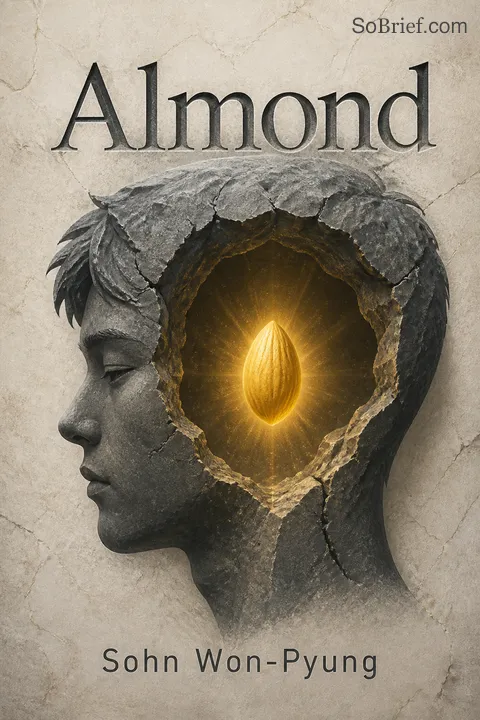
Yunjae, un niño con alexitimia, lucha por comprender las emociones debido a sus amígdalas cerebrales pequeñas. Su madre, decidida a ayudarlo, le da almendras con la esperanza de estimular su crecimiento emocional. A pesar de sus esfuerzos, Yunjae permanece distante, incapaz de entender los sentimientos que mueven a los demás. Su vida transcurre entre rutinas, guiado por las instrucciones de su madre para imitar emociones que él no puede sentir. Así comienza su viaje de autodescubrimiento y los retos que enfrentará en un mundo que exige compromiso emocional.
La tragedia golpea dos veces
En la víspera de Navidad, Yunjae presencia un ataque horrible que deja a su madre y abuela muertas. El incidente, perpetrado por un hombre llevado a la locura por las presiones sociales, deja a Yunjae ileso físicamente pero emocionalmente aislado. Como único sobreviviente, se ve obligado a enfrentar un mundo incierto, sin la guía de su familia. Esta tragedia marca un punto de inflexión, empujando a Yunjae a confrontar las limitaciones de su comprensión emocional y las duras realidades que lo rodean.
Amistades inesperadas
Tras la tragedia, Yunjae conoce al doctor Shim, un exmédico convertido en panadero que se convierte en su mentor y figura protectora. También se cruza con Gon, un chico problemático con un pasado violento. A pesar de sus diferencias, Yunjae y Gon forjan una amistad improbable, unida por sus experiencias compartidas de pérdida y alienación. A través de estas relaciones, Yunjae comienza a explorar las complejidades de las emociones humanas y la posibilidad de cambio, incluso para quienes la sociedad considera irredimibles.
Las luchas de Gon
Gon, atormentado por su pasado y las expectativas ajenas, busca su lugar en el mundo. Su relación con su padre distante, el profesor Yun, está llena de tensiones y malentendidos. Mientras Gon lidia con su identidad y el peso de sus acciones, recurre a Yunjae en busca de apoyo. Su amistad se convierte en un salvavidas, ofreciéndole una chispa de esperanza y la posibilidad de redención. A través del camino de Gon, Yunjae aprende sobre la empatía y el poder de la conexión humana.
Descubriendo la empatía
A medida que pasa más tiempo con Gon y el doctor Shim, Yunjae comienza a experimentar emociones que nunca creyó posibles. Sus interacciones con Dora, una chica llena de vida y pasión por correr, desafían aún más su comprensión del amor y la amistad. Gracias a estas relaciones, la capacidad emocional de Yunjae se expande, permitiéndole conectar con los demás a un nivel más profundo. Esta nueva empatía se convierte en el motor de un cambio tanto en su vida como en la de quienes lo rodean.
La influencia de Dora
Dora, con su personalidad vibrante y entusiasmo por la vida, se convierte en una influencia decisiva para Yunjae. Su presencia lo desafía a enfrentar sus miedos y abrazar lo desconocido. A través de Dora, Yunjae aprende a apreciar la belleza del mundo y la importancia de perseguir las propias pasiones. Su apoyo incondicional y su fe en el potencial de Yunjae lo inspiran a arriesgarse y explorar la profundidad de sus emociones. La influencia de Dora es un testimonio del poder transformador del amor y la amistad.
Enfrentando el pasado
Conforme avanza su viaje emocional, Yunjae se ve obligado a enfrentar los fantasmas de su pasado. El trauma no resuelto por la muerte de su madre y abuela pesa sobre él, amenazando con descarrilar su progreso. Con el apoyo de sus amigos, Yunjae encara estos desafíos con determinación, buscando encontrar cierre y paz. Este enfrentamiento se convierte en un momento crucial que le permite reconciliar su pasado con su presente y abrazar el futuro con esperanza y resiliencia.
Un nuevo comienzo
Con su renovada conciencia emocional, Yunjae inicia un nuevo capítulo en su vida. Aprende a navegar las complejidades de las relaciones humanas, encontrando fortaleza en la vulnerabilidad y coraje en la conexión. A medida que sigue creciendo y evolucionando, descubre la belleza de ser humano y las posibilidades infinitas que ello conlleva. Su viaje es un testimonio del poder del cambio y del impacto duradero del amor y la amistad.
Personajes
Yunjae
Yunjae es un niño con alexitimia que lucha por entender y expresar sus emociones. Su camino está marcado por la tragedia y la pérdida, pero también por el crecimiento y el autodescubrimiento. A través de sus relaciones con Gon, el doctor Shim y Dora, aprende a manejar las complejidades emocionales, encontrando finalmente esperanza y conexión en un mundo que antes le parecía frío y lejano.
Gon
Gon es un chico con un pasado violento que busca su lugar en el mundo. Su relación con Yunjae se convierte en una fuente de fuerza y redención, dándole la oportunidad de enfrentar sus demonios y aceptar el cambio. A pesar de su apariencia dura, Gon es profundamente sensible y anhela aceptación y comprensión. Su viaje es uno de transformación, aprendiendo a reconciliar su pasado con su presente.
Doctor Shim
El doctor Shim, exmédico convertido en panadero, se convierte en una figura guía para Yunjae. Su serenidad y sabiduría le brindan el apoyo y ánimo necesarios para explorar sus emociones. Las propias experiencias del doctor Shim con la pérdida y el arrepentimiento lo hacen un mentor compasivo y comprensivo, ayudando a Yunjae a enfrentar los retos de crecer y encontrar su lugar en el mundo.
Dora
Dora es una chica llena de energía y pasión por correr, que influye profundamente en Yunjae. Su entusiasmo por la vida y su fe inquebrantable en el potencial de Yunjae lo motivan a aceptar el cambio y explorar sus emociones. La presencia de Dora desafía a Yunjae a enfrentar sus miedos y a valorar la belleza del mundo, ayudándole a descubrir el poder transformador del amor y la amistad.
Profesor Yun
El profesor Yun es el padre de Gon, que lucha por reconectar con su hijo tras años de separación. Su relación con Gon está llena de tensiones y malentendidos, pero él se mantiene firme en su deseo de cerrar la brecha y reconstruir su vínculo. Su camino es uno de redención, aprendiendo a aceptar sus errores pasados y a abrirse a la posibilidad de cambio y perdón.
Recursos narrativos
Alexitimia
La alexitimia es un recurso central que define el carácter de Yunjae y sus interacciones con el mundo. Su dificultad para comprender y expresar emociones impulsa la narrativa, mostrando los retos y complejidades de la conexión humana. Esta condición funciona como un lente para explorar temas como la empatía, el crecimiento y el poder transformador del amor y la amistad.
Tragedia y pérdida
Las muertes trágicas de la madre y abuela de Yunjae actúan como detonantes de su viaje emocional. Esta pérdida lo obliga a enfrentar las limitaciones de su comprensión emocional y a navegar un mundo sin la guía familiar. La tragedia subraya la fragilidad de la vida y la importancia de la conexión humana, preparando el terreno para el crecimiento y autodescubrimiento de Yunjae.
Amistad y empatía
Las amistades que Yunjae forma con Gon, el doctor Shim y Dora son recursos clave que guían su viaje de crecimiento emocional. Estas relaciones lo desafían a explorar sus emociones y a aceptar el cambio. A través de la amistad y la empatía, Yunjae aprende a manejar las complejidades de las relaciones humanas, encontrando finalmente esperanza y conexión en un mundo que antes le parecía distante y frío.
Análisis
"Almendra", de Sohn Won-Pyung, es una profunda exploración del crecimiento emocional y el poder transformador del amor y la amistad. A través de la alexitimia de Yunjae, la novela se adentra en las complejidades de las emociones humanas y los desafíos de vivir en un mundo que exige compromiso emocional. La historia resalta la importancia de la empatía y la conexión, mostrando cómo las relaciones pueden ser catalizadoras de cambio y autodescubrimiento. Al enfrentar la tragedia y la pérdida, Yunjae aprende a abrazar sus emociones y a encontrar esperanza frente a la adversidad. En última instancia, la novela celebra la belleza de ser humano y las posibilidades infinitas que surgen al aceptar el cambio y el crecimiento.
También leyeron










Preguntas frecuentes
Synopsis & Basic Details
What is Almond about?
- A boy's emotional journey: Almond tells the story of Yunjae, a boy with alexithymia, a condition that makes it difficult for him to feel and express emotions. The narrative follows his life after a tragic event, exploring his relationships and his gradual journey towards understanding and experiencing emotions.
- Navigating a complex world: The story delves into how Yunjae learns to navigate a world that is driven by emotions he doesn't naturally possess. He relies on learned behaviors and rules to interact with others, highlighting the challenges of living with a condition that sets him apart.
- Themes of connection and change: The novel explores themes of friendship, empathy, and the possibility of change. It examines how relationships can impact personal growth and how even those who seem emotionally detached can learn to connect with others on a deeper level.
Why should I read Almond?
- Unique perspective on emotions: Almond offers a rare and insightful look into the world of someone who struggles with emotions. It challenges readers to consider the importance of empathy and the complexities of human connection.
- Compelling character development: The novel features well-developed characters, each with their own struggles and motivations. Yunjae's journey is particularly compelling, as he evolves from an emotionally detached boy to someone capable of experiencing a range of feelings.
- Thought-provoking themes: Almond tackles profound themes such as loss, trauma, and the search for identity. It prompts readers to reflect on their own emotional experiences and the ways in which they connect with others.
What is the background of Almond?
- Alexithymia as a focus: The novel is grounded in the concept of alexithymia, a real psychological condition, which is explored through Yunjae's experiences. The author uses this condition to examine the nature of emotions and how they shape human interactions.
- Social commentary: Almond subtly critiques societal pressures and expectations, particularly those related to emotional expression. The story highlights how individuals who deviate from these norms can be marginalized and misunderstood.
- Korean cultural context: While not explicitly a cultural commentary, the novel is set in a contemporary Korean context, which influences the characters' experiences and the social dynamics within the story.
What are the most memorable quotes in Almond?
- "I have almonds inside me.": This opening line, repeated in the prologue, introduces the central metaphor of the amygdalae and sets the stage for Yunjae's exploration of his emotional landscape. It highlights the physical basis of emotions and the core of his condition.
- "Luck plays a huge part in all the unfairness of the world. Even more than you'd expect.": This quote reflects Yunjae's understanding of the world's randomness and the role of chance in shaping individual lives. It underscores the theme of fate and the challenges of navigating an unpredictable world.
- "There is no such person who can't be saved. There are only people who give up on trying to save others.": This quote, attributed to the fictional P.J. Nolan, encapsulates the novel's message of hope and the potential for redemption. It emphasizes the importance of empathy and the power of human connection to transform lives.
What writing style, narrative choices, and literary techniques does Sohn Won-Pyung use?
- Detached first-person narration: The story is told from Yunjae's perspective, using a detached and observational tone that reflects his alexithymia. This narrative choice allows readers to experience the world through his unique lens, highlighting his emotional distance and gradual awakening.
- Simple and direct language: Sohn Won-Pyung employs a simple and direct writing style, which enhances the clarity of Yunjae's voice and makes the story accessible to a wide audience. The straightforward language contrasts with the complex emotional themes explored in the novel.
- Symbolism and metaphors: The author uses symbolism and metaphors, such as the almonds representing the amygdalae, to deepen the meaning of the story. These literary techniques add layers of interpretation and enhance the reader's understanding of Yunjae's internal world.
Hidden Details & Subtle Connections
What are some minor details that add significant meaning?
- The plum-flavored candy: The recurring mention of plum-flavored candy, loved by both Mom and Granny, symbolizes their shared bond and the bittersweet nature of their relationship. It also represents the small joys they found in life, even amidst hardship.
- The used-book store: The used-book store, a dream of Mom's, represents her love for stories and her desire to connect with others through literature. It also serves as a space where Yunjae encounters different perspectives and begins to explore his own emotions.
- The placement of emotion hanja: The placement of emotion hanja around the house, with negative emotions in the bathroom, reveals Mom's attempt to teach Yunjae about feelings. The fading of the negative characters in the bathroom symbolizes the gradual shift in Yunjae's emotional state.
What are some subtle foreshadowing and callbacks?
- The man in the suit: The man in the suit seen lurking before the Christmas Eve tragedy foreshadows the violence to come. His presence creates a sense of unease and hints at the impending danger.
- The "human emotion game": Mom's "human emotion game" foreshadows Yunjae's later struggles to understand and express emotions. It also highlights the artificiality of his early attempts to mimic feelings.
- Granny's "monster" nickname: Granny's affectionate nickname for Yunjae, "adorable little monster," foreshadows his later interactions with Gon, who is also seen as a "monster" by society. It also hints at the duality of human nature and the potential for both good and bad within each individual.
What are some unexpected character connections?
- Dr. Shim and Mom's friendship: The close friendship between Dr. Shim and Mom, revealed after her death, adds depth to both characters. It shows that Mom had a support system beyond her family and that Dr. Shim was more than just a neighbor.
- Gon and Mrs. Yun's connection: The revelation that Gon is Mrs. Yun's missing son creates a complex dynamic between Yunjae, Gon, and Professor Yun. It highlights the themes of loss, identity, and the search for belonging.
- Dora's understanding of Yunjae: Dora's ability to see beyond Yunjae's emotional detachment and recognize his true nature is unexpected. It shows that empathy can exist even in the absence of shared emotional experiences.
Who are the most significant supporting characters?
- Dr. Shim: As a mentor and guardian, Dr. Shim provides Yunjae with stability and guidance. His own experiences with loss and regret make him a compassionate and understanding figure in Yunjae's life.
- Gon: As Yunjae's unlikely friend, Gon challenges his understanding of emotions and forces him to confront his own limitations. Their relationship is a catalyst for change and growth for both characters.
- Dora: As a source of inspiration and support, Dora encourages Yunjae to embrace his emotions and pursue his passions. Her vibrant personality and zest for life have a transformative impact on Yunjae's journey.
Psychological, Emotional, & Relational Analysis
What are some unspoken motivations of the characters?
- Mom's desperation for Yunjae's normalcy: Mom's relentless efforts to teach Yunjae emotions stem from her deep-seated fear of his difference and her desire for him to fit into society. Her actions are driven by a mother's love, but also by her own anxieties.
- Gon's yearning for acceptance: Gon's violent behavior and tough exterior mask his deep-seated desire for acceptance and understanding. He seeks validation through his interactions with others, but his past experiences make it difficult for him to form genuine connections.
- Dr. Shim's need for redemption: Dr. Shim's decision to help Yunjae is partly driven by his own guilt and regret over his wife's death. He sees in Yunjae an opportunity to make amends for his past mistakes and find meaning in his life.
What psychological complexities do the characters exhibit?
- Yunjae's internal conflict: Yunjae's struggle with alexithymia creates a complex internal conflict. He is torn between his desire to understand emotions and his inability to experience them naturally. This conflict drives his journey of self-discovery and his gradual emotional awakening.
- Gon's self-destructive tendencies: Gon's self-destructive tendencies stem from his deep-seated feelings of worthlessness and his inability to cope with his past trauma. He sabotages his own chances at happiness, believing that he is destined to be an outcast.
- Professor Yun's guilt and regret: Professor Yun's guilt and regret over his son's disappearance and his wife's death lead to his emotional detachment and his inability to connect with Gon. He is haunted by his past mistakes and struggles to find a way to make amends.
What are the major emotional turning points?
- The Christmas Eve tragedy: The violent attack that kills Mom and Granny is a major emotional turning point for Yunjae. It forces him to confront the harsh realities of the world and the limitations of his emotional understanding.
- Yunjae's first experience of empathy: Yunjae's first experience of empathy, triggered by his interactions with Gon and Dora, marks a significant shift in his emotional development. It opens him up to a new world of feelings and connections.
- Gon's breakdown at the hideout: Gon's emotional breakdown at the hideout, where he finally admits his vulnerability, is a turning point in his journey. It shows that he is capable of experiencing deep emotions and that he is not as tough as he pretends to be.
How do relationship dynamics evolve?
- Yunjae and Gon's evolving friendship: Yunjae and Gon's friendship evolves from a tentative connection to a deep bond based on mutual understanding and acceptance. They challenge each other's perspectives and help each other grow.
- Yunjae and Dr. Shim's mentor-mentee relationship: Yunjae and Dr. Shim's relationship evolves from a simple arrangement to a deep bond based on mutual respect and trust. Dr. Shim provides Yunjae with guidance and support, while Yunjae helps Dr. Shim find meaning in his life.
- Yunjae and Dora's romantic connection: Yunjae and Dora's relationship evolves from a casual acquaintance to a deep romantic connection. Dora's influence helps Yunjae embrace his emotions and explore the complexities of love.
Interpretation & Debate
Which parts of the story remain ambiguous or open-ended?
- The nature of Yunjae's emotional growth: While Yunjae experiences significant emotional growth, the extent of his transformation remains somewhat ambiguous. The novel leaves it open to interpretation whether he fully overcomes his alexithymia or simply learns to navigate it more effectively.
- Gon's future: Gon's future is left open-ended, with the novel suggesting that he is on a path towards change but not providing a definitive resolution. This ambiguity reflects the complexities of real life and the challenges of overcoming past trauma.
- The meaning of "normal": The novel questions the meaning of "normal" and whether it is a desirable goal. It leaves it up to the reader to decide whether Yunjae's journey is about becoming normal or about embracing his unique identity.
What are some debatable, controversial scenes or moments in Almond?
- The butterfly scene: The scene where Gon tortures a butterfly is disturbing and controversial. It raises questions about the nature of empathy and the limits of human cruelty. It also highlights the different ways in which Yunjae and Gon experience and express emotions.
- Steel Wire's actions: Steel Wire's violent behavior and his manipulation of Gon are controversial. They raise questions about the nature of evil and the influence of negative role models.
- Yunjae's lack of reaction: Yunjae's lack of reaction to the violence and tragedy he witnesses is often debated. Some readers may see it as a sign of his emotional detachment, while others may interpret it as a form of resilience or a coping mechanism.
Almond Ending Explained: How It Ends & What It Means
- Yunjae's emotional awakening: The ending sees Yunjae experiencing a range of emotions for the first time, triggered by the near-death experience. This signifies a major shift in his emotional development and his ability to connect with others.
- Hope for the future: The ending offers a sense of hope for the future, with Yunjae, Mom, and Gon all on paths towards healing and growth. It suggests that even after experiencing great loss and trauma, it is possible to find meaning and connection in life.
- The cyclical nature of life: The final scene, with Yunjae on a bus, suggests the cyclical nature of life and the ongoing journey of self-discovery. It implies that life is a continuous process of change and growth, with both happy and tragic moments.








































