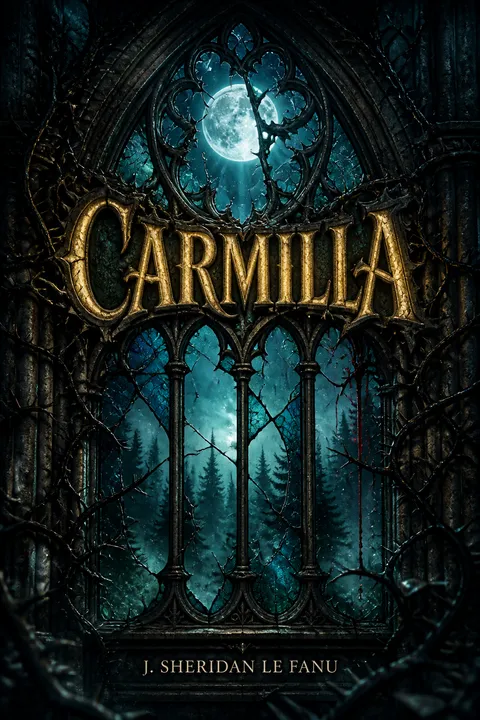
Resumen de la trama
Prólogo: Sombras y Secretos
La historia comienza con un prólogo que presenta al doctor Hesselius, un médico erudito que ha escrito extensamente sobre fenómenos sobrenaturales. La narración se presenta como un estudio de caso, contado por Laura, la protagonista, y enmarcado como un relato verídico de extraños sucesos en Estiria. El prólogo establece un tono de ambigüedad y curiosidad académica, insinuando la dualidad de la existencia y el delgado velo que separa lo natural de lo sobrenatural. El lector se prepara para una historia que difumina los límites entre la realidad y lo inquietante, con la promesa de un horror más profundo, quizás inexplicable.
El Primer Sustazo
Laura, una joven inglesa que vive en un castillo remoto de Estiria con su padre y sus institutrices, recuerda una experiencia formativa de su infancia: una mujer hermosa y misteriosa aparece en su habitación, la calma y luego le inflige un dolor agudo en el pecho. El incidente se descarta como un sueño, pero deja en Laura una sensación de inquietud y vulnerabilidad que perdura toda la vida. Este primer susto presagia los eventos sobrenaturales que vendrán y establece la susceptibilidad de Laura tanto al miedo como a la fascinación, sentando las bases psicológicas para su posterior relación con Carmilla.
La Llegada de la Invitada Enigmática
La vida aislada de Laura se ve alterada cuando un accidente de carruaje frente al castillo deja a una joven hermosa y desmayada—Carmilla—a su cuidado. La madre de Carmilla, alegando asuntos urgentes, deja a su hija bajo la custodia de la familia, exigiendo un secreto absoluto sobre su origen. La llegada de Carmilla coincide con la misteriosa muerte de una joven local y la cancelación de una esperada visita del general Spielsdorf y su sobrina Bertha. Se prepara así el escenario para una intensa y ambigua amistad entre Laura y Carmilla, marcada por el secreto y un sentido de destino.
Sueños y Reconocimiento
Laura y Carmilla forman rápidamente un vínculo estrecho, descubriendo que ambas soñaron con la otra desde niñas. Laura se siente perturbada por el parecido de Carmilla con la mujer de su pesadilla infantil, mientras Carmilla afirma haber visto a Laura en un sueño también. Su reconocimiento mutuo es a la vez reconfortante y perturbador, profundizando la sensación de predestinación y sugiriendo fuerzas sobrenaturales en juego. La intimidad entre las jóvenes se tiñe de afecto y una corriente subyacente de temor.
Intimidad e Inquietud
La belleza y el encanto de Carmilla cautivan a Laura, pero su comportamiento está marcado por el secreto, cambios de humor y un afecto intenso, a veces posesivo. Carmilla se niega a revelar su pasado, y sus declaraciones de amor resultan tanto seductoras como desconcertantes. Laura se siente atraída por Carmilla, pero también experimenta momentos de repulsión y miedo, especialmente durante los apasionados abrazos y las enigmáticas palabras sobre el amor, la muerte y la unión. La relación se convierte en un campo de batalla psicológico, con Laura atrapada entre el deseo y la ansiedad.
La Plaga en el Pueblo
Una enfermedad misteriosa azota las aldeas cercanas, cobrando la vida de varias jóvenes que reportan pesadillas y sensaciones de ahogo. Los campesinos susurran sobre vampiros, y un charlatán ambulante vende amuletos contra el "oupire". Carmilla reacciona con hostilidad a los rituales religiosos y funerales, y su salud parece fluctuar al compás de la de Laura. Los habitantes del castillo se sienten cada vez más inquietos a medida que la línea entre superstición y realidad se difumina.
Retratos y Linaje
La llegada de retratos familiares restaurados trae una revelación impactante: uno de ellos, titulado "Mircalla, condesa Karnstein, 1698", es el vivo retrato de Carmilla. Carmilla afirma un parentesco lejano con los Karnstein, cuyo castillo en ruinas se encuentra cerca. El parecido inquietante y la trágica historia familiar profundizan el misterio, sugiriendo que Carmilla podría ser mucho más antigua —y peligrosa— de lo que aparenta.
Pesadillas y Decaimiento
Laura comienza a sufrir pesadillas vívidas, sensaciones de asfixia y una creciente debilidad física. Sueña con un animal negro y una figura femenina que le inflige dolor en el pecho. Carmilla también afirma tener malos sueños, pero su vitalidad parece aumentar a medida que la de Laura disminuye. La casa entra en pánico cuando Carmilla desaparece de su habitación cerrada con llave, para reaparecer sin memoria del suceso. La sensación de amenaza sobrenatural se intensifica conforme empeora el estado de Laura.
Desapariciones y Explicaciones
Los paseos nocturnos de Carmilla se atribuyen al sonambulismo, pero la explicación no satisface ni a Laura ni a su padre. Se registra el castillo y se pone al personal en alerta. El comportamiento de Carmilla se vuelve más errático, y la percepción de la realidad de Laura comienza a deshilacharse. El hogar se ve dominado por el miedo y la confusión, pues las explicaciones racionales resultan insuficientes ante la creciente evidencia de lo extraño.
La Advertencia del Médico
Se convoca a un médico para examinar a Laura, quien descubre dos pequeñas marcas en su cuello. Advierte al padre de Laura que la mantenga bajo constante vigilancia y sugiere una causa sobrenatural para su enfermedad. El diagnóstico del médico es recibido con escepticismo, pero la acumulación de pruebas —los síntomas de Laura, las muertes en el pueblo y las rarezas de Carmilla— empujan a la familia hacia una aceptación renuente de lo impensable: que un vampiro está en acción.
El Relato del General Spielsdorf
El general Spielsdorf llega y relata la misteriosa muerte de su querida sobrina Bertha, tras la llegada de una huésped llamada Millarca y su madre. La historia refleja la experiencia de Laura: Bertha queda encantada por Millarca, enferma con síntomas similares y muere pese a la intervención médica. El testimonio del general aporta un contexto crucial, vinculando a Carmilla/Millarca con un patrón de conducta depredadora que se extiende por generaciones.
La Maldición del Baile de Máscaras
El general describe cómo conoció a Millarca y a su madre en un baile de máscaras, donde se ganaron la confianza y organizaron que Millarca se alojara con Bertha. El secretismo de la madre y el atractivo de la hija recuerdan el comportamiento de Carmilla. Tras el baile, Millarca desaparece y reaparece en circunstancias misteriosas, y la salud de Bertha se deteriora rápidamente. La creciente sospecha del general y su eventual enfrentamiento con lo sobrenatural preparan el clímax de la historia.
La Revelación de Mircalla
El general, el padre de Laura y un sacerdote local investigan la capilla en ruinas de Karnstein, buscando la tumba de Mircalla, condesa Karnstein. Con la ayuda del barón Vordenburg, experto en vampirismo, descubren el sepulcro oculto y confirman que Carmilla, Millarca y Mircalla son la misma persona: un vampiro que ha cazado jóvenes durante siglos. La revelación une los hilos de la narración, exponiendo el horror completo de la naturaleza de Carmilla.
La Capilla y el Leñador
Los investigadores escuchan de un leñador la historia de ataques vampíricos en el pueblo y los métodos para destruirlos. La historia de un noble moravo que derrotó a un vampiro en Karnstein presagia el enfrentamiento venidero. El grupo se prepara para el ritual necesario para acabar con el reinado de terror de Carmilla, apoyándose en el folclore y la autoridad legal para justificar sus acciones.
El Vampiro Revelado
En la capilla, el general enfrenta a Carmilla, quien se transforma ante sus ojos y escapa de su ataque. Su fuerza sobrenatural y su capacidad para desaparecer confirman su naturaleza inhumana. El grupo queda conmocionado pero resuelto, decidido a llevar a cabo el ritual que pondrá fin a su amenaza. Laura, traumatizada por el encuentro, es enviada lejos para su seguridad mientras los hombres se preparan para la prueba final.
Prueba y Ejecución
Los investigadores localizan la tumba de Mircalla, abren el ataúd y encuentran el cuerpo de Carmilla conservado como si estuviera vivo, flotando en sangre. Siguiendo antiguos ritos, le clavan una estaca en el corazón, la decapitan y queman sus restos. La muerte de Carmilla se acompaña de un grito penetrante, y la maldición sobre la región se levanta. La salud de Laura se restablece y las víctimas del vampiro son vengadas. El informe oficial de los hechos aporta un aire de sombría autenticidad al relato.
Consecuencias y Comprensión
Laura, aún atormentada por sus experiencias, reflexiona sobre los acontecimientos y la naturaleza del vampirismo. La investigación del barón Vordenburg ofrece una visión sobre la psicología y métodos del vampiro, enfatizando la naturaleza seductora y obsesiva de su depredación. La historia concluye con el miedo persistente de Laura y recuerdos ambiguos de Carmilla, quien permanece en su mente como una figura de amor y terror.
Personajes
Laura
Laura es la protagonista y narradora, una joven cuya vida protegida en un castillo remoto la hace vulnerable tanto a la soledad como a la influencia sobrenatural. Su trauma infantil la prepara para las depredaciones de Carmilla, y su viaje psicológico está marcado por una mezcla de fascinación, afecto y creciente temor. La relación de Laura con Carmilla es profundamente ambivalente: se siente atraída por la belleza y el encanto de su huésped, pero cada vez más repelida y aterrorizada por su posesividad y el costo físico y emocional de su intimidad. El desarrollo de Laura es un estudio sobre la pérdida de la inocencia, el despertar de deseos prohibidos y la lucha por reconciliar el amor con el horror.
Carmilla / Mircalla / Millarca
Carmilla es la enigmática invitada cuya verdadera identidad es Mircalla, condesa Karnstein, un vampiro de siglos de antigüedad. Es hermosa, lánguida e intensamente carismática, con capacidad tanto para el afecto genuino como para la depredación despiadada. Su psicología es compleja: anhela la intimidad y el amor, pero su naturaleza vampírica la impulsa a destruir a quienes desea. Su relación con Laura está marcada por ternura y violencia, y su negativa a revelar su pasado o verdadera naturaleza aumenta el misterio y el peligro. Carmilla encarna la dualidad de atracción y repulsión, amor y muerte, y su destrucción final es tanto un triunfo sobre el mal como una pérdida trágica.
El Padre de Laura
El padre de Laura es un oficial inglés retirado, dedicado a su hija y decidido a protegerla. Inicialmente escéptico ante explicaciones sobrenaturales, prefiere soluciones médicas racionales para la enfermedad de Laura. A medida que las pruebas se acumulan, se ve obligado a enfrentar la realidad de la amenaza vampírica y toma medidas decisivas para salvar a su hija. Su viaje refleja el de muchos protagonistas góticos: desde la incredulidad hasta la aceptación renuente y, finalmente, la participación activa en la destrucción del mal.
Madame Perrodon
Madame Perrodon es la institutriz principal de Laura, brindando consuelo y estabilidad en el hogar. Es sensible al malestar de Laura y rápida en notar cambios en su salud y estado de ánimo. Su papel es mayormente de apoyo, pero su ansiedad refleja la creciente inquietud en el castillo.
Mademoiselle De Lafontaine
La institutriz final, Mademoiselle De Lafontaine aporta un toque de sofisticación cosmopolita y misticismo al hogar. Se interesa por fenómenos espirituales y ofrece un contrapunto a la practicidad de Madame Perrodon. Su presencia añade profundidad a la dinámica social del castillo y destaca el choque entre racionalidad y superstición.
General Spielsdorf
El general Spielsdorf es un amigo de la familia cuya sobrina Bertha cae víctima de Carmilla/Millarca. Su dolor y rabia lo impulsan a investigar lo sobrenatural, y su testimonio aporta pruebas cruciales que vinculan a Carmilla con un patrón de depredación vampírica. La transformación del general de escéptico a vengador subraya los temas de pérdida, justicia y los límites de la racionalidad.
Bertha Rheinfeldt
Bertha es la sobrina del general Spielsdorf, cuyo destino refleja el de Laura. Su muerte a manos de Millarca sirve tanto de advertencia como de catalizador para la investigación que finalmente conduce a la destrucción de Carmilla. La historia de Bertha resalta la vulnerabilidad de las jóvenes y la naturaleza depredadora del vampiro.
La Madre de Carmilla
La mujer que dice ser la madre de Carmilla es una figura sombría, que orquesta la colocación de su hija en hogares desprevenidos y exige secreto. Su verdadera naturaleza y motivos permanecen ambiguos, pero claramente es cómplice en las depredaciones de Carmilla, actuando como facilitadora y protectora.
Barón Vordenburg
El barón Vordenburg es un excéntrico experto en vampirismo cuya investigación y guía son fundamentales para identificar y destruir a Carmilla. Su conocimiento une el folclore con la acción, y su conexión personal con Mircalla añade una capa de ironía trágica a la resolución de la historia.
El Médico
El médico sin nombre representa el enfoque racional y científico ante la enfermedad de Laura, pero termina reconociendo los límites de la medicina frente a lo sobrenatural. Sus advertencias y observaciones impulsan la narrativa hacia su clímax.
Recursos Narrativos
Narrativa enmarcada y manuscrito
El uso de un prólogo y la presentación del relato de Laura como un manuscrito encontrado otorgan al cuento un aire de autenticidad y ambigüedad. Este recurso permite múltiples perspectivas y capas de interpretación, invitando al lector a cuestionar los límites entre hecho y ficción, ciencia y superstición.
Doble y retratos ancestrales
El motivo del doble —la visión infantil de Laura, el retrato de Mircalla y los nombres recurrentes— refuerza el tema de la identidad y el ineludible peso del pasado. El retrato ancestral funciona como revelación literal y simbólica de la verdadera naturaleza de Carmilla, vinculándola a la línea Karnstein y al ciclo de depredación.
Sueños y pesadillas
Los sueños juegan un papel central en la narración, sirviendo como premoniciones y vehículos de ataque sobrenatural. Las pesadillas de Laura presagian su victimización y reflejan su tormento psicológico, mientras que los sueños de Carmilla insinúan su naturaleza dividida.
Seducción y ambigüedad
La relación entre Laura y Carmilla está marcada por una intimidad emocional y física intensa, que difumina las fronteras entre amistad, romance y depredación. La ambigüedad de su vínculo aumenta la tensión del relato y explora temas de sexualidad, represión y los peligros del deseo sin control.
Superstición versus racionalidad
La historia contrapone explicaciones médicas con supersticiones locales, vindicando finalmente a estas últimas. El cambio gradual del escepticismo a la creencia refleja los viajes psicológicos de los personajes y subraya las limitaciones de la racionalidad ante lo desconocido.
Presagios y paralelismos
Las muertes en el pueblo, el destino de Bertha y los síntomas de Laura se reflejan mutuamente, construyendo una sensación de inevitabilidad y fatalidad. Las primeras pistas —como el susto infantil y el retrato— presagian la revelación de la identidad de Carmilla y la trágica trayectoria de la historia.
Análisis
"Carmilla" se erige como una obra fundamental de la ficción vampírica, destacada por su profundidad psicológica, tensión atmosférica y tratamiento subversivo del género y la sexualidad. Le Fanu crea una narración que es a la vez un escalofriante cuento sobrenatural y una sutil meditación sobre los peligros y el atractivo de la intimidad prohibida. La relación entre Laura y Carmilla está cargada de ambigüedad, mezclando afecto, erotismo y violencia de maneras que desafían las normas victorianas y anticipan exploraciones posteriores del deseo queer. El uso de sueños, dobles y maldiciones ancestrales sitúa la obra firmemente en la tradición gótica, mientras que su enfoque en la agencia y la victimización femenina le confiere una resonancia moderna. "Carmilla" invita a los lectores a cuestionar los límites entre amor y destrucción, el yo y el otro, y lo racional y lo sobrenatural, dejando una sensación persistente de inquietud que perdura mucho después de la destrucción del vampiro.
También leyeron
Preguntas frecuentes
Synopsis & Basic Details
What is Carmilla about?
- Gothic Vampire Romance: J. Sheridan Le Fanu's "Carmilla" is a foundational Gothic novella that follows Laura, a young Englishwoman living in a secluded Styrian castle, whose life is transformed by the arrival of the enigmatic and beautiful Carmilla after a mysterious carriage accident.
- Seduction and Supernatural Illness: Carmilla quickly forms an intense, ambiguous bond with Laura, marked by passionate affection and unsettling secrecy. Simultaneously, a mysterious illness, characterized by languor, nightmares, and strange marks, begins to afflict young women in the surrounding villages, including Laura herself.
- Unveiling Ancient Evil: As Laura's health declines and the mystery deepens, her father and the grieving General Spielsdorf, whose niece suffered a similar fate, uncover the horrifying truth: Carmilla is a centuries-old vampire, Mircalla, Countess Karnstein, whose predatory existence is intertwined with the region's dark history.
Why should I read Carmilla?
- Pioneering Vampire Fiction: Read "Carmilla" for its significant influence on subsequent vampire literature, particularly Bram Stoker's Dracula, establishing many tropes while offering a unique, psychologically complex, and distinctly female-centric perspective on vampirism.
- Subtle Psychological Horror: The novella excels in building suspense and dread through psychological manipulation and ambiguous intimacy, exploring themes of forbidden desire, obsession, and the blurring lines between love and predation, making it a compelling study of human vulnerability.
- Rich Gothic Atmosphere: Immerse yourself in the atmospheric descriptions of a remote Styrian castle, ancient ruins, and moonlit forests, which create a pervasive sense of isolation, mystery, and impending doom, characteristic of classic Gothic literature.
What is the background of Carmilla?
- 19th-Century Gothic Revival: "Carmilla" was published in 1872, during a period of renewed interest in Gothic literature. Le Fanu drew upon existing European folklore about vampires, particularly from Eastern Europe (Styria, Moravia), but infused it with psychological depth and a distinctly sensual, almost erotic, undertone that was groundbreaking for its time.
- Victorian Societal Anxieties: The novella subtly reflects Victorian anxieties surrounding female sexuality, repressed desires, and the perceived dangers of female intimacy. Carmilla's predatory nature, cloaked in seductive charm, can be read as a metaphor for societal fears about women who defied conventional roles or expressed non-normative desires.
- Scientific vs. Superstitious Beliefs: The narrative is set against a backdrop of emerging scientific thought clashing with entrenched local superstitions. Dr. Hesselius's "psychological medicine" and the skepticism of Laura's father represent the rational, while the General's eventual acceptance of vampirism and Baron Vordenburg's lore highlight the limits of scientific explanation in the face of the uncanny.
What are the most memorable quotes in Carmilla?
- "Love is always selfish; the more ardent the more selfish.": This quote, spoken by Carmilla in Chapter VI, encapsulates her twisted philosophy of love, revealing the predatory core of her affection and foreshadowing the destructive nature of her bond with Laura. It highlights the dark side of passion and the vampire's self-serving existence.
- "You are mine, you shall be mine, you and I are one for ever.": Carmilla's possessive whisper to Laura in Chapter IV, often accompanied by physical embraces, chillingly articulates her vampiric claim. It blurs the line between romantic devotion and fatal consumption, symbolizing the vampire's desire to absorb the victim's life force and identity.
- "No sacrifice without blood.": Uttered by Carmilla in Chapter VI, this cryptic statement directly links her "love" to the act of feeding, revealing the inherent violence and necessity of blood in her existence. It's a stark, unsettling declaration that foreshadows the true nature of her "illness" and the ultimate cost of her affection.
What writing style, narrative choices, and literary techniques does J. Sheridan Le Fanu use?
- Framing Narrative and Manuscript: The story is primarily told from Laura's perspective, years after the events, lending it a confessional, haunted tone. This retrospective viewpoint allows for dramatic irony and a gradual unveiling of horror, as Laura recounts her initial naivete and the slow dawning of the terrifying truth, enhancing the psychological impact.
- Gothic Tropes and Atmosphere: Le Fanu masterfully employs classic Gothic elements: a secluded, ancient castle, a sense of decay and ruin (Karnstein), mysterious illnesses, supernatural visitations, and a pervasive atmosphere of dread and melancholy. The detailed descriptions of moonlight, shadows, and isolated landscapes contribute significantly to the story's chilling mood.
- Ambiguity and Subtext: A key technique is the deliberate use of ambiguity, particularly in the relationship between Laura and Carmilla, which is laden with homoerotic subtext. Le Fanu hints at forbidden desires and unspoken horrors rather than explicitly stating them, allowing the reader's imagination to fill in the gaps and creating a more unsettling and enduring sense of unease.
Hidden Details & Subtle Connections
What are some minor details that add significant meaning?
- The Mountebank's Insight: In Chapter IV, the traveling mountebank, a seemingly minor character, directly observes Carmilla's "sharpest tooth,—long, thin, pointed, like an awl, like a needle." This seemingly rude comment is a crucial, early, and accurate identification of Carmilla's vampiric fangs, dismissed by Laura but later confirmed by the doctor's findings.
- Carmilla's Aversion to Funerals: Carmilla's violent reaction to the funeral hymn and her declaration, "your forms wound me, and I hate funerals. What a fuss! Why you must die—everyone must die; and all are happier when they do," (Chapter IV) subtly reveals her inhuman nature and her deep-seated antipathy towards Christian rites and the natural cycle of death. This detail hints at her ancient, unholy existence and her detachment from human grief.
- The Horses' Reaction to the Cross: During the carriage accident in Chapter II, the horses "swerved so as to bring the wheel over the projecting roots of the tree" at the sight of an "ancient stone cross." This seemingly accidental detail subtly foreshadows Carmilla's supernatural nature and her inherent repulsion to religious symbols, a common vulnerability for vampires in folklore.
What are some subtle foreshadowing and callbacks?
- Laura's Childhood Fright: The opening chapter's account of Laura's encounter with a beautiful woman who causes a "stinging pain as if two needles ran into my breast" (Chapter I) is a direct, early foreshadowing of Carmilla's vampiric attack. This callback establishes a predestined connection between the two girls and highlights the cyclical nature of Carmilla's predation.
- General Spielsdorf's Distraught Letter: The General's initial letter in Chapter II, describing his niece Bertha's death and railing against "the fiend who betrayed our infatuated hospitality," serves as a powerful, albeit initially cryptic, foreshadowing of Laura's own fate. The General's "distraction" and "incredulity" mirror Laura's father's later struggle to accept the supernatural explanation, creating a parallel narrative of victimhood and dawning horror.
- Carmilla's "Charm" and "Malady": Carmilla's insistence on using the mountebank's "charm" against the "malaria" (Chapter VII), claiming it's "nothing magical, it is simply natural," is deeply ironic. This callback to the "oupire" charm, which she herself uses, subtly reveals her awareness of her own nature and her attempt to rationalize or deflect suspicion, even as she benefits from the charm's (temporary) protective qualities against other vampires.
What are some unexpected character connections?
- Baron Vordenburg's Ancestral Link to Mircalla: The most unexpected connection is revealed in the conclusion (Chapter XVI): Baron Vordenburg's ancestor was "a passionate and favored lover of the beautiful Mircalla, Countess Karnstein." This personal, tragic history explains the Baron's profound knowledge of vampirism and his dedication to tracking Mircalla, adding a layer of historical depth and personal vengeance to the scientific pursuit.
- Carmilla's "Mother" as a Co-Conspirator: The "stately lady in black velvet" who drops Carmilla off is not merely a concerned parent but a knowing accomplice in Carmilla's vampiric cycle. Her "fixed and stern countenance" when speaking to Laura's father, her "compulsory reserve" about their identity, and her "prearranged" departure (Chapter XII) suggest a calculated strategy to place Carmilla in new homes, highlighting a network or system behind the vampire's movements.
- The Doctor's Unspoken Suspicions: The unnamed doctor initially presented as a rational medical professional, subtly hints at his understanding of the supernatural. His "gloomy triumph" upon finding the blue spot on Laura's neck (Chapter IX) and his later insistence on the clergyman's presence before reading his letter (Chapter XIV) reveal a deeper, unstated knowledge of vampirism, connecting him to the ancient lore despite his scientific facade.
Who are the most significant supporting characters?
- General Spielsdorf: The General is crucial as a parallel victim and the primary catalyst for the vampire hunt. His personal tragedy with Bertha provides irrefutable evidence of Carmilla's pattern of predation, transforming him from a grieving friend into a determined, vengeful avenger who drives the narrative towards its climax and Carmilla's destruction.
- Baron Vordenburg: The Baron serves as the intellectual and historical authority on vampirism, providing the crucial knowledge and methodology for identifying and destroying Carmilla. His "curious lore" and "voluminous digest of all the judicial cases" (Chapter XVI) bridge the gap between folklore and practical action, making him indispensable to the resolution of the plot.
- Carmilla's Mother: Though she appears only briefly, the Countess is a pivotal figure who orchestrates Carmilla's arrival and departure. Her mysterious, commanding presence and the strict secrecy she imposes (Chapter II, XII) establish the clandestine nature of Carmilla's existence and hint at a larger, organized network or ancient lineage of vampires.
Psychological, Emotional, & Relational Analysis
What are some unspoken motivations of the characters?
- Carmilla's Yearning for Connection: Beyond mere sustenance, Carmilla exhibits a profound, albeit twisted, desire for intimacy and emotional connection. Her declarations like "I live in you; and you would die for me, I love you so" (Chapter V) suggest a longing for a bond that transcends simple predation, hinting at a tragic, lonely existence driven by an "irresistible law" (Chapter IV) that compels her to destroy what she loves.
- Laura's Subconscious Desire for Affection: Laura, living a "solitary" life in a remote castle, is subconsciously motivated by a deep yearning for companionship and affection. This emotional void makes her particularly susceptible to Carmilla's intense, seductive charm, even as she experiences "repulsion" and "disgust" (Chapter IV). Her initial delight in Carmilla's arrival stems from this unspoken need for a friend and lover.
- Laura's Father's Protective Denial: Laura's father's initial dismissal of her symptoms as "fancy" or "nerves" (Chapter IV, VII) is motivated by a deep-seated desire to protect his daughter and maintain a rational, ordered world. His reluctance to accept the supernatural is not just skepticism but a protective mechanism, an unspoken fear of a threat he cannot comprehend or control, highlighting his paternal love and helplessness.
What psychological complexities do the characters exhibit?
- Laura's Ambivalent Fascination: Laura experiences a profound psychological paradox: a simultaneous "love growing into adoration, and also of abhorrence" (Chapter IV) for Carmilla. This internal conflict reflects her struggle with forbidden desires and the terrifying realization that the object of her affection is also the source of her suffering, creating a complex interplay of attraction and dread.
- Carmilla's Apathetic Selfishness: Carmilla describes her own nature as "apathetic" yet capable of "ardent" love, stating "love is always selfish; the more ardent the more selfish" (Chapter VI). This reveals a complex psychology where her vampiric needs override conventional morality, yet she still expresses a form of possessive, consuming affection, blurring the lines between predator and lover.
- General Spielsdorf's Grief-Driven Obsession: The General's transformation from a rational soldier to a vengeful vampire hunter is a study in how extreme grief can shatter one's worldview. His "intense bitterness and fury" (Chapter X) and his determination to "unearth some of those fine people" (Chapter X) show a mind consumed by loss, channeling his despair into a singular, righteous, and ultimately successful, quest for vengeance.
What are the major emotional turning points?
- The Childhood Fright's Recurrence: The moment Laura recognizes Carmilla as the figure from her childhood nightmare (Chapter III) is a major emotional turning point. It transforms a vague, unsettling memory into a terrifying reality, establishing a deep, predestined connection between them and initiating Laura's journey into supernatural horror.
- Laura's Acceptance of Her Illness: Laura's gradual acquiescence to her "languor" and "strange melancholy," even finding it "sweet" and "not unwelcome" (Chapter VII), marks a critical emotional shift. This passive acceptance of her deteriorating health, a symptom of Carmilla's influence, signifies her increasing psychological and physical subjugation to the vampire's will.
- The General's Revelation of Bertha's Fate: General Spielsdorf's detailed account of Bertha's parallel illness and death (Chapter XI) serves as a devastating emotional turning point for Laura and her father. It provides undeniable proof of Carmilla's vampiric pattern, transforming their vague fears into concrete horror and galvanizing them into action against the supernatural threat.
How do relationship dynamics evolve?
- From Innocent Friendship to Predatory Obsession: Laura and Carmilla's relationship rapidly evolves from a seemingly innocent, intense friendship into a deeply unsettling dynamic of vampiric predation. Carmilla's "languid adoration" (Chapter VII) and possessive declarations ("You are mine") gradually reveal her true intent, transforming Laura from a cherished companion into a coveted victim.
- Parental Skepticism to Desperate Action: Laura's father's relationship with the supernatural threat evolves from initial skepticism and rational dismissal to desperate, decisive action. His journey from believing Laura's symptoms are "natural causes" (Chapter IV) to actively participating in Carmilla's execution (Chapter XV) reflects the overwhelming evidence forcing him to confront and combat the unthinkable.
- The General's Shared Grief and Alliance: General Spielsdorf's arrival transforms the isolated struggle into a collective effort. His shared grief and parallel experience with Bertha's death forge an immediate, powerful alliance with Laura's father, shifting the dynamic from individual bewilderment to a united, informed front against the vampire.
Interpretation & Debate
Which parts of the story remain ambiguous or open-ended?
- The Nature of Carmilla's "Love": While Carmilla is a vampire, the story leaves the precise nature of her affection for Laura ambiguous. Is it purely a predatory instinct disguised as love, or does her "wild heart bleeds with yours" (Chapter IV) suggest a genuine, albeit destructive, emotional attachment that transcends mere hunger? This ambiguity invites debate on whether she is capable of true feeling or if her expressions of love are merely a sophisticated form of manipulation.
- Laura's Complicity and Desire: The extent of Laura's subconscious complicity or even desire in her relationship with Carmilla remains open to interpretation. Her "ambiguous feeling" of attraction and repulsion, her "morbid reserve" about her symptoms, and her finding the languor "sweet" (Chapter VII) suggest a complex psychological state where she is not merely a passive victim but perhaps drawn to the forbidden intimacy, blurring the lines of consent.
- The Framing Narrative and Manuscript Authenticity: The prologue introduces Dr. Hesselius's notes and presents Laura's account as a "case" study, but the ultimate editor's decision to "abstain from presenting any précis of the learned Doctor's reasoning" (Prologue) leaves the scientific validation of the events open. This ambiguity allows readers to debate whether the events are truly supernatural or could be interpreted as psychological phenomena, madness, or elaborate deception.
What are some debatable, controversial scenes or moments in Carmilla?
- The Erotic Subtext of Carmilla's Affection: The intense physical and emotional intimacy between Laura and Carmilla, described with language like "ardor of a lover" and "hot lips traveled along my cheek in kisses" (Chapter IV), is highly debatable. For its time, this overt homoerotic subtext was controversial, inviting discussions on repressed sexuality, the dangers of female intimacy, and whether Le Fanu intended a critique or an exploration of such desires.
- Carmilla's "Fit" at the Funeral: Carmilla's violent, almost convulsive reaction to the funeral hymn and her subsequent "horribly livid" face and "trembled all over with a continued shudder" (Chapter IV) is a controversial moment. It can be interpreted as a manifestation of her vampiric nature reacting to sacred rites, or as a psychological breakdown, blurring the line between supernatural affliction and mental illness, leaving her true state open to interpretation.
- The "Suicide" Origin of Vampirism: Baron Vordenburg's theory that a "person, more or less wicked, puts an end to himself. A suicide, under certain circumstances, becomes a vampire" (Chapter XVI) is a controversial piece of vampire lore. This explanation for Mircalla's origin adds a moral dimension to vampirism, suggesting it's a curse born from self-destruction rather than an external evil, and invites debate on the nature of sin and damnation within the story's context.
Carmilla Ending Explained: How It Ends & What It Means
- The Vampire's Destruction: The Carmilla ending explained involves the General, Laura's father, and Baron Vordenburg locating Mircalla's hidden tomb in the Karnstein chapel. They open the coffin to find Carmilla's body perfectly preserved, floating in blood, with "faint but appreciable respiration." Following ancient vampire lore, they drive a stake through her heart, decapitate her, and burn her remains, scattering the ashes in the river, effectively ending her reign of terror.
- Laura's Lingering Trauma and Recovery: Laura's health is restored after Carmilla's destruction, but the ending emphasizes her lasting psychological trauma. She writes "
Descargar PDF
Descargar EPUB
.epub digital book format is ideal for reading ebooks on phones, tablets, and e-readers.








































