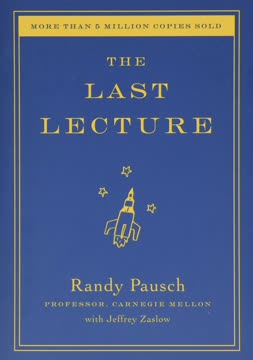
Ideas clave
1. Sueña en grande y ayuda a otros a cumplir sus sueños
"La experiencia es lo que obtienes cuando no conseguiste lo que querías."
Persigue los sueños de la infancia. Randy Pausch subraya la importancia no solo de perseguir tus propios sueños, sino también de ayudar a otros a alcanzar los suyos. Comparte historias personales sobre cómo cumplió sus ambiciones infantiles, como experimentar la ingravidez y trabajar en Disney Imagineering. Estas vivencias le enseñaron valiosas lecciones sobre la perseverancia y la creatividad.
Facilita los sueños de los demás. El trabajo de Pausch en el proyecto Alice, una herramienta de programación para estudiantes, ejemplifica su compromiso por hacer realidad los sueños ajenos. Al hacer que la codificación sea accesible y divertida, ayudó a millones de jóvenes a explorar su potencial en tecnología. Este legado demuestra cómo el esfuerzo de una persona puede impactar profundamente a generaciones futuras.
- Ejemplos de sueños facilitados:
- Tommy Burnett trabajando en las películas de Star Wars
- Estudiantes creando mundos virtuales en sus clases
- El Centro de Tecnología del Entretenimiento en Carnegie Mellon
2. Acepta los desafíos como muros de ladrillo que superar
"Los muros de ladrillo están ahí por una razón. No están para mantenernos afuera. Están para darnos la oportunidad de mostrar cuánto queremos algo."
La persistencia es clave. Pausch ve los obstáculos como oportunidades para demostrar dedicación y creatividad. Relata cómo superó rechazos, como la negativa inicial para ingresar al programa de doctorado en Carnegie Mellon, que finalmente convirtió en aceptación gracias a la persistencia y el trabajo en red.
Aprende de los tropiezos. El autor invita a ver los fracasos como experiencias de aprendizaje. Introduce el concepto del "Premio al Primer Pingüino", otorgado a quienes toman riesgos audaces y fracasan estrepitosamente, resaltando el valor de aprender de los errores y seguir innovando.
- Estrategias para superar muros de ladrillo:
- Buscar enfoques alternativos
- Apoyarse en redes y mentores
- Ver los tropiezos como oportunidades de crecimiento
3. Encuentra lo mejor en las personas y construye relaciones sólidas
"Si esperas lo suficiente, la gente te sorprenderá y te impresionará."
Busca el potencial en los demás. Pausch defiende la idea de ver lo mejor en las personas, incluso cuando no es evidente de inmediato. Comparte el consejo de su colega Jon Snoddy sobre dar tiempo a las personas para que muestren su lado bueno, enfatizando la paciencia y el optimismo en las relaciones interpersonales.
Fomenta el trabajo en equipo y la comunicación. El autor destaca la importancia de una dinámica grupal efectiva, ofreciendo consejos para colaborar con éxito, como reunirse adecuadamente, encontrar puntos en común y elogiar los esfuerzos mutuos. También resalta el valor de la comunicación clara y la escucha activa tanto en el ámbito personal como profesional.
- Consejos para construir relaciones fuertes:
- Practicar la escucha activa
- Mostrar aprecio y gratitud
- Ser paciente y dar oportunidades para mejorar
4. Sé sincero, auténtico y agradecido
"Prefiero a una persona sincera antes que a una persona moderna, porque lo moderno es pasajero. Lo sincero es duradero."
Valora la sinceridad sobre la moda. Pausch enfatiza la importancia de ser genuino y sincero en lo que se hace. Contrasta el impacto duradero de la sinceridad con la naturaleza efímera de estar “a la moda”, animando a enfocarse en la sustancia más que en el estilo.
Expresa gratitud. El autor subraya el poder de mostrar agradecimiento, especialmente mediante notas de agradecimiento escritas a mano. Comparte historias sobre cómo estos simples gestos pueden tener efectos profundos en las relaciones personales y profesionales, abriendo puertas a nuevas oportunidades.
- Maneras de demostrar autenticidad y gratitud:
- Escribir notas de agradecimiento a mano
- Reconocer las contribuciones de los demás
- Enfocarse en el impacto a largo plazo más que en impresiones pasajeras
5. La gestión del tiempo y la preparación son cruciales
"El tiempo debe gestionarse explícitamente, como el dinero."
Prioriza de manera efectiva. Pausch destaca la importancia de manejar el tiempo como un recurso limitado. Comparte consejos prácticos para maximizar la productividad, como evitar reuniones innecesarias y usar altavoces para poder hacer varias cosas durante las llamadas.
Prepárate para diferentes escenarios. El autor aboga por anticipar posibles desafíos y estar listo para enfrentarlos. Presenta el concepto del "Factor de ser devorado por lobos", que invita a considerar los peores escenarios y tener planes de contingencia.
- Estrategias para la gestión del tiempo y la preparación:
- Crear y mantener listas de tareas
- Delegar cuando sea posible
- Anticipar problemas y planificar en consecuencia
6. Aprende de la retroalimentación y pide disculpas sinceramente
"Una mala disculpa es peor que no pedir disculpas."
Acepta la crítica constructiva. Pausch resalta la importancia de buscar y aceptar retroalimentación para crecer personalmente. Comparte sus experiencias recibiendo críticas duras de mentores que le ayudaron a mejorar tanto en lo personal como en lo profesional.
Pide disculpas de manera efectiva. El autor ofrece pautas para disculparse sinceramente, enfatizando tres componentes clave: reconocer el error, expresar arrepentimiento y ofrecer reparar el daño. Advierte sobre las disculpas a medias o insinceras, que a menudo causan más daño que beneficio.
- Elementos de una disculpa efectiva:
- Reconocer el error
- Expresar arrepentimiento genuino
- Ofrecer reparar el daño
7. Mantén el optimismo y elige ser un “Tigger”
"No podemos cambiar las cartas que nos tocan, solo cómo jugamos la mano."
Elige la positividad. Pausch anima a mantener una actitud optimista, incluso ante la adversidad. Usa la analogía de elegir ser un alegre Tigger en lugar de un triste Ígor, personajes de Winnie the Pooh, para destacar el poder de la actitud en la experiencia personal.
Encuentra alegría en las circunstancias difíciles. El autor comparte anécdotas personales sobre cómo halló felicidad y humor durante su tratamiento contra el cáncer, como disfrazarse de superhéroes con su familia en Halloween. Subraya que mantener una actitud positiva ayuda a sobrellevar los retos y aprovechar al máximo el tiempo limitado.
- Maneras de cultivar el optimismo:
- Enfocarse en lo que se puede controlar
- Encontrar humor en situaciones difíciles
- Rodearse de personas positivas
8. Deja un legado duradero para tus seres queridos
"Lo fundamental es contarles las formas específicas e idiosincráticas en que me relacioné con ellos."
Crea recuerdos significativos. Pausch destaca la importancia de dejar memorias personales y específicas para los seres queridos. Comparte el consejo de Diane Sawyer sobre contar a sus hijos las maneras únicas en que se relacionó con cada uno, creando vínculos duraderos y tangibles.
Prepárate para el futuro. El autor aborda pasos prácticos para asegurar el bienestar de su familia tras su partida, como escribir cartas y grabar videos para sus hijos. También enfatiza la importancia de buscar ayuda profesional, como terapia, para afrontar los desafíos emocionales de una enfermedad terminal.
- Formas de dejar un legado duradero:
- Grabar mensajes y relatos personales
- Crear recuerdos específicos con los seres queridos
- Preparar arreglos prácticos para el futuro
Resumen de reseñas
La última lección recibió críticas variadas, aunque muchos elogiaron su mensaje inspirador y las enseñanzas sobre la vida. Los lectores valoraron el optimismo de Pausch y sus consejos para alcanzar los sueños, aunque algunos lo consideraron egocéntrico o repetitivo. El libro conectó especialmente con quienes enfrentan una enfermedad terminal o una pérdida. Los críticos señalaron su enfoque simplista y cuestionaron su relevancia más amplia. A pesar de las críticas, muchos encontraron la obra profundamente conmovedora y apreciaron su perspectiva sobre cómo vivir la vida plenamente. En conjunto, se percibió como un legado emotivo para los hijos de Pausch y un recordatorio sensible de la fragilidad de la existencia.
También leyeron








Preguntas frecuentes
What's "The Last Lecture" about?
- Overview: "The Last Lecture" by Randy Pausch is a memoir based on a lecture he gave at Carnegie Mellon University, focusing on achieving childhood dreams and the lessons learned throughout his life.
- Context: The lecture was part of a series where professors were asked to imagine they were giving their final talk before dying, but for Pausch, it was a reality due to his terminal cancer diagnosis.
- Themes: The book covers themes of perseverance, the importance of dreams, and how to live a meaningful life.
- Purpose: Pausch aimed to leave a legacy for his children and share his life lessons with a broader audience.
Why should I read "The Last Lecture"?
- Inspiration: The book is a source of motivation, encouraging readers to pursue their dreams and live life to the fullest.
- Life Lessons: It offers practical advice on overcoming obstacles, maintaining a positive attitude, and the importance of enabling the dreams of others.
- Emotional Impact: Pausch's personal story and his approach to facing terminal illness provide a powerful perspective on life and death.
- Legacy: It serves as a touching tribute to Pausch's family, especially his children, and a reminder of the impact one can have on others.
What are the key takeaways of "The Last Lecture"?
- Achieving Dreams: Pausch emphasizes the importance of setting and achieving childhood dreams, using his own life as an example.
- Overcoming Obstacles: He discusses the concept of "brick walls" as challenges that test how badly we want something.
- Living with Purpose: The book encourages readers to live with integrity, gratitude, and a focus on what truly matters.
- Enabling Others: Pausch highlights the significance of helping others achieve their dreams, which can be more rewarding than achieving your own.
What are the best quotes from "The Last Lecture" and what do they mean?
- "The brick walls are there for a reason." This quote emphasizes that obstacles exist to test our determination and to filter out those who don't want something badly enough.
- "We cannot change the cards we are dealt, just how we play the hand." It reflects the idea of accepting life's challenges and focusing on how we respond to them.
- "Experience is what you get when you didn't get what you wanted." This highlights the value of learning from failures and setbacks.
- "It's not about how to achieve your dreams. It's about how to lead your life." This encapsulates the book's message that living a good life will naturally lead to achieving dreams.
How does Randy Pausch define "brick walls" in "The Last Lecture"?
- Definition: Brick walls are metaphorical obstacles that stand in the way of achieving dreams or goals.
- Purpose: They exist to test our resolve and to separate those who truly want something from those who do not.
- Personal Examples: Pausch shares personal stories of overcoming brick walls, such as his journey to becoming a Disney Imagineer.
- Encouragement: He encourages readers to view brick walls as opportunities to demonstrate their dedication and creativity.
What is the significance of "head fakes" in "The Last Lecture"?
- Definition: A "head fake" is a teaching method where people learn something valuable while thinking they're learning something else.
- Application: Pausch uses head fakes in his teaching, such as using Alice software to teach programming through storytelling.
- Life Lessons: The book itself is a head fake, as it appears to be about achieving dreams but is actually about living a meaningful life.
- Impact: Head fakes are effective because they engage learners in a fun and indirect way, leading to deeper understanding.
How does Randy Pausch address the concept of time management in "The Last Lecture"?
- Importance: Pausch emphasizes that time is a finite resource and must be managed explicitly, like money.
- Strategies: He shares practical tips, such as making to-do lists, delegating tasks, and avoiding unnecessary activities.
- Prioritization: He advises focusing on tasks that align with personal goals and values, rather than getting caught up in trivial matters.
- Philosophy: Pausch believes that effective time management allows for a more fulfilling and productive life.
What role does gratitude play in "The Last Lecture"?
- Expression: Pausch stresses the importance of showing gratitude, whether through handwritten thank-you notes or acts of kindness.
- Impact: Gratitude can strengthen relationships, create positive environments, and lead to unexpected opportunities.
- Personal Stories: He shares anecdotes of how gratitude has played a role in his life, such as thanking his research team with a trip to Disney World.
- Legacy: Gratitude is a key component of the legacy Pausch wishes to leave for his children and readers.
How does Randy Pausch view failure in "The Last Lecture"?
- Perspective: Pausch sees failure as an essential part of learning and growth, not something to be feared.
- "First Penguin Award": He created this award to celebrate students who took risks and learned from their failures.
- Experience: He believes that experience is what you gain when you don't get what you want, and it's often more valuable than success.
- Encouragement: Pausch encourages readers to embrace failure as a stepping stone to success and innovation.
What advice does Randy Pausch give about achieving childhood dreams in "The Last Lecture"?
- Dream Big: He encourages setting ambitious goals and pursuing them with passion and perseverance.
- Overcome Obstacles: Pausch advises viewing challenges as opportunities to prove dedication and creativity.
- Seek Help: He emphasizes the importance of enabling others' dreams and seeking mentors who can guide and support you.
- Stay True: He advocates for living with integrity and staying true to one's values, which naturally leads to achieving dreams.
How does Randy Pausch incorporate humor and positivity in "The Last Lecture"?
- Approach to Illness: Despite his terminal diagnosis, Pausch maintains a positive outlook and uses humor to cope with his situation.
- Lecture Style: His lecture is filled with jokes, anecdotes, and light-hearted moments that engage and inspire the audience.
- Life Philosophy: Pausch believes in the power of positivity to overcome challenges and enhance life's experiences.
- Legacy: His humor and optimism are part of the legacy he wishes to leave for his children and readers, demonstrating the importance of enjoying life.
What is the role of family in "The Last Lecture"?
- Central Theme: Family is a central theme, as Pausch's lecture and book are dedicated to his wife and children.
- Legacy for Children: He aims to leave a legacy of love, memories, and life lessons for his children to cherish.
- Support System: Pausch highlights the importance of family support, especially during challenging times like his cancer diagnosis.
- Values: He shares the values his parents instilled in him and how he hopes to pass them on to his own children.








































