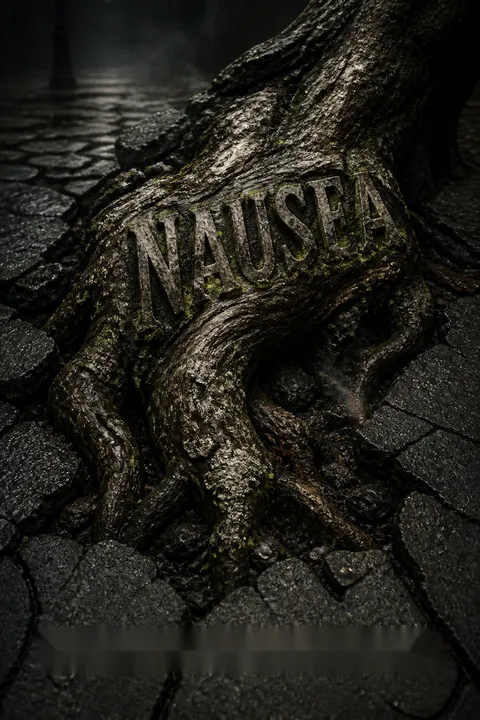
Resumen de la trama
La inquietante revelación
Antoine Roquentin, un historiador, comienza a sentir una profunda transformación en su interior, similar a una enfermedad. Esta inquietante sensación crece, llevándolo a cuestionar su existencia y el mundo que lo rodea. Nota la extrañeza en los objetos cotidianos y en las interacciones diarias, sintiéndose desconectado de su entorno. La introspección de Roquentin revela una vida marcada por caprichos y transformaciones repentinas, dejándolo con una sensación de incoherencia y vacío. Lucha contra el temor de lo que este cambio pueda traer, contemplando la posibilidad de dejar inacabada su investigación y su vida en Bouville.
El desarrollo de la crisis existencial
La crisis existencial de Roquentin se profundiza a medida que se vuelve agudamente consciente de lo absurdo de la existencia. Experimenta momentos de intensa náusea, desencadenados por la abrumadora presencia de los objetos y las personas que lo rodean. Estos episodios revelan el carácter arbitrario de la existencia, despojándolo de las reconfortantes ilusiones de propósito y significado. Las reflexiones de Roquentin lo llevan a comprender que la existencia es un fenómeno gratuito e inexplicable, dejándolo en un estado de profunda desorientación y aislamiento.
El peso de la existencia
La introspección de Roquentin se intensifica mientras lidia con el peso de la existencia. Se encuentra incapaz de escapar de la omnipresente sensación de náusea, que se convierte en un recordatorio constante de lo absurdo de la vida. Sus intentos de encontrar consuelo en su investigación histórica resultan inútiles, ya que el pasado no ofrece refugio frente al vacío existencial al que se enfrenta. Los encuentros de Roquentin con los habitantes de Bouville solo refuerzan su sentimiento de alienación, al observar sus vidas rutinarias y la superficialidad de sus aspiraciones.
Un encuentro con Anny
Roquentin se reúne con Anny, un antiguo amor, con la esperanza de encontrar algún atisbo de significado o conexión. Sin embargo, su encuentro solo pone de manifiesto los cambios que ambos han experimentado y la distancia que ahora los separa. Anny también ha vivido una transformación, habiendo abandonado su búsqueda de los "momentos perfectos" para resignarse a una vida desprovista de pasión. Su conversación revela la inutilidad de sus ideales pasados y la inevitabilidad del cambio, dejando a Roquentin con una sensación de pérdida y resignación.
La caída del Autodidacta
Roquentin es testigo de la caída del Autodidacta, un asiduo de la biblioteca que comparte su amor por el conocimiento. El comportamiento inapropiado del Autodidacta con unos jóvenes lo lleva a la desgracia pública y a la expulsión de la biblioteca. Este incidente subraya la fragilidad de la dignidad humana y el severo juicio de la sociedad. Roquentin empatiza con el aislamiento y la vergüenza del Autodidacta, reconociendo una lucha compartida contra el absurdo de la existencia.
La ciudad de Bouville
Mientras Roquentin se prepara para marcharse de Bouville, reflexiona sobre la atmósfera opresiva de la ciudad y la vida de sus habitantes. Percibe a Bouville como un microcosmos del absurdo y la inutilidad de la existencia humana, donde la gente se aferra a las rutinas y a falsas ilusiones de propósito. La partida de Roquentin marca el final de un capítulo de su vida, en su intento de escapar de un entorno asfixiante y encontrar un nuevo camino en París. A pesar de su desilusión, mantiene la esperanza en un futuro libre de las ataduras de su pasado.
Un destello de esperanza
En un momento de introspección, Roquentin considera la posibilidad de escribir una novela como medio para trascender el absurdo de la existencia. Imagina la creación de una obra que capture la esencia de la vida más allá de lo cotidiano, ofreciendo una sensación de claridad y propósito. Esta nueva esperanza le proporciona a Roquentin un sentido de dirección, al contemplar el potencial del arte para redimir su existencia y ofrecer un destello de significado en un mundo que, de otro modo, se muestra indiferente.
Analysis
Una exploración moderna del existencialismoLa náusea, de Jean-Paul Sartre, es una profunda exploración del existencialismo que captura la esencia del aislamiento humano y la búsqueda de sentido en un universo indiferente. A través del viaje introspectivo de Roquentin, Sartre ahonda en el absurdo de la existencia y en la inutilidad de las aspiraciones humanas. Los temas de la novela —la alienación, la desconexión y la lucha por encontrar un propósito— resuenan con fuerza en el lector moderno, ofreciendo una conmovedora reflexión sobre la condición humana. La exploración que hace Sartre de la angustia existencial y la búsqueda de sentido a través del arte aporta un destello de esperanza en una narrativa que, de otro modo, resultaría desoladora, destacando el potencial de redención y autoaceptación frente a un mundo absurdo.
Resumen de reseñas
La náusea es una novela existencialista polarizadora que explora temas como la falta de sentido, la libertad y el autoengaño a través de las luchas internas del protagonista, Antoine Roquentin. Muchos lectores encuentran fascinante la profundidad filosófica y el estilo introspectivo del libro, y elogian la capacidad de Sartre para capturar la angustia existencial. Sin embargo, otros la critican por considerarla aburrida, pretenciosa o excesivamente pesimista. El impacto de la novela en el pensamiento existencialista es ampliamente reconocido, aunque las opiniones sobre sus méritos literarios y su accesibilidad varían enormemente.
También leyeron





Characters
Antoine Roquentin
Antoine Roquentin es un historiador que se vuelve agudamente consciente de lo absurdo de la existencia. Su naturaleza introspectiva lo lleva a cuestionar el sentido de la vida y su lugar en el mundo. El viaje de Roquentin está marcado por un profundo sentimiento de aislamiento y desconexión de quienes lo rodean. Sus encuentros con los habitantes de Bouville y su reencuentro con Anny ponen de relieve su lucha por encontrar un propósito y un significado en un universo aparentemente indiferente.
Anny
Anny es la antigua amante de Roquentin, quien ha experimentado una transformación similar a la de él. En su día obsesionada con crear "momentos perfectos", ha abandonado sus ideales y se ha resignado a una vida sin pasión. El reencuentro de Anny con Roquentin revela los cambios que ambos han vivido y la distancia que ahora los separa. Su resignación ante el absurdo de la existencia refleja la propia lucha de Roquentin, evidenciando la inevitabilidad del cambio y la inutilidad de sus ideales pasados.
The Self-Taught Man
El Autodidacta es un usuario de la biblioteca que comparte el amor de Roquentin por el conocimiento. Su comportamiento inapropiado con unos jóvenes lo lleva a la deshonra pública y a ser expulsado de la biblioteca. La caída del Autodidacta subraya la fragilidad de la dignidad humana y el implacable juicio de la sociedad. Roquentin empatiza con su aislamiento y su vergüenza, reconociendo en él una lucha compartida contra el absurdo de la existencia.
M. Fasquelle
El señor Fasquelle es el gerente del Café Mably, un lugar que Roquentin frecuenta. Representa las rutinas mundanas y las interacciones superficiales que caracterizan la vida de los habitantes de Bouville. La presencia del señor Fasquelle sirve como recordatorio de la atmósfera opresiva de la ciudad y de la inutilidad de las aspiraciones humanas.
The Corsican
El Corso es el auxiliar de la biblioteca que expone públicamente al Autodidacta por su comportamiento inapropiado. Encarna el juicio severo y las normas rígidas de la sociedad, sirviendo como un recordatorio de la fragilidad de la dignidad humana. Las acciones del Corso ponen de manifiesto la naturaleza implacable del mundo en el que vive Roquentin.
The Patronne
La dueña del "Rendez-vous des Cheminots" es una mujer con la que Roquentin comparte una relación breve y superficial. Su presencia subraya el carácter transitorio de las relaciones humanas y los momentos fugaces de conexión que puntúan la existencia, por lo demás aislada, de Roquentin.
Plot Devices
Existential Reflection
El recurso argumental central de la novela es la reflexión existencial de Roquentin, que impulsa la narrativa y moldea sus interacciones con el mundo. A través de su introspección, Roquentin se enfrenta al absurdo de la existencia y a la inutilidad de las aspiraciones humanas. Esta reflexión actúa como catalizador de su transformación y de su decisión final de buscar el sentido a través del arte.
Nausea
La náusea es un recurso recurrente que simboliza la angustia existencial de Roquentin y su desconexión del mundo. Estos episodios de intensa náusea revelan la naturaleza arbitraria de la existencia y despojan al protagonista de las reconfortantes ilusiones de propósito y significado. La náusea funciona como un recordatorio constante del absurdo de la vida y de la lucha de Roquentin por encontrar su lugar en ella.
The City of Bouville
Bouville funciona como un microcosmos del absurdo y de la inutilidad de la existencia humana. La atmósfera opresiva de la ciudad y la vida rutinaria de sus habitantes acentúan el sentimiento de alienación y desconexión de Roquentin. La presencia de Bouville en la narrativa subraya los temas del aislamiento y la búsqueda de sentido en un universo indiferente.
The Past
La investigación histórica de Roquentin y sus reflexiones sobre el pasado funcionan como un recurso que resalta la inutilidad de buscar refugio lejos del presente. Sus intentos de encontrar consuelo en la historia resultan infructuosos, ya que el pasado no ofrece vía de escape frente al vacío existencial que le rodea. Este recurso subraya los temas de la novela sobre el aislamiento y la búsqueda de sentido en un mundo aparentemente indiferente.
Preguntas frecuentes
Synopsis & Basic Details
What is Nausea about?
- Existential awakening in Bouville: Antoine Roquentin, a historian, experiences a disturbing sense of alienation and meaninglessness in the French town of Bouville, chronicling his descent into existential dread through diary entries.
- Confronting the absurdity of existence: The novel explores Roquentin's struggle to understand the nature of existence, as he grapples with the overwhelming feeling of "Nausea" triggered by everyday objects and situations.
- Search for meaning and justification: Roquentin's journey involves a rejection of conventional values and a desperate search for a way to justify his own existence in a world devoid of inherent purpose.
Why should I read Nausea?
- Philosophical exploration of freedom: The novel offers a compelling exploration of existentialist themes such as freedom, responsibility, and the search for meaning in a meaningless world.
- Intense psychological portrait: Readers are immersed in Roquentin's subjective experience, gaining insight into the complexities of human consciousness and the challenges of self-discovery.
- Influential literary work: Nausea is a seminal work of 20th-century literature that has shaped philosophical and artistic thought, prompting readers to question their own existence and values.
What is the background of Nausea?
- Post-WWI disillusionment: Written in the early 1930s, the novel reflects the widespread disillusionment and uncertainty that followed World War I, questioning traditional values and societal structures.
- Sartre's philosophical development: Nausea is considered a foundational text in Sartre's philosophical development, laying the groundwork for his later works on existentialism and phenomenology.
- Setting in provincial France: The choice of Bouville as the setting emphasizes the banality and alienation of modern life, contrasting with the romanticized ideals of the past.
What are the most memorable quotes in Nausea?
- "I exist. That is all.": This quote encapsulates Roquentin's fundamental realization of the brute, inexplicable fact of existence, stripped of any inherent meaning or purpose.
- "The Nausea has not left me and I don't believe it will leave me so soon; but I no longer have to bear it, it is no longer an illness or a passing fit: it is I.": This quote marks Roquentin's acceptance of his existential condition, recognizing the Nausea as an integral part of his being rather than an external affliction.
- "Every existing thing is born without reason, prolongs itself out of weakness, and dies by chance.": This quote highlights Sartre's view of the contingency of existence, emphasizing the lack of inherent purpose or justification in the world.
What writing style, narrative choices, and literary techniques does Jean-Paul Sartre use?
- First-person diary format: The novel is presented as Roquentin's diary, providing direct access to his thoughts, feelings, and perceptions, creating a sense of immediacy and subjectivity.
- Phenomenological descriptions: Sartre employs detailed, sensory descriptions to capture Roquentin's experience of the world, emphasizing the raw, unfiltered nature of perception.
- Philosophical digressions: The narrative is interspersed with philosophical reflections and arguments, exploring key existentialist concepts such as contingency, absurdity, and freedom.
Hidden Details & Subtle Connections
What are some minor details that add significant meaning?
- The Self-Taught Man's alphabetical reading: The Self-Taught Man's systematic, alphabetical approach to reading symbolizes the futility of seeking absolute knowledge and the arbitrary nature of intellectual pursuits.
- The recurring image of the mirror: Roquentin's frequent encounters with mirrors reflect his struggle with self-identity and the elusive nature of the self, highlighting the instability of personal identity.
- The description of hands: The detailed descriptions of hands, both Roquentin's and those of other characters, emphasize the physical and visceral aspects of existence, contributing to the overall sense of unease and alienation.
What are some subtle foreshadowing and callbacks?
- The pebble on the beach: Roquentin's initial experience with the pebble foreshadows his later, more intense encounters with the Nausea, establishing the theme of the disturbing nature of existence.
- The jazz record "Some of These Days": The recurring presence of this song serves as a callback to moments of fleeting transcendence and artistic inspiration, offering a temporary escape from the Nausea.
- The image of the Roquentin's red hair: The description of Roquentin's red hair as a "beautiful red flame" foreshadows his final decision to create something beautiful and lasting, suggesting a potential path towards self-affirmation.
What are some unexpected character connections?
- Roquentin and the Self-Taught Man: Despite their differences, Roquentin and the Self-Taught Man share a common struggle with alienation and a desire for meaning, highlighting the universal nature of existential angst.
- The portraits in the Bouville museum: The portraits of Bouville's elite, seemingly disconnected from Roquentin's experience, represent the societal structures and values that he rejects, underscoring his alienation from bourgeois society.
- Anny and Roquentin's shared disillusionment: Anny and Roquentin's shared disillusionment with "perfect moments" reveals a parallel trajectory in their lives, suggesting a common struggle with the limitations of human experience.
Who are the most significant supporting characters?
- The Self-Taught Man: He embodies the human desire for connection and meaning, even in the face of absurdity, serving as a foil to Roquentin's more detached and intellectual approach.
- Anny: She represents a lost ideal and a potential for connection, but ultimately reinforces Roquentin's sense of isolation and the impossibility of finding lasting meaning in relationships.
- The Patronne: She provides a fleeting sense of human warmth and connection, but ultimately highlights the superficiality and transience of human relationships in Roquentin's life.
Psychological, Emotional, & Relational Analysis
What are some unspoken motivations of the characters?
- Roquentin's desire for control: Roquentin's meticulous diary-keeping and his attempts to understand the Nausea can be seen as an effort to exert control over his chaotic and unpredictable inner world.
- Anny's fear of vulnerability: Anny's detachment and her emphasis on "perfect moments" may stem from a fear of vulnerability and a desire to maintain control over her emotions and relationships.
- The Self-Taught Man's need for validation: The Self-Taught Man's pursuit of knowledge and his desire to connect with others may be driven by a deep-seated need for validation and acceptance.
What psychological complexities do the characters exhibit?
- Roquentin's detachment and hyper-awareness: Roquentin oscillates between detachment from the world and an overwhelming awareness of its absurdity, creating a sense of internal conflict and instability.
- Anny's blend of cynicism and nostalgia: Anny's cynicism about "perfect moments" is tempered by a lingering nostalgia for the past, revealing a complex emotional landscape and a struggle to reconcile her ideals with reality.
- The Self-Taught Man's naiveté and repressed desires: The Self-Taught Man's naiveté and his repressed desires create a sense of vulnerability and foreshadow his eventual downfall, highlighting the dangers of suppressing one's true nature.
What are the major emotional turning points?
- Roquentin's experience with the chestnut tree root: This moment marks a profound shift in Roquentin's understanding of existence, triggering a deep sense of alienation and the realization of the absurdity of life.
- Roquentin's reunion with Anny: Their reunion shatters Roquentin's hopes for connection and reinforces his sense of isolation, leading to a deeper understanding of his own existential condition.
- Roquentin's decision to write a novel: This decision represents a turning point in Roquentin's journey, offering a potential path towards self-affirmation and a means of transcending the absurdity of existence.
How do relationship dynamics evolve?
- Roquentin's relationships are marked by distance: Roquentin struggles to form meaningful connections with others, maintaining a sense of distance and detachment even in his closest relationships.
- Power dynamics in Roquentin's relationships: Roquentin often finds himself in relationships where power dynamics are skewed, either feeling dominated by others or struggling to assert his own agency.
- Relationships as mirrors of existential angst: Roquentin's relationships often reflect his own existential angst, highlighting the challenges of human connection in a world devoid of inherent meaning.
Interpretation & Debate
Which parts of the story remain ambiguous or open-ended?
- The nature of Roquentin's artistic project: The specific nature of the novel Roquentin intends to write remains ambiguous, leaving the reader to speculate on the potential for art to provide meaning and redemption.
- The possibility of genuine connection: The novel leaves open the question of whether genuine human connection is possible in a world defined by absurdity and alienation, prompting readers to consider the limitations of human relationships.
- The ultimate significance of the jazz record: The meaning of the jazz record "Some of These Days" is open to interpretation, representing either a fleeting escape from existence or a potential source of artistic inspiration and self-affirmation.
What are some debatable, controversial scenes or moments in Nausea?
- The Self-Taught Man's actions in the library: The Self-Taught Man's inappropriate behavior raises questions about the nature of morality, the limits of tolerance, and the role of society in regulating individual behavior.
- Roquentin's violent thoughts and impulses: Roquentin's violent thoughts and impulses, such as his desire to stab the Self-Taught Man, challenge readers to confront the darker aspects of human nature and the potential for violence in the face of existential dread.
- Roquentin's misogynistic tendencies: Roquentin's objectification of women and his dismissive attitude towards their experiences raise questions about gender dynamics and the potential for sexism in existentialist thought.
Nausea Ending Explained: How It Ends & What It Means
- Roquentin's decision to leave Bouville: Roquentin's departure from Bouville symbolizes his rejection of a life defined by routine, conformity, and the illusion of meaning, marking a decisive break with his past.
- The possibility of artistic creation: Roquentin's contemplation of writing a novel offers a glimmer of hope, suggesting that art may provide a means of transcending the absurdity of existence and finding a sense of purpose.
- Uncertainty about the future: The ending remains open-ended, leaving Roquentin's future uncertain and prompting readers to consider the ongoing nature of the existential quest and the challenges of self-discovery.
Sobre el autor
Otros libros de Jean-Paul Sartre

Descargar PDF
Descargar EPUB
.epub digital book format is ideal for reading ebooks on phones, tablets, and e-readers.








































