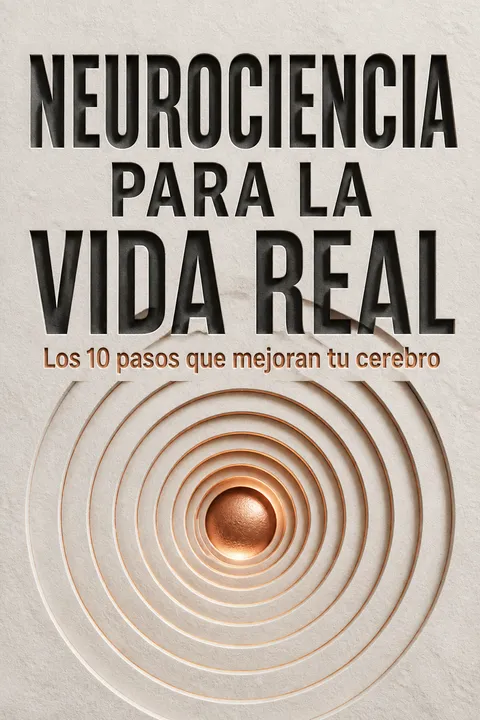
Ideas clave
1. Belief and safety unlock the brain's neuroplasticity to make the impossible possible.
Cuando crees que algo es posible, alteras tu propia química, disparas tus neuronas en nuevas frecuencias, activas zonas cerebrales que te impulsan hacia ese objetivo.
The power of belief. Our brains are not static, unyielding machines; they are highly moldable structures capable of carving entirely new neural pathways. When we truly believe a goal is achievable, we trigger neuroplasticity, allowing the brain to reorganize its circuits and unlock latent potential.
The safety catalyst. To break mental barriers, the brain must first perceive the objective as safe. If the brain senses threat, it retreats into survival mode, but when we visualize success and cultivate safety, we minimize the alert circuit and activate coordinated action.
Three accelerators for change:
- Safety: Visualizing success to signal to the brain that the goal is non-threatening.
- Intrinsic Motivation: Finding a powerful, deep-seated "why" that fuels the energy required for neural rewiring.
- Flexibility: Embracing the discomfort of adaptation and viewing the transition as an exploratory journey.
2. Your body acts as a remote control to instantly reprogram your emotional state.
Con nuestra forma de colocarlo, el cuerpo está comunicándose continuamente con nuestra cabeza.
Cognition is embodied. Our physical posture, breathing patterns, and movements send constant electrical feedback to our brains, shaping our emotional landscape. This concept of "embodied cognition" means we do not just think with our minds; we think and feel with our entire physical being.
The posture shift. When we consciously alter our physical stance—opening our chest, raising our gaze, and breathing deeply—we force the brain to resolve the contradiction between a slumped, anxious body and an upright, confident one. The brain quickly adjusts its neurochemistry to match the physical signals of safety and confidence.
The chemistry of movement:
- Posture: Standing tall and making eye contact triggers a shift from insecurity to confidence.
- Smiling: Forcing a smile activates the same brain regions as genuine joy, releasing dopamine and endorphins.
- Resetting: Simple physical shifts, like shaking out tension, transition the brain from chaotic high-beta waves to calm alpha waves.
3. Managing your electromagnetic energy prevents silent mental drains and social toxicity.
Nuestra mente inicia un diálogo silencioso con las mentes que tiene alrededor y entre ellas comparten energía sin que nosotros seamos conscientes.
Electromagnetic beings. The human brain and heart generate powerful electromagnetic fields that extend beyond our bodies, interacting constantly with the fields of those around us. This silent dialogue explains why we can instantly sense the "vibe" of a room or feel drained by someone's unexpressed tension.
Silent energy drains. We often feel exhausted without physical exertion because our brains consume up to 20% of our body's energy, especially when processing constant micro-decisions, digital notifications, or social friction. When we absorb others' negative energy, our frontal lobes work overtime to regulate our response, leading to deep fatigue.
Protecting your energy field:
- Symmetrical synchronization: Brainwaves naturally align with those nearby, meaning we can "catch" both calm and anxiety.
- The boundary bubble: Visualizing a protective barrier helps the brain separate personal emotions from external stress.
- Frontal lobe training: Strengthening the prefrontal cortex helps us empathize with others without absorbing their emotional toxicity.
4. Controlled stress (hormesis) is a biological tool that builds resilience and strength.
Lo que no te mata… te entrena.
The power of hormesis. Contrary to popular belief, avoiding all discomfort makes us fragile. Hormesis is the biological phenomenon where brief, controlled exposure to mild stressors—like cold, heat, fasting, or intense exercise—triggers cellular repair and strengthens our nervous system.
Eustress versus distress. While chronic stress (distress) wears down our immune system and shrinks the prefrontal cortex, positive stress (eustress) acts as a catalyst for growth. When we view a challenge as an achievable milestone rather than a threat, our cardiovascular system operates efficiently, and our focus sharpens.
Practical hormetic habits:
- Cold exposure: Taking brief cold showers to stimulate neurotransmitters and boost mental clarity.
- Intermittent fasting: Giving the digestive system a break to trigger autophagy and cellular cleanup.
- Cognitive challenges: Learning a difficult skill or having uncomfortable conversations to stimulate neuroplasticity.
5. Silencing your inner critic requires aligning with core values rather than seeking external approval.
Nos quieren y nos aceptan por el efecto que tenemos en los demás, no por el que creemos que tenemos.
The roots of self-criticism. Our brains are evolutionarily wired to seek social acceptance because, historically, isolation meant death. This survival mechanism creates an oversensitive internal radar that constantly measures our worth based on how we think others perceive us, often leading to harsh self-judgment.
Dethroning the judge. To silence the inner critic, we must realize that we are rarely as important to others as we think; most people are consumed by their own insecurities. By shifting our focus from seeking external validation to living in alignment with our chosen values, we calm the amygdala and restore neural balance.
Reprogramming the inner dialogue:
- Value mapping: Identifying three non-negotiable core values to serve as an internal compass.
- Active empathy: Performing conscious acts of kindness to shift the brain's focus outward and release serotonin.
- Cognitive flexibility: Intentionally debating our own rigid beliefs to train the brain to tolerate diverse perspectives.
6. True concentration is trained through pleasure and safety, not forced through fear.
El miedo es el atajo más rápido hacia la atención.
Two paths to focus. The brain can achieve concentration through two distinct neural pathways: fear or pleasure. While fear-induced focus (like cramming before an exam) is highly effective in emergencies, it narrows our perspective, produces high-beta stress waves, and generates poor-quality, short-term memory.
The pleasure pathway. When we focus through pleasure and curiosity, the brain releases dopamine in a stable, sustainable manner. This activates the prefrontal cortex without tension, allowing us to enter a state of flow where learning is deep, creative, and easily consolidated into long-term memory.
Training sustainable focus:
- Sensory transitions: Using familiar music to lower high-beta waves and ease the brain into a focused state.
- Environmental naming: Verbally identifying objects in the room to anchor the mind in the present moment.
- Alternate nostril breathing: Balancing the cerebral hemispheres to stabilize the nervous system before starting a task.
7. Healthy love is a state of neural synchronization that requires self-acceptance first.
Elegir mejor a quién amar, lejos de ser egoísmo, es sabiduría.
The brain in love. When we experience romantic love, our brains undergo a massive neurochemical shift, flooding our system with dopamine, oxytocin, and vasopressin. This cocktail temporarily deactivates the brain's critical judgment and fear centers, creating a state of profound trust and neural synchronization with our partner.
Breaking toxic loops. We often repeat painful relationship patterns because our emotional brain (the limbic system) seeks what is familiar, even if it is harmful. If we learned in childhood that love is conditional or chaotic, our brain misinterprets this distress as "home," driving us toward emotionally unavailable partners.
Evaluating relationship health:
- Freedom vs. confinement: A healthy bond expands our sense of self rather than restricting it.
- Psychological safety: Being able to show vulnerability without fear of judgment or rejection.
- Growth alignment: Supporting each other's individual evolution rather than clinging to codependency.
8. Reconnecting with your authentic self requires creating spaces of silence and positive illusion.
La ilusión es una herramienta biológica de transformación.
The cost of adaptation. From childhood, we build social masks to ensure acceptance, often burying our true desires under a mountain of obligations. Over time, this disconnect drains our vital energy, leaving us feeling numb, anxious, or disconnected from our own lives.
The power of positive illusion. Reconnecting with ourselves requires "illusion"—not as a delusion, but as a biological force of anticipation. When we allow ourselves to imagine and feel a future that excites us, we trigger dopamine release, which wakes up our brain's motivational circuits and prepares us for change.
Steps to reclaim authenticity:
- Creating silence: Carving out moments free of digital noise to let the brain's default mode network activate.
- Tracking micro-joys: Keeping a log of small, daily moments that spark genuine curiosity or peace.
- Gradual exposure: Introducing small, authentic changes into our routine to show the brain that being ourselves is safe.
9. Sleep is an active, essential brain-cleaning process driven by delta waves.
Un cerebro privado de sueño no piensa peor por voluntad, piensa peor por estructura.
The nightly cleanup. Sleep is not a passive state of inactivity, but a highly coordinated maintenance shift. During deep sleep, the glymphatic system acts as a biological dishwasher, pumping cerebrospinal fluid through the brain to wash away toxic waste products, including proteins linked to cognitive decline.
The architecture of rest. Our brains require slow, synchronized delta waves to perform synaptic pruning—the process of deleting useless information from the day to make room for new learning. Without this essential pruning, our neural networks become cluttered, leading to brain fog, emotional reactivity, and memory lapses.
Optimizing sleep hygiene:
- Light regulation: Dimming overhead lights and avoiding screens to allow natural melatonin production.
- Temperature drop: Keeping the bedroom cool to mimic the body's natural nocturnal cooling process.
- Vagal breathing: Using slow, prolonged exhalations to activate the parasympathetic nervous system before bed.
10. Creativity flourishes in the transition between focused action and relaxed daydreaming.
La inspiración no aparece en la prisa, sino en la pausa.
The creative oscillation. True creativity is not a constant state of intense focus, but a rhythmic dance between focused attention (beta waves) and relaxed daydreaming (alpha and theta waves). When we step away from a problem and let our minds wander, the default mode network connects distant ideas, bringing unexpected solutions to the surface.
Overcoming the block. Procrastination in creative work is often a defense mechanism against the high energy cost of making new neural connections, compounded by the fear of not meeting expectations. To bypass this block, we must lower the stakes, embrace the "daimon" concept of externalized genius, and focus on the pleasure of the process.
Activating the creative brain:
- Retinal focus shifting: Alternating gaze between near and far objects to synchronize the brain's hemispheres.
- Playful brainstorming: Generating wild, impractical ideas to bypass the brain's critical filter.
- Physical movement: Shifting physical states to break cognitive rigidity and stimulate dopamine release.
Descargar PDF
Descargar EPUB
.epub digital book format is ideal for reading ebooks on phones, tablets, and e-readers.








































