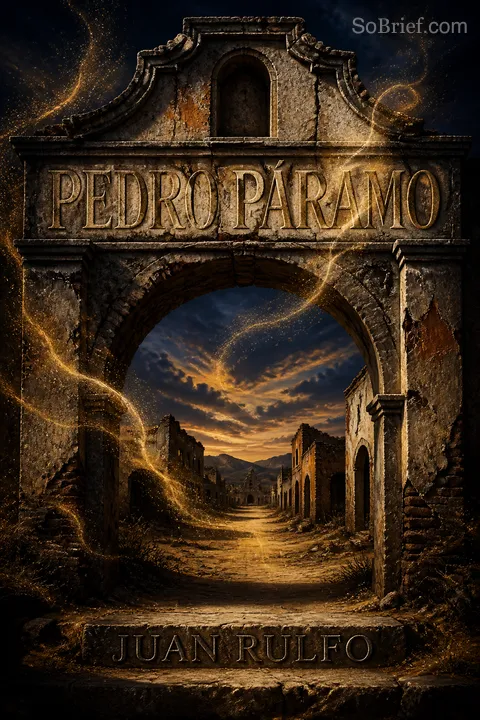
Resumen de la trama
Viaje a los fantasmas de Comala
Juan Preciado, cumpliendo el deseo de su madre moribunda, Dolores, viaja al pueblo de Comala en busca de su padre ausente, Pedro Páramo. Llega esperando encontrar un lugar lleno de nostalgia y esperanza, pero en su lugar descubre un pueblo desolado, abrasado por el sol, habitado por el silencio y la decadencia. Guiado por un misterioso arriero, Abundio, quien afirma también ser hijo de Pedro, Juan descubre que su padre lleva tiempo muerto y que Comala es un sitio donde los vivos y los muertos se entremezclan. El viaje no es solo físico, sino metafísico, pues Juan se adentra en un mundo donde el tiempo, la memoria y la realidad se confunden, y las fronteras entre la vida y la muerte se disuelven.
Ecos en calles vacías
Juan deambula por las calles abandonadas de Comala, encontrándose con figuras espectrales y escuchando voces del pasado. El pueblo está poblado por ecos: recuerdos y arrepentimientos de quienes alguna vez habitaron allí. Conoce a Eduviges Dyada, quien parece haberlo estado esperando, y aprende que los muertos en Comala no pueden descansar, atrapados por asuntos pendientes y penas no expresadas. La aparente desolación del pueblo es solo una ilusión; está lleno de murmullos de los muertos, cada uno reviviendo su dolor y anhelando redención o liberación.
La mujer que esperó
Eduviges Dyada, amiga de la madre de Juan, narra historias de amor, traición y la opresiva presencia de Pedro Páramo. Le cuenta a Juan sobre el sufrimiento de su madre y las promesas rotas que la llevaron a abandonar Comala. La vida de Eduviges está marcada por la soledad y un deseo profundo de muerte, reflejo de la desesperanza que permea el pueblo. A través de ella, Juan vislumbra la enredada red de relaciones y las deudas emocionales que atan las almas de Comala.
El ascenso de Pedro Páramo
Los recuerdos revelan la ascensión de Pedro Páramo desde un niño abandonado hasta convertirse en el cacique todopoderoso de Comala. Manipulador y ambicioso, consolida tierras y poder mediante la astucia, la violencia y la explotación. Su matrimonio con Dolores es una transacción, no una unión de amor, y deja tras de sí amantes abandonadas e hijos ilegítimos. El dominio de Pedro trae prosperidad para él, pero miseria para los demás, sembrando las semillas de la ruina eventual del pueblo.
Suspiros y abandono
Dolores, madre de Juan, es expulsada de Comala por la indiferencia y crueldad de Pedro. Su vida se convierte en una sucesión de suspiros, expresiones de anhelo y arrepentimiento. Cría a Juan en la pobreza, perseguida por recuerdos de un hogar perdido y un amor nunca correspondido. Su último deseo, en el lecho de muerte, es que Juan confronte a su padre, un acto que es a la vez venganza y una esperanza desesperada de cierre.
El pueblo de los muertos
Mientras busca refugio, Juan se da cuenta de que las personas que encuentra —Damiana, Donis, Dorotea— están muertas, atrapadas en un estado liminal. Sus historias se entrelazan, revelando una comunidad unida por la culpa, deseos insatisfechos y la incapacidad de avanzar. Los vivos son superados en número por los muertos, y el pueblo mismo se convierte en un purgatorio donde el tiempo se repite sin fin y el sufrimiento es ineludible.
El dominio del tirano
El control de Pedro Páramo sobre Comala es absoluto. Manipula al sacerdote, el padre Rentería, y usa la violencia para eliminar rivales. Su hijo Miguel, fruto de su propia amoralidad, aterroriza el pueblo con impunidad. Las acciones de Pedro envenenan la tierra y a su gente, convirtiendo a Comala en un lugar de miedo y desolación espiritual. Su obsesión por Susana San Juan, la mujer que realmente ama, es destructiva y obsesiva.
Amor y locura: Susana
Susana, amor de infancia de Pedro, regresa a Comala tras años de sufrimiento y pérdida. Traumatizada por su pasado y la muerte de su primer esposo, cae en la locura, incapaz de corresponder al amor de Pedro. Su mundo interior está lleno de recuerdos, alucinaciones y un deseo de escape. Los intentos de Pedro por poseerla solo profundizan su aislamiento, y su muerte marca el colapso final de sus esperanzas y la última oportunidad de renovación para el pueblo.
Los compromisos del sacerdote
El padre Rentería, sacerdote del pueblo, es cómplice de la tiranía de Pedro. Acepta sobornos, niega la absolución a los pobres y está atormentado por su propia impotencia y culpa. Su incapacidad para ofrecer guía espiritual o justicia contribuye a la condena de Comala. La iglesia, que debería ser fuente de salvación, se convierte en otro instrumento de opresión y desesperanza.
Los pecados y la muerte de Miguel
Miguel Páramo, hijo ilegítimo de Pedro, encarna los peores rasgos de su padre: crueldad, lujuria e imprudencia. Sus crímenes, que incluyen violación y asesinato, quedan impunes hasta su propia muerte violenta. La reacción del pueblo ante su fallecimiento es ambivalente, reflejando alivio y las profundas heridas que dejó. Su muerte marca un punto de inflexión, señalando el principio del fin para Pedro y Comala.
La tierra que murmura
Abrumado por el miedo y los incesantes murmullos de los muertos, Juan Preciado muere de terror y asfixia. Es enterrado en una fosa común junto a Dorotea, y juntos escuchan las voces interminables de los muertos de Comala. La tierra misma parece viva con recuerdos, arrepentimientos y confesiones, testimonio del dolor no resuelto que ata al pueblo.
Revolución y ruina
La Revolución Mexicana y los conflictos posteriores llegan a Comala, trayendo más caos y destrucción. Pedro Páramo manipula a los revolucionarios para sus propios fines, pero el levantamiento social termina minando su poder. Los habitantes restantes huyen o mueren, y la tierra queda estéril. La revolución, en lugar de traer justicia, solo deja más fantasmas y sueños rotos.
El colapso de Comala
Tras la muerte de Susana, Pedro Páramo, consumido por el dolor y el rencor, jura dejar morir a Comala. Retiene recursos, provocando hambruna y éxodo masivo. El pueblo, antes próspero, se convierte en un páramo, su destino sellado por el mismo hombre que lo gobernó. El ciclo de sufrimiento se completa, y Comala queda entregado a los muertos.
La última esperanza muere
El fallecimiento de Susana no es marcado por el duelo, sino por la celebración de un pueblo indiferente o ajeno. Su muerte es el golpe final al espíritu de Pedro y la extinguida esperanza de Comala. Las campanas suenan sin cesar, pero ninguna oración puede redimir al pueblo ni a su gente.
El fin de Pedro Páramo
Pedro Páramo, abandonado y quebrantado, se sienta solo en su hacienda en ruinas. Acechado por recuerdos y remordimientos, es finalmente asesinado por Abundio, otro de sus hijos olvidados, quien busca ayuda para enterrar a su propia esposa. La muerte de Pedro es anticlimática: un colapso silencioso más que un ajuste de cuentas dramático. Su legado es el de un vacío y ruina.
Voces enterradas que persisten
Incluso después de la muerte de Pedro, las voces de los muertos de Comala persisten. Juan y Dorotea, enterrados juntos, escuchan confesiones, lamentos y recuerdos interminables que llenan la tierra. La historia del pueblo no es de redención, sino de inquietud perpetua, pues los muertos permanecen atrapados bajo el peso de sus pecados y penas terrenales.
El ciclo del sufrimiento
La novela concluye con la sensación de que el sufrimiento de Comala es eterno, un ciclo alimentado por las fallas humanas: la codicia, la crueldad y la incapacidad de perdonar o soltar. Las fronteras entre pasado y presente, vida y muerte, están para siempre difuminadas. La historia es a la vez un lamento por un mundo perdido y una advertencia sobre las consecuencias del poder desmedido y las heridas no sanadas.
Personajes
Juan Preciado
Juan es el narrador principal y guía del lector en el mundo espectral de Comala. Impulsado por una promesa a su madre moribunda, llega buscando a su padre, pero solo encuentra fantasmas y ecos. Su viaje es tanto literal como existencial; es un observador pasivo, abrumado por el peso de la memoria colectiva del pueblo. Su arco psicológico va de la esperanza a la confusión, el miedo y finalmente la resignación, al sucumbir a los murmullos de los muertos. En la muerte, se convierte en testigo del ciclo interminable de sufrimiento que define a Comala.
Pedro Páramo
Pedro es la figura central cuyas acciones moldean el destino de Comala. Huérfano y emocionalmente reprimido, asciende al poder mediante la manipulación, la violencia y la explotación. Sus relaciones son transaccionales, salvo su amor obsesivo por Susana San Juan, que permanece insatisfecho y lo destruye. Pedro es víctima y verdugo de la miseria del pueblo, encarnando el potencial destructivo de la autoridad sin límites y el deseo no resuelto. Su complejidad psicológica radica en su capacidad para la crueldad y la vulnerabilidad, especialmente en sus últimos años de aislamiento y arrepentimiento.
Dolores Preciado
Dolores es la madre de Juan y esposa abandonada de Pedro. Su vida está marcada por la decepción, la nostalgia y el amor no correspondido. Representa el costo emocional de la ambición de Pedro y la transmisión generacional del sufrimiento. Su último deseo pone en marcha los acontecimientos de la novela, y su presencia perdura como voz de memoria y pérdida, moldeando la percepción de Juan y la comprensión del lector sobre la tragedia de Comala.
Susana San Juan
Susana es el objeto de la obsesión de Pedro y el personaje más enigmático de la novela. Traumatizada por su pasado y la muerte de su primer esposo, se refugia en la locura, incapaz de conectar con el mundo que la rodea. Su vida interior es un torbellino de recuerdos, alucinaciones y anhelos sensuales, convirtiéndola en víctima y símbolo del deseo inalcanzable. Su muerte marca el colapso final de la esperanza para Pedro y Comala.
Padre Rentería
El padre Rentería es el líder espiritual de Comala, pero su autoridad moral está minada por su dependencia de Pedro y su propia culpa. Niega la absolución a los pobres, acepta sobornos y sufre por su incapacidad para salvar a su rebaño o a sí mismo. Su lucha psicológica refleja el tema más amplio de la decadencia espiritual y el fracaso de las instituciones para ofrecer redención.
Eduviges Dyada
Eduviges es una figura espectral que recibe a Juan en Comala y sirve de enlace entre los vivos y los muertos. Su vida está marcada por un amor no correspondido y un deseo de muerte, reflejo de la desesperación que permea el pueblo. Encarnación de promesas incumplidas y la persistencia de la memoria más allá de la tumba.
Dorotea (La Cuarraca)
Dorotea es una mujer marginada que cree tener un hijo, aunque solo es un bulto de trapos. En la muerte, comparte tumba con Juan y se convierte en su compañera en el más allá. Sus delirios y anhelo de maternidad reflejan los temas de pérdida, ilusión y búsqueda de sentido en el sufrimiento.
Miguel Páramo
Miguel es el hijo ilegítimo de Pedro, conocido por su crueldad y anarquía. Su violencia descontrolada aterroriza Comala, y su muerte es alivio y símbolo de las consecuencias del legado de Pedro. Sus acciones profundizan las heridas del pueblo y aceleran su declive.
Abundio Martínez
Abundio es otro de los hijos no reconocidos de Pedro, un arriero que guía a Juan a Comala. Su vida está marcada por la pobreza, la pérdida y la desesperación. Al final, enloquecido por el dolor, mata a Pedro, poniendo fin al reinado del tirano de manera silenciosa y deshonrosa. Su historia subraya el ciclo generacional de abandono y sufrimiento.
Damiana Cisneros
Damiana es sirvienta en la Media Luna y una de las pocas que muestra amabilidad hacia Juan. Es una presencia estabilizadora en medio del caos, pero finalmente se revela también como un fantasma, otra víctima del destino de Comala. Su papel destaca la difusa línea entre la vida y la muerte y la persistencia de la memoria.
Recursos Narrativos
Narrativa no lineal y fragmentada
Rulfo estructura la novela como un collage de voces, recuerdos y flashbacks, rechazando una línea temporal directa. Esta fragmentación refleja la desintegración psicológica y espiritual de Comala y su gente. El lector debe reconstruir la historia desde perspectivas superpuestas, reflejando la confusión de los personajes y su incapacidad para escapar del pasado.
Difuminación entre vida y muerte
El recurso más impactante de la novela es la mezcla fluida entre vivos y muertos. Los personajes hablan desde más allá de la tumba, y las fronteras entre memoria, sueño y realidad son permeables. Esto crea una atmósfera onírica y enfatiza la persistencia del trauma no resuelto.
Ecos y murmullos
El motivo del murmullo —susurros, ecos y confesiones— impregna la novela. Estos sonidos representan el peso de la culpa colectiva y la imposibilidad de hallar paz. La tierra misma parece viva con las voces de los muertos, reforzando la sensación de un mundo atrapado en la inquietud perpetua.
Paisaje simbólico
El escenario es literal y simbólico: un pueblo árido y quemado por el sol que funciona como metáfora de la desolación espiritual y el purgatorio. El calor opresivo, el polvo y el silencio reflejan los estados internos de los personajes y las consecuencias de la tiranía de Pedro.
Presagios y circularidad
La narrativa está llena de presagios: muertes anunciadas y destinos sellados por las propias acciones de los personajes. La estructura circular de la historia, con motivos repetidos y finales abiertos, sugiere que el sufrimiento de Comala es ineludible y eterno.
Análisis
Pedro Páramo es una obra maestra de la literatura latinoamericana que combina elementos de realismo mágico, fragmentación modernista y leyenda popular para crear una meditación inquietante sobre el poder, la memoria y el más allá. El Comala de Rulfo es a la vez un lugar real y un purgatorio metafísico, donde los pecados del pasado resuenan sin cesar y la redención es esquiva. La novela critica los abusos de autoridad —política, familiar y religiosa— mientras explora los costos psicológicos del anhelo, el abandono y el deseo insatisfecho. Su estructura no lineal y su coro de voces obligan al lector a confrontar la inestabilidad de la verdad y la persistencia del trauma. En última instancia, Pedro Páramo es una advertencia sobre los peligros del poder sin control y la necesidad de enfrentar el pasado; es un lamento por un mundo perdido y un testimonio del poder duradero de la narrativa para dar voz a los silenciados y olvidados.
También leyeron




Preguntas frecuentes
Synopsis & Basic Details
What is Pedro Páramo about?
- A Son's Quest: The novel follows Juan Preciado, who journeys to the desolate, ghost-ridden town of Comala to fulfill a deathbed promise to his mother: to find his estranged father, Pedro Páramo. This initial quest quickly transforms into a descent into a spectral world where the boundaries between life and death are porous.
- Comala's Haunting Reality: Upon arrival, Juan discovers that Comala is a literal wasteland, populated by the murmuring voices of the dead, each trapped by their unresolved pasts and the legacy of Pedro Páramo's tyranny. His search for a living father becomes an encounter with a town that is itself a purgatory.
- The Tyrant's Legacy: The narrative interweaves Juan's present-day experiences with flashbacks revealing the rise and fall of Pedro Páramo, a ruthless cacique who amassed power through violence, manipulation, and exploitation, ultimately leading to the spiritual and physical ruin of Comala.
Why should I read Pedro Páramo?
- Pioneering Magical Realism: Juan Rulfo's novel is a foundational text of magical realism, seamlessly blending the supernatural with the mundane, creating a haunting and dreamlike atmosphere that influenced generations of Latin American writers, including Gabriel García Márquez.
- Masterful Narrative Structure: Its fragmented, non-linear narrative, shifting perspectives, and blurring of time challenge readers to actively piece together the story, offering a unique and deeply immersive literary experience that rewards close attention.
- Profound Thematic Depth: Beyond its captivating plot, "Pedro Páramo" delves into universal themes of power, corruption, unrequited love, memory, guilt, and the afterlife, offering a powerful critique of social injustice and the enduring consequences of human actions.
What is the background of Pedro Páramo?
- Post-Revolutionary Mexico: The novel is set against the backdrop of early 20th-century Mexico, spanning the Porfirio Díaz dictatorship, the Mexican Revolution (1910-1917), and the Cristero Revolt (1926-1929). This historical context of political upheaval and social unrest deeply informs the narrative, reflecting the breakdown of traditional structures and the rise of local strongmen like Pedro Páramo.
- Rural Jalisco's Influence: Rulfo drew heavily on the landscapes, folklore, and linguistic nuances of his native Jalisco, particularly the arid, often desolate regions. Comala, though fictional, embodies the harsh realities and spiritual desolation of many rural Mexican towns ravaged by conflict and neglect.
- Caciquismo and Land Ownership: A central theme is "caciquismo," the system of local political bosses (caciques) who wield absolute power, often through violence and land accumulation. Pedro Páramo's rise illustrates this phenomenon, highlighting the exploitation of the poor and the Church's complicity in maintaining such oppressive systems.
What are the most memorable quotes in Pedro Páramo?
- "I came to Comala because I was told my father lived here, a man named Pedro Páramo.": This opening line immediately establishes Juan Preciado's quest and the central mystery, setting a tone of determined, yet ultimately futile, searching that defines the entire narrative. It encapsulates the initial hope that quickly dissolves into the novel's spectral reality.
- "Pedro Páramo died years ago.": Uttered by the muleteer Abundio early in Juan's journey, this shocking revelation immediately subverts the reader's expectations and signals the novel's unique approach to time and existence, confirming that Juan's quest is not for a living man but for a ghost.
- "I'll cross my arms and Comala will die of hunger.": Pedro Páramo's chilling vow after Susana San Juan's death reveals the depth of his despair and vindictiveness. This quote marks his ultimate act of abandonment and revenge against the town, directly leading to Comala's desolation and its transformation into a literal ghost town.
What writing style, narrative choices, and literary techniques does Juan Rulfo use?
- Fragmented, Non-Linear Narrative: Rulfo masterfully employs a disjointed chronology, interweaving Juan Preciado's present-day journey with numerous flashbacks to Pedro Páramo's past. This "secret carpentry," as García Márquez notes, mirrors the psychological and spiritual disintegration of Comala, forcing the reader to actively reconstruct the story.
- Blurring of Life and Death: A hallmark of the novel is its seamless integration of the living and the dead, where characters converse and interact across the veil of mortality. This technique creates a haunting, dreamlike atmosphere, emphasizing the persistence of memory and unresolved suffering beyond the grave.
- Sparse, Evocative Prose: Rulfo's style is laconic and poetic, characterized by "syntactic constructions based on sentence fragments" and a frequent use of the subjunctive mood, as noted by the translator. This creates a sense of hesitation and uncertainty, reflecting the characters' bewilderment and the novel's pervasive sense of unreality and decay.
Hidden Details & Subtle Connections
What are some minor details that add significant meaning?
- Dolores's Pinhole Photograph: Juan's mother's photograph, found "full of holes, like pinpricks, with one large enough to fit your middle finger through located right where her heart should be," subtly foreshadows her emotional torment and the "witchcraft" of memory that draws Juan to Comala, symbolizing her broken heart and the destructive power of Pedro's indifference.
- The "Capitana" Weed: The muleteer's description of "La capitana" as "a plague that waits for people to leave so it can overtake their homes" is a poignant metaphor for Comala's decay. This seemingly minor detail personifies the town's abandonment, suggesting that nature itself conspires in its ruin once human life recedes.
- Susana's Cat Delusion: Susana's insistence that a cat is "doing circus tricks" and "startled me throughout the night" when Justina claims it slept with her, highlights the depth of Susana's madness and her retreat into a private, hallucinatory world. The cat becomes a symbol of her internal torment and the elusive nature of her reality.
What are some subtle foreshadowing and callbacks?
- Abundio's Early Revelation: Abundio's casual statement, "Pedro Páramo died years ago," delivered very early in Juan's journey, is a profound piece of foreshadowing that immediately redefines the nature of Juan's quest and the reality of Comala, setting the stage for the blurring of life and death.
- Eduviges's "Sixth Sense": Eduviges's ability to hear Miguel Páramo's horse and even converse with Miguel's ghost ("It was him, it was Miguel Páramo") before his death is officially announced, subtly foreshadows her own spectral nature and the pervasive presence of the dead in Comala, establishing the novel's supernatural premise.
- The Recurring "Murmuring": The initial description of Comala as a place where "the air so thin, they were easier to hear. They settled inside you, heavy," subtly foreshadows Juan's eventual death by suffocation from the "murmuring" of the dead, turning a sensory detail into a fatal force.
What are some unexpected character connections?
- Eduviges's Near-Motherhood of Juan: Eduviges's confession that she "was close to being your mother" and even slept with Pedro Páramo on Dolores's wedding night, reveals a shocking, almost incestuous, layer to the town's interconnectedness. This detail underscores the pervasive moral decay and the transactional nature of relationships under Pedro's influence, blurring familial lines.
- Donis and His Sister: The revelation that the man Juan shelters with, Donis, is in an incestuous relationship with the woman he lives with ("He's not my husband. He's my brother, although he doesn't want anyone to know it") highlights the extreme isolation and moral degradation in Comala. Their relationship symbolizes the town's abandonment by God and society, forcing its inhabitants into desperate, transgressive unions.
- Dorotea's Role in Miguel's Exploits: Dorotea, initially presented as a pitiable, deluded figure, later confesses to Father Rentería that she "was the one who got all those girls for the late Miguelito Páramo." This dark revelation exposes her complicity in Miguel's abuses, adding a disturbing layer to her character and demonstrating how even the marginalized were entangled in the town's corruption.
Who are the most significant supporting characters?
- Eduviges Dyada: More than just a welcoming ghost, Eduviges serves as Juan's initial guide into Comala's spectral reality, embodying the town's pervasive loneliness and unfulfilled desires. Her unrequited love for Pedro and her "sixth sense" make her a poignant symbol of the living dead, trapped by past promises and the inability to find peace.
- Dorotea (La Cuarraca): Juan's companion in the grave, Dorotea is a complex figure whose delusion of motherhood ("I never really had a son") reflects the town's collective longing and the illusions people cling to in the face of despair. Her confessions reveal the hidden moral compromises of Comala's inhabitants, making her a voice of both suffering and complicity.
- Fulgor Sedano: Pedro Páramo's loyal administrator, Fulgor is the pragmatic enforcer of Pedro's will, representing the instruments of the cacique's power and the moral compromises required to maintain it. His character highlights the systemic nature of Pedro's tyranny and the way individuals become complicit in widespread corruption.
Psychological, Emotional, & Relational Analysis
What are some unspoken motivations of the characters?
- Pedro Páramo's Pursuit of Susana: Beyond simple love, Pedro's obsessive pursuit of Susana San Juan is driven by a deep-seated need for control and an attempt to reclaim a lost innocence or an idealized past. His desire for her is so absolute that her madness and death lead him to abandon all other ambitions, revealing a singular, almost pathological, emotional core.
- Father Rentería's Moral Paralysis: Father Rentería's complicity with Pedro Páramo stems not just from financial dependence but from a profound spiritual crisis and self-loathing. His inability to grant absolution to himself or to truly challenge Pedro reveals a deep-seated fear and a sense of powerlessness that paralyzes his moral agency.
- Juan Preciado's Subconscious Search: While ostensibly fulfilling his mother's promise, Juan's journey is also a subconscious search for identity and belonging. His passive acceptance of the spectral reality and his eventual death by the "murmuring" suggest a deeper, perhaps inherited, longing to connect with his roots, even if those roots are in death.
What psychological complexities do the characters exhibit?
- Susana San Juan's Retreat into Madness: Susana's madness is a complex psychological defense mechanism against profound trauma, including the death of her husband Florencio and her father's exploitation. Her internal world, filled with sensual memories of the sea and fragmented visions, becomes a sanctuary from a reality she cannot bear, making her a symbol of resistance through mental escape.
- Pedro Páramo's Grief and Despair: Pedro's transformation from a ruthless, calculating tyrant to a broken, isolated figure after Susana's death reveals a surprising depth of emotional vulnerability. His decision to let Comala "die of hunger" is not just an act of vengeance but a manifestation of his profound despair and the collapse of his entire world, which was ultimately built around his unattainable love for Susana.
- Dorotea's Delusional Motherhood: Dorotea's belief in her non-existent child ("I never really had a son") is a poignant psychological coping mechanism for profound loss and unfulfilled longing. Her "blessed" and "cursed" dreams illustrate the mind's capacity to create its own reality, offering a bittersweet comfort in the face of a life devoid of genuine connection and purpose.
What are the major emotional turning points?
- Miguel Páramo's Death: Miguel's violent death is a pivotal emotional turning point for Pedro, despite his initial lack of outward grief. It marks the beginning of Pedro's realization of the cost of his actions ("I'm beginning to pay. Better to start early, to finish sooner") and foreshadows the unraveling of his empire and his own eventual demise.
- Susana San Juan's Return to Comala: Susana's return, orchestrated by Pedro, is a moment of intense emotional anticipation for him, representing his last hope for personal fulfillment. However, her descent into madness upon arrival immediately transforms this hope into a source of profound, unrequited suffering for Pedro, sealing both their tragic fates.
- Juan Preciado's Death by Murmuring: Juan's death, caused by the overwhelming "murmuring" of the dead, is the ultimate emotional climax of his journey. It signifies his complete absorption into Comala's spectral reality, a terrifying culmination of the psychological burden of the town's unresolved past and the futility of his quest.
How do relationship dynamics evolve?
- Pedro and Comala: From Control to Mutual Destruction: Pedro Páramo's relationship with Comala evolves from one of absolute control and exploitation, where he "made the laws," to one of mutual destruction. After Susana's death, his grief transforms into a vengeful abandonment, leading him to "cross my arms and Comala will die of hunger," ultimately destroying the very town he built and ruled.
- Juan and His Mother's Memory: From Promise to Understanding: Juan's relationship with his mother's memory shifts from a simple promise to a deeper, more complex understanding of her suffering and the futility of her longing. His experiences in Comala reveal the true extent of her abandonment and the "tattered sighs" that defined her life, making his quest a shared burden of sorrow.
- Father Rentería and His Faith: From Authority to Despair: Father Rentería's relationship with his priestly duties and his faith deteriorates from a position of moral authority to one of profound despair and self-condemnation. His compromises with Pedro and his inability to provide true spiritual guidance lead him to question God's will and his own salvation, culminating in his inability to grant absolution.
Interpretation & Debate
Which parts of the story remain ambiguous or open-ended?
- The Nature of Comala's Afterlife: The novel deliberately leaves ambiguous whether Comala is a literal purgatory, a metaphorical representation of a collective memory, or a psychological state induced by trauma and isolation. The seamless intermingling of living and dead characters challenges a definitive interpretation, inviting readers to ponder the boundaries of reality and the afterlife.
- The Identity of the Voices: While many voices are identifiable, the constant "murmuring" and "whispering" of the dead often blend into an indistinct chorus. It remains open to interpretation whether these are distinct, individual souls trapped in torment, or a collective consciousness of Comala's past, a single, pervasive lament.
- The Precise Chronology of Events: Rulfo's fragmented narrative and non-linear timeline make it impossible to construct a definitive, sequential plot. This ambiguity is intentional, reflecting the disorienting nature of memory and the idea that in Comala, time itself is fractured and cyclical, preventing a clear understanding of cause and effect.
What are some debatable, controversial scenes or moments in Pedro Páramo?
- Eduviges's Claim of Sleeping with Pedro: Eduviges's assertion that she slept with Pedro on his wedding night with Dolores, at Dolores's request, is highly controversial. It raises questions about consent, the nature of truth in a town of ghosts, and the extent of moral degradation. It forces readers to question the reliability of memory and the blurred lines of responsibility.
- Father Rentería's Absolution of Miguel Páramo: The priest's decision to grant absolution to Miguel Páramo, a known rapist and murderer, after receiving a bribe from Pedro, is a deeply debated moment. It highlights the corruption of the Church and the moral compromises made under tyranny, leaving readers to question the possibility of true redemption and divine justice in Comala.
- Pedro Páramo's Final Collapse: Pedro's death, described as "crumbling as if he were a pile of rocks," is anticlimactic and open to interpretation. Is it a just punishment for his tyranny, a tragic end for a man consumed by unrequited love, or a symbolic representation of the collapse of his entire world and the system he embodied? The lack of a dramatic confrontation leaves his ultimate fate ambiguous.
Pedro Páramo Ending Explained: How It Ends & What It Means
- The Tyrant's Crumbling Demise: Pedro Páramo's reign ends not with a bang, but a whimper. He is killed by Abundio Martínez, one of his many neglected sons, in a moment of drunken desperation, collapsing "as if he were a pile of rocks." This ignoble, almost accidental death symbolizes the complete disintegration of his power, his body, and the empire he built, reducing him to the very earth he exploited.
- The Perpetuity of Purgatory: Even after Pedro's death, the "murmuring" of Comala's dead continues, as Juan Preciado and Dorotea, buried together, listen to the endless voices. This signifies that the cycle of suffering, guilt, and unresolved past is not broken by the tyrant's demise. Comala remains a purgatorial space, its inhabitants forever trapped by their earthly burdens.
- A Legacy of Emptiness and Ruin: Pedro's final act of vengeance—letting Comala "die of hunger" after Susana's death—results in the town's complete desolation. His death marks the final stage of this ruin, leaving behind a landscape of emptiness and echoes. The ending underscores the novel's central themes: the destructive consequences of unchecked power, the futility of unrequited desire, and the enduring weight of a past that refuses to die.








































