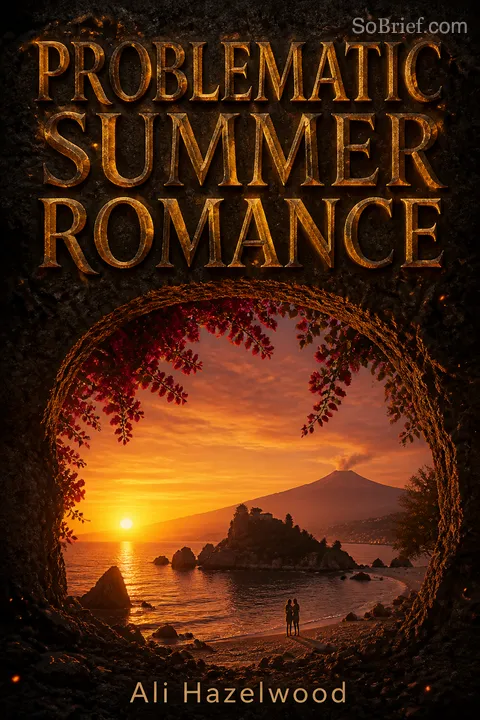
Resumen de la trama
Invitada Reacia a una Boda
Maya, una estudiante de posgrado de lengua afilada y emocionalmente compleja, afronta con aprensión la boda de destino de su hermano mayor, Eli, en Sicilia. No se trata solo del viaje o de las obligaciones familiares: la atormenta una reciente pelea con Conor, el mejor amigo de Eli y el amor secreto y prolongado de Maya. A pesar del consejo de su amiga Jade de fingir una enfermedad para evitar el evento, la lealtad de Maya prevalece. Aborda un avión junto al querido perro de Eli, Tiny, decidida a sobrevivir una semana de reencuentros incómodos, sentimientos no resueltos y la presión de ser la “hermanita” en una familia que ya ha soportado demasiadas pérdidas.
Llegada a Sicilia, Viejas Heridas
Al llegar a Sicilia, Maya se ve inmediatamente inmersa en el círculo cercano de Eli: Rue, su enigmática prometida; Conor, el taciturno padrino; y un elenco de amigos y ex parejas, entre ellos Avery, la reciente exnovia de Conor. La villa es impresionante, el paisaje sobrecogedor, pero el paisaje interior de Maya está tormentoso. Viejos duelos por la muerte de sus padres, su turbulenta adolescencia y su complicada relación con Eli resurgen con fuerza. La presencia de Conor—más maduro, emocionalmente distante y aún magnético—obliga a Maya a confrontar la tensión no resuelta entre ellos, especialmente al recordar la última vez que hablaron y los límites que él impuso.
El Problema con Conor
Conor es una presencia constante y perturbadora. Su historia es compleja: fue confidente de Maya, su llamada nocturna, su ancla emocional. Pero tras un año de silencio, ahora es frío, formal y aparentemente desinteresado. Los intentos de Maya por entablar conversación son respondidos con monosílabos, y cuando insiste, Conor la acusa de inmadura y nerviosa. El verdadero problema, tácito pero palpable, es la diferencia de edad y el tabú de que ella sea la hermana de Eli. La ira y el anhelo de Maya hierven bajo la superficie, decidida a purgar sus sentimientos por Conor o forzar una confrontación.
Lazos Fraternos, Cicatrices Familiares
La relación entre Maya y Eli es a la vez un salvavidas y una fuente de sufrimiento. Tras la muerte de sus padres, Eli se convirtió en su tutor, pero su vínculo se forjó en el trauma y el malentendido. Ambos hermanos cargan con culpa y arrepentimiento: Eli por su ausencia y Maya por su adolescencia rebelde y airada. Su dinámica se refleja en la reunión de la boda: amigos que se volvieron familia, padres sustitutos y la sombra siempre presente de la pérdida. La lucha de Maya por definirse más allá de ser “la hermanita de Eli” se complica por sus propios logros y las expectativas que recaen sobre ella.
La Caótica Fiesta de Boda
La fiesta de boda es un microcosmos de la adultez desordenada: la torpeza social de Rue, el ingenio afilado de Nyota, la confianza fingida de Tisha y la energía caótica de los hermanos del hockey. Maya encuentra consuelo en su amistad con Nyota, quien la anima a disfrutar de un “romance problemático de verano” si eso es lo que desea. Las bromas del grupo son a la vez escudo y arma, ocultando inseguridades y deseos profundos. Bajo los juegos y chistes, todos buscan conexión, validación y un sentido de pertenencia.
Colapso en Edimburgo, Rescate Inesperado
Tres años antes, Maya tocó fondo en Edimburgo tras una ruptura brutal y la traición de sus amigos. En un momento de desesperación, llamó a Eli, pero contestó Conor. Lo que comenzó como un intercambio incómodo y hostil se convirtió en un salvavidas: Conor escuchó, ofreció ayuda práctica y, por primera vez, vio a Maya como adulta. Su conexión se profundizó con llamadas nocturnas, vulnerabilidad compartida y un entendimiento mutuo de la ira y la pérdida. Fue el inicio de su enredo emocional: una amistad que se desdibujó en algo más.
Verano de Segundas Oportunidades
De regreso en Sicilia, la proximidad forzada de la semana de boda reaviva la conexión entre Maya y Conor. Comparten momentos de intimidad genuina: contemplar estrellas, confesiones y bromas juguetonas. Sin embargo, cada paso adelante se encuentra con uno atrás: la insistencia de Conor en mantener límites, la frustración de Maya ante su negación, y el espectro siempre presente de la desaprobación de Eli. La tensión es eléctrica, y la posibilidad de un romance “problemático” se convierte en tentación y amenaza.
Cena, Celos y Ex Parejas
La semana de boda es un carrusel de cenas grupales, salidas a la playa y conversaciones nocturnas. Surgen celos: Maya se inquieta por la fácil complicidad de Conor con Avery y Tamryn, su madrastra y amiga cercana. Un incidente de casi ahogamiento con Avery saca a la superficie viejas heridas, obligando a Maya a enfrentar sus inseguridades y la realidad de que la vida de Conor está llena de mujeres “de edad apropiada” y aparentemente menos complicadas. La dinámica del grupo se pone a prueba por enfermedades, malentendidos y el caos de una boda en destino que se descontrola.
Confesiones Bajo las Estrellas
Bajo el cielo siciliano, Maya y Conor finalmente tienen la conversación que han evitado. Desnudan sus miedos: la culpa de Conor por la diferencia de edad y su creencia de que está “aprovechándose”, la ira de Maya por ser infantilizada y su insistencia en su propia agencia. Sus confesiones son crudas, dolorosas y catárticas. Por primera vez, Conor admite que quiere a Maya, pero teme hacerle daño. Maya, a su vez, exige ser vista como igual, no como niña. La noche termina con un avance y la promesa de más.
El Desastre: Intoxicación y Rescate
La fiesta de boda sufre una intoxicación tras un lote defectuoso de arancello casero, dejando a pocos en pie. Maya, Conor y Minami se unen en su supervivencia compartida, y la crisis elimina las máscaras. Más tarde, un perro perdido (Bitty) y una erupción volcánica suman caos, pero también brindan oportunidades para que Maya y Conor colaboren, rescaten y cuiden a otros. Estos momentos de crisis revelan la profundidad de su alianza y cómo se complementan.
El Pasado se Repite
Intercalados en el drama presente, los flashbacks muestran la evolución de la relación entre Maya y Conor: su primera noche juntos en Edimburgo, las secuelas del desamor y la lenta construcción de confianza y deseo. Estos recuerdos no son solo románticos, sino fundamentales, mostrando cómo dos personas rotas encontraron consuelo mutuo. El pasado nunca está lejos del presente, y cada paso adelante está marcado por lo que fue.
Juegos en la Playa y Casi Ahogamientos
Un día en la playa se torna competitivo, con el infame lado “Mayageddon” de Maya emergiendo durante un partido de fútbol. Su intensidad es a la vez defecto y fortaleza, y Conor se siente exasperado y encantado. Cuando Avery casi se ahoga, los instintos protectores de Conor se activan, y Maya debe enfrentar sus celos y la realidad de sus sentimientos. El incidente marca un punto de inflexión, acercando a Maya y Conor, aunque sigan resistiéndose a lo inevitable.
El Cachorro y el Volcán
Mientras el Monte Etna entra en erupción y los planes de viaje se trastocan, Maya y Conor se unen para encontrar a Tiny, que ha desaparecido. Su búsqueda los lleva a Isola Bella, donde rescatan tanto a Tiny como a un cachorro callejero, Bitty. La aventura es angustiosa y unificadora, culminando en un momento de intimidad física y emocional en una gruta oculta. Los desastres naturales reflejan la agitación interna de los personajes, y el rescate se convierte en metáfora de su relación: desordenada, arriesgada y, en última instancia, gratificante.
La Verdad Sobre Nosotros
La presión de la boda, el caos de la semana y la tensión no resuelta entre Maya y Conor llegan a un punto crítico. Maya finalmente confiesa sus verdaderos sentimientos—no solo a Conor, sino a Eli y al resto del grupo. La verdad es compleja: Maya ha aplazado su oferta del MIT, decidió quedarse en Austin y quiere enseñar, no perseguir prestigio. Conor, a su vez, admite que ha estado enamorado de Maya durante años, pero temía actuar. Su honestidad es liberadora y aterradora, pero despeja el camino para una relación real.
La Boda Que No Fue
Con la boda oficial en peligro por el volcán y el caos de los viajes, Eli y Rue deciden casarse en una ceremonia privada al amanecer, con solo Maya y Conor como testigos. El momento es íntimo, emotivo y sanador. Recuerda que el amor no se trata de gestos grandiosos o circunstancias perfectas, sino de elegirse una y otra vez, incluso cuando todo lo demás se desmorona. La boda se convierte en símbolo de resiliencia, familia y la belleza caótica de la vida real.
Consecuencias y Nuevos Comienzos
En los días posteriores a la boda, Maya y Conor finalmente se permiten estar juntos—completamente, abiertamente y sin reservas. Enfrentan las reacciones de amigos y familia, confrontan la realidad de su diferencia de edad y errores pasados, y hacen planes para el futuro. La historia no termina con un cuento de hadas, sino con la promesa de un amor real, imperfecto y arduamente ganado. Maya y Conor ya no están definidos por su pasado, sino por las decisiones que toman juntos.
Personajes
Maya Killgore
Maya es una estudiante de posgrado en física, ferozmente inteligente y emocionalmente volátil. Huérfana desde joven, fue criada por su hermano mayor, Eli, con quien mantiene un vínculo complicado, amoroso y a veces adversarial. Sus rasgos definitorios son su agudeza, su ira (mecanismo de defensa contra el duelo y el abandono) y su implacable impulso por demostrarse a sí misma. Su relación con Conor es el núcleo emocional de la novela: él es su confidente y su mayor fuente de dolor. A lo largo de la historia, Maya evoluciona de una joven autodestructiva y defensiva a alguien capaz de vulnerabilidad, perdón y amor verdadero. Su viaje es la reivindicación de su agencia—sobre su carrera, sus relaciones y su propia narrativa.
Conor Harkness
Conor es el mejor amigo de Eli, un exitoso inversor en biotecnología y objeto del afecto prolongado de Maya. Se define por su reserva emocional, la culpa por su crianza privilegiada pero traumática y su obsesiva necesidad de control. Su mayor miedo es hacer daño a Maya—por la diferencia de edad, sus propios traumas y las dinámicas de poder. Es a la vez protector y saboteador, alejando a Maya por un sentido erróneo de responsabilidad. Su arco es de autoaceptación: aprender a confiar en la agencia de Maya, creer que merece amor y soltar el control absoluto. Su amor por Maya es transformador, enfrentándolo a sus miedos y deseos más profundos.
Eli Killgore
Eli es el hermano mayor y tutor sustituto de Maya tras la muerte de sus padres. Es un clásico triunfador: exitoso, generoso y profundamente leal. Su relación con Maya está cargada de culpa (por no estar lo suficiente) y orgullo (por sus logros). Su propio viaje es de soltar—confiar en que Maya tome sus propias decisiones, aceptar su relación con Conor y abrazar su felicidad con Rue. Es el ancla emocional del grupo, quien une a todos, pero también el más atormentado por el pasado.
Rue
Rue es la prometida y futura esposa de Eli. Socialmente torpe, introvertida y a menudo incomprendida, su lealtad y profundidad son inigualables. Su relación con Maya evoluciona de la distancia cautelosa a una verdadera hermandad. Es el centro emocional del mundo de Eli, y su presencia saca lo mejor de quienes la rodean. Su arco trata sobre aprender a aceptar el amor, confiar en los demás y encontrar su lugar en una nueva familia.
Nyota
Nyota es amiga de Rue y confidente de Maya. Abogada exitosa, es implacablemente honesta, ferozmente protectora y siempre lista con un comentario punzante. Anima a Maya a abrazar sus deseos, a ser “problemática” si eso la hace feliz, y a dejar de disculparse por su ira. Es la voz de la razón y la rebeldía, impulsando a Maya a reclamar su propia narrativa.
Avery
Avery es la reciente exnovia de Conor, colega en Harkness y nueva integrante del grupo de amigos. Es cálida, inteligente y genuinamente solidaria, pero su presencia genera inseguridad en Maya. Su arco trata sobre soltar el pasado, aceptar que algunos amores no están destinados y encontrar su propio camino.
Tamryn
Tamryn es una figura compleja: madrastra, amiga cercana y socia de negocios de Conor. Simboliza tanto la disfunción familiar como la fortaleza. Su relación con Conor es casi fraternal, y brinda apoyo crucial durante las batallas legales familiares. Su arco es de supervivencia, reinvención y el poder de la familia elegida.
Minami
Minami es miembro fundadora de Harkness, exnovia de Conor y madre sustituta para Maya. Es serena, cuidadora y profundamente perspicaz. Su pasado con Conor genera tensión pero también crecimiento para ambos. Su viaje trata sobre abrazar el cambio, construir una nueva familia y apoyar a quienes ama.
Tisha
Tisha es amiga de la infancia de Rue y el alma de la fiesta. Es ruidosa, divertida y no teme señalar las tonterías. Su papel es mantener al grupo con los pies en la tierra, aportar ligereza en momentos tensos y recordar que la vida es para vivirla, no solo para sobrevivirla.
Tiny y Bitty
Tiny, el querido perro rescatado de Eli, y Bitty, el cachorro callejero rescatado por Maya y Conor, son más que mascotas: representan amor incondicional, segundas oportunidades y el caótico y alegre desorden de la familia.
Recursos Narrativos
Doble Línea Temporal y Flashbacks
La novela utiliza una estructura de doble línea temporal, alternando entre la semana de boda actual en Sicilia y flashbacks a momentos formativos de Maya y Conor en Edimburgo y Austin. Este recurso permite al lector ver la evolución de su relación, las raíces de su trauma y cómo el pasado sigue moldeando el presente. Los flashbacks no son solo exposición, sino anclas emocionales que aportan contexto y profundidad a las decisiones de los personajes.
Proximidad y Intimidad Forzada
El escenario de la boda de destino obliga a Maya y Conor a convivir muy cerca, despojándolos de sus defensas habituales y excusas. La proximidad física, las crisis compartidas (intoxicación, perros perdidos, erupciones volcánicas) y la intensidad emocional de la semana crean un crisol donde viejas heridas se reabren y se forjan nuevos lazos. El entorno es a la vez idílico y claustrofóbico, reflejando las luchas internas de los personajes.
Simbolismo de Perros y Naturaleza
Tiny y Bitty, los perros rescatados, simbolizan lealtad, perdón y la posibilidad de nuevos comienzos. El paisaje siciliano—su belleza, peligro e imprevisibilidad—refleja el terreno emocional de los personajes. La erupción volcánica, la gruta oculta y los jardines salvajes funcionan como metáforas de la naturaleza caótica e incontrolable del amor y la sanación.
Caracterización a través del Diálogo
La voz de la novela es aguda, mordaz y profundamente personal. El diálogo es el principal medio de caracterización, revelando no solo lo que piensan los personajes, sino cómo se sienten, qué temen y qué desean. La charla oculta vulnerabilidad, pero también crea espacio para la sinceridad real. El humor es a la vez escudo y puente, permitiendo la conexión incluso cuando las palabras fallan.
Repetición Temática y Motivos
Los temas recurrentes de ira, agencia y el derecho a ser “problemática” están tejidos a lo largo de la narrativa. La lucha de Maya por apropiarse de su ira, exigir respeto y negarse a ser infantilizada se refleja en su relación con Conor, su familia y amigos. El motivo del “romance problemático de verano” es tanto un desafío como una celebración: un llamado a abrazar la imperfección, luchar por la felicidad y rechazar la idea de que el amor debe ser ordenado o indiscutible.
Análisis
Problematic Summer Romance es una historia de amor para la era de la terapia, los chats grupales y la duda constante. Trata sobre cómo el trauma persiste, la dificultad de confiar en la felicidad y el valor que se necesita para reclamar la propia narrativa—aunque sea “problemática”. La novela de Ali Hazelwood es a la vez una crítica aguda a las expectativas sociales (sobre edad, género, familia y ambición) y una celebración del camino desordenado y no lineal hacia el amor y la sanación. La lección del libro es clara: el amor real no busca la perfección, sino elegir al otro—una y otra vez—a pesar del miedo, la historia y las probabilidades. Se trata de hacer espacio para la ira, la alegría, las segundas oportunidades y el tipo de felicidad que se gana, no se recibe. Al final, la historia de Maya y Conor es un testimonio del poder de la vulnerabilidad, la necesidad del perdón y la belleza de amar—y ser amado—en tus propios términos.
También leyeron





Preguntas frecuentes
Synopsis & Basic Details
What is Problematic Summer Romance about?
- A physicist's chaotic destination wedding week: The story follows Maya, a sharp-witted physics graduate student, as she reluctantly attends her older brother Eli's destination wedding in Sicily. The week is complicated by the presence of Conor Harkness, Eli's best friend and Maya's long-standing, complicated crush, with whom she has a fraught history and unresolved feelings.
- Navigating past trauma and present tension: Set against the backdrop of a beautiful but increasingly chaotic Sicilian villa and landscape (including a looming Mount Etna), Maya must confront her grief over her parents' deaths, her turbulent adolescence, and her complex relationship with Eli, all while navigating the intense emotional tension with Conor and the dynamics of a messy wedding party.
- Finding love and self-acceptance amidst chaos: As unexpected disasters strike (food poisoning, a volcanic eruption, lost dogs), Maya and Conor are forced into proximity and forced intimacy, peeling back layers of self-denial, fear, and misunderstanding. The novel explores themes of age gaps, power dynamics, emotional vulnerability, and ultimately, finding a hard-won connection and self-acceptance.
Why should I read Problematic Summer Romance?
- Sharp wit and relatable emotional depth: Readers who enjoy witty, first-person narration and characters grappling with real emotional complexities will be drawn to Maya's voice and internal struggles. The dialogue-driven characterization is often hilarious, masking deeper vulnerabilities.
- Unique exploration of age gap and power dynamics: The book delves into the nuances of an age-gap relationship, particularly from the perspective of the younger woman, challenging traditional tropes and exploring themes of agency, consent, and self-worth in a thought-provoking way.
- A messy, unconventional romance with high stakes: Beyond the central romance, the story features a vibrant cast of supporting characters, unexpected plot twists (like volcanic eruptions and missing dogs), and a focus on found family and healing, making for an engaging and unpredictable read.
What is the background of Problematic Summer Romance?
- Austin roots and family trauma: The protagonist, Maya, and her brother Eli grew up in Austin, Texas. Their lives were significantly impacted by the unexpected deaths of their parents, leading to Eli becoming Maya's guardian and shaping their complicated bond and Maya's rebellious adolescence.
- The world of biotech finance: Eli and Conor are founding partners of Harkness, a biotech-focused firm. This background introduces a world of high finance, intense work culture, and specific jargon, contrasting with Maya's academic/teaching aspirations and highlighting the different worlds the characters inhabit.
- Sicilian setting and cultural context: The destination wedding takes place in Taormina, Sicily. The setting provides a rich cultural backdrop, from local customs (like granita for breakfast, beliefs about swimming after eating) to the dramatic natural landscape (Mount Etna, Isola Bella), which often mirrors the emotional turbulence of the characters.
What are the most memorable quotes in Problematic Summer Romance?
- "Problematicus.": Conor's dry, self-aware comment about the Harkness family insignia being "Fucked up" in Latin (Chapter 16) encapsulates the novel's central theme of embracing messiness and acknowledging inherent flaws, particularly within his own family and potentially his relationship with Maya.
- "I have never wanted anything as desperately, as ungovernably, as persistently as I want you.": Conor's raw confession to Maya in Chapter 36, revealing the depth of his long-held feelings and the immense effort he put into resisting them, marks a pivotal turning point where his carefully constructed emotional walls finally crumble.
- "I love you, Maya. And no. It's never going to pass.": Conor's declaration in Chapter 38, immediately after their first kiss, directly refutes his earlier assertion that Maya's feelings for him would fade (Chapter 35). This quote signifies his full acceptance of his love for her and his commitment to their future, regardless of the complexities.
What writing style, narrative choices, and literary techniques does Ali Hazelwood use?
- First-person, witty, and internal narration: The story is told primarily from Maya's perspective, characterized by a sharp, often sarcastic, and highly internal voice. This allows readers deep access to her thoughts, anxieties, and emotional processing, driving much of the character development through her internal monologue and reactions.
- Dual timelines and flashbacks: The narrative weaves between the present-day wedding week and significant moments from the past three years of Maya and Conor's interactions. This structure builds suspense, reveals the history of their connection gradually, and provides crucial context for their present-day dynamic and emotional baggage.
- Dialogue-driven characterization: A significant portion of the storytelling occurs through dialogue, particularly the witty, fast-paced banter between characters. This serves not only as a source of humor but also as a key method of characterization, revealing personalities, relationship dynamics, and underlying tensions through subtext and wordplay.
Hidden Details & Subtle Connections
What are some minor details that add significant meaning?
- Lucrezia's traditional beliefs and familiarity: The housekeeper, Lucrezia, initially seems like a minor character, but her insistence on local superstitions (like not swimming after eating, the power of urine for stings) and her familiar interactions with Conor (ruffling his hair, knowing his history with the villa) subtly highlight the deep roots of the setting and Conor's personal connection to the place, hinting at his family's history there before it's explicitly revealed.
- The recurring motif of plants and gardening: From Rue's cucamelon plant gift to Maya, the descriptions of the lush villa gardens, the lemon grove, the vineyard, and the wildflowers, plants symbolize nurturing, growth, and the possibility of cultivating something beautiful from difficult beginnings, mirroring Maya's journey of building a "nice adulthood over the ruins of a shitty adolescence" and her eventual career choice in teaching.
- Conor's subtle physical reactions to Maya: Despite his attempts at emotional control, small physical tells like his jaw twitching, nostrils flaring, or hands clenching when Maya challenges him or flirts with others reveal the depth of his suppressed feelings and the effort it takes for him to maintain his distance, often noticed more by other characters (like Nyota) than by Maya herself initially.
What are some subtle foreshadowing and callbacks?
- The Edinburgh scrunchie: The plaid scrunchie Maya loses in Conor's hotel room in Edinburgh (Chapter 19) and which he keeps for three years, only revealed in Chapter 36, is a powerful symbol of his hidden feelings and the significance he placed on their initial connection, foreshadowing the depth of his long-term attachment despite his actions.
- Conor's knowledge of Maya's habits: Conor's seemingly uncanny knowledge of Maya's routines (her swimming laps, her Post-it note system, her music listening) is initially presented as observational or inferred (Chapter 16, 23), but later revealed to be a result of his deliberate, long-term attention and care (paying for her music app, asking Eli about her), subtly building the evidence of his deep, hidden feelings over time.
- The "Problematic" label: The word "problematic" is used early on by Conor to describe their potential relationship (Chapter 23) and later by Minami to describe potential issues (Chapter 43). This recurring label, also in the book's title, foreshadows the central conflict and debate surrounding their age gap and history, framing it as an inherent challenge they must navigate.
What are some unexpected character connections?
- Tamryn as Conor's stepmother: The reveal that Tamryn, initially presented as Conor's close friend and business partner, is also his stepmother (Chapter 16) adds a significant layer to his family background and his relationship with her, explaining their unique bond and shared history outside of work.
- Paul's connection to Maya's career decisions: Paul, Axel's brother and a fellow guest, is revealed to be working at Sanchez (Chapter 8) and later accidentally reveals Maya's decision to turn down the Sanchez offer and defer MIT (Chapter 32). This seemingly minor connection highlights how interconnected the characters' lives are and how news about Maya, particularly her accomplishments, travels through Eli's network, even reaching people she barely knows.
- Conor's hidden acts of care for Maya: Subtle details reveal Conor's long-term, behind-the-scenes support for Maya, such as arranging for her graduation computer (Chapter 34), building her bookshelves (Chapter 34), and donating to her college department (Chapter 34). These acts, hidden from Maya and initially from the reader, demonstrate a depth of care that goes far beyond casual friendship and reframe his motivations.
Who are the most significant supporting characters?
- Eli Killgore: As Maya's older brother and guardian, Eli is central to her past trauma and present healing. His relationship with Maya is a core emotional thread, and his eventual acceptance of her choices and relationship with Conor is a major turning point.
- Rue: Eli's fiancée and later wife, Rue's quiet strength and genuine connection with Maya evolve into a significant sisterly bond. Her presence brings stability and emotional depth to Eli and the group, and her own journey of finding belonging mirrors Maya's.
- Minami: A founding partner at Harkness, Conor's ex, and a surrogate mother figure to Maya, Minami provides crucial emotional support and insight. Her past relationship with Conor and her perspective on his character are vital to understanding his complexities and the history of the firm.
- Nyota: Maya's sharp-witted friend, Nyota serves as a confidante and source of comedic relief. Her directness and encouragement push Maya to confront her feelings and assert her agency, providing external validation for Maya's internal struggles.
Psychological, Emotional, & Relational Analysis
What are some unspoken motivations of the characters?
- Conor's fear of repeating his father's patterns: A deep, unspoken motivation for Conor is his fear of becoming like his cruel, manipulative father (Chapter 16, 24). This drives his obsessive need for control, his resistance to vulnerability, and his misguided attempts to push Maya away, believing he is protecting her from his own potential for harm or taking advantage due to their age/power difference.
- Maya's need for external validation of her worth: Maya's drive for academic achievement and her sensitivity to criticism (especially from Eli or Conor) stem from a deep-seated need to prove her worth, particularly after the trauma of losing her parents and her difficult adolescence. Her anger often flares when she feels misunderstood or dismissed, as seen in her reactions to Conor's initial judgment or Eli's concern about her career choices.
- Eli's guilt over Maya's upbringing: Eli carries unspoken guilt over his perceived failures as Maya's guardian during her teenage years (Chapter 24). This motivates his fierce protectiveness, his pride in her accomplishments (sometimes expressed awkwardly), and his desire for her to be happy and settled, even if it means letting go of his own expectations for her career.
What psychological complexities do the characters exhibit?
- Maya's anger as a trauma response: Maya's "Mayageddon" persona and quick temper are explicitly linked to her unresolved grief and trauma from losing her parents and being thrust into a difficult living situation with Eli (Chapter 2). Her journey involves recognizing this anger as a defense mechanism and learning healthier coping strategies, though it still surfaces under stress or perceived threat.
- Conor's control as a coping mechanism: Conor's need for control, evident in his work, his personal life, and his interactions with Maya, is a direct result of his chaotic and emotionally abusive upbringing (Chapter 16, 24). He attempts to manage his environment and relationships to avoid the unpredictability and pain he experienced as a child, leading to emotional repression and difficulty with vulnerability.
- Rue's social anxiety and communication style: Rue's quietness and perceived coldness are psychological complexities stemming from social anxiety and a unique communication style (Chapter 7). Her comfort with silence and direct, often literal, way of speaking are initially misinterpreted by others, but Maya learns to understand and appreciate them, highlighting the importance of looking beyond surface impressions.
What are the major emotional turning points?
- Maya's breakdown call to Conor in Edinburgh: The desperate phone call Maya makes to Conor after her breakup and betrayal (Chapter 6) is a major turning point, establishing the foundation of their deep emotional connection and revealing Maya's vulnerability and Conor's unexpected capacity for care.
- The cave scene on Isola Bella: The intimate encounter in the grotto (Chapter 29, 30) is a pivotal emotional and physical turning point. It forces Maya and Conor to confront their undeniable attraction and the depth of their feelings, breaking through years of resistance and setting the stage for their eventual relationship.
- Eli and Maya's fight and reconciliation: The heated argument and subsequent heartfelt conversation between Eli and Maya about her career choices and his pride in her (Chapter 32) is a significant emotional turning point in their sibling relationship, allowing them to clear the air, express their love and respect, and move past old patterns of misunderstanding.
- Conor's declaration of love after the sunrise wedding: Conor's confession of love to Maya (Chapter 38), immediately following Eli and Rue's intimate wedding ceremony, is the ultimate emotional climax of their relationship arc, signifying his full acceptance of his feelings and his commitment to a future with her, regardless of his fears.
How do relationship dynamics evolve?
- Maya and Conor: From distant friends to undeniable lovers: Their dynamic shifts dramatically from awkward avoidance and unresolved tension (Chapter 3) to tentative connection (Chapter 7), intense emotional and physical intimacy (Chapter 29, 36), and finally, an open, committed relationship (Chapter 38, 43), overcoming years of resistance and external/internal obstacles.
- Maya and Eli: From fraught guardianship to mutual respect: Their relationship evolves from the strained dynamic of a rebellious teenager and her overwhelmed older brother (Chapter 2, 34) to one of mutual understanding, forgiveness, and deep respect (Chapter 32, 38), acknowledging past hurts while affirming their strong bond.
- Maya and Rue: From wary strangers to chosen sisters: Initially marked by awkwardness and perceived coldness (Chapter 7), their relationship blossoms into a genuine, supportive sisterhood (Chapter 7, 28, 38), built on quiet understanding, shared experiences, and mutual affection, becoming a key part of Maya's chosen family.
- The wedding party group dynamic: From disparate individuals to a supportive unit: The diverse group of friends and family, initially brought together by Eli and Rue, evolves into a supportive, albeit chaotic, unit (Chapter 5, 8, 28, 40). Shared crises and vulnerabilities foster genuine connections, highlighting the theme of found family and the strength found in community.
Interpretation & Debate
Which parts of the story remain ambiguous or open-ended?
- The full details of the Harkness firm's founding and the Minami/Conor breakup: While hinted at (Chapter 4, 24), the precise circumstances surrounding Eli, Conor, and Minami being kicked out of UT and the full story behind Conor and Minami's breakup remain somewhat ambiguous, leaving room for interpretation regarding the depth of past hurts and loyalties.
- The long-term impact of the age gap and power dynamics: While the novel ends with Maya and Conor committing to navigating their relationship, the future challenges posed by their age difference, Conor's wealth/influence, and their differing life stages are acknowledged but remain open-ended, suggesting that their "problematic" romance will require ongoing effort and communication.
- The extent of Rose's knowledge and betrayal: The degree to which Maya's best friend, Rose, knew about Alfie and Georgia's relationship before Maya found out (Chapter 15, 25) is debated by characters and left somewhat open to interpretation, highlighting the subjective nature of betrayal and the pain of losing a close friendship.
What are some debatable, controversial scenes or moments in Problematic Summer Romance?
- Conor's initial dismissal and judgment of Maya: Conor's accusation that Maya is "high" and his instruction for her to "stop acting like the childish brat" (Chapter 3) is a controversial moment that sparks debate about his character, his perception of Maya, and the appropriateness of his behavior, particularly given their history and the age gap.
- The power dynamics discussion and Conor's resistance: The extended debate between Maya and Conor about the power imbalance in their potential relationship (Chapter 19, 30, 36) is central to the novel's "problematic" theme. Readers may debate whether Conor's concerns are valid or a form of self-sabotage/infantilization, and whether Maya's insistence on her agency fully negates these dynamics.
- The intimate encounters in the cave and Conor's room: The scenes where Conor brings Maya to orgasm without fully participating himself (Chapter 30, 36) are debatable in terms of power dynamics and consent, particularly given their unresolved emotional tension and Conor's stated fears of taking advantage. While Maya asserts her agency and desire, the moments raise questions about control and vulnerability.
Problematic Summer Romance Ending Explained: How It Ends & What It Means
- Eli and Rue's impromptu wedding: The novel culminates not with the planned large wedding, but with Eli and Rue marrying in a private sunrise ceremony witnessed only by Maya and Conor (Chapter 38). This signifies that their love is about their commitment to each other, not external validation or perfect circumstances, highlighting resilience and the beauty of finding joy amidst chaos.
- Maya and Conor embrace their "problematic" love: After years of resistance and misunderstanding, Maya and Conor finally acknowledge their deep love for each other and commit to a relationship (Chapter 38, 43). Conor overcomes his fear of hurting Maya and accepts that she is an adult capable of making her own choices, while Maya accepts Conor's flaws and self-doubt, choosing him despite the complexities.
- A future built on honesty and shared vulnerability: The ending is not a tidy "happily ever after" but a realistic beginning. They acknowledge the challenges ahead (age gap, distance, Conor's work-life balance, family dynamics) but choose to face them together, prioritizing honesty, communication, and mutual support. Maya's decision to stay in Austin and teach, rather than pursue a prestigious but unfulfilling career, symbolizes her self-acceptance and commitment to her own happiness, which aligns with building a life with Conor on their own terms.
Not in Love Serie






Descargar PDF
Descargar EPUB
.epub digital book format is ideal for reading ebooks on phones, tablets, and e-readers.








































