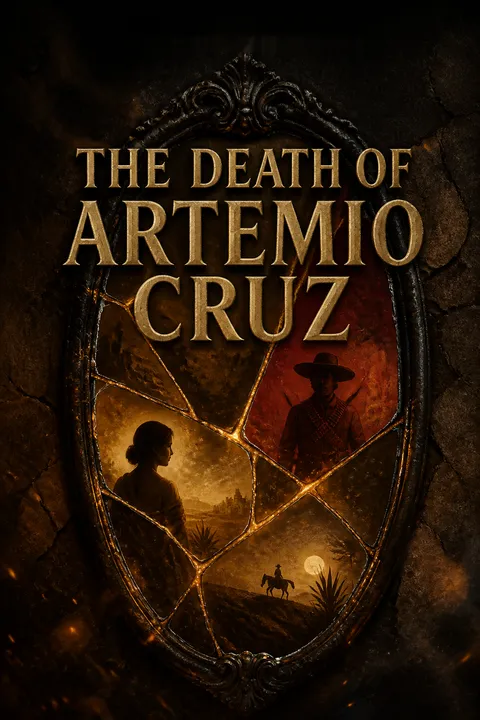
Resumen de la trama
Despertar en el lecho de muerte
La novela comienza con Artemio Cruz, un hombre poderoso y adinerado mexicano, tendido en su lecho de muerte. Su cuerpo se deteriora y oscila entre la conciencia y el desvanecimiento, rodeado por su esposa distanciada, Catalina, su resentida hija Teresa y otras figuras de su vida. La narrativa fragmentada alterna entre primera, segunda y tercera persona, reflejando la desorientación de Cruz y la disolución de su identidad. Mientras médicos y sacerdotes lo atienden, Cruz resiste sus cuidados, aferrado a su orgullo y negándose a mostrar vulnerabilidad. La decadencia física de su cuerpo refleja la corrupción moral y emocional que ha marcado su existencia. Esta apertura establece el motivo central: un hombre que confronta la suma de sus decisiones, atormentado por el arrepentimiento, el orgullo y la certeza de que su poder no podrá salvarlo de la muerte.
Reflejos fragmentados
La mente de Cruz vaga entre recuerdos, cada uno un fragmento de su pasado, refractado por el dolor y el delirio. Se ve a sí mismo en espejos, en los rostros ajenos y en las relaciones rotas que definen su existencia. La estructura narrativa imita esta fragmentación, saltando entre épocas y perspectivas. La identidad de Cruz no es un todo coherente, sino un collage de roles: revolucionario, amante, esposo, padre, magnate, traidor. La narrativa dislocada subraya la imposibilidad de reconciliar estos yoes y la futilidad de buscar redención al final. Sus reflexiones están teñidas de amargura, al reconocer el costo de su ambición y el vacío de sus victorias.
La promesa de la Revolución
De joven, Cruz se une a la Revolución Mexicana, impulsado por la esperanza de justicia y cambio. Lucha con valentía, forja lazos con sus compañeros y se enamora de Regina, una mujer cuya pureza y pasión encarnan la promesa revolucionaria. Sin embargo, la violencia y las traiciones de la guerra erosionan sus ideales. Presencia la ejecución de camaradas, el sufrimiento de los pobres y el ascenso de nuevos opresores. La Revolución, destinada a liberar, se convierte en vehículo de lucro y poder personal. Las decisiones de Cruz —a veces cobardes, otras despiadadas— lo alejan del idealismo, anticipando los compromisos y traiciones que definirán su vida posterior.
Amor y pérdida: Regina
Regina es el gran amor de la vida de Cruz, una relación marcada por la pasión, la ternura y la tragedia. Su tiempo juntos es breve pero transformador, ofreciéndole a Cruz un atisbo de felicidad y plenitud. La muerte de Regina —víctima colateral de la violencia revolucionaria— se convierte en la herida central de su existencia. Él sobrevive, pero a costa de su alma. El recuerdo de Regina lo persigue, símbolo de lo que pudo haber sido y recordatorio de la inocencia y el amor sacrificados por la supervivencia y la ambición. Su pérdida es el eje alrededor del cual giran sus arrepentimientos.
El precio de la supervivencia
La vida de Cruz es una sucesión de decisiones tomadas en nombre de la supervivencia. Traiciona amigos, amantes e ideales, justificando cada acto como necesario. En un momento crucial, elige salvarse a sí mismo a costa de otros, consolidando su reputación como un hombre dispuesto a todo para vivir. Este pragmatismo le trae riqueza y poder, pero también aislamiento y culpa. La narrativa explora el costo psicológico de estas elecciones, mientras Cruz se distancia cada vez más de quienes lo rodean y de su propio sentido del yo. La supervivencia, en la visión de Fuentes, es a la vez triunfo y maldición.
Matrimonio y traición
Tras la Revolución, Cruz se casa con Catalina, hija de un terrateniente adinerado, no por amor sino por ascenso social. Su matrimonio está cargado de resentimiento, agravios no expresados y distancia emocional. Catalina, antes orgullosa y fuerte, se ve disminuida por la indiferencia y las infidelidades de Cruz. Su relación se convierte en un campo de batalla de orgullo y dolor, con ambos incapaces de perdonar o conectar. El matrimonio engendra hijos, pero también perpetúa ciclos de traición y desilusión. La incapacidad de Cruz para amar o ser amado es tragedia personal y metáfora de los fracasos de la nueva élite mexicana.
Construyendo un imperio
Cruz aprovecha sus credenciales revolucionarias y su matrimonio para amasar una gran fortuna. Se convierte en magnate de medios, terrateniente y operador político, manipulando el poder para beneficio propio. Sus negocios se caracterizan por la corrupción, la explotación y alianzas con intereses extranjeros. Su ascenso refleja la transformación de México, del fervor revolucionario a la estasis oligárquica. La narrativa detalla sus métodos despiadados, su desprecio por los pobres y su visión cínica de la política. Sin embargo, bajo la fachada, Cruz sabe que su imperio está construido sobre arena y que su poder no lo protegerá de la pérdida ni de la muerte.
Familia y distanciamiento
Las relaciones de Cruz con su esposa, hija e hijo están envenenadas por su ausencia emocional y ambigüedad moral. Teresa, su hija, lo desprecia, viendo solo al tirano e hipócrita. Catalina, su esposa, está atrapada en un matrimonio sin amor, aferrada al orgullo y la religión como consuelo. Su hijo, Lorenzo, es enviado a luchar en la Guerra Civil Española, un gesto que es a la vez acto de amor y repetición del idealismo juvenil de Cruz. La familia solo se une por la decepción mutua y la búsqueda de la herencia. El lecho de muerte de Cruz no es lugar de reconciliación, sino de agravios sin resolver y verdades no dichas.
La corrupción del poder
A medida que Cruz acumula riqueza e influencia, se vuelve cada vez más corrupto, tanto moral como políticamente. Manipula sindicatos, soborna funcionarios y reprime la disidencia. Su periódico se convierte en herramienta de propaganda y vendettas personales. El poder aísla a Cruz, alimentando paranoia y cinismo. Está rodeado de aduladores y oportunistas, incapaz de confiar o ser confiado. La narrativa expone el vacío de sus logros, pues cada acto de dominación brinda solo satisfacción temporal y arrepentimiento duradero. El poder, en la visión de Fuentes, es una trampa que consume a quienes lo ejercen.
Los fantasmas del pasado
A medida que la muerte se acerca, Cruz es asediado por memorias de quienes ha perdido o traicionado: Regina, sus camaradas, su hijo, su propio yo juvenil. El pasado irrumpe en el presente, difuminando los límites entre memoria y realidad. Su mente repasa momentos de amor, violencia y cobardía, buscando sentido o absolución. Sin embargo, los fantasmas no ofrecen consuelo, solo recordatorios de lo desperdiciado. La narrativa sugiere que el pasado no puede ser escapado ni redimido, solo soportado. Las últimas horas de Cruz son un ajuste de cuentas con la suma de sus decisiones.
La siguiente generación
Los hijos de Cruz, especialmente Lorenzo, representan la posibilidad de renovación o repetición. La decisión de Lorenzo de luchar en España remite al pasado revolucionario de su padre, pero termina en tragedia. La generación joven queda atrapada entre el legado de la ambición paterna y el vacío de sus logros. La herencia que Cruz deja no es solo riqueza material, sino un patrón de orgullo, traición y desilusión. La novela cuestiona si el cambio verdadero es posible o si cada generación está condenada a repetir los fracasos de la anterior.
El peso de la memoria
A lo largo de la novela, la memoria es fuente de dolor y medio de supervivencia. Cruz se aferra a recuerdos de amor y juventud, aunque lo atormenten. El acto de recordar se vuelve una forma de afirmar la identidad frente a la muerte, de reclamar algún sentido en una vida marcada por el compromiso. Sin embargo, la memoria es también traicionera, selectiva y moldeada por el arrepentimiento. La novela sugiere que vivir es traicionar, y recordar es sufrir. Al final, la memoria es lo único que queda, un frágil baluarte contra el olvido.
El ajuste final
Cuando el cuerpo de Cruz falla, enfrenta las preguntas últimas: ¿Valió la pena? ¿Qué significa vivir, amar, traicionar, morir? La narrativa no ofrece respuestas fáciles. Sus momentos finales están marcados por el dolor, la confusión y un anhelo desesperado de conexión. Busca perdón, pero no puede pedirlo; desea amor, pero no puede darlo. Los últimos ritos del sacerdote, las lágrimas familiares, las disputas legales por su testamento, son rituales vacíos. Cruz muere como vivió: solo, orgulloso e irresuelto.
La herencia de México
La vida de Cruz es un microcosmos del México moderno: esperanza revolucionaria corrompida por el poder, idealismo sustituido por cinismo, promesa de cambio traicionada por el interés propio. La novela concluye con una meditación sobre el legado que Cruz deja, no solo a su familia, sino a su país. La riqueza, la tierra, las instituciones, la cultura del machismo y la corrupción forman parte de esa herencia. Fuentes sugiere que el ciclo de traición y desilusión no es solo personal, sino nacional. El desafío es si las futuras generaciones podrán liberarse.
El fin del camino
En las páginas finales, la conciencia de Cruz se disuelve. La voz narrativa se expande, abarcando no solo a Cruz sino a las generaciones anteriores y posteriores. Los límites entre el yo y el otro, pasado y presente, vida y muerte, se desdibujan y desvanecen. La novela cierra con un sentimiento de agotamiento, pero también de liberación. La muerte de Cruz es a la vez un final y un comienzo, un momento de juicio y la posibilidad de renovación. La historia de Artemio Cruz termina, pero la de México —y de quienes heredan su legado— continúa.
Personajes
Artemio Cruz
Artemio Cruz es la figura central, un hombre cuya vida abarca la Revolución Mexicana y el surgimiento del México moderno. Nacido pobre e ilegítimo, se convierte en revolucionario, luego en magnate adinerado, magnate de medios y manipulador político. Cruz se define por su voluntad de sobrevivir a cualquier costo, su capacidad para traicionar y su incapacidad para amar o ser amado. Psicológicamente, es un estudio de orgullo, culpa y alienación. Sus relaciones —con amantes, familia y camaradas— están marcadas por la explotación y la decepción. Al morir, Cruz debe enfrentar el vacío de sus logros y el dolor de sus recuerdos. Su viaje es tanto personal como emblemático de los ideales perdidos de una nación.
Regina
Regina es el gran amor de Cruz, una mujer cuya pasión y pureza representan la esperanza y el idealismo de la Revolución. Su relación con Cruz es breve pero transformadora, ofreciéndole un destello de felicidad y redención. Su muerte es el trauma central en la vida de Cruz, una herida que nunca sana. El recuerdo de Regina lo persigue, encarnando la inocencia y el amor sacrificados por la supervivencia y la ambición. Es a la vez persona real y símbolo de lo que México —y Cruz— pudieron haber sido.
Catalina
Catalina es la esposa de Cruz, hija de un terrateniente adinerado. Su matrimonio carece de amor, marcado por el resentimiento, el orgullo y la distancia emocional. Catalina es víctima y partícipe de los ciclos de traición que definen a su familia. Se aferra al orgullo y la religión, buscando consuelo en rituales y recuerdos. Su relación con Cruz es un campo de batalla, con ambos incapaces de perdonar o conectar. La complejidad psicológica de Catalina radica en su dependencia y odio simultáneos hacia Cruz, y en su incapacidad para liberarse del pasado.
Teresa
Teresa es la hija de Cruz, figura de amargura y decepción. Desprecia a su padre por su hipocresía y ausencia emocional, y su relación con su madre está marcada por el resentimiento mutuo. La vida de Teresa está moldeada por el legado de la ambición paterna y el vacío de sus logros. Es víctima y perpetuadora de la disfunción familiar, incapaz de escapar de los patrones de orgullo y traición que definen su herencia.
Lorenzo
Lorenzo es el hijo de Cruz, enviado a luchar en la Guerra Civil Española. Representa la posibilidad de renovación, la esperanza de que una nueva generación pueda romper los ciclos del pasado. Sin embargo, su destino refleja el de su padre: idealismo aplastado por la violencia y la traición. La muerte de Lorenzo es tragedia personal y símbolo del fracaso de los sueños revolucionarios. Su historia subraya la pregunta central de la novela: ¿puede la siguiente generación escapar del legado de sus padres?
Padilla
Padilla es el asistente de confianza de Cruz, quien maneja sus asuntos y registra sus pensamientos. Es a la vez servidor y posible sucesor, conocedor de los secretos y maquinaciones de Cruz. Su lealtad es pragmática, basada tanto en el interés propio como en el afecto. Representa a la nueva clase de tecnócratas y operadores que prosperan en el mundo creado por Cruz. Psicológicamente, Padilla es un espejo de Cruz: competente, cínico y, en última instancia, solo.
Don Gamaliel Bernal
Don Gamaliel es el padre de Catalina, un vestigio de la élite pre-revolucionaria. Es culto, orgulloso y finalmente impotente ante el cambio social. Sus interacciones con Cruz están marcadas por la desconfianza mutua y un respeto renuente. La decadencia de Don Gamaliel refleja la caída de la vieja aristocracia, y sus intentos por preservar la dignidad en la derrota evidencian el costo del orgullo y la tradición.
Gonzalo Bernal
Gonzalo es el hermano de Catalina y un idealista revolucionario. Su ejecución es un evento crucial que marca el destino de Cruz y Catalina. Representa la posibilidad de acción desinteresada y la tragedia del idealismo traicionado. Su recuerdo persigue a ambos, recordándoles lo perdido en la búsqueda del poder.
Lilia
Lilia es la joven amante de Cruz en sus últimos años, figura de sensualidad y transitoriedad. Su relación es transaccional, marcada por el uso mutuo y el vacío emocional. La presencia de Lilia subraya la incapacidad de Cruz para encontrar conexión o satisfacción duradera, y su partida eventual es otro recordatorio de la impermanencia del placer y la inevitabilidad de la pérdida.
Lunero
Lunero es el mulato que cría a Cruz en su infancia, enseñándole a sobrevivir y resistir. Representa el mundo de los pobres y marginados, los orígenes olvidados que Cruz busca escapar pero nunca puede negar del todo. El amor y sacrificio de Lunero son de los pocos actos genuinos de bondad en la vida de Cruz, y su recuerdo es un punto de referencia para el niño que Cruz fue alguna vez.
Recursos narrativos
Narrativa no lineal y perspectivas cambiantes
Fuentes estructura la novela como una serie de episodios entrelazados y no lineales, desplazándose a lo largo de la vida de Cruz. La narrativa alterna entre primera, segunda y tercera persona, difuminando los límites entre sujeto y objeto, memoria y realidad. Esta fragmentación refleja la desintegración psicológica de Cruz y la imposibilidad de construir un yo coherente. El uso de múltiples perspectivas permite al lector habitar la conciencia de Cruz, ver el mundo a través de sus ojos y experimentar la confusión y el arrepentimiento que marcan sus últimas horas.
La memoria como motivo
El acto de recordar es central en la novela, sirviendo tanto para sobrevivir como para sufrir. Los recuerdos de Cruz son selectivos, poco fiables y moldeados por la culpa y el anhelo. La narrativa regresa una y otra vez a momentos clave —la muerte de Regina, las traiciones, las oportunidades perdidas— subrayando la ineludibilidad del pasado. La memoria es refugio y prisión, ofreciendo sentido pero también certeza de dolor.
Simbolismo e imágenes recurrentes
Fuentes emplea símbolos recurrentes —espejos, ventanas, ríos, caballos, el mar, el cuerpo doliente— para evocar temas de identidad, transición y mortalidad. La decadencia física del cuerpo de Cruz se refleja en la corrupción moral de su vida y la sociedad que habita. El cruce del río, por ejemplo, reaparece como símbolo de transición, elección e irreversibilidad del destino.
Alegoría política e histórica
La vida de Cruz está explícitamente ligada a la historia del México moderno, desde la Revolución hasta el ascenso de la oligarquía. Sus traiciones y compromisos personales reflejan la trayectoria de la nación, y su muerte es un ajuste de cuentas individual y colectivo. La novela usa la historia de Cruz para explorar los fracasos de la Revolución, la persistencia de la desigualdad y la corrupción del poder.
Flujo de conciencia y monólogo interior
Fuentes emplea el flujo de conciencia y el monólogo interior para sumergir al lector en la mente de Cruz. La narrativa es a menudo dislocada, repetitiva y alucinatoria, reflejando la confusión y el dolor de la muerte. Esta técnica permite una exploración psicológica profunda, revelando contradicciones, miedos y deseos que impulsan a Cruz.
Análisis
La Muerte de Artemio Cruz es una obra maestra de la literatura latinoamericana, que combina profundidad psicológica con crítica política. A través de la vida y muerte de Artemio Cruz, Fuentes explora la transformación de México, de la esperanza revolucionaria a la estasis oligárquica, y cómo la ambición personal refleja la tragedia nacional. La novela es un estudio sobre los efectos corrosivos del poder, la ineludibilidad del pasado y la imposibilidad de redención mediante la riqueza o el orgullo. La estructura narrativa experimental de Fuentes —fragmentada, no lineal y polifónica— refleja el caos de la memoria y la disolución del yo al final de la vida. La lección central del libro es que vivir es traicionar, y que el precio de la supervivencia suele ser la pérdida del amor, la inocencia y el sentido. Sin embargo, en el acto de recordar, existe una posibilidad —aunque tenue— de comprensión, conexión y gracia. La Muerte de Artemio Cruz permanece como una poderosa advertencia contra las seducciones del poder y los peligros de olvidar los ideales que una vez inspiraron el cambio.
También leyeron

Preguntas frecuentes
Synopsis & Basic Details
What is The Death of Artemio Cruz about?
- A Dying Man's Reckoning: The novel chronicles the final hours of Artemio Cruz, a powerful and corrupt Mexican magnate, as he lies on his deathbed, his consciousness fragmented by pain and memory. His physical decay mirrors the moral compromises of his life.
- Mexico's Revolutionary Legacy: Through Cruz's non-linear recollections, the story traces his journey from a young, idealistic soldier in the Mexican Revolution to a ruthless, self-made millionaire, allegorically reflecting the nation's post-revolutionary disillusionment and the corruption of its ideals.
- Search for Meaning: Surrounded by his estranged family and business associates, Cruz grapples with his past choices, lost loves, betrayals, and the ultimate futility of his amassed power in the face of death, seeking a final, elusive understanding of his existence.
Why should I read The Death of Artemio Cruz?
- Masterful Narrative Experimentation: Carlos Fuentes employs a groundbreaking narrative structure, shifting between first, second, and third-person perspectives and non-linear timelines, offering a deeply immersive and challenging reading experience that explores the fluidity of identity and memory.
- Profound Psychological Depth: The novel delves into the complex psyche of its anti-hero, Artemio Cruz, revealing the intricate layers of pride, guilt, love, and cynicism that drive his actions and haunt his final moments, making for a compelling character study.
- Incandescent Social Commentary: Beyond the personal narrative, the book serves as a powerful and unflinching critique of post-revolutionary Mexico, exposing the corruption, class disparities, and betrayed ideals that shaped the nation, offering timeless insights into power and its corrosive effects.
What is the background of The Death of Artemio Cruz?
- Post-Revolutionary Disillusionment: The novel is set against the backdrop of 20th-century Mexico, specifically the aftermath of the Mexican Revolution (1910-1920), exploring how the initial revolutionary fervor and promises of social justice devolved into a new form of oligarchy and corruption.
- Fuentes's Political Critique: Carlos Fuentes, a prominent intellectual and diplomat, used the novel to critically examine the institutionalization of the Revolution and the rise of a new elite, like Cruz, who profited from the very ideals they once championed, reflecting a widespread disillusionment among Mexican intellectuals.
- Literary Boom Context: Published in 1962, the novel is a seminal work of the Latin American literary boom, characterized by its experimental narrative techniques, magical realism elements, and engagement with complex historical and political themes, influencing a generation of writers.
What are the most memorable quotes in The Death of Artemio Cruz?
- "Memory is satisfied desire.": This recurring phrase encapsulates Cruz's desperate attempt to find solace and meaning in his past, suggesting that true fulfillment is only attainable through the act of remembering, even if the memories are painful or fabricated.
- "To live is to betray your God. Every act in life, every act that affirms us as living beings, requires that the commandments of your God be broken.": This cynical yet profound statement reveals Cruz's core philosophy, justifying his ruthless actions as an inherent part of existence and a necessary defiance of conventional morality.
- "You are who you are because you knew how to fuck up other people and not let yourself get fucked over; you are who you are because you didn't know how to fuck up other people and you let yourself get fucked over.": This raw, visceral quote, part of the "fucked mother" motif, brutally distills Cruz's understanding of power dynamics and survival in Mexico, highlighting the brutal pragmatism that defined his life and the nation's trajectory.
What writing style, narrative choices, and literary techniques does Carlos Fuentes use?
- Polyphonic Narrative Voices: Fuentes employs a complex interplay of three distinct narrative voices: a first-person "I" (Cruz's immediate, dying consciousness), a second-person "you" (a judgmental, prophetic inner voice addressing Cruz), and a third-person "he" (an objective, historical chronicler), creating a multi-layered exploration of identity and memory.
- Non-Linear Chronology: The story jumps erratically between different periods of Cruz's life, often triggered by sensory details or fragmented thoughts, mirroring the chaotic and associative nature of a dying mind and challenging the reader to piece together the narrative.
- Symbolic Realism and Interiority: While grounded in historical reality, the prose is rich with symbolic imagery and delves deeply into Cruz's interior world, using stream-of-consciousness and internal monologues to reveal his psychological complexities and the subjective nature of his experiences.
Hidden Details & Subtle Connections
What are some minor details that add significant meaning?
- The Unlit Cigar: In the 1941 chapter, Artemio Cruz is described seesawing an unlit cigar between his lips until an American partner lights it for him. This subtle detail symbolizes his dependence on foreign capital and influence, even as he projects an image of self-made power, highlighting the economic subservience of the Mexican elite.
- Catalina's Stocking Repair: In the same 1941 scene, Catalina's mother instructs her to use saliva to mend a split in her stocking. This seemingly trivial act underscores the ingrained habits of maintaining appearances and the quiet desperation of the old aristocracy, even as their world crumbles around them, contrasting with Cruz's raw ambition.
- The "Fucked Mother" Motif: Beyond its shock value, the recurring phrase "fucked mother" (la chingada) is a deep cultural reference to Octavio Paz's The Labyrinth of Solitude, symbolizing Mexico's historical trauma, conquest, and the pervasive sense of betrayal and violation that underpins its national identity, which Cruz embodies.
What are some subtle foreshadowing and callbacks?
- The Mirror's Twin Reflection: From the very first page, Cruz sees his "sick twin" or "double" in reflections, foreshadowing the novel's central theme of fragmented identity and the internal conflict between the man he was and the man he became, culminating in the final, ambiguous merging of his selves.
- The River Crossing Motif: The image of crossing a river on horseback appears multiple times, notably with Regina ("That morning I waited for him with pleasure. We crossed the river on horseback.") and later with Lorenzo. This motif subtly foreshadows pivotal transitions, choices, and irreversible breaks in Cruz's life, often linked to moments of love or loss.
- The Unseen Rat Infestation: During the New Year's Eve party (1955), the narrator mentions the "hidden scurry of immense rats" in the foundations of Cruz's opulent Coyoacán home. This subtle detail foreshadows the decay and corruption underlying his empire, suggesting that despite outward appearances, his wealth is built on a foundation of rot and hidden threats.
What are some unexpected character connections?
- Padilla as Cruz's Shadow: Padilla, initially presented as a loyal administrator, is subtly revealed to be more than just a subordinate. Cruz's internal monologue suggests Padilla knows "everything" about his secrets and is being groomed as a successor, implying a deeper, almost symbiotic connection where Padilla embodies the pragmatic, amoral continuation of Cruz's legacy.
- The Shared "Fucked Mother" Identity: The novel implies a universal, almost genetic, connection through the "fucked mother" motif, suggesting that all Mexicans, regardless of class or role, are bound by this shared historical trauma and the resulting patterns of exploitation and survival, making even seemingly disparate characters like Cruz and the peasants fundamentally linked.
- Catalina's Unspoken Forgiveness: Despite her overt hatred, Catalina's final, trembling caress of Cruz's forehead, described as "fear and thankfulness, grateful that tenderness is overcoming fear," hints at a complex, unspoken connection and a moment of potential, albeit unacknowledged, forgiveness or understanding that transcends their bitter marriage.
Who are the most significant supporting characters?
- Lunero, the Mulatto Caretaker: Lunero is crucial as Cruz's surrogate father figure, representing a connection to his humble, indigenous origins and a life of simple, honest labor. His love and teachings are the few genuine influences on young Artemio, highlighting the path Cruz abandoned for power.
- Miguel, the Spanish Republican Soldier: Lorenzo's comrade in the Spanish Civil War, Miguel, embodies unwavering idealism and a pragmatic understanding of revolutionary struggle. His character serves as a foil to Cruz's later cynicism, showing a different path for revolutionary commitment and influencing Lorenzo's own tragic idealism.
- Don Pedrito, the Drunken Father: Artemio's biological father, Don Pedrito, is a pathetic figure of inherited decay and weakness. His inability to protect his family or land directly leads to Artemio's violent act of self-assertion, making him a pivotal, if weak, catalyst for Cruz's ruthless trajectory.
Psychological, Emotional, & Relational Analysis
What are some unspoken motivations of the characters?
- Artemio's Quest for Validation: Beyond mere wealth, Artemio Cruz's relentless accumulation of power and property is driven by a deep-seated need to validate his illegitimate birth and overcome the shame of his humble origins, constantly proving his worth to a society that initially rejected him. His internal monologue often returns to this struggle for recognition.
- Catalina's Pride as Self-Preservation: Catalina's coldness and rigid adherence to social decorum are not just disdain but a defense mechanism. Her "silent rancor" and refusal to yield to Cruz's advances are her only means of preserving a sense of self and dignity in a marriage where she feels bought and humiliated, as seen in her internal struggle: "I won't tell you. You conquer me at night. I conquer you during the day."
- Teresa's Inherited Resentment: Teresa's overt hatred for her father stems not only from his personal failings but also from an inherited sense of victimhood, a psychological burden passed down from Catalina. Her outbursts are a desperate attempt to assert agency and break free from the suffocating legacy of her parents' dysfunctional relationship.
What psychological complexities do the characters exhibit?
- Cruz's Duality of Cowardice and Bravery: Artemio Cruz constantly grapples with his own contradictory nature. He is capable of immense bravery in battle, yet also commits acts of profound cowardice, such as abandoning the wounded soldier. This internal conflict is a central psychological complexity, as he rationalizes his survival as a "general truth" where "cowardice and bravery" are two sides of the same coin.
- Catalina's Self-Imposed Martyrdom: Catalina's psychological state is marked by a complex blend of pride, religious piety, and a self-sacrificing martyrdom. She consciously chooses to "distill bitterness until he was poisoned" as a form of revenge, yet simultaneously seeks solace in God and her children, creating a tormented inner world where love and hate are inextricably linked.
- Lorenzo's Echoing Idealism: Lorenzo's decision to fight in the Spanish Civil War is a complex psychological echo of his father's youthful idealism, yet it also represents his own search for meaning and a desire to escape the moral compromises of his family. His tragic fate highlights the cyclical nature of idealism and disillusionment across generations.
What are the major emotional turning points?
- Regina's Death and Cruz's Despair: The discovery of Regina's body, hanging from a rope, is the most profound emotional turning point for Cruz. It shatters his youthful idealism and capacity for genuine love, transforming him from a passionate soldier into a cynical survivor. His subsequent embrace of the "beautiful lie" of their meeting on the beach underscores his emotional retreat.
- Catalina's Forced Marriage and Internal Rebellion: Catalina's emotional turning point occurs when her father, Don Gamaliel, forces her to marry Cruz to save the family's fortune. Her internal decision to "kill him in life, distilling bitterness until he was poisoned" marks her shift from a passive victim to an active, albeit silent, avenger, shaping the entire dynamic of their marriage.
- Artemio's Abandonment of the Wounded Soldier: The moment Artemio leaves the wounded Yaqui soldier to save himself in the canyon is a critical emotional turning point. It solidifies his pragmatic, self-serving nature and introduces a deep-seated guilt that he attempts to suppress, yet which resurfaces in his dying moments, revealing the true "price to be paid for surviving."
How do relationship dynamics evolve?
- Cruz and Regina: From Passion to Myth: Their relationship begins with raw, uninhibited passion and mutual devotion, a rare instance of genuine connection for Cruz. After Regina's death, this dynamic transforms into a haunting, idealized memory, a "beautiful lie" that Cruz clings to as a symbol of lost innocence, rather than a lived reality.
- Cruz and Catalina: From Transaction to Mutual Torment: Their marriage is initially a transactional arrangement for social and economic gain. Over time, it evolves into a complex dynamic of mutual resentment and silent warfare, where Catalina's coldness is met by Cruz's indifference, each using the other as a mirror for their own pride and pain, yet remaining inextricably bound.
- Cruz and Lorenzo: A Distant, Echoing Love: Cruz's relationship with his son, Lorenzo, is marked by a distant, almost idealized affection. Cruz attempts to mold Lorenzo into a better version of himself, sending him to the land and later to war, but their connection remains largely unspoken and tragically ends in Lorenzo's death, leaving Cruz with a profound, unfulfilled longing for a legacy of genuine love.
Interpretation & Debate
Which parts of the story remain ambiguous or open-ended?
- The Nature of Cruz's "Love" for Regina: While Regina is presented as Cruz's great love, the narrative leaves ambiguous the extent to which his memory of her is idealized or even fabricated. The "beautiful lie" of their meeting on the beach suggests that his love might be more a construct of his desire for innocence than a fully remembered reality, prompting debate on the authenticity of his deepest affections.
- The Identity of the "You" Narrator: The second-person "you" voice, which often judges and provokes Cruz, remains ambiguous. Is it his conscience, a manifestation of his suppressed guilt, an external divine judgment, or simply another facet of his fragmented dying mind? This ambiguity invites readers to interpret the source of Cruz's internal torment.
- The Meaning of the Final "Choice": In the novel's closing pages, the "you" voice presents Cruz with a series of alternative choices he could have made (e.g., staying with the wounded soldier, being a peon). It's unclear if these are genuine possibilities, a final torment, or a symbolic act of self-redemption in his dying thoughts, leaving the ultimate meaning of his life and death open to interpretation.
What are some debatable, controversial scenes or moments in The Death of Artemio Cruz?
- The Rape of Regina: The novel strongly implies that Artemio's initial encounter with Regina was a rape, describing her as "forced onto a horse and raped in silence in the officers' quarters." This controversial scene challenges the romanticized image of their love, forcing readers to confront the brutal origins of their relationship and the pervasive violence of the Revolution, sparking debate on the nature of consent and power.
- Cruz's Abandonment of the Yaqui Soldier: Artemio's decision to leave the severely wounded Yaqui soldier, Tobias, to die in the canyon is a morally controversial moment. While he rationalizes it as necessary for his own survival, it highlights his ruthless pragmatism and the sacrifice of human connection for self-preservation, prompting ethical discussions about the limits of survival.
- The "Fucked Mother" Monologue: The extended, visceral monologue about the "fucked mother" (la chingada) is highly controversial due to its explicit language and its raw, unflinching portrayal of Mexican identity. It challenges traditional notions of national pride and forces a confrontation with historical trauma and the cycle of abuse and exploitation, leading to debates about national character and cultural identity.
The Death of Artemio Cruz Ending Explained: How It Ends & What It Means
- Physical Dissolution and Mental Fragmentation: The Death of Artemio Cruz culminates in Cruz's physical demise, marked by intense pain, vomiting, and the failure of his internal organs. His consciousness, already fragmented, further dissolves, blurring the lines between his past selves, his family, and even the physical world around him. The final moments are a chaotic sensory overload, reflecting the ultimate loss of control.
- The Unresolved Legacy of Betrayal: Cruz dies without achieving reconciliation with his family or finding true absolution. His will, a final act of control and manipulation, distributes his wealth with a "cold bureaucratic formality," highlighting the enduring legacy of his transactional relationships and the emptiness of his material achievements. The family's continued bickering over his inheritance underscores the unresolved nature of his life's impact.
- A Cyclical View of Mexican History: The novel's ending, particularly the "you" voice's final pronouncements, suggests a cyclical view of history and human nature. Cruz's death is not a definitive end but a continuation of patterns: the "fucked mother" motif implies that the cycle of exploitation, betrayal, and the struggle for power will persist, inherited by future generations. His death is both a personal reckoning and a symbolic judgment on the unfulfilled promise of the Mexican Revolution, leaving the reader to ponder whether true change is ever possible.
Descargar PDF
Descargar EPUB
.epub digital book format is ideal for reading ebooks on phones, tablets, and e-readers.








































