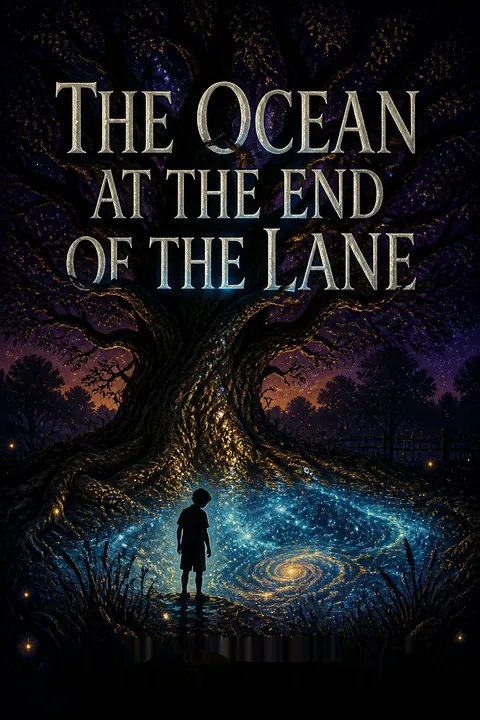
Resumen de la trama
El oscuro secreto del inquilino
Nuestro narrador rememora un episodio de su infancia cuando un inquilino robó su coche y se quitó la vida, liberando sin querer fuerzas oscuras. Este acto pone en movimiento poderes ancestrales que desencadenan una serie de sucesos aterradores. El narrador, un niño pequeño, se ve atrapado en el centro de estas manifestaciones sobrenaturales, mientras su familia permanece ajena al verdadero peligro que los rodea.
Las mujeres Hempstock
El niño encuentra refugio y amparo en las mujeres Hempstock, que habitan al final del camino. Lettie, la más joven, asegura que su estanque es en realidad un océano. Su madre y su abuela poseen un conocimiento ancestral que insinúa su naturaleza de otro mundo. Ellas se convierten en la única defensa del niño frente a las fuerzas oscuras que amenazan a su familia.
La verdadera naturaleza del estanque
Lettie lleva al niño hasta el estanque, revelándole su auténtica esencia: un vasto océano. Este océano encierra el poder de proteger y sanar, un portal hacia otros reinos. El niño experimenta un instante de omnisciencia, comprendiendo los secretos del universo, pero debe regresar a la realidad, dejando atrás el conocimiento del océano.
La bestia desatada
Ursula Monkton, una entidad malévola, se infiltra en el hogar del niño haciéndose pasar por una empleada doméstica. Manipula a la familia, sembrando caos y miedo. El niño, consciente de su verdadera naturaleza, lucha por convencer a sus seres queridos del peligro que acecha. El poder de Ursula crece, amenazando con devorar todo lo que el niño aprecia.
Los pájaros del hambre
Los pájaros del hambre, seres ancestrales que consumen la existencia, son convocados por la presencia de Ursula. Amenazan con borrar al niño y su mundo. Lettie y las Hempstock enfrentan a estas criaturas, empleando su saber y poder para proteger al niño. La tensión es máxima, pues el apetito destructivo de los pájaros del hambre no conoce límites.
El sacrificio
En un intento desesperado por salvar al niño, Lettie se entrega al océano en sacrificio. Su gesto desinteresado ata a los pájaros del hambre, alejándolos. El niño queda con un vacío en el corazón, recuerdo imborrable del sacrificio de Lettie. Su familia le asegura que ella regresará cuando el océano lo considere oportuno.
El abrazo del océano
Ya adulto, el narrador vuelve a la granja Hempstock, atraído por los recuerdos de Lettie y del océano. Descubre que ha regresado muchas veces, y que cada visita borra el dolor del pasado. El abrazo del océano ofrece sanación y esperanza, testimonio de la presencia perdurable de Lettie y del poder de la memoria.
Personajes
El narrador
El narrador, un niño de siete años, se ve inmerso en un mundo de poderes ancestrales y criaturas oscuras. Su inocencia y valentía son puestas a prueba mientras enfrenta amenazas sobrenaturales. Ya adulto, reflexiona sobre aquellos sucesos, buscando comprensión y cierre.
Lettie Hempstock
Lettie es la más joven de las mujeres Hempstock, quien afirma que su estanque es un océano. Su coraje y sabiduría guían al narrador a través de la oscuridad. Su sacrificio final para salvarlo deja una huella imborrable, símbolo de amor y protección.
Ursula Monkton
Ursula es una fuerza siniestra que se hace pasar por empleada doméstica. Manipula a la familia del narrador, sembrando caos y terror. Su verdadera naturaleza se revela como una criatura de oscuridad, empeñada en devorar el mundo del niño.
La anciana señora Hempstock
La abuela de Lettie, la anciana señora Hempstock, posee un conocimiento y poder ancestrales. Recuerda los orígenes del universo y utiliza su sabiduría para proteger al narrador de las fuerzas oscuras.
Ginnie Hempstock
La madre de Lettie, Ginnie, es una presencia reconfortante. Apoya a Lettie y al narrador, empleando su fortaleza y saber para combatir las amenazas sobrenaturales. Su amor y cuidado brindan consuelo en tiempos de miedo.
Los pájaros del hambre
Estas criaturas ancestrales consumen la realidad, convocadas por la presencia de Ursula. Amenazan con borrar al narrador y su mundo, representando el peligro supremo de la oscuridad descontrolada.
El inquilino
El suicidio del inquilino despierta las fuerzas oscuras, poniendo en marcha los acontecimientos de la historia. Sus acciones traen inadvertidamente a Ursula y a los pájaros del hambre a la vida del narrador, desencadenando una cadena de sucesos sobrenaturales.
Recursos narrativos
El océano
El estanque, revelado como un océano, funciona como un umbral hacia otros reinos. Ofrece protección y curación, simbolizando el poder de la memoria y la interconexión de todas las cosas. El abrazo del océano brinda consuelo y esperanza, testimonio de la presencia perdurable de Lettie.
Los pájaros del hambre
Estas criaturas representan la amenaza de aniquilación, consumiendo la existencia misma. Su presencia intensifica la tensión de la historia, pues el narrador y las Hempstock deben enfrentar el peligro supremo de la oscuridad sin control.
Memoria y sacrificio
Los recuerdos del narrador sobre Lettie y su sacrificio constituyen el núcleo emocional de la historia. Su acto valiente y desinteresado deja una huella imborrable, símbolo de amor y protección. El poder de la memoria ofrece sanación y esperanza, recordatorio de los lazos perdurables entre los personajes.
Análisis
"El océano al final del camino" explora los temas de la memoria, el sacrificio y el poder duradero del amor. El viaje del narrador a través de la oscuridad y el miedo es un testimonio de la fuerza de la inocencia y valentía infantiles. El sacrificio supremo de Lettie Hempstock subraya el núcleo emocional de la historia, simbolizando amor y protección. El océano, portal hacia el conocimiento y la sanación, ofrece consuelo y esperanza, recordándonos la interconexión de todas las cosas. La magistral narrativa de Neil Gaiman teje un rico tapiz de fantasía y realidad, invitando a los lectores a reflexionar sobre la naturaleza de la memoria y los lazos perdurables entre los personajes.
También leyeron
Preguntas frecuentes
Synopsis & Basic Details
What is The Ocean at the End of the Lane about?
- Childhood memory resurfaces: An unnamed narrator returns to his childhood home for a funeral, triggering forgotten memories of a fantastical and terrifying experience from when he was seven.
- Supernatural forces unleashed: The story revolves around the narrator's encounter with ancient, otherworldly forces after a lodger's suicide, and the three women who protect him.
- A battle for reality: The narrative explores the struggle between the mundane world and a hidden, magical realm, as the narrator confronts a malevolent entity and the consequences of his actions.
Why should I read The Ocean at the End of the Lane?
- Evocative and haunting: Gaiman's writing creates a dreamlike atmosphere, blending childhood wonder with genuine terror, making it a deeply immersive experience.
- Exploration of complex themes: The novel delves into themes of memory and sacrifice, loss, the nature of reality, and the power of childhood imagination, offering rich material for reflection.
- Unique blend of genres: It seamlessly combines elements of fantasy, horror, and coming-of-age, creating a story that is both captivating and thought-provoking.
What is the background of The Ocean at the End of the Lane?
- Rural Sussex setting: The story is set in the English countryside, a location that evokes a sense of timelessness and isolation, enhancing the magical realism.
- Childhood perspective: The narrative is filtered through the lens of a child's understanding, blurring the lines between reality and fantasy, and highlighting the vulnerability of youth.
- Mythological undertones: The story draws on elements of folklore and mythology, creating a sense of ancient power and timeless conflict, and suggesting a deeper history to the events.
What are the most memorable quotes in The Ocean at the End of the Lane?
- "Childhood memories are sometimes covered and obscured beneath the things that come later, like childhood toys forgotten at the bottom of a crammed adult closet, but they are never lost for good.": This quote highlights the theme of memory and sacrifice and its enduring power, suggesting that the past is always present.
- "I was not happy as a child, although from time to time I was content. I lived in books more than I lived anywhere else.": This quote reveals the narrator's coping mechanism and his preference for the safety of stories over the complexities of real life.
- "Monsters come in all shapes and sizes. Some of them are things people are scared of. Some of them are things that look like things people used to be scared of a long time ago. Sometimes monsters are things people should be scared of, but they aren't.": This quote explores the nature of fear and the ambiguity of what constitutes a monster, challenging conventional notions of good and evil.
What writing style, narrative choices, and literary techniques does Neil Gaiman use?
- First-person, unreliable narration: The story is told from the perspective of the narrator, whose memories are fragmented and subjective, creating a sense of mystery and uncertainty.
- Magical realism: Gaiman seamlessly blends fantastical elements with everyday reality, blurring the lines between the mundane and the supernatural, and creating a sense of wonder and unease.
- Symbolism and metaphor: The novel is rich in symbolism, with recurring motifs like the ocean, the color grey, and the hunger birds, which represent deeper themes and ideas.
Hidden Details & Subtle Connections
What are some minor details that add significant meaning?
- The burnt toast: The narrator's father's habit of eating burnt toast, initially presented as a quirk, later becomes a symbol of his hidden sacrifices and the narrator's distorted perception of his childhood.
- The silver coins: The appearance of old silver coins, like the sixpence and the shilling, foreshadow the intrusion of the past into the present and the disruption of the natural order.
- The children's games: The children's game of calling the green circle in the grass a "fairy ring" foreshadows the magical and dangerous events that will unfold, hinting at the hidden world beneath the surface.
What are some subtle foreshadowing and callbacks?
- The mention of anatomy: The narrator's fear of the word "anatomy" after visiting Madame Tussauds foreshadows the body horror elements and the threat of being consumed by the monstrous forces.
- The description of Ursula Monkton's dress: The description of Ursula Monkton's grey and pink dress as "flapping" foreshadows her true nature as a creature of chaos and the flapping canvas of the creature in the orange sky.
- The recurring phrase "little pitcher": Ursula Monkton's use of the phrase "little pitcher" is a callback to the narrator's childhood, highlighting her manipulation and the way she preys on his vulnerability.
What are some unexpected character connections?
- The lodger and Ursula Monkton: The lodger's suicide is the catalyst for the events, and his desire for money is mirrored in Ursula Monkton's actions, suggesting a connection between their desires and the unleashed chaos.
- The narrator and Lettie: The narrator and Lettie's connection transcends their age difference, suggesting a deeper, almost spiritual bond that is rooted in their shared experience of the magical world.
- The Hempstock women and the universe: The Hempstock women's knowledge and power suggest that they are not merely ordinary people, but rather ancient beings connected to the fabric of the universe, hinting at their true nature.
Who are the most significant supporting characters?
- Old Mrs. Hempstock: As the oldest of the Hempstock women, she embodies ancient wisdom and power, acting as a guide and protector for the narrator, and a force to be reckoned with.
- Ginnie Hempstock: Lettie's mother provides a sense of groundedness and practicality, balancing the more fantastical elements of the story, and offering a sense of comfort and protection.
- The black kitten: The black kitten with the white spot over one ear acts as a recurring symbol of hope and connection, appearing at crucial moments to guide and comfort the narrator.
Psychological, Emotional, & Relational Analysis
What are some unspoken motivations of the characters?
- The narrator's desire for connection: The narrator's longing for friendship and belonging drives his interactions with Lettie and his vulnerability to Ursula Monkton's manipulation.
- Lettie's need to protect: Lettie's actions are driven by a deep sense of responsibility and a need to protect the narrator, even at the cost of her own well-being.
- Ursula Monkton's desire for control: Ursula Monkton's actions are motivated by a desire for power and control, stemming from her own sense of isolation and a need to reshape the world to her liking.
What psychological complexities do the characters exhibit?
- The narrator's trauma: The narrator's childhood trauma manifests in his fragmented memories and his difficulty distinguishing between reality and fantasy, highlighting the lasting impact of his experiences.
- Lettie's burden of knowledge: Lettie's ancient knowledge and power come with a burden of responsibility, forcing her to make difficult choices and carry the weight of the world on her young shoulders.
- Ursula Monkton's distorted perception: Ursula Monkton's distorted perception of reality and her belief that she is making people happy reveal her deep-seated psychological issues and her inability to connect with others.
What are the major emotional turning points?
- The discovery of the dead lodger: The discovery of the dead lodger in the family car marks the beginning of the narrator's journey into the supernatural, triggering a sense of fear and unease.
- Lettie's sacrifice: Lettie's sacrifice is a major emotional turning point, leaving the narrator with a sense of loss and guilt, but also a deep appreciation for her love and protection.
- The narrator's return to the farm: The narrator's return to the farm as an adult is a moment of emotional catharsis, allowing him to confront his past and find a sense of closure.
How do relationship dynamics evolve?
- The narrator and Lettie: The narrator and Lettie's relationship evolves from a friendship to a deep, almost spiritual bond, highlighting the power of connection and the enduring nature of love.
- The narrator and his parents: The narrator's relationship with his parents is strained by their inability to understand his experiences, highlighting the disconnect between the adult and child worlds.
- The Hempstock women and the narrator: The Hempstock women's relationship with the narrator evolves from protectors to guides, offering him solace and wisdom, and helping him navigate the complexities of his life.
Interpretation & Debate
Which parts of the story remain ambiguous or open-ended?
- The true nature of the Hempstocks: The true nature of the Hempstock women remains ambiguous, leaving the reader to wonder if they are ancient beings, powerful witches, or something else entirely.
- The origin of the hunger birds: The origin and purpose of the hunger birds are never fully explained, leaving the reader to ponder their place in the universe and their connection to the dark forces.
- The extent of the narrator's memory: The extent to which the narrator's memories are accurate and reliable is left open to interpretation, blurring the lines between reality and fantasy.
What are some debatable, controversial scenes or moments in The Ocean at the End of the Lane?
- The bathtub scene: The scene where the narrator's father tries to drown him in the bathtub is a controversial moment, raising questions about the nature of parental love and the impact of trauma.
- The nature of Ursula Monkton: The nature of Ursula Monkton as a malevolent entity is open to interpretation, with some readers seeing her as a symbol of childhood fears and others as a representation of pure evil.
- The ending's ambiguity: The ending, with its suggestion that the narrator has visited the Hempstock farm many times, is open to interpretation, leaving the reader to wonder about the nature of time and memory.
The Ocean at the End of the Lane Ending Explained: How It Ends & What It Means
- The cyclical nature of memory: The ending suggests that the narrator has returned to the Hempstock farm many times, each visit erasing the pain of the past, highlighting the cyclical nature of memory and the power of the present moment.
- The enduring power of love and sacrifice: Lettie's sacrifice and the narrator's enduring memory of her highlight the power of love and sacrifice, suggesting that these forces can transcend time and space.
- The acceptance of the unknown: The ending leaves the reader with a sense of acceptance of the unknown, suggesting that some mysteries are best left unsolved, and that the power of imagination and wonder is more important than definitive answers.


Descargar PDF
Descargar EPUB
.epub digital book format is ideal for reading ebooks on phones, tablets, and e-readers.








































