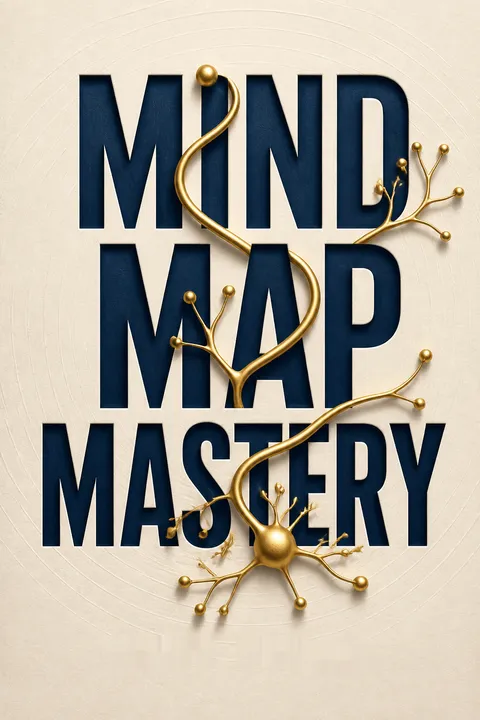

Points clés
1. Les cartes mentales : un outil révolutionnaire de pensée visuelle
Une carte mentale est un schéma complexe qui reflète la structure d’une cellule cérébrale, avec des branches qui s’étendent depuis son centre, évoluant selon des motifs d’association.
Représentation visuelle de la pensée. Les cartes mentales sont des diagrammes colorés et non linéaires qui traduisent idées et informations. Elles débutent par un concept central, d’où rayonnent branches et sous-branches, utilisant mots-clés, images et couleurs pour capter et organiser les pensées.
Mobilisation des deux hémisphères cérébraux. Contrairement aux méthodes traditionnelles de prise de notes, les cartes mentales sollicitent à la fois le côté logique gauche et le côté créatif droit du cerveau. Cette approche globale stimule la créativité, améliore la mémoire et favorise une pensée plus claire.
Applications multiples. Les cartes mentales s’utilisent pour :
- Le brainstorming et la résolution de problèmes
- La prise de notes et la synthèse d’informations
- La planification et la gestion de projets
- La définition d’objectifs et le développement personnel
- L’amélioration de la créativité et la génération d’idées nouvelles
2. La science derrière la carte mentale : exploiter la puissance du cerveau
Votre cerveau est un géant endormi, et la maîtrise des cartes mentales est là pour le réveiller !
La pensée rayonnante. Les cartes mentales fonctionnent en tirant parti de la tendance naturelle du cerveau à penser par associations. Ce processus, appelé pensée rayonnante, permet aux idées de circuler librement et de se connecter de manière non linéaire, à l’image des réseaux neuronaux.
Amélioration de la mémoire. L’alliance d’éléments visuels, de mots-clés et d’associations rend l’information plus facile à mémoriser. Des études ont démontré que la carte mentale peut augmenter la capacité de rappel jusqu’à 32 % par rapport aux méthodes classiques de prise de notes.
Bénéfices cognitifs :
- Meilleure concentration et attention
- Renforcement des capacités d’analyse et de pensée critique
- Organisation et structuration optimales de l’information
- Créativité et aptitude à résoudre des problèmes accrues
- Apprentissage plus rapide et efficace
3. Les lois de la carte mentale : règles essentielles pour une création efficace
Respecter ces lois vous libère pour développer votre propre « empreinte », ou plutôt « regard », tout en restant fidèle à l’esprit fondamental de la carte mentale.
Principes clés. Les lois de la carte mentale offrent un cadre garantissant des cartes claires, structurées et cognitivement engageantes.
Éléments indispensables :
- Utiliser une feuille blanche, sans lignes, en orientation paysage
- Commencer par une image centrale colorée représentant le sujet principal
- Tracer des branches courbes rayonnant du centre
- Inscrire un seul mot-clé par branche
- Employer images et symboles tout au long de la carte
- Utiliser la couleur pour catégoriser et mettre en valeur l’information
- Créer une hiérarchie claire avec branches principales et secondaires
Personnalisation. En suivant ces lois, chacun est encouragé à développer son propre style, faisant de chaque carte mentale une expression unique de sa pensée et de sa créativité.
4. Applications pratiques : les cartes mentales au travail, à l’étude et dans la vie personnelle
Que vous élaboriez une carte mentale pour un travail de recherche ou pour gérer un projet, abordez-la comme un jeu plutôt qu’une corvée, afin d’assurer un résultat créatif gagnant-gagnant !
Usage professionnel. Au travail, les cartes mentales peuvent transformer productivité et créativité :
- Planification et gestion de projets
- Sessions de brainstorming et génération d’idées
- Prise de notes et synthèses de réunions
- Présentations et rapports
- Planification stratégique et prise de décisions
Applications éducatives. Étudiants et enseignants tirent profit des cartes mentales pour :
- Prendre des notes pendant les cours
- Résumer des sujets complexes
- Préparer et réviser les examens
- Organiser la rédaction d’essais
- Structurer la recherche documentaire
Développement personnel. Les cartes mentales améliorent divers aspects de la vie personnelle :
- Fixer des objectifs et planifier sa vie
- Résoudre des problèmes et prendre des décisions
- Améliorer la mémoire et acquérir de nouvelles compétences
- Écriture créative et projets artistiques
- Gestion du temps et organisation quotidienne
5. Surmonter les obstacles : résoudre les problèmes courants liés aux cartes mentales
Une carte mentale fonctionne toujours lorsqu’elle est bien travaillée.
Difficultés fréquentes. Même les utilisateurs expérimentés peuvent rencontrer des obstacles :
- Difficulté à démarrer ou à choisir un sujet central
- Sentiment d’être submergé par des informations complexes
- Problèmes liés à l’aspect artistique ou à la présentation visuelle
- Tendance à compliquer excessivement la structure de la carte
Solutions et conseils :
- Commencer par des cartes simples et augmenter progressivement la complexité
- Se concentrer sur les mots-clés et l’essentiel, éviter l’encombrement
- Accepter l’imperfection dans les dessins ; des bonshommes bâtons et symboles simples sont efficaces
- Pratiquer régulièrement pour développer son style personnel et son efficacité
- Revoir et affiner ses cartes pour en améliorer la clarté et l’impact
Changement d’état d’esprit. Considérez la carte mentale comme un processus créatif et plaisant, non comme une technique rigide. Autorisez-vous à expérimenter et à apprendre à chaque essai.
6. Techniques avancées de carte mentale : élever vos compétences
Plus vous travaillez votre carte mentale, plus elle vous parlera et vous offrira tout le coaching dont vous avez besoin !
Résolution de problèmes complexes. Utilisez des techniques avancées pour aborder des questions complexes :
- Créer plusieurs cartes mentales interconnectées pour de grands projets
- Employer des codes couleur pour une organisation approfondie
- Intégrer un ordre numérique pour les processus séquentiels
- Utiliser métaphores et analogies pour représenter des concepts abstraits
Cartes mentales collaboratives. Participez à des sessions de groupe pour :
- Brainstorming d’équipe et génération d’idées
- Résolution de conflits et recherche de consensus
- Planification et gestion de projets partagés
- Processus décisionnels collectifs
Intégration avec d’autres outils. Combinez la carte mentale avec des techniques complémentaires :
- Analyse SWOT pour la planification stratégique
- Diagrammes d’Ishikawa pour l’analyse cause-effet
- Diagrammes de Gantt pour les calendriers de projet
- Cartes mentales comme préambule à la rédaction de rapports ou d’articles détaillés
7. L’avenir de la carte mentale : outils numériques et impact mondial
Aujourd’hui, le concept de carte mentale est connu dans le monde entier.
Évolution numérique. La carte mentale a su intégrer les avancées technologiques :
- Logiciels et applications de carte mentale numériques
- Plateformes collaboratives en ligne basées sur le cloud
- Intégration avec des outils de productivité et de gestion de projet
- Création et analyse assistées par intelligence artificielle
Adoption mondiale. La carte mentale a gagné une reconnaissance internationale :
- Intégration dans les programmes éducatifs à travers les cultures
- Adoption par des multinationales pour leurs processus d’affaires
- Compétitions et championnats de carte mentale
- Applications interculturelles adaptées à divers styles de pensée
Recherches en cours. Les études se poursuivent sur les bienfaits cognitifs de la carte mentale :
- Recherches neuroscientifiques sur l’activité cérébrale lors de la création de cartes mentales
- Applications en réhabilitation cognitive et santé mentale
- Exploration du potentiel de la carte mentale en intelligence artificielle et apprentissage automatique
- Développement de nouvelles techniques pour répondre aux défis et domaines émergents
Résumé des avis
Mind Map Mastery suscite des avis partagés. Nombreux sont ceux qui saluent son approche innovante pour organiser l’information et résoudre des problèmes, la jugeant utile dans divers domaines. Toutefois, certains reprochent au livre une certaine répétitivité, un ton trop promotionnel et un manque de profondeur. Les lecteurs apprécient les illustrations colorées ainsi que les exemples concrets, tout en regrettant que le contenu puisse être davantage synthétisé. Si certains considèrent le mind mapping comme une méthode véritablement révolutionnaire, d’autres le perçoivent simplement comme un outil parmi d’autres pour s’organiser. Ce livre est généralement recommandé aux débutants, mais il risque de ne pas apporter beaucoup de nouveautés aux utilisateurs expérimentés.
Les lecteurs ont aussi lu



FAQ
What's "Mind Map Mastery" about?
- Overview: "Mind Map Mastery" by Tony Buzan is a comprehensive guide to understanding and utilizing Mind Maps, a powerful thinking tool designed to enhance creativity, memory, and problem-solving skills.
- Purpose: The book aims to teach readers how to create and use Mind Maps effectively in various aspects of life, from personal development to professional tasks.
- Structure: It includes practical exercises, real-life examples, and stories from master Mind Mappers to illustrate the transformative potential of Mind Mapping.
- Audience: The book is intended for anyone looking to improve their cognitive abilities, whether they are students, professionals, or lifelong learners.
Why should I read "Mind Map Mastery"?
- Cognitive Enhancement: The book offers techniques to improve memory, creativity, and problem-solving skills, which are beneficial in both personal and professional settings.
- Practical Applications: It provides numerous examples of how Mind Maps can be applied to everyday tasks, making it a practical tool for organizing thoughts and projects.
- Community and Support: Reading the book connects you to a global community of Mind Mappers who share their experiences and insights.
- Personal Growth: It encourages self-discovery and personal development by helping you unlock your brain's full potential.
What is a Mind Map according to Tony Buzan?
- Definition: A Mind Map is a visual thinking tool that mirrors the structure of a brain cell, with branches radiating from a central image to represent ideas and associations.
- Components: It includes a central image, thick branches for main themes, and thinner branches for sub-themes, all connected with keywords and images.
- Purpose: Mind Maps are designed to engage both the logical and creative sides of the brain, enhancing memory and creativity.
- Applications: They can be used for note-taking, brainstorming, planning, and problem-solving across various fields.
How do I create a Mind Map as per "Mind Map Mastery"?
- Materials Needed: Start with a large sheet of plain white paper and a selection of colored pens or pencils.
- Central Image: Draw a central image that represents the main subject, using at least three colors to make it visually engaging.
- Branching Out: Create thick branches radiating from the central image, each representing a key theme, and use different colors for each branch.
- Keywords and Images: Place a single keyword or image on each branch to trigger associations and further ideas.
What are the key takeaways of "Mind Map Mastery"?
- Whole-brain Thinking: Mind Maps activate both hemispheres of the brain, enhancing cognitive functions like memory and creativity.
- Versatility: They can be applied to a wide range of activities, from personal goal setting to professional project management.
- Radiant Thinking: The book emphasizes the concept of Radiant Thinking, where ideas radiate from a central point, promoting a non-linear, organic flow of thoughts.
- Mind Mapping Laws: Following the specific Laws of Mind Mapping ensures clarity, creativity, and effectiveness in the maps you create.
What are the Laws of Mind Mapping according to Tony Buzan?
- Blank Paper: Always use a blank sheet of paper in landscape position to allow for free-flowing ideas.
- Central Image: Start with a colorful central image to engage the brain and trigger associations.
- Keywords and Branches: Use single keywords on branches, with each word or image on its own branch to maintain clarity.
- Color and Imagery: Incorporate colors and images throughout the Mind Map to stimulate memory and creativity.
What are the infinite applications of Mind Maps as described in the book?
- Home and Personal Life: Mind Maps can be used for planning events, setting personal goals, and organizing daily activities.
- Work and Professional Use: They are effective for project management, decision-making, and strategic planning.
- Education and Learning: Mind Maps aid in studying, revising, and understanding complex subjects.
- Creativity and Innovation: They foster creative thinking and can be used in artistic and design processes.
How does "Mind Map Mastery" address common misconceptions about Mind Maps?
- Clarification: The book distinguishes Mind Maps from other diagrams like spider diagrams and concept maps, which lack the same structure and effectiveness.
- Misuse: It addresses the issue of Mind Maps being misunderstood or misappropriated by those not fully trained in the technique.
- Laws Importance: Emphasizes the importance of adhering to the Laws of Mind Mapping to ensure the tool's effectiveness.
- Visual Appeal: Highlights the unique visual and cognitive benefits of true Mind Maps compared to other linear or hierarchical diagrams.
What are some advanced Mind Mapping techniques discussed in the book?
- Mini Mind Maps: Use smaller, focused Mind Maps to explore specific aspects of a larger topic without cluttering the main map.
- Chunking and Boundaries: Group related information into chunks and use boundaries to enhance memory and organization.
- 3D Mind Mapping: Envision Mind Maps in three dimensions to better understand spatial relationships and complex ideas.
- Digital Mind Mapping: Utilize software like iMindMap to create, edit, and share Mind Maps digitally, enhancing collaboration and accessibility.
What are the best quotes from "Mind Map Mastery" and what do they mean?
- "Your brain is a sleeping giant, and Mind Map Mastery is here to help wake it up!" This quote emphasizes the untapped potential of the human brain and how Mind Mapping can unlock it.
- "A Mind Map is a mirror of the mind’s inner workings." It highlights how Mind Maps reflect the natural processes of human thought, making them an effective tool for organizing and understanding information.
- "Mind Maps are analytical in the sense that you can use them to solve any problem." This underscores the versatility of Mind Maps in addressing a wide range of challenges and tasks.
- "The Mind Map is a natural evolution of human thinking." It suggests that Mind Maps are an intuitive tool that aligns with the way humans naturally process information.
How does "Mind Map Mastery" relate to digital and AI advancements?
- Digital Evolution: The book discusses the development of digital Mind Mapping tools like iMindMap, which enhance the accessibility and functionality of Mind Maps.
- AI Potential: It explores the possibility of AI mastering Mind Mapping, which would represent a significant advancement in artificial intelligence.
- 3D Mind Mapping: The future of Mind Mapping may include fully three-dimensional digital maps, offering new ways to visualize and interact with information.
- Human Element: Despite technological advancements, the book emphasizes the irreplaceable value of human creativity and intuition in Mind Mapping.
What is the future of Mind Mapping according to Tony Buzan?
- Continued Evolution: Mind Mapping will continue to evolve alongside technological advancements, integrating with digital tools and AI.
- Global Reach: The book envisions a future where Mind Mapping is a universal skill taught to children and adults worldwide.
- AI Integration: There is potential for AI to learn and apply Mind Mapping techniques, pushing the boundaries of artificial intelligence.
- Personal Empowerment: Mind Mapping will remain a powerful tool for personal development, helping individuals unlock their full cognitive potential.
À propos de l'auteur
Autres livres de Tony Buzan


Télécharger le PDF
Télécharger l'EPUB
.epub digital book format is ideal for reading ebooks on phones, tablets, and e-readers.








































