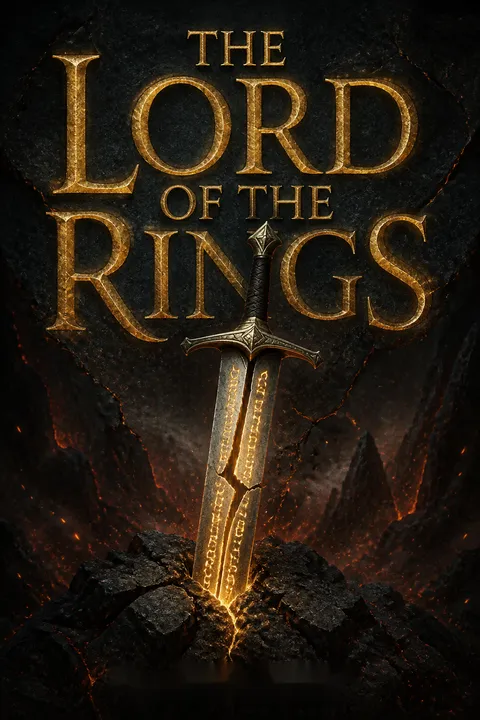

Résumé de l'intrigue
Ombres sur la Comté
L’histoire débute dans la tranquille Comté, où les hobbits mènent une vie simple et sereine. Bilbo Sacquet, excentrique et fortuné, prépare une grande fête d’anniversaire, mais la possession d’un mystérieux anneau a préservé sa jeunesse et attiré l’attention du magicien Gandalf. Gandalf découvre que cet anneau est en réalité l’Anneau Unique, forgé par le Seigneur des Ténèbres Sauron pour dominer la Terre du Milieu. Le pouvoir de Sauron renaît en Mordor, et ses serviteurs, les Nazgûls, traquent l’Anneau. Bilbo quitte la Comté, transmettant l’Anneau à son héritier, Frodon. Frodon, accompagné de ses fidèles amis Sam, Merry et Pippin, est contraint de fuir lorsque les Nazgûls se rapprochent. Leur quête commence dans l’incertitude, alors que l’ombre du mal s’étend jusqu’aux frontières de la Comté.
La Communauté se forme
Frodon et ses compagnons sont rejoints par Aragorn, un rôdeur mystérieux, et après maints périls, ils atteignent Fondcombe. Là, un conseil d’Elfes, d’Hommes, de Nains et de Gandalf révèle l’histoire de l’Anneau et la menace que représente Sauron. Le seul espoir réside dans la destruction de l’Anneau dans les flammes du Mont Destin. Une Communauté se forme : Frodon, Sam, Merry, Pippin, Aragorn, Gandalf, Legolas l’Elfe, Gimli le Nain, et Boromir de Gondor. Ils s’engagent dans une quête périlleuse, poursuivis par les forces de Sauron et le traître Saruman, un magicien corrompu.
Des chemins périlleux
La Communauté affronte l’hiver rigoureux du Caradhras et est contrainte de pénétrer dans les Mines de la Moria, où elle est attaquée par des orcs et un Balrog, un démon ancien. Gandalf tombe dans l’abîme avec le Balrog, se sacrifiant pour permettre aux autres de s’échapper. Les survivants trouvent refuge dans le royaume enchanté de Lothlórien, où Dame Galadriel leur offre conseils et présents. La compagnie descend le fleuve Anduin, mais l’influence de l’Anneau grandit, et Boromir tente de le prendre à Frodon. La Communauté se brise : Frodon et Sam partent seuls pour le Mordor, Merry et Pippin sont capturés par des orcs, tandis que Aragorn, Legolas et Gimli poursuivent leurs ravisseurs.
La corruption de l’Anneau
Au cours de leur périple dans la nature sauvage, Frodon et Sam sont rejoints par Gollum, ancien porteur de l’Anneau, qui devient leur guide. L’esprit de Gollum est déformé par le pouvoir de l’Anneau, tiraillé entre loyauté et perfidie. Pendant ce temps, les armées de Saruman ravagent le Rohan, et le roi Théoden est libéré de l’influence de Saruman par Gandalf, revenu transformé en Gandalf le Blanc. Les Rohirrim, avec Aragorn et ses compagnons, défendent le Gouffre de Helm contre les forces de Saruman. Merry et Pippin, avec les Ents, mènent l’assaut sur Isengard, renversant le pouvoir de Saruman. La corruption de l’Anneau est omniprésente, car même les sages et les forts sont tentés par sa promesse de puissance.
La rupture de la Communauté
Les membres de la Communauté sont dispersés. Frodon et Sam, guidés par Gollum, traversent les Marais Morts et approchent du Mordor. Aragorn, Legolas et Gimli poursuivent les orcs, s’allient au Rohan et combattent dans de grandes batailles. Merry et Pippin inspirent les Ents à attaquer Isengard. Gandalf affronte Saruman, désormais impuissant. Le fardeau de l’Anneau pèse de plus en plus sur Frodon, et Gollum les conduit à la tanière de Shelob, une araignée monstrueuse. Frodon est capturé, et Sam, le croyant mort, prend l’Anneau pour poursuivre la quête.
La guerre à l’Ouest
Les armées de Sauron assiègent Minas Tirith, capitale du Gondor. Gandalf et Pippin viennent en aide à la cité, tandis qu’Aragorn sollicite l’aide des Morts pour honorer un ancien serment. Le Rohan accourt au secours du Gondor, et la bataille des Champs du Pelennor fait rage. Le roi Théoden tombe, Éowyn et Merry tuent le Roi-Sorcier, et Aragorn arrive avec des renforts. La cité est sauvée, mais à grand prix. Les chefs de l’Ouest décident de marcher sur la Porte Noire, détournant ainsi le regard de Sauron de Frodon et Sam, qui poursuivent leur lutte dans le Mordor.
Le retour du roi
Aragorn se révèle être l’héritier d’Isildur et est couronné roi Elessar du Gondor. Il apporte guérison aux blessés et unit les royaumes des Hommes. Faramir et Éowyn trouvent amour et réconfort. Les armées de l’Ouest marchent vers la Porte Noire, défiant Sauron et offrant à Frodon et Sam leur unique chance d’atteindre le Mont Destin. L’ère des Hommes commence, tandis que les Elfes et autres peuples anciens se préparent à quitter la Terre du Milieu.
La route vers le Mordor
Déguisés en orcs, Frodon et Sam traversent la désolation du Mordor. La terre est stérile, peuplée des armées de Sauron et de regards vigilants. Le poids de l’Anneau menace de briser Frodon, et seule la loyauté de Sam les soutient. Obsédé, Gollum les traque. Ce voyage est une épreuve d’endurance, d’espoir et de volonté, alors que les hobbits s’approchent du Mont Destin, seul lieu où l’Anneau peut être détruit.
La terre de l’ombre
L’approche finale du Mont Destin est un cauchemar d’épuisement, de soif et de peur. Frodon est presque submergé par le pouvoir de l’Anneau, et Sam doit le porter. Gollum attaque, mordant le doigt de Frodon et s’emparant de l’Anneau. Dans son triomphe, Gollum tombe dans le feu, détruisant l’Anneau. Le pouvoir de Sauron s’effondre, Barad-dûr tombe, et l’Ombre se lève du monde. Frodon et Sam sont sauvés par les Aigles tandis que le Mordor s’effondre en ruines.
La fin de toutes choses
Les vainqueurs célèbrent, et Aragorn est couronné roi. Les hobbits sont honorés pour leurs exploits. Elfes, Nains et Hommes entament la guérison des plaies de la guerre. Frodon et Sam retournent dans la Comté, mais Frodon est à jamais marqué par son épreuve. La Comté a souffert de la malveillance de Saruman, et les hobbits doivent se battre pour la restaurer. La paix revient, mais les blessures de Frodon ne se referment pas.
Le nettoyage de la Comté
Les hobbits découvrent la Comté sous la coupe de malfaiteurs dirigés par Saruman (Sharkey) et Lotho Sacquet. La terre est ravagée, les arbres abattus, les hobbits opprimés. Frodon, Sam, Merry et Pippin mobilisent la Comté, renversent les malfaiteurs et affrontent [Saruman], tué par Grima. La Comté est restaurée, mais Frodon ne trouve pas la paix. Sam épouse Rosie et fonde une famille, tandis que la douleur de Frodon persiste.
Le passage des âges
Portant des blessures incurables, Frodon obtient le passage vers les Terres Immortelles avec Gandalf, Bilbo et les Elfes. Sam, Merry et Pippin retournent dans la Comté, transformés par leur voyage. L’ère des Elfes et de la magie s’achève, celle des Hommes commence. L’histoire se clôt sur le retour de Sam chez lui, apaisé par la certitude que le monde a été sauvé, au prix de grands sacrifices personnels.
Personnages
Frodon Sacquet
Frodon est un hobbit doux et réfléchi qui hérite de l’Anneau Unique de Bilbo. Choisi par le destin et l’amitié, il devient le porteur de l’Anneau, chargé de le détruire au Mont Destin. Le voyage met à l’épreuve son endurance, sa volonté et sa morale, alors que le pouvoir de l’Anneau le consume presque. Frodon est marqué par la compassion, montrant souvent pitié envers Gollum et même Saruman. Son parcours psychologique est celui d’un fardeau croissant et d’une aliénation ; il est à jamais changé, incapable de retrouver l’innocence de la Comté. Son histoire est un récit de sacrifice, d’endurance et des limites de l’héroïsme.
Sam Gamegie
Sam est le jardinier et ami le plus proche de Frodon, incarnant loyauté, humilité et résilience. Il est l’ancre émotionnelle de la quête, portant souvent Frodon physiquement et spirituellement. L’amour de Sam pour Frodon et la Comté lui donne la force de résister à la tentation de l’Anneau. Pratique, courageux et ingénieux, il représente la puissance de la bonté ordinaire. Son voyage est une progression, du serviteur humble au héros, et il trouve finalement guérison et bonheur dans la famille et le foyer.
Gandalf
Gandalf est un Maia, un esprit envoyé pour aider la Terre du Milieu, déguisé en vieil homme. Il est sage, compatissant et astucieux, orchestrant la résistance contre Sauron. Sa chute en Moria et son retour en tant que Gandalf le Blanc symbolisent mort et renaissance, et son rôle évolue de guide à chef. Il est un catalyseur de changement, inspirant courage et unité. Sa profondeur psychologique réside dans son humilité et sa compréhension des dangers du pouvoir ; il refuse l’Anneau, conscient de son influence corruptrice.
Aragorn (Grands-Pas, Elessar)
Aragorn est le dernier héritier d’Isildur, élevé dans l’ombre. C’est un rôdeur habile, guerrier et guérisseur, partagé entre son destin et ses doutes. Son voyage est celui de l’acceptation de son héritage et de l’unification des Peuples Libres. Noble, altruiste, il inspire loyauté. Son amour pour Arwen et son humilité le distinguent des autres rois. Son arc psychologique est celui de l’acceptation de la responsabilité et de l’espoir, culminant avec son couronnement et la restauration du royaume.
Gollum (Sméagol)
Gollum est une créature semblable à un hobbit corrompue par l’Anneau, partagée entre son moi originel (Sméagol) et son côté sombre (Gollum). Rusé, pitoyable, obsédé par l’Anneau (« mon précieux »), sa relation avec Frodon est complexe — à la fois guide et traître, suscitant l’empathie de Frodon et la méfiance de Sam. Son tourment psychologique et sa dépendance à l’Anneau animent l’intrigue, et son acte final — s’emparer de l’Anneau puis tomber dans le feu — sauve involontairement la Terre du Milieu.
Sam, Merry et Pippin
Merry et Pippin, cousins de Frodon, commencent comme hobbits insouciants et espiègles, mais deviennent des leaders et des guerriers. Merry aide à tuer le Roi-Sorcier ; Pippin sauve Faramir et sert le Gondor. Leur développement psychologique est marqué par la perte d’innocence, le courage et un sens accru des responsabilités. Avec Sam, ils incarnent la résilience et l’adaptabilité des hobbits.
Legolas
Legolas est un Elfe de la Forêt Noire, habile à l’arc et en harmonie avec la nature. Il est gracieux, perspicace, et noue une profonde amitié avec Gimli, dépassant l’ancienne inimitié entre Elfes et Nains. Sa perspective apporte émerveillement et mélancolie, témoin du déclin de son peuple.
Gimli
Gimli est un Nain d’Erebor, courageux et têtu. Son amitié avec Legolas symbolise la réconciliation. Sa fierté pour son héritage et son amour des Cavernes Scintillantes révèlent la profondeur des Nains au-delà du simple guerrier. Il est fidèle, plein d’humour, et valorise l’honneur et la loyauté.
Saruman
Saruman fut jadis chef des magiciens, mais sa soif de pouvoir et de savoir le conduit à trahir les Peuples Libres. Il devient un pantin de Sauron, déclenchant guerre et destruction industrielle. Son arc psychologique met en garde contre l’orgueil, la séduction du pouvoir et l’autodestruction de la trahison. Sa fin est ignominieuse, tué par son propre serviteur, Grima.
Sauron
Sauron est le Seigneur des Ténèbres, un Maia corrompu par Morgoth, cherchant à asservir la Terre du Milieu par l’Anneau. Jamais vu directement, sa présence se fait sentir comme une volonté maligne omniprésente. Il incarne la force psychologique de la domination, de la peur et du désespoir. Sa défaite ne vient pas d’un affrontement direct, mais de l’humilité et de la résilience des plus petits et improbables.
Mécanismes narratifs
L’Anneau Unique
L’Anneau est le moteur central de l’intrigue, symbolisant le pouvoir absolu et sa corruption. Il tente tous ceux qui le rencontrent, révélant leurs désirs et faiblesses. Son pouvoir isole et accable Frodon, guidant la narration et mettant à l’épreuve la morale des personnages. Sa destruction est la seule façon de vaincre Sauron, mais elle ne peut s’accomplir que par un acte de grâce — l’intervention de Gollum — et non par la seule volonté.
La Communauté
La formation et la dissolution de la Communauté structurent le récit, permettant de multiples intrigues et points de vue. La diversité du groupe — hobbits, Hommes, Elfe, Nain, magicien — symbolise la nécessité de coopération au-delà des différences. La rupture de la Communauté conduit à des quêtes parallèles, chacune contribuant à la victoire finale.
Le Voyage
Le motif du voyage est à la fois littéral et symbolique. Les personnages traversent des paysages vastes et périlleux, reflétant leurs luttes intérieures. Ce voyage les éprouve et les transforme, dépouillant l’innocence et forgeant de nouvelles identités. Le thème de la route revient sans cesse, soulignant destin, choix et inconnue.
Tentation et Pitié
Les personnages sont sans cesse mis à l’épreuve par l’Anneau et par des occasions de vengeance ou de pouvoir. La pitié de Frodon envers Gollum, la compassion antérieure de Bilbo, et la retenue de Sam sont cruciales ; ces actes de bonté conduisent finalement à la destruction de l’Anneau. La structure narrative utilise présages et échos pour renforcer le thème selon lequel la pitié, et non la force, est la clé de la victoire.
Guerre et passage des âges
La Guerre de l’Anneau sert de toile de fond à un conflit croissant, avec des batailles à Helm’s Deep, Pelennor et la Porte Noire. Le récit utilise ces événements pour marquer la fin de la domination des Elfes et autres peuples anciens, et le début de l’ère des Hommes. La structure mêle échelle personnelle et épique, montrant comment de petits actes influent sur le destin du monde.
Intrigues parallèles
Après la rupture de la Communauté, l’histoire se divise en plusieurs fils — la quête de Frodon et Sam, la guerre à l’Ouest, les aventures de Merry et Pippin. La narration alterne entre ces récits, créant suspense et offrant différents points de vue sur les mêmes événements. Ce procédé enrichit l’exploration du monde et de ses peuples.
Le nettoyage de la Comté
Le retour des hobbits dans une Comté corrompue ramène l’épopée au foyer, montrant que le mal peut s’implanter partout. Le nettoyage est à la fois un nettoyage littéral et symbolique, et un appel à la vigilance et au courage dans la vie quotidienne. Il souligne aussi le coût psychologique du voyage, car Frodon ne peut guérir complètement.
Le départ des porteurs de l’Anneau
Le départ de Frodon, Bilbo et des Elfes vers les Terres Immortelles offre une résolution douce-amère. Il reconnaît que certaines blessures ne peuvent guérir en ce monde, et que la fin d’une ère marque le début d’une autre. La structure narrative utilise ce mécanisme pour offrir à la fois clôture et sentiment d’une histoire toujours en cours.
Analyse
Le Seigneur des Anneaux perdure comme une œuvre fondatrice de la fantasy moderne parce qu’il mêle aventure épique, profonde introspection psychologique et vision morale profonde. Le monde de Tolkien est minutieusement construit, mais sa véritable force réside dans son exploration de la condition humaine (et hobbit). L’Anneau symbolise la tentation de dominer, et l’histoire affirme que le véritable héroïsme ne réside ni dans la force ni dans la sagesse, mais dans l’humilité, la pitié et la résilience. La structure narrative, avec ses intrigues entrelacées et ses perspectives changeantes, reflète la complexité de l’histoire et l’interconnexion de tous les peuples. Le motif du voyage permet la transformation, mais reconnaît aussi la perte et l’impossibilité de revenir inchangé. Le nettoyage de la Comté ancre l’épopée dans le quotidien, rappelant aux lecteurs que le mal doit être combattu aussi chez soi.
Les lecteurs ont aussi lu
FAQ
```markdown
Synopsis & Basic Details
What is The Lord of the Rings about?
- A Quest Against Absolute Evil: The Lord of the Rings chronicles the perilous journey of Frodo Baggins, a hobbit, who inherits a seemingly innocuous magic ring from his eccentric uncle, Bilbo. This ring is, in fact, the One Ring, an artifact of immense power forged by the Dark Lord Sauron to dominate all of Middle-earth.
- The Fellowship's Formation: To prevent Sauron from reclaiming the Ring and plunging the world into eternal darkness, a diverse fellowship is formed at the Council of Elrond. This group, comprising hobbits, Men, an Elf, a Dwarf, and a Wizard, embarks on a desperate quest to destroy the Ring in the only place it can be unmade: the fires of Mount Doom in Mordor.
- Sacrifice and the Dawn of a New Age: The narrative follows the Fellowship's trials, their eventual breaking, and the individual journeys of its members as they fight against Sauron's growing power. It culminates in the Ring's destruction, Sauron's defeat, and the restoration of Aragorn, the rightful king, ushering in a new age for Middle-earth, albeit one marked by the fading of Elves and the lingering wounds of war.
Why should I read The Lord of the Rings?
- Immersive World-Building: Tolkien's masterpiece offers an unparalleled depth of world-building, from its intricate languages and detailed histories to its rich mythologies and diverse cultures. Readers are transported to a Middle-earth that feels ancient and real, fostering a profound sense of immersion.
- Profound Thematic Exploration: Beyond the adventure, the book delves into universal themes such as the corrupting nature of power, the importance of friendship and loyalty, the resilience of the ordinary, and the bittersweet beauty of sacrifice. It's a story that resonates deeply with the human condition.
- Enduring Literary Influence: As a foundational work of modern fantasy, The Lord of the Rings has influenced countless authors, artists, and filmmakers. Reading it provides insight into the origins of many tropes and narrative structures prevalent in the genre today, offering a richer appreciation for its legacy.
What is the background of The Lord of the Rings?
- Deep Mythological Roots: The story is set in the Third Age of Middle-earth, a world with a vast, ancient history detailed in Tolkien's other works like The Silmarillion. This background includes the creation myths, the rise and fall of ancient kingdoms, and the long struggle against primordial evil, providing a rich tapestry against which the events of the Ring War unfold.
- Linguistic Inspiration: Tolkien, a philologist, initially created the Elvish languages (Quenya and Sindarin) for his own enjoyment, and then built the world of Middle-earth around them to give them a place and history. This linguistic foundation lends an extraordinary authenticity and depth to the names, songs, and lore within the narrative.
- Post-WWI Reflections: While Tolkien explicitly denied allegory, his experiences in World War I and observations of industrialization deeply influenced the story's themes. The devastation of the Shire, the industrial blight of Isengard, and the pervasive sense of loss and fading beauty reflect a profound concern for the impact of war and unchecked technological progress on nature and traditional ways of life.
What are the most memorable quotes in The Lord of the Rings?
- "All that is gold does not glitter, / Not all those who wander are lost; / The old that is strong does not wither, / Deep roots are not reached by the frost.": This iconic verse, from Gandalf's letter to Frodo, serves as a crucial piece of foreshadowing and character introduction for Aragorn. It encapsulates the theme of hidden nobility and the deceptive nature of appearances, urging readers and characters alike to look beyond the surface.
- "I wish it need not have happened in my time," said Frodo. "So do I," said Gandalf, "and so do all who live to see such times. But that is not for them to decide. All we have to decide is what to do with the time that is given us.": This exchange between Frodo and Gandalf in "The Shadow of the Past" is a powerful meditation on destiny, responsibility, and agency. It highlights the universal human desire to avoid hardship, yet underscores the moral imperative to act courageously within one's given circumstances, a central theme of the entire saga.
- "There's some good in this world, Mr. Frodo, and it's worth fighting for.": Uttered by Samwise Gamgee, this simple yet profound statement encapsulates the core message of hope and perseverance in the face of overwhelming evil. It reflects Sam's unwavering loyalty and his deep love for the simple beauties of life, which he believes are worth defending, even when all seems lost.
What writing style, narrative choices, and literary techniques does J.R.R. Tolkien use?
- Archaic and Formal Language: Tolkien employs a rich, often archaic vocabulary and formal sentence structures, especially in descriptions and the speech of noble characters or ancient beings. This choice imbues the narrative with a mythic, timeless quality, evoking the sense of reading an ancient legend or historical account, as seen in the elevated prose of Elrond's speeches.
- Omniscient and Shifting Perspective: The narrative primarily uses an omniscient third-person perspective, but frequently shifts its focus, particularly after the Fellowship breaks. This allows for a comprehensive view of the unfolding war, contrasting the intimate, often internal struggles of Frodo and Sam with the grander, external conflicts involving Aragorn, Gandalf, and the armies of Men, Elves, and Dwarves.
- Extensive Use of Poetry and Song: Throughout the text, Tolkien intersperses numerous poems, songs, and riddles, which serve multiple functions: they enrich the world-building by providing historical context, cultural insights, and character depth; they break up the prose, offering moments of reflection or emotional release; and they often foreshadow future events or reveal hidden truths, such as Bilbo's "Road goes ever on" poem or the Lay of Lúthien.
Hidden Details & Subtle Connections
What are some minor details that add significant meaning?
- The Significance of Pipe-weed: Beyond a simple hobbit pleasure, pipe-weed is revealed in the Prologue and later by Merry to be a plant native to Gondor, brought north by the Men of Westernesse. This seemingly trivial detail subtly links the Shire to the ancient history of Men and the wider world, foreshadowing the hobbits' eventual involvement in larger events and highlighting the unexpected origins of common things.
- The Elven-cloaks' Camouflage: The grey cloaks given by Galadriel are not merely warm garments; they possess a subtle magic that allows the wearer to blend seamlessly with their surroundings. This detail, initially presented as a practical gift, symbolizes the Elves' deep connection to nature and their mastery of subtle, non-aggressive forms of power, contrasting with Sauron's overt might.
- The Names of the Days and Months: Appendix D reveals that the Shire's calendar and weekday names are translations of older Dúnedain and Elvish terms, often with forgotten meanings. This deep linguistic layering underscores the ancient lineage of Middle-earth's cultures and the hobbits' unconscious connection to a grander past, even in their seemingly isolated existence.
What are some subtle foreshadowing and callbacks?
- Bilbo's "Thin and Stretched" Feeling: In "A Long-Expected Party," Bilbo describes feeling "all thin, sort of stretched, if you know what I mean: like butter that has been scraped over too much bread." This seemingly whimsical complaint subtly foreshadows the Ring's insidious effect, which drains its bearer's vitality and makes them feel insubstantial, a fate Frodo later experiences more acutely.
- Sam's Oliphaunt Rhyme: Sam's recitation of the "Oliphaunt" rhyme in Ithilien, initially a moment of comic relief, subtly foreshadows the later appearance of the Mûmakil in the Battle of the Pelennor Fields. It transforms a childhood fancy into a terrifying reality, emphasizing the vastness and unexpected dangers of the world beyond the Shire.
- The Barrow-blades' True Purpose: The daggers given to the hobbits by Tom Bombadil, taken from the Barrow-downs, are revealed by Gandalf to be "blades wrought by our own kindred in the North in the deep past." Merry's blade, in particular, proves to be a "troll's bane" and later, crucially, the only weapon capable of wounding the Witch-king, fulfilling an ancient prophecy and highlighting the enduring power of forgotten artifacts.
What are some unexpected character connections?
- Aragorn's Hidden Lineage and the Elfstone: Aragorn's true identity as the heir of Isildur is a central reveal, but the depth of his connection to the Elves is often overlooked. He is not only fostered by Elrond but is also betrothed to Arwen, Elrond's daughter, making him a descendant of Lúthien and Beren. The green Elfstone, Elessar, given to him by Galadriel, is a token of this heritage and a symbol of his future kingship, linking him directly to the ancient Elven-kings.
- Gimli and Galadriel's Unlikely Bond: The initial animosity between Gimli and Legolas, reflecting the ancient feud between Elves and Dwarves, is famously overcome. However, Gimli's profound reverence and love for Lady Galadriel, culminating in his request for a strand of her hair, is a truly unexpected connection. This bond transcends racial prejudice and symbolizes the healing of old wounds, foreshadowing Gimli's unique fate of sailing to the Undying Lands.
- Tom Bombadil's Ancient Knowledge: Tom Bombadil's seemingly whimsical nature belies his immense age and unique connection to Middle-earth. His casual familiarity with the "River-woman's daughter" (Goldberry) and his deep knowledge of the Old Forest and Barrow-wights hint at a primordial existence far predating the Elves and Men. His immunity to the Ring's power further emphasizes his singular, almost elemental, connection to the land itself, making him an enigmatic figure outside the conventional power structures.
Who are the most significant supporting characters?
- Tom Bombadil: Though he appears briefly, Tom Bombadil is profoundly significant as a character who exists outside the power struggles of Middle-earth. His immunity to the Ring's influence and his ancient, joyful connection to nature offer a glimpse of a different kind of power—one of pure being and harmony, untouched by the world's conflicts. He represents a primal, untamed spirit of the land.
- Lady Galadriel: As one of the most powerful and ancient Elves remaining in Middle-earth, Galadriel serves as a crucial source of wisdom, comfort, and subtle aid to the Fellowship. Her temptation by the Ring and her subsequent rejection of it highlight the immense moral strength required to resist absolute power, while her gifts, particularly the Phial, prove vital to Frodo's quest.
- Faramir: Boromir's younger brother, Faramir, stands out as a man of Gondor who resists the Ring's temptation, demonstrating a rare wisdom and compassion. His encounter with Frodo and Sam, and his understanding of the Ring's true nature, provide a stark contrast to his brother's fall and underscore the theme that true strength lies not in wielding power, but in refusing it.
Psychological, Emotional, & Relational Analysis
What are some unspoken motivations of the characters?
- Bilbo's Lingering Attachment to the Ring: While Bilbo outwardly claims to be "thin, sort of stretched" and desires a permanent holiday, his deep-seated reluctance to part with the Ring, calling it "My Precious" in a manner disturbingly similar to Gollum, reveals an unspoken, almost subconscious addiction. His "joke" at the party is a thinly veiled attempt to escape the Ring's hold, but his struggle with Gandalf shows the profound psychological grip it still has on him.
- Aragorn's Self-Doubt and Burden of Kingship: Aragorn's reluctance to claim his throne is often attributed to humility, but it also stems from a deep-seated fear of failure and the weight of his lineage. His long years as Strider, a wandering Ranger, allowed him to avoid the direct responsibilities of kingship. His internal struggle is not just about proving his worth, but about overcoming the historical failures of his ancestors, particularly Isildur, and the fear that he might succumb to the same temptations.
- Denethor's Despair and Pride: Denethor's seemingly irrational actions, such as his favoritism towards Boromir and his eventual madness, are driven by a profound, unspoken despair. He sees the inevitable decline of Gondor and the Age of Men, and his pride prevents him from accepting help or hope from outside sources, especially Gandalf, whom he views as a rival. His use of the palantír, a desperate attempt to gain knowledge and control, ultimately feeds his despair, leading to his tragic end.
What psychological complexities do the characters exhibit?
- Frodo's Empathy and the Burden of Pity: Frodo's decision to spare Gollum, echoing Bilbo's earlier act of pity, is a pivotal moment that highlights his deep empathy. This compassion, however, becomes a psychological burden, as he grapples with the moral implications of his choices and the constant threat posed by Gollum's treachery. His internal conflict between mercy and self-preservation is a central psychological complexity, demonstrating that even good intentions can lead to unforeseen perils.
- Sam's Simple Loyalty vs. Growing Wisdom: Sam's character evolves from a simple, unquestioning servant to a figure of profound wisdom and resilience. His initial "hobbit-sense" and distrust of the unknown are gradually tempered by his unwavering loyalty to Frodo and his experiences in the wider world. His internal monologues, particularly in Mordor, reveal a growing understanding of the larger stakes and a deep, unarticulated love for his master, showcasing a complex blend of simplicity and profound moral strength.
- Saruman's Intellectual Arrogance and Isolation: Saruman's fall is a psychological study in the dangers of intellectual pride and the pursuit of knowledge for its own sake. His belief that he can control power, rather than be controlled by it, leads him to isolate himself from his peers and ultimately from reality. His "mind of metal and wheels" symbolizes a detachment from living things and a descent into a sterile, destructive form of wisdom, culminating in his pathetic end as a "beggar in the wilderness."
What are the major emotional turning points?
- Bilbo's Relinquishment of the Ring: The scene where Bilbo finally gives up the Ring, after a fierce internal struggle and Gandalf's stern intervention, is a major emotional turning point. It marks the first clear demonstration of the Ring's corrupting power and the immense difficulty of letting go of absolute control, setting the stage for Frodo's even greater struggle.
- The Breaking of the Fellowship at Parth Galen: Boromir's attempt to seize the Ring from Frodo, followed by his valiant but ultimately fatal defense of Merry and Pippin, shatters the Fellowship and forces Frodo to continue alone with Sam. This event is a profound emotional blow, marking the loss of innocence and the realization of the Ring's divisive power, forcing the remaining members to confront their individual destinies.
- Éowyn's Defiance of the Witch-king: Éowyn's revelation as Dernhelm and her slaying of the Witch-king on the Pelennor Fields is a powerful emotional climax. Her act of defiance, driven by love and despair, shatters the ancient prophecy that "no living man may hinder me." This moment is a triumph of courage and will, not just for Éowyn, but for all who felt trapped by fate and the overwhelming power of evil.
How do relationship dynamics evolve?
- Gimli and Legolas: From Ancient Feud to Deep Friendship: The initial tension between Gimli and Legolas, rooted in centuries of Elvish-Dwarvish animosity, gradually transforms into one of the most profound friendships in the story. Their shared perils, mutual respect for each other's skills, and particularly Gimli's reverence for Galadriel, forge an unbreakable bond that transcends racial divides, symbolizing hope for reconciliation in Middle-earth.
- Frodo and Sam: Master and Servant to Co-dependant Companions: Their relationship evolves from a traditional master-servant dynamic to one of deep, almost symbiotic, companionship. Sam's unwavering loyalty and practical support become indispensable to Frodo, especially as the Ring's burden grows. Frodo, in turn, relies on Sam not just for physical aid but for emotional and moral strength, highlighting how their shared ordeal forges an unbreakable bond of love and mutual dependence.
- Aragorn and Théoden: From Distrust to Mutual Respect: Théoden, initially under Saruman's sway and distrustful of outsiders, views Aragorn with suspicion. However, through Gandalf's intervention and Aragorn's actions in battle, Théoden comes to recognize Aragorn's true nobility and wisdom. Their relationship transforms into one of mutual respect and alliance, symbolizing the rekindling of ancient bonds between the realms of Men and the hope for a united front against evil.
Interpretation & Debate
Which parts of the story remain ambiguous or open-ended?
- The Nature and Origin of Tom Bombadil: Tom Bombadil remains one of the most enigmatic characters, defying easy categorization. His power over the Ring, his ancientness ("Eldest, that's what I am"), and his detachment from the larger conflict leave his true nature ambiguous. He is neither Elf, Man, nor Dwarf, and his role seems to be that of a primal spirit of the land, a force of nature rather than a participant in the cosmic struggle, prompting endless reader speculation about his identity and purpose.
- The Fate of the Entwives: Treebeard's lament for the lost Entwives, who "did not die" but were "lost" after crossing the Great River to tend their gardens, leaves their ultimate fate unresolved. This ambiguity adds a layer of melancholy to the Ents' story and raises questions about the lasting impact of war and industrialization on nature. Their potential return, "when we have both lost all that we now have," suggests a cyclical view of history and a hope for future reconciliation that remains unfulfilled within the narrative.
- The Long-Term Healing of Frodo's Wounds: While Frodo is physically healed in Rivendell and after the Ring's destruction, his spiritual and psychological wounds are explicitly stated to be "not wholly cured." His departure to the Undying Lands, a place of healing, leaves the exact nature and duration of his recovery open to interpretation. This ambiguity acknowledges the lasting trauma of profound sacrifice and suggests that some burdens cannot be fully shed within the mortal world, even after victory.
What are some debatable, controversial scenes or moments in The Lord of the Rings?
- Gandalf's Delay in Reaching Frodo: Gandalf's prolonged absence after instructing Frodo to leave the Shire, leading to Frodo's perilous encounters with the Nazgûl, is a point of contention. While Gandalf explains he was imprisoned by Saruman, some readers question whether his priorities or judgment were flawed, or if his delay was a deliberate, albeit risky, part of a larger, unseen plan to test Frodo and the Ring.
- Boromir's Temptation and Death: Boromir's attempt to seize the Ring from Frodo is a deeply debated moment. While it highlights the Ring's corrupting power, some argue that his character arc is too abrupt or that his death, though valiant, is a convenient way to remove a morally compromised character. Others see it as a tragic but realistic portrayal of human fallibility and the immense pressure of the quest.
- The Eagles' Role and Late Intervention: The Eagles' repeated interventions, particularly their rescue of Gandalf from Orthanc and Frodo and Sam from Mount Doom, often spark debate. Critics argue that their power is too deus ex machina, questioning why they don't intervene earlier or more directly in the war. Tolkien's explanation that they are not "taxi services" and act only at specific times, or when commanded, points to their role as agents of a higher power, not mere plot devices.
The Lord of the Rings Ending Explained: How It Ends & What It Means
Terre du Milieu Série
Télécharger le PDF
Télécharger l'EPUB
.epub digital book format is ideal for reading ebooks on phones, tablets, and e-readers.








































