Résumé de l'intrigue
Éveil dans un monde cendré
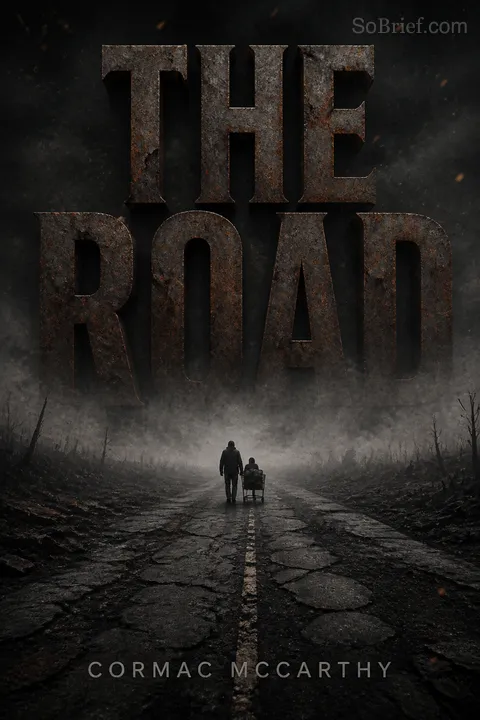
Dans un univers post-apocalyptique, un père et son jeune fils s’éveillent au milieu d’un paysage enveloppé de cendres, dépourvu de toute vie. Le père, hanté par des rêves d’un monde révolu, est animé d’un seul but : protéger son fils. Ensemble, ils entament un périple vers le sud, à la recherche de chaleur et de survie dans un monde où le soleil est voilé par un ciel gris perpétuel. Le père est tout pour le garçon, et le garçon est la raison de vivre du père. Ils avancent à travers ce terrain désolé, cherchant de quoi se nourrir et évitant les vestiges d’une humanité devenue sauvage.
Le début du voyage vers le sud
Le père et son fils poussent un chariot rempli de leurs maigres possessions le long d’une route qui s’étire à l’infini dans un paysage aride. Ils croisent les restes de la civilisation — villes abandonnées, voitures calcinées, et les squelettes de ceux qui n’ont pas survécu. Le père reste vigilant, toujours à l’affût du danger, tandis que le garçon s’accroche à lui, confiant dans sa capacité à les protéger. Leur destination est le sud, dans l’espoir de trouver un refuge pour affronter l’hiver à venir.
Rencontres avec la désolation
Au fil de leur route, père et fils affrontent de nombreuses menaces, parmi lesquelles des maraudeurs et des cannibales. Ils trouvent un refuge temporaire dans une maison approvisionnée en conserves, un rare moment de répit dans leur périple périlleux. Le père enseigne au garçon l’importance de « porter le feu », une métaphore pour préserver leur humanité dans un monde dépourvu de boussole morale. Malgré la noirceur ambiante, l’innocence et la compassion du garçon brillent, offrant une lueur d’espoir dans cet univers sombre.
Les dures réalités de la route
Père et fils croisent un voleur qui leur dérobe leur chariot, contraignant le père à prendre une décision difficile. Il récupère leurs biens, mais laisse le voleur nu et exposé aux éléments, un choix qui pèse lourdement sur lui et sur le garçon. Le père lutte avec les implications morales de ses actes, tandis que la compassion du garçon envers le voleur souligne la tension entre survie et humanité. Leur voyage est une lutte constante entre le maintien de leur intégrité morale et les dures réalités de leur monde.
Une lueur d’espoir
Arrivés sur la côte, ils découvrent un paysage aussi désolé que celui qu’ils ont traversé. Pourtant, ils mettent la main sur un bateau échoué contenant des provisions, leur offrant un répit momentané. Affaibli par la maladie, le père est déterminé à assurer la survie de son fils. Ils passent quelques jours sur la plage, rassemblant forces et ressources avant de poursuivre leur route. La curiosité et la résilience du garçon apportent une pause bienvenue face au désespoir qui les entoure.
La maladie du garçon
Le garçon tombe malade, et le père est envahi par la peur et le désespoir. Il veille sur lui avec les maigres ressources dont ils disposent, refusant de le quitter. Cette maladie marque un tournant, forçant le père à affronter la réalité de leur situation et la possibilité de perdre son fils. Malgré sa propre santé déclinante, il reste inébranlable dans sa détermination à protéger le garçon, incarnant l’amour désintéressé qui définit leur relation.
Dernier adieu et nouveaux départs
La santé du père se dégrade, et il comprend qu’il ne peut plus continuer. Il transmet ses dernières paroles de sagesse au garçon, l’exhortant à porter le feu et à chercher les bonnes personnes. Après la mort du père, le garçon est recueilli par une famille qui lui offre un nouveau départ. Le parcours qu’il a partagé avec son père lui a inculqué des valeurs de compassion et d’espoir, garantissant que le feu de l’humanité continue de brûler dans un monde qui a perdu son chemin.
Personnages
Le père
Le père est un homme mû par un seul objectif : assurer la survie de son fils dans un monde dépouillé d’humanité. Hanté par les souvenirs du passé, il fait preuve de ressources et d’une protection farouche, prêt à tout pour garder son fils en sécurité. Son amour pour le garçon est ce qui le soutient, et il peine avec les compromis moraux qu’il doit faire pour survivre. À mesure que sa santé décline, il est confronté à sa propre mortalité et à l’héritage qu’il laissera à son fils.
Le garçon
Le garçon incarne l’innocence et l’espoir dans un monde qui a perdu les deux. Malgré les horreurs qu’il voit, il conserve compassion et morale, remettant souvent en question les actes de son père et l’encourageant à aider autrui. Leur relation est fondée sur une confiance et un amour profonds, et il est la raison de vivre du père. Au fil de l’histoire, la résilience et la force intérieure du garçon deviennent de plus en plus évidentes, offrant une lueur d’espoir pour l’avenir.
Le voleur
Le voleur est un personnage secondaire qui symbolise le désespoir et la dégradation morale qui règnent dans ce monde. En volant le chariot du père et du fils, il force le père à affronter les dures réalités de la survie et les compromis moraux qu’elle implique. Les actes du voleur soulignent la frontière ténue entre survie et humanité, et sa rencontre avec le père et le fils sert de catalyseur à la compréhension grandissante du garçon.
La mère
Bien qu’absente du récit, la mère joue un rôle important dans la vision du monde du père. Son choix de mettre fin à ses jours plutôt que d’affronter les horreurs de leur univers hante le père, renforçant sa détermination à protéger leur fils à tout prix. Son absence rappelle sans cesse la fragilité de l’espoir et le poids de la survie, soulignant la lutte du père pour préserver son humanité dans un monde dépourvu de boussole morale.
La famille
La famille qui recueille le garçon après la mort du père incarne un nouveau départ et la possibilité d’espoir dans un monde apparemment dénué de lumière. Ils offrent au garçon la chance de poursuivre son chemin avec les valeurs que son père lui a transmises, assurant que le feu de l’humanité continue de brûler. Leur présence à la fin de l’histoire suggère qu’il existe encore des bonnes personnes, offrant une lueur d’espoir pour l’avenir.
Dispositifs narratifs
La route
La route est un élément central de l’intrigue, représentant le chemin que père et fils empruntent à la recherche de sécurité et de survie. Elle est à la fois un chemin concret et métaphorique, symbolisant les défis qu’ils affrontent et les choix qu’ils doivent faire. La route est une présence constante, façonnant leurs expériences et servant de toile de fond à leurs luttes et triomphes.
Le feu
Le concept de « porter le feu » est un motif récurrent dans l’histoire, symbolisant l’espoir du père pour l’avenir et sa volonté de préserver leur humanité dans un monde sans boussole morale. Il incarne les valeurs de compassion, d’amour et d’espoir que le père cherche à transmettre à son fils, garantissant que ce dernier porte ces idéaux même après la mort du père.
Le chariot
Le chariot est une représentation tangible de la lutte pour la survie du père et du fils, contenant leurs maigres possessions et servant de lien vital dans leur périple. Il symbolise le poids de la survie et le besoin constant de chercher des ressources dans un monde qui en offre peu. La présence du chariot souligne la précarité de leur existence et les défis qu’ils doivent relever pour trouver un refuge.
Analyse
« La Route » est une profonde exploration de la condition humaine, examinant jusqu’où les individus sont prêts à aller pour survivre dans un monde dépourvu de morale et d’espoir. À travers la relation entre le père et le fils, l’histoire aborde les thèmes de l’amour, du sacrifice et de la puissance durable de l’espoir. La détermination du père à protéger son fils et à lui transmettre les valeurs de compassion et d’humanité témoigne de la résilience de l’esprit humain. Dans un monde où la frontière entre survie et sauvagerie est floue, ce récit invite à réfléchir sur ce que signifie être humain et sur l’importance de porter le feu de l’espoir et de la morale, même dans les temps les plus sombres.
Les lecteurs ont aussi lu


FAQ
Synopsis & Basic Details
What is The Road about?
- Post-apocalyptic survival journey: The Road follows a father and son as they travel through a devastated, ashen landscape, struggling to survive and reach the coast.
- Focus on human connection: The core of the story is the intense bond between the father and son, their love and commitment to each other in the face of extreme adversity.
- Exploration of morality: The novel examines the characters' moral choices and the challenges of maintaining humanity in a world where civilization has collapsed.
Why should I read The Road?
- Powerful emotional impact: The Road is a deeply moving story that explores themes of love, loss, and the will to survive, leaving a lasting emotional impression.
- Unique post-apocalyptic vision: Cormac McCarthy's stark and brutal depiction of a world after an unnamed cataclysm is both haunting and thought-provoking.
- Philosophical depth: The novel raises profound questions about the nature of good and evil, the meaning of life, and the importance of human connection in the face of despair.
What is the background of The Road?
- Unspecified cataclysmic event: The novel does not explicitly state the cause of the apocalypse, leaving the reader to imagine the nature of the disaster.
- Environmental devastation: The world is depicted as a barren wasteland, with ash-filled skies, dead trees, and a lack of resources, reflecting a profound ecological collapse.
- Social breakdown: The collapse of society has led to widespread violence, cannibalism, and the loss of moral order, highlighting the fragility of civilization.
What are the most memorable quotes in The Road?
- "We're carrying the fire.": This recurring phrase encapsulates the theme of preserving humanity and hope in a desolate world, representing the father and son's inner light.
- "If he is not the word of God God never spoke.": This quote reveals the father's profound belief in his son's significance, viewing him as a divine warrant and the reason for his own survival.
- "You have to carry the fire.": This line, spoken by the father to the son, emphasizes the passing of responsibility and the continuation of hope and goodness in the face of despair.
What writing style, narrative choices, and literary techniques does Cormac McCarthy use?
- Sparse and minimalist prose: McCarthy's writing is characterized by its lack of punctuation, simple sentence structures, and avoidance of flowery language, creating a stark and direct tone.
- Focus on sensory details: The narrative emphasizes the characters' physical experiences, using vivid descriptions of the desolate landscape and the harsh conditions they endure.
- Limited omniscient point of view: The story is told from the father's perspective, but with occasional glimpses into the boy's thoughts and feelings, creating a sense of intimacy and emotional depth.
Hidden Details & Subtle Connections
What are some minor details that add significant meaning?
- The Coca-Cola can: The discovery of a single can of Coca-Cola becomes a symbol of a lost world and a rare moment of shared joy and nostalgia between the father and son.
- The morels: The finding of morel mushrooms represents a small victory and a reminder of the natural world's resilience, offering a brief respite from their constant struggle.
- The boy's book: The boy's book, though rarely read, symbolizes the importance of stories and the preservation of culture and knowledge in a world that has lost its past.
What are some subtle foreshadowing and callbacks?
- The father's dreams: The father's recurring dreams of a creature with "eyes dead white and sightless as the eggs of spiders" foreshadow the dangers and inhumanity they will encounter on their journey.
- The mention of the bloodcults: The reference to "bloodcults" consuming one another foreshadows the cannibalistic groups they will later encounter, highlighting the depths of human depravity.
- The mother's obsidian: The mention of the mother's obsidian foreshadows her suicide and the father's knowledge of how to use it, highlighting the theme of self-destruction.
What are some unexpected character connections?
- The old man, Ely: The encounter with the old man, Ely, reveals a shared understanding of the bleakness of their world and the futility of hope, creating a brief but profound connection.
- The thief: The encounter with the thief, though violent, highlights the shared desperation and moral compromises that define the characters' existence, creating a dark mirror of their own struggles.
- The family at the end: The family that takes in the boy at the end represents a continuation of the "fire" and a connection to a future that the father could not reach, offering a sense of hope and continuity.
Who are the most significant supporting characters?
- The old man, Ely: Ely serves as a philosophical foil to the father, embodying a nihilistic view of the world and challenging the father's belief in the importance of carrying the fire.
- The thief: The thief represents the moral decay and desperation that pervades the post-apocalyptic world, forcing the father to confront the harsh realities of survival.
- The family at the end: The family represents the possibility of hope and the continuation of humanity, offering a sense of closure and a new beginning for the boy.
Psychological, Emotional, & Relational Analysis
What are some unspoken motivations of the characters?
- The father's fear of losing his son: The father's actions are driven by an overwhelming fear of losing his son, which motivates his constant vigilance and his willingness to make difficult moral choices.
- The boy's desire for connection: The boy's compassion and empathy stem from a deep desire for human connection and a longing for a world where kindness and goodness still exist.
- The father's guilt over the mother's death: The father's actions are also influenced by his guilt over the mother's suicide, which fuels his determination to protect his son and ensure his survival.
What psychological complexities do the characters exhibit?
- The father's internal conflict: The father struggles with the moral compromises he must make to survive, torn between his desire to protect his son and his own sense of right and wrong.
- The boy's emotional resilience: Despite the horrors he witnesses, the boy maintains a sense of innocence and compassion, demonstrating a remarkable capacity for emotional resilience.
- The father's detachment: The father's emotional detachment is a coping mechanism to deal with the trauma and loss he has experienced, but it also creates a distance between him and the world.
What are the major emotional turning points?
- The discovery of the bunker: The discovery of the bunker filled with supplies offers a brief moment of hope and relief, but also highlights the fragility of their existence and the constant threat of loss.
- The boy's illness: The boy's illness forces the father to confront his own mortality and the possibility of losing his son, leading to a profound sense of fear and desperation.
- The father's death: The father's death marks the end of their shared journey and the beginning of the boy's new life, highlighting the themes of loss, grief, and the continuation of hope.
How do relationship dynamics evolve?
- The father's increasing vulnerability: As the father's health deteriorates, he becomes more vulnerable and dependent on the boy, highlighting the shifting power dynamics in their relationship.
- The boy's growing independence: The boy's increasing understanding of the world and his own moral compass leads to a growing sense of independence, preparing him for life without his father.
- The deepening bond: Despite the challenges they face, the bond between the father and son deepens, becoming a source of strength and resilience in their desolate world.
Interpretation & Debate
Which parts of the story remain ambiguous or open-ended?
- The cause of the apocalypse: The novel never explicitly states the cause of the cataclysm, leaving the reader to speculate about the nature of the disaster and its implications.
- The nature of the "good guys": The identity and motivations of the "good guys" are left ambiguous, raising questions about the possibility of redemption and the nature of hope in a post-apocalyptic world.
- The boy's future: The boy's future with the new family is left open-ended, leaving the reader to imagine the challenges and possibilities that lie ahead for him.
What are some debatable, controversial scenes or moments in The Road?
- The father's decision to leave the thief naked: The father's decision to leave the thief naked and exposed to the elements raises questions about the limits of compassion and the moral compromises necessary for survival.
- The father's willingness to kill: The father's willingness to kill to protect his son raises questions about the nature of violence and the justification of extreme measures in a desperate situation.
- The ending: The ending, with the boy finding a new family, is open to interpretation, with some readers finding it hopeful and others finding it too simplistic or sentimental.
The Road Ending Explained: How It Ends & What It Means
- The father's death: The father's death is a culmination of his failing health and the harsh conditions of their journey, marking the end of his role as the boy's protector.
- The boy's new beginning: The boy's discovery by a new family represents a continuation of the "fire" and the possibility of hope in a world that has lost its way, suggesting that humanity can endure even in the face of devastation.
- The legacy of love and compassion: The ending emphasizes the enduring power of love and compassion, highlighting the importance of carrying these values forward even in the darkest of times, as the boy carries the fire.
Télécharger le PDF
Télécharger l'EPUB
.epub digital book format is ideal for reading ebooks on phones, tablets, and e-readers.








































