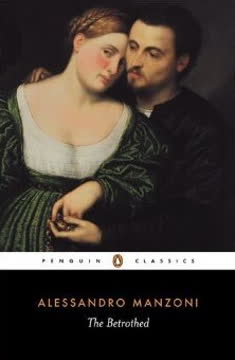
Trama
1. Prohibited Vows and Threats
At the heart of a rugged Lombard village, the humble weaver Renzo and the gentle, pious Lucy are ready to wed—a union quietly undermined by feudal oppression. Their priest, Don Abbondio, is menaced by Don Roderick's hired bravos, who, at Roderick's behest, demand the wedding be stopped. Fearful yet feebly defiant, Don Abbondio's compliance reveals a society where law bows before the whims of rank. Renzo and Lucy meet confusion and subterfuge; the world around them is a chessboard where pawns must choose between peril and silent suffering. As vows are broken on behalf of others' cruelty, innocence finds itself at the mercy of brazen self-interest, and the young lovers' future dims before intimidation and cowardice.
2. Comedy of Courage and Cowardice
Seeking a path through injustice, Renzo turns to the bumbling lawyer, Azzecca Garbugli, who, misunderstanding the case, mistakes him for a villain. Plans to force the marriage by tricking the priest end in farcical failure when Don Abbondio's panic causes chaos and alarm. The villagers' efforts, marked by superstition and peasant wisdom, only compound confusion. Meanwhile, Lucy's confession to the kindly Friar Christopher exposes the wider currents swirling around their personal woes: predatory nobility, cowardly clergy, and a populace seeking solutions either in the law's loopholes or desperate trickery. Each attempt at resolution swings between hope and grotesque comedy, balancing the gravitas of injustice with the pitiful slapstick of rural desperation.
3. Plots, Counsels, and Caprice
The narrative refracts through Lucy's secret: even her mother, Agnes, is kept in the dark about Don Roderick's pursuit. Relating her fears to Friar Christopher during confession, she's urged to hasten her union with Renzo before further evil can befall them. Meanwhile, at courtly tables and in the convent, webs of power are woven by men and women both—Agnes's rural stratagems mirror the calculating, embittered plots in noble parlors. A network of alliances, old histories, and personal caprice determines the destiny not only of the peasants, but also of those lords and ladies whose lives, for all their privilege, remain as vulnerable to fate's cruelties as anyone's.
4. The Friar's Duel Within
Friar Christopher, harboring a tormented past—a homicide, penance, and embrace of monastic life—stands as a moral pillar amidst institutional rot. He attempts to sway Don Roderick from his course, invoking justice and charity before unleashing prophetic wrath when rebuffed. Meanwhile, Renzo and Lucy, convinced their last hope lies in Christopher's intervention, ready themselves for a clandestine marriage with the aid of accomplices. Yet the night devolves into uproar: Don Abbondio's panic foils their plan, the ringing of the alarm bell scatters the conspirators, and an attempted kidnapping at Lucy's home is narrowly avoided. Christopher's spiritual conviction is tested against the brute realities of power—a duel between the mercy of the spirit and the iron laws of violence.
5. Ruthless Power, Small Defenses
The failed forced marriage and kidnapping plot scatter the protagonists. Don Roderick's ruthless designs drive the lovers into frantic escape. Friar Christopher calls on his own connections and the fragile bonds within the Church to secure interventions—which run up against power's impunity. With the countryside descending into lawlessness, Lucy is sent for protection to a convent ruled by the complex and tragic "Signora," herself trapped by the machinery of power and the memories of her own wrongs. Renzo finds only mistaken accusations and the limits of peasant cunning, as every recourse to justice proves hollow in the shadow of feudal privilege.
6. The Night of Failed Schemes
Lucy arrives at the castle of her patroness, but even the sanctuary of cloistered walls is vulnerable, as the secret alliances of Egidio, the Signora, Griso, and Don Roderick converge to orchestrate her abduction. Meanwhile, Renzo, caught up in a riot after seeking redress for their woes, is swept along in a Milanese insurrection—where the people's anger explodes over hunger, injustice, and the corruption of authorities. Pursued by the law, misunderstood, and betrayed by circumstance, Renzo must abandon his name and homeland, escaping across the border in a frantic exile. The night's confusion breeds new separations and a deeper awareness of society's rotten foundations.
7. Saints, Sinners, and Prejudice
Lucy, caught in the web of power and perfidy, is imprisoned in the castle of the "Unknown"—a notorious warlord haunted by his own multitude of crimes. Her saintly faith and desperate prayers stir both her captor's conscience and her own vow to the Virgin, in which she pledges a life of renunciation if delivered. Meanwhile, Don Abbondio and Agnes also flee for their lives, finding as much peril in the chaos of lawless uncertainty as in the men who wield violence. As the protagonists are swept into new settings—lazarettos, castles, and the city's voracious rumors—faith alone seems steady amidst the ruins of political and moral order.
8. The Queen in Her Prison
The Signora, Lucy's patroness, is revealed as both captor and tragic prisoner, ensnared since youth by family intrigue, social ambition, and her own capitulation to sin. Her haunted conscience, Egidio's manipulations, and the suffocating routines of the convent explore the inescapability of society's prisons, both literal and psychological. Meanwhile, the Unknown's confrontation with Lucy's innocence and suffering becomes a crucible: faced with pity, terror, and the appeal to a mercy he barely comprehends, the infamous criminal is propelled towards unexpected remorse and spiritual transformation. Here, brute power is undone, not by violence, but by the persistent, humble power of grace and suffering.
9. The Weaving of Justice
The Unknown, tormented by his crimes, is moved by Cardinal Federigo Borromeo's profound holiness and compassion. In a meeting of historic import, mercy begets repentance, and the castle's ruthless ruler begins to repair his wrongs—starting with Lucy's liberation. The cardinal's moral authority, distinct from the legal or clerical cowardice seen elsewhere, spurs a wider awakening of conscience and reconciliation. Lucy, rejoined with Agnes, is promised protection, while Friar Christopher—exiled unjustly—prays for miracles. As old systems of power falter and convert or die, justice appears in its truest form: not as the law's revenge, but as the spiritual restoration of the fallen and oppressed.
10. Pandemics and Processions
Amid collapsing social order, Milan suffers a devastating famine, then plague. Civil authority is undermined by inept decrees, violent riots, and scapegoating of bakers, strangers, and imagined poisoners. Bread becomes both symbol and arena for the people's outrage and confusion. Lucy, Renzo, Agnes, and even Don Abbondio are scattered anew by the turbulence: exiles, fugitives, or quarantined, they seek safety against a backdrop of communal panic and religious pageantry. The tensions between public hysteria, communal violence, and private virtue become starkly visible, as even father Borromeo's efforts can barely mitigate the ruin gathering around the city and countryside.
11. The Vagrant Across Borders
Renzo, branded as a rioter and fugitive, is forced to reinvent himself across the river in Bergamo; his identity and hopes for reunion obscured by slanders, official searches, and misinformation. Agnes, too, must navigate a world in ruins, where gold is as dangerous as poverty, and safety is always temporary. In convent and quarantine, Lucy finds strange and constricting kindness, her commitment to her vow creating as much anguish as it brings courage. The narrative lingers on the ways personal identity is recast or effaced by institutional power—one can be both criminal and victim, peasant and outlaw, beloved and outcast, depending on who is listening and who wields the pen.
12. Of Outlawed Sinners and Miracles
The unexpected conversion of the Unknown leads to acts of real restitution: Lucy is saved from the clutches of violence and reunited with her mother. Cardinal Federigo's presence grants the villagers a demonstration of true spiritual nobility. Don Roderick, thwarted and undone, flees to Milan, an exile like those he had victimized. A shifting of destinies unfolds as marriages, deaths, charity, and resurgence overtake a society still shaken by invasion and disease. Yet even miracles—Lucy's survival, the Unknown's repentance, Friar Christopher's sanctity—must be woven into the battered fabric of reality and new beginnings, not as easy victories but as hard-won acts of reconciliation with an afflicted world.
13. Conversion in a Haunted Castle
The Unknown's transformation becomes an example both for his followers and for a war-weary, disease-stricken population. His acts of charity and penance foreshadow the possibility of social restoration. The tale lingers on the weary cycles of flight, famine, and the slow, guarded return to devastated homes. Even good intentions become tangled with self-interest, rumor, and bureaucracy, as survivors contemplate restitution, forgiveness, and the humility that follows privation. What remains true through these reversals is the insurance of human solidarity: the kindness of strangers, the lessons of suffering, the necessity to hope even in ruin.
14. Cardinal's Grace in the Valley
Cardinal Federigo brings not merely comfort but probing moral challenge. He calls Don Abbondio to account for his cowardice and forces the curate—and by extension the reader—to confront the cost of fearful compliance with injustice. The community is offered a vision of what true authority can be: humility allied with courage, and grace as the seed of healing. Renzo and Lucy, after their long separation and many trials, are finally permitted to marry—not by the triumph of cunning or luck, but by the surrender to mercy, the reparation due to the innocent, and the irrevocable lessons of shared suffering.
15. The Slow Triumph of Providence
The devastation wrought by war, famine, and plague is slowly mended, not by grand revolutions but by the patient, humble acts of reconciliation, restitution, and forgiveness: land is bought, debts repaid, wounds made honorable, marriages celebrated with simplicity and gratitude. The wounds of the past remain in memory, but their bitterness is gradually sweetened. Even the errors of custom, the pettiness of neighbors, the sting of gossip, and the limitations of happiness in a fallen world mark out the boundaries of what wary contentment and hope a damaged community can achieve.
16. Death's Shadow and Restoration
In the wake of tragedy, Lucy and Renzo, at last, create a home for themselves across the border, blending their losses with their triumphs. The narrative stresses both the permanence of sorrow and the hard-won nature of contentment: even miracles do not annul grief, and happiness requires the humility to accept uncertainty. Looking back, the lessons of their afflictions are clear—not that suffering is avoidable, but that the only true inheritance is courage, faith, and kindness. Their new life is not paradise, but enough for people reconciled to the ways of Providence—and the refrain of the story is that good, if slow, can indeed triumph after evil.
Analysis
Modern resonance of endurance and hope amid chaosThe Betrothed is both a love story and a philosophical meditation on justice, power, and the capacity for moral transformation. Manzoni's "Providence" is not the simplistic guarantee of happy endings, but an insistence that, despite crushing evil and the failures of institutions, redemption remains possible—if slow, costly, and imperfect. The novel's greatest insight lies in its profound moral psychology: the persistent ambiguities of guilt and innocence, the ease with which the oppressed can become oppressors, the way individuals and societies alike are caught between cowardice and courageous action. In an age of plague, war, and rampant disinformation, Manzoni offers a vision of community that relies not on idealized heroism, but on the cumulative effect of small acts: courage wrested from timidity, restitution from guilt, kindness in the wake of betrayal. The text's relevance endures in its unflinching portrayal of how societies come unraveled in times of crisis, and how only humility, solidarity, and a sense of humanity's shared frailty can begin to mend them. The lesson is both personal and universal: happiness is neither automatic nor unmixed, but scarred, chastened, and nourished by the endurance of suffering and the slow restoration of trust and love.
Sintesi delle recensioni
Reviews of The Betrothed reveal a deeply beloved yet polarizing work. Many Italian readers, forced to study it repeatedly in school, initially resented it but rediscovered its brilliance as adults. Common praise highlights Manzoni's irony, vivid characters, rich historical detail, and psychological depth. Critics note the novel's preachy religious tone and occasionally slow pacing. Remarkably, readers across languages and cultures connected with its plague narrative, finding striking parallels to modern events like COVID-19. Its characters and phrases have become deeply embedded in Italian cultural identity.
Altri hanno letto anche
Characters
Renzo Tramaglino
Renzo stands at the center of the story's emotional gravity, a silk weaver whose journey from eager betrothal to fugitive exile renders him a representative of the common man under systemic oppression. Orphaned young but industrious and intelligent, Renzo wields a fierce loyalty to Lucy and a stubborn sense of justice, yet is also impulsive, hot-blooded, and at times naive. His passage through mistaken legal accusations and the violence of mobs exposes the porous boundaries between victim and criminal. Throughout, Renzo wrestles with disappointment, rage against injustice, and the temptation to vengeance but learns—largely through suffering and the influence of his spiritual mentors—to incorporate patience, mercy, and self-reflection. His development is not that of the grand epic hero but the relatable, flawed, and ultimately resilient survivor whose happiness is hard-won, chastened, and deeply human.
Lucy (Lucia) Mondella
Lucy embodies grace, humility, and unwavering piety; her beauty and modesty become both her shield and peril. Lucidly aware of her vulnerabilities in a world governed by men's desire and power, she suffers not only through Don Roderick's pursuit but also through the failings of her protectors, from the cowardice of the clergy to the complicity or impotence of other women. Her spiritual strength is quietly unshakeable, crystallizing in her vow to the Virgin—a gesture that both expresses and tests her agency in adversity. Lucy's journey traverses fear, captivity, and a luminous faith that paradoxically induces in her powerful enemies both remorse and transformation. Her eventual restoration is not one of naïve triumph; it is an affirmation that goodness, while bruised, can survive the world's cruelty.
Don Abbondio
The curate is a masterstroke of psychological realism—a man whose intelligence, caution, and instinct for self-preservation are the tools of the powerless in a predatory society. Reluctant, anxious, and full of rationalizations, Don Abbondio is both comic and tragic: he is at once a censor of bravery and a pitiful victim of the times, finding his moments of power only over those weaker than himself. His journey from terror to shame and half-hearted contrition during confession before Cardinal Federigo mirrors the quandary of the middle class in times of collapse: survival is not always dignified, and self-justification is often an ineffectual shield against remorse. There is abiding irony and some measure of compassion in his fate.
Friar Christopher (Padre Cristoforo)
A complex figure defined by remorse, Friar Christopher is haunted by his own violent past, seeking atonement in acts of intervention for the forsaken. Intrinsically opposed to both institutional corruption and personal vengeance, he is a natural peacemaker, teacher, and at times the novel's conscience. His determination to help Renzo and Lucy is realized through sacrificial action and moral wisdom, despite the tragic limits of what goodness, cloistered or otherwise, can accomplish against overwhelming corrupt forces. Out of his internal duel—with rage, pride, and humility—emerges the narrative's model for forgiveness, patient suffering, and the refusal to let despair have the last word.
Don Roderick (Don Rodrigo)
Don Roderick's character fuses erotic predation, paranoia, and the perverse confidence of the petty noble. His pursuit of Lucy is less about desire than about the assertion of social power: a contemptuous challenge to both custom and decency. Ultimately, even he is not immune to existential dread: his own isolation, the inexorable collapse of his schemes, and the return of sickness and death. Roderick's gradual undoing, capped by his hallucinatory, desperate final days, exposes the emptiness of pride, the futility of oppression, and the inexorability of justice beyond human courts.
The Unknown (l'Innominato)
At first, the Unknown is a figure of legend and terror—wielding unchecked violence, patron to outlaws, and seemingly impervious to both remorse and retribution. Yet, in Lucy's innocence and suffering, he confronts the existential abyss of his own life. His conversion is rendered as a genuine internal revolution: a spiritual crisis of despair precipitating a quest for mercy. The Unknown's encounter with Cardinal Federigo Borromeo is among the novel's climaxes, a confrontation both chilling and cathartic. He moves from villain to penitent, his journey mirroring Manzoni's Christian anthropology: evil can be monstrous, but even monsters can be redeemed by grace, humility, and the will to make amends.
Agnes (Agnese Mondella)
Lucy's mother is shrewd, practical, and fiercely loving; her folk wisdom and experience buffer her daughter and Renzo from the cruelty of the world but only to a point. Her advice is sometimes myopic, rooted in tradition and expediency, but often provides the only support the young couple receive. Agnes personifies the suffering and endurance of the rural poor, whose ingenuity is always at risk of being overwhelmed by the machinations of the powerful. Her arc is one of wise resilience—managing peril not by conquest, but by persistent resourcefulness and motherly love.
The Signora (Unnamed Nun of Monza)
As a figure of tragic ambiguity, the Signora embodies the silent suffering of women sacrificed to family, convent, and intrigue—a noble forced into the cloister, whose own descent into guilt, complicity, and self-loathing reflects the intertwining of social and psychological captivity. Her relationship with Lucy is a fraught mirror; her acts that of both benediction and betrayal. The psychological realism of her portrayal—a blend of pride, shame, and desperation—renders her one of the novel's most memorable, ambiguous, and haunting women.
Azzecca Garbugli (the lawyer)
Azzecca Garbugli is an embodiment of a society where justice is a game for the shrewd and the connected; his bluster, jargon, and underhanded strategies encapsulate the legalistic absurdity and corruption of the times. His advice is at best useless to Renzo, at worst actively harmful—an ironic commentary on the gulf between law as an ideal and as practiced.
Cardinal Federigo Borromeo
The cardinal is portrayed with respectful, almost hagiographic realism—a man wholly surrendered to his idea of Christian, institutional, and personal virtue. His courage, humility, and absolute dedication contrast sharply with both secular and ecclesiastical failures everywhere around him. When confronted with the Unknown, or when calling Don Abbondio to confession, he models a grace that judges without cruelty and forgives without flattery. Federigo is not just a spiritual figure, but the novel's vision of what true greatness in public life might be.
Plot Devices
Weaving fate's net and societal critique
Manzoni constructs the plot as a relentless entanglement of individual destinies within the net of society's larger mechanisms: feudal power, legal corruption, and clerical timidity. The lovers' misfortune is never random but relentlessly foreshadowed and propelled by the latticework of custom, law, violence, and coercion. Frequent foreshadowings—Roderick's threats, the friar's warnings, the shadow of the Unknown—drive the action forward and keep the sense of menace alive. Exile, disguise, mistaken identity, and the shifting of names and roles (Renzo becomes "Antonio Rivolta," Lucy hides in the convent, Don Roderick flees) highlight the instability of individual fate in the face of social turbulence. Manzoni's narrative teases the reader with shifting perspective, moving deftly from the close psychological interior of a character to the panoramic sweep of historical events—disease, famine, war—blurring the lines between personal and political disaster. The narrative is cyclical: each escape or small victory is undercut by larger reversals, emphasizing the fragility of happiness. The story's closure is marked not by impossible triumphs, but by the gradual, ambiguous return of order, and the lessons learned—the slow, providential healing that replaces strife.








































