Punti chiave
1. Il totalitarismo esige la resa assoluta della verità oggettiva
Alla fine il Partito avrebbe annunciato che due più due fa cinque, e tu avresti dovuto crederci.
La morte della realtà oggettiva. Il Partito non mira solo a controllare i comportamenti esterni, ma la stessa essenza della verità. Affermando che la realtà esiste solo nella mente, lo Stato si pone come unico arbitro di ciò che è reale. Questo cambiamento filosofico priva l’individuo di ogni fondamento oggettivo su cui appoggiarsi o resistere.
Il controllo della percezione. La lotta di Winston Smith è innanzitutto una battaglia intellettuale per preservare la validità delle proprie esperienze sensoriali. Quando lo Stato può dettare verità matematiche, la sanità mentale individuale viene smantellata sistematicamente. La perdita della verità oggettiva rende la popolazione completamente dipendente dalle dichiarazioni mutevoli del potere.
- L’equazione 2 + 2 = 5 diventa il simbolo supremo della sottomissione intellettuale.
- La memoria individuale è trattata come una malattia da curare con la tortura sistematica.
- La sanità mentale viene ridefinita da misura oggettiva a semplice conformità collettiva.
La resa definitiva. Al termine della tortura, Winston non si limita a fingere di credere che 2 + 2 faccia cinque; lo percepisce davvero. Questo rappresenta la vittoria totale dello Stato totalitario sull’anima umana. Quando la mente abbandona la logica di base, la capacità di pensiero indipendente si spegne per sempre.
2. Il linguaggio è l’arma suprema per limitare il pensiero umano
Non vedi che tutto lo scopo del Neolingua è restringere il campo del pensiero?
La restrizione del vocabolario. Il Neolingua è progettato per eliminare sistematicamente le parole che potrebbero esprimere dissenso, ribellione o individualità. Riducendo il linguaggio, il Partito rende letteralmente impossibile concepire pensieri non ortodossi. Se non esistono parole per descrivere la libertà, il concetto stesso di libertà svanisce.
L’eliminazione delle sfumature intellettuali. Il linguaggio cancella tutte le gradazioni di significato, riducendo l’espressione umana a termini rigidi e binari. Senza parole come “libertà” o “giustizia”, i concetti stessi si affievoliscono nella coscienza umana. Questa carestia linguistica assicura che la mente resti passiva e facilmente controllabile.
- “Nonbuono” sostituisce “cattivo”, privando il linguaggio di profondità emotiva e sfumature letterarie.
- Le parole si comprimono in composti brutti e taglienti come “polpensiero” e “amore-minimo” per bypassare il pensiero critico.
- L’obiettivo finale è trasformare il parlare in un riflesso meccanico e involontario, non in un atto intellettuale.
La fine del dissenso. Quando il linguaggio è completamente controllato, la possibilità di rivoluzione si estingue per sempre. Senza gli strumenti per articolare il malcontento, i cittadini diventano unità biologiche passive e prive di pensiero. Il trionfo supremo del Neolingua è l’allineamento totale del discorso umano con l’ideologia statale.
3. La manipolazione psicologica distrugge la sacralità dell’unità familiare
Era quasi normale che le persone sopra i trent’anni avessero paura dei propri figli.
L’arma della gioventù. Il Partito smantella sistematicamente la struttura familiare trasformando i bambini in informatori sponsorizzati dallo Stato. Attraverso organizzazioni come le Spie Junior, i bambini vengono indottrinati a dare priorità alla lealtà verso il Grande Fratello rispetto all’amore genitoriale. Questa inversione dell’affetto naturale trasforma la casa in un luogo di sorveglianza primaria.
L’erosione della fiducia. Questa spionaggio domestico crea un’atmosfera pervasiva di terrore all’interno della famiglia, dove i genitori devono costantemente controllare parole ed espressioni. Il legame naturale dell’affetto familiare viene sostituito da sospetto e paura reciproci. Nessun rapporto è al sicuro dal controllo statale.
- I bambini sono incoraggiati a spiare i genitori e denunciare ogni sospetto crimine di pensiero.
- La famiglia Parsons illustra questa tragedia, con Parsons denunciato con orgoglio dalla propria figlia.
- La vita familiare si trasforma da rifugio intimo a estensione dello Stato poliziesco.
La canalizzazione dell’emozione umana. Distruggendo la lealtà familiare e proibendo il piacere sessuale, il Partito convoglia tutta la passione umana in sfoghi approvati dallo Stato. L’energia che sarebbe andata all’amore viene raccolta come odio politico. Questa deviazione psicologica garantisce che lo Stato resti l’unico oggetto di devozione.
4. Il dolore fisico è lo strumento supremo di controllo comportamentale
Del dolore si può desiderare una sola cosa: che finisca.
I limiti dell’eroismo. Il percorso di Winston mostra che nessuna convinzione morale o forza intellettuale può resistere al potere crudo e travolgente della tortura fisica. Sottoposto a dolore intenso, il sistema nervoso umano annulla ogni ideale superiore in una disperata lotta per la sopravvivenza. Il corpo diventa il traditore supremo della mente.
Il corpo come nemico. Il Partito sfrutta questa vulnerabilità biologica per demolire l’indipendenza psicologica delle sue vittime. Minacciata dalla distruzione fisica, la mente accetta volentieri qualsiasi menzogna per sfuggire all’agonia. Il dolore è la leva definitiva per rimodellare l’identità umana.
- La tortura fisica al Ministero dell’Amore è pensata per spezzare lo spirito, non solo per estorcere informazioni.
- Winston comprende che di fronte al dolore non esistono eroi, solo corpi spezzati in cerca di sollievo.
- Il Partito usa fame sistematica, percosse e privazione del sonno per erodere il senso di sé della vittima.
Il trionfo del fisico. Alla fine, il Partito dimostra che l’istinto di autoconservazione del corpo è la leva suprema del controllo. Manipolando la paura fisica, lo Stato riscrive le convinzioni più profonde della vittima. La mente, spezzata dalla sofferenza fisica, cede volentieri la propria autonomia al torturatore.
5. Riscrivere la storia permette alla classe dominante di giustificare il presente
Chi controlla il passato controlla il futuro. Chi controlla il presente controlla il passato.
La manipolazione della memoria. Il Ministero della Verità esiste solo per alterare i documenti storici in modo da allinearsi alle narrazioni politiche mutevoli del Partito. Garantendo che lo Stato non abbia mai torto, il Partito mantiene l’illusione di infallibilità assoluta. Questo revisionismo costante priva i cittadini di ogni ancora storica.
La perdita del confronto. Senza un resoconto accurato del passato, i cittadini non hanno parametri per misurare la loro attuale miseria. Sono costretti ad accettare l’affermazione del Partito che la vita è notevolmente migliorata, nonostante il degrado urbano evidente. Il passato diventa una lavagna vuota su cui lo Stato scrive la propria giustificazione.
- Il lavoro di Winston consiste nel far sparire figure storiche e riscrivere vecchi discorsi per allinearsi alle alleanze correnti.
- Il repentino cambio di nemici durante la Settimana dell’Odio dimostra la terribile velocità del revisionismo storico.
- La distruzione delle prove materiali lascia i cittadini con ricordi confusi e facilmente manipolabili.
La creazione della verità. Nel mondo di Oceania, la storia non è un resoconto di eventi oggettivi, ma uno strumento fluido di potere politico. Controllando ciò che si ricorda, il Partito detta ciò che è vero nel presente. Questo controllo assoluto del tempo assicura che il regime attuale resti intoccabile ed eterno.
6. Il doppio pensiero permette alla mente di accettare contraddizioni logiche
Tenere simultaneamente due opinioni che si annullano a vicenda, sapendo che sono contraddittorie e credendo in entrambe.
La meccanica dell’autoinganno. Il doppio pensiero è il processo psicologico che consente ai cittadini di accettare le palesi contraddizioni del Partito senza provare dissonanza cognitiva. È la forma suprema di disciplina mentale, che richiede alla mente di dimenticare ciò che sa essere vero. Questa cecità autoindotta è essenziale per sopravvivere sotto un regime totalitario.
Il paradosso istituzionalizzato. Questa ginnastica mentale si riflette nei nomi stessi dei ministeri governativi, che svolgono esattamente l’opposto delle funzioni dichiarate. I cittadini devono scegliere consapevolmente di credere a queste menzogne pur conoscendo la verità. Lo stato psicologico risultante è di confusione permanente e controllata.
- Il Ministero della Pace fa la guerra, mentre il Ministero della Verità produce menzogne e propaganda.
- Il Ministero dell’Abbondanza gestisce le carenze economiche, e il Ministero dell’Amore conduce torture.
- Il doppio pensiero permette alla classe dominante di mantenere il potere assoluto eliminando la capacità di critica logica.
La morte della logica. Padroneggiando il doppio pensiero, gli individui perdono la capacità di riconoscere ipocrisia o incoerenza. Questo condizionamento psicologico assicura che l’autorità del Partito resti indiscussa, anche quando le sue azioni sono completamente irrazionali. La mente diventa la propria carceriera, controllando i propri pensieri per evitare di essere scoperta.
7. La ribellione individuale è inutile senza coscienza collettiva
Se c’è speranza, scrisse Winston, risiede nei proletari.
La forza delle masse. Winston riconosce che i proletari, che costituiscono l’ottantacinque percento della popolazione di Oceania, sono l’unica forza capace di rovesciare il Partito. Tuttavia, la loro mancanza di consapevolezza politica li tiene intrappolati in un ciclo di ignoranza e sopravvivenza. La loro energia potenziale resta dormiente, sprecata in banalità.
Il paradosso della rivoluzione. La tragedia dei proletari è che non si ribelleranno mai finché non diventeranno consapevoli della loro oppressione, ma non possono diventarlo finché non si saranno ribellati. Questo circolo vizioso assicura che la loro enorme energia potenziale resti inutilizzata. Il Partito li mantiene facilmente pacificati con intrattenimenti a basso costo e beni di prima necessità.
- Il Partito ignora i proletari, considerandoli animali subumani non degni di sorveglianza ravvicinata.
- La donna proletaria con il braccio rosso rappresenta la vitalità grezza e riproduttiva di un futuro che Winston non vedrà mai.
- Gli atti individuali di ribellione, come la relazione tra Winston e Julia, vengono facilmente schiacciati perché privi di sostegno collettivo.
L’isolamento del dissenso. Senza un movimento unificato e consapevole, i ribelli individuali sono solo anomalie da correggere. Il Partito isola e neutralizza facilmente queste ribellioni personali, lasciando intatta la struttura sociale. La ribellione privata di Winston è in definitiva solo un piccolo segnale nella perpetua esistenza dello Stato.
8. La tecnologia è una lama a doppio taglio ottimizzata per la sorveglianza
Naturalmente non c’era modo di sapere se in un dato momento si fosse osservati.
L’occhio onnipresente. In Oceania, la tecnologia non serve a migliorare la vita umana, ma a imporre la conformità assoluta attraverso la sorveglianza costante. Il teleschermo funge sia da trasmettitore di propaganda statale sia da ricevitore per la Polizia del Pensiero. Questa doppia funzione elimina il concetto di spazio privato.
Il peso psicologico. Questo monitoraggio continuo costringe i cittadini a interiorizzare lo sguardo dello Stato, controllando espressioni facciali e linguaggio del corpo. Il confine tra vita pubblica e privata viene completamente cancellato, lasciando nessuno spazio sicuro per il pensiero individuale. La paura di essere osservati diventa uno stato mentale permanente.
- I teleschermi sono installati in ogni casa e luogo pubblico, trasmettendo propaganda che non si può spegnere.
- Microfoni e telecamere nascoste sono disseminati per tutta la città, anche in ambienti apparentemente naturali.
- Il poster del Grande Fratello è un costante promemoria visivo della sorveglianza ineludibile dello Stato.
La perversione del progresso. Orwell avverte che il progresso tecnologico, se separato dalla responsabilità morale, diventa l’arma suprema della tirannia. Invece di liberare l’umanità, la tecnologia viene usata per schiavizzare la mente umana. La macchina è ottimizzata non per il comfort umano, ma per il controllo totale del comportamento.
9. Il vero tradimento avviene quando l’istinto di sopravvivenza prevale sull’amore
Fallo a Julia! Fallo a Julia! Non a me! Julia!
Il punto di rottura. Nella Stanza 101, Winston è costretto a confrontarsi con la sua più grande paura: i ratti. Di fronte alla prospettiva della mutilazione fisica, il suo amore per Julia crolla e implora che sia lei a subire la tortura al suo posto. Questo momento di terrore puro svela i limiti della lealtà umana.
La morte dell’anima. Questo atto di tradimento è l’ultimo passo nella rieducazione di Winston, poiché distrugge l’ultimo residuo della sua integrità morale. Privilegiando la propria sopravvivenza rispetto alla donna amata, consegna la propria umanità allo Stato. Il tradimento è totale, lasciandolo vuoto e svuotato.
- L’obiettivo finale del Partito non è solo l’obbedienza, ma l’eliminazione completa dell’affetto umano indipendente.
- L’incontro tra Winston e Julia dopo il rilascio è freddo e privo di vita, poiché entrambi riconoscono il danno permanente del loro tradimento reciproco.
- La distruzione del loro amore dimostra che lo Stato ha sostituito ogni legame umano con la lealtà al Grande Fratello.
La vittoria finale. La capitolazione di Winston nella Stanza 101 non è solo una sconfitta fisica, ma una morte spirituale. Imparando ad amare il Grande Fratello, completa la sua trasformazione in uno strumento vuoto e obbediente del regime totalitario. Lo Stato ha conquistato con successo l’ultima fortezza dello spirito umano: la capacità di amare un’altra persona.
Confermo di aver elaborato in dettaglio tutti e 9 i punti chiave nel formato richiesto.
Altri hanno letto anche




FAQ
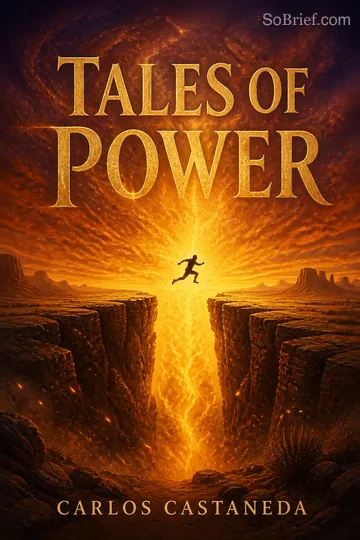
What is Tales of Power about?
- A Journey Beyond Reason: The book chronicles Carlos Castaneda's continued apprenticeship with Yaqui sorcerer Don Juan Matus, focusing on the transition from altered states induced by psychotropic plants to achieving non-ordinary reality through discipline and intent.
- Exploring Duality: It delves deeply into the concepts of the tonal and the nagual (the known, organized world of reason and the self) and (the unknown, the void, the realm of power and the totality of oneself), presenting them as two fundamental aspects of human existence.
- Warrior's Path Culmination: The narrative follows Carlos as he faces increasingly challenging physical and perceptual tests orchestrated by Don Juan and his fellow sorcerer Don Genaro, pushing him towards a final confrontation with the nagual and the culmination of his training.
Why should I read Tales of Power?
- Deep Dive into Consciousness: The book offers a unique and challenging perspective on human perception, reality, and the potential of consciousness beyond conventional understanding, pushing readers to question their own assumptions about the world.
- Experiential Philosophy: Rather than abstract theory, the teachings are embedded in vivid, often bizarre, experiences and dialogues, making complex philosophical ideas about self, reality, and power tangible and engaging.
- Literary Intrigue: Beyond the philosophical content, the book functions as a compelling narrative with memorable characters, dramatic scenes, and a sense of unfolding mystery, making it a captivating read for fiction enthusiasts interested in the esoteric.
What is the background of Tales of Power?
- Continuation of Apprenticeship: Published in 1974, it is the fourth book in Carlos Castaneda's series detailing his purported apprenticeship with Don Juan Matus, following The Teachings of Don Juan, A Separate Reality, and Journey to Ixtlan.
- Shift in Focus: This book marks a significant shift from the earlier emphasis on psychotropic plants as a means to access non-ordinary reality, focusing instead on techniques like stopping the internal dialogue, dreaming, and the warrior's way as paths to personal power.
- Setting as Symbol: The narrative unfolds across various locations in Mexico – Don Juan's house in Sonora, Mexico City, and Don Genaro's mountain home – with each environment often serving as a symbolic backdrop for the lessons being imparted, from the mundane "island of the tonal" in the city park to the powerful, unknown "nagual" in the wilderness.
What are the most memorable quotes in Tales of Power?
- "A warrior seeks impeccability in his own eyes and calls that humbleness.": This quote defines the core difference between the average man's self-confidence (seeking external validation) and the warrior's humbleness (seeking internal alignment), a central theme in the warrior's path analysis.
- "The tonal is everything we know... The nagual is the part of us which we do not deal with at all.": This fundamental definition introduces the core duality that structures the sorcerers' explanation, highlighting the boundary between the rational, describable world and the mysterious, unspeakable unknown.
- "Only if one loves this earth with unbending passion can one release one's sadness.": Delivered near the end, this quote reveals the ultimate grounding for the warrior navigating the unknown, emphasizing that love for the world is the source of joy and freedom, not just knowledge or power.
What writing style, narrative choices, and literary techniques does Carlos Castaneda use?
- First-Person Experiential Narrative: The book is told entirely from Carlos's perspective, immersing the reader directly in his subjective experiences, doubts, and transformations, making the abstract concepts feel immediate and personal.
- Dialogue-Driven Structure: Much of the teaching and plot progression occurs through extensive dialogues between Carlos, Don Juan, and Don Genaro, characterized by repetition, rhetorical questions, teasing, and often circular logic that mimics the non-linear nature of the sorcerers' world.
- Juxtaposition of Mundane and Mystical: Castaneda frequently places extraordinary events and profound philosophical discussions within ordinary settings (a park bench, a restaurant, a car ride), highlighting the sorcerers' ability to perceive the mystical within the mundane and challenging the reader's sense of normal reality.
Hidden Details & Subtle Connections
What are some minor details that add significant meaning?
- The Feeling in the Stomach: Recurring physical sensations, particularly in the stomach or midsection, are consistently linked to moments of fear, power, perceptual shifts, and the location of 'will' and the nagual, suggesting a bodily, non-intellectual form of knowing. (e.g., Carlos feeling a strange pain in his stomach when trying to hold the man's image, the anguish during falling sensations, the location of 'will' below the navel).
- Don Juan's Suit: Don Juan's appearance in a tailored suit in Mexico City is presented as a deliberate "challenge" and a symbol of his mastery over the "tonal" world, demonstrating that a warrior can navigate and even embody the conventional world impeccably without being bound by it.
- The Moth's Call as a Feeling: The mysterious sputtering sound of the moth is initially heard externally but later experienced internally as a feeling or vibration, illustrating how external phenomena in the sorcerers' world can be perceived directly by the body, bypassing rational interpretation.
What are some subtle foreshadowing and callbacks?
- The Moth Encounter: The initial encounter with the moth, described as "knowledge prowling," foreshadows the later revelation that moths are "heralds... guardians of eternity" and carriers of "gold dust of knowledge," linking a seemingly minor event to a core symbolic element of the nagual.
- The Gait of Power: Carlos's involuntary execution of the "gait of power" while fleeing the moth callbacks an earlier technique taught by Don Juan, demonstrating that the body has absorbed knowledge and capabilities beyond Carlos's conscious awareness or control in moments of extreme stress.
- The Dying Man in the Park: The encounter with the dying man, presented as an "omen," foreshadows the later discussions about death as the ultimate adviser and the indispensable ingredient in "having to believe," linking a specific event to a fundamental principle of the warrior's path.
What are some unexpected character connections?
- Don Genaro as Benefactor: The revelation that Don Genaro, known for his playful antics, is Carlos's "benefactor" (the one who guides into the nagual) while Don Juan (the stern teacher) is Pablito and Nestor's benefactor, subverts expectations and highlights the personalized nature of the apprenticeship based on the apprentice's needs.
- Carlos and Pablito's Parallel Journeys: Despite their different personalities and teachers, Carlos and Pablito are explicitly paired by "power" and undergo similar final tests together, suggesting a shared destiny or complementary paths towards the totality of self.
- The "Trinity" Dynamic: Don Genaro playfully labels Carlos, Pablito, and Nestor as the "Trinity" (Father, Son, Holy Ghost) during a moment of shared experience, a brief, unexpected religious allusion that highlights their interconnectedness in the face of the unknown, albeit in a humorous, subversive way.
Who are the most significant supporting characters?
- Don Genaro: As Carlos's benefactor, Don Genaro is crucial for providing direct, undeniable experiences of the nagual, often through physically impossible or bizarre actions that challenge Carlos's reason and force perceptual shifts. His playful nature contrasts with Don Juan's severity, offering a different facet of sorcery.
- Pablito: As a fellow apprentice and Carlos's counterpart, Pablito's parallel journey, fears, and experiences (like the basket encounter or being split) serve as validation and comparison points for Carlos, highlighting shared struggles and the diverse manifestations of the nagual.
- Nestor: The third apprentice, Nestor, primarily serves as a "witness" in the final stages, his reactions (fear, shyness, unexpected humor) providing an external gauge of the intensity of the events and the impact of the nagual on different individuals.
Psychological, Emotional, & Relational Analysis
What are some unspoken motivations of the characters?
- Don Juan's Pedagogical Intent: While Don Juan states his goal is to guide Carlos to the totality of self, his unspoken motivation often seems to involve deliberately provoking Carlos's emotional and rational limits through disorientation, teasing, and fear, as a calculated strategy to break down his conventional worldview.
- Carlos's Need for Control/Explanation: Carlos's persistent need to understand, rationalize, and take notes, even in the face of the inexplicable, reveals an unspoken motivation driven by intellectual habit and a deep-seated fear of losing control, which Don Juan constantly challenges.
- Don Genaro's Affectionate Guidance: Beyond his role as benefactor, Don Genaro's actions towards Carlos, particularly the physical contact and playful interactions, seem motivated by a genuine, unspoken affection and concern, contrasting with Don Juan's more detached approach and making the terrifying experiences more bearable.
What psychological complexities do the characters exhibit?
- Carlos's Duality of Self: Carlos exhibits a profound psychological split between his rational, academic self ("the tonal") and a deeper, instinctual self capable of non-ordinary perception ("the nagual"), leading to internal conflict, self-doubt, and moments of disassociation when these two aspects clash.
- Don Juan's Calculated Severity: Don Juan displays a complex psychological control, maintaining a severe, often mocking demeanor while simultaneously expressing underlying care and strategic intent, using emotional manipulation as a tool for teaching.
- Don Genaro's Playful Power: Don Genaro embodies the psychological complexity of integrating immense power with childlike playfulness and vulnerability (e.g., his "pain" after landing, his shyness about his teeth), suggesting that mastery does not require abandoning human emotion but transforming it.
What are the major emotional turning points?
- Encountering the Moth/Knowledge: Carlos's first sober perception of the moth as "knowledge" is a turning point, shifting his understanding of sorcery from plant-induced visions to a state achievable through discipline, marking a move towards greater personal responsibility for his experiences.
- Witnessing Don Genaro's Double: Seeing Don Genaro appear seemingly out of nowhere after being "called" is a major emotional shock that shatters Carlos's rational framework and forces him to confront the possibility of realities beyond his comprehension, leading to intense fear and intellectual turmoil.
- The Splitting Experience: The deliberate "splitting" of Carlos's awareness by Don Juan and Don Genaro's whispering is a pivotal emotional and perceptual event, forcing him to experience himself as a "cluster" of awarenesses rather than a unified self, fundamentally altering his sense of identity and reality.
How do relationship dynamics evolve?
- Teacher-Apprentice to Benefactor-Ward: Carlos's relationship with Don Juan evolves from a traditional teacher-apprentice dynamic focused on discipline and the tonal to a more complex relationship where Don Juan acts as a protector of Carlos's tonal while Don Genaro takes on the role of benefactor, guiding him into the nagual.
- Carlos's Connection with Don Genaro: Initially terrified by Don Genaro's unpredictable power, Carlos develops a bond of affection and trust with him, seeing him not just as a sorcerer but as a "warm," "gentle" benefactor, highlighting the personal nature of the guidance.
- Shared Journey with Pablito and Nestor: Carlos forms a sense of camaraderie and shared fate with Pablito and Nestor, particularly during the final trials, moving from observing them as other apprentices to experiencing profound, terrifying events alongside them, recognizing their mutual vulnerability and strength.
Interpretation & Debate
Which parts of the story remain ambiguous or open-ended?
- The Nature of the Nagual Manifestations: The exact nature of the nagual's manifestations (moth, man, bird, furry crocodile, feline) remains ambiguous; are they objective forms, subjective perceptions, or something else entirely? The text suggests they are "a mixture of you and him," leaving their ontological status open to interpretation.
- The Reality of Physical Feats: Scenes like Don Genaro standing horizontally on a tree, gliding through the air, or Carlos being "transported" miles instantly blur the line between literal event, shared hallucination, or a radical shift in perception, leaving the reader to question the nature of reality within the narrative.
- The Outcome of the Final Leap: The book ends with Carlos and Pablito leaping into the "unknown," but their ultimate fate – whether they survive, return, or are permanently transformed – is left open-ended, emphasizing that the journey into the nagual is ongoing and its results unpredictable.
What are some debatable, controversial scenes or moments in Tales of Power?
- The Physical Manipulations: Don Juan and Don Genaro's use of physical force (shoving, hitting, dunking, burying) to induce perceptual shifts or break Carlos's state is highly debatable from a conventional perspective, raising questions about the ethics and necessity of such methods in spiritual or psychological transformation.
- The "Spirit Catcher" Fart: Nestor's use of a fart as a "spirit catcher" during a moment of intense fear, while presented humorously, is a controversial juxtaposition of the sublime and the scatological, challenging traditional notions of spiritual practice and potentially alienating readers seeking a more conventionally reverent tone.
- The "Splitting" of Awareness: The description of Carlos's awareness being "split" by whispering in his ears, leading to a sensation of being a "cluster" of awarenesses, is a highly abstract and potentially controversial concept that defies easy psychological or philosophical categorization, inviting debate about the nature of consciousness itself.
Tales of Power Ending Explained: How It Ends & What It Means
- The Final Leap: The book culminates with Carlos and Pablito, guided to a place of power by Don Juan and Don Genaro, making a deliberate leap into the "unknown" at twilight, the "crack between the worlds." This is not necessarily a physical jump into an abyss but a plunge into the realm of the nagual, the totality of self, beyond the confines of the tonal.
- Embracing the Unknown & Love for Earth: Before the leap, Don Juan and Don Genaro emphasize that the decision to return to the tonal world rests solely on the warrior's "will" and, crucially, their "unbending love for this earth." This reveals that the ultimate power and grounding for navigating the unknown comes not just from knowledge or technique, but from a profound connection to the world itself.
- Becoming "Dust on the Road": Don Juan and Don Genaro state they will become "dust on the road," signifying their departure from Carlos's life as active guides. Carlos and Pablito are left to navigate their paths alone, armed with the knowledge and experiences gained, their future uncertain but dependent on their impeccability and ability to integrate the tonal and nagual, living fully as luminous beings. This ending emphasizes self-reliance and the ongoing nature of the warrior's journey.
The Teachings of Don Juan Series Serie
Scarica PDF
Scarica EPUB
.epub digital book format is ideal for reading ebooks on phones, tablets, and e-readers.








































