重要ポイント
1. 価値投資と長期的な事業の基礎に注目する
「価格はあなたが支払うもの、価値はあなたが得るものだ。」
長期的視点。 価値投資とは、短期的な市場の変動にとらわれず、企業の本質的な経済状況に注目することを意味する。このアプローチでは以下が求められる。
- 企業の長期的な収益力の評価
- 競争優位性の持続可能性の検証
- 経営陣の質と資本配分の判断力の分析
安全余裕率。 価値投資の重要な原則は、内在価値に対して大幅に割安な価格で資産を購入し、評価の誤りや予期せぬ事態に備えることだ。
- 内在価値を下回る価格で取引されている企業を探す
- 計算に誤差の余地を持たせる
- 魅力的な機会が訪れるまで忍耐強く待つ
2. 内在価値とキャッシュフロー創出を理解する
「割引キャッシュフロー計算で最も安いと示された投資こそ、投資家が購入すべきものだ。」
割引キャッシュフロー。 企業の内在価値は、その企業が生涯にわたって生み出すキャッシュを現在価値に割り引いて算出される。この考え方は株式、債券、企業全体の投資に共通する。
キャッシュ創出に注目。 企業評価の際は以下を重視する。
- フリーキャッシュフローの創出能力
- 投下資本利益率(ROIC)
- 維持および成長のための資本需要
会計上の利益は操作されやすいが、キャッシュフローは歪めにくい。報告数値の裏にある真の経済状況を常に見極めることが重要だ。
3. 持続可能な競争優位を持つ高品質企業を優先する
「真に優れた企業は、投下資本に対する優れたリターンを守る永続的な『堀』を持っている。」
経済的堀。 競争から企業を守り、長期にわたり高い資本収益率を維持できる持続可能な競争優位を持つ企業を探す。これには以下が含まれる。
- 強力なブランド認知
- ネットワーク効果
- 高い乗り換えコスト
- 規模の経済
- 知的財産権
長期的持続性。 企業の競争優位が時間を超えて維持されるかを評価する。考慮すべき要素は以下の通り。
- 業界の動向と潜在的な破壊要因
- 技術革新
- 規制環境
- 経営陣の適応力と革新力
4. 投資判断において経営陣の誠実さと才能を重視する
「魅力的な事業の見込みがあっても、尊敬に値しない経営者とは組みたくない。悪い人間と良い取引ができたことは一度もない。」
人物評価。 経営陣を評価する際は以下を優先する。
- 誠実さと倫理的行動
- 事業への情熱
- 才能と成功実績
- 株主利益との整合性
企業文化。 優れた企業文化を持つ会社を選ぶことも重要だ。そうした文化は、
- 優秀な人材の獲得と定着を促す
- イノベーションと継続的改善を育む
- 短期的利益より長期的価値創造を重視する
優れた事業も経営が悪ければ破壊される一方、才能と倫理を兼ね備えたリーダーは長期的に大きな価値を生み出す。
5. 保守的な財務管理を実践し過剰な借入を避ける
「他人の善意に依存することは決してない。ベアリングスでは『大きすぎて潰せない』は逃げ道ではない。」
借入回避。 レバレッジは慎重に扱う。
- 借入は必要最小限にとどめる
- 可能な限り長期固定金利で借り入れる
- 経済的逆風に耐えうる十分な流動性を確保する
財務の健全性。 強固なバランスシートと保守的な財務慣行を持つ企業を優先する。
- 高い現金および流動資産の保有
- 低い負債比率
- 安定したフリーキャッシュフローの創出
この方針は短期的なリターンを犠牲にすることもあるが、経済の低迷や市場の混乱時に安定性と選択肢をもたらす。
6. 投資において忍耐強く逆張りの姿勢を持つ
「他人が強欲なときは恐れ、他人が恐れているときは強欲であれ。」
逆張り思考。 独立した思考力を養い、群衆に流されない。
- 悲観が強いときに機会を探す
- 市場が熱狂しているときは慎重になる
- 最良の投資はしばしば当時は不快に感じることを認識する
忍耐。 優れた投資機会は稀であることを理解する。
- 魅力的な投資が少ないときは現金を保有することを厭わない
- 無理に不適切な決断をせず、適切な機会を待つ
- 時には何もしないことが最も賢明な選択であることを覚えておく
7. 失敗から学び、自分の能力の範囲内で行動する
「素晴らしい企業を適正価格で買うほうが、適正な企業を素晴らしい価格で買うよりはるかに良い。」
継続的学習。 成功と失敗の両方から積極的に学ぶ。
- 過去の投資判断を分析し、何が良くて何が悪かったかを理解する
- 他者の失敗を研究し、同じ過ちを繰り返さない
- 企業や業界に関する知識と理解を絶えず深める
能力の範囲。 自分が真に理解できる投資に集中する。
- 自分の限界と専門分野を正直に認識する
- 長期的な経済性を予測できない複雑または急速に変化する業界への投資は避ける
- すべてのチャンスに飛びつく必要はなく、自分の能力圏内の機会を待つことを心がける
8. 経営陣と株主の利害を一致させる
「最良の結果は、誠実で能力があり、長期間にわたり多額の自己資金をコミットしている人物がいるときに生まれると信じている。」
オーナーシップの精神。 経営陣が会社に多額の個人資産を投じているかを重視する。
- 大きな株式保有は株主との利害一致を促す
- 長期保有はコミットメントの証明となる
報酬体系。 経営者報酬の仕組みを評価する。
- 長期的な価値創造に連動した成果報酬を好む
- 過剰なストックオプションや短期ボーナスには注意を払う
- 株主価値を真に促進する指標に基づく報酬を求める
経営陣の成功が企業と株主の成功に直結していることを確認する。
9. 合併・買収には慎重に臨む
「多くの経営者は、自社の庭が反応しないカエルでいっぱいになっても、自分のキスの力を過信し続ける。」
買収基準。 買収を検討する際は厳格に選別する。
- 強固な経済性と優秀な経営陣を持つ企業を選ぶ
- 優良企業でも過剰な支払いは避ける
- 売り手や投資銀行の予測やシナジー見積もりには慎重になる
株主視点。 買収は常に既存株主の立場で考える。
- 株式を買収通貨として使う真のコストを評価する
- 買収が一株当たり価値を本当に向上させるかを確認する
- 厳しい基準を満たさない取引は断る勇気を持つ
多くの買収は買収企業の株主価値を毀損することを忘れてはならない。
10. 株主との明確なコミュニケーションを維持する
「年次報告書では、本当に重要な数字や情報を提供しようと努めている。」
透明性。 株主に対して明快かつ誠実な情報開示を優先する。
- 自分が株主の立場なら知りたい情報を提供する
- 専門用語や曖昧な表現を避け、平易な言葉で事業の状況を説明する
- 失敗や課題も隠さず率直に伝える
重要指標に注目。 事業理解に不可欠な情報を強調する。
- 長期的価値創造を真に促す指標を示す
- 財務結果の背景や説明を添える
- 短期的または本質的でない指標に惑わされないようにする
株主を事業のパートナーと捉え、意思決定に必要な情報を提供することが肝要である。
レビューまとめ
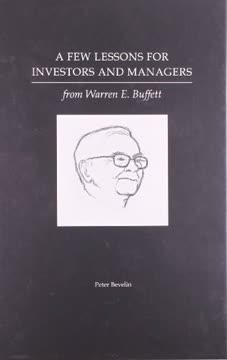
『ウォーレン・バフェットから投資家と経営者へのいくつかの教訓』は、バフェットの知恵を簡潔にまとめた点で高く評価されている。本書は明快でシンプルな構成により、投資や経営に関する貴重な洞察を提供している。多くの読者は、バフェットの哲学を初めて学ぶ入門書として、または既に彼の考えに親しんだ人にとっての有益な再確認として役立つと感じている。一方で、独自の内容や背景説明が不足しているとの指摘もあるが、時代を超えた助言をわかりやすく伝える点を評価する声も多い。総じて、バフェットの実証済みの原則を求める投資家や経営者にとって、読む価値のある一冊と位置づけられている。
他の人が読んだ本
 イマーシブ
イマーシブ



よくある質問
What's "A Few Lessons for Investors and Managers From Warren Buffett" about?
- Compilation of Wisdom: The book is a compilation of key quotes and lessons from Warren Buffett, focusing on investment and management strategies.
- Investment and Management Focus: It provides insights into investing in financial assets, valuing businesses, and understanding business characteristics.
- Buffett's Principles: The book distills Buffett's principles on corporate governance, management compensation, and risk reduction.
- Practical Advice: It offers practical advice for investors and managers, emphasizing the importance of trustworthy management and clear performance metrics.
Why should I read "A Few Lessons for Investors and Managers From Warren Buffett"?
- Learn from the Best: Warren Buffett is one of the most successful investors, and this book offers direct insights into his thinking and strategies.
- Concise and Accessible: The book is designed to be an easy-to-read, concise guide, making complex investment concepts accessible.
- Timeless Wisdom: Buffett's principles are timeless and applicable across various market conditions and business environments.
- Improve Decision-Making: It helps improve decision-making in investments and management by focusing on fundamental principles and long-term thinking.
What are the key takeaways of "A Few Lessons for Investors and Managers From Warren Buffett"?
- Value Over Price: Understand the difference between price and value, and never pay more than what you get back in value.
- Importance of Management: Trustworthy and talented management is crucial for business success and should be a key consideration in investments.
- Risk Management: Reducing risk through simplicity, understanding, and a margin of safety is essential for long-term success.
- Corporate Governance: Effective corporate governance involves selecting the right leaders and ensuring their interests align with those of the shareholders.
What are the best quotes from "A Few Lessons for Investors and Managers From Warren Buffett" and what do they mean?
- "Price is what you pay; value is what you get." This emphasizes the importance of understanding the intrinsic value of an investment rather than just its market price.
- "I am a better investor because I am a businessman and a better businessman because I am an investor." This highlights the synergy between investing and business management.
- "In the business world, the rear-view mirror is always clearer than the windshield." It suggests that while past performance is easier to analyze, future predictions are inherently uncertain.
- "The most important thing to do when you find yourself in a hole is to stop digging." This advises against continuing with a failing strategy and emphasizes the importance of adaptability.
How does Warren Buffett define investing in financial assets?
- Cash Flow Focus: Investing involves laying out cash today to get more cash back in the future, focusing on cash inflows and outflows.
- Price vs. Value: The return on investment depends on the price paid compared to the value received, emphasizing not overpaying.
- Understanding Value: Investors must be able to determine the worth of a financial asset to know the expected return.
- Comparison with Alternatives: Returns should be compared with other available opportunities to ensure the best investment decision.
What is Warren Buffett's approach to valuation?
- Cash is King: Follow the cash, as it is the only thing that can be spent, and use it to determine the value of an asset.
- Discounted Cash Flows: Value is determined by expected cash inflows and outflows, discounted at an appropriate interest rate.
- Intrinsic Value: Intrinsic value is an estimate, not a precise figure, and should be adjusted for interest rates and future cash flow forecasts.
- Avoid Precision Illusions: Avoid relying on precise numbers from complex models, as they can create a false sense of security.
How does Warren Buffett view the value of a business?
- Business vs. Bond: A business is similar to a bond but requires estimating future "coupons" or cash flows.
- Management Impact: The quality of management can significantly affect the equity "coupons" or returns.
- Book Value vs. Intrinsic Value: Book value is not a reliable indicator of intrinsic value, which is based on future cash flows.
- Growth Considerations: Growth can destroy value if it requires more cash inputs than the discounted value of future cash flows.
What are the characteristics of a great business according to Warren Buffett?
- Enduring Moat: A great business has a sustainable competitive advantage or "moat" that protects high returns on invested capital.
- Pricing Power: The ability to raise prices without losing customers is a key characteristic of a great business.
- Low Capital Requirements: Businesses that require little incremental investment to grow are preferred.
- Inflation Protection: Great businesses can increase prices easily and accommodate large volume increases with minimal capital investment.
How does Warren Buffett assess management performance?
- Integrity and Talent: Trustworthy and talented management is crucial, and Buffett prefers to work with people he likes, trusts, and admires.
- Clear Yardsticks: Establishing clear performance goals and yardsticks is essential to measure management success.
- Avoid "Except For": Managers should not explain away bad results with "except for" and should be accountable for their actions.
- Focus on Long-Term: Management should focus on long-term value creation rather than short-term earnings targets.
What is Warren Buffett's view on mergers and acquisitions?
- Sensible Price Tag: Acquisitions should only be made if they increase the intrinsic value per share of the acquiring company.
- Avoid Overconfidence: Overconfidence and the thrill of action can lead to poor acquisition decisions.
- Understand True Value: It's crucial to understand the true value of what is being given up in an acquisition.
- Beware of Projections: Be cautious of financial projections from sellers, as they often have more entertainment value than educational value.
How does Warren Buffett suggest reducing risk?
- Keep It Simple: Stick with simple and obvious propositions rather than resolving complex problems.
- Margin of Safety: Insist on a margin of safety in purchase price to protect against unforeseen events.
- Avoid Leverage: Use debt sparingly and ensure financial strength to handle adverse conditions.
- Be Patient: Exercise patience and avoid rushing into investments, especially during times of market euphoria.
What are Warren Buffett's thoughts on economic forecasting and market fluctuations?
- Ignore Forecasts: Buffett believes short-term economic forecasts are useless and distract from long-term investment decisions.
- Mr. Market Concept: View market fluctuations as opportunities to buy or sell based on value, not as guides for decision-making.
- Focus on Fundamentals: Evaluate investments based on business fundamentals rather than market sentiment.
- Long-Term Perspective: Maintain a long-term perspective and avoid being swayed by short-term market movements.