
핵심 요약
1. 시각은 보편적이면서도 다양하다: 동물들은 세상을 각기 다르게 본다
“상어와 오리너구리가 감지하는 미약한 전기장을 우리는 느낄 수 없다. 로빈과 바다거북이 감지하는 자기장도 우리에게는 비밀이다. 바다가 물고기의 보이지 않는 흔적을 추적하는 것처럼 우리는 할 수 없다. 떠도는 거미가 윙윙거리는 파리가 만드는 공기 흐름을 느끼는 것 또한 불가능하다.”
보편적이면서도 다양하다. 시각은 수많은 종이 공유하는 기본 감각이지만, 그 표현 방식은 놀라울 정도로 다양하다. 동물들은 각자의 필요와 환경에 맞게 눈을 진화시켜, 매우 다양한 시각 능력을 갖추게 되었다.
- 독특한 시각 능력의 예:
- 상어와 오리너구리의 전기장 감지
- 로빈과 바다거북의 자기장 감지
- 바다가 물고기의 흔적을 추적하는 능력
- 떠도는 거미가 파리의 공기 흐름을 감지하는 능력
이처럼 감각의 다양성은 인간의 세계관이 수많은 가능성 중 하나에 불과함을 일깨워준다. 이러한 차이를 이해하고 존중하는 것은 자연 세계와 그 안에서 진화한 놀라운 적응들을 더 깊이 이해하는 데 도움을 준다.
2. 독특한 눈 구조: 가리비부터 점핑 스파이더까지, 자연의 기발한 설계
“가리비는 내측 가장자리를 따라 눈이 배열되어 있는데, 어떤 종은 수십 개, 또 다른 종은 200개까지도 된다. 만조 가리비의 눈은 네온 블루베리처럼 보인다.”
자연의 기발한 설계. 동물계는 각자의 필요와 환경에 맞게 진화한 다양한 눈 구조를 보여준다. 이 다양성은 시각적 문제를 독특하게 해결하는 진화의 힘을 증명한다.
주목할 만한 눈 구조의 예:
- 가리비: 껍데기 가장자리에 최대 200개의 눈, 네온 블루베리처럼 빛남
- 점핑 스파이더: 거의 360도 시야를 위한 8개의 눈 배열
- 카멜레온: 독립적으로 움직이는 눈으로 동시에 여러 방향을 관찰
- 스트리티시아 챌린저리(심해 갑각류): 거의 360도 원주 시야를 위한 단일 수평 원통형 눈
이러한 놀라운 설계는 ‘눈’의 개념에 대한 우리의 고정관념을 깨뜨리며, 진화가 만들어낼 수 있는 무한한 가능성을 보여준다. 다양한 구조를 연구함으로써 동물들이 환경을 인식하고 상호작용하는 여러 방식을 이해할 수 있다.
3. 예리한 시력의 힘: 인간 시력의 뛰어난 선명도
“인간은 거의 모든 동물보다 세밀한 부분을 구분하는 데 뛰어나다. 멜린은 인간의 예리한 시력이 얼룩말 줄무늬를 특별하게 볼 수 있게 한다는 점을 깨달았다.”
인간의 시각 선명도. 일반적인 생각과 달리, 인간의 시력은 대부분 동물보다 세밀한 부분을 구분하는 데 탁월하다. 이 뛰어난 선명도는 우리가 환경을 인식하고 상호작용하는 방식에 큰 영향을 미친다.
인간 시력 선명도의 핵심:
- 각도당 주기(cpd)로 측정 시, 인간은 60~70 cpd를 구분
- 독수리 같은 맹금류만이 인간 시력을 능가
- 대부분 동물, 심지어 많은 포식자도 훨씬 낮은 선명도 보유
- 사자: 13 cpd (인간 기준으로는 법적 실명 수준)
- 꿀벌: 1 cpd
이 예리한 시력은 인간의 진화와 문화 형성에 큰 역할을 했으며, 독서, 얼굴 인식, 정교한 운동 능력 등을 가능하게 했다. 하지만 이로 인해 우리는 다른 동물들이 우리와 같은 수준의 세밀함으로 세상을 본다고 오해하기 쉽다.
4. 인간 시각을 넘어서: 다양한 시야와 선명도를 이해하기
“인간의 시각 세계는 앞에 있고, 인간은 그 안으로 움직인다,” 마틴은 한때 썼다. “하지만 조류의 세계는 주변에 있고, 새들은 그 안을 통과한다.”
다양한 관점. 동물들은 인간과는 매우 다른 시야와 시력 선명도를 지니고 있다. 이러한 차이를 이해하는 것은 각 종이 환경을 어떻게 인식하고 상호작용하는지 이해하는 데 필수적이다.
다양한 시야와 선명도의 예:
- 새: 측면에 눈이 있어 파노라마 시야 확보
- 청둥오리: 머리를 움직이지 않고도 하늘 전체를 볼 수 있음
- 왜가리: 서서 발밑의 물고기를 볼 수 있음
- 소와 다른 초식동물: 수평선 스캔을 위한 예리한 시야 띠 보유
- 심해어: 위를 향한 관 모양 눈으로 실루엣 포착
- 카멜레온: 독립적 눈 움직임으로 다방향 동시 관찰
이처럼 다양한 시각 능력은 각 종이 자신의 필요와 환경에 맞게 진화했음을 보여준다. 이러한 차이를 인식하면 동물 행동을 인간 중심적 시각으로 오해하는 일을 줄일 수 있다.
5. 시각 속도의 차이: 일부 동물은 시각을 통해 시간을 다르게 인식한다
“그들의 눈에는 인간 영화가 슬라이드쇼처럼 보일 것이다. 우리의 가장 빠른 동작도 느릿느릿하게 보일 것이다. 치명적인 의도로 움직이는 열린 손바닥도 쉽게 피할 수 있을 것이다. 권투는 태극권처럼 보일 것이다.”
시간 지각의 차이. 동물들이 시각 정보를 처리하는 속도는 크게 다르며, 이는 시간과 움직임에 대한 인식 차이로 이어진다. 이러한 시각 처리 속도의 차이는 종들이 환경과 서로 상호작용하는 방식에 중요한 영향을 미친다.
시각 처리 속도에 영향을 주는 요소:
- 임계 깜박임 융합 주파수(CFF): 깜박이는 빛이 연속적으로 보이는 지점
- 동물의 크기와 속도: 작고 빠른 동물이 더 높은 CFF를 가짐
시각 처리 속도의 예:
- 인간: 60Hz
- 개: 75Hz
- 피에드 파리잡이새(가장 빠른 척추동물): 146Hz
- 킬러 파리: 350Hz 이상 가능성
이러한 시각 처리 속도 차이는 사냥이나 포식자 회피 같은 활동에서 특정 동물에게 큰 이점을 준다. 이 차이를 이해하면 파리가 손을 피하는 행동처럼 인간에게는 이해하기 어려운 행동도 설명할 수 있다.
6. 야간 시력: 극한 어둠 속에서 보는 능력의 적응
“워런트는 벌이 자신의 손조차 보이지 않는 어두운 밤에 둥지를 찾는 모습을 촬영했다. 그는 벌이 자신의 눈으로 볼 수 있는 것을 보기 위해 야간 투시경을 사용해야 했다.”
어둠에 대한 적응. 많은 동물은 극도로 어두운 환경에서도 볼 수 있도록 놀라운 적응을 진화시켰다. 이는 어둠 속 시력의 한계에 대한 우리의 고정관념을 깨뜨린다.
야간 시력 적응의 예:
- 메갈롭타 제날리스(땀벌): 밤에 울창한 열대우림을 탐색
- 신경학적 기법으로 빛 민감도 향상
- 여러 광수용체 반응을 통합
- 광자 수집 시간 연장
- 고양이와 사슴: 망막 뒤에 반사층(타페텀) 보유
- 부엉이와 타르시어: 매우 큰 눈 진화
이러한 적응은 어둠의 도전을 극복하는 자연의 기발함을 보여준다. 또한 많은 동물의 시각 능력이 특히 저조도 환경에서 인간을 훨씬 능가함을 일깨워준다. 이 적응을 이해하면 동물들이 환경을 탐색하고 생존하는 다양한 방식을 알 수 있다.
7. 심해 시력: 대왕오징어의 거대한 눈과 그 진화적 목적
“가장 크고 민감한 눈을 가진 대왕오징어는 지구에서 가장 어두운 환경 중 하나를 스캔하며 다가오는 고래의 희미한 반짝임을 포착한다.”
진화적 목적. 대왕오징어의 지름 27cm에 달하는 거대한 눈은 심해 생활의 도전에 대응한 독특한 적응이다. 그 크기와 민감도는 이 극한 환경에서 특정 진화적 목적을 수행한다.
대왕오징어 눈의 핵심:
- 동물계에서 가장 큰 눈으로, 다른 심해 생물보다 훨씬 큼
- 극심한 심해에서 큰 생물 발광체를 감지하도록 진화
- 주요 기능: 주 포식자인 향유고래의 접근 감지
- 고래가 만드는 생물발광 구름을 120미터 거리에서 감지 가능
이 놀라운 적응은 심해에서 포식자와 피식자 간의 진화적 경쟁을 보여준다. 또한 특정 환경 압력이 극단적인 특성 발달을 이끌 수 있음을 증명한다. 대왕오징어의 눈은 생존 도전에 대한 자연선택의 힘을 상징한다.
8. 어두운 빛 속 색채 시력: 야간 시력에 대한 기존 가정을 뒤엎다
“반달빛 정도 밝기에서 켈버의 세계는 흑백으로 변했지만, 호박나방은 여전히 파란색과 노란색을 구분할 수 있었다.”
야간 색채 시력. 오랫동안 믿어온 것과 달리, 일부 동물은 매우 어두운 빛 조건에서도 색을 구분할 수 있다. 이 발견은 야간 시력에 대한 우리의 이해를 뒤흔들며 색채 인식의 진화와 기능에 관한 새로운 질문을 제기한다.
어두운 빛 속 색채 시력의 핵심:
- 이전에는 모든 동물이 밤에는 색맹이라고 여겨짐
- 코끼리 호박나방은 반달빛 정도 밝기에서도 색 구분 가능
- 야행성 동물 행동과 생태 이해에 중요한 시사점
- 다른 종에서도 미지의 시각 능력이 존재할 가능성 제기
이 발견은 동물 인식에 대한 우리의 가정을 끊임없이 재검토하는 중요성을 보여준다. 또한 동물들이 우리의 기대를 훨씬 뛰어넘는 감각 능력을 지닐 수 있음을 상기시키며, 다양한 종이 환경을 경험하고 상호작용하는 방식을 더욱 풍부하게 이해하게 한다.
리뷰 요약
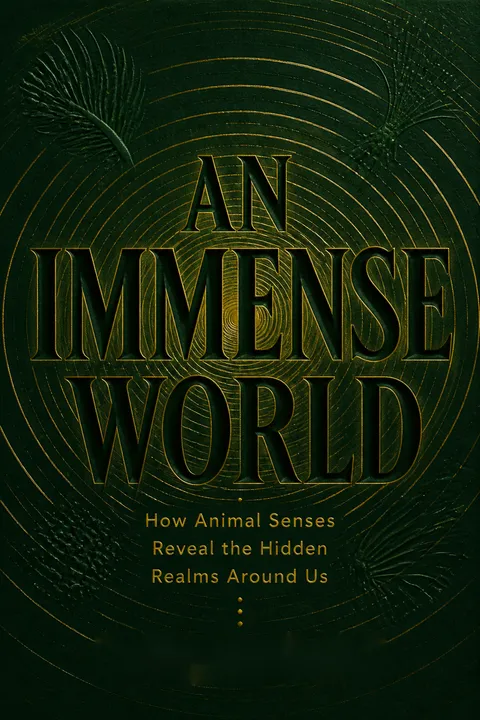
『거대한 세계』는 동물의 감각을 탐구하며, 각기 다른 종들이 현실을 어떻게 인지하는지에 대한 흥미로운 통찰을 제시한다. 저자 용은 ‘움벨트’라는 개념을 소개하는데, 이는 각 생명체가 지닌 고유한 감각의 세계를 뜻한다. 독자들은 익숙한 감각부터 전기장과 자기장에 이르기까지 다양한 감각의 여정을 따라가게 된다. 이 책은 흥미로운 문체와 철저한 연구, 그리고 깊이 있는 내용으로 찬사를 받았다. 다소 방대하다는 평도 있었지만, 대부분의 평론가들은 동물들이 지닌 다채로운 감각 능력에 매료되었다. 마지막 장에서는 인간이 동물의 감각 세계에 미치는 영향을 다루어, 이미 깊이 있는 독서 경험에 한층 더 무게를 더한다.
다른 독자들이 읽은 책








자주 묻는 질문
What's An Immense World about?
- Exploration of Animal Senses: An Immense World by Ed Yong explores how various animals perceive their environments through unique sensory adaptations, revealing the hidden realms these senses uncover.
- Concept of Umwelt: The book introduces "Umwelt," a term that describes the unique sensory world each species inhabits, emphasizing how different animals experience reality based on their sensory capabilities.
- Interconnectedness of Senses: Yong discusses how animals use multiple senses simultaneously, creating a rich tapestry of perception crucial for survival and interaction within ecosystems.
Why should I read An Immense World?
- Broadens Understanding of Nature: The book expands appreciation for the complexity of animal life and the various ways creatures interact with their environments, encouraging perspectives beyond human experience.
- Engaging Storytelling: Ed Yong combines scientific research with captivating narratives, making complex topics accessible and enjoyable, inviting readers to explore the wonders of the natural world.
- Awareness of Sensory Pollution: It raises awareness about the impact of human activity on animal senses, such as light and noise pollution, inspiring readers to advocate for conservation efforts.
What are the key takeaways of An Immense World?
- Diversity of Sensory Experiences: Animals perceive the world in ways vastly different from humans, with unique adaptations like echolocation in bats and electric fields in fish.
- Impact of Environment on Senses: Environmental factors shape sensory adaptations, such as electric catfish evolving to detect electric fields crucial for survival in murky waters.
- Human Influence on Animal Senses: Human-induced changes, like light and noise pollution, disrupt sensory landscapes, highlighting the urgent need for conservation efforts.
What are the best quotes from An Immense World and what do they mean?
- “Earth teems with sights and textures...”: This quote encapsulates the richness of the natural world and the myriad ways animals interact with it, urging recognition of life's complexity beyond human senses.
- “Each is enclosed within its own unique sensory bubble...”: Highlights the concept of Umwelt, illustrating that every species has a limited perception of reality, shaped by its sensory abilities.
- “We have to save the quiet, and preserve the dark.”: Reflects the call to action for preserving natural soundscapes and darkness for wildlife, emphasizing the detrimental effects of sensory pollution.
How does Ed Yong define the concept of Umwelt in An Immense World?
- Specific Perceptual World: Umwelt refers to the part of the environment that an animal can sense and experience, unique to each species, shaping their interaction with surroundings.
- Comparison to a House: Yong likens an animal's body to a house with many windows, each representing a different sense, illustrating limited perception of the larger world.
- Radical Notion: Challenges traditional views of animals as mere machines, recognizing them as sentient beings with their own inner worlds worth contemplating.
How does An Immense World address the impact of human activity on animal senses?
- Threatened Sensescapes: Human activities, such as pollution and habitat destruction, threaten the sensory environments animals rely on, disrupting communication, navigation, and survival.
- Misunderstanding Animal Needs: Lack of understanding of animal senses can lead to poor conservation practices, with urban environments overwhelming animals adapted to quieter habitats.
- Call for Conservation: Yong advocates for protecting diverse ecosystems, highlighting that preserving sensory landscapes is crucial for animal survival and well-being.
What unique sensory adaptations are discussed in An Immense World?
- Echolocation in Bats and Dolphins: Bats and dolphins use echolocation to navigate and hunt, emitting sounds that bounce off objects, creating a mental map of surroundings.
- Electric Senses in Fish: Certain fish, like electric eels, generate and detect electric fields to navigate and communicate, essential for survival in murky waters.
- Magnetoreception in Migratory Animals: Animals like birds and turtles use Earth's magnetic field to navigate during migrations, crucial for long-distance travel.
How does Ed Yong explain sensory exploitation in An Immense World?
- Definition of Sensory Exploitation: Occurs when one species evolves traits that exploit the sensory biases of another, shaping the evolution of communication signals.
- Example of Túngara Frogs: Male frogs produce calls that appeal to females' sensory biases, increasing mating success by tapping into pre-existing preferences.
- Evolutionary Implications: Sensory preferences can drive the evolution of traits in other species, illustrating dynamic interplay in communication systems.
How does An Immense World illustrate the interconnectedness of senses?
- Multisensory Integration: Animals often rely on multiple senses simultaneously, like mosquitoes using smell, heat, and taste to locate hosts, creating a comprehensive understanding of surroundings.
- Cross-Modal Recognition: Some animals recognize objects using different senses, such as electric fish identifying shapes through vision and electric fields, showcasing sensory system adaptability.
- Impact of Sensory Overload: Human activity can disrupt natural integration of senses, leading to confusion and maladaptive behaviors, highlighting the importance of balanced sensory environments.
What role does technology play in understanding animal senses in An Immense World?
- Innovative Research Methods: Scientists use advanced technologies, like high-speed cameras and acoustic sensors, to study animal senses, capturing behaviors previously impossible to analyze.
- Visualizing the Invisible: Technology helps make invisible sensory phenomena, like electric fields and sound waves, visible, aiding in understanding animal-environment interactions.
- Bridging Gaps in Knowledge: Enables data collection that bridges gaps in understanding animal senses, uncovering new insights into sensory worlds of various species.
How does An Immense World address the concept of pain in animals?
- Complexity of Pain Perception: Pain is not uniform across species; different animals perceive and respond to pain based on ecological needs and evolutionary history.
- Behavioral Responses: Some animals, like insects, may tolerate pain differently than mammals, raising questions about pain's nature and adaptive significance.
- Ethical Implications: Understanding pain perception has important implications for animal welfare and ethics, influencing treatment of other species.
What insights does An Immense World provide about the evolution of sensory systems?
- Adaptive Significance: Sensory systems evolve in response to environmental pressures, enhancing species' ability to detect and respond to stimuli, crucial for survival.
- Convergence of Sensory Traits: Instances of convergent evolution show unrelated species developing similar sensory adaptations, underscoring sensory systems' importance across taxa.
- Interplay Between Senses: Different sensory modalities work together to shape perception, reflecting evolution's dynamic nature and ongoing species adaptations.
저자 소개
같은 저자의 다른 책: Ed Yong

PDF 다운로드
EPUB 다운로드
.epub digital book format is ideal for reading ebooks on phones, tablets, and e-readers.








































