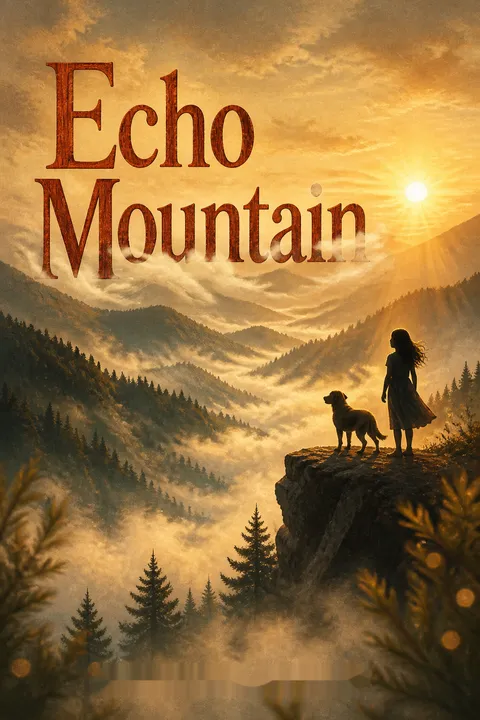
Samenvatting van het verhaal
Ellie redt een pasgeboren puppy
Vroeg in de ochtend trotseert Ellie de verwachtingen van haar moeder door een pasgeboren puppy, Quiet, te redden met koud water. Deze daad van moed en hoop zet de toon voor Ellie's karakter: vastberaden, meelevend en bereid om het bestaande aan de kaak te stellen. Haar band met de puppy symboliseert haar zorgzame aard en voorspelt haar rol als genezer in het verhaal. De puppy wordt een symbool van leven en veerkracht, een spiegel van Ellie's eigen reis op Echo Mountain.
De strijd van het gezin op Echo Mountain
De Grote Depressie dwingt Ellie's familie om het stadsleven achter zich te laten en opnieuw te beginnen op Echo Mountain. Haar vader, ooit kleermaker, en haar moeder, muzieklerares, worstelen met de harde realiteit van het bergleven. Het gezin wordt geconfronteerd met honger en ontberingen, maar Ellie vindt troost in de wildernis, in tegenstelling tot haar moeder en zus, die verlangen naar hun oude leven. Dit hoofdstuk benadrukt de veerkracht van het gezin en de verschillende manieren waarop zij omgaan met hun nieuwe werkelijkheid.
Ellie's band met de wildernis
In tegenstelling tot haar moeder en zus bloeit Ellie op in de wildernis, waar ze vreugde en betekenis vindt in de natuurlijke wereld. Haar band met haar vader verdiept zich terwijl ze samen werken aan een nieuw bestaan. Ellie's verbondenheid met de berg en haar bewoners onderscheidt haar van haar familie, wat een kloof schept maar haar ook een unieke kracht geeft. Haar relatie met het land wordt een bron van identiteit en veerkracht, die haar reis en haar rol als genezer vormgeeft.
Het ongeluk van vader en de gevolgen
Een tragisch ongeluk brengt Ellie's vader in coma, wat de dynamiek binnen het gezin verandert en Ellie dwingt een verantwoordelijke rol op zich te nemen. Het ongeluk, veroorzaakt tijdens het redden van haar broer Samuel, laat Ellie achter met schuldgevoelens en een vastberadenheid om haar vader te genezen. Deze cruciale gebeurtenis test de veerkracht van het gezin en dwingt Ellie haar angsten en beperkingen onder ogen te zien. De toestand van haar vader wordt een katalysator voor Ellie's groei en haar zoektocht naar onconventionele manieren om hem terug te brengen.
Ellie's geheime houtsnijwerken en ontdekkingen
Ellie ontdekt prachtig gesneden houten figuren die voor haar in het bos zijn achtergelaten, wat haar nieuwsgierigheid wekt en haar leidt naar een mysterieuze jongen genaamd Larkin. Deze houtsnijwerken symboliseren een verbinding met het onbekende en vormen een brug tussen Ellie en de geheimen van de berg. De houtsnijwerken worden een bron van verwondering en een aanzet tot Ellie's ontdekkingsreis, terwijl ze probeert te begrijpen waar ze vandaan komen en wie de jongen is die ze achterlaat. Dit hoofdstuk verdiept het mysterie en Ellie's band met de berg.
Ellie's vastberadenheid om vader te genezen
Gedreven door hoop en wanhoop experimenteert Ellie met onconventionele methoden om haar vader uit zijn coma te wekken. Ze gebruikt een mix van natuurlijke remedies en intuïtie, geleid door een innerlijk vlammetje van vastberadenheid. Ondanks de scepsis van haar moeder zet Ellie door, overtuigd van de kracht van haar instincten en de wijsheid van de berg. Haar zoektocht om haar vader te genezen wordt een metafoor voor haar eigen groei en veerkracht, terwijl ze leert vertrouwen op zichzelf en de natuur.
Ellie's ontmoeting met de mysterieuze hond
Ellie komt een wilde, gestreepte hond tegen die haar naar Cate leidt, een teruggetrokken vrouw die op de berg woont. Cate, gewond en hulpbehoevend, wordt een nieuwe focus voor Ellie's genezende instincten. De hond, Captan, symboliseert de wildheid en het mysterie van de berg en leidt Ellie naar nieuwe uitdagingen en verbindingen. Deze ontmoeting vergroot Ellie's wereld en introduceert haar aan nieuwe bondgenoten en geheimen, waardoor haar band met de berg en haar rol als genezer verdiept.
Ellie staat voor een moeilijke keuze
Ellie wordt geconfronteerd met een lastige beslissing wanneer Larkin, een jongen die ze is gaan vertrouwen, haar hulp nodig heeft. Ondanks de risico’s besluit ze hem te helpen, wat haar moed en toewijding aan de mensen om wie ze geeft onderstreept. Deze keuze markeert een keerpunt voor Ellie, die steeds meer haar rol als genezer en beschermer op Echo Mountain op zich neemt. Haar beslissing weerspiegelt haar groeiende volwassenheid en bereidheid om gevaar te trotseren voor het welzijn van anderen.
Cate's genezing en Ellie's groei
Naarmate Cate's gezondheid verbetert onder Ellie's zorg, groeit de band tussen hen. Cate deelt haar kennis van natuurlijke remedies en genezing, die Ellie gretig opneemt. Deze relatie wordt een bron van kracht voor Ellie, die meer vertrouwen krijgt in haar eigen kunnen. Cate's herstel symboliseert de helende kracht van gemeenschap en het belang van het doorgeven van kennis. Ellie's groei wordt duidelijk naarmate ze meer verantwoordelijkheid neemt en een centrale rol speelt in het genezingsproces op de berg.
Larkin's geheim en familiebanden
Larkin's mysterieuze verleden komt aan het licht wanneer hij toegeeft dat Cate zijn grootmoeder is. Deze onthulling verdiept Ellie's begrip van Larkin en de complexiteit van familiebanden. De connectie tussen Larkin en Cate benadrukt thema’s als nalatenschap en het belang van familie. Ellie's acceptatie van Larkin's geheim toont haar empathie en vermogen om voorbij het uiterlijk te kijken, wat hun vriendschap versterkt en haar rol als verbindende kracht op de berg bevestigt.
De kracht van muziek en herinnering
Terwijl Ellie's vader begint te herstellen, speelt muziek een cruciale rol in zijn genezingsproces. Het geluid van een mandoline, bespeeld door Ellie's moeder, wekt herinneringen en emoties op, wat helpt hem uit zijn coma te halen. Dit hoofdstuk benadrukt de transformerende kracht van muziek en het vermogen om mensen over tijd en ruimte heen te verbinden. De gedeelde muzikale erfenis van het gezin wordt een bron van kracht en eenheid, en illustreert het belang van culturele en familiale banden.
Een nieuw begin op Echo Mountain
Met het herstel van haar vader en de genezing van Cate kijkt Ellie met hernieuwd optimisme naar wat komen gaat. Ze reflecteert op haar reis en de lessen die ze heeft geleerd, en voelt zich meer verbonden met de berg en haar bewoners dan ooit tevoren. Dit hoofdstuk markeert een nieuw begin voor Ellie, die haar rol als genezer en leider in haar gemeenschap omarmt. Het verhaal eindigt met een gevoel van hoop en mogelijkheden, terwijl Ellie en haar familie zich voorbereiden op de uitdagingen die nog komen.
Personages
Ellie
Ellie is een vastberaden en empathisch meisje dat haar rol als genezeres op Echo Mountain met hart en ziel vervult. Haar reis wordt gekenmerkt door moed en een diepe verbondenheid met de natuur. Terwijl ze de uitdagingen van het bergleven aangaat, groeit Ellie uit tot een leider die haar omgeving inspireert met haar veerkracht en compassie. Haar relaties met Cate en Larkin tonen haar vermogen om voorbij het uiterlijk te kijken en betekenisvolle verbindingen te leggen.
Ellie's vader
Ellie's vader, ooit een bekwame kleermaker, wordt de drijvende kracht achter Ellie's groei en vastberadenheid. Zijn herstel is verweven met de thema’s van muziek en herinnering, waarbij het geluid van een mandoline hem helpt uit zijn coma te ontwaken. Zijn verhaal weerspiegelt de kracht van veerkracht en het belang van familieondersteuning bij het overwinnen van tegenspoed.
Ellie's moeder
Ellie's moeder is een liefdevolle en zorgzame aanwezigheid binnen het gezin, die muziek gebruikt om contact te maken met haar man en kinderen. Haar rol als lerares en musicus benadrukt het belang van culturele en familiale banden. Haar verhaal weerspiegelt de uitdagingen van aanpassing en de helende en verbindende kracht van muziek.
Esther
Esther, de oudere zus van Ellie, is praktisch ingesteld en aanvankelijk sceptisch over Ellie's onconventionele methoden. Haar reis weerspiegelt de spanning tussen traditie en verandering, terwijl ze leert nieuwe denkwijzen te omarmen. De veranderende relatie tussen Esther en Ellie benadrukt het belang van familieondersteuning en begrip in tijden van crisis.
Samuel
Samuel, de jongere broer van Ellie, staat symbool voor onschuld en nieuwsgierigheid. Zijn aanwezigheid herinnert aan de kwetsbaarheid van het gezin en het belang van bescherming. Samuel's vertrouwen in Ellie benadrukt haar rol als beschermer en gids, wat haar gevoel van verantwoordelijkheid en liefde verdiept.
Cate
Cate is een kundige en teruggetrokken vrouw die mentor wordt voor Ellie. Haar genezende wijsheid en kennis van natuurlijke remedies spelen een cruciale rol in het verhaal. Cate's herstel symboliseert de kracht van gemeenschap en het belang van het doorgeven van kennis. Haar relatie met Ellie is er een van wederzijds respect en leren, waarbij beiden groeien door hun gedeelde ervaringen.
Larkin
Larkin is een mysterieuze jongen met een diepe band met de berg en haar geheimen. Zijn onthulling dat Cate zijn grootmoeder is, geeft zijn karakter meer diepgang en benadrukt thema’s als familie en nalatenschap. De vriendschap tussen Larkin en Ellie is gebaseerd op vertrouwen en gedeeld begrip, terwijl ze samen de complexiteit van hun verleden verkennen. Zijn vaardigheid als houtsnijder symboliseert zijn vermogen om schoonheid en betekenis te scheppen uit de natuur.
Captan
Captan is een wilde, gestreepte hond die de wildheid en het mysterie van de berg belichaamt. Zijn loyaliteit en intelligentie maken hem een belangrijke bondgenoot in Ellie's reis, en hij vertegenwoordigt de geest van de berg en haar bewoners. De aanwezigheid van Captan benadrukt het thema van onderlinge afhankelijkheid en de kracht van de verbinding tussen mens en dier.
Verhaalelementen
De houtsnijwerken
De prachtig gesneden houten figuren die voor Ellie in het bos zijn achtergelaten, vormen een mysterieuze verbinding tussen haar en Larkin. Deze houtsnijwerken symboliseren het onbekende en het potentieel voor ontdekking, en begeleiden Ellie op haar reis van verkenning en groei. Ze vertegenwoordigen de geheimen van de berg en de band tussen Ellie en de natuur, en verdiepen het mysterie en de intrige van het verhaal.
De vlam
De vlam in Ellie symboliseert haar vastberadenheid en intuïtie, die haar leiden in haar zoektocht om haar vader te genezen en anderen te helpen. Deze innerlijke kracht vertegenwoordigt haar verbondenheid met de berg en haar rol als genezeres, en belichaamt hoop en veerkracht. De vlam is een metafoor voor Ellie's groei en haar pad naar begrip en acceptatie.
Muziek en herinnering
Muziek speelt een essentiële rol in het verhaal en fungeert als katalysator voor genezing en verbinding. Het geluid van een mandoline helpt Ellie's vader uit zijn coma te ontwaken, wat de transformerende kracht van muziek illustreert. Dit verhaalelement benadrukt het belang van culturele en familiale banden en de mogelijkheid van muziek om tijd en ruimte te overstijgen.
De berg
Echo Mountain is meer dan een decor; het is een personage op zich dat het leven en de reizen van haar bewoners vormgeeft. De uitdagingen en geheimen van de berg drijven de plot voort en beïnvloeden Ellie's groei en de aanpassing van haar familie. De berg staat symbool voor zowel ontbering als genezing en belichaamt de thema’s van veerkracht en transformatie in het verhaal.
Genezing en natuurlijke remedies
Het gebruik van natuurlijke remedies en genezingsmethoden is een centraal verhaalelement dat Ellie's groei en vastberadenheid weerspiegelt. Haar reis als genezeres wordt gekenmerkt door moed en vindingrijkheid, terwijl ze leert van Cate en de wijsheid van de berg. Dit verhaalelement benadrukt de kracht van gemeenschap en het belang van het doorgeven van kennis.
Analyse
"Echo Mountain" van Lauren Wolk is een ontroerende verkenning van veerkracht, genezing en de kracht van gemeenschap. Tegen de achtergrond van de Grote Depressie volgt het verhaal de jonge Ellie terwijl ze de uitdagingen van het bergleven aangaat, gedreven door een diepe verbondenheid met de natuur en een vastberadenheid om haar comateuze vader te genezen. Door haar reis benadrukt de roman het belang van onconventionele wijsheid, de transformerende kracht van muziek en de kracht van familie- en gemeenschapsbanden. De berg zelf fungeert als een personage dat zowel ontbering als genezing belichaamt en het leven van haar bewoners vormgeeft. Wolk’s verhaal legt de nadruk op thema’s als groei, moed en de onwankelbare menselijke geest, en biedt lezers een verhaal van hoop en mogelijkheden te midden van tegenspoed.
Anderen lazen ook



Veelgestelde vragen
Synopsis & Basic Details
What is Echo Mountain about?
- A girl's healing quest: Echo Mountain follows twelve-year-old Ellie, whose family is forced to relocate to a remote Maine mountain during the Great Depression after her father suffers a debilitating accident. Driven by a deep connection to the wilderness and an unwavering spirit, Ellie embarks on a determined quest to find unconventional ways to heal him.
- Survival and self-discovery: The narrative explores the family's struggle for survival in a harsh, isolated environment, contrasting Ellie's natural affinity for the wild with her mother and sister's longing for their former town life. Ellie's journey becomes one of profound self-discovery as she embraces her unique abilities and intuition.
- Unlikely mountain connections: Ellie's path leads her to forge unexpected bonds with a reclusive "hag" named Cate and a mysterious boy, Larkin, who help her unlock ancient wisdom and confront the complexities of healing, family, and belonging on Echo Mountain.
Why should I read Echo Mountain?
- Rich sensory immersion: Lauren Wolk's prose is deeply atmospheric, drawing readers into the tactile and sensory world of the mountain, from the smell of balsam sap to the feel of cold river water, creating a vivid and immersive reading experience. This detailed imagery enhances the themes of nature's healing power.
- Profound character development: The novel offers a nuanced exploration of resilience, grief, and transformation through its complex characters, particularly Ellie, whose internal struggles and unwavering determination to heal her family resonate deeply. Readers witness her evolution from a child burdened by guilt to a confident young healer.
- Timeless themes explored: Beyond its historical setting, Echo Mountain delves into universal themes of adaptation, the power of unconventional wisdom, the strength of familial bonds, and the enduring human spirit in the face of adversity, making it a compelling read for those seeking a story of hope and growth.
What is the background of Echo Mountain?
- Great Depression era hardship: The story is set in Maine in 1934, during the height of the Great Depression, which serves as the catalyst for the family's move from town to the isolated Echo Mountain. This historical context underscores the themes of economic struggle, self-sufficiency, and the drastic measures families took to survive.
- Rural self-reliance culture: The narrative deeply embeds itself in the culture of rural self-reliance, where families barter goods, hunt for food, and rely on traditional knowledge for survival and healing. This contrasts sharply with the family's previous urban life, highlighting the stark shift in their existence.
- Nature as a living entity: Echo Mountain itself is presented not merely as a setting but as a character, a wild and untamed force that both challenges and nurtures its inhabitants. The story explores the deep, almost spiritual connection some characters, like Ellie and Cate, have with the natural world and its ancient wisdom.
What are the most memorable quotes in Echo Mountain?
- "I loved the mountain. And I loved what it kindled in me. And that was that." (Chapter 3): This quote encapsulates Ellie's profound and unique connection to the wilderness, setting her apart from her mother and sister. It highlights her burgeoning sense of self and purpose, which the mountain nurtures, becoming a core aspect of her identity and resilience.
- "A person was more than just a body." (Chapter 59): This powerful statement, uttered by Ellie, reflects her deep understanding of healing that transcends physical ailments. It underscores the novel's central theme that true recovery involves emotional, spiritual, and relational well-being, not just the mending of flesh.
- "The brain's like the world. Every part of it has a way of doing things. But you won't know what you know until you know it." (Chapter 42): Cate's insightful observation about the brain, drawing a parallel to the vastness of the world, speaks to the novel's exploration of hidden knowledge, intuition, and the process of learning through experience. It emphasizes that understanding often comes through doing and discovery, rather than just formal instruction.
What writing style, narrative choices, and literary techniques does Lauren Wolk use?
- First-person, intimate narration: The story is told from Ellie's first-person perspective, offering an intimate and immediate connection to her thoughts, feelings, and sensory experiences. This narrative choice allows readers to deeply empathize with Ellie's journey of self-discovery and her unique perception of the world, enhancing the emotional depth of the Echo Mountain analysis.
- Lyrical, evocative prose: Wolk employs a lyrical and descriptive writing style, rich with sensory details and vivid imagery that brings the natural world of Echo Mountain to life. Her use of metaphor and simile, such as "the moon, beautiful in its bruises" (Chapter 3), creates a poetic atmosphere that underscores the beauty and harshness of the wilderness.
- Subtle foreshadowing and thematic echoes: The narrative masterfully weaves in subtle hints and recurring motifs, like the "flame" in Ellie's chest or the repeated phrase "if was quite a word," which foreshadow future events and deepen thematic connections. This technique encourages careful reading and rewards readers with layers of meaning, contributing to the rich themes in Echo Mountain.
Hidden Details & Subtle Connections
What are some minor details that add significant meaning?
- The "Keavy" mandolin's origin: The revelation that Ellie's mother's mandolin, named "Keavy," was crafted by Larkin's deceased father (Chapter 51) is a profound detail. It subtly connects the two families through shared artistry and loss, highlighting how music transcends their current divisions and foreshadows a potential for future harmony, linking to music and memory themes in Echo Mountain.
- Cate's "Girls Who Became Famous" book: Cate's mention of Florence Nightingale's story, particularly how she healed a sheepdog named Cap (Chapter 64), is a subtle callback to Ellie's initial act of saving Quiet and Captan's name. This detail reinforces the theme of innate healing ability and the idea that one's true calling can be revealed through compassionate action, deepening the Ellie character analysis.
- The significance of "if": The recurring phrase "if was quite a word" (Chapters 6, 14, 45) subtly emphasizes the pervasive uncertainty and the weight of hypothetical outcomes in the characters' lives. It highlights the constant internal negotiation between hope and despair, and the burden of choices made or not made, adding a layer of psychological depth to the narrative.
What are some subtle foreshadowing and callbacks?
- Ellie's "echo-girl" nature: Early in the book, Ellie describes herself as an "echo-girl" who feels the pain of others (Chapter 4), subtly foreshadowing her deep empathy and intuitive healing abilities. This trait is later manifested in her ability to understand animals and sense Cate's and Larkin's unspoken emotions, reinforcing her role as a natural healer in Echo Mountain.
- The doctor's locket payment: The detail that Ellie's mother paid the doctor with her silver locket (Chapter 7) for his ineffective treatment of her father foreshadows the family's desperation and the limitations of conventional medicine. It sets up the later contrast with Ellie's unconventional, effective methods and Cate's wisdom, highlighting the theme of alternative healing in Echo Mountain.
- Captan's "singing" and barking: Captan's initial silence, broken only by howls and growls, and his later "singing" to Ellie's mother (Chapter 69) subtly foreshadows his role in awakening her musical spirit and, consequently, her father. His bark, which finally rouses Ellie's father, is a powerful callback to the idea that strong, even jarring, stimuli can be necessary for profound change, linking to Captan symbolism.
What are some unexpected character connections?
- Cate as Mrs. Cleary: The revelation that Cate, the reclusive "hag," is actually Mrs. Cleary, the kind nurse from Bethel who once treated Esther's earaches (Chapter 49), is a significant and unexpected connection. This twist challenges initial perceptions and highlights themes of identity, transformation, and the enduring impact of kindness, enriching Cate's character study.
- Captan as Quiet's father: The subtle suggestion that Captan, Cate's wild dog, is the sire of Maisie's puppies, including Quiet (Chapter 57), creates an unexpected familial link between the wild mountain and Ellie's domestic life. This connection reinforces the idea of interconnectedness and the blending of different worlds, adding depth to Captan symbolism and the bond between Ellie and Quiet.
- Larkin's father as the mandolin maker: The discovery that Larkin's deceased father was the luthier who crafted Ellie's mother's beloved "Keavy" mandolin (Chapter 51) establishes a poignant, unseen bond between the two families. This shared heritage through music and craftsmanship underscores themes of legacy, loss, and the unexpected ways lives intertwine on Echo Mountain.
Who are the most significant supporting characters?
- Captan, the loyal guide: Captan, Cate's brindled dog, is far more than a pet; he acts as a silent, intuitive guide for Ellie, leading her to Cate and later communicating distress through his "singing" and barking. His loyalty and wild wisdom are crucial to the plot, symbolizing the mountain's untamed spirit and the deep, unspoken bonds between humans and animals, central to Echo Mountain character analysis.
- Larkin, the hidden carver: Larkin, initially the mysterious carver of wooden gifts, becomes Ellie's confidant and a key helper in Cate's healing. His quiet strength, artistic talent, and deep connection to his grandmother and the mountain's history make him a vital character who mirrors Ellie's own journey of self-discovery and acceptance, exploring Larkin motivations.
- Esther, the evolving sister: Esther, Ellie's older sister, initially represents the family's resistance to mountain life and harbors resentment towards Ellie. However, her journey reveals her own fears and capacity for kindness, particularly when caring for Cate. Her transformation highlights the complexities of sibling relationships and the slow, often painful process of adaptation and empathy, adding depth to Esther character development.
Psychological, Emotional, & Relational Analysis
What are some unspoken motivations of the characters?
- Ellie's guilt and responsibility: Ellie's relentless pursuit of her father's healing is deeply motivated by her unspoken guilt over the accident, believing she was indirectly responsible for Samuel being in harm's way (Chapter 14). This internal burden drives her to extreme measures, as she feels compelled to "fix" what she perceives as her fault, a key aspect of Ellie motivations.
- Esther's longing for the past: Esther's constant complaints and desire to return to town stem from a profound sense of loss and a struggle to adapt, which she expresses through anger and blame. Her unspoken motivation is a desperate yearning for the comfort, familiarity, and social structure of their old life, which she believes was unjustly taken from her, impacting Esther character development.
- Mother's protective fear: Ellie's mother's initial resistance to Ellie's unconventional healing methods and her desire to keep her children "tame" are rooted in a deep, unspoken fear of further loss and the unpredictable nature of the mountain. Her motivation is to protect her remaining family from the wildness that has already caused so much pain, influencing her decisions in Echo Mountain.
What psychological complexities do the characters exhibit?
- Ellie's "two-ness": Ellie grapples with a complex internal duality, describing herself as "two opposite things at the same time" (Chapter 4)—a skilled woods-girl and an "echo-girl" who feels the pain of others. This psychological complexity allows her to navigate both the practical demands of survival and the emotional nuances of healing, making her a uniquely empathetic and effective protagonist in Echo Mountain analysis.
- Mother's identity crisis: Ellie's mother experiences a profound psychological shift, feeling like "a stranger in this new skin" (Chapter 46) after leaving town. Her inability to sing or play the mandolin reflects a loss of her former identity as a music teacher and a struggle to find joy and purpose in the harsh mountain life, showcasing the psychological impact of the Great Depression.
- Larkin's quiet grief and isolation: Larkin's reserved nature and his secret gift-giving reveal a deep-seated loneliness and unresolved grief over his father's death. His psychological complexity lies in his quiet observation and artistic expression, using his carvings as a way to connect without direct interaction, reflecting the isolation and emotional burdens of mountain life, central to Larkin motivations.
What are the major emotional turning points?
- Father's first groan: The moment Ellie's father groans after the bee stings (Chapter 59) is a pivotal emotional turning point, offering the first tangible sign of his awakening after months of silence. This brief sound ignites a powerful surge of hope and validation for Ellie, reinforcing her belief in her unconventional methods and fueling her determination.
- Mother's mandolin playing: When Ellie's mother finally picks up and plays her mandolin, "Keavy," after Captan's insistent "singing" (Chapter 69), it marks a significant emotional breakthrough. This act symbolizes her return to her true self, her acceptance of the mountain's wildness, and a profound release of pent-up grief, creating a moment of collective healing and joy for the family.
- Esther's recognition of Mrs. Cleary: Esther's emotional breakthrough upon recognizing Cate as Mrs. Cleary, the kind nurse from her childhood (Chapter 49), is a powerful turning point. It shatters her rigid perceptions, allowing her to shed her resentment and embrace empathy, transforming her relationship with Cate and, implicitly, with Ellie, highlighting the themes in Echo Mountain of forgiveness and understanding.
How do relationship dynamics evolve?
- Ellie and Mother's shifting bond: Initially strained by Ellie's wildness and the mother's grief, their relationship evolves from conflict to mutual understanding and respect. The mother's gradual acceptance of Ellie's healing methods and her own return to music signify a softening and a deeper appreciation for Ellie's unique strengths, transforming their dynamic from opposition to partnership.
- Esther's journey from resentment to empathy: Esther's relationship with Ellie is marked by initial resentment and blame, particularly regarding their father's accident. However, her experience caring for Cate and witnessing Ellie's unwavering compassion slowly erodes her hardened exterior, leading to moments of genuine empathy and a renewed sisterly bond, showcasing Esther character development.
- Cate and Larkin's intergenerational healing: The relationship between Cate and Larkin is one of deep, unspoken love and mutual reliance, where Larkin cares for his grandmother and learns her healing ways. Their bond, rooted in shared grief and mountain wisdom, highlights the importance of legacy and the quiet strength found in intergenerational connections, providing a powerful counterpoint to the family's initial struggles.
Interpretation & Debate
Which parts of the story remain ambiguous or open-ended?
- Father's full cognitive recovery: While Ellie's father awakens and begins to speak, the extent of his long-term cognitive and physical recovery remains somewhat ambiguous. Cate warns that he "may be . . . different now. Not quite who he was before. And he may not remember some things" (Chapter 42), leaving the reader to ponder the lasting impact of his coma and the challenges still ahead for his full rehabilitation.
- The future of the mountain community: The story concludes with a sense of hope and new beginnings, but the long-term integration of Cate and Larkin's family with Ellie's community is left open. The lingering prejudices (e.g., Mrs. Lockhart's suspicion, Larkin's mother's anger) suggest that true acceptance and unity will be an ongoing process, reflecting the complexities of community building in Echo Mountain.
- The nature of Ellie's "gift": The source of Ellie's intuitive healing abilities and her deep connection to animals and nature is never explicitly explained. It's presented as an innate quality, a "flame" within her, leaving it open to interpretation whether it's a mystical gift, heightened empathy, or simply a profound attunement to the natural world, adding to the Ellie character analysis.
What are some debatable, controversial scenes or moments in Echo Mountain?
- Ellie's "shock therapy" for her father: Ellie's repeated attempts to rouse her father using jarring methods—dunking him in cold water, putting a snake in his bed, and applying bee stings to his temple—are highly debatable. While ultimately effective, these actions are portrayed as reckless and potentially harmful by her family, prompting readers to question the ethics of her desperate measures versus the desperate need for a cure, a key point in Echo Mountain analysis.
- Ellie taking blame for the accident: Ellie's decision to shoulder the blame for her father's accident, protecting Samuel and Esther (Chapter 14), is a controversial act of self-sacrifice. While noble, it leads to her isolation and the family's resentment, raising questions about the long-term psychological cost of such a burden and whether honesty, however painful, might have been a healthier path.
- The "hag" label and its implications: The community's labeling of Cate as a "hag" and the fear associated with her, despite her being a kind, knowledgeable nurse, is a controversial portrayal of prejudice. It sparks debate about how fear and misunderstanding can demonize those who are different or possess unconventional wisdom, highlighting themes of societal judgment versus individual truth in Echo Mountain.
Echo Mountain Ending Explained: How It Ends & What It Means
- Father's awakening and memory's return: The novel culminates with Ellie's father fully awakening, his memory of the accident returning, and his explicit exoneration of Ellie ("Not Ellie," Chapter 70). This signifies not just physical healing but also emotional and relational restoration within the family, as the burden of blame is lifted and understanding begins to mend fractured bonds. This is a crucial part of the Echo Mountain ending explained.
- The final carving and shared purpose: The discovery of Larkin's new carving—a figure of himself placed next to Ellie's (Chapter 73)—symbolizes the deepening of their friendship and a shared future purpose. It represents mutual recognition, acceptance, and the promise of collaboration in their roles as healers and caretakers of the mountain, suggesting a new generation embracing its unique path.
- Ellie's realization: "doing one thing was doing everything": Ellie's profound realization that "doing one thing was doing everything" (Chapter 73) encapsulates the novel's core message. It means that every act of kindness, every effort to heal, every step towards understanding, no matter how small or seemingly isolated, contributes to a larger, interconnected web of well-being and growth, affirming the transformative power of compassion and resilience in Echo Mountain themes.

PDF downloaden
EPUB downloaden
.epub digital book format is ideal for reading ebooks on phones, tablets, and e-readers.








































