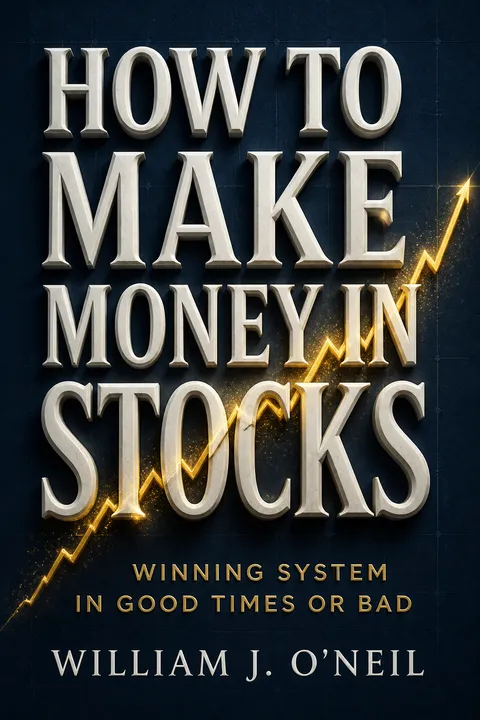
Belangrijkste inzichten
1. Beheers het CAN SLIM-beleggingssysteem voor marktsucces
"Je moet beseffen wanneer je het mis hebt en een aandeel zonder aarzeling verkopen. Hoe weet je dat je het mis hebt? De koers daalt onder de prijs die je ervoor hebt betaald!"
De basis van CAN SLIM: Het CAN SLIM-beleggingssysteem, ontwikkeld door William J. O'Neil, is een bewezen strategie om potentiële winnaars op de markt te herkennen. Elke letter staat voor een belangrijk kenmerk:
- C: Huidige kwartaalwinst (minimaal 25% groei)
- A: Jaarlijkse winstgroei (ten minste 25%)
- N: Nieuwe producten, management of koersrecords
- S: Vraag en aanbod (producten met hoge vraag)
- L: Leider in de sector
- I: Institutionele steun
- M: Marktrichting
Door te focussen op deze eigenschappen vergroten beleggers hun kansen om aandelen te selecteren met een groot groeipotentieel. Het systeem benadrukt het belang van het combineren van fundamentele analyse met technische grafieklezing om weloverwogen beleggingsbeslissingen te nemen.
2. Begrijp markttrends en timing voor optimaal beleggen
"Beleggen in een stijgende markt is de veiligste en gemakkelijkste manier om geld te verdienen."
Marktrichting is cruciaal: Het begrijpen van de algemene markttrend is essentieel voor succesvol beleggen. Belangrijke punten om te onthouden:
- Follow-through dagen wijzen op mogelijke marktstijgingen
- Distributiedagen duiden op mogelijke correcties
- Gebruik IBD’s Market Pulse om op de hoogte te blijven van de actuele marktomstandigheden
Beleggers doen er goed aan aandelen te kopen tijdens bevestigde stijgingen en over te stappen op cash tijdens correcties. Deze aanpak helpt verliezen te beperken en winsten te maximaliseren door investeringen af te stemmen op gunstige marktomstandigheden. Timing is essentieel – klaarstaan om te handelen bij het begin van een nieuwe stijging kan leiden tot aanzienlijke winst.
3. Ontwikkel een gedisciplineerde routine om winnende aandelen te vinden
"De sleutel is een routine creëren die voor jou werkt, iets wat je consequent elke dag blijft doen."
Dagelijkse en wekelijkse gewoontes: Succesvolle beleggers stellen consistente routines op voor marktanalyse en aandelenselectie. Een typische routine kan bestaan uit:
Dagelijks:
- Controleer de marktrichting in de rubriek The Big Picture
- Bekijk Stocks on the Move voor potentiële uitbraken
- Analyseer grafieken van aandelen op je watchlist
Wekelijks:
- Bestudeer de IBD 50 voor top presterende aandelen
- Lees The New America artikelen over opkomende leiders
- Voer een nabespreking uit van recente transacties
Het ontwikkelen van deze gewoontes helpt beleggers gefocust, geïnformeerd en voorbereid te blijven om marktkansen te benutten. Consistentie in het volgen van een bewezen routine maakt vaak het verschil tussen succes en falen op de beurs.
4. Leer emoties te beheersen en ego onder controle te houden bij handelen
"Emoties kunnen je de baas worden, en slechte beslissingen leiden vaak tot nog meer slechte beslissingen als je geen regels hebt."
Psychologische discipline: Succesvol beleggen vereist het beheersen van emoties en het handhaven van discipline. Belangrijke strategieën zijn:
- Stel duidelijke, schriftelijke handelsregels op en houd je eraan
- Vermijd verliefd worden op aandelen of overmoedig worden
- Leer van fouten door nabesprekingen van transacties
- Focus op het systeem, niet op persoonlijke meningen of emoties
Emotionele controle is vaak het moeilijkste aspect van beleggen. Door psychologische valkuilen te herkennen en te beheersen, kunnen beleggers rationelere beslissingen nemen en kostbare fouten vermijden. Een systematische aanpak helpt emoties uit te schakelen en leidt tot consistentere resultaten.
5. Pas strikte koop- en verkoopregels toe voor consistente winst
"De belangrijkste regel in CAN SLIM is om alle verliezen te beperken tot niet meer dan 7 à 8% onder de aankoopprijs van een aandeel."
Risicomanagement: Het opstellen en volgen van duidelijke koop- en verkoopregels is essentieel voor succes op lange termijn. Belangrijke regels zijn:
Koop:
- Aandelen kopen die uit solide basispatronen breken
- Let op een volume dat minstens 40% boven het gemiddelde ligt bij uitbraken
- Overweeg kopen bij terugval naar het 10-weeks voortschrijdend gemiddelde
Verkoop:
- Verlies beperken tot 7-8% onder aankoopprijs
- Winst nemen bij 20-25% koersstijging
- Aandelen die 20% stijgen in 2-3 weken minstens 8 weken vasthouden
Deze regels helpen verliezen te minimaliseren, winsten veilig te stellen en te profiteren van potentiële grote winnaars. Door deze richtlijnen consequent toe te passen, worden emotionele beslissingen voorkomen en verbetert de algehele portefeuilleprestaties.
6. Bestudeer historische patronen om toekomstige marktleiders te herkennen
"De patronen van grote winnaars uit het verleden herhalen zich keer op keer."
Patroonherkenning: Het bestuderen van historische grafieken van vroegere marktleiders helpt beleggers potentiële toekomstige winnaars te identificeren. Belangrijke aandachtspunten zijn:
- Basispatronen (cup-with-handle, dubbele bodem, vlakke basis)
- Volume-eigenschappen tijdens uitbraken
- Prijs- en volumeontwikkeling in de vroege fases van grote bewegingen
Door vertrouwd te raken met deze patronen, kunnen beleggers vergelijkbare situaties in de huidige markt sneller herkennen. Deze kennis maakt het mogelijk eerder in te stappen bij potentiële grote winnaars en versterkt het vertrouwen om posities vast te houden tijdens normale correcties.
7. Blijf jezelf continu ontwikkelen en pas je aan aan marktveranderingen
"Het is het voortdurende leerproces dat zo waardevol is."
Levenslang leren: De aandelenmarkt verandert voortdurend, waardoor beleggers zich steeds moeten bijscholen en hun strategieën moeten aanpassen. Manieren om geïnformeerd te blijven en vaardigheden te verbeteren:
- Volg workshops en seminars van IBD
- Neem deel aan lokale IBD Meetup-groepen
- Bestudeer eerdere transacties via nabesprekingen
- Lees boeken van succesvolle beleggers en handelaren
- Blijf op de hoogte van markttrends en nieuwe producten/diensten
Succesvolle beleggers stoppen nooit met leren. Door voortdurend nieuwe kennis te zoeken en vaardigheden te verfijnen, kunnen ze zich aanpassen aan veranderende marktomstandigheden en hun concurrentievoordeel behouden. Het vermogen om de eigen aanpak te evolueren op basis van nieuwe informatie en ervaringen is kenmerkend voor langdurig succes op de beurs.
Samenvatting van recensies
"Hoe je geld verdient met aandelen" introduceert O'Neils CAN SLIM-beleggingsstrategie, die fundamentele en technische analyse combineert om aandelen met een hoog groeipotentieel te identificeren. Lezers waarderen de uitgebreide aanpak, de gedetailleerde grafiekanalyse en de nadruk op het beperken van verliezen. Sommigen vinden de inhoud inzichtelijk en praktisch, terwijl anderen kritiek hebben op de promotionele toon ten opzichte van O'Neils eigen producten. De focus van het boek op momentumbeleggen en groeiaandelen staat in contrast met de benadering van waarde-investeringen. Ondanks uiteenlopende meningen over de schrijfstijl en diepgang, beschouwen velen het als een waardevolle bron voor zowel beginnende als ervaren beleggers.
Anderen lazen ook





Veelgestelde vragen
What's "How to Make Money in Stocks: A Winning System in Good Times or Bad" about?
- Overview: The book by William J. O'Neil provides a comprehensive guide to stock market investing using the CAN SLIM strategy, which is based on historical research of the market's biggest winners.
- Purpose: It aims to help both new and experienced investors understand how to identify and invest in leading stocks during market uptrends and protect their capital during downtrends.
- Structure: The book is structured to take readers through a step-by-step process, from understanding market trends to executing trades and managing a portfolio.
- Success Stories: It includes real-life success stories of investors who have applied the CAN SLIM strategy to achieve significant financial gains.
Why should I read "How to Make Money in Stocks"?
- Proven Strategy: The book offers a time-tested investing strategy that has been successful for decades, helping investors make informed decisions.
- Comprehensive Guide: It covers all aspects of stock investing, from market analysis to stock selection and portfolio management, making it suitable for both beginners and seasoned investors.
- Real-Life Examples: The inclusion of success stories provides practical insights and inspiration, showing how the strategy can be applied in real-world scenarios.
- Educational Value: Readers will gain a deeper understanding of market dynamics and learn how to develop a disciplined approach to investing.
What are the key takeaways of "How to Make Money in Stocks"?
- CAN SLIM Strategy: The book emphasizes the importance of the CAN SLIM strategy, which focuses on current earnings, annual earnings, new products, supply and demand, leadership, institutional sponsorship, and market direction.
- Market Timing: Understanding market trends and timing is crucial for maximizing gains and minimizing losses.
- Discipline and Rules: The book stresses the importance of following a set of rules to keep emotions in check and make rational investment decisions.
- Continuous Learning: Successful investing requires ongoing education and adaptation to changing market conditions.
What is the CAN SLIM strategy in "How to Make Money in Stocks"?
- C - Current Earnings: Look for stocks with a minimum of 25% increase in the most recent quarter's earnings.
- A - Annual Earnings: Focus on companies with annual earnings growth of at least 25% over the past three to five years.
- N - New Products or Services: Invest in companies with innovative products or services that are in high demand.
- S - Supply and Demand: Favor stocks with high trading volume, indicating strong institutional interest.
How does "How to Make Money in Stocks" suggest timing the market?
- Follow-Through Days: The book highlights the importance of identifying follow-through days, which signal a change from a downtrend to a new uptrend.
- Distribution Days: It advises monitoring distribution days, which indicate heavy selling and potential market corrections.
- Market Pulse: Regularly check the market's overall trend using tools like IBD's Market Pulse to guide investment decisions.
- Stay Flexible: Be prepared to adjust your strategy based on market conditions, as the market can change rapidly.
What are the best quotes from "How to Make Money in Stocks" and what do they mean?
- "The market doesn’t know who you are, doesn’t know how bright you are, and doesn’t know what great college you attended. It simply doesn’t care." This quote emphasizes the importance of humility and following the market's signals rather than relying on personal opinions or ego.
- "You have to realize when you may be wrong and sell a stock without hesitation." It underscores the necessity of cutting losses quickly to preserve capital.
- "Investing is not an elite club, or something you cannot do. If you think that way, I believe you are dead wrong." This quote encourages readers to believe in their ability to succeed in investing with the right knowledge and discipline.
How does "How to Make Money in Stocks" address emotional control in investing?
- Recognize Emotions: The book identifies common emotions like hope, fear, and greed that can negatively impact investment decisions.
- Set Rules: It advises setting predetermined rules for buying and selling to minimize emotional trading.
- Stay Disciplined: Emphasizes the importance of discipline in following a proven strategy and not deviating based on emotions.
- Learn from Mistakes: Encourages investors to review past trades to understand emotional triggers and improve future decision-making.
What role do institutional investors play in "How to Make Money in Stocks"?
- Driving Force: Institutional investors are the primary drivers of stock prices due to their large-scale buying and selling.
- Volume Indicator: High trading volume often indicates institutional interest, which is a positive sign for potential stock performance.
- Support Levels: Institutions often provide support at key moving averages, making these levels important for investors to watch.
- Research Focus: The book suggests focusing on stocks with strong institutional sponsorship as they are more likely to be market leaders.
How does "How to Make Money in Stocks" suggest handling big winners?
- Hold for Big Gains: The book advises holding onto stocks that show strong performance and potential for significant gains.
- Pyramiding: It suggests adding to positions in winning stocks at logical points to maximize returns.
- Avoid Early Selling: Warns against taking small profits in big winners, as this can limit overall gains.
- Monitor Fundamentals: Continually assess the stock's fundamentals to ensure it remains a strong investment.
What is the significance of volume in "How to Make Money in Stocks"?
- Supply and Demand: Volume is a key indicator of supply and demand, with high volume suggesting strong interest in a stock.
- Breakouts: Look for breakouts on high volume as a sign of institutional buying and potential for further price increases.
- Support and Resistance: Volume can help identify support and resistance levels, providing insights into potential price movements.
- Confirmation: Use volume to confirm price trends and validate the strength of a stock's movement.
How does "How to Make Money in Stocks" recommend managing a portfolio?
- Diversification: The book suggests diversifying investments across different sectors to reduce risk.
- Position Sizing: Start with small positions and add to them as confidence in the stock's performance grows.
- Regular Review: Continuously review and adjust the portfolio based on market conditions and stock performance.
- Capital Preservation: Emphasizes the importance of preserving capital by cutting losses and taking profits at appropriate times.
What are the common mistakes to avoid according to "How to Make Money in Stocks"?
- Ignoring Market Trends: Failing to recognize and adapt to market trends can lead to significant losses.
- Emotional Trading: Allowing emotions to dictate investment decisions often results in poor outcomes.
- Holding Losers: Keeping losing stocks in the hope they will recover can erode capital.
- Overconfidence: Believing you are always right can lead to ignoring important market signals and making costly mistakes.
Over de auteur
Andere boeken van William J. O'Neil
PDF downloaden
EPUB downloaden
.epub digital book format is ideal for reading ebooks on phones, tablets, and e-readers.








































