Những điểm chính
1. Toán học là một hành trình trừu tượng của trí tưởng tượng
"Phương pháp trừu tượng trong toán học, như người ta thường gọi, là kết quả khi ta áp dụng thái độ tương tự đối với các đối tượng toán học. Thái độ này có thể được tóm gọn trong khẩu hiệu sau: một đối tượng toán học là những gì nó thực hiện."
Mô hình hóa toán học được tái định nghĩa. Toán học không chỉ là những phép tính cứng nhắc, mà là nghệ thuật sáng tạo trong việc biểu diễn các hệ thống phức tạp qua những mô hình đơn giản hóa. Các nhà toán học trừu tượng hóa những đặc điểm cốt lõi từ các vấn đề thực tiễn, biến những tình huống rối rắm thành những biểu diễn tinh tế, dễ quản lý.
Nguyên tắc mô hình hóa chủ chốt:
- Đơn giản hóa các hệ thống phức tạp
- Tập trung vào những đặc tính thiết yếu
- Tạo ra các biểu diễn linh hoạt, có thể chuyển đổi
- Ưu tiên sự hiểu biết hơn là sao chép chính xác
Giải quyết vấn đề sáng tạo. Mô hình hóa toán học đòi hỏi trí tưởng tượng, giúp các nhà nghiên cứu khám phá các hiện tượng bằng cách chắt lọc chúng thành những khuôn khổ khái niệm. Cách tiếp cận này cho phép nghiên cứu các hệ thống quá phức tạp để quan sát trực tiếp, từ động lực học quần thể đến cơ học lượng tử.
2. Con số là công cụ, không phải vật thể huyền bí
"Từ góc nhìn trừu tượng, ta có thể xử lý những câu hỏi này như cách ta đã xử lý các câu hỏi tương tự về số không: bằng cách quên đi chúng."
Con số như cấu trúc chức năng. Con số không phải là những thực thể huyền bí mà là công cụ chức năng với các quy tắc và hành vi cụ thể. Ý nghĩa của chúng xuất phát từ sự tương tác và mối quan hệ, chứ không phải từ những thuộc tính siêu hình vốn có.
Sự tiến hóa của các loại số trong toán học:
- Số tự nhiên xuất phát từ việc đếm
- Số âm mở rộng khả năng toán học
- Số vô tỉ và số phức mở rộng hiểu biết khái niệm
- Mỗi loại số tuân theo các quy tắc hệ thống
Trừu tượng hóa như sự giải phóng. Bằng cách xem con số như cấu trúc tuân theo quy tắc thay vì thực thể tuyệt đối, các nhà toán học tự do khám phá những miền toán học sáng tạo, xây dựng các khung tính toán và khái niệm mạnh mẽ.
3. Chứng minh hé lộ những chân lý sâu sắc vượt qua quan sát hiển nhiên
"Đôi khi một chứng minh không chỉ là sự đảm bảo rằng một mệnh đề là đúng. Ví dụ, giờ đây ta có lý do để biết rằng việc lát gạch là không thể."
Chứng minh toán học như lời giải thích. Chứng minh không chỉ là công cụ xác nhận mà còn là phương tiện giải thích sâu sắc, làm sáng tỏ cấu trúc và mối quan hệ toán học tiềm ẩn. Một chứng minh tốt mang lại cái nhìn sâu hơn ngoài sự xác nhận bề mặt.
Đặc điểm của chứng minh:
- Hé lộ các kết nối nền tảng
- Thách thức những giả định trực giác
- Thể hiện lập luận logic
- Mang đến sự hiểu biết sâu sắc hơn
Khám phá trí tuệ. Chứng minh toán học là hình thức điều tra trí tuệ nghiêm ngặt, từng bước tháo gỡ các vấn đề phức tạp qua lập luận logic và chiến lược giải quyết sáng tạo.
4. Vô hạn và giới hạn thách thức sự hiểu biết trực giác của chúng ta
"Một trong những niềm vui khi dành cả đời cho nghiên cứu toán học là khi càng có kinh nghiệm, ta càng có thể 'nhìn thấy' câu trả lời cho nhiều câu hỏi hơn."
Khái niệm vô hạn. Vô hạn không phải là một đại lượng cụ thể mà là khung khái niệm để hiểu các giới hạn và xấp xỉ trong toán học. Các nhà toán học biến những khái niệm vô hạn tưởng chừng nghịch lý thành những biểu diễn hữu hạn, dễ quản lý.
Chiến lược khám phá giới hạn:
- Phân tách khái niệm vô hạn thành các xấp xỉ hữu hạn
- Sử dụng kỹ thuật tinh chỉnh dần dần
- Phát triển trực giác toán học trực quan
- Đón nhận lập luận toán học phi trực giác
Mở rộng nhận thức. Nghiên cứu vô hạn phát triển trực giác toán học, giúp các nhà nghiên cứu nhận thức các mối quan hệ phức tạp vượt ra ngoài tư duy tính toán truyền thống.
5. Hình học vượt lên trên không gian vật lý
"Hình học đa chiều là một ví dụ khác về khái niệm được hiểu rõ nhất từ góc nhìn trừu tượng."
Trừu tượng hình học. Hình học không chỉ giới hạn trong không gian ba chiều vật lý mà còn khám phá các miền toán học với nhiều chiều và cấu trúc topo phức tạp. Hình học toán học trở thành công cụ để hiểu các hệ thống đa dạng.
Khám phá chiều không gian:
- Tọa độ như biểu diễn toán học
- Khoảng cách và hình dạng được định nghĩa trừu tượng
- Đa tạp như cấu trúc hình học linh hoạt
- Nguyên lý hình học áp dụng rộng rãi trong nhiều ngành
Linh hoạt khái niệm. Bằng cách trừu tượng hóa các nguyên lý hình học, các nhà toán học có thể mô hình hóa các hệ thống phức tạp trong kinh tế, vật lý và khoa học máy tính.
6. Ước lượng và xấp xỉ là sức mạnh toán học
"Phần lớn mọi người nghĩ toán học là môn học rất sạch sẽ, chính xác... Nhưng hầu hết thời gian ta phải chấp nhận một ước lượng sơ bộ."
Tư duy toán học xác suất. Sức mạnh toán học thường xuất phát từ các kỹ thuật xấp xỉ tinh vi hơn là các phép tính chính xác tuyệt đối. Ước lượng mang lại những hiểu biết thực tiễn trong các lĩnh vực khoa học và tính toán.
Kỹ thuật xấp xỉ:
- Mô hình xác suất
- Ước lượng giới hạn và biên độ
- Phân tích so sánh
- Định lượng không chắc chắn có hệ thống
Giải quyết vấn đề thực tiễn. Phương pháp xấp xỉ giúp các nhà toán học xử lý những vấn đề phức tạp không thể giải quyết chính xác, kết nối giữa lý thuyết và ứng dụng thực tế.
7. Tư duy toán học phá vỡ những định kiến khuôn mẫu
"Tài năng bị đánh giá quá cao; hãy tập trung vào điểm mạnh độc đáo của bạn."
Bản sắc toán học vượt qua định kiến. Khả năng toán học vượt lên trên những định kiến hẹp về tuổi tác, tính cách và thiên tài bẩm sinh. Thành công đến từ tư duy chiến lược, học hỏi kiên trì và giải quyết vấn đề sáng tạo.
Phát triển phẩm chất toán học:
- Nuôi dưỡng tư duy chiến lược
- Đón nhận học tập liên tục
- Trân trọng sự kiên trì hơn tài năng bẩm sinh
- Phát triển cách tiếp cận nhận thức độc đáo
Sự trưởng thành trí tuệ. Tư duy toán học là kỹ năng năng động, không ngừng phát triển, dành cho những ai có nền tảng và phong cách nhận thức đa dạng.
Tóm tắt đánh giá
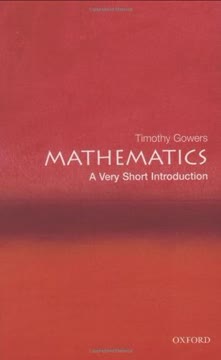
Toán học: Giới thiệu ngắn gọn nhận được nhiều đánh giá tích cực. Độc giả đánh giá cao cách trình bày ngắn gọn nhưng sâu sắc trong việc giải thích các khái niệm và tư duy toán học. Nhiều người cảm thấy được khai sáng, khen ngợi khả năng của tác giả khi biến những ý tưởng phức tạp trở nên dễ hiểu. Tuy nhiên, một số ý kiến cho rằng cuốn sách có phần hơi khó với người mới bắt đầu hoàn toàn hoặc lại quá cơ bản đối với những ai đã có nền tảng toán học. Cuốn sách được ghi nhận nhờ tập trung vào tư duy trừu tượng và cách tiếp cận mang tính triết học đối với toán học. Tóm lại, đây là lựa chọn đáng cân nhắc cho những ai muốn hiểu sâu hơn về lý luận toán học vượt ra ngoài các phép tính thông thường.
Mọi người cũng đọc


Câu hỏi thường gặp
What's "Mathematics: A Very Short Introduction" about?
- Overview of Mathematics: The book provides a concise introduction to the field of mathematics, exploring its fundamental concepts and the abstract nature of mathematical thinking.
- Accessible to All: Written by Timothy Gowers, it aims to make mathematics accessible to a broad audience, including those without a strong mathematical background.
- Wide Range of Topics: It covers various topics such as numbers, proofs, geometry, and the concept of infinity, offering insights into both historical and modern mathematical ideas.
- Philosophical Approach: The book also delves into the philosophical aspects of mathematics, discussing how abstract thinking can resolve complex problems.
Why should I read "Mathematics: A Very Short Introduction"?
- Understanding Mathematics: It helps demystify mathematics, making it less intimidating and more approachable for readers of all backgrounds.
- Broad Perspective: The book offers a broad perspective on how mathematics is applied in various fields, from science to philosophy.
- Critical Thinking Skills: Reading it can enhance your critical thinking and problem-solving skills by exposing you to mathematical reasoning.
- Philosophical Insights: It provides philosophical insights into the nature of mathematical concepts, which can be intellectually stimulating.
What are the key takeaways of "Mathematics: A Very Short Introduction"?
- Abstract Thinking: The book emphasizes the importance of abstract thinking in understanding and solving mathematical problems.
- Mathematical Models: It discusses how mathematical models are used to represent real-world phenomena and the importance of simplifying assumptions.
- Proofs and Logic: The book highlights the role of proofs in mathematics, illustrating how they provide certainty and understanding.
- Infinity and Limits: It explores the concept of infinity and how limits are used to make sense of infinite processes in mathematics.
How does Timothy Gowers define the abstract method in mathematics?
- Focus on Rules: The abstract method involves focusing on the rules and properties of mathematical objects rather than their intrinsic nature.
- Mathematical Objects: It suggests that mathematical objects are defined by what they do, not by what they are.
- Application to Concepts: This method is applied to various mathematical concepts, such as numbers and geometric shapes, to simplify and generalize them.
- Philosophical Implications: The approach has philosophical implications, challenging traditional views on the existence and nature of mathematical entities.
What is the significance of proofs in mathematics according to the book?
- Certainty and Understanding: Proofs provide certainty and a deeper understanding of mathematical statements, putting them beyond doubt.
- Logical Structure: They follow a logical structure, starting from axioms and using logical steps to reach conclusions.
- Historical Context: The book discusses historical examples, such as the proof of the irrationality of the square root of two, to illustrate the development of mathematical proofs.
- Resolution of Disputes: Proofs help resolve disputes in mathematics by providing a clear and rigorous basis for conclusions.
How does "Mathematics: A Very Short Introduction" explain the concept of infinity?
- Infinite Processes: The book explains infinity through the concept of limits, which help make sense of infinite processes.
- Mathematical Definitions: It discusses how infinity is used in mathematics, such as in infinite decimals and series, and the challenges it presents.
- Philosophical Perspective: The book offers a philosophical perspective on infinity, questioning its existence and role in mathematics.
- Practical Applications: It also covers practical applications of infinity in calculus and other areas of mathematics.
What are the different types of numbers discussed in the book?
- Natural and Whole Numbers: The book starts with natural numbers and their properties, including addition and multiplication.
- Rational and Irrational Numbers: It explains rational numbers as fractions and introduces irrational numbers, such as the square root of two.
- Real and Complex Numbers: The book covers real numbers, including decimals, and complex numbers, which involve the square root of negative one.
- Abstract Approach: Each type of number is discussed using the abstract method, focusing on their properties and rules.
How does the book address the relationship between mathematics and geometry?
- Euclidean Geometry: The book discusses Euclidean geometry, based on Euclid's axioms, and its historical significance.
- Non-Euclidean Geometry: It introduces non-Euclidean geometries, such as spherical and hyperbolic geometry, challenging traditional views.
- Dimensionality: The concept of dimension is explored, including higher-dimensional spaces and their mathematical properties.
- Curved Space: The book explains the idea of curved space and its implications for understanding the universe.
What role do estimates and approximations play in mathematics according to the book?
- Practical Necessity: Estimates and approximations are often necessary in mathematics when exact solutions are impractical or impossible.
- Types of Approximations: The book discusses different types of approximations, such as additive and multiplicative, and their applications.
- Mathematical Models: Approximations are crucial in creating mathematical models that represent real-world phenomena.
- Understanding Complexity: They help in understanding complex systems and making predictions when precise calculations are not feasible.
How does "Mathematics: A Very Short Introduction" explain the use of mathematical models?
- Simplifying Assumptions: Mathematical models use simplifying assumptions to represent complex real-world systems.
- Applications Across Fields: The book illustrates how models are applied in various fields, such as physics, biology, and economics.
- Abstract Representation: Models are abstract representations that focus on essential features, ignoring irrelevant details.
- Predictive Power: They provide predictive power, allowing for the analysis and forecasting of system behavior.
What are some of the best quotes from "Mathematics: A Very Short Introduction" and what do they mean?
- "A mathematical object is what it does." This quote encapsulates the abstract method, emphasizing the importance of properties and rules over intrinsic nature.
- "Proofs provide certainty and understanding." It highlights the role of proofs in establishing the truth and deepening comprehension of mathematical statements.
- "Infinity is indispensable to mathematics." This quote underscores the necessity of infinity in mathematical theory and its challenges.
- "Mathematics continually builds on itself." It reflects the cumulative nature of mathematical knowledge, where new concepts build on previous ones.
How does the book address common misconceptions about mathematics?
- Mathematics as Abstract: The book challenges the misconception that mathematics is purely about numbers and calculations, emphasizing its abstract nature.
- Role of Genius: It dispels the myth that only geniuses can excel in mathematics, highlighting the importance of hard work and strategic thinking.
- Mathematics and Age: The book addresses the misconception that mathematicians peak early, showing that expertise and knowledge grow over time.
- Mathematics and Gender: It discusses the underrepresentation of women in mathematics, attributing it to social factors rather than ability.
Dẫn luận ngắn Bộ sách