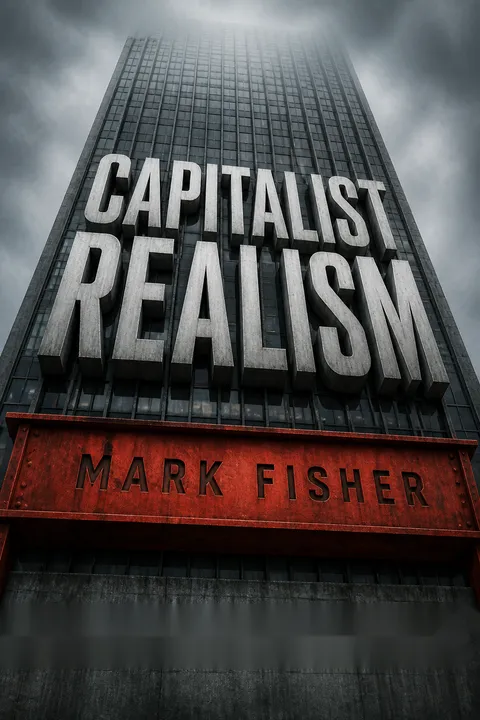

重點摘要
1. 資本主義是唯一的遊戲規則
這句口號正好捕捉了我所謂「資本主義現實主義」的意涵:普遍存在的感覺不僅認為資本主義是唯一可行的政治與經濟體系,而且現在甚至無法想像有任何連貫的替代方案。
沒有替代方案。 資本主義現實主義是一種普遍的信念,認為資本主義是唯一可行的政治與經濟體系,使得想像其他可能性變得困難。這不僅是接受資本主義,而是無法構思其他任何東西。這種必然性的感覺是一股強大的力量,塑造了我們的思維與行動。
文化霸權。 這種信念並非以武力強加,而是深植於我們的文化中,塑造了我們的慾望、抱負,甚至夢想。這是一個已經被自然化到幾乎看不見的系統,就像我們呼吸的空氣一樣。這使得挑戰或抵抗變得極其困難。
超越意識形態。 資本主義現實主義運作於傳統意識形態論辯之外。它不需要積極的信仰或支持;它只是作為預設的狀態存在。這使它比明顯的宣傳形式更為陰險且難以對抗。
2. 反烏托邦的視野反映我們的現實
它所投射的世界看起來更像是我們世界的外推或加劇,而非一個替代方案。
反烏托邦如鏡。 反烏托邦電影與小說,曾經是想像替代未來的練習,現在往往反映我們當前的現實。它們不呈現一個根本不同的未來,而是展示一個加劇的當下,威權主義與資本主義共存。
危機的常態化。 「反恐戰爭」使危機成為常態,讓緊急措施看似永久存在。這創造了一種情況,使民主規範的暫停被接受,模糊了自由與控制的界線。
公共空間的侵蝕。 新自由主義者慶祝公共空間的消失,導致國家被剝離至其核心的軍事與警察功能。這造成一個世界,拘留營與連鎖咖啡館並存,凸顯資本主義現實主義的矛盾。
3. 新事物的終結與文化的貧瘠
是否可能沒有突破,沒有「新事物的震撼」即將到來?
重複與重組。 越來越多人懷疑未來只會是重複與重組,沒有真正的「新事物震撼」。這導致在期待新事物與悲觀認為永遠不會有新事物之間的兩極擺盪。
文化的博物館化。 文化越來越被轉化為博物館藏品,物件被從其生活世界中剝離,組合成文物。這過程剝奪了文化物件的力量,因為它們不再以新的視角或原始脈絡被觀看。
資本主義對歷史的消費。 資本主義吞噬並消費所有過去的歷史,為所有文化物件賦予貨幣價值。這過程將實踐與儀式轉化為美學物件,對過去文化的信仰進行反諷。
4. 資本主義的諷刺性反資本主義
這種象徵性的反資本主義非但沒有削弱資本主義現實主義,反而強化了它。
企業式反資本主義。 資本主義經常將反資本主義情緒納入其產品中,例如好萊塢電影中出現的「邪惡企業」。這種象徵性的反資本主義透過替我們表演異議,讓我們能無所顧忌地繼續消費。
他動性(Interpassivity)。 這是文化產品替我們執行反資本主義的現象,使我們能繼續參與資本主義交換而不感到罪惡。這是一種否認形式,我們相信資本主義不好,但行為上卻像沒事一樣。
過度重視信念。 資本主義意識形態過度重視內在主觀信念,而忽視我們行為中展現的信念。只要我們心裡相信資本主義不好,就可以繼續參與其中。這種否認結構對資本主義的運作至關重要。
5. 真實與現實:體制的裂縫
只有當資本主義被證明在某種程度上不一致或站不住腳時,資本主義現實主義才會受到威脅;換言之,資本主義所謂的「現實主義」若被證明根本不是現實主義。
超越自然秩序。 解放政治必須摧毀「自然秩序」的表象,揭露被呈現為必然與不可避免的事物其實只是偶然。當前被稱為現實的事物,曾經是不可能的,反之亦然。
真實作為不可表述。 真實是任何「現實」必須壓抑的東西,是一個不可表述的X,只能在表面現實的裂縫與矛盾中隱約可見。環境災難即是這樣的真實,一個資本主義難以同化的創傷性空洞。
心理健康與官僚體制。 心理健康與官僚體制是資本主義現實主義中尚未完全政治化的兩個難題。壓力問題日益嚴重與官僚體制的擴張,顯示資本主義本質上是功能失調的,而其表面運作的代價極高。
6. 反思性無力與抑鬱享樂主義
他們知道情況很糟,但更重要的是,他們知道自己無能為力。
政治冷漠。 今日英國學生看似政治冷漠,並非因為冷漠或憤世嫉俗,而是因為一種反思性的無力感。他們知道情況糟糕,但也知道自己無能為力。這種認知成為自我實現的預言。
抑鬱享樂主義。 許多年輕人經歷抑鬱享樂主義,無法做其他事,只能追求快樂。這是他們模糊的結構性位置的結果,夾在紀律機構與新消費者身份之間。
控制社會。 控制社會運作於無限延期,外部監控被內部自我監控取代。這意味著控制只有在你配合時才有效,導致一種「控制成癮者」,對控制本身上癮。
7. 後福特主義:彈性與不穩定
過去工人可以掌握一套技能,期望在嚴格的組織階層中向上晉升,現在則必須隨著從機構到機構、從角色到角色的轉換,定期重新學習技能。
沒有長期保障。 後福特主義的特徵是「沒有長期」,工人必須隨著工作變動定期重新學習技能。這種對彈性的強調對家庭生活造成難以承受的壓力,因為義務與承諾等價值被視為過時。
工作的控制論化。 工作與生活變得不可分割,資本甚至在你做夢時跟隨你。時間不再是線性的,而是混亂且分裂成點狀。為了有效運作,工人必須具備應對突發事件的能力,並在完全不穩定的條件下生活。
雙極性障礙。 個體內部的心理衝突必然帶來傷害。雙極性障礙的增加與後福特主義有關,因為資本主義本質上是雙極性的,在亢奮的躁狂與抑鬱的低潮間擺盪。
8. 市場斯大林主義與官僚反生產
晚期資本主義重複了斯大林主義的特點:重視成就的象徵勝過實際成就。
官僚體制的擴張。 儘管新自由主義宣稱結束自上而下的控制,官僚體制卻加劇了,各種新的行政與規範不斷湧現。這是某些過程與服務對市場化固有抵抗的結果。
市場斯大林主義。 晚期資本主義重視成就的象徵,工作變成產生與修飾表象,而非實際工作目標的過程。這是一個一切堅固的事物都融化成公關的系統。
大他者。 大他者是任何社會場域所假設的集體虛構。它並非全知,其構成性的無知使公關得以運作。大他者是公關與宣傳的消費者,是即使沒有個體能相信也必須被信仰的虛擬形象。
9. 缺失的中心與企業的非人格化
卡夫卡的最高天才在於探索資本特有的負面無神論:中心缺失,但我們無法停止尋找或假設它。
資本主義的無中心性。 我們大多數人最接近直接體驗資本主義無中心性的,是與客服中心的遭遇。這種經驗濃縮了晚期資本主義的政治現象學:無聊、挫折與無力的憤怒。
卡夫卡式的官僚體制。 卡夫卡對官僚體制的探索不僅限於極權主義,也高度相關於晚期資本主義的分散式市場斯大林主義官僚體制。中心缺失,但我們無法停止尋找或假設它。
企業的非人格化。 問題在於,多數倫理版本假設的個人責任模式,對資本或企業的行為影響甚微。生態災難與其他全球危機的原因是非人格化的結構,而非個別行動者。
10. 沒有父親的家長主義:斯賓諾莎式的解決方案
馬克思主義的超級保姆當然會轉向結構性原因,而非個別家庭的問題排解,因為結構性原因產生了同樣反覆的效果。
父親功能的失敗。 晚期資本主義標誌著父親功能的失敗,父母常常無法為子女提供必要的指導與結構。這是因為雙親都需工作以及文化強調享樂的結果。
斯賓諾莎倫理學。 斯賓諾莎拒絕義務論,主張以健康概念為核心的倫理學,對晚期資本主義的非道德情感工程具有啟示意義。自由是當我們能理解行為的真實原因時才能達成的。
超越享樂主義。 雖然晚期資本主義透過健康訴求表達許多禁令,但它常推廣一種簡化的享樂模型,優先考量「感覺與外表良好」勝過心理健康與智力發展。真正的沒有父親的家長主義必須超越這種有限視野。
其他人也在讀



常見問題
What's "Capitalist Realism: Is There No Alternative?" about?
- Exploration of Capitalist Realism: The book examines the pervasive sense that capitalism is the only viable political and economic system, making it difficult to imagine alternatives.
- Cultural and Political Analysis: Mark Fisher critiques how capitalist realism affects culture, politics, and individual psychology, leading to a sense of inevitability and resignation.
- Impact on Society: It discusses how capitalist realism shapes public services, education, and mental health, often leading to bureaucratic inefficiencies and widespread discontent.
- Philosophical Underpinnings: The book draws on thinkers like Fredric Jameson, Slavoj Žižek, and Gilles Deleuze to explore the philosophical dimensions of capitalist realism.
Why should I read "Capitalist Realism: Is There No Alternative?" by Mark Fisher?
- Critical Insight: The book provides a deep critique of contemporary capitalism, offering insights into why it feels so inescapable.
- Cultural Relevance: It connects economic theories with cultural phenomena, making it relevant for understanding today's media and societal trends.
- Philosophical Depth: Fisher's work is grounded in philosophical thought, making it a rich text for those interested in critical theory.
- Practical Implications: The book discusses real-world implications, such as the impact on mental health and education, making it applicable to everyday life.
What are the key takeaways of "Capitalist Realism: Is There No Alternative?"?
- Inescapability of Capitalism: Capitalism is seen as the only viable system, making alternatives hard to imagine.
- Cultural and Psychological Effects: The book explores how capitalist realism affects culture and individual psychology, leading to widespread discontent.
- Critique of Neoliberalism: Fisher critiques neoliberal policies and their impact on public services and individual well-being.
- Call for Alternatives: The book encourages the exploration of new political and economic models to challenge capitalist realism.
How does Mark Fisher define "capitalist realism"?
- Widespread Sense of Inevitability: Capitalist realism is the belief that capitalism is the only viable system, making alternatives seem impossible.
- Cultural and Economic Dominance: It describes how capitalism permeates all aspects of life, from culture to politics and individual psychology.
- Philosophical Underpinnings: Fisher draws on thinkers like Jameson and Žižek to explore the philosophical dimensions of capitalist realism.
- Impact on Imagination: The concept suggests that capitalist realism stifles the imagination, making it difficult to envision different ways of living.
What are the best quotes from "Capitalist Realism: Is There No Alternative?" and what do they mean?
- "It’s easier to imagine the end of the world than the end of capitalism." This quote highlights the pervasive sense of inevitability surrounding capitalism.
- "Capitalism seamlessly occupies the horizons of the thinkable." It suggests that capitalism limits our ability to imagine alternatives.
- "The long, dark night of the end of history has to be grasped as an enormous opportunity." Fisher encourages readers to see the current state as a chance to explore new possibilities.
- "The tiniest event can tear a hole in the grey curtain of reaction." This quote emphasizes the potential for small actions to challenge the status quo.
How does "Capitalist Realism" relate to mental health?
- Link to Depression: Fisher argues that capitalist realism contributes to rising rates of depression and mental distress.
- Privatization of Stress: The book discusses how stress is treated as an individual problem rather than a systemic issue.
- Critique of Neoliberal Policies: Fisher critiques neoliberal policies for exacerbating mental health issues by promoting individualism and competition.
- Call for Politicization: The book suggests that mental health issues should be politicized to challenge capitalist realism.
What role does bureaucracy play in "Capitalist Realism"?
- Market Stalinism: Fisher describes the proliferation of bureaucracy under neoliberalism as "market Stalinism," where symbols of achievement are valued over actual achievement.
- Impact on Public Services: Bureaucracy in education and healthcare is critiqued for prioritizing targets and audits over genuine improvement.
- Surveillance and Control: The book discusses how bureaucracy serves as a tool for surveillance and control in capitalist societies.
- Resistance to Marketization: Fisher argues that certain processes resist marketization, leading to increased bureaucracy.
How does Mark Fisher critique neoliberalism in "Capitalist Realism"?
- Discrediting Neoliberalism: Fisher argues that neoliberalism has been discredited but continues to dominate political economy as an inertial default.
- Impact on Public Services: Neoliberal policies are critiqued for their negative impact on education, healthcare, and mental health.
- Cultural and Economic Effects: The book explores how neoliberalism shapes culture and individual psychology, leading to widespread discontent.
- Call for Alternatives: Fisher encourages the exploration of new political and economic models to challenge neoliberalism.
What is the significance of the "big Other" in "Capitalist Realism"?
- Symbolic Structure: The "big Other" is a symbolic structure presupposed by any social field, representing collective fictions.
- Role in Capitalism: Fisher uses the concept to explain how capitalist realism functions, with PR and propaganda maintaining the illusion of coherence.
- Crisis of Symbolic Efficiency: The decline in belief in the "big Other" is linked to the crisis of symbolic efficiency in postmodernism.
- Public Relations and Perception: The "big Other" is the consumer of PR, allowing capitalism to function despite widespread awareness of its shortcomings.
How does "Capitalist Realism" address the concept of the "Nanny State"?
- Critique of Anti-Statism: Fisher critiques the neoliberal and neoconservative hostility towards the "Nanny State" while highlighting the contradictions in their reliance on state functions.
- Blame and Responsibility: The book discusses how the state is often blamed for failures that are systemic, deflecting attention from corporate irresponsibility.
- Centerlessness of Capitalism: Fisher argues that the centerlessness of global capitalism is unthinkable, leading to scapegoating of the state.
- Call for Collective Management: The book suggests that collective management is necessary to address systemic issues like environmental catastrophe.
What does Mark Fisher propose as alternatives to capitalist realism?
- New Political Subject: Fisher calls for the emergence of a new political subject capable of challenging capitalist realism.
- Worker Autonomy: The book advocates for worker autonomy and a rejection of excessive auditing and managerialism.
- Collective Management: Fisher suggests that collective management is necessary to address systemic issues like environmental catastrophe.
- Revitalized Left: The book encourages a revitalized left to confidently occupy new political terrain and explore alternatives to capitalism.
How does "Capitalist Realism" relate to cultural production and media?
- Impact on Culture: Fisher argues that capitalist realism stifles cultural innovation, leading to a culture of conformity and repetition.
- Role of Media: The book critiques media for failing to challenge audiences and for promoting a culture of solipsism and interpassivity.
- Public Service Broadcasting: Fisher highlights the importance of public service broadcasting in providing complex and intellectually demanding content.
- Call for Cultural Risk: The book encourages media professionals to take risks and offer audiences something different from what already satisfies them.

下載 PDF
下載 EPUB
.epub digital book format is ideal for reading ebooks on phones, tablets, and e-readers.








































