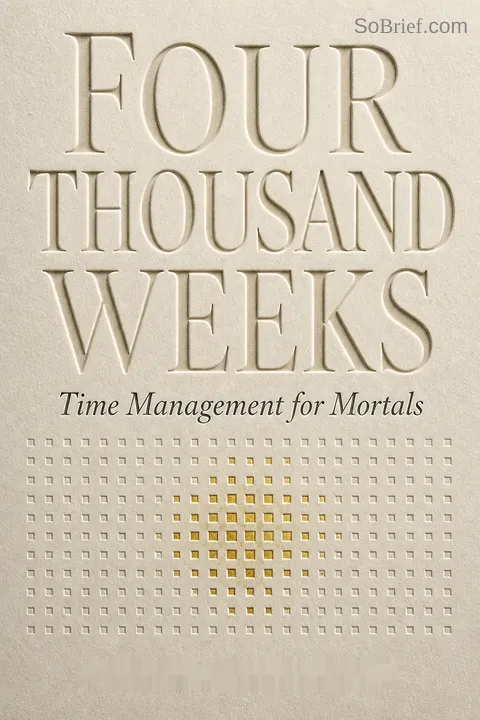
重點摘要
1. 接納有限的時間:四千個星期就是我們的全部
「人類的平均壽命短得荒謬、令人恐懼,甚至像是一種侮辱。」
生命是短暫的。 典型的人類壽命大約只有 4,000 個星期。這個殘酷的現實迫使我們去面對自己的死亡,以及我們在地球上有限的時間本質。與其將其視為令人沮喪的事,我們不如將其轉化為動力,在短暫的生命中活出最大的價值。
觀念的轉變。 意識到時間的有限可以帶來更充實的人生。它鼓勵我們:
- 專注於真正重要的事情
- 對如何度過時間做出自覺的選擇
- 更充分地感激當下
- 放下對完美做好生活中每個層面的不切實際期望
透過接納我們的局限性,我們反而獲得了更多自由,得以真實且有目的地生活。
2. 生產力悖論:高效往往帶來更多工作
「生產力是一個陷阱。變得更高效只會讓你更加匆忙,而試圖清空待辦清單只會讓它更快被重新填滿。」
高效適得其反。 與普遍認知相反,提高生產力往往會帶來更多的工作,而不是更少。這是由以下幾個因素造成的:
- 當我們變得更高效時,期望值也會隨之提高
- 節省時間的科技往往會創造新的需求
- 我們完成得越多,往往會承擔更多的機會和責任
解決方案: 與其試圖做完所有事,不如專注於:
- 有意識地選擇忽略哪些事情
- 對工作和承諾設定明確的界限
- 接受永遠會有未完成任務的事實
- 優先處理真正重要的事情,而不是試圖清空不斷增長的待辦清單
透過抵抗不斷提高生產力的衝動,我們可以為更有意義的工作和體驗創造空間。
3. 面對現實:接受局限並做出自覺選擇
「真正的問題不在於我們有限的時間。真正的問題在於,我們在不知不覺中繼承了一套關於如何使用有限時間的麻煩觀念,並感到有壓力要遵循這些觀念生活。」
直面有限性。 接受我們的局限性是通往更充實人生的第一步。這意味著:
- 承認我們無法做完所有事
- 意識到生活總是伴隨著取捨
- 理解對時間進行完美控制是不可能的
做出深思熟慮的選擇。 一旦我們接受了自己的局限性,我們就可以:
- 專注於對我們真正重要的事情
- 對如何度過時間做出自覺的決定
- 放下對自己沒做之事產生的罪惡感
- 擁抱錯失恐懼的對立面——享受錯失的樂趣(JOMO)
透過直面現實,我們獲得了根據自己的價值觀來塑造生活的自由,而不是不斷追求一個不可能實現的完美理想。
4. 克服拖延:選擇忽略什麼
「管理有限時間的核心挑戰不在於如何把所有事情做完——那永遠不可能發生——而是在於如何最明智地決定不做什麼,以及如何對不做這些事感到心安理得。」
策略性忽略。 為了克服拖延並明智地利用時間:
- 預先決定你要在哪些事情上失敗或忽略
- 一次只專注於一個重大項目
- 採用「固定容量」的生產力方法(例如,兩個待辦清單:開放式和封閉式)
擁抱不完美。 接受以下事實:
- 你無法完美地做好每件事
- 生活中的某些領域注定會被忽略
- 在某些事情上表現平庸是沒關係的
透過有意識地選擇忽略什麼,你可以為真正重要的事情釋放出時間和精力,從而減少焦慮並提高整體生產力。
5. 擺脫對未來的過度專注:在當下尋找意義
「你可以專注於充分享受你實際上「有時間」去體驗的那一小部分經歷——而且在每個當下,你越能自由地選擇什麼最重要,你就越自由。」
當下意識。 許多人生活在持續的期盼狀態中,總是為了未來的目標而工作。這種方法:
- 奪走了我們當下的快樂
- 創造了一種永遠「追趕不上」的感覺
- 導致一種生命正在與我們擦肩而過的感覺
轉向當下。 為了擺脫對未來的過度專注:
- 意識到當下是我們唯一擁有的時刻
- 在日常活動中尋找意義,而不僅僅是在最終目標中
- 在日常任務中練習正念和專注
- 欣賞旅程本身,而不僅僅是終點
透過讓自己立足於當下,無論未來的結果如何,我們都能在生活中找到更深層的滿足感和意義。
6. 抵抗控制時間的衝動:耐心就是力量
「削弱分心力量最有效的方法,就是停止期待事情會有所不同——去接受這種不適感,僅僅是有限的人類在致力於那些要求高且有價值的任務時,被迫面對我們對生活如何展開控制力有限的真實感受。」
擁抱不適。 試圖控制時間往往會導致挫折和焦慮。相反地:
- 接受不適是具有意義的工作的一部分
- 意識到急躁往往會讓事情花費更長的時間
- 讓事情按照自然的節奏展開
培養耐心。 在一個崇尚忙碌的世界裡,耐心成為了一種超能力:
- 它能讓人更深入地投入到任務和人際關係中
- 它能減輕壓力並改善決策
- 它開啟了匆忙思考可能會錯過的種種可能性
透過抵抗控制時間的衝動,我們反而對自己的體驗和結果獲得了更多的影響力。
7. 與他人同步:時間是一種網絡財貨
「擁有大量的時間,卻沒有機會與他人協同使用,這不僅毫無用處,而且實際上令人感到不愉快。」
時間作為共享資源。 雖然個人時間管理很重要,但我們經常忽略與他人同步時間的價值:
- 共享的體驗往往更有意義
- 協調一致的時間可以建立更深厚的人際關係和社群建設
- 同步的休閒時間(例如週末、節日)能提供集體的活力恢復
平衡個人與集體時間。 為了最大化時間的價值:
- 優先考慮能帶來共享體驗的活動
- 願意為了集體利益而妥協部分個人日程的控制權
- 認識到社交節奏和傳統的重要性
透過將時間視為一種網絡財貨,我們可以平衡個人需求與社會連結,創造出更豐富、更充實的生活。
8. 培養即時的慷慨與休息
「每當你的腦海中浮現出慷慨的念頭——捐錢、關心朋友、發郵件讚美某人的工作——請立即付諸行動,而不是推遲到以後。」
對慷慨的念頭立即採取行動。 對慷慨的想法立即採取行動:
- 防止善意被遺忘
- 在人際關係中創造積極的動力
- 透過善行提升個人幸福感
擁抱真正的休息。 在一個不斷追求生產力的世界裡:
- 認識到真正放鬆時間的價值
- 允許自己純粹為了樂趣而參與活動
- 嘗試使用「無聊」的科技來減少持續的刺激
透過培養慷慨和擁抱休息,我們與時間建立了一種更平衡、更充實的關係。
9. 接納宇宙級的微不足道:透過視角獲得解放
「記住你在宇宙的時間尺度上有多麼微不足道,會讓人感覺像是放下了一個我們大多數人起初並未意識到自己一直在背負的重擔。」
宇宙視角。 在宏大的格局中認識到我們的微不足道:
- 減輕了實現宏偉目標的壓力
- 讓我們能以更輕鬆的態度面對日常生活
- 有助於客觀看待個人問題
在平凡中尋找意義。 記住宇宙級的微不足道:
- 感激微小的日常行動所蘊含的內在價值
- 認識到「有意義的人生」並不需要改變世界的成就
- 在簡單的善行和創造力中尋找快樂和目的
透過接納我們在宇宙中的微不足道,我們反而能更自由、更真實地活在當下。
10. 練習無所事事:在忙碌的世界中重獲自主權
「學會更好地[無所事事],就是開始重獲你的自主權——不再被試圖逃避此時此地的現實感受所驅使,冷靜下來,並在你短暫的一生中做出更好的選擇。」
擁抱無聊。 在一個充斥著持續刺激的世界裡,無所事事是一種激進的行為:
- 它有助於打破不斷分心的惡性循環
- 它能帶來更深層的自我反省和創造力
- 它能減輕壓力並提高整體幸福感
具體步驟:
- 留出時間進行無結構的思考
- 練習正念和冥想
- 參與沒有特定目標或結果的活動
- 限制科技的使用,尤其是在休息時間
透過學會安於無所事事,我們重新掌控了自己的注意力,並對如何度過時間做出更有意識的選擇。
評論摘要
**《四千週》**挑戰了傳統的時間管理建議,指出人生的有限性使我們不可能完成所有事情。柏克曼鼓勵讀者接納自己的局限,專注於真正重要的事情,並在當下尋找意義。許多書評家認為這本書的哲學令人耳目一新且備感釋放,並讚賞其反直覺的生產力方法。有些人覺得書中內容有時顯得重複或自相矛盾,但總體而言,讀者在接受生命的限制,以及將有意義的體驗置於無止境地完成任務之上等方面,獲得了寶貴的啟發。
其他人也在讀





常見問題
What's "Four Thousand Weeks" about?
- Exploration of time management: "Four Thousand Weeks" by Oliver Burkeman examines time management through the lens of human finitude, highlighting the average human lifespan of around four thousand weeks.
- Philosophical perspective: The book challenges traditional productivity methods by exploring philosophical ideas about how humans perceive and use time.
- Focus on meaningful living: Burkeman encourages readers to embrace the limitations of time and prioritize living a meaningful life over controlling every aspect of it.
Why should I read "Four Thousand Weeks"?
- Reframe time management: The book offers a fresh perspective, moving away from traditional productivity hacks to a more philosophical approach that emphasizes meaningful living.
- Address modern busyness: It tackles the modern epidemic of busyness and the pressure to be constantly productive, providing insights into finding peace and fulfillment.
- Practical and philosophical insights: Burkeman combines practical advice with philosophical insights, making it valuable for anyone looking to rethink their relationship with time.
What are the key takeaways of "Four Thousand Weeks"?
- Embrace limitations: Accepting the finite nature of time can lead to a more fulfilling life by forcing us to prioritize what truly matters.
- Avoid the efficiency trap: Becoming more efficient often leads to more busyness and stress, rather than the peace of mind we seek.
- Live in the present: Focusing on the present moment, rather than constantly planning for the future, can lead to a more meaningful and satisfying life.
How does Oliver Burkeman suggest we manage our time?
- Prioritize what matters: Focus on a few important tasks rather than trying to do everything, which often leads to stress and inefficiency.
- Limit work in progress: Set a hard limit on the number of projects you work on at any given time to ensure focus and completion.
- Embrace imperfection: Accept that not everything will be perfect or completed, and that making choices about what to neglect is crucial.
What is the "efficiency trap" in "Four Thousand Weeks"?
- Definition: The "efficiency trap" refers to the paradox where becoming more efficient leads to more tasks and responsibilities, rather than freeing up time.
- Increased busyness: As you become more efficient, you often take on more work, increasing busyness and stress rather than reducing it.
- Focus on meaningful tasks: Burkeman suggests focusing on meaningful tasks and accepting that not everything can be done to avoid this trap.
What does Burkeman mean by "living in the present"?
- Present moment focus: Living in the present means focusing on the current moment rather than constantly planning for the future or dwelling on the past.
- Avoiding instrumentalization: It involves avoiding the tendency to treat every moment as a means to an end, which can lead to a lack of fulfillment.
- Embrace life's flow: By embracing the flow of life and accepting its impermanence, we can find more joy and meaning in everyday experiences.
How does "Four Thousand Weeks" address the concept of busyness?
- Modern busyness epidemic: The book discusses how modern society is plagued by an epidemic of busyness, driven by the pressure to be constantly productive.
- Cultural expectations: Burkeman explores how cultural expectations and the desire to achieve more contribute to this sense of busyness.
- Finding peace in busyness: He offers insights into how to find peace and fulfillment by focusing on what truly matters and letting go of the need to do everything.
How does Burkeman suggest we handle procrastination?
- Embrace procrastination: Burkeman suggests viewing procrastination as a natural part of life rather than something to be eradicated.
- Focus on important tasks: Prioritize the most important tasks and accept that not everything can be accomplished.
- Manage effectively: By prioritizing and accepting our limitations, we can manage procrastination more effectively.
What is "cosmic insignificance therapy" in "Four Thousand Weeks"?
- Embrace smallness: "Cosmic insignificance therapy" helps readers embrace their smallness in the grand scheme of things.
- Relieve pressure: By recognizing our insignificance, we can relieve the pressure of trying to achieve monumental success.
- Focus on meaning: This perspective allows us to focus on meaningful activities without the burden of unrealistic expectations.
How does "Four Thousand Weeks" redefine productivity?
- Shift focus: The book redefines productivity by shifting the focus from efficiency to meaningful engagement with life.
- True productivity: Burkeman argues that true productivity involves doing things that matter, rather than simply getting more done.
- Prioritize joy and fulfillment: He encourages readers to prioritize activities that bring joy and fulfillment, even if they don't lead to tangible outcomes.
What are some practical tips from "Four Thousand Weeks" for better time management?
- Fixed volume approach: Adopt a "fixed volume" approach to productivity, limiting the number of tasks you take on.
- Serialize projects: Focus on one project at a time to completion.
- Minimize distractions: Embrace "boring and single-purpose technology" to enhance focus and minimize distractions.
What are the best quotes from "Four Thousand Weeks" and what do they mean?
- "The average human lifespan is absurdly, terrifyingly, insultingly short." This quote highlights the book's central theme of the finite nature of human life and the importance of using our limited time wisely.
- "Time management is all life is." Burkeman suggests that managing our time effectively is crucial to living a meaningful life, as time is the essence of our existence.
- "The spirit of the times is one of joyless urgency." This quote reflects the modern obsession with busyness and productivity, which often leads to stress and a lack of fulfillment.
關於作者

下載 PDF
下載 EPUB
.epub digital book format is ideal for reading ebooks on phones, tablets, and e-readers.








































