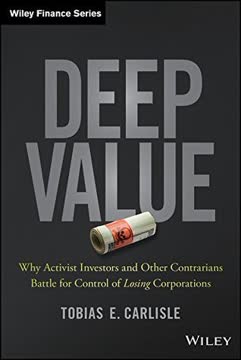
核心要点
1. 深度价值投资聚焦被低估且不受青睐的股票
深度价值是以商业灾难为掩饰的投资胜利。
深度价值的本质。 深度价值投资专注于购买那些因暂时性问题或市场悲观情绪而大幅低于内在价值的股票。这类股票通常具有以下特征:
- 投资者普遍不看好
- 面临短期挑战或挫折
- 交易价格低于清算价值或净资产价值
- 所属行业处于周期性低谷
该策略旨在通过公司业绩改善或市场重新认识股票真实价值,促使价格与价值之间的差距逐渐缩小,从而获利。像本杰明·格雷厄姆这样的深度价值投资者认为,这种方法提供了“安全边际”,以防止资本的永久性损失。
2. 均值回归驱动深度价值投资的回报
异常的好或坏状况不会永远持续。
均值回归的力量。 深度价值投资的核心假设是,企业业绩和股票估值随着时间推移往往会回归历史平均水平或行业标准。这种现象表现为:
- 业绩不佳的公司逐步改善运营
- 高估股票价格下跌
- 低估股票价格上涨
- 行业状况在繁荣与萧条后趋于正常
研究表明,近期表现最差的股票往往在未来表现优异,而之前的领头羊则表现落后。这种反直觉的动态为深度价值投资者提供了逆势操作、利用市场情绪获利的机会。
3. 激进投资能加速被低估公司的价值实现
我们从经验中知道,市场最终会以某种方式追赶价值。
变革催化剂。 像卡尔·伊坎这样的激进投资者通过争取董事会席位、推动管理层变革、改善运营、调整战略或资本配置,旨在释放表现不佳公司的潜在价值。激进投资的主要手段包括:
- 代理权争夺以获得董事会席位
- 公开施压活动
- 推动拆分或资产出售
- 倡导提高分红或回购
虽然并非所有深度价值投资者都会参与激进投资,但激进投资的威胁往往促使管理层采取提升价值的措施。研究显示,激进投资干预通常能带来超越市场的回报,尤其是在目标明确时。
4. 定量指标助力识别深度价值机会
我们发现企业价值倍数,尤其是格林布拉特的息税前利润(EBIT)变体,在识别被低估股票方面表现最佳。
价值筛选。 定量指标和筛选工具有助于发现潜在的深度价值机会,常用指标包括:
- 市净率(P/B)
- 企业价值与息税前利润倍数(EV/EBIT)
- 净流动资产价值
- 盈利收益率
研究表明,企业价值与息税前利润倍数在不同时间和市场中均有效识别被低估股票。结合多种价值指标能进一步提升筛选效果。但定量筛选仅是起点,需辅以定性分析。
5. 行为偏差创造深度价值机会
我们倾向于奖励表现好的人,惩罚表现差的人,而由于均值回归的存在,这种行为使我们在统计上因奖励他人而受罚,因惩罚他人而获益。
利用市场非理性。 深度价值机会常因投资者的行为偏差和认知错误而产生,这些偏差导致市场对负面消息过度反应,并将近期趋势过度外推。常见偏差包括:
- 新近偏差
- 损失厌恶
- 羊群效应
- 过度自信
通过保持情绪纪律和采取逆向操作,深度价值投资者能从这些普遍的心理倾向中获利。理解行为金融学原理有助于解释为何深度低估的股票得以持续存在并最终反弹。
6. 深度价值投资需要耐心与逆向思维
我们的直觉是错误的,在不确定条件下我们的推理能力也很有限。
心理挑战。 成功的深度价值投资通常要求:
- 买入他人积极抛售的股票
- 长期持有头寸
- 容忍账面亏损和波动
- 抵制在反弹初期卖出的冲动
这种方法违背人类本能,心理上极具挑战。深度价值投资者必须培养情绪纪律、独立思考和长期视角,才能克服自然倾向,坚持到底。
7. 公司治理与资本配置是重点关注领域
管理层是评估领先公司最重要的因素之一,对次级公司的市场价格有重大影响。
治理重要性。 深度价值投资者会仔细审视公司治理和资本配置决策,因为这些因素对长期股东价值影响深远。关注重点包括:
- 董事会构成与独立性
- 高管薪酬结构
- 资本支出与收购记录
- 分红与股票回购政策
治理不善和激励不当会破坏价值,阻碍被低估股票的反弹。激进投资者常针对这些领域推动改进,释放股东价值。
8. 深度价值股票具备非对称风险收益特征
市场价格大幅上涨且历史盈利增长率高的股票未来盈利增长往往放缓,表现落后市场;而市场价格大幅下跌且盈利持续下降的股票未来盈利增长往往加速,表现优于市场。
有利赔率。 深度价值股票通常因以下原因具备非对称的上行潜力与有限的下行风险:
- 股票价格已反映低预期
- 市场情绪改善带来估值倍数扩张空间
- 运营和财务改善的潜力
- 交易价格低于净资产价值时下行空间有限
尽管个别深度价值股票风险较大,但多元化组合往往能以低于市场整体波动性的表现实现超额收益。这种动态为耐心投资者创造了有利的风险回报机会。
9. 行业结构与竞争态势影响深度价值投资
高回报吸引新进入者,竞争削弱盈利能力;亏损和低回报导致竞争者退出,留下的企业迎来高增长和高盈利期。
情境分析。 深度价值投资者必须理解行业动态和竞争格局,以判断公司困境是暂时性还是结构性。需考虑因素包括:
- 进入壁垒与竞争优势
- 行业产能与供需平衡
- 技术颠覆与淘汰风险
- 监管环境与政策变化
处于长期衰退行业的公司可能是价值陷阱,而周期性行业的短期低迷则可能孕育深度价值机会,因弱势企业退出市场。
10. 成功的深度价值投资者结合定量与定性分析
其他投资者花费大量时间钻研最后未解的细节,可能错失以极低价格买入、尽管信息不完整但具安全边际的机会。
整体方法。 虽然定量筛选能发现潜在深度价值标的,但深入的定性分析对于区分真正机会与价值陷阱至关重要。关键定性因素包括:
- 管理层素质与激励机制
- 竞争地位与行业趋势
- 资产负债表强度与流动性
- 价值实现的潜在催化剂
像塞思·克拉曼这样的成功深度价值投资者强调理解商业模式、行业动态和潜在风险的重要性。但他们也警示,过度分析和追求完美信息可能导致错失良机。
读者评价
《深度价值》探讨了投资于被低估且常处困境的公司的理念。读者们称赞卡莱尔以数据为基础的分析方法及丰富的历史案例,认为他对均值回归和激进投资策略的阐释极具价值。一部分人欣赏其学术严谨性,另一些人则觉得内容较为晦涩。该书挑战了关于成长股的传统观念,并提供了深度价值投资优于市场的实证依据。批评者指出,实际操作效果可能与回测结果存在差异。总体而言,读者普遍认为这是对价值投资原则一次深刻且偶有重复的探讨。
其他人还在读
 沉浸式
沉浸式


常见问题
What is [Deep Value: Why Activist Investors and Other Contrarians Battle for Control of Losing Corporations] by Tobias E. Carlisle about?
- Focus on undervalued companies: The book examines why activist investors and contrarians target deeply undervalued, often struggling corporations, viewing them as prime opportunities for outsized investment returns.
- Contrarian investment philosophy: It challenges the idea that only good businesses make good investments, showing that “ugly” or out-of-favor stocks can offer asymmetric upside.
- Activism and market control: Carlisle explores how activist investors use tactics like proxy fights and media campaigns to unlock intrinsic value in these companies.
- Behavioral and historical context: The book provides historical case studies and explains the psychological biases that cause investors to overlook deep value opportunities.
Why should I read [Deep Value] by Tobias E. Carlisle?
- Timeless investment principles: The book distills over 80 years of value investing research, rooted in Benjamin Graham’s philosophy, into actionable insights for modern investors.
- Insight into activism: Readers gain a detailed understanding of how activist investors identify, target, and unlock value in underperforming companies.
- Counterintuitive lessons: It explains why contrarian strategies—buying “ugly” stocks—often outperform glamour and growth stocks, challenging common investment intuition.
- Evidence-based approach: The book combines rigorous academic research with real-world case studies, making it practical and credible.
What are the key takeaways from [Deep Value] by Tobias E. Carlisle?
- Deep value outperforms: Stocks trading at significant discounts to intrinsic or liquidation value tend to generate superior returns, despite appearing risky or unattractive.
- Mean reversion is central: Both business fundamentals and stock prices tend to revert to the mean, so poor past performance often precedes strong future returns.
- Activists as catalysts: Activist investors play a crucial role in disciplining management and catalyzing value realization, often leading to restructurings or takeovers.
- Margin of safety matters: The size of the discount to intrinsic value is more important than business quality or growth prospects in driving returns.
What is the core philosophy of deep value investing in [Deep Value] by Tobias E. Carlisle?
- Mean reversion principle: Deep value investing relies on the idea that stocks trading at deep discounts due to poor recent performance will revert to their true value over time.
- Contrarian value strategy: Research shows that low-valuation, poor-performing stocks outperform glamour stocks, even when controlling for quality.
- Behavioral edge: Investors’ cognitive biases, such as extrapolation and neglect of base rates, create persistent mispricings that deep value investors can exploit.
- Systematic approach: The strategy emphasizes rule-based, systematic investing over subjective judgment.
How do activist investors use deep value principles according to [Deep Value] by Tobias E. Carlisle?
- Target undervalued companies: Activists look for companies with low valuations, large cash holdings, and poor recent performance, often suffering from agency problems.
- Catalyze change: By acquiring significant stakes and engaging management or pushing for board changes, activists aim to unlock value through restructuring or asset sales.
- Superior returns from activism: Research shows that activist campaigns produce significant abnormal returns, especially when activists pursue aggressive, well-defined objectives.
- Market for corporate control: Activists exploit the principal-agent conflict to force management to act in shareholders’ interests.
What valuation metrics does [Deep Value] by Tobias E. Carlisle recommend for identifying deep value and activist targets?
- Graham’s net current asset value (net nets): Identifies stocks trading below their liquidation value, historically delivering extraordinary returns and attracting activist interest.
- Enterprise multiple (EV/EBIT): Favored for scalability, this metric highlights companies trading cheaply relative to operating earnings and net debt, making them ripe for activism.
- Earnings yield focus: Carlisle’s research suggests that earnings yield alone outperforms more complex formulas, emphasizing the importance of buying “fair companies at wonderful prices.”
- Quality measures secondary: While quality metrics can help, valuation is a more consistent predictor of returns within value stocks.
What behavioral biases and psychological barriers does [Deep Value] by Tobias E. Carlisle highlight as obstacles to deep value investing?
- Extrapolation bias: Investors tend to project recent trends indefinitely, leading to overvaluation of glamour stocks and avoidance of value stocks.
- Neglect of base rates: Both professionals and individuals ignore statistical probabilities, focusing on anecdotal evidence and misjudging likely outcomes.
- Overconfidence and broken-leg problem: Investors overestimate their ability to override systematic rules, leading to poor decisions and resistance to rule-based investing.
- Naïve extrapolation and overreaction: The market often overreacts to news, causing prices to deviate from intrinsic value before mean reversion occurs.
How does [Deep Value] by Tobias E. Carlisle explain the historical role of corporate raiders and activists like Carl Icahn and T. Boone Pickens?
- Catalysts for change: The book chronicles how activists like Icahn and Pickens exploited overcapitalized, poorly managed companies to force restructuring and unlock value.
- From raiders to activists: It traces the evolution from hostile takeovers in the 1980s to modern activist investing, which often involves large stakes and board engagement.
- Successful campaigns: Case studies such as Icahn’s involvement in Genzyme and ImClone show how activism can lead to significant stock price appreciation and operational improvements.
- Principal-agent problem: Activists address the separation of ownership and control, realigning management’s interests with those of shareholders.
What is the "Icahn Manifesto" and its significance in [Deep Value] by Tobias E. Carlisle?
- Activist investment strategy: Carl Icahn’s 1976 manifesto outlined acquiring large stakes in undervalued companies and using shareholder rights to push for liquidation, sale, or restructuring.
- Addressing agency conflict: The manifesto directly confronts the principal-agent problem, aiming to realign management’s interests with shareholders’.
- Catalyst for activism: It exemplifies how activists can create catalysts that force undervalued companies into play, increasing stock prices and generating profits.
- Legacy of activism: The manifesto set the stage for modern activist investing tactics.
How does [Deep Value] by Tobias E. Carlisle describe the evolution of Warren Buffett’s investment approach?
- From liquidator to operator: Buffett began as a Graham-style liquidator focusing on net nets but evolved to favor “wonderful companies at fair prices” under Charlie Munger’s influence.
- Qualitative factors embraced: He incorporated qualitative analysis of business quality, management, and competitive advantages, moving beyond pure quantitative margin of safety.
- Intrinsic value focus: Buffett’s valuation emphasizes sustainable high returns on invested capital and the ability to compound value over time.
- Case study example: Investments like See’s Candies illustrate this evolved approach.
What is the "Magic Formula" and how does [Deep Value] by Tobias E. Carlisle analyze it?
- Joel Greenblatt’s strategy: The Magic Formula combines return on capital and earnings yield to systematically select undervalued stocks with good business quality.
- Earnings yield drives returns: Carlisle’s research shows that the earnings yield component alone outperforms the combined formula, favoring “fair companies at wonderful prices.”
- Enterprise multiple superiority: The enterprise multiple (EBIT/EV) is a better valuation metric than price-to-book or price-to-earnings, as it accounts for capital structure and operating earnings.
- Practical application: The Magic Formula provides a systematic, rule-based approach to deep value investing.
What does [Deep Value] by Tobias E. Carlisle say about the relationship between company quality and investment returns?
- Valuation trumps quality: Evidence shows that within value stocks, those with lower growth and quality metrics often outperform higher-quality, high-growth value stocks.
- Mean reversion of quality: High-quality companies tend to revert to average performance over time, while low-quality companies have more room for improvement and revaluation.
- Quality measures are inconsistent: Metrics like gross profits-to-assets show mixed results in predicting returns within value stocks.
- Focus on valuation: The book recommends prioritizing valuation over quality for deep value investing success.
What are the best quotes from [Deep Value] by Tobias E. Carlisle and what do they mean?
- “Deep value is investment triumph disguised as business disaster.” — Highlights the counterintuitive nature of buying distressed companies for superior returns.
- “If the profits had been increasing steadily it is obvious that the shares would not sell at so low a price.” — Benjamin Graham, emphasizing that deep undervaluation often reflects misplaced market pessimism.
- “The uglier the stock, the better the return.” — Summarizes the finding that low- or no-growth value stocks tend to outperform high-growth value stocks.
- “There is very little altruism in finance... substantial stockholders... should gain a more respectful hearing.” — Graham, underscoring the importance of activist investors in correcting management failures and unlocking value.








































