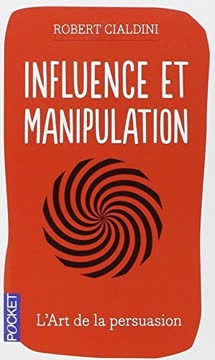
核心要点
1. 心理捷径:我们的自动运作模式
事情应尽可能简单,但不能过于简单。
自动反应。 人类天生倾向于对某些刺激做出自动、几乎“机械式”的反应,就像母火鸡会对小火鸡的“啾啾”声做出回应一样。这种反应通常高效,是复杂世界中不可或缺的心理捷径。艾伦·兰格的实验表明,仅凭“因为”一词,就能几乎自动地获得请求的同意,即使没有合理的理由,这充分体现了触发机制的强大力量。
“贵即是好”的启发式。 一个典型例子是滞销的绿松石首饰,价格翻倍后反而更快售出。顾客因无法判断质量,便以价格作为可靠指标,证明了“贵即是好”的刻板印象极具影响力。对比效应使得某物在与之前展示的物品比较时显得更有吸引力或更昂贵,潜移默化地影响我们的感知。
捷径的必要性。 在信息和选择过载的环境中,这些自动“点击”成为我们轻松应对的必备工具。虽然它们可能让我们易受操控,但总体上有效,避免了认知负担过重。文明的发展正是通过增加无需深思熟虑即可完成的行为数量,使这些自动化机制在日常生活中愈发重要。
2. 互惠法则:社会债务的力量
我们之所以为人,是因为祖先学会了在互惠义务网络中共享技能和食物。
回报的义务。 这一普遍原则促使我们回报所获利益。无论是礼物、邀请还是服务,接受即产生债务感。丹尼斯·里根教授的研究显示,赠送一瓶可乐能使人购买彩票数量翻倍,证明了互惠法则的强大,甚至超过了对请求者的好感。
强制债务与不公平交换。 互惠法则可能被利用,通过提供未请求的利益(如机场哈雷克里希纳教徒赠送鲜花),一旦接受,“受害者”便感到必须回报,即使交换极不公平(用一瓶可乐换多张彩票)。负债感和害怕社会谴责驱使我们接受不成比例的让步,往往损害自身利益。
互惠让步。 一种高效变体是“拒绝-撤回”策略。先提出过分请求遭拒,再提出较小请求(真正目标),让对方觉得对方做出让步,从而促使自己也做出让步。年轻童子军先卖彩票后卖巧克力的例子,结合对比原则,使第二个请求更具吸引力,效果显著。
3. 承诺与一致性:保持自我连贯的需求
先抵抗比后抵抗更容易。
行为与信念的对齐。 一旦我们做出选择或采取立场,内外压力促使我们行为与初衷保持一致。赛马下注后更自信的赌徒,或解除订婚后反而更依恋的萨拉,都是自我说服的体现。我们的心智努力为过去的决定寻找合理化理由。
公开与书面承诺的力量。 承诺越是主动、公开且需付出努力,其约束力越强。中国战俘营利用书面声明(甚至抄写)将战俘转化为合作者,因为书写行为形成了实物证据和社会压力。安利等企业利用书面承诺强化销售员和客户的投入,减少合同取消。
诱饵陷阱。 “低球”策略先以优惠条件获得承诺,再撤销优惠,客户因已投入而寻找新理由支持决定。汽车销售常用此法,使客户接受更高价格。初始承诺形成内在合理化基础,即使优惠消失,仍难以回头,陷入自我一致的陷阱。
4. 社会认同:真理源于他人
当人人想法一致时,没人真正思考。
他人行为的指引作用。 我们倾向于认为他人采纳的行为是恰当的,尤其在不确定时。因此电视中的预录笑声有效,酒吧服务员用钞票“引导”小费也奏效。此原则是有用捷径,但也使我们易受伪造或误导的社会证据影响,因反应多为自动。
集体无知与旁观者效应。 在模糊紧急情况下,众多目击者反而降低援助概率。每个人观察他人反应,见普遍冷漠便判断无事发生。凯瑟琳·杰诺维斯案中38名目击者未出手即为悲剧,城市匿名和责任分散加剧了集体无知。
相似性与维特效应。 我们更易受与自己相似者影响。广告用“普通人”推销产品。维特效应指媒体报道自杀后,模仿自杀和事故增加,显示社会认同的强大影响力,尤其当受害者被视为与个体相似时,甚至影响生死决策。
5. 好感:友谊与亲和力的吸引力
律师的主要工作是让陪审团喜欢他的当事人。
我们喜欢的人更具影响力。 我们更愿意满足熟悉且喜欢之人的请求。塔珀威尔聚会利用朋友销售,将友情的温度转移到商业交易中。沙克利等公司通过推荐链条,让销售员带着共同朋友的名字出现,使拒绝变得困难,利用我们不愿令亲友失望的心理。
好感因素。 多种因素增强我们对他人的好感:
- 外貌: 有吸引力者被视为更有才华、诚实和聪明(光环效应),在司法等场合享受优待。
- 相似性: 我们喜欢与自己相似的人,无论观点、穿着还是背景。销售员常假装有共同点。
- 赞美: 即使明显的奉承也能增加好感,如乔·吉拉德习惯给客户寄“你是朋友”卡片。
- 合作: 共同为目标努力(如拼图学习或警察“坏警察/好警察”策略)促进友谊,减少偏见。
联想原则。 我们倾向将事物的正负特质联结到其周围环境。广告商将产品与名人或美好形象(模特、体育赛事)联系。政治家借助成功者的光环,回避失败,即使非其责任,力图借他人荣耀提升自身形象。
6. 权威:对专家的盲目服从
这项实验的主要结果是成年人对权威表现出几乎无限的顺从。
对合法权威的服从。 我们从小被教导服从权威,因为这有利于社会秩序。米尔格拉姆实验揭示普通人在权威命令下愿意施加痛苦,甚至违背良知。三分之二受试者给予模拟致命电击,证明对权威的“几乎无限顺从”。
权威的象征。 权威影响力强大,甚至其象征物也能引发自动服从,常常不自觉:
- 头衔: 简单的称谓(博士、教授)能提升个人形象和可信度,即使其专业无关。
- 服装: 制服(警察、医生)或正装赋予权威气场,促使服从。比克曼实验显示穿制服者更易获得遵从。
- 配饰: 豪车、珠宝象征高地位,激发敬畏,影响交通和社交行为。
自动服从的危险。 虽然常有用,但机械服从可能导致严重错误,如护士误将耳滴剂用于肛门。说服专家利用演员扮权威(如罗伯特·杨代言Sanka)或伪装成无私专家,利用我们不质疑权威外表的倾向。
7. 稀缺性:对有限资源的渴望
爱情需要理解可能失去所爱之物。
独特性的价值。 稀缺或有限的机会更具吸引力。害怕失去机会是强大决策驱动力,往往超过同等收益的诱惑。摩门教堂突然开放引发抢购即为例证。收藏家重视稀有物品,即使有瑕疵,也因其独一无二和难得。
心理反抗。 当选择自由受限或威胁时,我们对不可得之物欲望更强。这种“反抗”从两岁“反抗期”起,青少年时期尤甚(“罗密欧与朱丽叶”效应,父母反对加深爱情)。禁令(如禁用含磷洗衣粉、禁书)提升了被禁物的渴望和正面评价,即使其本质未变。
稀缺的最佳条件。 稀缺在突发(近期自由丧失)和社会需求驱动(竞争)时最强。詹姆斯·戴维斯认为革命发生于改善后自由倒退阶段,人们为曾享有的权利而战。销售者利用竞争(如多买家争车)制造抢购狂潮,理性被竞争情绪取代。
8. 抵御影响:识别与反击
盲目坚持是一种狭隘的恶魔。
机制意识。 首要防线是认识到我们易受这些自动捷径影响。理解互惠、连贯、社会认同、好感、权威和稀缺如何被利用,有助于关闭自动驾驶。非全盘否定影响,而是分辨诚实提议与操控,意识自身偏见。
警示信号识别。 每条原则有其警示:
- 连贯性:感到被强迫时的“胃部不适”。
- 社会认同:明显伪造迹象(预录笑声、假排队)。
- 好感:过快或意外的好感。
- 权威:质疑权威是否“真正专业”和“真诚”。
- 稀缺:情绪激动,反思是否因物品本身或仅因拥有欲望。
战略反击。 面对伪造或扭曲信号的操控者,建议采取激烈态度,如抵制产品、寄送抗议信、公开揭露操控。目标是维护心理捷径的完整性,这些捷径对现代复杂世界的导航至关重要,同时惩罚破坏规则者,确保规则尽可能有效。
读者评价
《影响力与操控》总体评价较高,平均评分为4.04分(满分5分)。读者普遍认为本书内容丰富,发人深省,是理解说服技巧的必读之作。许多人赞赏书中大量的案例和研究,尽管也有部分读者觉得内容略显重复或篇幅较长。该书因其对市场营销、社会心理学及人类行为的深刻洞察而备受推崇。无论是专业人士还是普通读者,都被推荐阅读,因其有助于识别并应对日常生活中的操控手段。
其他人还在读




常见问题
1. What is [Influence et manipulation] by Robert Cialdini about?
- Explores persuasion psychology: The book investigates the psychological principles that lead people to say "yes" to requests, focusing on how these principles are used in everyday life and by professionals.
- Six core influence principles: Cialdini identifies six fundamental "weapons of influence": consistency, reciprocity, social proof, authority, liking, and scarcity.
- Research-based insights: The author combines laboratory experiments with real-world fieldwork, infiltrating sales and marketing environments to observe persuasion tactics in action.
- Automatic compliance mechanisms: The book explains how these principles often trigger automatic, subconscious responses, leading to unreflective consent.
2. Why should I read [Influence et manipulation] by Robert Cialdini?
- Understand manipulation tactics: The book reveals how easily our decisions can be influenced by psychological triggers, often without our awareness.
- Defend against exploitation: By learning these principles, readers can recognize and resist manipulative tactics used by marketers, salespeople, and others.
- Practical, real-world examples: Cialdini provides vivid case studies and experiments, making the concepts easy to grasp and apply.
- Improve ethical influence: The book also offers guidance on how to use these principles ethically to enhance communication, leadership, and persuasion skills.
3. What are the key takeaways from [Influence et manipulation] by Robert Cialdini?
- Six weapons of influence: The main takeaways are the six principles—consistency, reciprocity, social proof, authority, liking, and scarcity—that drive human compliance.
- Automaticity of consent: People often respond to these triggers without conscious thought, making them vulnerable to manipulation.
- Defense strategies: Awareness and critical thinking are essential to resist unwanted influence.
- Ethical application: Understanding these principles allows for both self-protection and ethical use in personal and professional contexts.
4. What are the "armes de l’influence" (weapons of influence) in [Influence et manipulation] by Robert Cialdini?
- Definition: These are fundamental psychological triggers that prompt automatic compliance to requests.
- The six principles: Consistency, reciprocity, social proof, authority, liking, and scarcity each represent a distinct mechanism of influence.
- Exploited by professionals: Marketers, salespeople, and others use these principles to increase their persuasive power.
- Automatic consent: Each weapon can provoke unthinking agreement, making it crucial to recognize when they are being used.
5. How does the principle of consistency (cohérence) work in [Influence et manipulation] by Robert Cialdini?
- Desire for internal harmony: People have a strong need to appear and be consistent with their commitments and previous actions.
- Commitment triggers consistency: Public or written commitments, even small ones, increase the likelihood of future compliance with related requests.
- Risks of blind consistency: Automatic consistency can lead to poor decisions, as individuals justify choices even when evidence suggests otherwise.
- Exploited in persuasion: Professionals use small initial commitments to pave the way for larger requests.
6. What is the rule of reciprocity in [Influence et manipulation] by Robert Cialdini and how is it exploited?
- Universal social rule: Reciprocity compels people to repay favors or gifts, even if unsolicited, fostering cooperation but also vulnerability.
- Exploitation tactics: Marketers and solicitors give small gifts or favors to create a sense of obligation, then request something larger in return.
- Rejection-then-retreat technique: A large initial request is refused, followed by a smaller one, which feels like a concession and is more likely to be accepted.
- Powerful across cultures: The reciprocity rule is deeply ingrained and difficult to resist.
7. How does the principle of social proof (preuve sociale) in [Influence et manipulation] by Robert Cialdini affect behavior?
- Looking to others: People determine appropriate behavior by observing what others do, especially in uncertain situations.
- Conformity effects: Social proof can lead to powerful conformity, such as increased suicides or accidents after media coverage (the Werther effect).
- Exploited in marketing: Fake testimonials, laugh tracks, and staged popularity are used to manipulate perceptions and drive behavior.
- Stronger with similarity and uncertainty: Social proof is most influential when the observed group is similar to us or when the situation is ambiguous.
8. What is the "Werther effect" as explained in [Influence et manipulation] by Robert Cialdini?
- Origin and definition: Named after Goethe’s novel, the Werther effect describes how publicized suicides can trigger imitative suicides.
- Modern evidence: Studies show suicide rates and fatal accidents rise after widely reported suicides, especially with greater publicity.
- Imitation beyond suicide: Some individuals mimic suicides through fatal accidents, influenced by social proof and media coverage.
- Broader implications: The effect demonstrates the powerful, sometimes dangerous, impact of social proof on human behavior.
9. What role does the principle of liking (sympathy) play in persuasion according to [Influence et manipulation] by Robert Cialdini?
- Liking increases compliance: People are more likely to agree to requests from those they like, including friends, attractive individuals, or those who are similar.
- Sales and social influence: Tupperware parties and successful salespeople leverage personal relationships and likability to drive sales.
- Factors enhancing liking: Physical attractiveness, similarity, compliments, and cooperation all boost likability and persuasive power.
- Professional exploitation: Marketers and persuaders intentionally build rapport to increase compliance.
10. What does [Influence et manipulation] by Robert Cialdini say about the power of authority in persuasion?
- Automatic obedience: People tend to comply with authority figures, sometimes even against their better judgment, as shown in Milgram’s experiments.
- Symbols of authority: Titles, uniforms, and luxury items serve as cues that trigger obedience, regardless of actual expertise.
- Risks of blind obedience: Automatic compliance can lead to errors and abuses, especially when authority is faked or misused.
- Critical evaluation needed: The book urges readers to question the legitimacy and motives of authority figures.
11. What is the principle of scarcity (rareté) in [Influence et manipulation] by Robert Cialdini and why does it influence decisions?
- Value of rarity: Scarce or limited items are perceived as more valuable, triggering a fear of missing out.
- Psychological reactance: When access is restricted, people are motivated to regain that freedom, increasing desire for the item.
- Common tactics: Limited-time offers, sold-out products, and forbidden information are used to create urgency and drive decisions.
- Emotional manipulation: Scarcity often leads to rushed, less rational choices.
12. How can readers defend themselves against the weapons of influence described in [Influence et manipulation] by Robert Cialdini?
- Awareness is key: Recognizing the six principles and their tactics is the first step in resisting manipulation.
- Monitor emotional responses: Feelings of urgency, obligation, or excessive liking should serve as warning signals to pause and reflect.
- Separate person from request: Focus on the merits of the offer, not the likability or authority of the persuader.
- Reframe situations: Mentally reclassify manipulative tactics (like unsolicited gifts) as sales strategies, reducing their persuasive power.








































