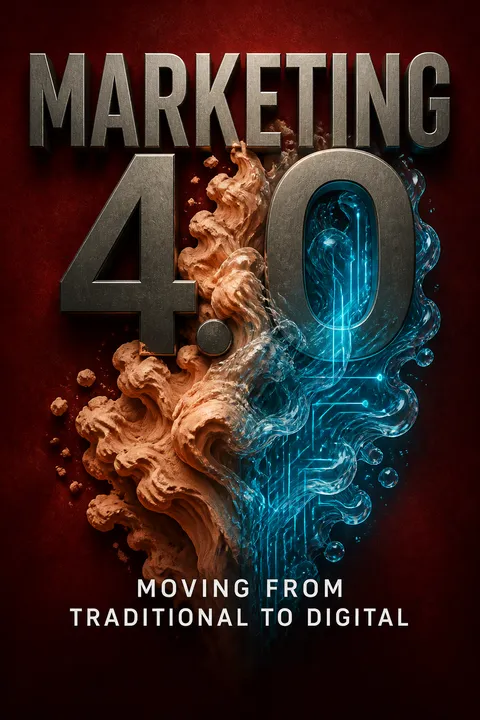

核心要点
1. 数字经济催生全新营销模式:营销4.0
营销4.0是一种融合线上与线下互动的营销方法,连接企业与客户。
范式转变。 数字经济深刻改变了营销格局,促使营销策略必须融合传统与数字手段。营销4.0认识到,尽管数字互动至关重要,但线下接触依然是日益线上化世界中的重要差异化因素。
核心要素:
- 融合线上与线下客户体验
- 强调真实性与透明度
- 利用机器互联与人工智能
- 聚焦人与人之间的连接以增强互动
营销4.0顺应数字经济中客户路径的变化,引导客户从认知走向倡导。它承认在高科技环境下,客户渴望高触感体验,产品更个性化,服务更贴心。
2. 权力转移至横向、包容且社交化的连接客户
互联网带来的透明度也使新兴国家的创业者能从发达国家同行那里汲取灵感。
影响力民主化。 数字经济将权力从垂直、排他和个体转向横向、包容和社交。这一转变赋能了客户社区,使其更有声音,也更无惧大企业和品牌。
关键转变:
- 从排他到包容:经济权力更均衡分布
- 从垂直到横向:小型、年轻企业能与大企业竞争
- 从个体到社交:社交群体的影响力超过个体
这些变化彻底重塑商业环境。客户社区变得更强大,自由分享品牌故事。品牌讨论比定向广告更具公信力,社交圈成为主要影响源。
3. 面对连接客户的营销悖论需平衡策略
连接显著降低了企业、员工、渠道伙伴、客户及相关方之间的互动成本。
驾驭矛盾。 连接世界带来多重悖论,营销者必须应对:
-
线上与线下互动:
- 两者需共存互补
- 高科技世界催生对高触感互动的需求
-
知情与分心客户:
- 客户信息更丰富但注意力更短
- 挑战在于赢得关注并创造有意义的品牌对话
-
负面与正面倡导:
- 负面声音可激发忠实客户的正面支持
- 品牌需拥有愿意在数字世界捍卫它的拥护者
营销者必须拥抱这些悖论,制定平衡线上线下体验、吸引分心客户注意力、培养品牌拥护者的策略。
4. 青年、女性与网民构成最具影响力的数字亚文化
青年、女性和网民长期被企业分别深入研究,但其集体力量,尤其作为数字时代最具影响力群体,尚未充分挖掘。
发挥关键影响力。 青年、女性与网民(YWN)是数字时代最具影响力的群体,各自在塑造市场趋势和品牌认知中扮演独特角色。
特征与影响力:
- 青年:早期采用者、潮流引领者、变革推动者
- 女性:信息收集者、全面购物者、事实上的家庭决策者
- 网民:社交连接者、表达倡导者、内容贡献者
有效触达这些群体,营销者应:
- 针对青年赢得心智份额,引领潮流
- 利用女性对家庭决策的影响扩大市场份额
- 借助网民的社交网络扩大情感份额,放大品牌声音
理解并参与这些关键亚文化,是数字经济中成功的关键。
5. 新客户路径:从认知到倡导(五个A)
营销4.0的终极目标是引导客户从认知走向倡导。
重新构想客户旅程。 传统AIDA模型演变为五个A:Aware(认知)、Appeal(吸引)、Ask(询问)、Act(行动)、Advocate(倡导)。该框架反映客户间的连接性及现代客户旅程的非线性特征。
五个A:
- 认知:被动接触品牌
- 吸引:短期记忆或品牌吸引力
- 询问:主动寻求信息
- 行动:购买决策
- 倡导:忠诚与推荐
关键点:
- 路径非线性,客户可能跳跃或往返阶段
- 社交影响在询问阶段尤为重要
- 终极目标是将客户转化为忠实倡导者
营销者需理解并优化每个阶段,有效引导客户完成从认知到倡导的转变。
6. 新生产力指标:购买行动率(PAR)与品牌倡导率(BAR)
PAR衡量企业将品牌认知转化为购买的能力,BAR衡量将品牌认知转化为倡导的能力。
衡量营销效能。 传统品牌认知和客户满意度指标在数字经济中不足以全面反映营销绩效。PAR和BAR提供更深入的生产力洞察。
计算与意义:
- PAR = 购买客户数 ÷ 认知品牌客户数
- BAR = 倡导客户数 ÷ 认知品牌客户数
优势:
- 评估从认知到行动及倡导的转化效果
- 识别客户旅程中的瓶颈
- 指导营销资源分配
聚焦这些指标,营销者能更精准把握各阶段转化率,做出数据驱动的优化决策。
7. 以人为本的营销塑造真实如朋友般的品牌
品牌需变得真实诚恳,承认自身不足,摒弃完美假象。
品牌人性化。 数字时代,客户渴望品牌如人般亲切、可爱,甚至带有脆弱感。以人为本的营销不仅满足客户功能与情感需求,更触及其潜在焦虑与渴望。
以人为本品牌的六大属性:
- 物理性:独特且吸引人的品牌形象
- 智慧性:创新解决问题的能力
- 社交性:开展有意义的对话
- 情感性:激发情感并促进行动
- 个性化:自我认知与真实性
- 道德性:坚守伦理与诚信
构建真实、以人为本的品牌,营销者需:
- 通过数字人类学(社交聆听、网络民族志、共情研究)深入理解客户
- 发展体现人性特质的品牌属性
- 创造满足客户深层需求的有意义连接
8. 内容营销通过讲故事激发品牌好奇心
内容营销使营销者从品牌推广者转变为讲故事的人。
以价值吸引。 内容营销涉及创造、策划、分发和放大对特定受众有趣、相关且有用的内容,旨在通过故事讲述深化品牌与客户的连接。
内容营销关键步骤:
- 目标设定:明确与业务目标一致的目标
- 受众映射:识别并理解目标群体
- 内容构思与规划:制定主题、形式和叙事
- 内容创作:产出高质量原创内容
- 内容分发:利用自有、付费和赢得的媒体渠道
- 内容放大:借助影响者并参与对话
- 评估:衡量绩效与目标的匹配度
- 改进:基于洞察持续优化策略
有效内容营销在为客户创造价值的同时,潜移默化地推广品牌,激发客户旅程中的好奇与参与。
9. 全渠道营销整合线上线下体验
全渠道营销是整合多渠道以打造无缝且一致的客户体验的实践。
无缝整合。 随着客户日益移动化和渠道无差异化,营销者必须在所有接触点提供一致体验。全渠道营销打破渠道壁垒,创造统一客户体验。
推动全渠道营销的趋势:
- “即时”经济中的移动商务
- 将“网购后线下体验”(webrooming)引入线下渠道
- 将“线下看货线上购”(showrooming)引入线上渠道
实施步骤:
- 绘制客户路径上的所有可能接触点和渠道
- 识别最关键的接触点和渠道
- 改善并整合这些关键接触点和渠道
成功的全渠道营销需组织协同,打破孤岛,利用大数据分析优化跨渠道客户体验。
10. 移动应用、社交客户关系管理与游戏化提升客户参与度
内容营销优于传统营销的成功之处在于高度可追踪,可按内容主题、形式和分发渠道监测绩效。
驱动忠诚。 初次购买后持续吸引客户对建立品牌亲和力和倡导至关重要。数字时代三大有效技术:
-
移动应用:
- 提升数字客户体验
- 应用场景:内容传递、自助服务、产品整合
- 设计考量:使用场景、功能、界面、后台集成
-
社交客户关系管理(Social CRM):
- 通过社交媒体管理品牌互动与关系
- 与传统CRM区别:客户驱动、对话式、全天候
- 实施步骤:构建感知响应能力、培养赋权代理、利用社区参与
-
游戏化:
- 将游戏原理应用于非游戏场景
- 常见应用:忠诚度计划、客户社区
- 益处:提升参与度,激励期望行为
通过有效运用这些技术,营销者能与客户建立更深层次连接,推动长期忠诚与倡导。
读者评价
《市场营销4.0》评价褒贬不一,平均评分为4.07分(满分5分)。许多读者赞赏其对数字营销的深刻见解,以及从传统营销向线上策略转变的阐述。书中对客户旅程、品牌倡导和全渠道营销的讨论,赢得了不少好评。不少人认为这本书是数字时代营销人员的必读之作,然而也有部分读者批评其内容重复,缺乏实操案例。总体来看,本书为现代营销理念提供了较为全面的理论概述,但部分读者希望其内容能更加简明且具备可操作性。
其他人还在读





常见问题
What's "Marketing 4.0: Moving from Traditional to Digital" about?
- Transition to Digital: The book discusses the shift from traditional marketing methods to digital strategies, emphasizing the integration of both to enhance customer engagement.
- Customer Path Redefined: It introduces a new customer path model, moving from the Four A's to the Five A's: Aware, Appeal, Ask, Act, and Advocate.
- Human-Centric Approach: The authors advocate for a human-centric marketing approach, focusing on building authentic connections with customers.
- Technological Impact: It explores how digital innovations and connectivity are reshaping marketing practices and customer interactions.
Why should I read "Marketing 4.0: Moving from Traditional to Digital"?
- Expert Insights: Authored by Philip Kotler, a leading figure in marketing, the book offers authoritative insights into modern marketing trends.
- Practical Frameworks: It provides actionable frameworks and strategies for integrating digital and traditional marketing.
- Understanding Digital Economy: The book helps readers understand the dynamics of the digital economy and how to leverage them for marketing success.
- Future-Proofing Marketing: It prepares marketers for future challenges by addressing the convergence of technology and human-centric marketing.
What are the key takeaways of "Marketing 4.0: Moving from Traditional to Digital"?
- Five A's Model: The book introduces a new customer path model: Aware, Appeal, Ask, Act, and Advocate, emphasizing the role of connectivity.
- Human-Centric Marketing: It stresses the importance of building brands that connect with customers on a human level.
- Integration of Channels: The book highlights the need for seamless integration of online and offline marketing channels.
- Influence of Digital Subcultures: It identifies youth, women, and netizens as key influencers in the digital marketing landscape.
How does "Marketing 4.0" redefine the customer path?
- From Four to Five A's: The book shifts from the traditional Four A's (Aware, Attitude, Act, Act Again) to the Five A's (Aware, Appeal, Ask, Act, Advocate).
- Social Influence: It emphasizes the role of social influence in shaping customer decisions, particularly in the Ask stage.
- Advocacy as Loyalty: Loyalty is redefined as advocacy, where customers actively recommend brands to others.
- Non-linear Path: The customer path is not always linear; customers may skip stages or loop back based on their experiences.
What is the significance of the Five A's model in "Marketing 4.0"?
- Comprehensive Framework: The Five A's model provides a comprehensive framework for understanding the customer journey in the digital age.
- Focus on Connectivity: It highlights the importance of connectivity and social influence in each stage of the customer path.
- Driving Advocacy: The model aims to drive customers from awareness to advocacy, leveraging peer-to-peer influence.
- Flexible Application: It is applicable across industries, allowing for cross-industry comparisons and insights.
How does "Marketing 4.0" address the integration of traditional and digital marketing?
- Coexistence of Channels: The book emphasizes that digital marketing should complement, not replace, traditional marketing.
- Role Shifts: Traditional marketing initiates customer interaction, while digital marketing focuses on driving action and advocacy.
- Seamless Experience: It advocates for a seamless blend of online and offline experiences to enhance customer engagement.
- Strategic Balance: Marketers are encouraged to find a strategic balance between traditional and digital efforts to maximize impact.
What are the new metrics introduced in "Marketing 4.0" for measuring marketing productivity?
- Purchase Action Ratio (PAR): PAR measures how effectively brand awareness is converted into purchases.
- Brand Advocacy Ratio (BAR): BAR assesses how well brand awareness translates into customer advocacy.
- Conversion Focus: These metrics focus on the conversion process rather than just the outcome, providing deeper insights.
- Improvement Opportunities: By analyzing PAR and BAR, marketers can identify bottlenecks and areas for improvement in the customer path.
How does "Marketing 4.0" define human-centric marketing?
- Approachable Brands: Human-centric marketing involves creating brands that are approachable, likeable, and authentic.
- Addressing Anxieties: It focuses on addressing customers' latent anxieties and desires through empathetic engagement.
- Human Attributes: Brands should possess human attributes like physicality, intellectuality, sociability, emotionality, personability, and morality.
- Building Connections: The approach aims to build genuine human-to-human connections with customers.
What role do digital subcultures play in "Marketing 4.0"?
- Influential Segments: Youth, women, and netizens are identified as the most influential segments in the digital era.
- Trendsetters and Gatekeepers: Youth are trendsetters, women are gatekeepers of market share, and netizens expand heart share.
- Community Influence: These subcultures have strong community networks that amplify their influence on mainstream markets.
- Targeting Strategy: Marketers are encouraged to engage these segments to drive brand advocacy and market success.
What are the best quotes from "Marketing 4.0" and what do they mean?
- "In a high-tech world, people long for high touch." This quote emphasizes the need for human interaction in an increasingly digital environment.
- "The future of marketing is digital and this book is your guide." It highlights the book's role as a roadmap for navigating digital marketing challenges.
- "Customers are no longer passive targets but are becoming active media of communications." This underscores the shift in customer roles from passive recipients to active participants in brand conversations.
- "The WOW factor is what differentiates a brand from its competitors." It stresses the importance of creating memorable experiences that drive customer advocacy.
How does "Marketing 4.0" suggest creating a WOW factor?
- Surprise and Delight: WOW moments are created by exceeding customer expectations and delivering unexpected delight.
- Personalization: Personalizing experiences to address individual customer anxieties and desires can trigger WOW moments.
- Viral Potential: WOW moments are contagious and can lead to widespread advocacy and positive word of mouth.
- Strategic Design: Companies should design strategies, processes, and training to consistently deliver WOW experiences.
What are the tactical applications of "Marketing 4.0" in the digital economy?
- Human-Centric Marketing: Focus on building authentic brands that connect with customers on a human level.
- Content Marketing: Use storytelling to create engaging content that initiates conversations and builds brand curiosity.
- Omnichannel Marketing: Integrate online and offline channels to provide a seamless customer experience and drive commitment.
- Engagement Marketing: Utilize mobile apps, social CRM, and gamification to enhance customer engagement and drive advocacy.
关于作者
其他作品,作者: 菲利普·科特勒


下载 PDF
下载 EPUB
.epub digital book format is ideal for reading ebooks on phones, tablets, and e-readers.








































