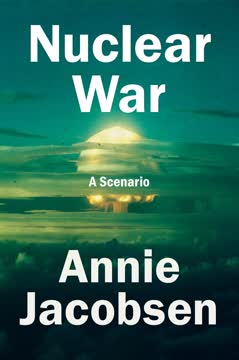
核心要点
1. 核战争:一场可避免的人类灾难
本书提出的核战争情景可能明天就发生,甚至可能就在今天晚些时候。
迫在眉睫的威胁。 本书强调核战争的危险无时无刻不在,指出这并非遥远的可能,而是可能以惊人速度展开的现实。所描绘的情景并非虚构,而是基于专家访谈和解密文件的合理推演。
人类代价。 核战争的后果极其惨重,可能导致数十亿人死亡和文明崩溃。书中描绘了战争爆发后的严峻局面,包括:
- 初次爆炸带来的焚烧
- 大范围火灾与火风暴
- 辐射中毒
- 长期环境破坏
可避免的悲剧。 尽管前景惨淡,书中隐含的观点是核战争并非不可避免。通过认识风险、倡导裁军与降级冲突,人类仍有机会避免这场可预防的灾难。
2. 危险的“发射警戒”状态
我们的战略力量始终处于随时响应状态,人人皆应知晓。
随时发射准备。 美国和俄罗斯的大部分核武库处于“发射警戒”状态,意味着接到命令后几分钟内即可发射。这种姿态大大增加了意外或未经授权使用的风险。
预警发射政策。 该政策规定美国在收到来袭预警后将立即发射核武器,无需等待确认。这极大缩短了决策时间,增加了误判的可能。
美国核三位一体:
- 陆基洲际弹道导弹(ICBM)
- 潜射弹道导弹(SLBM)
- 具备核能力的轰炸机
“发射警戒”与“预警发射”政策的结合,制造了一个极其危险的局面:一次误报或误判就可能引发全面核战争。
3. 预警发射:一场边缘政策
一旦收到核攻击预警,我们即刻准备发射。这是政策,我们不等待。
时间紧迫的决策。 预警发射政策迫使领导人在几分钟内做出核报复的关键决策,几乎没有时间进行核实或外交斡旋,极大增加了意外战争的风险。
误报频发。 历史上早期预警系统多次出现误报,凸显了依赖自动化系统做出全球性决策的危险。这些事件警示我们,预警发射政策本质上存在巨大隐患。
谨慎的必要。 书中建议采取更为谨慎的策略,优先核实信息和降级冲突,减少意外核战争风险。这包括取消“发射警戒”状态和废止预警发射政策。
4. 斩首打击:绝望的战略
华盛顿遭遇突袭是当地人最深切的恐惧。
针对领导层。 斩首打击旨在一击摧毁敌方领导和指挥体系。这一策略在核战争背景下尤为危险,可能促使先发制人攻击,导致冲突升级。
指挥中心的脆弱。 书中指出五角大楼、夏延山等关键指挥中心极易遭受核打击,其毁灭将严重削弱国家的有效反应能力。
升级的恶性循环。 对斩首打击的恐惧可能引发双方竞相先发制人,形成危险的升级循环,增加意外或故意核战争的风险。
5. 核三位一体:恐怖的三重奏
美国别无选择,只能继续制造和储备核武器。
陆、海、空三位一体。 美国核三位一体包括陆基洲际导弹、潜射弹道导弹和具备核能力的轰炸机。多元化的力量结构旨在确保即使一环受损,仍能实施报复性打击。
生存能力与稳定性的矛盾。 虽然三位一体增强了威慑力,但也带来了脆弱性和升级压力。例如,陆基导弹更易遭受先发制人攻击,促使采取预警发射姿态。
维护成本。 维持核三位一体耗资巨大,分散了其他紧迫需求的资源。书中隐含质疑:三位一体的利益是否值得承担其风险和成本。
6. 末日飞机:末世中的指挥控制
我们的战略力量始终处于随时响应状态,人人皆应知晓。
空中指挥中心。 “末日飞机”即E-4B夜鹰,是一架军用波音747,设计用于核战争爆发时作为空中指挥中心,确保政府连续性和对核力量的控制。
电磁脉冲防护。 末日飞机具备电磁脉冲(EMP)防护能力,能抵御核爆产生的强大能量冲击,保障其在核攻击后仍能正常运作。
局限与脆弱。 尽管功能强大,末日飞机并非无懈可击。其依赖复杂通信系统,且效能取决于关键人员和基础设施的存续。
7. 核冬天:文明的终结
人类历史即战争史。除短暂且脆弱的间歇外,世界从未真正和平;史前时代更是杀戮不断。
全球气候灾难。 核冬天是假设的大规模核战争后,巨量烟尘进入大气层,遮蔽阳光,导致全球气温骤降的情景。
生态崩溃。 寒冷与黑暗将摧毁农业,破坏生态系统,引发大范围饥荒。书中描绘了核战争后世界的惨淡景象,生存成为持续的挑战。
长期影响。 核冬天可能对地球气候和环境造成长久影响,使大片地区数十年甚至数百年内不适宜居住。
8. 控制的幻象:岌岌可危的系统之系统
世界可能在未来数小时内终结。
复杂系统。 核指挥控制是一个系统之系统,依赖庞大互联的技术和人力网络。这种复杂性带来错误、故障和意外后果的风险。
脆弱性与相互依赖。 书中强调核指挥控制系统各组成部分的脆弱性,包括预警卫星、通信网络和决策流程。任何一环失效都可能引发连锁反应。
战争迷雾。 在核危机的混乱中,获取准确信息和理性决策极为困难。书中强调冗余、韧性和人类判断力在降低核战争风险中的重要性。
9. 人为因素:偏执、误判与群体疯狂
人类历史即战争史。
人的不完美。 书中强调偏执、误判和群体疯狂等人类因素在核危机升级中的作用。这些心理和社会动态可能压倒理性决策,导致灾难性后果。
领导力的重要性。 在核危机中,个别领导人的决策可能影响全球。书中强调需要具备明智判断、清晰沟通和致力于降级冲突的领导者。
同理心的力量。 通过揭示核战争的人类代价,书中旨在促进跨国界、跨意识形态的同理心。这种同理心是构建更和平安全世界的关键。
10. 不可想象的灾难:末日演练
为了更具体地了解答案,我们回溯六十多年前,1960年12月,回到美国战略空军司令部的一次秘密会议。
为最坏做准备。 书中揭示各国政府为核战争所做的详尽准备,包括应对攻击的详细计划和程序。这些准备虽旨在增强威慑,却也可能使核战争观念常态化,增加其发生风险。
邪恶的平庸。 书中将核战争计划与纳粹大屠杀相提并论,指出理性个体在官僚体系中可能参与可怕行为的潜力。
道德反思的必要。 书中呼吁读者正视核武器的道德问题,思考开发、维护和控制核武器者的伦理责任。
读者评价
《核战争:一种设想》是一部令人震撼且经过细致研究的著作,描绘了一个假想的核冲突场景。部分读者认为书中内容既具信息量又令人毛骨悚然,然而也有读者批评其带有推测性质且文字重复。书中详细描述了朝鲜对美国发动攻击,进而引发全球核战争的情景。许多人赞赏作者雅各布森的深入调查和对核战争可怕后果的生动呈现,但也有人觉得文风夸张,设定过于牵强。总体而言,本书作为对核武器危险性的严肃警示,具有重要意义。
其他人还在读
常见问题
1. What is Nuclear War: A Scenario by Annie Jacobsen about?
- Minute-by-minute nuclear scenario: The book presents a meticulously researched, realistic scenario of a nuclear war, beginning with a surprise missile launch and escalating to global catastrophe.
- Focus on command and control: It explores the inner workings of U.S. and Russian nuclear command systems, decision-making processes, and the roles of leaders during a crisis.
- Consequences and aftermath: The narrative details the immediate and long-term effects of nuclear war, including environmental devastation, societal collapse, and the existential threat to humanity.
- Grounded in expert interviews: Jacobsen bases her scenario on exclusive interviews with military officials, scientists, and emergency experts, as well as declassified documents.
2. Why should I read Nuclear War: A Scenario by Annie Jacobsen?
- Unprecedented realism and detail: The book offers a rare, near-real-time depiction of nuclear war, moving beyond theory to show the human, environmental, and geopolitical realities.
- Critical understanding of nuclear risks: Readers gain insight into the dangers of current nuclear policies, such as "Launch on Warning" and "Hair-Trigger Alert."
- Urgent call for awareness: Jacobsen emphasizes the fragility of deterrence and the catastrophic consequences of nuclear conflict, urging readers and policymakers to reconsider nuclear strategies.
- Authoritative and accessible: The book draws on expert interviews and declassified sources, making complex topics understandable for general readers.
3. What are the key takeaways from Nuclear War: A Scenario by Annie Jacobsen?
- Nuclear war is fast and devastating: The scenario shows that nuclear war could unfold within an hour, with millions killed almost instantly and little time for decision-making.
- Paranoia and mistrust drive escalation: Historical and psychological factors, such as fear of decapitation strikes, fuel rapid and catastrophic decisions.
- Nuclear winter and societal collapse: The aftermath includes environmental devastation, famine, and the potential collapse of civilization, with humanity possibly reduced to a hunter-gatherer existence.
- Nuclear weapons are the true enemy: The book stresses that the existence of these weapons poses an existential threat to all humanity.
4. What are the best quotes from Nuclear War: A Scenario by Annie Jacobsen and what do they mean?
- “The world could end in the next couple of hours.” – General Robert Kehler. This quote highlights the immediacy and unpredictability of nuclear war risk.
- “Humanity is just one misunderstanding, one miscalculation away from nuclear annihilation.” – UN Secretary-General António Guterres. It underscores the fragility of peace and the dangers of human error.
- “Paranoia is a psychological phenomenon, same as deterrence.” – Annie Jacobsen. This reflects how psychological factors can be as influential as military hardware in nuclear decision-making.
- “If North Korea detonates a high-altitude EMP over America, it’s Electric Armageddon.” – Dr. Peter Pry. This quote illustrates the catastrophic potential of EMP attacks, beyond direct nuclear strikes.
5. How does Annie Jacobsen describe the timeline and phases of a nuclear missile attack in Nuclear War: A Scenario?
- Detection within seconds: U.S. satellites detect a missile launch almost instantly, triggering alerts across multiple command centers.
- Flight phases: The missile’s journey includes a Boost Phase (5 minutes), Midcourse Phase (20 minutes), and Terminal Phase (1.6 minutes), totaling about 26 minutes and 40 seconds.
- Critical decision window: The U.S. president has approximately six minutes after detection to decide on a counterattack, a timeframe described as dangerously short.
- Escalation to global conflict: The scenario shows how quickly a single launch can escalate into a full-scale nuclear exchange.
6. What is the "Launch on Warning" policy in Nuclear War: A Scenario and why is it risky?
- Definition: "Launch on Warning" means launching nuclear weapons upon detection of incoming missiles, before they strike, to preserve retaliatory capability.
- Extreme time pressure: Leaders have only minutes—sometimes as few as six—to make irreversible decisions, increasing the risk of mistakes.
- Expert criticism: The policy is described as “inexcusably dangerous” by experts and former officials, due to the potential for accidental or mistaken launches.
- Ongoing practice: Despite widespread criticism, both the U.S. and Russia maintain this policy, keeping many weapons on hair-trigger alert.
7. How does Nuclear War: A Scenario by Annie Jacobsen portray nuclear command and control systems?
- Complex, multi-layered systems: Command and control involve multiple facilities, satellites, communication networks, and personnel working around the clock.
- Sole authority of leaders: The U.S. and Russian presidents have sole authority to order nuclear launches, without requiring approval from others.
- Vulnerabilities and redundancies: While there are backup systems and airborne command posts, many facilities are vulnerable to direct strikes and EMPs.
- Human and technical factors: The book highlights how stress, miscommunication, and technical failures can interact with catastrophic results.
8. What is the "Dead Hand" system and its significance in Nuclear War: A Scenario by Annie Jacobsen?
- Automatic retaliation mechanism: The "Dead Hand" (Perimeter) is a Soviet/Russian system designed to automatically launch nuclear weapons if command is lost and a nuclear strike is detected.
- Cold War origins: It was developed to ensure mutual destruction in case of a decapitation strike, reflecting deep-seated paranoia.
- Modern uncertainty: The system reportedly still exists, though its current capabilities are unclear; it symbolizes the dangers of automated escalation.
- Escalation risk: The existence of such systems increases the likelihood of uncontrollable nuclear war.
9. How does Annie Jacobsen describe the effects of a nuclear bomb detonation on a major city in Nuclear War: A Scenario?
- Immediate destruction: A 1-megaton bomb obliterates the Pentagon and surrounding areas, with a fireball over a mile wide.
- Mass casualties: Over 1 to 2 million people are killed or fatally injured within seconds, with severe burns and trauma miles from ground zero.
- Firestorm and fallout: The blast ignites massive fires and spreads radioactive fallout, making rescue and survival nearly impossible.
- Long-term uninhabitability: The affected area remains lethal for days, complicating any recovery efforts.
10. What is the U.S. nuclear triad and why is it significant in Nuclear War: A Scenario by Annie Jacobsen?
- Three delivery systems: The triad consists of land-based ICBMs, nuclear-capable bombers, and nuclear-armed submarines.
- Survivability and deterrence: Submarines are the most survivable, bombers can be recalled, and ICBMs are kept on hair-trigger alert for rapid response.
- Strategic complexity: The triad ensures a retaliatory capability but complicates decision-making under extreme time pressure.
- Central to nuclear policy: The triad is a cornerstone of U.S. deterrence strategy, but also increases the risk of rapid escalation.
11. How does Nuclear War: A Scenario by Annie Jacobsen explain the risks and limitations of U.S. missile defense systems?
- Limited interceptor capacity: The U.S. has only 44 ground-based interceptors, with a success rate of about 55%, insufficient for a large-scale attack.
- Technological challenges: Systems like the Sea-Based X-Band Radar have been criticized as costly and unreliable, and distinguishing real warheads from decoys is difficult.
- No defense against SLBMs: Submarine-launched missiles can strike with little warning and are nearly impossible to intercept.
- False sense of security: The book warns that missile defense cannot reliably protect against a determined nuclear attack.
12. What are the psychological and societal impacts of nuclear war described in Nuclear War: A Scenario by Annie Jacobsen?
- Mass panic and chaos: Cities descend into panic, with infrastructure collapse, communication failures, and overwhelmed emergency services.
- Survivor suffering: Radiation sickness, firestorms, and lack of medical care lead to horrific suffering and high mortality among survivors.
- Government continuity at risk: Decapitation strikes threaten the survival of government, risking military rule and loss of democracy.
- Long-term societal collapse: The book warns of a breakdown in social order, with survivors facing starvation, disease, and a return to primitive living conditions.
关于作者
其他作品,作者: 安妮·雅各布森