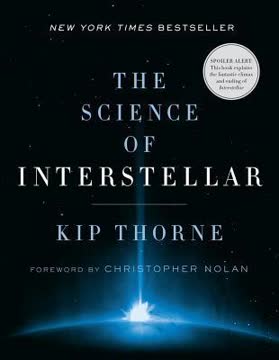
核心要点
1. 星际穿越的科学:穿越时空与好莱坞的旅程
“我不知道有什么更好的图示方法,除了图23.5。但它带来了奇妙的结果。”
独特的合作。 《星际穿越的科学》一书,是著名物理学家基普·索恩与好莱坞电影制作人之间非凡合作的结晶。它探讨了克里斯托弗·诺兰电影《星际穿越》背后的科学理念,将前沿物理学与电影叙事巧妙融合。
虚构中的科学严谨。 索恩与电影创作团队紧密合作,既保证科学的准确性,又允许创意的发挥。书中深入讲解了黑洞、虫洞、时间膨胀等高级物理概念,阐释它们如何融入电影剧情。
科学与娱乐的桥梁。 这次合作展示了科学如何激发并丰富故事讲述,同时借助大众媒体普及复杂科学思想,达到寓教于乐的效果。
2. 黑洞:扭曲的时空与引力怪兽
“黑洞由扭曲的空间和扭曲的时间构成,别无他物——没有任何物质。”
黑洞的定义。 黑洞是引力极其强大以至于连光线都无法逃脱的空间区域。它们并非由物质组成,而是完全由扭曲的时空构成。
关键特征:
- 事件视界:任何物质和光线都无法逃脱的边界
- 奇点:黑洞中心密度无限大的点
- 引力时间膨胀:靠近黑洞时,时间流逝变慢
- 引力透镜效应:黑洞弯曲光线,扭曲其背后物体的外观
《星际穿越》中的巨兽“加冈图亚”。 影片中出现的超大质量黑洞“加冈图亚”在剧情中至关重要。索恩与视觉特效团队合作,打造了迄今为止电影中最科学准确的黑洞形象。
3. 虫洞:宇宙中的捷径
“虫洞并非自然形成的现象。”
理论构想。 虫洞是时空中的假想隧道,可能为宇宙中的长途旅行提供捷径。虽然爱因斯坦方程允许其存在,但自然形成的可能性极低。
核心概念:
- 爱因斯坦-罗森桥:虫洞的数学描述
- 奇异物质:假设中具有负能量密度的物质,用以维持虫洞开放
- 可通行性:物质能否穿越虫洞的潜力
《星际穿越》中的应用。 影片利用虫洞作为剧情装置,实现星际旅行。索恩探讨了这一概念的科学基础及如何在三维媒介中呈现四维物体的挑战。
4. 相对论性时间膨胀:引力对时间的深远影响
“万物都倾向于停留在能让其衰老最缓慢的地方,而引力正是将它们拉向那里。”
爱因斯坦的洞见。 时间膨胀是爱因斯坦相对论的结果,表明时间在强引力场或高速运动下流逝更慢。
现实例证:
- GPS卫星:必须考虑时间膨胀以保持定位精度
- 原子钟:能测量不同高度间时间流逝的微小差异
《星际穿越》中的极端时间膨胀。 影片通过米勒星球生动展现了这一概念:由于靠近超大质量黑洞“加冈图亚”,星球上一小时相当于地球上的七年。
5. 第五维度:探索“体”空间的概念
“对他们来说,时间或许只是另一种物理维度。过去可能是一条他们能攀爬进入的峡谷,未来则是一座他们能攀登的山峰。”
超越可观测宇宙。 影片中的“体”指的是包含我们三维宇宙(或“膜”)的更高维空间。
核心思想:
- 膜理论:认为我们的宇宙是高维空间中的一层膜
- 弦理论:提出额外空间维度的存在
- 体生物:假设能自由穿行于这些额外维度的存在
对剧情的意义。 在《星际穿越》中,体和高维空间的概念用来解释看似不可能的现象,如跨越时空操控引力。
6. 引力异常与“解开引力”之谜
“牛顿第三定律。人类唯一知道的移动方式就是留下某物作为代价。”
未解之谜。 影片中的引力异常指无法用现有物理理论解释的引力效应。
教授的方程:
- 试图统一引力与量子力学
- 旨在解释并控制引力异常
- 代表理论物理的前沿探索
寻找万物理论。 影片剧情围绕“解开引力”展开,这在现实物理中对应着统一广义相对论与量子力学的理论追求。
7. 视觉化不可能:将科学准确性带入电影
“与他们合作是一种乐趣。”
开创性视觉效果。 索恩与视觉特效团队紧密合作,打造了科学准确的黑洞、虫洞及其他宇宙现象的视觉呈现。
创新之处:
- 电影史上首次准确展现黑洞吸积盘
- 黑洞周围引力透镜效应的可视化
- 三维空间中四维超立方体的表现
准确性与叙事的平衡。 在追求科学严谨的同时,为了叙事和观众理解,做出了一定的妥协。
8. “毅力号”航程:应对极端物理环境
“库珀迅速决定:‘导航主机毁坏,生命维持不足以返回地球,但我们或许能勉强抵达埃德蒙斯星球。’”
星际航行的挑战。 影片探讨了靠近超大质量黑洞时极端的物理条件和航行难题。
关键概念:
- 引力弹弓:利用引力加速航天器
- 临界轨道:黑洞“火山边缘”的不稳定轨道
- 极端时间膨胀:不同地点时间流逝差异巨大
现实与戏剧的结合。 影片在科学准确与戏剧张力之间取得平衡,塑造引人入胜的太空旅行故事。
9. 奇点:物理学的极限
“BKL奇点混沌无序,极度混乱且致命。”
已知物理的边界。 奇点是当前物理理论失效的点,通常位于黑洞中心。
奇点类型:
- BKL(贝林斯基-哈拉特尼科夫-利夫希茨)奇点:黑洞中心的混沌奇点
- 吸入奇点:由物质坠入黑洞形成
- 旋转黑洞中新发现的外飞奇点
量子引力。 奇点的行为被认为受尚未发现的量子引力定律支配,是理论物理的前沿领域。
10. 时间旅行与向过去传讯:物理学的边界探索
“库珀在卧室挤压空间中移动速度远超时间流逝,因此他能轻松穿越超立方体,抵达任意卧室时间点!”
理论可能性。 虽然逆向时间旅行极可能不现实,影片探讨了基于现有物理理论的推测性概念。
核心思想:
- 闭合类时间曲线:时空中返回起点的理论路径
- 引力波:时空涟漪,可能携带信息
- 体生物:假设能从高维操控时空的存在
科学基础上的叙事创新。 影片利用这些概念构建故事,突破已知物理界限,同时保持与真实科学理论和推测的联系。
读者评价
《星际穿越的科学》获得了大多数积极评价,因其对电影中复杂物理概念的通俗解释而备受赞誉。读者们欣赏索恩在区分已确立科学、合理推测与猜想方面的清晰表达。许多人认为本书加深了他们对电影的理解与欣赏。尽管部分读者在面对较为技术性的章节时感到困难,但整体而言,本书因其科学严谨性和引人入胜的内容而受到称赞。不少评论者指出,这本书改变了他们对电影的看法,并激发了他们对宇宙更深层次的好奇心。
其他人还在读



常见问题
What's The Science of Interstellar about?
- Exploration of scientific concepts: The book delves into the scientific principles behind the film Interstellar, covering topics like black holes, wormholes, and gravitational waves.
- Collaboration with filmmakers: Kip S. Thorne, a renowned physicist, worked closely with director Christopher Nolan to ensure the film's science was both accurate and engaging.
- Accessible to all readers: Thorne aims to make complex scientific ideas understandable to a general audience, encouraging curiosity about the universe.
Why should I read The Science of Interstellar?
- Unique perspective on science: The book offers insights from a leading physicist who contributed to a major Hollywood film, blending entertainment with education.
- Inspires interest in science: Thorne's passion for science is infectious, motivating readers to explore scientific concepts and their implications for humanity.
- Deepens understanding of the film: Readers gain a richer appreciation of Interstellar by learning the real science behind its plot and visuals.
What are the key takeaways of The Science of Interstellar?
- Understanding black holes: The book explains how black holes are formed, their properties, and their role in the universe, emphasizing their nature as "warped space and warped time."
- Concept of wormholes: Thorne discusses the theoretical existence of wormholes, their potential for interstellar travel, and the need for "exotic matter" to keep them open.
- Impact of gravity on time: The relationship between gravity and time is explored, particularly how "time slows near Gargantua," affecting the characters' experiences in the film.
What are the best quotes from The Science of Interstellar and what do they mean?
- "Accident is the first building block of evolution.": This quote reflects the unpredictability of life and evolution, suggesting that chance events can lead to significant changes in species and environments.
- "A wormhole isn’t a naturally occurring phenomenon.": Thorne emphasizes that traversable wormholes, if they exist, are likely artificial constructs rather than naturally occurring entities in the universe.
- "The last people to starve will be the first to suffocate.": This quote highlights the dire consequences of environmental collapse, illustrating the interconnectedness of food supply and breathable air in a deteriorating ecosystem.
How does The Science of Interstellar explain black holes?
- Black holes as warping spacetime: Thorne describes black holes as regions where spacetime is warped so severely that nothing, not even light, can escape their gravitational pull.
- Gargantua's properties: The book details the characteristics of Gargantua, the black hole in Interstellar, including its mass, spin, and the effects of its tidal gravity on nearby objects.
- Visualizing black holes: Thorne discusses how the film visually represents black holes and their accretion disks, using scientific principles to create a realistic portrayal.
What scientific principles are explained in The Science of Interstellar?
- Black holes and their properties: The book details how black holes warp space and time, affecting nearby objects and light, and discusses their formation from dying stars.
- Wormholes as shortcuts: Thorne explains the concept of wormholes as theoretical passages through space-time that could allow for faster-than-light travel, contingent on the existence of exotic matter.
- Gravitational waves: The text covers the detection of gravitational waves and their significance in understanding cosmic events, such as black hole collisions.
How does The Science of Interstellar address the concept of time?
- Time as a fourth dimension: Thorne emphasizes that time is treated as a fourth dimension in the universe, fundamentally different from the three spatial dimensions we experience.
- Time dilation near black holes: The book explains how time slows down in strong gravitational fields, such as those near black holes, affecting the experiences of characters in the film.
- Interplay of time and gravity: Thorne discusses how gravity influences the flow of time, a key theme in both the film and the scientific principles it explores.
What is the significance of gravitational anomalies in The Science of Interstellar?
- Key to understanding gravity: Gravitational anomalies are presented as phenomena that could provide insights into the fundamental nature of gravity and its effects on space-time.
- Potential for new discoveries: Thorne suggests that studying these anomalies could lead to breakthroughs in our understanding of the universe and the laws of physics.
- Plot device in the film: In Interstellar, these anomalies drive the narrative, influencing the characters' decisions and the quest for survival.
How does The Science of Interstellar explain the role of gravity?
- Gravity as a fundamental force: Thorne emphasizes that gravity is one of the four fundamental forces of nature, governing the interactions of matter and the structure of the universe.
- Gravitational waves: The book discusses the significance of gravitational waves, ripples in spacetime caused by massive objects, and their role in the film's narrative and scientific foundation.
- Harnessing gravity for survival: Thorne explores the idea that understanding and manipulating gravity could be key to humanity's survival, a central theme in Interstellar.
What is the significance of the tesseract in The Science of Interstellar?
- Representation of higher dimensions: The tesseract symbolizes a four-dimensional space that allows Cooper to interact with different moments in time, showcasing the film's exploration of time as a physical dimension.
- Communication across time: Inside the tesseract, Cooper can send gravitational signals to his daughter Murph, illustrating the book's theme of using scientific principles to transcend traditional limitations of time.
- Complexity of the tesseract: Thorne explains how the tesseract is not just a simple hypercube but is modified to enhance the narrative, allowing for a rich visual and conceptual experience.
What challenges did Kip Thorne face while writing The Science of Interstellar?
- Balancing science and storytelling: Thorne had to ensure that complex scientific ideas were presented in an engaging way that would resonate with a general audience.
- Collaborating with filmmakers: He navigated the creative process with directors and screenwriters, balancing scientific integrity with the demands of cinematic storytelling.
- Explaining advanced concepts: Thorne aimed to make difficult topics like quantum gravity and relativistic physics accessible, which required careful thought and clear explanations.
What role does Kip Thorne hope The Science of Interstellar will play for readers?
- Encouraging scientific curiosity: Thorne aims to inspire readers to explore scientific concepts and engage with the wonders of the universe.
- Bridging science and fiction: The book serves as a bridge between the realms of science and storytelling, demonstrating how scientific principles can inform and enhance narrative experiences.
- Educating the public: Thorne hopes to make complex scientific ideas accessible, fostering a greater understanding of the universe and the importance of scientific inquiry.








































