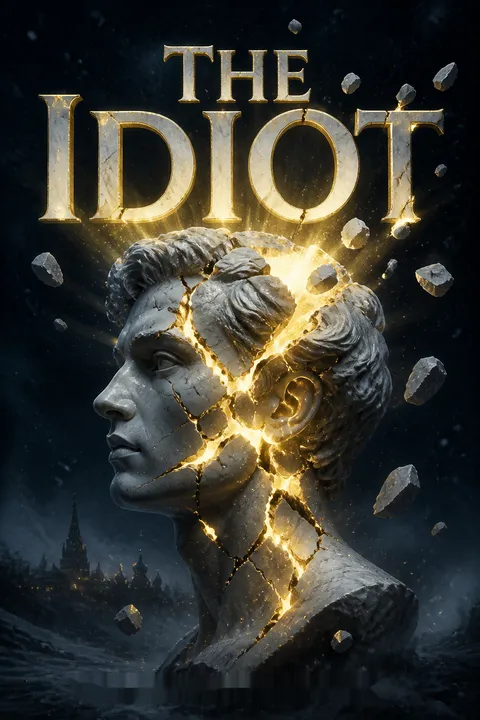

ملخص الحبكة
وصول الأمير الغامض
تبدأ رحلة القطار بتقديم شخصيتين غريبتين. في صباح ضبابي من نوفمبر، يقترب قطار من مدينة سانت بطرسبرغ، يحمل شابين: بارفين روغوجين، رجل ذو عيون نارية وشخصية مكثفة، والأمير ليف ميشكين، روح لطيفة عائدة من سويسرا بعد علاج الصرع. تكشف محادثتهما عن براءة ميشكين وطبيعة روغوجين العاطفية. ميشكين، الذي لا يملك مالاً أو علاقات، في طريقه للقاء أقارب بعيدين، عائلة إيبانشين، بينما يعود روغوجين للمطالبة بميراث. هذا اللقاء يمهد لسلسلة من الأحداث التي تشابكت فيها مصائرهما.
تجمع عائلي متوتر
بيت عائلة إيبانشين يعج بالتوتر. يصل الأمير ميشكين إلى مقر العائلة، حيث يستقبله أفرادها بشك وفضول. تتألف العائلة من الجنرال إيبانشين وزوجته وبناته الثلاث، وهم منخرطون في مأزق اجتماعي يتعلق بزواج محتمل بين ابنتهما أغلايا وخاطب ثري يُدعى جانيا. يخلّ الجو المتوتر حضور ميشكين الصريح والبرئ، حيث تبدأ طبيعته الصادقة ورؤاه غير المتوقعة في كسب ود العائلة رغم تحفظاتهم الأولية.
لعبة الاعترافات
لعبة خطيرة تكشف الحقائق الخفية. خلال تجمع في منزل ناستاسيا، يشارك الضيوف في لعبة يُطلب فيها من كل منهم الاعتراف بأسوأ أفعالهم. اقترح هذه اللعبة فرديشينكو المشاغب، وكانت تهدف إلى التسلية لكنها سرعان ما تحولت إلى جدية. مع كل اعتراف، تظهر الجوانب المظلمة لشخصياتهم وماضيهم. تبرز صدق وبراءة ميشكين بشكل واضح، متناقضة مع تشاؤم الآخرين. هذه اللعبة تمهد الطريق لكشف أعمق وصراعات لاحقة.
دخول روغوجين الدرامي
يصل روغوجين بمقترح صادم. تأخذ الأمسية منعطفاً درامياً عندما يقتحم روغوجين منزل ناستاسيا مع مجموعة من أتباعه الصاخبين. يعلن حبه لناستاسيا ويعرض عليها ثروة مقابل الزواج منه. شغفه المكثف والمتهور يتناقض مع نوايا جانيا المحسوبة، مما يخلق جواً متوتراً ومتقلباً. تجد ناستاسيا نفسها ممزقة بين خاطبين، ويجب عليها أن تقرر مستقبلها. المشهد يبرز قوة الهوس المدمرة وتعقيد الرغبات البشرية.
قرار ناستاسيا الجريء
تتخذ ناستاسيا قراراً يغير مجرى حياتها. أمام احتمال الزواج من جانيا لأجل الأمان أو من روغوجين من أجل الشغف، تختار ناستاسيا قراراً مفاجئاً. ترفض كلا الخاطبين، مفضلة أن تؤكد استقلالها وحريتها. صدم قرارها الجميع، خاصة جانيا الذي شعر بالإهانة والغضب. أما ميشكين، الذي نما لديه تعاطف عميق تجاه ناستاسيا، فشعر بالارتياح والقلق في آن واحد على سلامتها. قرار ناستاسيا يمهد لمزيد من الاضطرابات واستكشاف موضوعات الحب والحرية وتدمير الذات.
الميراث غير المتوقع للأمير
يتلقى ميشكين خبر ميراث ضخم. وسط الفوضى، يصل خبر ميراث كبير من قريب بعيد إلى ميشكين. هذا الكشف يغير مكانته الاجتماعية ويعقد علاقاته، حيث يتفاعل من حوله بمزيج من الحسد والانتهازية. الميراث يضيف أبعاداً جديدة، ويجبر ميشكين على مواجهة تعقيدات الثروة وتأثيرها على حياته وقيمه.
إعلان أغلايا الجريء
تظهر أغلايا تمردها واستقلالها. تلتقي أغلايا بالأمير ميشكين وتكشف عن رغبتها في الهروب من توقعات عائلتها. تعبر عن إحباطها من الضغوط الاجتماعية ومحاولات عائلتها تزويجها. تعلن أغلايا بشجاعة نيتها الهروب واتباع طريقها الخاص، طالبة دعم الأمير. عزيمتها على تأكيد استقلالها تبرز صراعها مع الأعراف الاجتماعية.
الزفاف الذي لم يحدث
ينتهي يوم زفاف ناستاسيا بالفوضى. رغم محاولات الأمير المضي قدماً في زواجه من ناستاسيا، يكتنف اليوم توتر شديد. مع اقتراب الحفل، تبدو ناستاسيا مضطربة بوضوح. في اللحظة الأخيرة، تهرب مع روغوجين، تاركة الأمير مهاناً ووحيداً. الحضور الذين تجمعوا لمشاهدة الحدث يصابون بالصدمة، ويتدهور سمعة الأمير أكثر.
نوايا روغوجين المظلمة
يؤدي هوس روغوجين إلى مأساة. مدفوعاً بحبه الهوسي لناستاسيا، يأخذها روغوجين بعيداً، لكن نواياه بعيدة عن النبل. يشعر الأمير بالخطر ويتبعهم إلى سانت بطرسبرغ. تتدهور الحالة العقلية لروغوجين مع ازدياد سيطرته وبارانوياه. الأمير، خائفاً على سلامة ناستاسيا، يصر على العثور عليها ومنع وقوع كارثة.
اكتشاف مأساوي
يجد الأمير ناستاسيا ميتة. في لقاء مروع، يعثر الأمير على جثة ناستاسيا بلا حياة في منزل روغوجين. غمره الحزن والرعب، ويواجه روغوجين الذي يعترف بالقتل. يبقى الأمير بجانب روغوجين في حالة صدمة، غير قادر على استيعاب المأساة التي حدثت. الرجلان، المرتبطان بحبهما لناستاسيا، يواجهان عواقب أفعالهما.
تبعات الجنون
تنهار صحة الأمير العقلية. بعد الأحداث الصادمة، تتدهور الحالة النفسية للأمير ميشكين بسرعة. يُعاد إلى سويسرا للعلاج، لكن تحسنه ضئيل. تتصالح عائلة إيبانشين وتزوره، لكن أغلايا قد تزوجت من كونت بولندي. قصة الأمير المأساوية تقدم درساً تحذيرياً عن الحب والهوس وهشاشة العقل البشري.
الشخصيات
الأمير ليف ميشكين
مراقب بريء ومتعاطف. يعود الأمير ميشكين إلى روسيا بعد سنوات من العلاج للصرع، وهو رجل لطيف وطيب القلب. براءته وصدقه تجعلان الآخرين يقللون من شأنه، لكن فهمه العميق للطبيعة البشرية يكشف عن بصيرة نادرة. تفاعلاته مع عائلة إيبانشين وناستاسيا فيليبوڤنا تبرز دوره كبوصلة أخلاقية في عالم مليء بالخداع والطموح.
بارفين روغوجين
خاطب عاطفي ومتهور. روغوجين شاب ثري مدفوع بحب مكثف ومتهور لناستاسيا فيليبوڤنا. هوسه بها يدفعه لاتخاذ قرارات جريئة وخطيرة، منها عرض ثروة مقابل الزواج. طبيعته المتقلبة وتجاهله للأعراف الاجتماعية تجعله شخصية قوية، متناقضة مع هدوء ميشكين.
ناستاسيا فيليبوڤنا
جميلة غامضة ومتمردة. ناستاسيا امرأة جميلة ومعقدة ذات سمعة مثيرة للجدل. ذكاؤها وسرعتها في الرد يجذبان من حولها، لكن ماضيها وصراعاتها الداخلية تضفي عليها هالة من الغموض والمأساة. تفاعلاتها مع ميشكين تكشف عن هشاشتها ورغبتها في اتصال حقيقي، بينما رفضها لجانيا وروغوجين يظهر تصميمها على التحكم في مصيرها.
جانيا إيفولجين
طموح ومتناقض. جانيا شاب ممزق بين رغبته في الثراء وضميره الأخلاقي. مرتبط بزواج محتمل من ناستاسيا لأجل المال، يعاني من صراعات داخلية بين الخجل والطموح. تفاعلاته مع ميشكين وناستاسيا تكشف عن صراعه الداخلي والضغوط الاجتماعية التي تحرك أفعاله.
الجنرال إيبانشين
رب عائلة نافذ وعملي. الجنرال إيبانشين رجل قوة ونفوذ، يهتم بالحفاظ على مكانة عائلته الاجتماعية. نهجه العملي في الحياة يتصادم أحياناً مع وجهات نظر الآخرين المثالية. تفاعلاته مع ميشكين وناستاسيا تكشف عن مخاوفه العميقة بشأن المستقبل والخيارات التي يجب أن تتخذها عائلته.
أغلايا إيبانشين
شابة فخورة ومستقلة. أغلايا، أصغر بنات عائلة إيبانشين، تتميز بإرادتها القوية ورغبتها في الاستقلال. تفاعلاتها مع ميشكين تكشف عن علاقة معقدة، حيث تصارع مشاعرها تجاهه وتوقعات عائلتها. تمردها وعزمها على رسم طريقها الخاص يسلطان الضوء على موضوعات الحب والحرية واكتشاف الذات في الرواية.
ليزبيثا بروكوفيفنا
أم قلقة وحامية. ليزبيثا قلقة بشدة على مستقبل ابنتها أغلايا والشائعات حول علاقتها بالأمير ميشكين. تدفعها غريزتها الأمومية للبحث عن الوضوح وحماية أغلايا من الفضائح المحتملة. قلقها يعكس صراعها بين توقعات المجتمع واستقلالية ابنتها.
يفغيني بافلوفيتش
مراقب عملي وبصير. يقدم يفغيني منظوراً عقلانياً للأحداث، معترفاً بسذاجة الأمير وطبيعة علاقاته المدمرة. ملاحظاته تسلط الضوء على الضغوط والتوقعات الاجتماعية التي تسهم في المأساة.
أدوات الحبكة
لعبة الاعترافات
تكشف الحقائق الخفية وعيوب الشخصيات. لعبة الاعترافات، التي اقترحها فرديشينكو، تعمل كأداة سردية لكشف أسرار الشخصيات وأخطائهم الأخلاقية. من خلالها، يكتسب القارئ فهماً أعمق لتعقيدات كل شخصية والضغوط الاجتماعية التي تواجهها. كما تمهد الاعترافات لصراعات وتحالفات مستقبلية، حيث يتعامل الأبطال مع عواقب أفعالهم الماضية.
الميراث غير المتوقع
يغير مكانة ميشكين الاجتماعية. كشف الميراث يعمل كعنصر محوري في الحبكة، يغير علاقات ميشكين ويضيف أبعاداً جديدة للقصة. يتحدى قيمه ويجبره على مواجهة تعقيدات الثروة وتأثيرها على حياته. كما يشعل الصراعات، حيث يتفاعل من حوله بحسد وانتهازية، كاشفين عن طبيعتهم الحقيقية.
الأحلام والرؤى
ترمز للصراع الداخلي والاضطراب. أحلام ميشكين تمثل استعارة لصراعاته العاطفية والخط الفاصل بين الواقع والخيال. تعكس هذه الرؤى مخاوفه ورغباته، وتوفر نافذة على نفسيته وتنبئ بالأحداث القادمة. تسلط الضوء على استكشاف الرواية للوعي الباطن وتعقيد المشاعر الإنسانية.
الرسائل كأداة سردية
تكشف الحقائق والدوافع الخفية. رسائل ناستاسيا إلى ميشكين تشكل أداة حبكة حاسمة، تكشف عن صراعاتها وهوسها الداخلي. تعمق هذه الرسائل فهم القارئ لعلاقتها المعقدة مع ميشكين وأغلايا، وتؤكد موضوعات الحب والغيرة وتدمير الذات في الرواية.
الزفاف
رمز للتوقعات الاجتماعية والصراع الشخصي. الزفاف يعمل كمحفز للمأساة المتصاعدة، مبرزاً الصراع بين الأعراف الاجتماعية والرغبات الشخصية. يسلط الضوء على الصراع الداخلي للأمير واستحالة التوفيق بين حبه لأغلايا وناستاسيا.
الجنون
استكشاف لهشاشة العقل البشري. موضوع الجنون يتخلل السرد، ويبلغ ذروته في انهيار الأمير العقلي. يقدم تعليقاً على القوة المدمرة للحب والهوس، والخط الرفيع بين العقلانية والجنون.
التحليل
استكشاف عميق للطبيعة البشرية. رواية "الأبله" لفيودور دوستويفسكي تغوص في تعقيدات المشاعر الإنسانية، التوقعات الاجتماعية، وهشاشة العقل. من خلال شخصية الأمير ميشكين، يستعرض دوستويفسكي التوتر بين البراءة والفساد، التعاطف والهوس. استكشاف الرواية للحب والحرية وتدمير الذات يقدم درساً تحذيرياً عن مخاطر الرغبات غير المنضبطة والضغوط الاجتماعية التي تشكل حياتنا. السرد المعقد وتطوير الشخصيات الغني يقدم انعكاساً خالداً على الحالة الإنسانية، متحدياً القراء للتفكير في المعضلات الأخلاقية التي تحدد وجودنا.
قرأ الآخرون أيضًا

الأسئلة الشائعة
Synopsis & Basic Details
What is The Idiot about?
- Return of a Prince: Prince Myshkin, after years in a Swiss sanatorium for epilepsy, returns to Russia to navigate a world of complex social relationships and moral dilemmas.
- Entanglement in Love: He becomes entangled in a love triangle with the troubled Nastasia Filippovna and the proud Aglaya Epanchin, each representing different facets of beauty and societal expectations.
- Clash of Innocence and Corruption: Myshkin's inherent goodness and naiveté clash with the ambition, greed, and moral compromises of the Russian society he encounters, leading to tragic consequences.
Why should I read The Idiot?
- Psychological Depth: Dostoevsky masterfully explores the inner lives of his characters, revealing their unspoken motivations, psychological complexities, and emotional vulnerabilities.
- Moral and Philosophical Themes: The novel grapples with profound questions about faith, morality, societal corruption, and the nature of beauty, offering a thought-provoking reading experience.
- Complex Character Dynamics: The intricate relationships between the characters, marked by love, jealousy, and manipulation, create a compelling and emotionally charged narrative.
What is the background of The Idiot?
- 19th-Century Russia: The novel reflects the social and political climate of 19th-century Russia, including the rise of nihilism, the clash between traditional values and modern ideas, and the influence of Western thought.
- Dostoevsky's Personal Experiences: Dostoevsky's own experiences with epilepsy, poverty, and political radicalism inform the novel's themes and character portrayals, adding depth and authenticity to the narrative.
- Social Commentary: The novel critiques the moral decay and materialism of Russian society, exposing the hypocrisy and corruption that lie beneath the surface of wealth and privilege.
What are the most memorable quotes in The Idiot?
- Beauty Will Save the World: This iconic quote encapsulates Myshkin's belief in the transformative power of beauty, though its meaning remains open to interpretation and debate within the novel.
- Compassion is the Law: Myshkin's emphasis on compassion as a guiding principle highlights his moral philosophy and his desire to alleviate the suffering of others, even at his own expense.
- Two Minutes of Life: Myshkin's reflection on the condemned man's experience underscores the preciousness of life and the horror of capital punishment, revealing Dostoevsky's own moral convictions.
What writing style, narrative choices, and literary techniques does Fyodor Dostoevsky use?
- Psychological Realism: Dostoevsky delves into the inner thoughts and emotions of his characters, using stream-of-consciousness and interior monologue to reveal their psychological complexities.
- Polyphonic Narrative: The novel features multiple voices and perspectives, creating a dynamic and multi-layered narrative that challenges the reader to interpret events from different viewpoints.
- Symbolism and Foreshadowing: Dostoevsky employs recurring symbols and subtle foreshadowing to hint at future events and deepen the novel's thematic resonance, adding layers of meaning to the narrative.
Hidden Details & Subtle Connections
What are some minor details that add significant meaning?
- Myshkin's Gaiters: Symbol of Unworldliness: Myshkin's un-Russian gaiters, noted upon his arrival, subtly emphasize his outsider status and detachment from societal norms, highlighting his innocence and vulnerability.
- The Swiss Landscape: Echoes of Inner Peace: The Swiss landscape paintings in the Epanchin's home, admired by Myshkin, subtly connect to his past and the relative peace he experienced in Switzerland, contrasting with the turmoil of Russian society.
- Rogojin's Father's Coat: Inherited Darkness: Rogojin's wearing of his father's old coat when first encountering Nastasia Filippovna foreshadows the inherited darkness and destructive tendencies that define his character and fate.
What are some subtle foreshadowing and callbacks?
- The Guillotine Story: Foreshadows Violent End: Myshkin's detailed account of an execution foreshadows the violent climax of the novel, hinting at the destructive potential lurking beneath the surface of society.
- Abbot Pafnute's Signature: Symbol of Lost Faith: Myshkin's calligraphy of Abbot Pafnute's signature, a seemingly minor detail, subtly foreshadows the theme of lost faith and the search for spiritual meaning in a secular world.
- The Silver Cross: Ironic Exchange of Fates: The exchange of crosses between Myshkin and Rogojin, a gesture of brotherhood, ironically foreshadows their intertwined destinies and the tragic consequences of their shared obsession.
What are some unexpected character connections?
- Lebedeff and the Apocalypse: Unexpected Intellectual Depth: Lebedeff's knowledge of the Apocalypse, initially presented as comical, reveals a surprising intellectual depth and connects him to the novel's broader themes of faith, morality, and societal decay.
- General Ivolgin and the Past: Faded Glory and Lies: General Ivolgin's fabricated stories of his past, though often dismissed as drunken ramblings, reveal a longing for recognition and a distorted sense of self-importance, highlighting the theme of societal disillusionment.
- Nastasia and the Epanchin Girls: Secret Admiration and Connection: The rumor of Nastasia's secret relations with the Epanchin girls, though unlikely, hints at a hidden connection and a shared understanding of societal constraints, blurring the lines between seemingly disparate characters.
Who are the most significant supporting characters?
- Lebedeff: The Unreliable Narrator: Lebedeff, with his mix of cunning, sentimentality, and knowledge of the Apocalypse, acts as an unreliable narrator, providing insights into the characters and themes while also distorting the truth for his own gain.
- Colia Ivolgin: The Voice of Reason: Colia, despite his youth, often provides a voice of reason and moral clarity, offering insightful observations and challenging the hypocrisy of those around him.
- Hippolyte Terentyev: The Nihilistic Confessor: Hippolyte, the consumptive youth, serves as a mouthpiece for nihilistic ideas and a critique of societal values, challenging the reader to confront uncomfortable truths about life, death, and suffering.
Psychological, Emotional, & Relational Analysis
What are some unspoken motivations of the characters?
- Aglaya's Rebellious Streak: Desire for Authenticity: Aglaya's rebellious behavior stems from a deep-seated desire for authenticity and a rejection of societal expectations, driving her to seek genuine connection and meaning in her life.
- Rogojin's Possessive Love: Fear of Abandonment: Rogojin's possessive love for Nastasia is rooted in a deep-seated fear of abandonment and a desperate need for validation, leading him to destructive actions.
- Nastasia's Self-Destructive Tendencies: Seeking Punishment and Release: Nastasia's self-destructive tendencies are driven by a desire for punishment and a twisted sense of redemption, stemming from her past trauma and societal condemnation.
What psychological complexities do the characters exhibit?
- Myshkin's Epilepsy: Heightened Perception and Vulnerability: Myshkin's epilepsy is not merely a physical ailment but a source of heightened perception and spiritual insight, as well as vulnerability and social alienation.
- Rogojin's Duality: Love and Hate Intertwined: Rogojin's character embodies a complex duality, torn between passionate love and destructive hatred, reflecting the internal conflicts and moral ambiguities of human nature.
- Nastasia's Internal Conflict: Pride and Self-Loathing: Nastasia's character is defined by a constant internal conflict between her pride and her self-loathing, leading to erratic behavior and a tragic inability to find peace.
What are the major emotional turning points?
- Myshkin's Public Confession: Exposure of Inner Self: Myshkin's public confession of love for both Aglaya and Nastasia marks a turning point, exposing his inner turmoil and setting the stage for the tragic climax.
- Nastasia's Rejection at the Altar: Loss of Hope and Control: Nastasia's rejection of Myshkin at the altar signifies a complete loss of hope and control, leading to her final descent into madness and self-destruction.
- Rogojin's Confession of Murder: Descent into Madness: Rogojin's confession of Nastasia's murder marks his final descent into madness, highlighting the destructive power of obsession and the tragic consequences of unchecked passion.
How do relationship dynamics evolve?
- Myshkin and Aglaya: Idealization and Disillusionment: The relationship between Myshkin and Aglaya evolves from initial idealization to eventual disillusionment, as Aglaya's pride and societal expectations clash with Myshkin's unconventional nature.
- Myshkin and Rogojin: Brotherhood and Rivalry: The bond between Myshkin and Rogojin is characterized by a complex mix of brotherhood and rivalry, driven by their shared love for Nastasia and their contrasting moral philosophies.
- Nastasia and Rogojin: Obsession and Destruction: The relationship between Nastasia and Rogojin is defined by obsession and destruction, as Rogojin's possessive love ultimately leads to tragedy and Nastasia's inability to escape her past.
Interpretation & Debate
Which parts of the story remain ambiguous or open-ended?
- The Nature of Myshkin's "Idiotism": Innocence vs. Incapacity: The extent to which Myshkin's "idiocy" is a source of wisdom or a limitation remains ambiguous, prompting debate about the nature of innocence and its role in a corrupt world.
- Aglaya's True Feelings: Love, Pity, or Contempt: Aglaya's true feelings for Myshkin are never fully revealed, leaving room for interpretation about her motivations and the reasons for her ultimate rejection of him.
- Nastasia's Capacity for Redemption: Victim or Manipulator: The question of whether Nastasia Philipovna is a victim of circumstance or a manipulative force remains open to debate, challenging the reader to grapple with her complex and contradictory nature.
What are some debatable, controversial scenes or moments in The Idiot?
- The Game of Confessions: Exploitation or Catharsis: The game of confessions can be interpreted as either a cynical exploitation of personal vulnerabilities or a cathartic exercise in self-revelation, prompting debate about the nature of truth and honesty.
- Myshkin's Offer to Marry Nastasia: Compassion or Paternalism: Myshkin's offer to marry Nastasia can be seen as an act of selfless compassion or a condescending and paternalistic gesture, sparking debate about the ethics of his actions.
- Nastasia's Choice of Rogojin: Agency or Self-Destruction: Nastasia's ultimate choice to run away with Rogojin can be interpreted as an assertion of her agency or a self-destructive act driven by her internal demons, prompting debate about the extent to which she controls her own fate.
The Idiot Ending Explained: How It Ends & What It Means
- Myshkin's Return to Incapacity: Loss of Innocence: Myshkin's final descent into idiocy signifies the tragic loss of innocence and the inability of pure goodness to survive in a world consumed by passion and corruption.
- Rogojin's Acceptance of Fate: Redemption Through Suffering: Rogojin's acceptance of his sentence and his shared vigil with Myshkin suggest a glimmer of redemption through suffering, hinting at the possibility of spiritual transformation even in the face of unspeakable acts.
- The Triumph of Darkness: Critique of Societal Values: The novel's bleak ending serves as a powerful critique of societal values and the destructive forces that undermine human connection, leaving the reader with a sense of profound loss and moral ambiguity.




تحميل PDF
تحميل EPUB
.epub digital book format is ideal for reading ebooks on phones, tablets, and e-readers.








































