
Key Takeaways
1. True inner calm begins with radical self-clarity and value alignment
I believe that this lack of clarity inside us is the fundamental cause of most of our worldly anxieties.
The cost of confusion. When we lack a deep understanding of who we are, we chase external fantasies—fame, money, or relationships—only to find ourselves empty and anxious. True clarity requires looking backward into our childhood and early careers to identify the environments, people, and activities that naturally put us in a state of flow. Without this self-knowledge, we remain reactive, easily thrown off balance by the chaotic traffic of daily life.
Uncovering core values. Our core values act as internal compasses during moments of decision-making. By analyzing past dilemmas where logic clashed with our gut feelings, we can extract our intrinsic guiding principles. These values are not extrinsic rewards like money or fame, but intrinsic rules that dictate how we feel about our actions.
- Freedom and flexibility
- Operating ethically
- Creating high-quality, timeless products
- Curiosity and continuous learning
A dual-purpose soul. Meaning is derived when we align our daily actions with both self-actualization and the service of others. Once we put on our own oxygen mask through self-acceptance, we can find profound joy in making a tangible difference in the lives of those around us. When your work nourishes your soul and helps others, the background noise of anxiety naturally begins to fade.
2. You are not your mind; you must actively tame your involuntary thoughts
Thoughts don’t have the power to become reality.
The wild animal within. Our minds are evolutionary survival machines, constantly scanning for non-existent predators and generating irrational fears. To regain control, we must treat the mind like a tantrum-throwing child: acknowledge its presence but refuse to give it our undivided attention. By recognizing that we are separate from our thoughts, we strip them of their power to dictate our emotional reality.
Identifying cognitive triggers. Anxiety is often sparked by specific external cues—such as tragic news or traumatic memories—that send our thoughts into a tailspin. By recognizing these triggers, we can interrupt the panic cycle using rational self-talk and cognitive reframing.
- Labeling thoughts as passing waves rather than absolute truths
- Using absurd mental counter-examples (like imagining a white elephant) to break the cycle
- Actively reminding ourselves: "I am not my mind; I am beyond it"
The power of Mushin. Entering a state of "no-thought" or flow allows our natural instincts and reflexes to take over. When we stop overthinking and simply throw ourselves into action, we bypass the brain's hesitation and achieve peak performance. Action itself produces the clarity we mistakenly try to find through endless contemplation.
3. Unexpressed emotions fester; release them through play, creation, and connection
I’ve rarely seen a highly expressive person stuck in a constant state of anxiety.
The danger of repression. Bottling up emotions like anger, grief, or fear inevitably leads to psychological distress and psychosomatic physical pain. We must find healthy, non-destructive outlets to let these feelings flow through us rather than letting them accumulate inside. Whether through crying, laughing, or physical exertion, emotional release is vital for maintaining mental equilibrium.
Reclaiming childhood play. Engaging in low-friction creative hobbies—such as doodling, playing an instrument, or knitting—quiets the mind's chatter. These activities release feel-good chemicals and anchor us firmly in the present moment.
- Start small without an agenda or expectation of financial reward
- Revisit eccentric childhood hobbies to rediscover effortless flow
- Focus on the physical act of creation to induce zero-thinking
Defeating the loneliness epidemic. Human beings are hardwired for tribal connection, yet modern technology isolates us in individualistic cocoons. Stepping out of our comfort zones to engage in genuine, in-person conversations is a powerful antidote to chronic anxiety. When we are fully engaged with another human being, our senses are too busy reacting and responding to listen to the anxious noise in our heads.
4. Physical movement, exhalation-focused breathing, and sleep are non-negotiable anchors
Exercise has a more profound and sustained positive effect on mood, anxiety, cognition, energy, and sleep than any pill I can prescribe.
Movement alters mood. The connection between the mind and body is a two-way street; just as emotions dictate our posture, forcing physical movements like smiling or walking can trick the brain into a calmer state. When panic strikes, simply standing up and moving around can break the mental feedback loop of anxiety. We do not need intense, grueling workouts to benefit; simple, low-friction movements throughout the day are enough to shift our mental state.
The exhalation formula. To rapidly down-regulate an agitated nervous system, we must focus on extending our exhales. While inhaling triggers the sympathetic "fight-or-flight" response, long exhales activate the parasympathetic "rest-and-digest" system.
- Inhale for a count of four; exhale slowly for a count of eight
- Stimulate the vagus nerve through deep breathing, cold water splashes, or humming
- Practice Bhramari Pranayama (humming with a closed mouth) to lower heart rate
Establishing daily anchors. We must protect our mental health by prioritizing sleep discipline and establishing a daily "anchor point"—a non-negotiable routine that combines movement and creation. Sticking to a consistent sleep schedule and winding down without screens is our best defense against daily chaos. When the body is well-rested and anchored by routine, the mind is far more resilient to external stressors.
5. Mindful consumption requires strict boundaries against social media and doomsday news
If there is one irrefutable truth in today’s age of social media, it is this: we all oversell our good times and hide our bad times.
The illusion of perfection. Social media feeds are curated galleries of lies and exaggerations that trigger subconscious comparison and feelings of inadequacy. To protect our sanity, we must create emotional distance from the content we consume and view it merely as entertainment. Recognizing that online portrayals are highly edited performances prevents us from developing a sense of lack in our own lives.
Taming the digital feed. We must transition from passive, mindless scrolling to highly structured, time-blocked consumption. By assigning specific slots for social media, we give our minds the space to process information critically.
- Set strict daily time limits on social media apps
- Combine checking feeds with an existing habit, like right after breakfast
- Avoid reaching for the phone on autopilot during transition moments
The math of survival. The modern news cycle weaponizes fear because outrage and panic drive clicks. When doomsday headlines threaten to overwhelm us, we must look at the objective probabilities and realize that statistically, the math of human survival is overwhelmingly in our favor. Reframing negative statistics to focus on positive probabilities allows us to stay informed without falling into despair.
6. Master your communication by controlling your tone, response times, and ego
The biggest problem with communication is the illusion that it has taken place.
The power of tone. Communication breakdowns rarely stem from what we say, but rather how we say it. Raising our voice or using aggressive language immediately triggers defensiveness in others, whereas an assertive yet calm tone invites cooperation. Even in difficult situations, keeping our tone respectful ensures that our message is heard rather than drowned out by emotional noise.
The rules of response. In an era of instant messaging, we must resist the pressure to be constantly available. Delaying our responses to emotionally charged messages allows us to act with rational clarity rather than impulsive anger.
- Respond urgently only if the matter is genuinely urgent for you
- Use the appropriate medium: move complex or sensitive topics from chat to phone calls
- Sleep on provocative messages for at least 24 hours before replying
Praise and apology. Leading our interactions with genuine praise disarms tension and fosters mutual respect. Similarly, mastering the difficult art of a sincere apology—without adding defensive excuses—mends broken relationships and instantly restores our own peace of mind. By prioritizing resolution over winning arguments, we protect our mental energy from the drain of prolonged conflict.
7. Postpone judgment by cultivating curiosity and stepping out of echo chambers
Be curious, not judgmental.
Curious first, judgment later. When confronted with triggering situations or shocking information, our default instinct is to react with immediate outrage. By training ourselves to pause and ask questions first, we allow nuance and context to override our emotional knee-jerk reactions. Postponing judgment keeps our minds calm and prevents us from being manipulated by sensationalized narratives.
Escaping the echo chamber. Modern algorithms isolate us in digital echo chambers that reinforce our biases and demonize alternative viewpoints. To maintain a resilient, independent mind, we must actively seek out perspectives that challenge our deeply held beliefs.
- Listen to opposing viewpoints with an open, non-judgmental mind
- Engage in conversations with people of differing social or political ideologies
- Trust your gut instinct when a group's ideology begins to feel irrational
Mindful information seeking. Curiosity must be paired with structured research habits to avoid information overload. We must know exactly where to start our search, dedicate focused time to understanding the material, and know when to stop looking before falling into endless rabbit holes. Setting strict boundaries on our information gathering prevents curiosity from morphing into anxiety-inducing overthinking.
8. Cultivate a taste for quality and aesthetics to quiet your restless mind
Good taste is a love for refinement, quality and nuance.
The calm of aesthetics. Surrounding ourselves with tasteful, well-designed environments and high-quality art has a profound, therapeutic effect on our nervous system. Beautiful spaces and objects activate the brain's reward pathways, inducing a sense of order and tranquility that counters external chaos. Cultivating an appreciation for aesthetics is a powerful form of mental maintenance.
Developing the observation muscle. Cultivating taste is not a matter of wealth, but of deliberate attention and curiosity. By studying the details of exceptional craftsmanship—whether in architecture, literature, or design—we train our minds to appreciate nuance and reject low-effort, trivial distractions.
- Immerse yourself in timeless literature, classical music, and fine art
- Associate with individuals who maintain high standards of quality
- Observe the hidden details of everyday objects and environments
A quiet mind. When we actively engage our taste, we shift our focus from passive consumption to deep, mindful appreciation. This immersive experience silences our inner critic, anchors us in the present, and allows us to experience the world with profound serenity. By choosing quality over quantity in all aspects of life, we build a sanctuary of calm within a chaotic world.
Review Summary
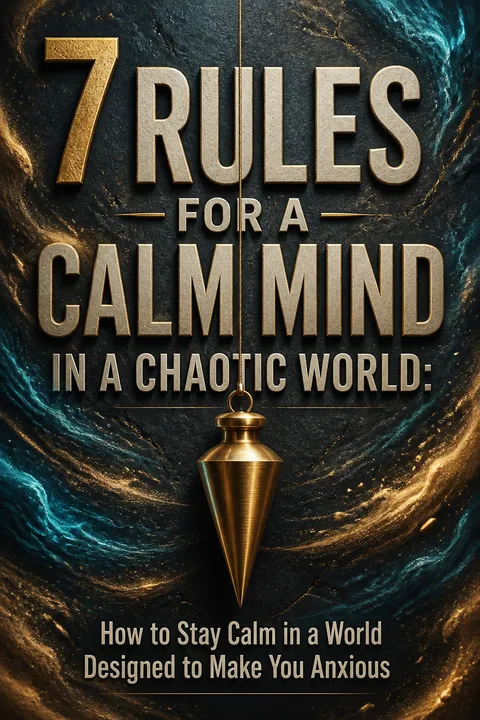
Readers widely praise 7 Rules for a Calm Mind in a Chaotic World as a practical, relatable, and accessible guide for managing anxiety in modern life. Most appreciate the conversational tone, short chapters, and "Points to Remember" summaries. Reviewers highlight the book's dual focus on inner clarity and external noise, particularly around digital habits. Personal anecdotes make the advice feel authentic rather than preachy. The lone critical voice found the guidance too surface-level, but the overwhelming majority consider it a meaningful, returnable resource for mental calm.
Download PDF
Download EPUB
.epub digital book format is ideal for reading ebooks on phones, tablets, and e-readers.








































