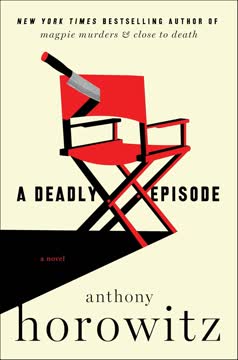
Plot Summary
Murder Behind the Scenes
On the film set in Hastings, what should have been another day of British drama turns catastrophic. Production is already a war zone: over budget, egos clashing, and creative disputes fermenting. But when a young production runner stumbles, wide-eyed and petrified, among costumed extras and props, screaming "He's dead!", illusion and reality cruelly collide. It is Daniel Hawthorne—a detective who should only live on the page—who's found stabbed in his trailer. The shoot screeches to an eerie halt, the performance abruptly exchanged for genuine terror, suspicion, and confusion. The boundaries between fiction and real life spiral out of control—death is suddenly no longer a narrative device, but an inescapable, bloody truth.
The Film Adaptation Deal
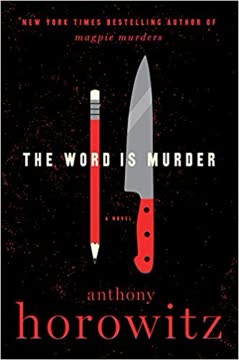
Eighteen months earlier, author Anthony Horowitz is approached by Dandelion Productions about adapting his book The Word is Murder. Negotiations brew tension: who will write the screenplay, who gets creative control—and why does the detective hero, Daniel Hawthorne, suddenly command as much attention as his creator? Both Horowitz and Hawthorne become financial partners in the adaptation, adding layers of rivalry to their already prickly partnership. As film rights are eagerly snapped up and prospects for prestige shimmer, Horowitz feels unmoored; his story and very identity are being handed to strangers. Meanwhile, the grim shadow of future disaster does not escape him—or us.
Table Reads and Tensions
A first in-person meeting among the key players—Horowitz, Hawthorne, agent Hilda Starke, producer Teresa de León, and soon, the appointed screenwriter, Shanika Harris—quickly turns combative. The group's dynamic is unstable: Shanika is wary of crime fiction and banter, and reveals her critical, modern interpretation of the story, re-focusing it on masculinity, banter as façade, and monsters within. Hawthorne's uncanny, Sherlockian deductions unsettle Shanika, revealing her activist life in exacting detail. Even at this fledgling stage, trust is strained. Hawthorne is both the object of the adaptation and a disruptive, critical presence—already, the truth-versus-fabrication tension at the heart of the project surfaces.
Casting Shadows
Months pass without word, until Horowitz is sent a draft of Shanika's script—one that twists both him and Hawthorne into less flattering, even poisonous, versions. As funding crystalizes and a director—Cy Truman—is hired, dreams of A-list casting (Cumberbatch, Hiddleston, et al.) fall flat. The film will instead star David Caine as Hawthorne (methodical, volatile, haunted) and Ralph Seymour as the "writer" (nervous, unraveling). But Seymour arrives a shell of his former star self, broken by past humiliations; Caine is an unpredictable firebrand. The actors' chemistry, and the ghosts of past feuds and trauma, guarantee further turmoil as the film and reality begin to mirror one another.
On Set in Hastings
Horowitz visits the set, only to witness a whirlwind of chaos and bruised egos. The director and actors are locked in battle over lines and authority; the script distorts reality to the point where Horowitz barely recognizes his own story. Hawthorne is on-hand as "consultant," his advice preferred over Horowitz's. The cast and crew are worn down; tears, gossip, and backstabbing fill the production tent. Horowitz himself is unsettled by the staged version of himself—a tracksuit-clad, greasy shadow. The actors' off-camera rapport is toxic, and authentic tension festers beneath every scene.
The Fatal Production
Central to both book and adaptation is a scene: a fatal car accident involving children. The day's filming is fraught with delays, egos, and creative arguments. At the height of this emotional tempest, chaos erupts—David Caine, the star, is found stabbed in his Winnebago. The murder is not merely an interruption, but a full stop—transforming film fantasy into actual crime. Immediate suspicion falls everywhere: resentful cast, fired crew, a simmering producer, Hawthorne's shadowy presence, and a history of secrets. The set becomes a contained whodunit—a locked room murder in full public view.
Chaos on The Battle Set
The post-shooting drinks at "The Battle" pub are fraught with tension. Teresa grapples with financial collapse, Cy and Ralph rehash past slights, and a production assistant, Izzy, mourns being fired after angering the lead actor. Personal histories and alliances spring leaks: old romances, activism, activism-as-PR, blackmail over BAFTA secrets, and dangerous entanglements between activism and careerism. The pub setting echoes the collision of personal vendetta and professional façade. By night's end, the group is shattered—old wounds fueling a cauldron of future violence.
The Star's Bloody Exit
Hawthorne and Horowitz return to a locked-down, police-infested set. Detective Superintendent Milnes leads the investigation, but brings Hawthorne in as unofficial expert. The evidence rapidly unfurls: Caine was texting his brother before dying. The murder weapon is traced to a curious local connection. Everyone on set is a suspect or has an alibi that bristles with half-truths. The police work systematically, but Hawthorne leaps into unorthodox lines of inquiry, interviewing shell-shocked runners, bitter agents, and resentful actors. The boundaries between staged and real violence are now permanently blurred.
Suspects and Secrets
The investigation divides among key suspects: Izzy the fired runner; James Aubrey the agent, hiding financial stress and angry text exchanges; Teresa the desperate, half-broke producer; director Cy, old wounds still raw; screenwriter Shanika with activist idealism and personal betrayals; Ralph battered by old trauma; and a web of secondary crew with motives or resentments. Each interview reveals new layers of long-held jealousy, blackmail, career sabotage, or lingering ideological betrayal. Caine's own double life comes under scrutiny, while the set's toxic environment makes everyone's story unreliable.
The Actor's Tragic Past
The core of the emotional narrative is Ralph Seymour, an actor whose career was ruined years before by an infamous BAFTA stage disaster. His connection to Caine is revealed as both adversarial and tragic: friendship, competition, love triangles, and betrayal compounded over the years. Hidden in the backstory: Caine's calculated act of sabotage (allergy-triggering pills disguised as painkillers), the collapse of Seymour's career, and Seymour's self-loathing and exile. The deeply personal nature of both actors' grievances shows how old wounds long precede the murder, and makes Seymour both a fitting suspect and a tragic figure.
Investigation and Revelation
Hawthorne, with Horowitz constantly a step behind, peels back layers of past crimes—from the recent murder to a cold case years earlier at Foss Hall, involving a complex web of loyalties, confessions, and cover-ups. The investigation uncovers the lengths to which humans will go to protect family, to absolve beloved children, or to take the blame for the innocent. It exposes the lies we tell detectives, each other, and ourselves to keep our stories intact, even if it means letting the wrong person pay. The detectives' own partnership is tested by mutual suspicion.
Old Wounds, Fresh Motives
Digging deeper, the story travels to Foss Hall, Yorkshire, where years earlier Hawthorne's intervention cleared a young man of blackmail and murder. The investigation, past and present, reveals that seemingly obvious confessions can be self-sacrifices to protect one's children; that 'villains' may themselves be the real victims. The legal and social machinery, content with confessions and clear cases, fails to see the invisible hand of love, grief, and loss that truly motivates violence. Hawthorne is forced to confront his own missteps, including the price of doing the "right" thing at the wrong time.
The Ghosts of Foss Hall
In retelling how Harry Morgan confessed to a murder he did not commit (to spare his autistic daughter, the true accidental perpetrator), the story forces a reckoning with ethics, guilt, and the devastation of "justice" wrongly aimed. Morgan's confession—calculated, meticulous, heartbreaking—is contrasted with the real cost: his own suicide in prison and the emotional ruination of his wife, Deborah. Foss Hall stands as a microcosm: a family's secrets, a detective's doubts, and the collapse of the fairytale of country gentility. Hawthorne faces lingering guilt over missed clues and innocence lost.
Veiled Truths in Reeth
Shifting focus to Reeth, the investigation uncovers Hawthorne's own boyhood, marked by loss, secrecy, and erasure. The village is modelled as an idyll with sinister undertones: a school burned down, records destroyed, secrets so deep even modern technology cannot uncover them. Horowitz's search for Hawthorne's childhood becomes an existential detective quest—truth here is suppressed by actors more powerful than any villain in fiction. The past resists exposure; institutions bury their own shame; and identity can be rewritten—or erased—by those in power.
Unraveling Family Ties
The shards of Hawthorne's origins are pieced together—adoption, brief refuge at Foss Hall, familial tragedy. The interplay between found family (like the Ratcliffes), absent parents, and the charitable interventions of power-brokers like Dr. Morton reveal how the powerless, even Hawthorne, can be at the mercy of society's whims. The detritus of scandal and trauma hide in plain sight in English villages and families alike. Hawthorne is both detective and lost child—his understanding of innocence and guilt shaped by personal history, not just logic or law.
The Confession that Wasn't
A key piece: the letter left by Harry Morgan, only revealed after the death of his daughter. Morgan's "confession" is laid bare as a deliberate act of self-immolation—to shield his own child, a truly innocent killer, from the justice system and a world unkind to difference. The real murderer, known only within the family, is mourned rather than blamed. The priestly, legal, and investigatory authorities all stand powerless against the self-sacrifice at the core of parental love. The lesson: that confession, evidence, and forensic certainty are frail next to the truths people carry to the grave.
Motive, Means, Opportunity
Back in Hastings, all motives are thrown back onto the table: professional jealousy, broken hearts, personal betrayal, crumbling finances, ideological hypocrisy. For each suspect, the moment of murder is unreachable or the motive insufficient. But a careful revisit of texts, CCTV, and overlooked details leads to a new realization. Technology, narrative misdirection, and the crucial telltale sign—a steak knife at a vegan activist's lunch—rewire the logic of the crime and reveal the killer in the least expected place.
Closing Time
The truth explodes: the killer is not an actor, agent, or director, but the pub landlady Deborah Morgan—widow of the man who sacrificed himself years earlier. The real motive is grief and twisted justice; Deborah blames David Caine's activism (and performative hypocrisy) for her husband's suicide. When she learns Caine is a fraud, eating steak after killing her family's future as a vegan eco-martyr, she exacts vengeance with the very knife of his betrayal. This catharsis, delivered in her own confessional, marks her own final, voluntary sentence.
My Mistake
As the dust settles, Horowitz and Hawthorne debrief on the train, exposing not just the secrets of the case but their own bruised partnership. Horowitz is wounded by Hawthorne's cold rationalism and by franchise-like surveillance of his every move—even the author's private notes are not his own. The line between author and character, detective and narrator, is mercilessly bloodied. Hawthorne reminds us truth is elusive, justice is flawed, and even in fiction, "you make a lot of mistakes." Their journey is a wound: one always steps ahead, one forever chasing, neither wholly at peace.
Analysis
At its most impactful, A Deadly Episode is a kaleidoscopic meditation on storytelling, justice, and the blurred boundaries between performance and reality. Through its labyrinthine plot, it destabilizes traditional hierarchy: the author is not omniscient, the detective is not infallible, and even the victim is not purely innocent. The book interrogates how trauma and truth are edited, erased, or exaggerated by people and institutions alike—be it in the British justice system, the film and publishing industries, or the narratives families tell themselves to survive the unspeakable. Motives for murder are shown to be always overdetermined: jealousy and ambition overlay primal grief and the need for catharsis, leaving even the detectives morally unsettled. Hawthorne's own quest for the "correct story" is revealed as tragic, his pursuit always just missing what matters most—the cost of love, the burden of sacrifice, the wounds that fiction (and law) cannot heal. In our era of surveillance, performance, and meta-narratives, Horowitz's adaptation is not simply a whodunit, but a commentary on who gets to tell the story—and what is forever left unsaid.
Review Summary
A Deadly Episode receives mostly positive reviews, with an overall rating of 4.14/5. Fans praise the witty meta-fictional premise — a murder occurring on the film set adapting the series' first book — and the sharp, humorous dynamic between Hawthorne and Horowitz. Many highlight this as Hawthorne's most personal case yet, offering glimpses into his mysterious past. Common criticisms include a slow opening, disjointed pacing, and an occasionally unconvincing resolution. Despite mixed feelings about the plot, most readers remain devoted to the series and eagerly anticipate future instalments.
People Also Read

Characters
Anthony Horowitz
As narrator and unwilling protagonist, Horowitz is both the experiencer and interpreter of events: an established author rattled by his own adaptation's distortions and by the messy realities of a murder that echoes the narratives he normally controls. His psychological journey is shaped by feelings of marginalization—overshadowed by the detective he writes about, cast as a bystander even in stories "about" him, and increasingly troubled by boundaries between fiction and reality. His efforts to understand Hawthorne, his own shifting identity, and the actual murder draw out his anxieties, insecurities, and a persistent need to narrate—anchored to the deep tension between authorial control and helpless fascination.
Daniel Hawthorne
Hawthorne's role oscillates between quirky, Holmesian sleuth and a deeply wounded child forged by abandonment and family trauma. He is rational but profoundly human, sacrificing social warmth for the dogged pursuit of uncomfortable truths. His relationships with others are transactional, often unpleasant, masking a deeply personal vulnerability. His development in the narrative emerges through glimpses into his own secretive past, his capacity for both empathy and unsparing logic, and his persistent, almost obsessive, need for stories to be told "correctly"—even when those stories bear his own scars.
Teresa de León
Teresa is the driving force behind the adaptation—a charismatic but increasingly unravelled leader, beset by financial stress after the death of her father and by mounting production crises. Her motivations are multifaceted: the desire for artistic prestige, validation, survival. As personal and professional disasters accumulate, she becomes both suspect and victim—a woman caught in the crosshairs of capitalist expectation, creative compromise, and emotional exhaustion, drifting between hope and collapse.
David Caine
A complex figure, Caine is by turns a charismatic, gifted actor, a political activist, and a monstrous manipulator. His outward persona of progressive activism belies narcissism, cruelty, and a tendency toward sabotage—whether emotional, professional, or literal (as in the BAFTA allergy incident). Caine is at the nexus of every major conflict: adored, envied, hated, and at last murdered for the dissonance between who he is and who he performs. In death, his true nature becomes the Rosetta Stone of the entire mystery, exposing the follies and furies of those orbiting him.
Ralph Seymour
Haunted, even destroyed, by past trauma—his infamous public collapse at the BAFTAs, sabotaged in secret by Caine—Seymour returns to England adrift, hoping for professional resurrection. He is an emotional open wound, his humiliation echoed in every gesture. His tangled relationship with Caine, a mixture of hero worship, resentment, and latent rivalry, places him at the center of suspicion and tragedy. Seymour embodies the vulnerability of fame: its short memory for triumphs, its cruel inability to let go of shame.
Shanika Harris
The whip-smart, confrontational screenwriter, Shanika, brings her own ideology and skepticism to the adaptation, resisting genre clichés and demanding emotional depth over traditional plotting. Her previous relationship with Caine (and the aftermath) complicate her involvement. Her idealism—vegan, green, anti-masculine—collides tragically with Caine's revealed hypocrisy. As her faith is ruptured, she is propelled toward grief, rage, and withdrawal from the production, her own stability undermined by betrayal.
Izzy Mays
Izzy represents the innocence and ambition of the young worker in the creative industries—crushed by hierarchical power dynamics and arbitrary decisions. Her enthusiasm is weaponized against her: fired for a trivial misstep, later traumatized by discovering Caine's corpse. Her simultaneous proximity to and distance from the film's central figures highlights the predation and callousness endemic to fragile creative circles.
James Aubrey
Aubrey is the archetype of the crumbling power-broker: concealing financial ruin under fake luxury, clinging to lost clients, and making ominous threats to maintain what little remains of his influence. His presence within the narrative is slippery—sometimes asserting innocence, at other times implicated by bloody evidence. The true nature of his lies reveals the classic survival instinct of those rendered obsolete by business shifts and personal misjudgments.
Cy Truman
Once a creative visionary, now a director weighed down by compromise and old grudges, Cy is at the mercy of both economic realities and emotional betrayals. His own affair with Caine becomes an act of manipulation, fueling blackmail and resentment. For Cy, the film set is both personal battlefield and professional purgatory.
Deborah Morgan
Initially cast as peripheral—wife of a falsely imprisoned man—Deborah's story crescendos in the final act. Grief-stricken, embittered by judicial failure and her daughter's death, she harbors a well of anger and unyielding resolve. When she learns of Caine's hypocrisy, she channels a lifetime of loss into one final act of catharsis: vengeance by knife. Her eventual confession is motivated not by guilt, but by the need to reclaim her own system of justice.
Plot Devices
Nested Mysteries and Meta-Fiction
The book's structure is a puzzle box: a murder on a film set re-enacting a book, itself inspired by real events. This recursive narrative loops the reader through repeated investigations—Horowitz's original mystery, the film's adaptation, the real murder on set, and finally the detective's efforts to solve both past (Foss Hall) and present crimes. This elegant layering of fictions destabilizes the reader's sense of "truth," making the act of storytelling itself both subject and object of suspicion.
Misdirection and the Unreliable Narrator
The plot is thick with red herrings: a dozen viable suspects, each with credible means and motive, their own histories shrouded in trauma, vendetta, professional rivalry, or heartbreak. Horowitz himself becomes an unreliable narrator, his perspective blinkered by his own insecurities, blindness to detail, and Hawthorne's manipulation. The use of technology—text messages, voice-to-text, iPad notes—becomes both clue and trap, hiding the truth in plain sight.
Character Doppelgängers and Performance
The doubling of Hawthorne and Horowitz—both in life and as played by actors in the film—creates a psychological hall of mirrors. Truth and representation blur, as do past and present. Actors become suspects, suspects become actors; the performance is always on, even in matters of life and death.
Institutional Critique and Thematic Irony
Throughout, legal and moral institutions are lampooned for their blindness to psychological complexity, their desire for neat solutions, and their indifference to genuine harm. "Confession" is a performance, not proof. The entertainment machine, too, is shown as a place where people eat each other alive, where truth is secondary to saleable narrative and image.
Technological Clues and Surveillance
Technology is both tool and snare: the killer is caught by digital voice-to-text messages coded with physical clues; Horowitz's own notes are spied upon by Hawthorne via iPad hackery. Surveillance—on the street, on set, even on the train—reveals that privacy and truth are never as secure as we'd like to believe.
Emotional Catharsis and Motivated Violence
The ultimate revelation—that murder is committed not from professional rivalry, greed, or fleeting rage, but from the volcanic pressure of injustice and loss—reframes the entire story. Justice is not always a system, but sometimes the desperate, private act of the powerless.