
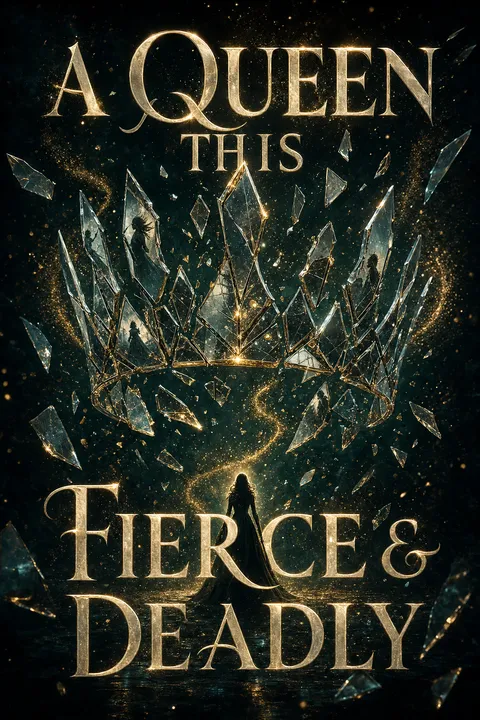


Plot Summary
Prologue
On the battlefield where the barrier between kingdoms is about to fall, Regner7 and his allies raise a hidden mirror. When the fae king Conreth9 unleashes his power to break the enemy line, the glass hurls it back, and Prisca's1 cousin Zathrian8 neutralizes her time magic at the fatal instant. The reflected blast strikes Lorian2 in the chest, freezing him to ice before he bursts into thousands of shards.
Screaming, Prisca1 clutches the hourglass at her throat and does the one thing forbidden to her kind: she drags time backward, tearing power from the marrow of her own soul. The gods demanded the Bloodthirsty Prince's2 death. She refuses to accept it, willing his scattered pieces back into one breathing body.
The opening stages the series' central moral wager: love against cosmic law. Prisca's choice is not heroism in any tidy sense but transgression, a mortal overruling divine bookkeeping. Stark frames time magic as soul-fuel, making the rescue self-cannibalizing, which converts a triumphant reunion into a debt. The mirror is a resonant device, turning power back on its wielder, an image of consequence itself. Zathrian's neutralization introduces betrayal-by-blood before we even know him. Crucially, the prologue withholds the price rather than the act, so the reader enters the novel already knowing the heroine cheated fate and dreading the invoice. Grief and defiance fuse into the emotional engine that drives everything after.
The Powerless Queen Wakes
Prisca1 surfaces from a three-day coma to a body that no longer hums with time magic. In the gap between life and death she met two women with her exact amber eyes: her murdered mother and her city-cursing grandmother, who condemned her defiance as forbidden yet poured slivers of their own souls into her to keep her breathing. Revived, Lorian2 refuses to leave her side.
When she confesses to her aunt Telean14 that she turned time backward to reclaim her mate,2 Telean14 recoils, insisting her ancestors would be ashamed. Prisca1 refuses to repent. Conreth,9 who dealt the killing blow, is hollowed by guilt and finally offers Lorian2 a genuine alliance, handing over his generals and agreeing to train Kaliera's6 powerful son, Jamic.17
The aftermath weaponizes silence: Prisca's missing magic reads as the gods' bill, and her refusal to feel guilt curdles into denial. Stark stages family as tribunal, with Telean's disgust wounding more than any enemy. The dead mother and grandmother function as split conscience, one gentle and one ruthless, mapping Prisca's own future selves. Conreth's remorse humanizes a former antagonist and models the book's recurring pattern of reconciliation through catastrophe. Powerlessness becomes psychological rather than merely tactical, seeding the later revelation that her wound is self-inflicted. The scene establishes the true stakes: not whether she can win the war, but whether she can survive what winning it required.
Kaliera Hunts the Grimoire
Regner's7 estranged queen, Kaliera,6 sneaks into the Lyrishade mine where thousands of chained monsters strain against their bonds. Her aide Pelysian22 hauls her out before discovery, but guards close in. Her loyal servant Nelia deliberately draws them off and is cut down, her broken body rolling back to Kaliera's6 feet.
Pelysian22 reveals the true prize is a grimoire Regner7 guards, a book of dark magic that fuels his lies and lets him steal power. Obsessed with ruling and desperate to reunite with her captive son Jamic,17 Kaliera6 resolves to return to the castle and take it, brushing off Pelysian's22 warnings. Learning the barrier has fallen and Jamic17 is safe, she dreams of a future where she and her son17 rule the continent together.
Kaliera's thread runs parallel to the heroes as a study in ambition uncooled by suffering. She is intelligent, calculating, and monstrously self-justifying, treating Nelia's loyalty as a resource to be spent. Pelysian's grim line about consequences echoes the grandmother's warning to Prisca, binding the two women as mirror studies: both defy limits, but one loves and one merely wants. The chained monsters foreshadow Regner's true weapon and the coming slaughter. Kaliera's maternal love is real yet corrosive, the one crack in her armor and the lever others will use. Stark lets us inhabit villainy from inside, making it comprehensible without excusing it.
Stillcrest's Camp Burns
Sent to check on the rescuer Vicer,15 Madinia3 finds him trapped in a hidden settlement ruled by the stubborn secessionist Kaelin Stillcrest,18 who refuses to let her people flee to safety. When a boy with enhanced hearing warns of hundreds of approaching hooves, the camp has no real evacuation plan. Regner's7 iron guards descend, butchering families.
Madinia,3 who insists she cares for no one, hauls mothers and children into the forest and drives them toward hidden supply caches, memorizing routes as flames and screams close in. A badly burned boy named Darnis dies in her arms despite her fire magic. Vicer15 vanishes fighting the guards alone. The slaughter plants a barbed guilt in Madinia3 and, later, in the absent Prisca.1
This is the novel's crucible for Madinia, whose cultivated coldness is exposed as armor over an unbearable tenderness. Stark stages the horror of leadership without power: fire cannot heal burns, and clever routes cannot outrun cavalry. Stillcrest embodies the paradox of a tyranny of self-determination, a leader who dooms her people while claiming to free them. Darnis's death is the wound that reorganizes Madinia's arc and, transmitted through guilt, warps Prisca's relationship with her own magic. The chapter interrogates the ethics of forced rescue versus consent, refusing easy answers while making the cost of hesitation viscerally clear.
Zathrian's Blood Ultimatum
A charming young aide named Jorvik arrives beside the hybrid general Blynth, and Prisca's1 instincts spike. Pinned by Lorian's2 hand and Blynth's dagger, Jorvik admits he was planted by Prisca's1 cousin Zathrian,8 the rival claimant who commands twenty thousand hybrid soldiers. His message is blunt: cede the crown or die.
The infiltration proves Zathrian8 can reach Prisca1 whenever he pleases, and it rattles her badly. Blynth reads it as a bluff born of weakness, since the hybrid elders no longer favor her cousin.8 Still, the threat crystallizes an unavoidable truth. Prisca1 must eventually kill the man who allied with Regner,7 murdered the envoy she sent to negotiate, and helped orchestrate Lorian's2 death on that mirrored battlefield.
Zathrian's power play is psychological warfare, an assassination of confidence rather than of the queen. Stark uses the infiltration to dramatize how tyranny corrodes trust from within, forcing Prisca to suspect every ally. The scene sharpens the dynastic tragedy at the book's heart: two heirs of the same cursed bloodline, one raised in love and one warped by a father's cruelty. Blynth's reading reframes the threat as desperation, teaching Prisca to read power as performance. The moment also matures her from reactive victim to strategist, accepting that survival will demand she become an executioner of family, a burden she carries with visible dread.
The Blank Pages Trap
Returning to Regner's7 castle behind a flimsy cover story, Kaliera6 dines beside her husband7 and discovers his guests: Zathrian,8 openly plotting the fae's extermination, and Eadric, the spy who freed Jamic.17 That night she slips into Regner's7 bedroom and seizes the grimoire, only to find its pages blank and Regner7 laughing behind her. Her lady Alcandre, who has been sharing his bed, betrayed her.
Regner's7 guards murder her handmaidens one by one to punish her, and she flees through an enchanted mirror to the hovel of the seer Ravynia, Pelysian's22 mother, shattering the glass behind her. Stripped of allies, dignity, and prize, Kaliera6 accepts the humiliating necessity of crawling to the hybrid heir1 simply to reach her son17 again.
Kaliera's downfall is engineered by the same instrumental cruelty she practices, her ladies discarded until one of them repays neglect with betrayal. Stark lands a bleak feminist irony: the women Kaliera failed to protect become the instrument of her fall. The blank grimoire humiliates ambition itself, exposing how far she overreached. Crucially, this defeat repositions the villain-queen as an unstable asset for the protagonists, since only her son can bind her cooperation. Her flight through the fracturing mirror rhymes with the prologue's reflective weapon, threading consequence through glass again. Even brought low, Kaliera remains dangerous precisely because her love and her hunger are inseparable.
The Coin and the Warning
Using a favor-coin owed to the pirate queen Daharak,16 Prisca1 secures an audience with the Gromalian prince Rekja19 in the coastal city Sorlithia, delivering back his kidnapped lover Thora, whom Prisca1 had stolen to sow distrust of Rekja's19 now-dead father.
Grateful, Rekja19 weighs alliance despite Regner's7 veiled threats. There Prisca1 meets Mona,23 Regner's7 defected High Priestess, who delivers the war's darkest revelation: killing Regner7 will not be enough.
The three grimoires belong to a dark god, Calpharos, whose memory and power return with every use of the books. They cannot be destroyed, only hidden by someone incorruptible, or the world is doomed. Meanwhile Daharak16 learns Regner's7 concealed fleet ambushed and sank eight hundred of her ships.
The alliance politics reveal Prisca's uncomfortable pragmatism: she apologizes to Thora for using her, yet uses her again to reach Rekja, embodying the queen's dilemma of loving individuals while spending them for the whole. Mona's revelation vastly enlarges the stakes, converting a war of liberation into a cosmic containment problem and setting up the endgame's true test. Stark plants the incorruptibility clause early, an unmistakable Chekhov's condition. The fleet ambush demonstrates Regner's mastery of misdirection, foreshadowing the larger feint to come. The chapter braids romance, statecraft, and mythic dread into a single tightening knot of consequence.
Sorlithia Falls
Regner's7 general Tymedes besieges Sorlithia with winged skyrions and ground-bound terrovians, granting Rekja19 twenty hours to surrender. Lorian2 incinerates every flying beast with fae fire, nearly draining himself, while Galon11 and the others hold the walls.
The city cannot survive; residents pour into escape tunnels as Prisca,1 still powerless, kills terrovians by hand and Galon11 steers refugees out. Marth12 flings his body between a fae-iron blade and his friend Rythos,13 taking a chest wound that nearly kills him.
Prisca1 beheads a soldier stalking hidden children and drags them to safety through the burning streets. The allies retreat, having bought lives and time, but Lorian2 begins hearing whispers and seeing the soldiers he has slain, an unwelcome gift of his resurrection.
The siege stages the asymmetry of the whole war, overwhelming numbers against extraordinary individuals, and shows the moral texture of retreat: victory measured in evacuees, not ground. Marth's sacrifice deepens the found-family theme and burdens him with survivor's tension, since he mourns Cavis while nearly dying for another. Lorian's haunting introduces the resurrection's price obliquely, blooming into a study of guilt as literal specter. Prisca's hand-to-hand killing of the child-hunter marks her hardening; she discovers a hatred that steadies rather than paralyzes. Stark refuses catharsis, ending on loss and creeping madness rather than heroics, keeping consequence perpetually in the frame.
A Wedding Amid War
Before the alliance scatters, Lorian2 marries Prisca1 in a Gromalian forest so everyone they love can gather one final time. Galon11 officiates with stories that make the grieving company laugh. Conreth9 attends, gifts Lorian2 a fae amulet, and lends Renit, a fae with mimicry magic, in exchange for lasting peace.
Vicer15 stumbles in alive, dragging a broken, repentant Stillcrest18 who begs to fight and atone; Prisca1 slaps her publicly, then embraces her. On the wedding night, the dead soldiers Lorian2 killed manifest to torment him, but his fallen friend Cavis24 guides him to reject his shame and reclaim the Bloodthirsty Prince2 title as a shield for the woman he loves. The specters recede, and the newlyweds steal one night of joy.
Stark deliberately inserts celebration into carnage, arguing that joy is resistance and memory is armor for the battles ahead. The wedding gathers every thread before the great dispersal, functioning as both reward and premonition. Prisca's slap-then-embrace of Stillcrest is a masterclass in queenship as calibrated mercy: public justice, private compassion, satisfying the guilty conscience that craves punishment. Lorian's confrontation with his dead reframes his infamous epithet from stain to shield, an act of self-integration rather than denial. Cavis, lingering to heal the living rather than to accuse, redefines haunting as grace. The chapter insists that identity, forgiveness, and love are the true weapons against tyranny's despair.
The Challenge in the Arena
Disguised by Renit's mimicry to walk into Zathrian's8 camp, Prisca1 reveals herself and formally challenges her cousin,8 while Lorian2 and Marth12 demand the right to face Eadric and his torturer Soltor, the men who murdered Cavis.24 Powerless but relentlessly trained, Prisca1 duels Zathrian8 blade to blade, learning his father nearly killed him for failing to inherit the crown.
She buries a dagger in his gut but cannot finish him, choosing mercy over vengeance. Across the arena, Lorian2 methodically dismantles Eadric while refusing to use magic, and Prisca1 kills Soltor with a thrown knife in Cavis's24 name. The watching hybrid army, freed from Zathrian's8 poison, kneels to their true queen,1 and the wounded cousin8 is spared and healed.
The duel externalizes the dynastic tragedy: two products of the same bloodline, differentiated only by whether they were loved. Zathrian's confession invites pity without absolution, and Prisca's mercy is framed later as strength rather than weakness, a distinction the book carefully litigates. Lorian's refusal to use power against Eadric transforms vengeance into demonstration, proving to a wary army that his savagery is disciplined choice. The kneeling completes Prisca's legitimacy arc, earned through blood and bravery rather than birthright or magic. Stark stages catharsis for Cavis's murder while refusing bloodlust its full appetite, complicating the reader's satisfaction with a note of restraint.
The Amulet That Lied
Demos,5 Asinia,4 and a chosen squad raid the Lyrishade mine for the third fae amulet, finding it guarded within a warded underground lake swarming with serpent creatures. They break the ward and seize the artifact, losing the fighter Nyrik to the depths, only for the fae healer Gwynara to reveal it is a flawless fake. The true amulet is being smuggled south in a carriage.
They collapse the entire mine with Yan's earth magic, ride the river downstream, and ambush the convoy. Asinia4 baits the shield-wielding guard into wrapping his ward around himself, letting Demos5 snatch the genuine amulet as the last guards burn. Through the ordeal, Demos,5 haunted by dead friends and his fraught reunion with Tor,20 finally lets himself love Asinia.4
Regner's decoy epitomizes his signature strategy, defeating enemies by anticipating their reach and turning their triumphs into wasted motion. The lake sequence renders teamwork as trust made physical, warders and archers keeping one another alive underwater. Nyrik's death, believing himself a hero, poses the chapter's quiet cruelty: sacrifice made meaningful only by ignorance. Asinia's bait exploits the universal instinct toward self-preservation, foreshadowing her later reversal of exactly that instinct. Demos's romance thaws as he stops using guilt to keep love at arm's length, and Tor's presence forces the reckoning with a past he can neither undo nor forgive himself for.
Rythos's Forbidden Gift
On the island of Quorith, Rythos13 and Madinia3 beg his bitter father Verdion and the Arslan council to lend their fleet, exposing Verdion's secret pact with Regner.7
When the council still votes against war, Rythos13 does the thing he swore never to do: he floods every council member with irresistible feelings of friendship, guiding them to vote unanimously for alliance. The effort leaves him vomiting and sick with self-loathing, the proof his father used to justify banishing him as too dangerous.
His enraged brother Brevan throws them both into a cell and extracts a cruel promise that Rythos13 will one day return to serve him. Madinia3 rages against the bars while their friends bleed elsewhere, both prisoners unsure if their gambit will matter in time.
Rythos's arc interrogates the ethics of a power that overrides consent, the same debate Madinia raised over Vicer at Stillcrest's camp. By finally using his gift, he validates his father's fear and grieves the person he wished to be, dramatizing how survival forces us to become instruments we despise. Verdion embodies inherited pettiness masquerading as prudence, a foil to the leaders who choose their people over their pride. Brevan's coercive bargain converts even victory into servitude, deepening the family wound. Madinia's helpless fury behind bars mirrors her powerlessness at the camp, tightening her thematic thread about the agony of watching from the wrong side of a wall.
The Power She Buried
A wounded, imprisoned Zathrian8 reveals two truths to Prisca:1 the gods cannot steal a power they gifted, only hide it, and Regner's7 southern march is a feint. His real target is the Asric Pass, where thousands of vulnerable hybrids flee toward their homeland. Shaken, Prisca1 finally turns inward and discovers her time magic was never gone.
In her shame and grief after the camp massacre, she walled it off with self-loathing, subconsciously accepting powerlessness as the punishment that would spare her loved ones. She lets the poisonous feelings crest and recede, tears down the barrier, and reclaims her magic stronger than before, then races warnings to Demos5 and the others to reach the pass before Regner7 butchers the innocent.
This is the psychological keystone of the novel, converting a magical mystery into a study of self-sabotage and survivor's guilt. Zathrian's theology reframes the gods as tricksters who let mortals imprison themselves, making trauma, not divinity, the true jailer. Prisca's healing arrives not by suppressing her shame but by feeling it fully, a strikingly modern account of processing rather than repressing pain. Reclaiming her power becomes an act of self-forgiveness. Stark simultaneously detonates the plot's central misdirection, transforming an apparent victory march into a race against genocide, and elevates Zathrian from villain to reluctant instrument of truth.
The Stand at the Pass
Demos,5 Asinia,4 Tibris,10 Herne, and Vicer15 rush to the Asric Pass with only a few thousand soldiers, rigging Herne's forest traps and funneling the last refugees through the mountains toward the tunnel to Lyrinore. When Regner's7 ten thousand attack at dusk, they hold a desperate line so mothers, children, and the sick can escape.
Stillcrest18 dies redeeming herself, and Vicer15 forgives her as she bleeds out. Demos5 orders a furious Asinia4 through the pass and stays to hold the mouth, expecting to fall. Instead she scales the cliff and rains arrows down to cover him. Just as their strength gives out, the outlaw Caddaril the Cleaver and his criminals smash into Regner's7 rear guard, buying the exhausted defenders their retreat.
The pass battle distills the war's moral core: the willingness to die defending strangers, the vulnerable rather than the strong. Stillcrest's death completes her redemption arc and grants Vicer release from the guilt planted at her camp, closing a loop of blame with grace. Demos's self-appointed martyrdom and Asinia's defiance of it stage their love as a contest of who gets to sacrifice for whom, foreshadowing the climax. Caddaril's outlaws pay off the seeded misinformation campaign, rewarding earlier planting. Stark keeps the reader in the trench, emphasizing exhaustion, cold, and dwindling supplies, so that heroism reads as endurance rather than glory.
The Last Shore
The armies converge on the peninsula near the hybrid homeland. Prisca1 freezes time so Lorian's2 fae fire can incinerate thousands of terrovians, and the near-extinct Drakoryx led by Vynthar join the fight. Conreth's9 spent fae army arrives, and the traitor warden Sylvielle is exposed as the one who bred Regner7 his monsters; Conreth9 shatters her.
Regner's7 generals collapse from poison, secretly the work of Telean14 and the smuggler Ameri. The human rebel Natan21 staggers in, tortured to death for slowing Regner's7 march, and dies among the friends he saved. Conreth9 hurls himself into a killing blow meant for Prisca1 and falls. The dying elders spend their lives opening the tunnel so the caged hybrids can finally reach Lyrinore.
The convergence rewards nearly every seeded thread, from the Drakoryx to the poison to the elders' sacrifice, demonstrating how a sprawling ensemble can pay dividends at scale. Sylvielle's exposure resolves the mystery of the monsters' origin and lets Conreth complete his redemption through righteous violence. Telean's covert poisoning reframes an old woman as a decisive combatant, honoring intelligence over swordcraft. Natan and Conreth embody the chapter's thesis that heroism is often quiet and self-erasing, buying time and lives at ultimate cost. Stark orchestrates grief and vindication together, refusing to let triumph arrive uncosted, so the climax approaches soaked in both hope and loss.
The Pure-Hearted Sacrifice
Regner7 shelters behind the reflecting mirror, and Tor's20 ward-breaking cannot crack it alone. Asinia4 seizes Daharak's16 god-touched orb, a weapon only the pure of heart can wield without dying, and sprints along the enemy line. Everything between her and the mirror dissolves in white light, the glass finally shatters, and Asinia4 falls lifeless as Demos5 howls over her body.
Prisca,1 screaming with grief, freezes time around Regner7 alone and drives her sword through his chest; in death his stolen youth melts away to reveal his true withered face. Then the orb glows again and, judging her pure, returns Asinia4 to life. Rythos13 and Madinia3 arrive with the risen Arslan fleet, and Daharak's16 ships break Regner's7 navy at last.
The climax fuses the incorruptibility clause, the mirror, the orb, and Prisca's reclaimed magic into a single detonation, rewarding the reader's long accumulation of setups. Asinia's willingness to die inverts her earlier bait tactic that exploited self-preservation, completing her transformation from liability to legend nobody will know. The gods' judgment returning her alive proposes that purity is measured by sacrificial love, not bloodlessness, a pointed rebuttal to Regner's transactional cruelty. His reversion to a withered true self literalizes tyranny as theft made flesh. Stark grants catharsis but stages it through devastation first, ensuring the kill lands as grief-shadowed relief rather than clean triumph.
The Grimoire's Reckoning
With Regner7 dead, his son Jamic17 channels his strange, un-returnable power into Madinia3 so she can wield the dark grimoire. Her eyes blacken as the book's seductive magic claws at her mind, whispering of all the good they could do together, but she refuses to become another Regner.7
Speaking words in a tongue she never learned, she undoes his evil: stolen human power floods back to those it was stripped from, and every enslaved spider is freed of the webs that bound their wills. Elsewhere, Kaliera6 murders Regner's7 general Tymedes but is betrayed by Pelysian,22 who fulfills the dead Nelia's dying wish and has her felled by a poisoned bolt. She dies at her son's17 feet. Bound by blood vow, Zathrian8 is offered a place in the new kingdom.
Madinia's confrontation with the grimoire mirrors Regner's origin and lets her choose the opposite path, defining virtue as the refusal of seductive power rather than its absence. Her restoration of stolen magic reverses the entire premise of the tyranny, a symbolic decolonizing of the self. Kaliera's death, orchestrated by the servant she scorned, completes her tragic circuit of consequence and answers the grandmother's early warning through a different mother. Jamic's grief for a woman who could not stop using him closes the book's meditation on maternal love as both salvation and poison. Zathrian's blood vow institutionalizes mercy with safeguards, marrying forgiveness to prudence in the new order.
Epilogue
Prisca1 is crowned beneath the stars in a homeland she has never truly lived in, mourning the aunt14 and elders who never saw it rise. Lorian2 settles uneasily into kingship, softening before his people until they stop flinching at the Bloodthirsty Prince.2
Conreth9 recovers, and his wife Emara carries the twins that will end his heirless dread. A farewell letter reveals Telean14 chose her own death to spare Prisca1 and Demos5 pain, bargaining with the gods so the young could outlive the old.
Asinia,4 alive and forgiven by Demos,5 opens the shop he secretly bought in her name. And Madinia,3 at last unleashed, boards Daharak's16 ship for distant lands carrying the grimoire, while a watchful stranger named Calysian marks her departure and the seer warns she may yet become a monster.
The denouement trades battlefield spectacle for the harder labor of aftermath: grief interwoven with ordinary joys, paint colors debated, shops opened, letters read. Telean's letter reframes her death as authorship rather than victimhood, a final act of maternal love that answers the guilt Prisca carried from the prologue. Conreth's coming twins literalize the reconciliation of brothers and the future the war purchased. Madinia's departure resists tidy closure, keeping her wildness and the dangerous grimoire in motion, and Calysian's shadow plus the seer's warning deliberately leaves a door ajar. Stark argues that peace is not an ending but a fragile, ongoing choice against the pull of power and despair.
Analysis
Stark's finale is fundamentally about the price of defiance and the labor of self-forgiveness. The prologue's transgression, reversing death itself, seeds a novel-long meditation on consequence, dramatized through Prisca's1 missing magic. That the power was hidden by her own self-loathing rather than seized by the gods reframes the fantasy of divine punishment as a strikingly modern account of trauma: grief and guilt jail us more effectively than any deity, and healing comes from feeling pain fully rather than burying it. The book repeatedly distinguishes mercy from weakness, sacrifice from martyrdom, and purity from bloodlessness, refusing easy moral binaries in a war where every leader must spend the people they love. Its central ethical debate, whether powers that override consent, Rythos's13 persuasion, Madinia's3 fire, Prisca's1 time, may be used for good, is left productively unresolved; the answer the story endorses is that intention and restraint matter more than the power itself, and that the true corruption is Regner's,7 the tyrant who turns theft and lies into governance. Found family is the counterforce to that tyranny: a wedding staged inside a war argues that joy and memory are weapons, and the ensemble's interlocking sacrifices, Telean's14 poison, Natan's21 infiltration, Conreth's9 redemptive shielding, Asinia's4 self-immolation, demonstrate that heroism is usually quiet and self-erasing. The recurring image of the mirror, force reflected back on its wielder, becomes the book's thesis on consequence, while the god-touched orb's judgment redefines a worthy heart as one capable of sacrificial love, a direct rebuttal to Regner's7 transactional cruelty. The ending resists tidy closure: peace is not an ending but a fragile choice renewed daily, and Madinia's3 departure with the undestroyed grimoire keeps the pull of power and despair alive, insisting that liberation, like grief, is ongoing work.
Review Summary
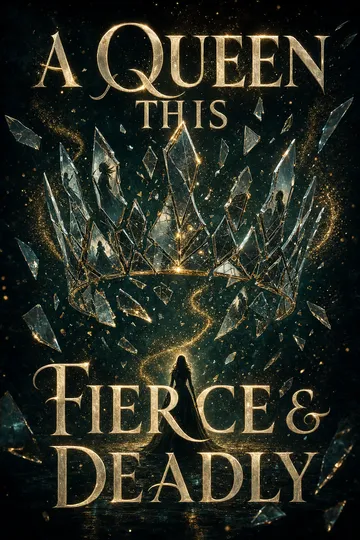
A Queen This Fierce and Deadly receives mostly positive reviews, with readers praising the character development, world-building, and emotional impact. Many consider it a satisfying conclusion to the series, highlighting the battle scenes and multiple POVs. Some criticize the pacing and excessive filler content. The romance and found family aspects are widely appreciated. While some readers felt the series declined after the first book, others rank it among their favorite fantasy series. Overall, the book evokes strong emotions and leaves a lasting impression on many readers.
People Also Read
Characters
Prisca (Nelayra)
Hybrid queen, time-wielderRaised as a human village girl, Prisca discovers she is the hybrid heir, wielder of forbidden time magic channeled through an hourglass. Fierce, stubborn, and reflexively self-sacrificing, she throws her body between danger and anyone she loves, a trait that makes her both a beloved queen and a liability to herself. Her defining wound is guilt: over choices that cost lives, over defying the gods for love, over feeling unworthy of the crown and the mate she adores2. She distrusts her own power and second-guesses her mercy. Across the story she learns that worth does not equal magic, that grief must be felt rather than buried, and that leadership means spending people she loves while refusing to become the tyrant she fights7.
Lorian
Fae warrior, devoted mateOnce the feared mercenary known across the continent as the Bloodthirsty Prince, Lorian is a lightning-and-fire-wielding fae who gave up his royal title to stand beside Prisca1. Grumpy, possessive, and lethally protective, he masks decades of guilt beneath sardonic control. With Prisca1 he reveals a startling tenderness and a rare, joyous smile. His arc wrestles with the weight of everyone he has killed, the strain of watching his mate1 risk herself, and a fractured bond with his brother Conreth9. He learns to reframe his violent reputation as a shield rather than a shame, to trust his wife's1 strength even when it terrifies him, and to imagine a future beyond war.
Madinia
Fire-wielder, reluctant heartA former court lady of Regner's7 palace, Madinia wields devastating fire and a razor tongue. She insists she cares for no one and dreams only of escaping the continent for a new life, yet again and again she risks everything to save others. Her cultivated coldness is armor over a raw, easily wounded tenderness, and she despises how thoroughly Prisca's1 friendship made her care. Pragmatic to the point of ruthlessness, she advocates for using any weapon at hand, including powers others find monstrous. Her journey tests whether she can accept love and belonging rather than treating feeling as weakness, and whether freedom means running from people or toward them.
Asinia
Archer, loyal best friendPrisca's1 childhood best friend from their village, Asinia is a gifted archer and aspiring seamstress with an uncanny, almost magical accuracy. Gentle where others are hardened, she has survived Regner's7 dungeon and emerged determined to matter, to be remembered as brave and worthy rather than a burden. She tucks away rage and grief to examine later, a coping habit that makes her steady under fire. Her deepening love with Demos5 gives her a future to fight for. Asinia embodies the quiet heroism the novel prizes: courage without spectacle, the willingness to spend herself utterly for the people she loves without craving recognition for it.
Demos
Hybrid general, Prisca's brotherPrisca's1 older brother by blood, Demos endured nearly a year in Regner's7 dungeon watching friends he led be executed, a trauma that made him a brilliant, ruthless strategist consumed by self-blame. Physically imposing and coldly logical in battle, he softens only around those he loves. He is overprotective to a fault, forever trying to sacrifice himself so others need not. His reunion with his old friend Tor20 reopens old guilt, and his slow-building love for Asinia4 forces him to imagine laying down his sword and simply living. Demos learns that being more than a general, a man who chooses peace and love, is the harder and truer victory.
Kaliera (The Queen)
Scheming captive queenRegner's7 estranged wife, Kaliera is a coldly brilliant survivor who spent decades caged beside a tyrant7 and dreams of ruling in his place beside her son. Manipulative, proud, and utterly self-justifying, she treats loyalty as currency and other people as tools, even those who love her. Her single genuine attachment is to her son Jamic17, the one crack in her armor. Ambition, not conscience, drives her, and she consistently mistakes cunning for wisdom. She serves as the novel's cautionary mirror to Prisca1 and Madinia3: another woman who defies limits, but one whose love has curdled into hunger, incapable of the sacrifice that redemption would require.
Regner (Sabium)
Immortal tyrant kingThe centuries-old human king who rules through stolen power, manufactured lies, and religious terror, Regner harvests magic from his own people and twists fae creatures into weapons. A master of misdirection, he anticipates his enemies and turns their triumphs into traps. Beneath his amused cruelty lurks fear of the hybrids and the god-touched grimoire he wields. He is the fixed evil the whole continent orbits, the architect of every character's grief.
Zathrian
Rival heir, Prisca's cousinPrisca's1 blood cousin, a hybrid with the power to neutralize and sense time magic, Zathrian was raised to be king by a father who nearly killed him for failing. Bitter and power-hungry, he allied with Regner7 and commands twenty thousand hybrid soldiers. Charming, calculating, and desperate for the throne he believes was stolen from him, he carries a wound of never being loved for himself, which makes him both dangerous and, at moments, unexpectedly sympathetic.
Conreth
Fae king, Lorian's brotherThe powerful, formal king of the fae lands and Lorian's2 estranged older brother, Conreth long prioritized his crown over his family, a choice that fractured their bond. Arrogant and controlling, he keeps a mimicry-fae decoy for protection and struggles to admit fault. Devastated by the harm his pride has caused, he seeks genuine reconciliation with Lorian2 and a true alliance with the hybrids, learning that being a brother matters more than being a king.
Tibris
Healer, Prisca's brotherPrisca's1 human foster brother and a gifted healer, Tibris is warm, selfless, and endlessly devoted to caring for others, often at his own expense. He discovers his healing power was far greater than he believed, limited only by the barrier and his own grief. His tender, secret love for the rebel leader Herne gives him something of his own to fight for and to protect.
Galon
Steady fae water-wielderA powerful fae warrior who was a father figure to Lorian2, Galon is calm, disciplined, and unshakeable under pressure. He wields water with lethal precision and trains Prisca1 relentlessly. His steadiness anchors the group in chaos, and his quiet confidence in Prisca1 bolsters her when her own fails. He becomes the one entrusted to protect her when Lorian2 cannot.
Marth
Grieving fae fighterOnce the group's irrepressible jokester, Marth has turned grim and joyless since the death of his friend Cavis24, consumed by guilt he cannot release. Fiercely loyal and formidable in battle, he must learn to mourn rather than blame himself. His bond with Cavis's24 daughter Piperia offers a path back toward the man he used to be.
Rythos
Charming fae persuaderA warm, easygoing fae of the island people the Arslan, Rythos possesses a power to inspire irresistible friendship, a gift he refuses to use for fear of what it makes him. Estranged from his bitter father, he has long believed he was unjustly banished. Prisca's1 first true hybrid friend, he carries old grief over a lost love and must confront whether his dangerous power can serve good.
Telean
Prisca's fierce auntPrisca1 and Demos's5 aunt and their closest link to their murdered mother, Telean is gruff, principled, and devoted. A former royal seamstress who once loved a man lost to invasion, she holds firm beliefs about the gods and the limits of power, which put her at odds with Prisca's1 choices. Beneath her sternness lies fierce, self-sacrificing love.
Vicer
Hybrid rescuer, rebelA resourceful hybrid who spent years smuggling his people out of Regner's7 cities, Vicer is compassionate, principled, and haunted by every life he cannot save. He refuses to use coercion even when it might spare lives, a stance that costs him dearly. Loyal to Prisca1 and shaped by the mother-figure Margie who raised him.
Daharak
Pragmatic pirate queenThe shrewd, swaggering queen of a vast pirate fleet, Daharak allied with Prisca1 to bring down the barrier and free herself from the continent. She has private enemies and a long-hunted weapon of her own. Blunt, self-interested but honorable, she keeps her word and sees more clearly than most, dispensing hard truths with a pirate's ease.
Jamic
Powerful young heirKaliera's6 son, forced by Regner7 to carry immense stolen power, Jamic emerged from suffering with startling strength and a fundamentally good heart. Grave beyond his years, he loves his mother6 while grasping her flaws, and he trains to wield his unusual magic. His goodness and his power make him both a hope and a target in the new order.
Kaelin Stillcrest
Stubborn camp leaderThe proud secessionist leader of a hidden hybrid settlement, Stillcrest rules her people while claiming to free them, refusing outside help and dooming them through pride. Confronted by catastrophe, she is forced to reckon with the cost of her choices and seeks a way to atone for the lives lost under her leadership.
Rekja
Reluctant Gromalian kingThe newly bereaved prince turned king of Gromalia, Rekja was long a puppet of his tyrannical father. In love with the guard Thora, he genuinely cares for his people and must decide whether to defy Regner7. Honorable and cautious, he risks everything by choosing the right side of a war he cannot avoid.
Tor (Torinth)
Ward-breaker, Demos's old friendA hybrid with the rare power to diminish personal wards and once like a brother to Demos5, Tor survived the betrayal that doomed their friends and blames Demos5 for it. Now a father, he resists being drawn back into war until conscience overrides fear.
Natan
Human rebel from homeA friend from Prisca's1 destroyed village, Natan leads humans who infiltrate and sabotage Regner's7 army from within, undertaking perhaps the hardest and most thankless role of the war: betraying the soldiers he lives among to slow the tyrant's7 march.
Pelysian
Seer's son, Kaliera's aideKaliera's6 outwardly loyal aide and the son of the seer Ravynia, Pelysian possesses acute hearing and quiet purpose. He guides events from the shadows according to his mother's foresight, carrying grief and a resolve harder than the queen he serves6 realizes.
Mona
Defected High PriestessRegner's7 High Priestess who secretly worked against him, honoring her dead mother's failed rebellion. Able to hide her true self from truth-seekers, she carries the war's most crucial knowledge about the grimoires and the dark god they serve.
Cavis
Fallen friend, guiding presenceA beloved member of Lorian's2 group killed before the story begins, Cavis remains present in memory and grief, a father whose daughter Piperia the others cherish. His steady kindness continues to shape those he left behind.
Plot Devices
The Hourglass
Channels forbidden time magicAn ancient artifact worn at Prisca's1 throat that focuses her rare power to slow, stop, and even reverse time. Turning time backward is forbidden and self-consuming, burning away pieces of the wielder's soul, which is why the gods forbid it. The hourglass frames the novel's central bargain: the prologue's resurrection of Lorian2 sets the plot in motion, and Prisca's1 fraught relationship with the device, its loss, its recovery, and its tactical use in battle, tracks her psychological journey from guilt to acceptance. In the climactic battles it becomes decisive, letting her freeze enemies so allies can strike, culminating in the single frozen instant that lets her kill the tyrant7.
The Grimoire
Source of stolen powerOne of three books into which a dark god poured his knowledge and magic, the grimoire is how Regner7 steals human power, transfers it, and lies with supernatural ease. It cannot be destroyed, and every use draws the dark god Calpharos closer to reclaiming it, which turns even victory into peril. The book drives Kaliera's6 obsession, underpins the priestess Mona's23 dire warning that killing Regner7 is not enough, and poses the endgame's true test: it must be taken and hidden by someone incorruptible. Its seductive whisper of limitless good makes it a temptation as much as a weapon, testing whoever dares to open it against becoming the next tyrant.
The Reflecting Mirror
Bends power back on enemiesA god-given artifact that reflects magical attacks and reinforces Regner's7 personal ward against all power, rendering him and his generals nearly untouchable. Introduced catastrophically in the prologue, where it turns the fae king's9 blast back to kill Lorian2, the mirror recurs as the physical embodiment of consequence, throwing force back on its wielder. Kaliera6 escapes through a linked enchanted mirror. In the final battle it is the shield that must be shattered before Regner7 can be reached, making its destruction the literal precondition for ending the war and the target of the climax's greatest sacrifice.
The Three Fae Amulets
Keys to breaking wardsAncient artifacts gifted to the fae by a god, the amulets amplify their bearers' power and are essential to overwhelming Regner's7 defenses. The alliance holds two while hunting the third, hidden in a monster-breeding mine, which turns out to have been swapped for a flawless decoy and smuggled away. Their gathering drives a major quest, and their distribution among the most powerful fae, Lorian2, Galon11, Conreth9, and later others, structures the climactic assault on the mirror. They also test trust: deciding who is worthy to wield such power becomes a running political and personal question among allies.
The God-Touched Orb
Weapon only the pure may wieldA rumored, immensely destructive blue weapon that the pirate queen Daharak16 hunted for years, only to learn it can be wielded without dying solely by someone pure of heart. Introduced early as a tantalizing mystery and passed to Madinia3 for safekeeping, the orb embodies the novel's meditation on purity and sacrifice. Because everyone who has killed seems disqualified, it appears useless, which makes its eventual use a profound test of the difference between bloodlessness and sacrificial love. Its climactic deployment shatters Regner's7 mirror and interrogates what the gods truly measure when they judge a heart worthy.
FAQ
Synopsis & Basic Details
What is A Queen This Fierce and Deadly about?
- Forbidden love and defiance: The story centers on Prisca, a hybrid queen, who defies the gods by using forbidden time manipulation to save her mate, Lorian. This act sets off a chain of events that tests her strength, loyalty, and the very fabric of her world.
- Political intrigue and war: The narrative is set against a backdrop of political maneuvering and a looming war, as Prisca and her allies must navigate treacherous alliances and face powerful enemies. The fate of multiple kingdoms hangs in the balance.
- Personal sacrifice and growth: The book explores themes of personal sacrifice, as Prisca and her companions must make difficult choices that have far-reaching consequences. It also delves into the characters' emotional journeys, as they grapple with loss, love, and the weight of their responsibilities.
Why should I read A Queen This Fierce and Deadly?
- Intense emotional depth: The book offers a deeply emotional experience, exploring themes of love, loss, and sacrifice with raw honesty. Readers will connect with the characters' struggles and triumphs.
- Complex characters and relationships: The story features a cast of complex characters with nuanced motivations and evolving relationships. Readers will be invested in their journeys and the dynamics between them.
- High-stakes fantasy world: The book is set in a richly detailed fantasy world with high stakes and political intrigue. Readers will be drawn into the action and the challenges the characters face.
What is the background of A Queen This Fierce and Deadly?
- Magical and political conflict: The story is set in a world where magic is a powerful force, and political alliances are constantly shifting. The conflict between humans, hybrids, and fae is a central element of the narrative.
- Ancient prophecies and gods: The book incorporates elements of ancient prophecies and the interference of gods, adding a layer of complexity to the characters' struggles. The gods' demands and the consequences of defying them are a recurring theme.
- Cultural and historical influences: The story draws on various cultural and historical influences, creating a unique and immersive world. The political structures, social hierarchies, and magical systems are all intricately woven into the narrative.
What are the most memorable quotes in A Queen This Fierce and Deadly?
- "In another life.": Lorian's final words before being frozen by Conreth's power, highlighting the depth of their love and the tragedy of their separation. This quote encapsulates the theme of love transcending even death.
- "In every life, wildcat. No matter what happens, you hold on to that. It's you and me in every life.": Lorian's promise to Prisca, emphasizing the enduring nature of their bond and their connection across time and space. This quote is a testament to their unwavering love.
- "Change the world, granddaughter. And heal our kingdom.": Prisca's grandmother's words, a call to action that underscores the weight of responsibility and the potential for change. This quote highlights the themes of legacy and the power of individual choices.
What writing style, narrative choices, and literary techniques does Stacia Stark use?
- Dual perspectives and shifting POVs: Stark employs dual perspectives, primarily focusing on Prisca and Lorian, but also shifting to other characters to provide a broader view of the events. This technique allows readers to understand the motivations and emotions of multiple characters.
- Fast-paced and action-driven: The narrative is fast-paced and action-driven, with frequent battle scenes and moments of high tension. This keeps readers engaged and invested in the characters' struggles.
- Foreshadowing and callbacks: Stark uses foreshadowing and callbacks to create a sense of interconnectedness and to hint at future events. This technique adds depth and complexity to the narrative, rewarding careful readers.
Hidden Details & Subtle Connections
What are some minor details that add significant meaning?
- The hourglass: The hourglass, initially just a tool for Prisca's time manipulation, becomes a symbol of her defiance and the consequences of her actions. Its presence is a constant reminder of the delicate balance between life and death.
- The color amber: The recurring color of amber, particularly in the characters' eyes, symbolizes their shared heritage and the connection between Prisca, her mother, and her grandmother. It also represents the power they wield.
- The sea serpents: The sea serpents, initially presented as a threat, become a symbol of the fae kingdom's power and the ancient magic that protects it. Their connection to the fae and their role in the war add a layer of depth to the world-building.
What are some subtle foreshadowing and callbacks?
- Ysara's warning: Ysara's warning to Prisca about not being able to keep Lorian foreshadows the challenges and sacrifices Prisca will face in her relationship. It also hints at the larger forces at play.
- The seer's prophecy: The seer's prophecy about the Bloodthirsty Prince's death foreshadows Lorian's demise and Prisca's desperate attempt to save him. It also highlights the theme of fate versus free will.
- The grimoire's power: The grimoire's power is foreshadowed through its influence on Sabium and the way he uses it to manipulate others. This foreshadowing creates a sense of dread and anticipation for the moment when the grimoire is finally used.
What are some unexpected character connections?
- Pelysian and Nelia: The connection between Pelysian and Nelia, revealed through his grief at her death, adds a layer of complexity to his character and highlights the personal cost of war. It also shows that even seemingly minor characters have their own stories and relationships.
- Torinth and Demos: The shared history between Torinth and Demos, revealed through their childhood friendship and shared trauma, adds depth to their characters and highlights the long-lasting impact of war. It also shows that even those who seem to have moved on are still haunted by their past.
- Sylvielle and Regner: The connection between Sylvielle and Regner, revealed through her betrayal, highlights the insidious nature of power and the way it can corrupt even those who seem to be on the side of good. It also shows that even those who seem to be allies can be enemies in disguise.
Who are the most significant supporting characters?
- Telean: Prisca's aunt, Telean, serves as a mentor and a voice of reason, offering guidance and support. Her warnings about the dangers of time manipulation and her eventual sacrifice highlight her wisdom and selflessness.
- Galon: Lorian's friend and advisor, Galon, is a loyal and steadfast presence, offering support and guidance. His strategic mind and unwavering loyalty make him a valuable ally.
- Marth: Lorian's friend and confidant, Marth, is a complex character who grapples with his past and his role in the war. His loyalty and his willingness to sacrifice himself for others make him a compelling figure.
Psychological, Emotional, & Relational Analysis
What are some unspoken motivations of the characters?
- Lorian's fear of loss: Lorian's overprotectiveness of Prisca stems from his deep-seated fear of losing her again. His actions are driven by a desire to keep her safe, even if it means sacrificing his own well-being.
- Kaliera's desire for control: Kaliera's actions are driven by a need to control her own destiny and to protect her son. Her desire for power is rooted in her fear of vulnerability and her determination to never be a victim again.
- Zathrian's need for validation: Zathrian's alliance with Regner is driven by a need for validation and recognition. His desire for the throne is rooted in his belief that he is the rightful heir and that he deserves to be in power.
What psychological complexities do the characters exhibit?
- Prisca's guilt and responsibility: Prisca grapples with the guilt and responsibility of her actions, particularly her use of time manipulation. She struggles to reconcile her desire to protect her loved ones with the consequences of her choices.
- Lorian's internal conflict: Lorian struggles with his identity as the Bloodthirsty Prince and his desire to be a better man for Prisca. He grapples with his past and his fear of losing control, making him a complex and compelling character.
- Demos's survivor's guilt: Demos is haunted by the loss of his friends and family, and he struggles with survivor's guilt. His actions are driven by a need to protect those he cares about and to make amends for his past.
What are the major emotional turning points?
- Lorian's death and resurrection: Lorian's death and Prisca's desperate attempt to bring him back is a major emotional turning point, highlighting the depth of their love and the lengths they are willing to go to for each other.
- The loss of Telean: Telean's death is a major emotional turning point, highlighting the sacrifices made in the war and the personal cost of leadership. It also serves as a catalyst for Prisca's determination to end the war.
- Asinia's sacrifice: Asinia's sacrifice is a major emotional turning point, highlighting the themes of loyalty and selflessness. Her actions demonstrate the power of friendship and the willingness to give everything for a greater cause.
How do relationship dynamics evolve?
- Prisca and Lorian's bond: Prisca and Lorian's relationship evolves from a passionate connection to a deep, enduring love. They learn to trust and rely on each other, their bond becoming a source of strength and resilience.
- Prisca and Telean's relationship: Prisca and Telean's relationship evolves from a strained connection to a deep bond of love and respect. They learn to understand and appreciate each other, their relationship becoming a source of guidance and support.
- Demos and Asinia's connection: Demos and Asinia's relationship evolves from a shared trauma to a deep, enduring love. They learn to trust and rely on each other, their bond becoming a source of strength and resilience.
Interpretation & Debate
Which parts of the story remain ambiguous or open-ended?
- The nature of the gods: The true nature of the gods and their motivations remain ambiguous, leaving readers to question their role in the characters' lives and the larger events of the story.
- The future of the hybrid kingdom: The future of the hybrid kingdom and its relationship with the other kingdoms remains open-ended, leaving readers to wonder what challenges and opportunities lie ahead.
- The long-term consequences of time manipulation: The long-term consequences of Prisca's time manipulation remain ambiguous, leaving readers to ponder the potential impact on the world and the characters' lives.
What are some debatable, controversial scenes or moments in A Queen This Fierce and Deadly?
- Prisca's use of time manipulation: Prisca's decision to use time manipulation to save Lorian is a controversial moment, raising questions about the ethics of defying fate and the consequences of such actions.
- Kaliera's actions: Kaliera's actions, particularly her betrayal of her own people, are controversial, raising questions about the nature of power and the lengths people will go to for survival.
- The ending: The ending, with the loss of Asinia and the ambiguous future of the characters, is open to interpretation and debate, leaving readers to ponder the true cost of victory and the nature of sacrifice.
A Queen This Fierce and Deadly Ending Explained: How It Ends & What It Means
- Regner's defeat and the return of power: The ending sees Regner defeated, and the stolen power returned to the humans. This signifies a victory for the oppressed and a step toward a more just world.
- The sacrifice of Asinia: Asinia's sacrifice to destroy the mirror is a bittersweet moment, highlighting the cost of war and the selflessness of those who fight for a better future. Her death is a reminder that even in victory, there is loss.
- The promise of a new beginning: The ending offers a glimpse of hope for the future, with Prisca and Lorian working to rebuild their kingdom and create a better world for all. The ending is a testament to the resilience of the human spirit and the power of love and unity.
Kingdom of Lies Series
About the Author

Download PDF
Download EPUB
.epub digital book format is ideal for reading ebooks on phones, tablets, and e-readers.








































