Key Takeaways
1. America's Unique Constitutional Framework Shapes Its Electoral Landscape
The electoral process serves as the link between the people and their government.
Foundational principles. American democracy is defined by two core constitutional characteristics: the separation of powers with checks and balances, and federalism. Unlike parliamentary systems where the executive emerges from the legislature, the U.S. president, legislators, and sometimes judges are elected separately, often with different terms, creating distinct electorates and making it difficult to assign clear accountability for policy outcomes. This intricate design, while ensuring checks on power, complicates the direct translation of public will into governmental action.
Complex accountability. The federal system further decentralizes power, reserving significant authority to individual states, each with its own elected government. This means citizens vote for a multitude of officials—federal, state, and local—often simultaneously on a "long ballot." This complexity can lead to voter "falloff," where citizens focus on top-tier races like the presidency and neglect less salient contests, making it challenging to forge a clear connection between votes cast and the policies enacted by lower-office holders.
Fixed terms. Another unique feature is the fixed terms for all elected offices, meaning elections occur on a set schedule regardless of political crises or public opinion shifts. This contrasts sharply with systems allowing votes of no confidence or snap elections, ensuring stability but also limiting the electorate's immediate ability to express discontent or consent to evolving governmental policies. These structural choices, while taken for granted by many Americans, profoundly influence how elections are run and how effectively citizens can hold their leaders accountable.
2. The Electoral College: A Legacy of Compromise, A Source of Modern Distortion
When looked at from the perspective of the founding generation and the political problems they faced, the Electoral College can be seen as an amazingly successful invention, one which guaranteed the election of a respected leader without violating any of the hard-fought compromises battled over as the Constitution was drawn.
Founders' solution. The Electoral College was a brilliant compromise by the nation's founders, addressing conflicts between large and small states, and sidestepping the contentious issue of slavery by allowing states to determine how electors were chosen. It ensured the election of a respected leader, George Washington, without resorting to pure popular vote, which many "democrats" of the era distrusted. However, this system was designed for a different political landscape, one without established political parties or universal suffrage.
Winner-take-all. Today, the Electoral College operates primarily through a winner-take-all system in 48 of 50 states, where the plurality winner of the popular vote in a state receives all of that state's electoral votes. This practice, adopted for pragmatic partisan reasons, means that a candidate can win the presidency without winning the national popular vote, as seen in 2000 with George W. Bush. This outcome, while constitutionally valid, often sparks debate about the system's democratic legitimacy.
Strategic implications. The winner-take-all rule profoundly shapes presidential campaign strategy, leading candidates to concentrate resources and attention on a limited number of "battleground states" where the outcome is uncertain. Citizens in these pivotal states are deluged with campaign visits and advertising, while those in reliably red or blue states are largely ignored. This unequal distribution of campaign focus means that not all citizens' votes carry equal weight in the presidential contest, raising questions about equitable representation and voter engagement across the nation.
3. Single-Member Districts and Plurality Rule: Foundations of a Two-Party System
Without these restrictions, it can be argued, the electoral process could produce more accurate reflections of citizen preferences, at least on a national level.
Local representation. Americans assume they will have "their" representative elected from a single, geographically defined district, a system mandated for the House of Representatives since 1967. While initially intended to ensure local interests were known and represented, these districts now average nearly 700,000 residents, often with diverse populations, making the founders' vision of homogeneous representation challenging. This structure, combined with the winner-take-all Electoral College, strongly encourages the dominance of two major parties.
Plurality, not majority. Most American elections, from local to federal, are decided by plurality rule, meaning the candidate with the most votes wins, even if they don't secure a majority. This "first-past-the-post" system can lead to non-majority winners, where a candidate is elected despite a significant portion of the electorate voting for other options. While runoff elections or Instant Runoff Voting (IRV) could ensure majority rule, they are often seen as too complicated or costly, despite their potential democratic advantages in multi-candidate races.
Two-party dominance. The combination of single-member districts and plurality rule creates a powerful incentive for voters to coalesce around two major parties. Votes for minor party candidates are often perceived as "wasted" or even counterproductive, as they might inadvertently help the least favored major party candidate win. This structural reality, rather than explicit constitutional mandate, is the primary driver behind America's enduring two-party system, limiting voter choice and potentially stifling diverse political viewpoints.
4. From Feared Factions to Indispensable Institutions: The Evolution of American Parties
The institution that the founders feared had not really been developed at the time of their warnings.
Founders' paradox. Despite James Madison's warnings against "factions" and George Washington's caution against the "spirit of party," the very founders of the nation became the leaders of its first political parties. The Jeffersonian Democratic-Republicans and the Federalists emerged from philosophical differences over the nation's direction, demonstrating that parties, initially seen as divisive, became necessary to form coalitions and advance competing visions of the public good. This early period established the legitimacy of electoral competition and peaceful transfers of power.
Policy and patronage. Over two centuries, American parties evolved from elite-driven, policy-centered groups to mass-based organizations fueled by patronage and popular participation. The Jacksonian era democratized the nominating process, leading to the rise of powerful "party machines" in the late 19th century. These machines, dominated by political bosses, cemented voter loyalty through material incentives like jobs and aid for immigrants, prioritizing winning elections and controlling patronage over policy principles.
Adaptation and resilience. The decline of party machines in the early 20th century, due to reforms like direct primaries, civil service, and federal welfare programs, did not signal the end of parties. Instead, they adapted, transforming into resilient "service organizations" for candidates. Today, parties primarily focus on:
- Fundraising for candidates
- Providing campaign services (polling, research, generic ads)
- Recruiting strong candidates
- Networking with interest groups
This shift ensures their continued relevance in modern elections, even as their direct control over nominations and policy agendas has diminished.
5. Expanding the Franchise: A Century-Long Journey to Universal Suffrage
The history of expansion of the electorate has progressed in four phases.
Gradual inclusion. At the nation's founding, voting was largely restricted to white, male property owners, making politics an elite avocation. The electorate's expansion was a protracted, multi-phase process, fundamentally altering the nature of American politics and forcing parties to adapt their strategies to reach new voter blocs. Each phase brought new groups into the political fold, challenging existing power structures and redefining democratic participation.
Key phases of expansion:
- Property requirements removed: Gradually eliminated by states, often replaced by taxpayer requirements, eventually abolished by the 24th Amendment (federal) and Supreme Court (all elections).
- Suffrage for African Americans: The 15th Amendment (1870) granted the right, but Jim Crow laws (literacy tests, poll taxes, intimidation) effectively disenfranchised them until the Voting Rights Act of 1965, which dramatically increased black voter registration and influence, particularly in the South.
- Women's suffrage: A decades-long struggle culminating in the 19th Amendment (1920), doubling the eligible electorate. While initially feared to cause radical policy shifts, women's voting behavior largely mirrored men's, though their collective influence reshaped party appeals.
- Lowering the voting age: The 26th Amendment (1971) lowered the age to 18 during the Vietnam War, recognizing the contradiction of drafting young men who couldn't vote. This group, however, has historically shown lower turnout rates and less distinct voting patterns than anticipated.
Transformative impact. Each expansion of the franchise forced political parties to broaden their appeals, recruit diverse candidates, and develop new campaign techniques to mobilize a larger, more varied electorate. While the legal barriers to voting have largely been removed, the challenge now lies in increasing participation among all eligible citizens, ensuring that the "chorus of the electorate" truly represents the nation's diverse voices.
6. Party Organizations Today: Service Providers, Not Power Brokers
Whereas once party organization built from the most local level, through counties and states to the national level, today the power in the organization flows largely from the national level down.
From machines to staff. The powerful, patronage-driven party machines of the "gilded age" are largely a relic of the past, replaced by modern party organizations that are less about direct control and more about providing essential campaign services. While formal structures exist at local, state, and national levels, the real work is done by professional staff, often unknown to the public, who focus on the mechanics of winning elections rather than dictating policy.
National influence. Today, national party committees (DNC, RNC) and their congressional counterparts (Hill committees) are central to campaign operations. They:
- Raise significant funds, often funneling resources to competitive state races.
- Develop national campaign strategies and messaging.
- Provide candidates with polling, opposition research, and media support.
- Play a crucial role in recruiting strong candidates for federal office.
This top-down flow of resources and expertise contrasts sharply with the historical grassroots power of local machines, reflecting a shift in the locus of party influence.
Policy-driven activism. Unlike the patronage-focused bosses of old, modern party activists and staff are largely motivated by policy preferences. Democratic activists tend to be more liberal, and Republican activists more conservative, than their respective rank-and-file voters. This ideological commitment means that party organizations, particularly in primary processes, can push for more extreme policy positions, contributing to increased partisan polarization and making compromise more difficult for elected officials.
7. The Presidential Nomination: A Front-Loaded Gauntlet for the Few
The nominating process is not some abstraction, of interest only to political junkies.
Complex and consequential. The process by which major parties select their presidential nominees is a complex, often misunderstood, but profoundly consequential aspect of American democracy. It winnows a large field of potential candidates down to two, determining who will ultimately contend for the nation's highest office. The nature of this process—whether an incumbent seeks re-election, or if it's an open contest—dictates the level of intraparty competition.
Early state dominance. For decades, the Iowa caucuses and New Hampshire primary have disproportionately influenced the nominating calendar, giving these small, unrepresentative states immense power. This "front-loading" means that a candidate's viability often hinges on early success, forcing contenders to:
- Concentrate resources and attention on these initial contests.
- Build national name recognition and fundraising capacity early.
- Appeal to the specific ideological leanings of early primary/caucus voters.
As a result, the identity of the nominee is often clear months before the national conventions, leaving voters in later states with little influence.
Money and momentum. The ability to raise substantial funds, particularly early in the process, has become a critical determinant of a candidate's viability. While federal matching funds exist, many candidates now opt for private funding to avoid spending limits, leading to massive fundraising efforts. The rise of internet fundraising has democratized this somewhat, allowing candidates like Howard Dean to raise millions from small donors. However, the intense, condensed nature of the primary season, coupled with the need for significant financial and organizational resources, means that the nominating process often favors candidates with established profiles and fundraising prowess, rather than necessarily those with the best governing skills.
8. General Elections: Electoral College Strategy Dictates the Battleground
Presidential campaigns do not look for every last popular vote; they look for the magic number of electoral votes—270.
The 270-vote quest. In the general election, the Electoral College system fundamentally dictates campaign strategy. Candidates are not aiming for the national popular vote, but rather for the "magic number" of 270 electoral votes needed to win. This means campaigns strategically allocate resources, time, and advertising to a limited number of "battleground states" where the outcome is uncertain, while largely ignoring states considered reliably Democratic or Republican.
Unequal attention. The concentration on battleground states creates a stark disparity in voter engagement and information. Citizens in these pivotal states are inundated with candidate visits, advertising, and media coverage, leading to higher interest and turnout. Conversely, voters in non-battleground states receive minimal attention, potentially feeling their vote is less impactful. This strategic reality, while efficient for campaigns, raises questions about equitable representation and the overall health of national democratic participation.
Campaign finance adaptation. The funding of general elections has also evolved significantly. While public funding for presidential campaigns exists, the Bipartisan Campaign Reform Act (BCRA) of 2002, aimed at curbing "soft money," led to the rise of "527 groups." These organizations, operating outside traditional campaign finance regulations, spent vast sums on "issue advocacy" that effectively supported or opposed candidates, demonstrating the resilience of moneyed interests in finding ways to influence elections despite reform efforts. This continuous adaptation of campaign finance strategies ensures that financial resources remain a critical, and often controversial, factor in determining electoral outcomes.
9. Subnational Elections: The Illusion of Choice in Uncompetitive Races
By almost any measure—incumbents defeated, margins of victory, number of uncontested elections—the 2002 and 2004 congressional elections were among the least competitive in history.
Lack of competition. Below the presidential level, particularly in elections for the U.S. House of Representatives and state legislatures, a striking lack of competition often prevails. In recent decades, over 90% of House incumbents seeking re-election have won, often by wide margins or even unopposed. This phenomenon, dubbed "Dubious Democracy," means that in many districts, citizens have little meaningful choice, and the outcome is effectively predetermined months before Election Day.
Incumbent advantage. Several factors contribute to incumbent safety, making it difficult for challengers to gain traction:
- Name recognition and constituent service: Incumbents leverage their office to build positive relationships and address local needs.
- Fundraising prowess: They can raise significantly more money from interest groups and donors, outspending challengers by vast margins.
- Gerrymandering: District lines are often drawn by partisan state legislatures to create "safe" seats, favoring one party or the other.
- Personal organization: Incumbents develop sophisticated campaign operations over multiple election cycles.
These advantages deter strong challengers, leading to many races being uncontested or featuring weak opposition.
The local paradox. This lack of competition creates a paradox: while national or state-level trends might indicate widespread dissatisfaction with a party, local incumbents of that same party are often re-elected easily due to their personal popularity and the structural advantages they hold. This disconnect means that citizens' broader political sentiments may not be effectively translated into electoral outcomes at the subnational level, hindering the democratic ideal of holding government accountable through the ballot box.
10. The Price of Democracy: Campaign Finance and the Quality of Discourse
What should it cost to run an election? Who should bear that cost? Should the ability to raise money be a factor—or even a determining factor—in who wins an election?
Escalating costs. The cost of running for office in the United States has skyrocketed, with presidential nomination races alone requiring hundreds of millions of dollars. This "cost of entry" effectively screens out many potential candidates, limiting the pool to those with significant personal wealth or access to extensive fundraising networks. For congressional races, incumbents routinely outspend challengers by massive margins, creating a formidable barrier to entry for new contenders.
Broken system. Despite numerous reform efforts, including the Bipartisan Campaign Reform Act (BCRA) of 2002, the campaign finance system remains widely criticized as "broken." Loopholes, such as those exploited by "527 groups," allow vast sums of unregulated money to influence elections, raising concerns about undue influence from wealthy donors and special interests. The debate over reform is complex, pitting arguments for free speech against the need for fair elections and equal access to the political process.
Erosion of discourse. The quality of campaign discourse is also a persistent concern. Critics argue that candidates often avoid substantive policy discussions, opting instead for "negative campaigning" or focusing on personal attacks, which are perceived as more effective in capturing voter attention. Media coverage, particularly on television, often prioritizes the "horse race" aspects of campaigns—who's ahead, what's the strategy—over in-depth analysis of policy differences. This environment makes it challenging for citizens to make truly informed judgments, as they are often presented with limited, superficial, or emotionally charged information.
11. American Democracy: A Beacon of Rights, Yet Far from Perfect in Practice
In effort after effort to move American democracy toward the ideal, however, few political leaders have put aside their own political interests and focused on the process that would serve the nation best.
A proud legacy. The United States justly prides itself on a democratic system that has endured for over two centuries, characterized by political competition, equal participation rights, and peaceful transfers of power. It consistently scores high on global indicators of political rights, serving as a model for many emerging democracies. Citizens have the right to criticize those in power, and incumbents, when defeated, peacefully cede authority to their successors.
Persistent flaws. Despite these virtues, American democracy falls short of its ideals in several critical areas:
- Low voter turnout: Compared to other developed democracies, U.S. participation rates are low, and voters are disproportionately privileged, raising questions about whose voices are truly heard.
- Unrepresentative nominations: The presidential nominating process is front-loaded and often unrepresentative, leading to candidates who may not be the most qualified or broadly appealing.
- Unequal influence of money: Campaign finance laws, despite reforms, allow money to play an outsized role, potentially stifling competition and granting undue influence to donors.
- Lack of competition: Many subnational elections are uncontested or uncompetitive, limiting citizens' ability to hold incumbents accountable.
- Superficial discourse: Campaigns often lack substantive debate, relying on negative ads and media focus on strategy rather than policy.
The reform challenge. Addressing these flaws is a complex undertaking, as reforms often face resistance from those who benefit from the existing rules. The challenge lies in devising solutions that enhance democratic participation and fairness without creating new problems or infringing on fundamental freedoms. As Winston Churchill famously remarked about democracy, "It has been said that democracy is the worst form of government except all the others that have been tried." For American democracy to truly embody its ideals, continuous, self-critical efforts toward improvement are essential.
Review Summary
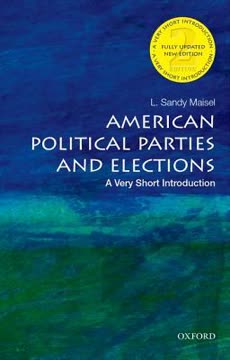
Reviewers generally find American Political Parties and Elections an informative and accessible introduction to the U.S. political system, praising its historical context, clear organization, and critical analysis of democratic shortcomings. Many appreciate its coverage of the Electoral College, party history, and nomination processes. Common criticisms include occasional repetitiveness, the author's perceived Democratic bias, and translation quality issues in Arabic editions. Most recommend it as a solid starting point for understanding American electoral politics, though some found it overly detailed or insufficiently comparative with other democratic systems.
People Also Read