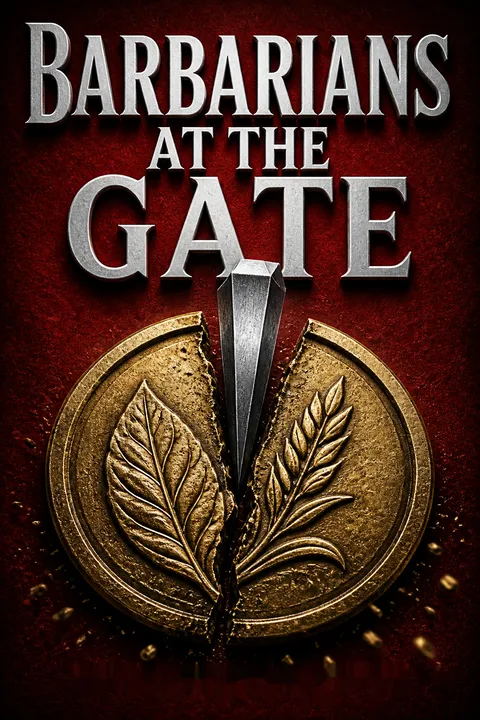
Plot Summary
The Rise of Ross Johnson
Ross Johnson's journey from modest Canadian beginnings to the upper echelons of American corporate power is marked by his irreverence, charm, and relentless drive. He quickly distinguishes himself as a "noncompany man," thriving on chaos and constant change, and surrounding himself with a loyal band of "Merry Men." Johnson's rise through Standard Brands and later Nabisco is fueled by his ability to charm boards, outmaneuver rivals, and embrace a new, deal-driven corporate culture. His leadership style—brash, informal, and often profane—upends the staid traditions of American business, setting the stage for the seismic events to come. Johnson's story is one of ambition, opportunism, and the intoxicating allure of power in a rapidly changing corporate landscape.
Southern Roots, Northern Ambitions
The story shifts to Winston-Salem, North Carolina, where the RJ Reynolds Tobacco Company has shaped the city's identity and culture for generations. The company's deep Southern roots, paternalistic management, and sense of community pride stand in stark contrast to the brash, modern ambitions of executives like Johnson. As Reynolds grows and diversifies, it attracts a new breed of leaders—outsiders with big ideas and little patience for tradition. The collision of Southern values and Northern ambition creates tension and uncertainty, especially as the company faces mounting competition, internal power struggles, and the looming threat of change. The stage is set for a dramatic clash between legacy and innovation.
The Merger That Changed Everything
The merger of Nabisco and RJ Reynolds is a watershed moment, bringing together two vastly different corporate cultures. Johnson, now in a position of immense influence, navigates the treacherous waters of boardroom politics, perks, and power plays. The integration is fraught with suspicion, resentment, and cultural misunderstandings, as the old guard of Reynolds clashes with Johnson's freewheeling style. The merger's promise of synergy and growth is quickly overshadowed by infighting, strategic missteps, and the relentless pursuit of personal gain. Johnson's maneuvering, combined with the board's shifting loyalties, sets the company on a path toward unprecedented upheaval.
The Age of Excess
With Johnson at the helm, RJR Nabisco becomes a symbol of 1980s corporate excess. Lavish perks, private jets, extravagant parties, and a culture of entitlement permeate the executive ranks. The company's Atlanta headquarters is transformed into a palace of opulence, while Johnson and his inner circle indulge in the spoils of power. Yet beneath the surface, cracks begin to show—resentment among employees, public scrutiny, and a growing sense of disconnect from the company's roots. The relentless pursuit of deals and personal enrichment blinds leadership to the risks ahead, as Wall Street's influence grows ever stronger.
Wall Street's New Kings
As the 1980s progress, Wall Street's power brokers—investment bankers, LBO specialists, and junk bond kings—emerge as the true rulers of corporate America. Figures like Henry Kravis, Peter Cohen, and Ted Forstmann become household names, wielding unprecedented influence over the fate of companies like RJR Nabisco. The rise of leveraged buyouts (LBOs), fueled by cheap debt and financial innovation, transforms the landscape, making even the largest corporations vulnerable to takeover. The lines between management, ownership, and Wall Street blur, as greed and ambition drive ever-larger deals. The stage is set for a battle that will test the limits of loyalty, ethics, and financial engineering.
The LBO Idea Emerges
Frustrated by RJR Nabisco's stagnant stock price and undervalued assets, Johnson and his advisers begin to seriously consider a leveraged buyout. The idea is seductive: take the company private, unlock hidden value, and make a fortune in the process. Wall Street bankers swarm, each pitching their own vision of how to structure the deal. The mechanics of LBOs—mountains of debt, asset sales, and ruthless cost-cutting—promise riches for those at the top, but threaten jobs, stability, and the company's future. As Johnson weighs his options, the seeds of conflict are sown, and the specter of a bidding war looms.
The Battle for Control
Once the LBO plan is set in motion, the company is thrust into play. Johnson's management group, backed by Shearson Lehman, prepares to make its move, but the public announcement triggers a frenzy. Rival bidders, including the formidable Henry Kravis of Kohlberg Kravis Roberts (KKR), and the principled Ted Forstmann, enter the fray. The board, caught between loyalty to management and fiduciary duty to shareholders, forms a special committee to oversee the process. As alliances shift and old friendships dissolve, the battle for control becomes a high-stakes game of strategy, deception, and brinkmanship, with billions on the line.
The Bidding War Begins
The opening salvo of bids ignites a bidding war unlike any before. Johnson's group, confident in its inside knowledge, is blindsided by Kravis's aggressive tactics and deep pockets. Forstmann, decrying the excesses of junk bonds and financial engineering, mounts his own challenge. The board is inundated with offers, counteroffers, and legal threats, as each side seeks to outmaneuver the others. The process becomes increasingly chaotic, with leaks, rumors, and media scrutiny fueling public outrage. The true cost of the deal—financial, personal, and ethical—begins to emerge, as the company's fate hangs in the balance.
Greed and Public Outrage
As details of the management group's lavish compensation and the deal's staggering fees leak to the press, public sentiment turns sharply against Johnson and his allies. Time magazine's "A Game of Greed" cover crystallizes the backlash, making RJR Nabisco a symbol of corporate avarice. Employees, shareholders, and the broader public express outrage at the spectacle of executives enriching themselves while jobs and communities are put at risk. The board, feeling the heat, grows increasingly wary of siding with management. The moral and reputational stakes of the deal become as significant as the financial ones.
The Board's Dilemma
The special committee of the board faces an excruciating decision: accept the highest bid, regardless of its source, or protect the company's legacy and employees. Personal relationships, past favors, and regional loyalties complicate the process, as directors grapple with their own roles in the unfolding drama. Legal advisers, investment bankers, and public relations experts swarm, each with their own agendas. The board's deliberations become a microcosm of the era's larger questions about corporate governance, responsibility, and the meaning of value. The outcome will set a precedent for future takeovers and define the legacy of all involved.
The Final Showdown
In a dramatic, tension-filled climax, the bidding escalates to unprecedented heights. Kravis and Johnson's groups trade offers, each leveraging every advantage and connection they possess. Legal maneuvering, strategic leaks, and personal appeals abound, as the board seeks to extract the best possible deal for shareholders. In the end, Kravis's KKR prevails, edging out Johnson's management group with a combination of financial engineering, credibility, and sheer determination. The largest leveraged buyout in history is sealed, but not without leaving scars—on reputations, relationships, and the company itself.
Aftermath and Legacy
The dust settles on the RJR Nabisco deal, revealing a landscape forever changed. Johnson departs with a golden parachute but a tarnished reputation. Kravis and KKR inherit a company burdened by debt and public scrutiny. Employees and communities grapple with uncertainty, while Wall Street celebrates its triumph—and counts its fees. The deal becomes a cautionary tale, emblematic of the excesses and contradictions of the 1980s. As the era of the mega-deal fades, the lessons of RJR Nabisco reverberate through boardrooms, business schools, and popular culture, shaping debates about corporate purpose, governance, and the true cost of winning.
Analysis
Barbarians at the Gate is more than a chronicle of the largest leveraged buyout in history; it is a parable of an era defined by ambition, greed, and the triumph of financial engineering over industrial stewardship. The book exposes the contradictions at the heart of 1980s corporate America: the pursuit of shareholder value at the expense of employees and communities, the blurring of lines between management and ownership, and the corrosive effects of unchecked ambition. Through its vivid characters and intricate plotting, the story reveals how personal relationships, psychological needs, and public perception can shape—and ultimately derail—even the most sophisticated financial strategies. The lessons are enduring: the dangers of short-term thinking, the limits of loyalty, and the high cost of winning at any price. In a world where the "barbarians" are often insiders, the true legacy of RJR Nabisco is a cautionary tale about the perils of confusing value with values.
Review Summary
Barbarians at the Gate receives mostly positive reviews for its detailed account of the RJR Nabisco leveraged buyout. Readers praise its engaging narrative style, thorough research, and insights into 1980s Wall Street culture. Some find it overly long and complex, with too many characters to follow. The book is lauded for exposing corporate greed and providing a fascinating look at high-stakes business deals. Many consider it a classic in finance literature, though a few critics find the subject matter dry or morally troubling.
Characters
Ross Johnson
Ross Johnson is the quintessential outsider who rises to the top by challenging norms and cultivating loyalty among his inner circle. His psychological makeup is a blend of insecurity, charm, and a relentless need for action and approval. Johnson's relationships are transactional yet personal—he wins over boards and colleagues with humor and largesse, but can be fickle and self-serving. As CEO, he embodies the contradictions of the 1980s: innovative yet reckless, generous yet greedy, a master of spin who ultimately becomes a symbol of excess. His arc is one of ambition, hubris, and the high personal cost of playing the corporate game at its most ruthless.
Henry Kravis
Henry Kravis is the face of Wall Street's new power—calculating, disciplined, and unyielding. His psychological drive stems from a need to prove himself, both to his family and the financial world. Kravis's relationships are strategic; he values loyalty but expects results, and is quick to cut ties with those who fail him. As the architect of the modern LBO, he is both admired and feared, embodying the era's shift from industrial to financial capitalism. Kravis's victory in the RJR Nabisco battle cements his legacy, but also exposes the limits and dangers of debt-fueled ambition.
Ed Horrigan
Ed Horrigan is the hard-nosed, combative executive who thrives in crisis but struggles with politics. His loyalty to Johnson is tested by personal ambition and the shifting tides of the boardroom. Horrigan's psychological profile is shaped by a need for respect and recognition, often manifesting in confrontational behavior. He is both a victim and beneficiary of the era's excesses, ultimately sidelined by forces beyond his control. Horrigan's journey reflects the fate of many middle managers caught between old loyalties and new realities.
Peter Cohen
Peter Cohen represents the new breed of Wall Street executive—smart, aggressive, and eager to make his mark. His relationship with Johnson is complex: part ally, part rival, and ultimately a casualty of conflicting interests. Cohen's psychological struggle is between loyalty to clients and the pursuit of personal and institutional gain. His inability to manage the egos and agendas swirling around the deal exposes the limits of financial engineering when confronted with human complexity. Cohen's arc is one of ambition, frustration, and the sobering realization that not all deals can be won.
Ted Forstmann
Ted Forstmann is the conscience of the story, railing against the excesses of junk bonds and the moral decay of Wall Street. His psychological makeup is defined by a deep need for integrity and a sense of mission, often putting him at odds with peers. Forstmann's relationships are marked by both admiration and exasperation—he is respected for his principles but often dismissed as self-righteous. His failure to win the RJR Nabisco deal is both a personal disappointment and a vindication of his warnings about the dangers of debt and greed.
Charlie Hugel
Charlie Hugel is the steady hand amid chaos, tasked with leading the special committee through the storm. His psychological profile is one of duty, caution, and a desire to do right by shareholders and the company's legacy. Hugel's relationships are tested by conflicting loyalties—to Johnson, the board, and his own sense of ethics. He becomes the embodiment of the board's dilemma, forced to choose between personal ties and fiduciary responsibility. Hugel's arc is one of increasing disillusionment, as he witnesses the corrosive effects of greed and ambition.
Steve Goldstone
Steve Goldstone is the lawyer who tries to inject reason and foresight into a process driven by ego and emotion. His psychological struggle is between professional detachment and personal investment in the outcome. Goldstone's relationships are defined by his role as advisor and confidant, often serving as the last line of defense against disaster. He is both respected and ignored, his warnings frequently unheeded until it is too late. Goldstone's journey is a study in the limits of rationality in a world ruled by passion and self-interest.
Jim Robinson
Jim Robinson, head of American Express, is both a power broker and a friend to many of the key players. His psychological makeup is marked by a desire for harmony and a belief in the possibility of win-win outcomes. Robinson's relationships are complicated by his dual roles as competitor and confidant, often forcing him to mediate between warring factions. He is ultimately unable to reconcile the competing demands of loyalty, ethics, and business, serving as a symbol of the era's moral ambiguity.
John Greeniaus
John Greeniaus starts as a loyal Nabisco executive but becomes disillusioned by Johnson's actions and the direction of the company. His psychological arc is one of awakening and moral courage, as he chooses to aid rival bidders in hopes of preserving Nabisco's integrity. Greeniaus's relationships shift from camaraderie to quiet rebellion, reflecting the broader theme of personal conscience versus group loyalty. His actions play a pivotal role in shaping the outcome of the bidding war.
Paul Sticht
Paul Sticht represents the old guard—cautious, paternalistic, and increasingly out of step with the new realities of corporate America. His psychological struggle is with obsolescence and the loss of control, as younger, more aggressive leaders seize the reins. Sticht's relationships are marked by nostalgia and a sense of betrayal, as he watches the company he helped build torn apart by forces he cannot contain. His arc is a poignant reminder of the costs of change and the passing of an era.
Plot Devices
Leveraged Buyout (LBO)
The LBO is the central plot device, serving as both the engine of action and the symbol of the era's excess. It introduces the mechanics of high-stakes finance—mountains of debt, asset sales, and the promise of quick riches—while raising profound questions about risk, responsibility, and the true meaning of value. The LBO structure creates a zero-sum game, pitting management against Wall Street, insiders against outsiders, and personal ambition against collective good. The escalating bids, fueled by financial innovation and competitive brinkmanship, drive the narrative toward its explosive climax.
Boardroom Drama and Fiduciary Duty
The formation of the special committee and the board's deliberations provide the story's ethical and emotional core. The device of the boardroom as battleground allows for the exploration of loyalty, betrayal, and the competing demands of personal relationships and fiduciary duty. The board's struggle to balance shareholder interests with broader responsibilities mirrors the larger societal debate about the purpose of the corporation. The use of legal counsel, confidential memos, and procedural maneuvering heightens the tension and underscores the complexity of modern governance.
Media and Public Perception
The role of the media—especially the Time magazine cover and relentless press coverage—serves as both a plot accelerant and a mirror for the characters' anxieties. Public outrage and scrutiny force the players to confront the reputational costs of their actions, influencing decisions and alliances. The interplay between private maneuvering and public spectacle adds a layer of irony and tragedy, as the pursuit of wealth and power is exposed to the harsh light of public judgment.
Foreshadowing and Irony
Throughout the narrative, moments of foreshadowing—warnings about debt, hints of betrayal, and the specter of public backlash—are woven into the story. The irony of Johnson's initial confidence, the board's misplaced trust, and the ultimate outcome serve to underscore the unpredictability and moral ambiguity of the era. The use of recurring motifs—such as the "barbarians at the gate" metaphor and the image of the casino—reinforces the sense of a world spinning out of control.
Narrative Structure
The story unfolds through a shifting mosaic of perspectives—executives, bankers, lawyers, board members—each with their own motives and blind spots. The narrative structure mirrors the chaos and complexity of the deal itself, with overlapping timelines, parallel negotiations, and a relentless escalation of stakes. The use of real dialogue, reconstructed scenes, and detailed character studies creates a sense of immediacy and immersion, drawing the reader into the heart of the action.
FAQ
1. What is Barbarians at the Gate: The Fall of RJR Nabisco by Bryan Burrough and John Helyar about?
- Epic corporate takeover saga: The book chronicles the dramatic 1988 leveraged buyout (LBO) battle for RJR Nabisco, which became the largest and most complex corporate takeover in history at the time.
- Focus on key players: Central figures include Ross Johnson (RJR Nabisco’s CEO), Henry Kravis (KKR), and other Wall Street powerhouses, whose ambitions and rivalries drive the narrative.
- Insight into 1980s Wall Street: It provides a vivid portrait of the era’s financial culture, including the rise of junk bonds, aggressive deal-making, and the clash between old and new corporate values.
- Behind-the-scenes drama: The book reveals the personalities, negotiations, and high-stakes maneuvers that shaped the outcome and changed American business.
2. Why should I read Barbarians at the Gate by Bryan Burrough and John Helyar?
- Definitive account of LBO era: The authors conducted extensive interviews and research, making this the authoritative narrative on the RJR Nabisco takeover and 1980s corporate finance.
- Understanding high finance: The book demystifies leveraged buyouts, mergers, and Wall Street strategies, making complex financial concepts accessible and engaging.
- Human drama and ethics: It goes beyond numbers, exploring the egos, alliances, betrayals, and ethical dilemmas that define high-stakes corporate battles.
- Historical and cultural relevance: The story marks a turning point in Wall Street history, offering lessons that remain relevant for understanding modern business and finance.
3. Who are the main players in the RJR Nabisco takeover battle described in Barbarians at the Gate?
- Ross Johnson and management group: Johnson, the flamboyant CEO, leads a management buyout team backed by Shearson Lehman and Salomon Brothers, seeking to retain control and reap large rewards.
- Henry Kravis and KKR: Kravis and his firm, Kohlberg Kravis Roberts, are LBO pioneers who mount a hostile bid using junk bonds and aggressive tactics.
- Ted Forstmann and Forstmann Little: A rival LBO firm critical of junk bonds, advocating a more conservative approach but ultimately unable to compete financially.
- Investment bankers and advisers: Key figures from Shearson Lehman, Drexel Burnham, Lazard Freres, and First Boston play crucial roles in structuring, financing, and negotiating the bids.
4. What is a leveraged buyout (LBO) as explained in Barbarians at the Gate by Bryan Burrough?
- Definition and mechanics: An LBO is a financial transaction where a company is purchased primarily with borrowed money, using the company’s assets and future cash flows as collateral.
- Typical structure: About 60% of the purchase price comes from bank loans, 10% from the buyer’s own funds, and the rest from investors or junk bonds, with debt paid down over time.
- Management’s role: Executives often form a buyout group to take the company private, but ultimate control usually rests with the buyout firm, not management.
- Controversy and impact: LBOs are criticized for heavy debt burdens and potential layoffs, but proponents argue they force companies to become leaner and more efficient.
5. How did junk bonds influence the RJR Nabisco LBO and 1980s Wall Street, according to Barbarians at the Gate?
- Fuel for LBO growth: Junk bonds—high-yield, high-risk debt—enabled massive, fast-moving buyouts by providing quick access to large amounts of capital.
- Role of Michael Milken and Drexel Burnham: These Wall Street players were central to popularizing junk bonds, transforming the scale and speed of corporate takeovers.
- Controversy and criticism: Critics like Ted Forstmann called junk bonds “funny money,” blaming them for inflating deal prices and endangering companies with excessive debt.
- Impact on competition: Junk bonds allowed firms like KKR to outbid traditional buyers and pursue hostile takeovers, reshaping the balance of power in corporate America.
6. What was unique about Ross Johnson’s management agreement in the RJR Nabisco LBO, as described by Bryan Burrough?
- Unprecedented control and rewards: Johnson demanded veto power over the board and major decisions, and his management group was granted up to 20% of the company’s equity—potentially worth billions.
- Lifestyle protection: Johnson insisted on preserving perks like corporate jets and the Atlanta headquarters, resisting typical LBO cost-cutting.
- Public and board backlash: The agreement, once leaked, became a lightning rod for criticism, symbolizing executive greed and complicating negotiations.
- Negotiation complication: The pact’s terms made it difficult for other bidders to cooperate with management, stalling peace talks and fueling anti-LBO sentiment.
7. How did the culture clash between Reynolds Tobacco and Nabisco affect the merged company in Barbarians at the Gate?
- Contrasting corporate traditions: Reynolds was conservative and rooted in Winston-Salem, while Nabisco was more flamboyant and New York-based, leading to conflicting values and management styles.
- Tensions and alienation: Nabisco executives felt powerless under Reynolds’s bureaucracy, while Reynolds veterans resented Nabisco’s perks and lifestyle, resulting in internal conflicts and resignations.
- Symbolic product conflicts: Campaigns like Nabisco’s Fleischmann’s Margarine, which discouraged smoking, horrified tobacco executives and highlighted the cultural divide.
- Complicated integration: The cultural clash made strategic decision-making and company integration more difficult, contributing to instability.
8. What role did investment bankers and advisers play in the RJR Nabisco takeover, according to Barbarians at the Gate?
- Deal architects and influencers: Bankers from Shearson Lehman, Drexel Burnham, Lazard Freres, and others proposed, structured, and financed the LBO, bringing expertise and pressure to the process.
- Merchant banking evolution: Investment banks increasingly invested their own capital in deals, blurring lines between advisory roles and ownership.
- Inter-firm rivalries: Banks often competed against each other, sometimes representing opposing sides, adding complexity to the takeover battle.
- Financial innovation: Bankers introduced new concepts like limited partnerships, dual-stock structures, and leveraged financing, pushing the boundaries of corporate finance.
9. How did the RJR Nabisco board and special committee influence the LBO process in Barbarians at the Gate?
- Formation for fairness: A special committee of independent directors was created to evaluate buyout proposals and protect shareholder interests.
- Legal and fiduciary duties: The committee’s lawyers guided directors through complex legal responsibilities, especially regarding management’s conflicting interests.
- Active involvement: The board, led by Charlie Hugel, managed the auction process, set bidding guidelines, and worked on restructuring plans.
- Suspicions and conflicts: Tensions arose over the committee’s impartiality, especially given Johnson’s influence and the offering of equity stakes to directors.
10. What were the main bidding groups and strategies in the final RJR Nabisco auction, as detailed in Barbarians at the Gate?
- Management group led by Johnson: Backed by Shearson Lehman and Salomon Brothers, they raised their bid to $112 per share but faced skepticism due to the management agreement and public backlash.
- KKR’s disciplined approach: Henry Kravis’s team countered with $108, then $109, and finally $112 per share, offering better securities and reset provisions to reassure the board.
- First Boston’s innovative bid: The group, with Jay Pritzker, proposed a complex tax-deferral strategy using installment notes, but lacked solid financing and was ultimately dismissed.
- Board’s decision: The board favored KKR’s bid due to better terms, securities, and promises to shareholders and employees, leading to a unanimous vote for KKR.
11. What were the key financial instruments and innovations used in the RJR Nabisco bids, according to Bryan Burrough?
- Pay-in-kind (PIK) securities: These bonds allowed interest to be paid in additional bonds rather than cash, reducing immediate cash outflows and enabling higher bids.
- Reset provisions: KKR’s bid included mechanisms guaranteeing securities would trade at stated values, providing more certainty to the board and shareholders.
- Installment note loophole: First Boston’s bid used a tax-deferral strategy to increase bid value, but it carried political and legal risks and lacked reliable financing.
- Complex valuation: The use of PIKs, resets, and other securities required expert analysis, highlighting the financial engineering central to the deal.
12. What are the key takeaways and best quotes from Barbarians at the Gate by Bryan Burrough and John Helyar?
- Complexity of corporate takeovers: The RJR Nabisco saga shows that large buyouts involve intricate financial engineering, legal maneuvering, and personal ambitions.
- Power of personalities: The outcome hinged on the character, relationships, and decisions of a few key individuals, whose motivations were often personal as well as professional.
- Impact on stakeholders: The deal brought risks such as heavy debt, job losses, and conflicts of interest, raising ethical and economic questions that still resonate.
- Notable quotes: “Some genius invented the Oreo. We’re just living off the inheritance.” (Ross Johnson); “The casino society.” (Felix Rohatyn); “Mickey Mouse has just become Mighty Mouse!” (Jim Maher), each
About the Author
Download PDF
Download EPUB
.epub digital book format is ideal for reading ebooks on phones, tablets, and e-readers.








































