

Plot Summary
Inescapable Choices, Fractured Loyalties
Quinn faces an ultimatum: surrender the priceless "marker" within her tattoo to sadistic mobster Ambrose, or lose Atlas—the man who risked his life saving hers. She rallies Nico and Killian, but is cornered by betrayal when Emmett—her trusted lieutenant—sells her out. As violence intensifies and hidden truths about family loyalty and gang codes surface, Quinn is forced to choose between her father's mysterious legacy and the lives of those she loves most, setting in motion a spiral of desperate gambits and haunting consequences.
Atlas in Chains
Shackled and battered, Atlas endures Ambrose's torment with the knowledge that his pain is being used as leverage against Quinn and their chosen family. Ambrose reveals that every connection and scrap of information—all the way back to Quinn's uncle—has already been exploited. Yet Atlas clings to defiance, his only hope the combined courage of Quinn, Nico, and Killian, and the thin possibility of escape. His ordeal becomes a crucible, burning away doubt and forging his bond with Quinn even stronger.
Desperate Bargains, Unforgivable Betrayals
Quinn, wracked by guilt and heartbreak, attempts to lead Enigma and her men while holding herself together. Nico and Killian, haunted by the lines between family and leadership, scrape together defenses and try to stabilize the bruised gang hierarchy in the face of mounting threats. Emmett's betrayal poisons trust; even the formerly unbreakable bonds start to fracture. In a war zone of shattered shops and rivals on every block, the rules change—loyalty is the only currency, and it's in short supply.
Nightmare at Blood and Ink
Quinn is haunted by gruesome nightmares where Atlas dies, unable to save him—a reflection of her own fears and the relentless trauma infecting her mind. Unable to contain her pain, friends and lovers pull her back from the edge, but emotional wounds remain raw. Through violence and desperate sex, they try to re-anchor themselves—finding fleeting comfort in each other's arms, even as guilt and dread persist.
Loving Through Violence
Quinn, Nico, and Killian spiral into primal, violent intimacy—a desperate act to anchor themselves after so many losses. Each unleashes their inner demons, bruising and marking one another, blurring the lines between love, violence, and possession. They confront feelings of inadequacy, guilt, and need, finding solace and solidarity, though the weight of responsibility and grief never truly lifts.
Grieving and Gathering
The aftermath is tender: stories and wounds are shared—scar tissue laid bare—as the group recognizes the true strength of their fractured but fierce union. Quinn's compulsion to save Atlas merges with the men's own confessions of loss and love, forging an unspoken pact of loyalty and belonging. Led by this deeper bond, they plot their next moves, determined not just to survive but to bring Atlas home.
Into the Syndicate's Web
Seeking knowledge and leverage, Quinn and her men approach Willow and her allies (the Voronin brothers)—characters who themselves have escaped similar chains. Through hard-won trust, they unmask more of the Syndicate's operations, discovering just how impenetrable and far-reaching its web runs. Quinn learns that her marker can buy almost anything, but every favor carries a debt with insatiable collectors.
Setting the Trap
With new intelligence—and under relentless time pressure—Quinn plans a high-risk infiltration of the Noctura Spa to contact the Syndicate's elusive head, Malcolm Mercer. She navigates an environment where nudity, intimacy, and threat blend, forced to play a dangerous game of seduction and exposure. She's stripped of weapons and dignity, but meets Mercer on unequal terms, striking a deadly bargain to "redeem" her marker and ensure Atlas's freedom.
Entrapment at Noctura
At the spa's heart, Quinn is paraded, naked and vulnerable, before the calculating Mercer, forced to "burn away" her father's secret marker in a ritualized branding—her body literally made the canvas of Syndicate power. The exchange: a seat for Ambrose, if Atlas is spared. The cost: every layer of protection and secrecy she inherited is seared away; now, all debts—and threats—are hers alone.
Mercer's Deadly Bargain
The ceremony becomes a battlefield of language and intent. At the pivotal moment, rather than passing the marker to Ambrose, Quinn invokes her Syndicate right—the votum—to demand Atlas's release instead. Technically within the rules, she manipulates the system, outplaying Ambrose, but earning the Syndicate's simmering wrath. Ambrose escapes with vengeance in his eyes, but Atlas is saved—at the price of Quinn's final innocence and independence.
Scars and Savagery
The group retreats to recover, tending wounds literal and metaphorical. Each scar—on Atlas, on Quinn, on the others—tells their shared story, old abuses and fresh betrayals alike. Through tender confessions and new tattoos, Quinn and her men mark and claim each other, redefining family as what they build together, not what blood or legacy dictate. The knowledge that Ambrose escaped stalks them all, lending urgency to the next move.
Renewed Vows, Rising Stakes
As they reassemble their battered alliance, Quinn musters what remains of Enigma, trying to salvage hope from the ruins, while Nico and Killian weather the loss of their own outlaw "family" to rivals. Under relentless pressure and with new enemies on every side, vulnerabilities yield raw confessions and a vow: from now on, they live—and fight—as one.
Calling on Old Debts
With nowhere left to turn, Quinn seeks help from other underworld survivors (Willow, River, the Kings of Chaos), learning that in their world, every friendship is forged through shared trauma and mutual rescue. She admits her limits, but the counsel is unanimous: Ambrose is the greater immediate threat—the Syndicate and Zoey can wait. A plan forms to use Emmett, the traitor, as bait.
Plotting and Power Plays
To draw Ambrose out, they exploit Emmett's desperation and cowardice, weaponizing their own bodies and relationships in front of him, twisting the knife of jealousy and failure. Quinn orchestrates a trap: Emmett is convinced (or coerced) to set up a meeting, pretending to have captured Quinn herself, luring Ambrose into a confrontation they can control.
Votum of Blood
When the plan spirals—Ambrose brings an army and the group is pinned, outgunned, and bleeding—Quinn uses her last Syndicate votum, burning through her final favor. The Syndicate's muscle arrives, turning the bloodbath and saving her men, but at a high, unspoken price. The cost is now a lethal tally of obligations, and her debtors will come to collect.
The Price of Unity
In the aftermath, more innocent lives are lost. Quinn disbands Enigma to protect what's left of her people, burning her bridges to the past and sending surviving members into hiding. Her home is ashes, her positions are gone, but her union with Atlas, Killian, and Nico has never been fiercer. Their bond—now marked on flesh, sealed in blood—is all that stands between her and oblivion.
The Cat, the Killer, the Queen
Amid violence, the small acts—Killian tending to Quinn's rescued cat, her marking him with a tattoo in a reversal of old trauma—offer a glimmer of hope, healing, and transformation. These warriors, broken by the past but reassembled in love, become family by deliberate choice, replacing old scars with new connections.
Catalyst for Revenge
Tracking Emmett by night, Killian becomes predator to the would-be player, capturing and breaking him for answers. Emmett, pathetic and broken, is revealed as empty—void of real information, disposable to Ambrose in the end. But his cowardice is repurposed as a weapon, turned into the bait to force a final confrontation. Quinn's wrath crystallizes: whatever the cost, this ends tonight.
All or Nothing Reunion
Quinn finally voices her love for her three men—admitting what's now undeniable. Their responses—fierce, possessive, awed—strengthen their resolve. They promise loyalty and unity amid the coming war, heartbreak and violence folded into their intimacy, cemented with new vows and acts of devotion.
Emmett: Traitor's Fate
The trap is set with Emmett's trembling complicity, but when the ambush unravels, he betrays them yet again. In the chaos, Quinn, using all her ruthless resourcefulness, turns on Emmett and kills him—finally exorcising his ghost from her life. His death is both liberation and a grim warning: betrayal in this world has only one end.
The Final Gambit
Ambrose's men descend, pinning Quinn and the Princes on a rooftop in a hopeless gunfight. Sacrifice after sacrifice is made to keep each other alive while bullets and blood fly. With hope extinguished, Quinn makes the ultimate sacrifice—calling in her final Syndicate votum, knowing the cost may be her own life. As the Syndicate's soldiers descend and the tide turns, Ambrose is left with nothing but rage.
Into the Inferno
Quinn's home and business are burned to nothing, her people scattered, her heart nearly consumed by survivor's guilt. She grieves openly, not only for what was lost, but for what betrayal and loyalty cost. She recognizes that to keep her loved ones alive, she must let go of everything else—even the comfort of past loyalty and tradition.
Fire and Aftermath
As the group stands amid the ruins of Blood and Ink, Quinn is forced to make the hardest call—dissolving Enigma, sending her remaining family away. The grief is overwhelming, and she wonders if she's a curse or if leadership means only sacrificing all who follow her. Her men anchor her, refusing to let her drown in regret.
Disbanding for Survival
In the silence after her decision, Quinn stands alone. Atlas refuses to let her isolate herself further, and together they reflect on what their found family truly means. They resolve that even though everything around them may burn, the love and unity they found will not so easily be lost.
Last Votum—Caged and Hunted
Knowing Ambrose cannot be trusted, the group prepares for a final trap. The lines between bait and prey blur as Emmett and then Ambrose make their last moves. Ambrose is cornered in a firefight, bleeding, and finally dies—but not before uttering a warning that death, once kindled, is never truly done with them. With this, the last chapter with Ambrose closes.
Blood on the Riverbank
The Syndicate's favor is spent to the last drop; Ambrose is finally dead. But each victory comes with new scars and obligations. The survivors drift home exhausted, physically and emotionally spent, knowing they have traded one set of enemies for another. The world is quieter—but only for a moment.
Apex, Endings, and Aftershocks
At the next Syndicate meeting, Quinn learns that Ambrose's dying words have outlived him: her deception in Celine's case is revealed. The repayment for her salvation—and the breach of the Syndicate's rules—is to forfeit her life. Yet even as dangers gather, the bonds between Quinn and her three men remain the one unbroken thing: a found family, strong enough to survive even what fate—and the underworld—demands.
Analysis
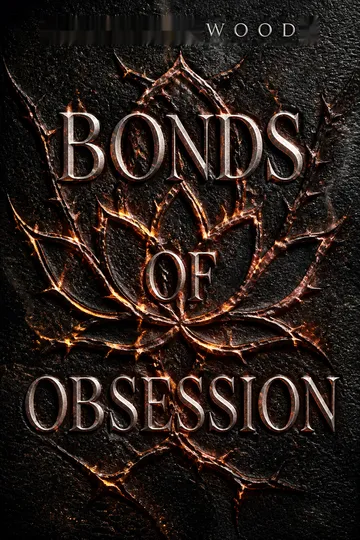
Bonds of Obsession is a master class in taking the trappings of dark, reverse-harem thrillers and elevating them into a meditation on survival, trauma, and the building (and losing) of family by choice rather than blood. At its heart, the book explores what it means to protect, to lead, and to love ruthlessly in a world where every bond is a potential liability as much as salvation. Eva Ashwood invites readers to question the nature of loyalty: When is it blindness, and when is it strength? Through Quinn, we witness the psychological costs of carrying others through fire; through the Princes, the journey from rivals to kin; and through villains like Ambrose and Emmett, the cautionary lesson that cruelty, cowardice, and betrayal devour their wielders first.
The story's plot devices—especially the marker/votum, and the use of ritualized pain—underscore that every act of rescue is also an act of self-loss. Quinn's journey is one from legacy-bound daughter to self-defined queen—her "reign" built not on conquest, but on acts of deliberate, repeated trust, even after catastrophic betrayals. In the end, the family she claims doesn't erase trauma or pain; it gives them meaning, transmutes them into the building blocks of a new home. Ashwood leaves us with the lesson that survival, in the truest sense, is never a solitary act—and that every chain broken is another opportunity to rebuild, to love, and, when necessary, to burn the old world to keep your people warm.
Review Summary
Bonds of Obsession receives an overall rating of 4.14/5, with polarized opinions. Enthusiastic readers praise its gripping plot, intense cliffhangers, and steamy romance between Quinn and her three love interests. Critics, however, find fault with Quinn's poor decision-making, repetitive sex scenes that disrupt pacing, and a perceived weakening of tension compared to earlier installments. Many readers note the overuse of her three "votums" as frustrating, while cameos from characters in other series are widely appreciated. The brutal cliffhanger ending leaves readers eagerly anticipating the final book.
People Also Read
Characters
Quinn Kent
As the story's fierce center, Quinn is defined by her relentless determination, haunted vulnerability, and ruthless self-sacrifice. Initially hardened by loss—her father's death, Enigma's collapse—she's both feared and revered in her world. Betrayed by those closest to her (Emmett), she is forced to confront the limits and costs of loyalty. Her psychoanalytic journey is a descent into survivor's guilt, shame, and the rediscovery of family through chosen bonds. She grows from solitary queen to partner and co-warrior with Atlas, Nico, and Killian—her trauma given voice, her strength finding meaning not in dominance, but in devotion and unity.
Atlas
Once an enforcer and rival, Atlas is Quinn's equal and mirror—enduring torture for the group, suffering but never breaking. Having survived abuse and loss in his past, he's driven by the need to protect and possess, channeling pain into love and absolute loyalty. His psychological arc is about reclaiming agency—from objectified victim to self-sacrificing partner—and learning that vulnerability and letting himself be loved is its own kind of power. His deep need for family finds fulfillment in Quinn and the princes as he moves from isolation to shared identity, symbolized by his mark—tattooed and emotional alike.
Nico
As the "brains" of the group, Nico balances the tension between control and raw passion. Having lost his original family (the biker club turned against him), he struggles with leadership guilt and the fear of failing those who rely on him. He's wracked by survivor's guilt and the weight of impossible choices—but finds catharsis and release in caring for Quinn, learning to trust others (and himself) in moments of vulnerability and savagery alike. Psychologically, he's the bridge between violence and tenderness, always ready to die for his found family.
Killian
The most physically intimidating of the three, Killian is driven by old wounds—childhood trauma, abusive parentage, and a struggle with self-acceptance. Psychologically, he battles with dehumanization and fears of true intimacy, only ever feeling safe in the role of protector or avenger. His love is expressed through acts of care (tending wounds, defending the weak, caring for a rescue cat), and his greatest growth is learning to bare his own vulnerabilities, accepting the mark of love as something strengthening—not diminishing—his power.
Ambrose
Ambrose is a master puppeteer, thriving in chaos and torment. Psychologically, he embodies everything the group most fears and despises: using love as a weapon, trust as a snare, and violence as both currency and pleasure. Intimately acquainted with powerlessness (his time in prison, his obsessions with Syndicate status), Ambrose externalizes his inner void by seeking to destroy and dominate. Ultimately undone by his own hubris and inability to break Quinn's unity, his curse lingers—his parting words an omen for cycles of vengeance yet to come.
Emmett
Once Quinn's confidant, Emmett's arc is that of self-destruction through envy and inadequacy. He is a psychological warning about the cost of cowardice—how the desire for validation can turn into the root of self-betrayal. His manipulation and final collapse serve as a mirror for what Quinn fears in herself, but ultimately, his fate proves the story's lesson: betrayal earns only oblivion.
Malcolm Mercer
In his clinical detachment and precision, Mercer represents the institutional evil of the Dark Lotus. His psychological profile is that of a man unmoved by violence, invested only in legacy and the rules that keep his kind in power. He tests, seduces, and punishes Quinn, perennially unthreatened except when the rules themselves are at stake. He's both executioner and bureaucrat—a paradoxical cultivator of chaos through order.
Willow
Willow survives her own traumas by building both family and alliances—she's the empathetic touchstone that allows Quinn to glimpse another path, one where softness and strength coexist. Willow's chosen family (the Voronin brothers) and her willingness to cross boundaries for friends represent the possibility of loyalty untethered by blood, and of healing without erasure.
The Syndicate Members (Imogen, Casssandra, Owen, Rafael, Elliot)
Each reflects a psychological archetype: Imogen as pragmatic survivor; Cassandra as ruthless matriarch; Owen as the smuggling lone-wolf; Rafael as the "fixer"; Elliot as the "enforcer." Together they are both allies and executioners—a cabal whose family is built on obligation and the threat of karma, and who serve to escalate the stakes and test Quinn's resolve to the breaking point.
Princess the Cat
Rescued, fragile, and a survivor in her own right, Princess is both a literal and psychological emblem of what the characters fight to preserve within themselves: gentleness, hope, the continuity of care. Her presence with Killian in particular is a motif of healing and the possibility that even the brokenest warrior can nurture and be nurtured.
Plot Devices
The Mark/Tattoo as Inheritance and Weapon
Quinn's marker—hidden in her tattoo—functions systematically as both the source of her power and the price for her survival. Passed down by her father as an inscrutable inheritance, it becomes leverage for all: a guarantee of Syndicate status, protection, and, when invoked through the votum system, an inescapable debt. Each "favor" granted burns through another layer of Quinn's autonomy, trading agency for rescue and compounding her future peril. Psychological and literal, it symbolizes how family legacy—what's carved into us—can become a weapon others wield against us… or that we must transform into freedom.
Votum Invocation
The votum system—where each Syndicate member is bound to grant three "favors" in a lifetime, no questions—structures the plot's highest stakes moments. Votum is invoked to save Atlas, for sanctuary, and to rescue all from Ambrose's guns. With each invocation, the clock ticks closer to Quinn's final loss of leverage—each "life saved" potentially requiring her death in payment. As a device, it raises the tension, ensuring that every "escape" is earned by mortgaging the future, binding the group tighter in a gilded cage. Its rules, like the underworld itself, are both absolute and corruptible: survival depends on manipulation as much as honor.
Psychological Intimacy Through Pain and Sacrifice
Sex and violence merge in highly ritualized, sometimes brutal, scenes—tattoos inked, wounds stitched, marks and bruises exchanged—as characters seek to reclaim their bodies and heal psychic wounds through physical sensation. This narrative choice blurs the lines between pain as punishment and as catharsis, deepening both erotic connection and emotional trust. It's a repeated motif: each time Quinn and the Princes are brought to the brink of destruction (or despair), they turn to each other, finding new ways to build unity not in the absence of pain, but in its honest sharing.
Institutional and Personal Betrayal
The story systematically dismantles traditional sources of power: clubs, gangs, Syndicates—all become sites of betrayal, corruption, and death. The only "safe" loyalty is reconstituted through deliberate acts of trust and self-revelation. Betrayers—Emmett, old club leaders, even dead relatives—are punished not just with death, but with oblivion and being written out of the family story. Survival is a psychological act: trusting when you have every reason not to.
Outpacing the Predator, Becoming the Apex
The plot uses predator-prey imagery (alleyway hunts, Emmett as "rat," Ambrose as "lion") to structure power exchanges: who is in control, and when? When Quinn shifts from quarry to hunter—using herself as bait, setting technicalities to win under impossible odds, embracing her own darkness when all else has failed—she subverts the world's rules. She can never return to innocence, but she forges a new power on her own terms.
Pretty Ruthless Monsters Series Series
About the Author




Download PDF
Download EPUB
.epub digital book format is ideal for reading ebooks on phones, tablets, and e-readers.








































