
Plot Summary
Gunshots in the Spa Basement
Quinn and her three men—Atlas, Nico, and Killian—are ambushed during a forced meeting of the Dark Lotus Syndicate in Noctura's basement. What should have been a moment of triumph over a mutual enemy flips into horror as Malcolm, the Syndicate's cold-blooded leader, exposes Quinn's secret: sparing a crime rival against Syndicate rules. Guns are drawn, and ritualistic judgment is passed—Quinn and her men sentenced to die. Each member takes a stab at Quinn as punishment for her betrayal, forcing everyone, especially her men, to watch helplessly as blood stains loyalty and love alike. But even as she bleeds, the primal need to fight kicks in, igniting a desperate, bloody struggle for an escape that seems impossible.
Vows and Chains Broken
Bound in chains as the Syndicate members mete out punishment, Quinn understands she is the cause of her men's torment. In a fleeting burst of strength, she turns the tide, headbutting her executioner and sparking chaos. The men, battered but undeterred, seize the distraction. Amid gunshots and splattered blood, they break free, operating as a singular, practiced unit even as the odds mount and the world narrows into adrenaline, pain, and animal instinct. Each vow they ever made—of loyalty, of vengeance, of love—is rewritten in the heat of battle, as chains fall away and escape becomes not just a possibility, but the only option.
Escape Through Sewers
With the spa's armed guards on their heels, the group flees below the city, slogging through freezing sewage. Wounded and weak, Quinn depends on her men for survival, stubbornly battling shame and trauma as the icy, filthy water amplifies every injury. As they weave through tunnels, their pain and vulnerability strip away bravado, leaving only raw, unfakeable emotion. A harrowing near-miss with their pursuers cements just how alone they are—quarry hunted through a forgotten world. But in the sewer's damp chill, their bond is forged even deeper, each clinging to the other as the only warmth left in the dark.
Losing Enigma, Finding Shelter
Above ground and bleeding, the fugitives stagger into the comparative safety of an old Carnage safe house, only to discover an old ally—Kendrick. Trust frays at the edges: betrayal still tastes fresh, and survival means difficult choices. Even as Quinn's wounds are stitched, both literal and metaphorical, the realization burns—her father's empire is long lost, and so is any comfort she once found in the city she calls home. Yet, as the group adjusts to the shaky truce with former enemies, a new family structure emerges from the ashes—less about territory, more about found, hard-earned trust.
Healing and Nightmares
Days blend as everyone tends wounds and restless, haunted sleep claims Quinn's nights. The safe house is no paradise; fear seeps through its walls, and even in unconsciousness, she can't escape the weight of everything she's lost and the horrors she's survived—both old and new. Nightmares pull her under—visions of Ambrose and Malcolm, the deaths of those she loves, the constant sense she's not strong enough to save them all. Her men hold and anchor her through the night, but the emotional toll is relentless. Still, as she gradually heals, their love becomes more than a refuge—it is her stubborn declaration that she will not yield.
Forced Choices and Torn Bonds
The Syndicate tracks them down; capture is inevitable. In a cold, calculated move, Malcolm gives Quinn a choice: her freedom, or her men's lives. She chooses them, publicly betraying her lovers and scarring through the tattooed rings that mark their bond. The act is both brutal and necessary—a lie that destroys trust to ensure their survival. She gives herself to Malcolm to spare the three who would die for her, sacrificing happiness and sanity for a slim chance at all their futures. Alone, wounded in every sense, she becomes a wife in name only—trapped and surveilled, counting down until Malcolm's patience or mercy finally runs dry.
Bleeding for Survival
Malcolm proves himself every inch the manipulator: a captor and a would-be lover obsessed with Quinn as a stand-in for her mother, whom he destroyed. He lauds her defiance even as he works to break her spirit, pressing for submission—as wife and "property." Quinn finds the strength to bargain for limited freedoms—a return to the world, the chance to rebuild Blood and Ink—but every moment is a careful performance, hoping the mask won't slip. Surrounded by opulence that only deepens her sense of being trapped, she navigates humiliations and veiled threats, never letting herself forget the blood she's paid, or the lives counting on her resolve.
Shadows of Betrayal
Plots within plots simmer as Quinn seeks to quietly turn Malcolm's own lieutenants against him with Imogen's help. Alliances are slippery, and trust costs more than blood. Even when trauma binds its survivors—Quinn, Imogen, Cassandra—the ever-present risk of betrayal haunts each secret conversation. And just as hope begins to grow, the knife twists: a supposed ally, Elliot, betrays the cabal, revealing their plans to Malcolm. What follows is slaughter; vicious retribution is unleashed as the house of cards comes crashing, once again, into violence and loss.
Scarred Hearts Reunite
Even as Quinn endures Malcolm's tightening grasp, her men plot and rebuild, dreaming of a future beyond their nightmares. Through coded messages and narrow escapes, forbidden reunions spark—sometimes passionate, sometimes healing, always desperate. Loss and longing have scarred their hearts, but each kiss, each whispered vow, tattoos over the pain with belief that reunion and vengeance might be possible. Their new, battered family grows stronger, not weaker, with each risk they take for one another, making the ultimate reckoning with Malcolm both inevitable and necessary.
Sanctuary of Survival
A pulse-pounding rescue brings Quinn back into the arms of her men, battered but breathing. Allies—old gang members, new blood, even unexpected friends like Willow—rally for a final stand. Bonded by trauma, the walls between Enigma and Carnage crumble; enemies are made family as they face down their common foes, knowing that true safety will not come from running, but from destroying the monsters who made them prey. There is no illusion of happily ever after—yet hope flickers in the way they tend each other's wounds and trade battle-scarred smiles. In the forced pause before the storm, love is their chosen weapon.
Rebuilding with Blood and Ink
Malcolm's reign ends in blood, brutality, and a cold river. Quinn, her three Princes, Cassandra, Owen, and the remnants of the old Syndicate survivors choose to forge something new—not by debt or fear, but by shared power. Their alliance is fragile and hard-earned, each partner aware that trust must replace the old violence. Blood and Ink rises from ruin—a symbol but also their new home base and business, both criminal and artistic. As their world stabilizes, the lines between love and power blur; what is born is something fiercely loyal, defiantly loving, and impossible to tear apart.
Alliances Against the Crown
With the Syndicate gone, Malcolm's death does more than topple a king—it wipes away the blood rules of old Detroit. Cassandra and Owen propose a new partnership: The Collective—a true alliance where each has an equal stake and voice, free of forced obedience or manufactured debts. Quinn and her men debate, but the prospect of real agency—and a future crafted by choice, not desperation—wins them over. For the first time, they build not only for survival but for legacy. The past's injuries transform into the muscle and bone of a new, shared empire.
Imogen's Truth
Quinn's alliance with Imogen is cemented in shared trauma and the secrets of blood debts—of being forced to kill or submit for a seat at the table. Imogen's confession exposes the hollow center of Malcolm's power: not brotherhood, but control via mutual pain and blackmail. As women in a world built for men's appetites, Quinn and Imogen must shape their own rules, even as every risk they take inches them closer to betrayal or execution. Imogen pays the ultimate price—her life—for her belief that, with the right allies, change is possible.
The Last Betrayal
The coup comes to a head at a tense summit in a luxury lounge, where alliances fray. Malcolm is lured in, thinking himself still the chess master. But Elliot, monstrous in his own right, outplays them all—betraying the would-be rebels in a massacre. Malice and cowardice rip through the ranks as Imogen falls to a bullet, old loyalties shatter, and the lingering myth of honor among thieves is destroyed. Quinn witnesses, in real time, the cost of trusting those who see people not as partners but as disposable bargaining chips.
Cat and Mouse in the Dark
Captured and caged in a trafficking warehouse, Quinn and her men muster what hope remains. Torture and humiliation are layered on methodically; Malcolm and Elliot savor the opportunity to crush their spirits as they prepare to end them. But even caged, survival burns bright. Betrayals are called out, bonds are reforged, and determination crystallizes—no one will make them victims again. As pain and fear mount, so does ferocious resolve: caged wolves are still wolves.
Queen Without a King
Broken but not beaten, Quinn faces Malcolm's ultimate violation—and knows that the only justice is to kill him with her own hands. It is not enough to let her men finish the job; only by ending her abuser herself can she rewrite her story, break past curses, and honor both mother and father. Stripped of all disguise, facing death and violence, she is transformed—never the victim, but the author of her destiny. When the moment comes, it is not with mercy or regret, but with cold satisfaction: her pain, her retribution, her freedom.
Riot in the Shadows
Smoke grenades, gunfire, and chaos erupt as Willow and the allied gangs launch a daring raid to rescue Quinn and her men. Blood spills as old gang rivalries fall away in a shared mission: loyalty to their own, not to dead kings. Rescue is not without cost—lives are lost, the price of freedom counted in pain and sacrifice—but as the survivors limp to safety, what remains is powerful: a new loyalty cemented not by fear, but by earned trust and mutual choosing.
A Family of Four
The war is ended. In the quiet aftermath, Quinn and her Princes heal each other's wounds—physical and emotional—by carving new marks into one another: scars over scars, rituals of claiming and belonging. Pain is pleasure, and pleasure is proof that what was meant to break them has only made them stronger. Laughter, self-deprecating humor, and shared silence bind them closer than any tattoo. For the first time, love is not fragile. It is inevitable, inexhaustible, and chosen every day.
Blood Debts and Family
In the safety of their makeshift home, wounds close and guilt gives way to a fierce recommitment. The ghost of Quinn's father, the truth of her mother's murder, and the scars both visible and hidden are confronted directly. Each Prince, including wild, stoic Killian, claims Quinn—body and soul, night after night—rewriting their shared story as one of love, survival, and ironclad loyalty. They build a family not from inherited trauma, but from the vow that none are ever alone again.
Ruin, Rescue, and Rising
As the dust settles, the survivors honor the dead, thank those who risked everything for them, and make amends where they can. The new partnership—"The Collective"—rises from the ashes; old enemies become allies in a network built on choice and the understanding that corporate-like crime can have rules and respect. Quinn's life, once dictated by others, is now her own. For the first time, revenge gives way to vision: building not an empire, but a community, a legacy.
Bound by Knives and Scars
Quinn invites her men to mark her body anew, carving fresh, intimate tattoos over the scars of old betrayals. Pain and pleasure merge—each cut a reclamation of what was stolen, each drop of blood a testament to vulnerability and trust. Together, they turn destruction into art, pain into joy, and a broken past into proof of indomitable will. Their marks are not chains, but chosen bonds—visible reminders that theirs is a family not born of bloodline, but of blood willingly given.
The Collective is Born
Blood and Ink thrives as the center of a new criminal cooperative; Enigma and Carnage operate in concert, leveraging trust instead of fear. Cassandra, Owen, and other survivors join a true partnership—equals, not pawns—and rule with Quinn not as queen, but as catalyst. New alliances boost power, business, and security for all, yet the inner circle's greatest victory is in their private world: love healed through play, chase, pleasure, and honest laughter. Destiny, written not in script or tradition, but in scars and choice, finally belongs to those who earned it.
Analysis
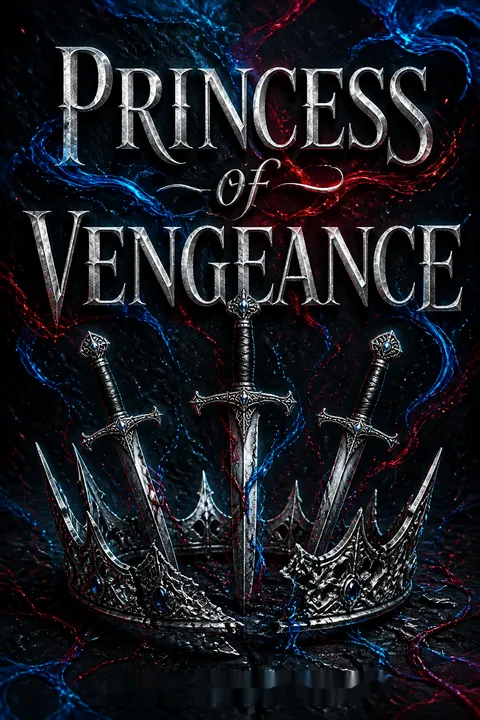
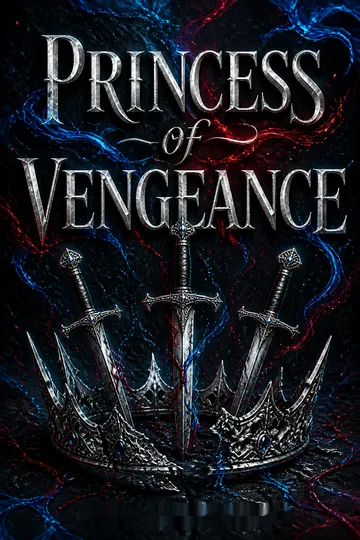
Princess of Vengeance is a searing, high-octane study in transformation: both personal and collective. It's a testament to the ugly, unforgettable truth that survival isn't about erasing trauma but about reclaiming power from those who would use pain as a chain. Eva Ashwood weaves a narrative where mafia romance conventions are inverted: the hero is not the most brutal, but the most persistent; the queen rescues herself; and love is neither simple nor safe, but born from shared scars and active choice.
The novel's lessons are deeply feminist—it interrogates patriarchal violence, explores how women become both weapon and wound, and resolutely refuses to make Quinn a victim, even when victimized. The men in Quinn's life—Atlas, Nico, Killian—are necessary because they see her, respect her, and grow by loving her, healing the learned helplessness that the underworld teaches. The repeated motif of making and breaking blood bonds, then choosing to forge new marks, resonates as an anthem for found family and recovery—vulnerabilities displayed without shame.
Ultimately, Princess of Vengeance is less about defeating an external enemy than about winning the right to define oneself, to love boldly, and to build something better from ruin. Its emotional arc is not a return to innocence but the acceptance and mastery of pain, turning survival itself into an act of vengeance—and of liberation. The message is clear: when old rules burn, the survivors write the new ones, together.
Review Summary
Princess of Vengeance receives mostly positive reviews, with readers praising its explosive finale, character development, and intense chemistry between Quinn and her three love interests. Many highlight the satisfying conclusion, emotional depth, and thrilling action sequences. Common criticisms include excessive spice scenes that disrupt narrative flow, unrealistic post-injury intimacy, predictable plot elements, and some unresolved storylines. Killian's softer moments with the cat Princess were frequently noted as highlights. The bonus epilogue received widespread acclaim.
Characters
Quinn Kent
Once the inheritor of her father's gang Enigma, Quinn is marked by violence, loyalty, and a refusal to be anyone's victim. Orphaned by murder, scarred by betrayal, and hunted by the Syndicate she once tried to outwit, she evolves from a clever, hard-edged survivor into a true queen—ruling not by controlling others, but by making hard sacrifices and forging family from broken souls. Her psychoanalysis is a study in post-traumatic growth: she uses both pain and pleasure to carve freedom from the past, and though haunted by old traumas, her courage never fails. The men she loves (Nico, Atlas, Killian) are her anchors, each meeting a piece of her deepest needs. In choosing them—and herself—over old power structures, she claims agency, revenge, and, finally, peace.
Nico Morelli
Nico is a former leader of the Princes of Carnage, whose charisma and cunning mask a deep capacity for loyalty, gentleness, and self-hate. As the tactician of the group, his psychoanalysis is that of a man shaped by constant responsibility, wounded by the betrayals which split his original gang, and scarred by an abusive upbringing. He struggles with legacy—a father who abandoned him—and transformation—first through his tortured relationship with Quinn, then through reimagining what family can be when forged by choice rather than duty. His love for Quinn is all-encompassing, protective, and intensely physical, but he is capable of giving and receiving devotion in ways that redefine "masculinity" for this criminal world.
Atlas Demaro
Atlas is the muscle of the group, stoic, brooding, and fiercely protective. Scarred by violence and betrayal, he carries guilt for every failure and a need to prove his worth through physical devotion. Atlas's journey is one of learning that his value lies not just in violence or strength, but in loyalty, emotional courage, and the ability to let himself be loved. The psychoanalysis of Atlas is that of someone who has built walls to survive—slowly dismantled by Quinn's trust and his brothers' support. He risks his life without hesitation and comes to understand belonging as something to be claimed, not just earned.
Killian Graves
Killian is brutal, physically intimidating, and famous for his violent efficiency, but beneath his emotionless veneer is a man starved for acceptance and purpose. For much of his life, he believed himself incapable of feeling love or joy. Quinn and the brothers reveal that even the "broken" can heal: he learns, painfully, that real power isn't fear but vulnerability chosen. His arc is a slow, beautiful softening, expressed in small acts of care—a rescued cat, tenderness during Quinn's recovery, and finally, pride in new belonging. His greatest transformation is accepting love as something deserved, not endured.
Malcolm Mercer
The cold, calculating head of the Dark Lotus Syndicate, Malcolm is a misogynist with a god complex. His psychoanalysis reveals a man who can only imagine power through ownership: infecting all relationships with manipulation, blackmail, and transactional violence. His obsession with Quinn is a twisted replay of his rejection by her mother. He cannot see love as anything but control. In the end, his cowardice and reliance on fear prove his undoing. Though intelligent and dangerous, his inability to generate true loyalty marks his demise.
Imogen Brooks
Imogen, a Syndicate member drawn in by the blood-debt system, is simultaneously ruthless and vulnerable. She provides strategic support and hard-won truth, quietly working to subvert Malcolm's rule. Her psychoanalysis is that of someone who protects herself with coldness, scarred by the loss of her sister and the understanding that trauma can be as much a weapon as a wound. Her compassion for Quinn reawakens a desire for a future beyond war, but in risking rebellion, she pays the ultimate price—choosing self-determination over safety.
Elliot Shaw
Elliot is a study in corrupted survivorhood. Once a victim, he becomes the abuser, embracing Malcolm's brutal methods and relishing violence. Betraying the rebels for power, he exposes the depth of his amorality—proving that cruelty replicated is even more monstrous than cruelty born. He enjoys torture, and his final moments reveal his hollowness, even in supposed victory.
Cassandra
Cassandra emerges as both survivor and leader, poised and ruthless when needed, but with an acute sense of honor. She carries old wounds from the Syndicate and chooses to join the rebellion not out of sentiment, but because she recognizes that true power comes from shared agency rather than solo domination. Her psychoanalysis reveals someone who only trusts those who survive the worst together.
Willow
Once a background player, Willow steps up in the final acts as a vital rescuer and emotional anchor for Quinn. She is proof that healthy relationships—platonic, maternal, romantic—can help recover strength in a world addicted to violence. Her choice to intervene is not transactional, but chosen out of genuine care. In doing so, Willow expands the family once again, reminding all that connection saves lives.
The Cat (Princess)
The cat is a symbol: of innocence, trust, and the possibility of caring for something small when the world is brutal. Killian's devotion to Princess is a window into his repressed empathy; the cat's survival becomes a totem for "the small good things that matter," a thread tying the group's humanity to their war for survival.
Plot Devices
Multiple First-Person Points of View
By rotating first-person chapters among Quinn, Atlas, Nico, and Killian, the narrative lays bare each character's wounds, desires, and transformations. This structure amplifies misunderstandings, the costs of mistrust, and—when unity emerges—demonstrates the impossibility of survival alone. Perspective also highlights how each is changed by love and loyalty.
Symbolic Markings and Tattoos
Scars, tattoos, and ritual cuts show who owns whom, who chooses whom, and who breaks free. Blood, paint, and ink are reminders that belonging and punishment can look the same from outside, but differ in meaning—one imposed, one chosen.
Betrayal and Double Agents
Betrayals—even among the closest—are foreshadowed by stress fractures in relationships. Repeated, strategic betrayals (Kendrick's initial turn, Elliot's final treason, Zoey and the Tyrants) teach both the characters and the reader that power without loyalty is fragile. Eventually, only those willing to be vulnerable survive betrayal.
Trauma as Both Weapon and Weakness
Quinn's recurring nightmares, panic attacks, and physical reactions to being caged or assaulted are not distractions from the plot—they are the plot. Violence is cyclical, and only by owning every scar, by sharing the weight, can the cycle be broken. Healing is messy, nonlinear, and often indistinguishable from further wounding.
Direct, Streamlined Dialogue and Combat
The narrative strips away superfluous description, focusing instead on tense, rapid-fire exchanges and visceral, kinetic action. This propels the plot, reveals character under stress, and ensures the emotional arc doesn't get lost in a labyrinth of detail.
Reversals of Power and Gender
Quinn is never a passive prize or a mere object of desire; plot structure foregrounds her choices, sacrifices, and the costs of agency in a mafia-patriarchy. Sex, violence, and negotiation become arenas for proving self-worth, rewriting the genre's tired gender scripts.
Closure, but Not Fairy Tale
When Quinn and the Princes win, victory comes at a cost, and they don't pretend love alone heals all wounds. Instead, scars are worn as proof of survival. The future is a risky, ambitious alliance—The Collective—built on mutual trust, not on fear or blood debt.
Pretty Ruthless Monsters Series Series
About the Author

Download PDF
Download EPUB
.epub digital book format is ideal for reading ebooks on phones, tablets, and e-readers.








































