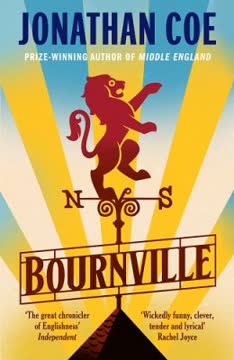
Plot Summary
Prologue: Pandemics and Portents
In March 2020, Lorna, a jazz musician, lands in Vienna for an emotionally charged performance tour, shadowed at every step by the mysterious onset of the Covid-19 pandemic. Airports are subdued, faces are masked, and people are visibly on edge. Her interactions—and especially the casual stockpiling of toilet paper by her host—underline a sense of impending rupture to normal life. At the same time, the story introduces the centrality of intergenerational family relationships, as Lorna's efforts to Skype her technologically challenged Gran reflect both affection and persistent distance. The mood is one of tension between the old world of expected routines and the seemingly unstoppable arrival of global uncertainty. Gentle humor and quiet dread interweave as Lorna's journey sets the novel's tone: the personal is always inseparable from the historical, and collective anxieties seep into every private moment.
The Chocolate Village Origins
The origins of Bournville are explored: a unique village in England founded by the Cadbury family, Quakers determined to create a harmonious haven where business, nature, and community coexisted. The village grows from meadows to a blooming, industrious community, all set around the chocolate 'Works' that shape both daily life and identity. Cadbury's desire to inject a trace of European sophistication into their English chocolate finds echo in the choice of the name 'Bournville'. This founding vision embodies a paradox—a subtle complexity where Englishness is laced with a yearning for continental elegance, showcasing how identity is rarely pure and always in flux. Readers taste the sweetness of idealism but sense the undercurrents of anxiety about belonging and national pride.
VE Day—Victory and Violence
As World War II ends, Bournville is gripped by relief and uncertainty. For Mary, an intelligent, sensitive girl, VE Day is full of subdued celebration, mundane arguments about piano practice, and the thrill of anticipated freedom. Yet, the joy quickly turns as the communal bonfire deteriorates into violence—the Lamb family's German grandfather, Mr. Schmidt, is attacked in the xenophobic fervor. Memory doesn't just record the jubilation but also the cruelty and scar tissue of war, reflected in the bloodied yellow cravat Mary keeps as a private relic. Throughout the day, family routines, silent grievances, and small joys are set against national events, capturing the way grand history always intersects with the humdrum texture of personal life.
Coronation, Change, and Childhood
The coronation of Elizabeth II in 1953 is observed through the prism of family life and technological marvel as televisions become central to collective witnessing. Mary matures into the young woman at the heart of the story, her athletic, outgoing demeanor contrasting with the shier, more intellectual Geoffrey—her soon-to-be husband. Through diary entries and memories, the period is depicted as one of bright promise and social optimism, yet tension simmers beneath the surface: class differences, subtle prejudices, and rigid values persist. The chapter highlights the ritual of gathering, the magic of television's global reach, and the formation of memory—how seeing history together forms personal and national identity, but also prepares the ground for later divides.
Marriage, Memory, Migration
Mary's courtship culminates in her engagement and eventual marriage to Geoffrey, a match rooted in mutual respect but lacking the kinetic spark of young love; in the background, Kenneth—her charming, politically engaged friend—lingers as a road not taken. Migration, both literal and metaphorical, defines the era: friends move, Europe beckons, the past is both a security blanket and a chain. The family's happiness is fragile, shadowed by cultural change and latent insecurities about their place in a transforming Britain. Old traditions brush up against newly forming ones; the personal is always hooked to wider social trends. Mary's dreams and disappointments, recounted in quietly witty diary entries, hint at the complexity—and irreducibility—of how we come to be who we are.
Family Threads Entwined
The 1960s swirl with hopes, anxieties, and cross-continental kinship. Mary and Geoffrey's family grows, their son Peter emerges as an artistic, withdrawn soul, while the competitive Jack and steady Martin develop opposing worldviews. Meeting their German cousins during the 1966 World Cup—where England faces West Germany—exposes ingrained attitudes about nationhood, culture, and inherited conflict. Chocolate, both as a literal treat and as a symbol of identity, is a recurrent motif, uniting and dividing in equal measure. Children embody the fusion of past and future, playfully re-enacting historical aggression in the shelter-turned-playhouse. What begins as childhood rivalry reveals deeper currents of cultural difference, pride, and a longing for kinship denied by generations of war.
World Cup and Divided Loyalties
The feverish drama of the 1966 World Cup final—England's controversial win over West Germany—becomes a crucible for family pride and national anxiety. The game's outcome is debated fiercely among children and adults, acting as a touchstone for broader questions: What does it mean to be English, or German, or European? Hostilities from the war echo in friendly (and less friendly) ribbing, the boundaries of identity maintained in jest and in genuine grievance. The uneasy fusion of nostalgia, competitiveness, and anxiety about change pulses through the household. The prize for victory is pride, but also the conviction that life, like sport, is a winner-takes-all game—an ethic that will have consequences as the years roll on, shading innocence with the specter of future loss.
Tides of Change, 1969
A joint family holiday in North Wales frames a tale of childhood creativity, awakening, and hidden political turmoil. David, Mary's cousin's son, recalls his young friendship with Sioned, a local girl, and the simple, beautiful story they co-author about an underwater village. Sioned shatters their fantasy, revealing the real story of Capel Celyn—a Welsh village flooded to provide water for Liverpool, symbolizing the cost of progress and the bitterness of colonial neglect. Simultaneously, the backdrop of Welsh nationalist protest and covert MI5 intervention (involving family members) injects a bruising reality: even the private world of children can't escape the shocks of history, loss, and divided allegiances. The investiture of Prince Charles as Prince of Wales becomes another flashpoint of unresolved identity.
The Royal Wedding, Shifting Sands
The 1981 wedding of Charles and Diana provides an occasion for collective hope, celebration, and the awkward pleasures of family gatherings. Watching in Bournville, the Lambs—now connected by marriage to new neighbors from India—exemplify Britain's shifting social fabric. Yet the ceremony, watched by millions, only briefly camouflages deeper divides: silent prejudices, marital tensions, and social conservatism run beneath outwardly cheerful surfaces. For older family members, it is a moment of escape and renewal; for the younger ones, it is a stage set for mounting complexities. The chapter closes with multiple internal monologues, revealing that unity is often a carefully tended illusion and that true acceptance, especially across cultures and generations, remains elusive.
Chocolate Wars in Europe
The 1990s see Martin—now a Cadbury executive—waging a literal and symbolic 'chocolate war' at the heart of the European Union, fighting for British chocolate's place on the continent. The battle exposes British Euroscepticism, the power and dangers of humor in journalism (notably in the rise of "Boris"), and the profound differences wrought by history, taste, and bureaucracy. Martin's technical expertise is constantly at odds with the emotional narratives spun about chocolate, Englishness, and the idea of Europe. The Lambs' story weaves into the fate of the nation: the question of who decides what is truly "British" (or even truly chocolate) remains fraught, as personal histories drown beneath tides of political change.
Loss and Loneliness—Princess Diana
The death of Princess Diana in 1997 is an emotional shockwave felt distinctly by each family member—grief, bafflement, and anger woven through daily routines and private lives. For Peter, Diana's funeral is a time of personal trembling, as he navigates burgeoning acceptance of his sexuality, a faltering marriage, and the ache of true intimacy. The story's lens widens to show how national mourning can mask private agonies, with characters' longings for connection echoing the public's outpouring of loss for a woman they never truly knew. At the edges, friends and family falter, unable to cross boundaries of understanding—yet the act of telling, remembering, and performing music offers slim hope for healing.
Generations Apart, Generations Together
The new millennium draws the Lamb family—and the nation—into the complexities of globalization, multiculturalism, and personal dislocation. The family tree splits and reformulates: marriages dissolve and re-form, children scatter, and memories are both treasured and contested. Atonement and regret compete with pride and habit. Mary, increasingly frail yet fiercely independent, embodies the challenge of aging into a rapidly changing world. The wounds of silence—homophobia, class divisions, unresolved rifts over Brexit—are exposed at family funerals and festive gatherings alike. The interplay of joy and disappointment resembles a melody with no resolution, as new arrivals (like the Iranian Nazari family) take up residence, making the old new again.
Lockdown, Reunion, Requiem
Covid-19's arrival forces the Lambs and their extended kin into states of isolation—both literal and emotional. Mary's world contracts to the ritual of phone calls to Peter, to the daily presence of her cat, and to memories of a Bournville long gone. The loss is physical—a deprivation of touch, of conversation, of celebration at life's crucial milestones. Technology (Skype, Zoom, online amenities) becomes a bittersweet lifeline, yet nothing replaces the body in shared space. Death arrives, as always, without warning but now compounded by medical bureaucracy and the cruelty of rules: funerals are held with only twelve mourners, family connections wither at a distance. Yet, in a final act of defiance and love, Mary's last meeting with her son echoes the ethic of the entire novel: being together matters, even when language fails.
Endings, Beginnings, and the Loop of Time
The story's final movement is not simply an end but a circling back to Bournville's green heart. Objects—yellow cravats, diaries, chocolates—become relics of eras past and threads that tie generations. New owners inhabit old homes, public rituals (VE Day, funerals) persist with changed faces, and the children's voices on the playground offer the same contrapuntal melody to broom strokes as they did 75 years ago. The recurring phrase "Everything changes, and everything stays the same" resonates—a meditation on time, memory, and the stubborn endurance of hope. The Lambs' story, like that of Bournville, is both unique and archetypal: a family, a nation, forever remaking itself at the crossroads of history and the human heart.
Analysis
Bournville is both an intimate family saga and an insightful meditation on Britishness—its promises, hypocrisies, ruptures, and hopes. Jonathan Coe masterfully uses the microcosm of one Midlands clan to excavate the persistence and perils of tradition, the illusions and traumas of unity, and the pain and necessity of change. The Lambs are not simply "everyfamily"; they are a prism through which we see the slow, attritional work of history as experienced by ordinary people responding to extraordinary times. The novel insists that commemoration—whether of victories (VE Day) or losses (Princess Diana, a mother's death)—is less about the events themselves than the ways we use memory to protect or interrogate self-understanding. In its final chapters, Bournville is fearless about the cost of silence, of unaddressed wounds, and the fact that generational progress is never automatic, but achieved painstakingly through reckoning, regression, and sometimes, finally, acceptance.
At its core, the book is a love letter to the everyday—rituals, objects, tastes, music, and voices that endure—and a warning about nostalgia's double edge. It mourns what is lost but refuses sentimental comfort, showing that kindness and inclusion, while possible, require more than ceremonies or chocolate: they demand truth, self-examination, and the willingness to be changed by both pain and love. For our modern era of uncertainty and division, Bournville's gentleness is radical: it asks whether being a family, or even a nation, means huddling together for warmth, or daring to open the door to the next wave of strangers and difference, knowing all the risks—and all the possibilities.
Review Summary
Reviews of Bournville are mixed, averaging 3.78/5. Admirers praise its sweeping family saga, clever structure, and engaging portrait of postwar Britain through seven key national events. Critics find it overly didactic, predictable, and politically heavy-handed, with underdeveloped characters and too much historical narration overshadowing genuine storytelling. Many note it falls short of Coe's earlier masterworks like What a Carve Up! and The Rotters' Club. The treatment of Boris Johnson, the monarchy, Brexit, and the COVID pandemic divides readers, with some appreciating the sharp satire and others finding it preachy and on-the-nose.
People Also Read


Characters
Mary Lamb (née Clarke)
Mary is the emotional and psychological heart of the narrative—a woman born into the hopeful utopianism of Bournville's chocolate vision, growing up through wars, coronations, and social revolutions. Her early athleticism and musical talent signal her capacity for joy, yet she embodies the compromises of mid-century femininity: wife, mother, teacher, and keeper of tradition, even as she is forced to navigate the arrival of new values, cultures, and discomforts. Her relationships—with self-doubting Geoffrey, lively children, and defiant in-laws—test her ability to adapt. Psychologically, Mary is both robust and prone to defensiveness; her real growth is marked by the slow reckoning with regrets (lost loves, prejudices, kindness withheld), especially as loneliness and illness close in. Her final openness on her deathbed, and her willingness to face her own blind spots, offer the possibility of reconciliation, if not resolution.
Geoffrey Lamb
Geoffrey, Mary's husband, is a product of meritocratic ambition, deeply invested in notions of respectability, stability, and order. A bank manager with hidden classicist aspirations, he is burdened by snobbery and an inability to express emotion—traits exacerbated by decades of quiet dislocation and social change. His relationships—with Mary (who outpaces him emotionally), with his children (especially Martin and Peter, whom he struggles to understand), and with the broader world—are shaped by an unconscious rigidity. As times change, Geoffrey withdraws, unable to recognize his son's sexuality, or to welcome his daughter-in-law Bridget, despite decades together. His tragic arc climaxes in a breakdown after Diana's death, when his repressed grief finally bursts forth—his only open display of feeling.
Jack Lamb
Jack channels the self-confidence and tribal competitiveness of postwar Britain, thriving in sales and business, and always the life of the party. He is a joker, a risk-taker, and at times, an unreflective upholder of casual prejudice and received wisdom. Yet beneath the bravado is a genuine tenderness—especially for his mother—and a vulnerability that surfaces in moments of loss. His outlook, shaped by the competitive, winner-takes-all values of postwar prosperity, renders him blind to the subtler pain of others, notably in family conflict and the apparent triviality with which he treats Brexit's fallout. Jack is both lovable and exasperating, a man for his era—and sometimes, unfortunately, lost in the next.
Martin Lamb
Martin, the measured son, finds purpose in practical competence (first in the Cadbury staff amenities, later as a chocolate export manager) and in European optimism. He is principled, serious, and sometimes gloomy, especially as the tide of British Europskepticism rises. His marriage to Bridget—who gently outshines him in ambition—offers moments of equality and partnership. Yet Martin is deeply affected by family rifts, the sense of British decline, and the pain of seeing fairness and reason overwhelmed by bluster. He is the family's chronicler and, in later life, a bridge between generations—cautiously hopeful, quietly resigned, ever analytical.
Peter Lamb
Peter is both prodigy and outsider, a gifted musician and the child who never quite fits the family mold. His development is marked by yearning—for maternal approval, for emotional intimacy, for self-acceptance as a gay man in a reserved household. Peter carries a quiet ache—a need for connection that is constantly frustrated by family silences and social taboos. The trauma of unexpressed pain, the quest for recognition, and the evolving relationship with his mother (from distance to rediscovered closeness late in life) mark his psychological arc. His story is ultimately one of hard-won individuality and the uncertain, valuable hope for future generational healing.
Bridget Lamb
Originally an outsider—a Scottish, Black woman working in law—Bridget becomes not just Martin's partner but the family's conscience. She brings modern sensibilities, pushes against prejudice, and offers sharp, sometimes merciless insights. Bridget's relationship with Mary grows from provisional respect to genuine love-with-critique, culminating in a powerful, disruptive funeral speech that forces all to reconsider the comfortable fictions of "family." Her psychological arc is that of the perennial outsider: trying to belong, refusing to be quiet, and demanding real accountability, not just politeness and ritual.
Lorna Simes
Lorna, Martin and Bridget's daughter, is a quietly assertive artist—a musician who navigates both the creative world and the expectations of family and culture. As a woman of mixed heritage growing up in a changed Bournville, she naturally scrambles markers of identity and resists easy categorization. Lorna's journey mirrors those of her forebears—carrying history's baggage while forging new connections, especially in pandemic times, when she supports and is tested by her grandmother's decline. Her psychoanalytic depth lies in her role as catalyst and healer across the generations.
David Foley
A cousin by marriage, David is defined by his acute, emotionally precise memory—a writer, poet, and professor whose childhood and adolescence intertwine with the Lambs' story. Growing up burdened and yet animated by family secrecy, misunderstandings, and unrequited relationships (notably with Sioned), David becomes the inheritor of stories, tasked with making meaning of them for himself and others. His adult life, marked by divorce and later reconnection, traces the pain and catharsis of coming "home" to the truth after decades of displacement.
Sioned
First encountered as a bold, funny Welsh farm girl, Sioned matures into a journalist and passionate advocate for her community and heritage. She brings an outsider's—and a nationalist's—wit to the narrative's Englishness, never letting sentimentality off the hook and always asking how history's wrongs might be righted. Her complicated involvement with both David and the family's submerged secrets helps expose layers of class, colonialism, and memory that otherwise might remain untouched. Sioned is the voice of contradiction—empathic, skeptical, and unafraid to disrupt.
Shoreh Nazari
The Iranian woman who, with husband Farzad, eventually inhabits Mary's childhood home, literally and metaphorically opens the narrative into new possibility. Her sensitivity to the echoes of history found in lost diaries and artifacts allows Bournville's legacy to become truly transnational. Through Shoreh, the continuing community is reborn—not as a drama of loss, but one of mixing, curiosity, and continuity: "everything changes, and everything stays the same."
Plot Devices
Multi-Generational Epic Structure
The novel spans nearly a century but does so in nested, overlapping sections—"occasions"—each centered on pivotal moments of British public life and their resonance in family life. Generational changes are mapped both through grand events (VE Day, royal weddings, World Cups, pandemics) and through the more intimate, recurring rituals of dinners, funerals, and conversations. The narrative returns to specific sites and metaphors (the garden, the house, the park bench) to anchor this high-concept movement in ordinary sensory detail.
Integration of Public and Private History
Both the grandeur and trauma of twentieth-century Britain are captured through family eyes, letting collective experience infiltrate domestic rituals and vice versa. Devices such as diaries, music performances, and conversations act as portals where personal emotion and public life blend. Shockwaves from global events—wars, deaths, referenda—are measured not just in headlines but in their residue on kitchen counters, in childhood games, and in adult regrets. The narrative's repeated tension is between the "public show" and "private cost" of history.
Recurring Motifs and Objects
A yellow cravat, chocolate bars, lost diaries, garden tools, baking rituals—these mundane objects become repositories of memory, standing for what is lost, unspoken, or yearned for. Their reappearance, sometimes decades apart, helps tie disparate epochs together with emotional force. The act of finding or losing them often signals cracks in generational understanding or, alternately, moments of tentative healing.
Polyphony, Interior Monologue, and Free Indirect Discourse
The novel often shifts point of view within and across chapters, sometimes dissolving into multi-voiced interior monologues at key events (royal wedding, funerals, lockdown). This creates a chorus of impressions—conflicting, overlapping, and poignant—suggesting both how history is made of micro-experiences and how every major event is colored by private hopes, dread, and memory.
Narrative Irony and Self-Consciousness
The story is layered with meta-awareness: characters debate the meaning of "Englishness," argue over historical memory, and repeatedly notice how collective rituals fail to heal, or sometimes enable the very wounds they seek to commemorate. The use of official pronouncements (royal speeches, news broadcasts, government edicts), placed against family banter or bitter familial infighting, produces both pathos and biting satire.
Foreshadowing and Closure
The book is structured to end in the tangible present—lockdown, the loss of Mary, the uncertain new Bournville—yet nearly every chapter quietly plants the seeds for what will come: buried prejudices emerging, objects lost and found, children's songs echoing forward. Rituals repeat with difference: funerals mirror earlier processions, Skype calls recall early family phone trees, chocolates eaten in joy and in mourning. Time is circular, relentless, but never quite the same—everything changes, everything stays the same.








































