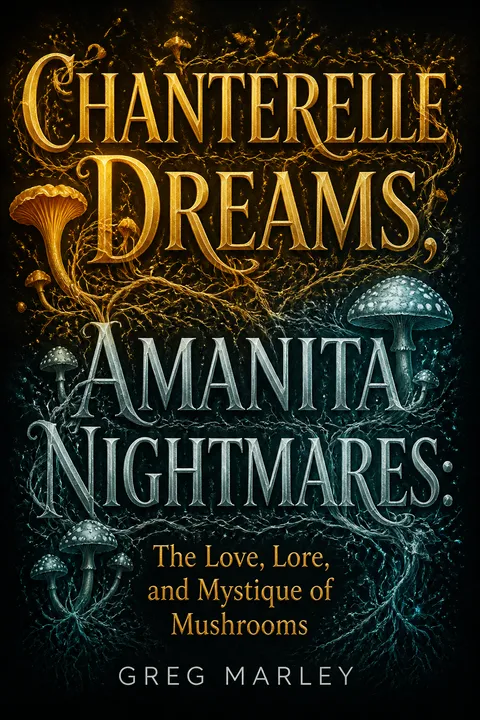
Key Takeaways
1. Cultural divides shape our relationship with fungi (Mycophilia vs. Mycophobia)
The terms "mycophilic" and "mycophobic" were coined in 1957 by an international banker and famed amateur mycologist, R. Gordon Wasson, to describe differences between ethnic groups with regard to their attitudes, beliefs, and use of wild mushrooms.
Cultural inheritance. Our relationship with mushrooms is deeply divided by cultural heritage. Mycophilic cultures, such as those in Russia, Eastern Europe, and parts of Asia, view mushrooms as cherished friends, integrating them into folklore, daily cuisine, and family traditions. Conversely, Anglo-Saxon cultures, including mainstream America, have historically suffered from deep-seated mycophobia, viewing wild fungi with suspicion, disgust, and fear.
The American shift. In recent decades, America has begun to transition from its mushroom-fearing roots toward a burgeoning mycophilia. This shift is driven by a desire to reconnect with ancestral culinary traditions, the rise of ethnic cuisines, and a growing environmental consciousness. Foraging has evolved from a suspect eccentricity into a celebrated outdoor pursuit.
The double-edged sword. While embracing wild mushrooms opens up a world of culinary delight, it also introduces risks. In highly mycophilic countries, mushroom poisonings are actually more common because so many more people forage, sometimes with misplaced confidence. To safely navigate this transition, Americans must replace inherited fear with rigorous, scientific education.
- Mycophilic regions: Russia, Poland, Czech Republic, Japan.
- Mycophobic regions: Great Britain, historical United States.
- Key drivers of change: Slow Food movement, back-to-the-land ethics, gourmet culinary trends.
2. The "Foolproof Four" offer a safe entry point for novice foragers
The beginner is advised to start with these puffballs in risking his life in the cause of mycophagy. But there is no risk, for they are all both safe and good to eat so long as the flesh is white, dry and compact.
A simplified roadmap. To ease the anxiety of the novice forager, mycologist Clyde Christensen introduced the concept of the "Foolproof Four" in 1943. These four mushrooms are common, highly distinct, and lack deadly look-alikes, making them the perfect starting point for anyone looking to transition from the supermarket aisle to the forest floor.
The chosen four. The classic quartet consists of morels, puffballs, the sulphur shelf (chicken mushroom), and shaggy manes. Each of these mushrooms possesses unique physical characteristics that make misidentification highly unlikely for an observant collector:
- Morels: Distinctive honeycomb-pitted caps and completely hollow interiors.
- Puffballs: Spherical, white-fleshed globes that must be pure white inside.
- Sulphur Shelf: Bright orange and yellow bracket fungi growing on wood.
- Shaggy Manes: Cylindrical, scaly white caps that dissolve into black ink with age.
The golden rule. Even within this "foolproof" group, safety requires strict adherence to basic foraging guidelines. Foragers must always cook these mushrooms thoroughly, as raw morels and sulphur shelves contain heat-labile toxins that can cause severe stomach upset. Additionally, puffballs must always be sliced open to ensure they are not immature, deadly Amanita buttons.
3. Chanterelles represent the gold standard of predictable, mycorrhizal foraging
The best, time-tested mushroom meals require few complex cooking techniques and even fewer special ingredients beyond the right kinds of mushrooms.
The golden treasure. The golden chanterelle (Cantharellus cibarius) is arguably the most popular and widely sought wild mushroom in the world. Its bright yellow-orange color, elegant vase-like shape, and intoxicating aroma of fresh apricots make it a joy to find and a masterpiece on the dinner plate.
Mycorrhizal predictability. Unlike saprobic mushrooms that move around as they exhaust their food supply, chanterelles are mycorrhizal, forming stable, symbiotic relationships with tree roots. This means they will fruit in the exact same forest locations year after year, allowing foragers to map and return to their personal "secret spots" every summer.
Culinary respect. Chanterelles possess a delicate, fat-soluble flavor that is easily overwhelmed by heavy spices or tomato-based sauces. They are best prepared simply, sautéed in butter or cream, and paired with mild ingredients like eggs, chicken, or pasta. Foragers should never dry chanterelles, as dehydration destroys their unique texture and aroma; instead, sauté and freeze them for preservation.
4. Boletus edulis (Porcini) reigns as the king of culinary and dried mushrooms
Ancient tradition has it that should you ever chance upon a lone Cep, you should ask it quietly, "Where is your brother?" since they invariably grow in pairs.
The king of boletes. Known as the king bolete, porcini, or cep, Boletus edulis is a culinary titan celebrated globally for its rich, nutty flavor and dense, meaty texture. Characterized by a fat, club-like stem with net-like reticulations and a smooth, brown cap, it features a sponge-like pore surface instead of gills.
The magic of drying. While fresh porcini are a seasonal luxury, drying actually concentrates and intensifies their flavor, creating a rich, earthy essence that far surpasses the fresh mushroom. The soaking liquid from reconstituted dried porcini makes an incredibly flavorful stock for risottos, soups, and gravies.
Wary harvesting. Because porcini are highly attractive to forest insects, foragers must harvest them young, before the white pore surface turns yellow-green and becomes a breeding ground for fungus gnats. When foraging for boletes, avoid any species with red pores that stain blue when bruised, as several of these are known to cause severe gastrointestinal distress.
5. Deadly Amanitas inflict silent, delayed, and devastating organ failure
Amatoxins, the liver-destroying toxins found in amanitas, are so potent that it takes as little as 0.1 milligram (mg) of alpha-amanitin per kilogram of body weight to kill a person.
The silent killers. The death cap (Amanita phalloides) and the destroying angels (Amanita bisporigera and A. virosa) are responsible for the vast majority of fatal mushroom poisonings worldwide. These elegant, white or greenish-beige mushrooms contain amatoxins, which ruthlessly halt protein synthesis in human cells, targeting the liver and kidneys.
The deceptive delay. The true horror of amatoxin poisoning lies in its delayed onset. Symptoms do not appear until 6 to 24 hours after ingestion, by which time the toxins have already been absorbed and begun destroying the liver. This is followed by a deceptive "honeymoon phase" of temporary recovery before complete liver and kidney failure sets in.
Avoiding the genus. Because there is no universal antidote, treatment relies on aggressive hydration, activated charcoal, and experimental therapies like injectable silymarin (milk thistle extract) or, ultimately, a liver transplant. To stay safe, foragers must learn the anatomical hallmarks of the genus Amanita and avoid eating any members of this group:
- White gills that are free from the stem.
- A ring (annulus) on the stem.
- A bulbous stem base enclosed in a cup-like sac (volva).
- A white spore print.
6. The false morel (Gyromitra) is a high-stakes gamble with volatile toxins
Persons who decide to continue this gastronomic gamble should have the number of their regional poison centers engraved on their eating utensils.
The rocket fuel toxin. False morels (Gyromitra esculenta) contain gyromitrin, a toxin that converts in the human stomach into monomethylhydrazine (MMH)—the exact chemical used as liquid rocket fuel. MMH is highly volatile, meaning it can evaporate during cooking, potentially poisoning the cook simply through the inhaled steam.
A cultural paradox. Despite its deadly potential, the false morel is considered a prized delicacy in Finland and parts of the American Great Lakes region. In Finland, it is sold commercially with mandatory warning labels and preparation instructions that require boiling the mushrooms twice in large volumes of water to leach out the toxins.
The narrow threshold. Eating false morels is a dangerous gamble because the threshold between a symptom-free dose and a lethal dose is incredibly narrow. Individual sensitivity varies wildly, and a person can eat them safely for years only to be suddenly and severely poisoned by their next meal. Symptoms include severe headache, vomiting, jaundice, and potentially fatal convulsions.
7. Historically "safe" mushrooms can harbor hidden, delayed, or immune-mediated dangers
The history of the poison pax shows us that rarely is there a mild case.
The poison pax mystery. For generations, the poison pax (Paxillus involutus) was widely collected and eaten across Eastern Europe, with foragers believing that thorough cooking rendered it perfectly safe. However, scientists eventually discovered that repeated consumption of the mushroom can trigger a deadly, cumulative immune response.
Antigenic destruction. The poison pax contains an antigen that stimulates the human body to produce IgG antibodies. Over time, these antibodies build up, and upon a subsequent meal of the mushroom, they form complexes that attach to and violently destroy the victim's own red blood cells, causing acute hemolytic anemia, shock, and kidney failure.
The fallen angel. A similar tragedy occurred in Japan in 2004, when the historically popular "angel wings" mushroom (Pleurocybella porrigens) suddenly caused an outbreak of fatal brain disease (encephalopathy) in elderly people with compromised kidney function. These cases serve as a stark warning that a mushroom's long history as an edible does not guarantee its safety for everyone.
8. Psychoactive mushrooms serve as powerful entheogens and tools for clinical healing
To eat the mushrooms, you must be clean: they are the blood of our Lord the Eternal Father.
Sacred gateways. For thousands of years, indigenous cultures have used psychoactive mushrooms containing psilocybin as "entheogens"—sacred substances used to generate the divine within. Rather than being used as recreational intoxicants, these mushrooms were treated with immense reverence and used in highly structured, ritualized healing and spiritual ceremonies.
The clinical renaissance. After being banned in the 1970s due to the excesses of the counterculture movement, psilocybin is currently undergoing a scientific renaissance. Modern clinical studies at institutions like Johns Hopkins have shown that psilocybin, when administered in a controlled "set and setting," can induce profound, life-altering mystical experiences that significantly reduce anxiety, depression, and the fear of death in terminally ill patients.
The fly agaric alternative. Unlike psilocybin, the fly agaric (Amanita muscaria) contains ibotenic acid and muscimol, which produce a more physical, delirious state of intoxication often accompanied by deep, dream-filled sleep. This iconic red-and-white mushroom is deeply woven into Siberian shamanism, European folklore, and is even postulated to be the historical origin of flying reindeer and Santa Claus myths.
9. Fungi are the invisible, interconnected keystones of forest ecosystems
Paul Stamets, author of Mycelium Running, refers to this system as "Earth's natural Internet."
The wood-wide web. Beneath the forest floor lies an unimaginably vast network of microscopic fungal threads called mycelium. This network connects the roots of different trees and plants, acting as a biological internet that facilitates the sharing of water, nutrients, and chemical warning signals across the entire forest ecosystem.
Keystone relationships. The health of our forests depends on a complex, triangular relationship between trees, truffles (underground-fruiting fungi), and small mammals like the northern flying squirrel. The trees provide sugars to the mycorrhizal truffles, the truffles provide water and minerals to the trees, and the flying squirrels dig up and eat the fragrant truffles, dispersing their thick-walled spores through their feces.
Ecosystem engineers. Wood-decaying fungi, such as heart-rot species, act as vital ecosystem engineers by softening the wood of living and dead trees. This decay allows primary cavity nesters like the pileated woodpecker to excavate nesting holes, which are later inherited by secondary cavity nesters like owls, bats, and flying squirrels, dramatically increasing forest biodiversity.
10. Home cultivation integrates fungi into sustainable permaculture systems
You cannot find a mushroom without leaving the house.
Permaculture integration. Growing mushrooms at home is an excellent way to integrate fungi into sustainable permaculture systems. By utilizing organic waste products like wood chips, sawdust, straw, and logs, home gardeners can cultivate delicious, gourmet mushrooms while simultaneously building soil fertility and structure.
Easy starter species. For the beginner, several species of mushrooms are highly forgiving and easy to cultivate outdoors:
- Wine Cap Stropharia: Aggressive wood-chip colonizers that can be planted directly into garden mulch or pathways.
- Oyster Mushrooms: Highly adaptable fungi that can be grown on logs, straw, or even recycled cardboard and paper.
- Shiitake: Classic gourmet mushrooms grown by inoculating hardwood logs with spawn-filled wooden dowels.
The quiet harvest. Outdoor mushroom cultivation requires patience, as it can take six months to a year for the mycelium to fully colonize a log or bed before producing its first crop. However, once established, these perennial fungal patches will reward the patient gardener with a bountiful, predictable harvest of fresh, healthy mushrooms for years to come.
I confirm that I have written detailed takeaways for ALL 10 key takeaways in the format requested.
Review Summary
Chanterelle Dreams, Amanita Nightmares receives generally positive reviews, averaging 3.95 stars. Readers appreciate its blend of mycological science, cultural history, folklore, and foraging guidance, praising the author's infectious enthusiasm and balanced approach to safety. Many recommend it as an ideal introduction for beginners and casual enthusiasts alike. Common criticisms include lack of clear focus, insufficient photographs, inconsistent organization, and an East Coast-centric perspective. Several reviewers note it reads as part field guide, part narrative history, though most agree it successfully inspires curiosity about the fascinating world of mushrooms.
Download PDF
Download EPUB
.epub digital book format is ideal for reading ebooks on phones, tablets, and e-readers.








































