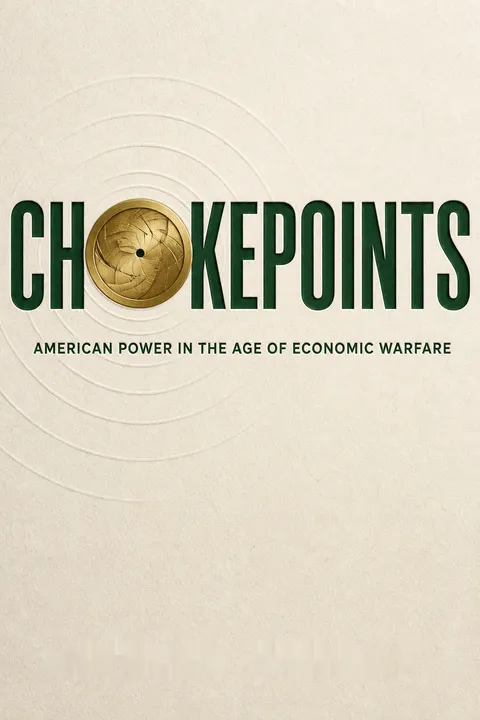

Key Takeaways
1. Economic Warfare: The New Global Battlefield
This is economic warfare. It is how America fights its most important geopolitical battles today.
A new kind of war. Economic warfare has evolved from ancient trade embargoes to sophisticated, non-violent tactics, becoming America's primary tool for addressing global security challenges. Unlike conventional military force, economic weapons leverage global interdependence, allowing the U.S. to exert immense pressure without direct military engagement. This shift is driven by the interconnectedness of the modern world economy, where actions by U.S. officials can create far-reaching ripples.
Historical limitations. Historically, economic warfare often failed due to the need for formidable naval power or broad international consensus, which was difficult to sustain. Examples like Pericles's Megarian Decree, Napoleon's Continental System, and the League of Nations' failures against Italy and Japan demonstrated these limitations. The UN embargo on Iraq in the 1990s, while effective in some ways, was costly, required a naval blockade, and ultimately didn't prevent war, leading to skepticism about economic tools.
Globalization's paradox. The paradox of globalization is that while it fostered unprecedented economic integration, it also created new vulnerabilities. The very systems designed for efficiency and profit became "chokepoints" that could be exploited for political ends. This realization, particularly after 9/11, transformed economic tools from symbolic gestures into potent instruments of statecraft, enabling America to "win without fighting" in ways previously unimaginable.
2. The Dollar's Unseen Power: America's Ultimate Chokepoint
The U.S. government is the gatekeeper at each point along this invisible infrastructure.
The dollar's dominance. The U.S. dollar underpins the global economy, serving as the default currency for international trade, finance, and foreign exchange. This pervasive role, solidified by the post-WWII Bretton Woods system and later by the petrodollar recycling agreement with Saudi Arabia, grants the U.S. unparalleled leverage. Most international transactions, even between non-U.S. entities, involve the dollar, often clearing through U.S.-based financial institutions.
Weaponized finance. This dominance means that access to the dollar and the U.S. financial system is a necessity for global commerce. With a simple executive order, the U.S. president can deny foreign firms access to this "invisible infrastructure." Banks worldwide, regardless of their headquarters, comply with U.S. sanctions to avoid severe penalties, effectively becoming "reliable infantrymen on the front line of U.S. sanctions enforcement."
Globalization's unintended chokepoints. The architects of globalization, like Alan Greenspan and Walter Wriston, inadvertently created these chokepoints. Their focus on free markets and interconnected systems led to a centralized financial network that, while efficient, became susceptible to political exploitation. This transformation allowed the U.S. to wield economic weapons with reduced cost and amplified impact, even against powerful adversaries, without needing military force or UN consensus.
3. Iran: The Proving Ground for Financial Warfare
One bank at a time, Washington would condition the international financial system to reject all business with Iran—not because governments required it but because banks deemed it the right risk-based business decision.
A new strategy emerges. After 9/11, Stuart Levey at the Treasury Department challenged the notion that sanctions against Iran were ineffective. Recognizing Iran's deep ties to the global economy, he devised a strategy to directly target foreign banks and companies, leveraging their aversion to legal and reputational risk. This "whisper campaign" aimed to persuade them to voluntarily cut ties with Iran, even without explicit government mandates or UN resolutions.
Targeting financial networks. Levey and his team, including Adam Szubin, systematically exposed Iran's deceptive financial practices, such as "stripping" transaction data, and imposed "blocking sanctions" on major Iranian banks. These measures, combined with the threat of secondary sanctions under the Comprehensive Iran Sanctions, Accountability, and Divestment Act (CISADA), effectively severed Iran's access to the U.S. financial system and the dollar, including crucial "U-turn transactions."
Oil as the last bastion. Despite initial successes, Iran's oil revenues continued to fund its nuclear program. Congressional pressure led to the Menendez-Kirk amendment, which targeted Iran's Central Bank and its oil sales. Treasury developed a "gradual oil reduction strategy," offering waivers to countries that significantly cut imports, and later mandated escrow accounts for oil payments, effectively denying Tehran access to its petrodollars. This economic squeeze led to:
- The rial's collapse
- Soaring inflation and unemployment
- Widespread social unrest
- The election of Hassan Rouhani, who campaigned on sanctions relief.
This pressure ultimately paved the way for the 2015 nuclear deal (JCPOA), demonstrating the unprecedented power of weaponized finance.
4. Russia (2014): The Scalpel and the Cost of Caution
The sanctions were intended to change Putin’s calculus—to convince him that a larger invasion of Ukraine was not worth the costs, and to coax him into peace negotiations with Poroshenko.
A different adversary. Russia's 2014 annexation of Crimea presented a new challenge: a nuclear superpower deeply integrated into the global economy, especially with Europe. Unlike Iran, a full-scale economic war risked severe collateral damage to Western economies and alliances. The Obama administration, wary of unintended consequences and prioritizing transatlantic unity, opted for a "scalpel-like" approach rather than a "sledgehammer."
Targeted precision. Daleep Singh at Treasury, alongside Dan Fried at the State Department, developed "sectoral sanctions" that:
- Barred Russia's largest state-owned banks and energy companies (like Rosneft) from Western capital markets, limiting their ability to raise new debt and equity.
- Prohibited the sale of advanced technology for offshore oil drilling and fracking, aiming to constrain Russia's future energy production.
These measures were designed to inflict palpable, yet controlled, pain on Russia's economy without causing immediate systemic shock or disrupting European energy supplies.
Mixed results and costly caution. While the sanctions, exacerbated by falling oil prices, sent Russia's economy into a tailspin (ruble devaluation, capital flight, recession), they failed to reverse Putin's actions in Ukraine. The West's cautious, incremental approach allowed Russia time to adapt and insulate its economy. This included:
- Developing alternative financial systems (SPFS, Mir).
- Diversifying foreign exchange reserves away from the dollar.
- Deepening economic ties with China.
The reluctance to "go big" immediately after Crimea ultimately reinforced Putin's belief that the West was unwilling to bear the burden of a high-intensity economic standoff, setting a dangerous precedent.
5. China: The Tech Chokepoint and the Great Decoupling
If America lost its technological leadership, little else would matter.
The new frontier: technology. The Trump administration, particularly under Matt Pottinger, recognized that China's economic aggression was fundamentally a challenge to U.S. technological leadership. Beijing's "Made in China 2025" initiative aimed for self-sufficiency in critical technologies, threatening to displace American firms and undermine U.S. military dominance. This shifted the focus of economic warfare from financial chokepoints to technological ones.
Early tests and lessons. Initial attempts to counter China, such as tariffs and the failed "nationalizing 5G" proposal, proved insufficient. However, the Commerce Department's "denial order" against ZTE, which crippled the Chinese telecom giant by cutting off its access to U.S. technology, revealed a powerful new weapon. This demonstrated that control over critical American technology could be as lethal as control over the dollar, even if Trump's subsequent reversal on ZTE highlighted political inconsistencies.
Huawei and the FDPR. The campaign against Huawei became the centerpiece of this new approach. Despite initial loopholes and allied reluctance, the Foreign Direct Product Rule (FDPR) was deployed, banning any company worldwide from selling chips to Huawei if those chips were made using U.S. technology. This forced global chipmakers like TSMC to choose between the U.S. and Huawei, effectively crippling Huawei's smartphone business and significantly impacting its 5G ambitions. This marked a shift from behavior change to permanent economic attrition, aiming to downsize China's role in the global tech economy.
6. Russia (2022): Deterrence Failed, Attrition Began
Compared with all this, the sanctions felt inadequate. In relation to their principal goal—preventing a Russian invasion in the first place—they were a resounding failure.
A failure of deterrence. Despite months of intelligence warnings and public threats of "swift and severe consequences" from the Biden administration and its allies, Russia launched a full-scale invasion of Ukraine in February 2022. Putin, underestimating Western resolve and believing his economy was "sanctions-proof," proceeded with his imperial ambitions, demonstrating that the threat of economic pain alone was insufficient to deter him.
Unprecedented financial shock. In response, the West unleashed its most potent economic weapons:
- Central Bank Immobilization: The G7 froze over $300 billion of Russia's foreign exchange reserves, rendering Putin's war chest largely useless for defending the ruble or financing the war.
- Blocking Sanctions: Major Russian banks like VTB were cut off from the dollar and the international financial system.
- High-Tech Export Controls: The FDPR was applied to Russia, severing its access to critical semiconductors and other advanced technologies, impacting its military-industrial complex and civilian industries.
This "shock and awe" approach, initially resisted by some, was galvanized by the brutality of the invasion and Ukraine's unexpected resilience.
The energy carve-out. A critical exception was made for Russia's energy sector, with "General License 8" exempting oil and gas payments from financial sanctions. This was driven by fears of spiking global oil prices and exacerbating inflation in Western economies. While this allowed Russia to continue earning billions from energy exports, it also highlighted a major vulnerability in the sanctions regime, prompting a later push for a price cap.
7. The Price Cap: A Novel Weapon in the Oil Market
The aim was to “use sanctions to make oil cheaper,” as Gacki put it, a notion that sounded too good to be true.
Addressing the energy dilemma. Despite severe financial and tech sanctions, Russia's oil revenues surged due to high global prices and the energy carve-out. To cut Moscow's war funding without reducing global supply, Treasury officials, including Andrea Gacki and Peter Harrell, developed the "price cap" mechanism. This innovative approach aimed to:
- Allow Russian oil to flow to market, preventing price spikes.
- Reduce the revenue Russia earned per barrel.
A service providers' cartel. The price cap was implemented by leveraging the West's dominance in maritime services. The G7 agreed to:
- Ban their companies from providing shipping, insurance, and financing for Russian oil sold above a set price ($60/barrel).
- Waive this ban if the oil was sold below the cap.
This effectively created a "service providers' cartel," forcing buyers like India and Turkey to negotiate lower prices with Russia to access essential Western services. The policy aimed to maintain supply while reducing Russia's profits, a complex "Rubik's Cube" of economic statecraft.
Early success and long-term impact. Despite initial skepticism and overcompliance from some actors (like Turkey at the Bosphorus), the price cap, combined with other market forces, led to a significant drop in Russian oil prices and revenues. This demonstrated the West's ability to exert leverage over a major commodity market. The policy, however, also contributed to the "partitioning" of the global oil market, with Russian oil now flowing through a parallel supply chain at a discounted price, marking the end of a truly unified global oil market.
8. The World Economic Rupture: Globalization's Unraveling
The trade-offs facing policymakers in Washington, Beijing, Brussels, and Moscow can be thought of as an impossible trinity consisting of economic interdependence, economic security, and geopolitical competition. Any two of these can coexist but not all three.
The security dilemma of interdependence. The Age of Economic Warfare has exposed a fundamental tension: intense geopolitical competition cannot coexist with deep economic interdependence and a desire for economic security. As the U.S. and its rivals weaponize economic ties, governments worldwide are scrambling to reduce vulnerabilities, leading to a "security dilemma" where one state's defensive measures are perceived as offensive by others.
De-risking, not decoupling. The Biden administration, while continuing Trump's tech restrictions on China, advocates for "de-risking and diversifying" rather than full "decoupling." This involves:
- "Friendshoring" supply chains to trusted allies.
- Massive domestic investments in critical technologies (e.g., semiconductors, clean energy) through acts like the CHIPS and Science Act.
- Targeted export controls on "small yards" of foundational technologies with "high fences" to prevent military applications.
However, China's retaliatory measures (e.g., gallium and germanium export restrictions) and its efforts to build self-sufficient tech ecosystems (e.g., Huawei's Mate 60 Pro chip) demonstrate the challenges and the risk of escalating economic conflict.
The future of chokepoints. While the dollar's dominance remains strong, the weaponization of finance has spurred efforts by Russia and China to build alternative systems (e.g., e-CNY, SPFS) and reduce dollar dependence. New chokepoints are also emerging in critical sectors like clean energy, where China currently dominates mineral processing. The future of economic warfare will require:
- Investing in interdisciplinary "economic war councils" and talent.
- Proactive planning and allied coordination.
- Accepting the necessity of "sacrifice" and preparing populations for economic costs.
The era of unfettered globalization is over, replaced by a fragmented world where economic security is paramount, and the choice between interdependence, security, and competition will define the coming decades.
Review Summary
Chokepoints receives overwhelmingly positive reviews (4.36/5 from 953 readers), praised for making complex economic warfare accessible and engaging. Readers describe it as surprisingly readable—like a thriller rather than a textbook—detailing how the US weaponized financial systems, technology, and sanctions against Iran, Russia, and China since the early 2000s. The book traces the evolution from ineffective Hussein-era sanctions to sophisticated chokepoint strategies targeting banks, semiconductors, and oil markets. Reviewers appreciate Fishman's insider access, non-partisan approach, and detailed chronicling of key figures like Stuart Levey. Some note it's highly detailed and best for those interested in geopolitics.
People Also Read



FAQ
What is Chokepoints: American Power in the Age of Economic Warfare by Edward Fishman about?
- Explores U.S. economic power: The book examines how the United States uses economic tools—sanctions, export controls, and financial regulations—to achieve geopolitical objectives without resorting to military conflict.
- Focus on economic chokepoints: Fishman introduces and analyzes the concept of “chokepoints”—critical nodes in global finance and technology that the U.S. can leverage for strategic advantage.
- Case studies and historical context: The narrative is built around key episodes involving Iran, Russia, and China, tracing the evolution of economic warfare from ancient times to the present.
Why should I read Chokepoints by Edward Fishman?
- Insight into modern power: The book reveals how economic statecraft has become central to U.S. foreign policy and global competition, offering a behind-the-scenes look at contemporary geopolitics.
- Timely and relevant analysis: Fishman’s insider perspective and real-world case studies make complex topics like sanctions and export controls accessible and urgent for readers interested in current events.
- Strategic lessons for leaders: The book provides actionable recommendations for policymakers, business leaders, and informed citizens on navigating the risks and opportunities of economic warfare.
What are the key takeaways from Chokepoints by Edward Fishman?
- Economic warfare is powerful: Sanctions and financial controls can inflict significant damage on adversaries, often without military engagement.
- Chokepoints are strategic assets: Control over the U.S. dollar, financial networks, and technology supply chains gives the U.S. immense leverage in global affairs.
- Risks and limitations exist: Overuse or poorly designed sanctions can cause unintended harm, provoke backlash, and undermine U.S. influence, requiring careful calibration and allied coordination.
How does Edward Fishman define “chokepoints” in Chokepoints?
- Critical economic nodes: Chokepoints are gateways or dependencies in global trade, finance, or technology that, if controlled, confer disproportionate power to the controller.
- Examples old and new: Classic chokepoints include the Bosphorus Strait; modern ones are the U.S. dollar, SWIFT, semiconductor supply chains, and maritime insurance.
- Strategic leverage: By targeting these chokepoints, the U.S. can shape global flows of money, goods, and technology to advance its geopolitical interests.
How does Chokepoints by Edward Fishman explain the evolution of economic warfare?
- Historical roots: The book traces economic warfare from ancient embargoes and blockades to 20th-century sanctions and embargoes, highlighting recurring challenges.
- Transformation in the 21st century: Globalization, financial deregulation, and technological advances have created new chokepoints, making economic warfare more precise and potent.
- Modern case studies: Fishman details how these tools have been used against Iran’s nuclear program, Russia’s aggression in Ukraine, and China’s technological ambitions.
What role does the U.S. dollar and financial system play as a chokepoint in Chokepoints?
- Dollar’s global dominance: The U.S. dollar’s status as the world’s reserve currency gives America unique power to impose financial sanctions and control access to global markets.
- Financial infrastructure as leverage: U.S.-based payment systems, correspondent banks, and networks like SWIFT serve as chokepoints that can isolate adversaries from international finance.
- Risks of overuse: Fishman and officials like Jack Lew warn that excessive reliance on dollar-based sanctions could erode the dollar’s central role and prompt adversaries to seek alternatives.
How does Edward Fishman describe the use and impact of sanctions in Chokepoints?
- Sanctions as statecraft: Sanctions are portrayed as a primary tool for deterring and punishing adversaries, with increasing sophistication and precision over time.
- Case studies of impact: The book details how sanctions campaigns against Iran and Russia damaged their economies and influenced political outcomes, such as the Iran nuclear deal.
- Challenges and consequences: Fishman discusses enforcement difficulties, humanitarian impacts, and the risk of adversaries adapting or forming alternative alliances.
What is the significance of technology and semiconductors as chokepoints in Chokepoints by Edward Fishman?
- Technology as leverage: Advanced technologies, especially semiconductors, are identified as critical chokepoints in the U.S.-China rivalry and broader economic warfare.
- Export controls in action: The U.S. has used export controls and rules like the Foreign Direct Product Rule (FDPR) to restrict Chinese firms’ access to cutting-edge chips and equipment.
- Supply chain vulnerabilities: Fishman highlights the concentration of semiconductor production and the strategic importance of securing and diversifying these supply chains.
How does Chokepoints by Edward Fishman analyze the U.S.-China economic rivalry and trade war?
- From engagement to competition: The book traces the shift from economic integration to strategic competition, focusing on trade tensions, tariffs, and technology restrictions.
- Broader geopolitical context: Fishman situates the trade war within a larger contest for technological and economic supremacy, emphasizing the need for a comprehensive U.S. strategy.
- Impact on global supply chains: The rivalry has exposed vulnerabilities and prompted efforts to “friendshore” and secure critical industries.
How did the U.S. and its allies coordinate sanctions against Russia, according to Chokepoints?
- Unified response to aggression: The U.S. and G7 prepared coordinated sanctions packages targeting Russia’s banks, central bank reserves, and technology exports after the 2022 invasion of Ukraine.
- Innovative measures: Actions included immobilizing Russia’s central bank assets and imposing a price cap on Russian oil, leveraging Western control over financial and maritime chokepoints.
- Challenges of unity: Maintaining allied consensus was crucial but difficult, especially regarding energy sanctions and balancing economic impacts on global markets.
What are the main challenges and limitations of economic warfare discussed in Chokepoints by Edward Fishman?
- Unintended consequences: Sanctions can harm civilians, disrupt global markets, and sometimes strengthen adversaries’ resolve or push them toward self-sufficiency.
- Risk of fragmentation: Overuse or unilateral action can fracture the global economic system, prompting adversaries to develop alternatives and undermining U.S. leverage.
- Need for strategic wisdom: Fishman stresses the importance of careful design, multilateral coordination, and balancing economic might with diplomatic engagement.
What recommendations and future strategies does Edward Fishman propose in Chokepoints?
- Permanent economic war council: Fishman advocates for a dedicated, interdisciplinary council to coordinate U.S. economic warfare policy and prepare for future crises.
- Smarter, targeted sanctions: He calls for more precise, multilateral sanctions that minimize humanitarian harm and avoid overreach, with clear objectives and enforcement.
- Investment in resilience: The U.S. should strengthen control over critical technologies, invest in domestic industries, and work with allies to secure chokepoints and maintain global leadership.
Bonus:
What are the best quotes from Chokepoints by Edward Fishman and what do they mean?
- “Maintain as large of a lead as possible”: Emphasizes the U.S. strategy to preserve technological and economic advantages for security and leadership.
- “An invasion is an invasion”: Reflects a clear, principled stance against Russian aggression and the importance of upholding international norms.
- “Without firing a shot”: Captures the essence of economic warfare as a means to exert power and achieve objectives through non-military means.
- “Economic growth was its official mission”: Highlights the dual role of economic policy in promoting prosperity and serving national security interests.
Download PDF
Download EPUB
.epub digital book format is ideal for reading ebooks on phones, tablets, and e-readers.








































