Plot Summary
Rusty Bunkboat Memories
The narrator recalls a childhood spent in a cramped, post-war apartment, where the top bunk rocks like a boat, ferrying dreams and anxieties. The city outside is alive with noise, plastic bags, and counterfeit watches, but also haunted by loss and transformation. The narrator's family, stowaways in a "dark green boat," live in anxious obscurity, their hopes pinned to lottery balls and the myth of a golden industrial age. The city's past is both alluring and inaccessible, its history rewritten by rulers and textbooks, while real memories—of teachers, playgrounds, and the uncle slicing cow entrails—are tinged with failure and longing. The city, once vibrant, now recedes into memory, its inhabitants turning into cockroaches, hiding in the cracks of collective consciousness.
Hallelujahs and Lost Faces
The narrator's family once sought solace in incense and gods, then in the imported Jesus and his hymns. New Year's fireworks, family dinners, and TV soap operas once united the building's residents, blurring the line between fiction and reality. The narrator's little sister, a mischievous presence, inspects scars and warns of puppet strings controlling their lives. But as time passes, faces vanish—sister, teachers, even the city's familiar skyline. The narrator is left with dreams of collapse and a sense of being lost at sea, unable to return to the table or the past, haunted by the weight of vanished faces and the city's shifting identity.
Stew, Suicides, and Silence
The city is haunted by the sound of bodies falling—teachers, classmates, anonymous citizens. The narrator's school is filled with empty seats and abandoned buildings, while at home, dinner is a stew of pig's tail that laughs and accuses. Official forms demand promises not to die, but suicides and disappearances mount. The narrator and friends seek solace in childish games and forbidden places, but the city's rules are arbitrary and cruel. Memory fractures, and the narrator clings to a list of things not to forget: lost friends, bodies, promises, and the voice of a sister hidden in a drawer.
Vanishing Sister, Vanishing City
The narrator's sister, a rebellious spirit, escapes the family's confines, climbing lampposts and warning of invisible threads connecting all lives. The narrator, now grown, drives through the city's industrial ruins, searching for meaning but finding only emptiness and fleeting encounters. The sister reappears as a spectral presence, her existence denied by parents and erased from memory. The narrator's life becomes routine and transactional, haunted by the sense of something missing, unable to move forward or remember where to go. The city, like the sister, is both present and absent, a ghostly double.
Lotus Roots and Revolt
A dispute over fake lotus roots at the market becomes a catalyst for rebellion. The narrator's mother, shamed and furious, joins other women in seeking justice, only to find the authorities complicit in the deception. The women's anger grows as they confront police indifference and bureaucratic stonewalling. Their protest is not just about vegetables but about the invasion of strangers, the erosion of trust, and the loss of community. The lotus root becomes a symbol of deeper rot, and the women's collective action hints at the possibility of resistance, even as the system remains unyielding.
Birds Become Books
The narrator, adrift in the city, follows a flock of strange birds into a hidden bookshop called Desert. There, the birds transform into books, each trembling with life and memory. The narrator searches desperately for messages from the vanished sister, flipping through pages that lead only to confusion and isolation. The city outside is fluid and porous, its buildings drooping like tentacles, its windows opening and closing like gills. The boundaries between people, objects, and stories dissolve, and the narrator is left grasping for meaning in a world where everything is in revolt.
Housewives Occupy the Market
The housewives' occupation of the market escalates, drawing crowds and the attention of police. The women arrange lotus roots into human figures, a silent memorial to lost youth. The authorities respond with surveillance, propaganda, and eventually brute force—helicopters, glittering powder, riot police. The women are transformed into statues, then disappeared behind metallic barriers. The narrator's family is fractured; the mother's absence leaves the home vulnerable to ants and flooding. The protest grows, but so does the distance between loved ones, as the machinery of the state grinds on.
Sirens and Toe Cleavage
The narrator recalls the street's "toe cleavage" women—sex workers whose feet and smiles haunt his imagination. Their presence is both seductive and tragic, shaping his ideals of womanhood and adulthood. The women, like the city's other outcasts, are eventually swept away by police raids, leaving only memories and longing. The narrator's childhood fortress—a plastic stool—becomes a vantage point for observing the city's secret dramas, but also a symbol of his own impotence and isolation. The city's sensuality is inseparable from its violence and erasure.
Blue Rain and Ten O'Clock Screams
After the crackdown, the city is awash in blue-dyed water, pain, and silence. The missing housewives are branded criminals on TV, their faces paraded as warnings. The community is traumatized, unable to speak or mourn openly. At ten o'clock each night, sleepwalkers lean from windows to scream coded messages—"Lotus root stew! Human soup! 666! Mum!"—a chorus of grief and resistance. The police, now childlike and gleeful in their violence, play games with bullets and barricades. The narrator witnesses the transformation of protest into ritual, and of suffering into collective memory.
Po-Po Playtime
The police, once benign, are now inflated into grotesque statues and childish figures, their authority both terrifying and absurd. They infiltrate every aspect of daily life, from subways to cinemas, their presence inescapable and unpredictable. The narrator's sister, perched above the chaos, mocks their transformation and exposes the emptiness of their power. The city adapts, its people donning disguises and learning to navigate the new rules, but the sense of surveillance and threat is ever-present. The line between play and oppression blurs, and the city's spirit is both resilient and exhausted.
Television Swallows the Family
The narrator's father, bereft after the mother's disappearance, retreats into television, which grows to consume the family's living space and memories. The TV world becomes more real than reality, with the father appearing as a background character in endless dramas. The narrator, unable to rescue him, flees to the sanctuary of the bunk bed, now a leaky lifeboat. The city's grief is commodified and anesthetized by entertainment, and the boundaries between inside and outside, real and fake, are hopelessly blurred.
Ears Like Butterflies
The city is plagued by mysterious afflictions—ears falling off, people transforming into animals, words vanishing from the internet. The narrator searches for lotus roots, now forbidden, and finds only echoes and refusals. Graffiti becomes a form of communication, walls answering questions with their own scrawls. The city's inhabitants are isolated, their bodies and identities fragmenting. News reports blame outsiders and viruses, but the real contagion is fear and silence. The narrator clings to small rituals—touching ears, eating noodles—as the world becomes increasingly surreal and hostile.
Subway to Nowhere
The narrator rides subways that never reach their destination, haunted by a man with a broken neck searching for "Station 831." The city's infrastructure, once a symbol of progress, now traps its citizens in endless loops and underground malls. The narrator remembers the joy of childhood journeys, now replaced by a sense of claustrophobia and loss. The city's expansion is an illusion; every escape route leads back to the same place. The disaster repeats daily, and the narrator is left searching for a way home that no longer exists.
The Law Arrives at Night
The long-awaited Law arrives, not as a savior but as a series of masks—grandfather, neighbor, actor—each more hollow than the last. The community stages elaborate welcomes, but the Law's true nature is unknowable and ever-changing. The narrator, isolated in the apartment, is visited by the Law in the guise of family, receiving letters that are both intimate and obscene. The Law's arrival signals the end of old certainties and the beginning of a new regime of surveillance, performance, and enforced forgetting.
Days Thin, Time Stalls
The city's calendar is broken; days repeat or vanish, and time becomes tasteless and thin. Neighbors lament the loss of difference and the impossibility of grief. The narrator visits the Thin Day Hotel, where floors and rooms disappear, and significance is sealed away. The hotel's lift girl hints at forbidden knowledge, but the narrator is denied access. The city's past is inaccessible, its future uncertain, and the present is a perpetual waiting room, haunted by what cannot be named or entered.
Paper Cities Underground
The narrator joins others in an underground maze, crafting paper replicas of lost people, places, and things. These offerings provide comfort but also risk trapping their makers in nostalgia. The narrator's mother, friends, and even lost loves reappear as paper simulacra, their presence both consoling and hollow. The act of creation becomes a way to resist erasure, but also a reminder of the impossibility of true return. The underground city is a refuge, but also a tomb, and the narrator wonders if anyone ever truly escapes.
Island Tumors and Exile
The narrator, now an exile, is marked by a shifting island-shaped tumor, a physical manifestation of the city's trauma. Moving from guesthouse to bathhouse, the narrator encounters others similarly marked, each carrying their own islands of memory and pain. The city's poison lingers in the body, and the narrator charts its course like a map. Encounters with strangers reveal a shared sense of loss and endurance, as the exiles search for meaning and connection in a world that has become alien and unstable.
Letters from the Lost
A letter from the narrator's sister reveals the family's fate after the narrator's disappearance. Forced to deny the narrator's existence, the family becomes a performance for journalists and neighbors, their grief hidden but inescapable. The scent of loss permeates their new life, and every Sunday they wait by the pier for news of the dead. The sister's letter is both accusation and longing, a testament to the enduring bonds of family and the impossibility of closure. The city's wounds are private and collective, visible only in the rituals of waiting and remembrance.
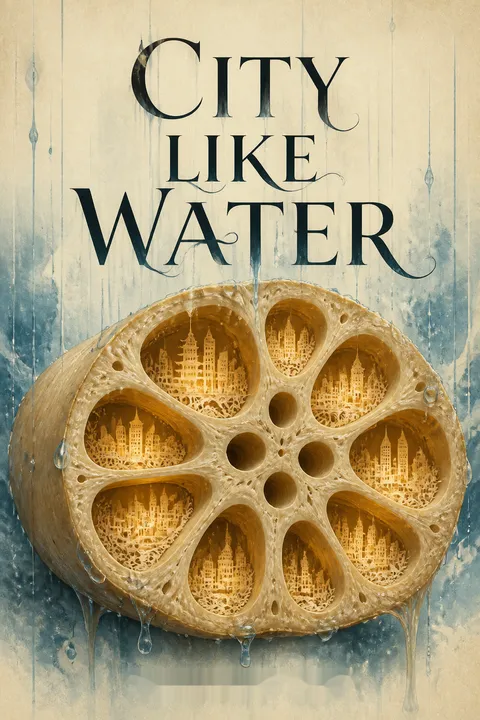
City Like Water
The narrator plants an ear in the ground, seeking to listen to the city's buried voices. The city is a network of reflections, puddles, and echoes, its history both unique and universal. The lotus root, with its black holes, becomes a symbol of loss and connection. Childhood memories of bus rides, umbrellas, and musical fountains resurface, mingling joy and sorrow. The city is always changing, always vanishing, but its spirit persists in the small acts of remembrance and the hope that, one day, the lost will return or be carried away on the wind.
Analysis
A city's memory is its resistance
City Like Water is a haunting, surreal meditation on loss, memory, and the struggle to remain human in the face of erasure and authoritarianism. Through its fragmented narrative and dreamlike imagery, the novel captures the psychological toll of living in a city—clearly modeled on Hong Kong—where history is rewritten, dissent is punished, and even family bonds are subject to surveillance and denial. The recurring motifs of water, paper, and transformation evoke both the fragility and resilience of identity; what is lost may return in altered form, and what is suppressed finds new channels. The novel's lesson is not one of easy hope, but of endurance: to remember, to mourn, to create—even in exile or underground—is itself an act of defiance. In a world where the city is always vanishing, the persistence of memory, love, and small acts of resistance becomes the only way to keep the city, and the self, alive.
Review Summary
City Like Water is praised for its haunting, surrealist portrayal of Hong Kong's political upheaval, particularly the 2019 pro-democracy protests. Reviewers consistently admire the lyrical, hallucinatory prose and vivid imagery, though many acknowledge that limited knowledge of Hong Kong's history left portions unclear. The novella's dreamlike, fragmented structure is frequently compared to a fever dream, with readers noting its emotional resonance despite its brevity. Translator Natascha Bruce receives particular commendation for preserving the poetic quality of the original Chinese text.
People Also Read

Characters
The Narrator
The narrator is the central consciousness through which the city's transformations are filtered. Sensitive, introspective, and often passive, they are shaped by loss—of family, city, and self. Their relationships are marked by longing and guilt, especially toward the vanished sister and absent mother. The narrator's psychological arc is one of increasing alienation, as they move from childhood wonder to adult disillusionment, ultimately becoming an exile marked by trauma. Their attempts to remember, record, and recreate the past are both acts of resistance and sources of pain, as memory becomes both a refuge and a trap.
The Little Sister
The narrator's sister is a mischievous, daring presence who challenges authority and questions reality. She is both a real sibling and a symbol of the city's lost potential—her disappearance mirrors the erasure of dissent and individuality. She reappears as a ghostly guide, urging the narrator to remember and resist, and her absence haunts the family, who are forced to deny she ever existed. Psychologically, she represents the narrator's conscience and the city's suppressed voice, her fate a warning about the cost of forgetting.
The Mother
The mother is initially a figure of domestic routine, her life defined by cooking, cleaning, and market negotiations. When deceived over lotus roots, she becomes a leader in the housewives' revolt, channeling her rage into collective action. Her disappearance fractures the family, and her absence is felt as both a personal and communal loss. She symbolizes the everyday heroism of ordinary citizens, her arc moving from invisibility to defiance, and finally to martyrdom or myth.
The Father
The father is a quiet, routine-bound man who copes with loss by immersing himself in television and nostalgia. He is unable to adapt to the city's changes, becoming a background figure in both real life and the TV dramas he watches. His psychological withdrawal mirrors the city's retreat into fantasy and denial, and his inability to connect with the narrator underscores the generational and emotional gaps created by trauma.
Piggy (English Teacher)
Piggy is a memorable childhood figure, her high heels and perfume marking her as both alluring and vulnerable. Her disappearance—possibly by suicide—signals the end of an era and the collapse of old certainties. She represents the fragility of those who try to nurture or inspire in a hostile environment, and her fate haunts the narrator as a symbol of irretrievable loss.
Twiglet
Twiglet is a classmate whose distinctive appearance and deep voice make him unforgettable. His presence in the underground city, crafting paper offerings, anchors the narrator's memories of youth and resistance. He embodies the persistence of memory and the dangers of nostalgia, his fate uncertain but emblematic of those who remain trapped by the past.
The Toe Cleavage Woman (Pompom)
Pompom is one of the street's sex workers, her feet and weary smile haunting the narrator's imagination. She represents both the allure and vulnerability of the city's marginalized, her eventual disappearance a microcosm of the city's broader erasures. Her memory shapes the narrator's ideals and regrets, and her fleeting presence underscores the fragility of connection.
The Law
The Law is an ambiguous, ever-changing figure—sometimes a neighbor, sometimes a family member, sometimes a bureaucratic letter. He/it embodies the state's power to surveil, punish, and rewrite reality. The Law's arrival signals the end of old freedoms and the imposition of new rules, but its true nature is always elusive. Psychologically, the Law represents both external oppression and internalized fear.
The Sister's Letter
The letter from the sister is both a narrative device and a character in its own right, giving voice to the family's suppressed pain and longing. It reveals the cost of enforced forgetting and the persistence of love and memory, even in exile. The letter's tone is both accusatory and compassionate, bridging the gap between the narrator and those left behind.
The City
The city itself is a character—fluid, porous, and ever-changing. It is both a site of trauma and a source of resilience, its streets, markets, and subways shaping and reflecting the lives of its inhabitants. The city's transformations mirror the psychological states of its people, and its ultimate fate is bound up with their ability to remember, resist, and adapt.
Plot Devices
Surrealism and Metamorphosis
The novel employs surreal imagery—birds turning into books, ears flying like butterflies, bodies marked by islands—to convey the instability of reality under political and social pressure. Metamorphosis is both a symptom of trauma and a means of survival, allowing characters to adapt or escape when direct resistance is impossible. This device destabilizes the reader's expectations and mirrors the characters' psychological dislocation.
Fragmented Narrative and Memory
The story unfolds in fragments, memories surfacing and receding like tides. The narrator's recollections are unreliable, often contradictory, and shaped by longing and guilt. This structure emphasizes the difficulty of constructing a coherent self or history in a city where erasure and rewriting are constant threats. The use of lists, letters, and graffiti as narrative elements reinforces the theme of memory as both fragile and essential.
Symbolism and Allegory
Lotus roots, umbrellas, bunk beds, and paper offerings are recurring symbols, each carrying layers of meaning—loss, resistance, connection, and the impossibility of return. The city's transformation into water, paper, or desert is both literal and metaphorical, reflecting the characters' psychological states and the broader political context. Allegory allows the novel to address real-world events obliquely, preserving ambiguity and emotional resonance.
Satire and Absurdity
The depiction of police as inflated statues, the Law as a series of masks, and the proliferation of meaningless rituals and propaganda highlight the absurdity of authoritarian power. Satire exposes the emptiness of official narratives and the resilience of ordinary people, even as it acknowledges the dangers of cynicism and despair.
Intertextuality and Media
The novel constantly references media—TV dramas, news reports, internet searches—showing how they shape and distort personal and collective memory. The boundaries between performance and life are porous, and characters often find themselves playing roles scripted by others. This device critiques the commodification of grief and the manipulation of truth in contemporary society.
Download PDF
Download EPUB
.epub digital book format is ideal for reading ebooks on phones, tablets, and e-readers.








































