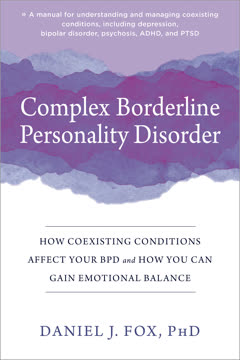
Key Takeaways
1. Borderline Personality Disorder (BPD) is a complex, often misdiagnosed condition, not a choice.
BPD isn’t a choice, nor is it a choice to destroy your life or the lives of others.
Misdiagnosis is common. Individuals like Pam often face years of misdiagnosis, cycling through various labels like depression or anxiety, because BPD symptoms overlap with many other disorders. This confusion stems from BPD's chameleon-like nature, presenting differently in each person and varying in severity. Mental health providers, overwhelmed by the symptom complexity, may grasp at diagnostic straws, delaying accurate identification and effective treatment for an average of seven years.
BPD is a real disorder. Despite common misconceptions and stigma, BPD is a legitimate mental health condition, not a character flaw or a deliberate act of manipulation. It develops as a maladaptive coping mechanism to manage years of anguish and disappointment, often rooted in biological vulnerabilities, abuse, and invalidating family environments. Recognizing BPD as a disorder is the first step toward understanding and managing its impact.
Personality's influence. Our unique personality, shaped by five core factors (Openness, Conscientiousness, Extraversion, Agreeableness, Neuroticism), dictates our thoughts, feelings, and behaviors. A disordered personality, like BPD, is characterized by an inability to adapt these patterns across situations, leading to significant functional impairment and distress. BPD, a Cluster B disorder, manifests as erratic and dramatic behaviors, impacting relationships and self-perception.
2. Complex BPD (CBPD) arises when BPD co-occurs with other mental health conditions.
Complex BPD (CBPD) signifies that the symptoms and behaviors can be attributed to BPD and other mental health co-occurring conditions.
Pure vs. Complex BPD. Pure BPD refers to cases where all symptoms are solely attributable to BPD. However, 85-97% of individuals with BPD also have at least one co-occurring condition, leading to what is termed Complex BPD (CBPD). This distinction is vital because it broadens the clinical picture beyond BPD alone, acknowledging the combined impact of multiple disorders.
Core vs. Surface Content. Understanding CBPD requires differentiating between core and surface content.
- Core content represents deep-seated internal beliefs about self, others, and the world (e.g., worthlessness, abandonment, emptiness).
- Surface content includes observable behaviors and emotions (e.g., depression, anger, self-harm).
Medication typically addresses surface content, but lasting change requires addressing the underlying core content.
Cycle of symptom dismissal. A common pitfall in CBPD treatment is the "cycle of symptom dismissal," where all issues are attributed solely to BPD, overlooking co-occurring conditions. This leads to ineffective treatment, worsening symptoms, and increased frustration. Recognizing CBPD means acknowledging that symptoms can stem from multiple sources, necessitating a comprehensive approach to diagnosis and intervention.
3. Distinguishing BPD from co-occurring Bipolar Disorder is crucial for effective mood management.
When bipolar disorder and BPD make up your CBPD, you and your family, friends, coworkers, and treating professionals are tasked with a number of significant challenges due to similarities in symptoms as well as learning how to recognize when they present.
Symptom overlap. Bipolar disorder and BPD share many overlapping symptoms, making differentiation challenging. Both can involve:
- Irritability, racing thoughts, impulsivity, and risk-taking behaviors.
- Periods of sadness, low energy, poor concentration, and suicidal ideation.
This overlap often leads to misdiagnosis, as seen in Wendy's story, where initial depression was treated without recognizing underlying bipolar or BPD.
Key differentiators. Distinguishing between bipolar episodes and BPD-driven mood fluctuations relies on specific factors.
- Timing and duration: Bipolar manic/hypomanic episodes last at least 4-7 days, and depressive episodes last at least two weeks, often with periods of stability in between. BPD mood shifts are typically shorter, lasting hours to a few days, and are frequently peppered throughout one's history.
- Triggers: BPD mood shifts are often directly linked to identifiable stressors, particularly fears of abandonment or rejection, activating core content. Bipolar episodes, conversely, may arise without clear external triggers.
- Medication response: Bipolar disorder is generally more responsive to mood-stabilizing medication, which can significantly reduce episode severity and lengthen periods of stability. BPD's core content issues, however, are less impacted by medication, which primarily addresses surface symptoms.
Impact on treatment. Misdiagnosing one for the other can lead to ineffective interventions. Treating BPD as bipolar might mean over-reliance on medication with limited impact on core issues, while treating bipolar as BPD might neglect crucial mood stabilization. A comprehensive CBPD approach ensures both disorders are addressed, leading to more impactful and targeted treatment.
4. Depression frequently co-occurs with BPD, requiring a focus on core content for lasting relief.
Major depressive disorder occurs in 83 percent of individuals with BPD and can be a deadly co-occurrence.
High comorbidity. Major depressive disorder is highly prevalent in individuals with BPD, significantly increasing the risk of suicide attempts. This combination creates a complex clinical picture, as depressive symptoms can be driven by either major depression, BPD, or both. Ray's story illustrates how untreated depression can worsen over years, leading to severe functional impairment and a sense of hopelessness.
Distinguishing depressive episodes. While symptoms like low mood, anhedonia, sleep disturbances, and feelings of worthlessness are common to both, key differences exist:
- Duration: Major depressive episodes last at least two consecutive weeks. BPD depressive episodes are typically shorter, lasting hours to a few days, and often resolve when a specific trigger (e.g., perceived abandonment) is resolved.
- Triggers: BPD-related depression is frequently a reaction to identifiable stressors that activate core content like emptiness or abandonment. Major depression may occur without such clear external triggers.
- Medication efficacy: Depression co-occurring with BPD is often resistant to standard antidepressant treatment if the underlying BPD core content is not addressed. Medication may alleviate surface symptoms, but the deeper issues persist.
Addressing core content. Effective treatment for this type of CBPD necessitates identifying and addressing BPD's core content issues first. These deep-seated beliefs (e.g., worthlessness, emptiness) fuel depressive responses. By recognizing and challenging these core beliefs, individuals can dismantle the "depression-colored glasses" that distort their perceptions and perpetuate negative cycles, leading to more sustainable symptom reduction and a renewed sense of hope.
5. Psychotic or quasi-psychotic symptoms in CBPD demand grounding and reality-testing techniques.
Psychosis is essentially an impairment in reality testing, which manifests as the inability to differentiate self from others, to differentiate internal from external stimuli and circumstances, and to maintain emotional control within social contexts.
Psychosis vs. Quasi-Psychosis. BPD was historically named for being "on the border" of psychosis, highlighting the symptom overlap.
- Psychotic symptoms (e.g., hallucinations, delusions) involve a significant impairment in reality testing, where one cannot differentiate internal from external stimuli. These are often bizarre, sustained, and significantly impair functioning, as seen in Annalise's severe episode.
- Quasi-psychotic symptoms (e.g., intense suspiciousness, odd thinking, brief dissociative states) are stress-related, non-bizarre, and typically short-lived (minutes to hours). They often revolve around fears of abandonment and remit when the stressor subsides.
Dissociation and paranoia. Dissociation, a cognitive disturbance, involves impaired attention, memory, depersonalization, or derealization. While not psychosis, it can be a defense mechanism against overwhelming emotions, especially in trauma. Paranoid ideation in BPD is usually non-delusional and abandonment-focused, distinct from the sustained, generalized paranoia seen in psychotic disorders.
Management strategies. When these symptoms arise, a multi-pronged approach is essential:
- Medication: Antipsychotics can be effective for acute psychotic symptoms, reducing their intensity and duration.
- Grounding techniques: Strategies like cold water splashes, mindful breathing, or the 5-4-3-2-1 method help refocus attention on the present, counteracting feelings of detachment or unreality.
- Reality testing: Techniques like "distortion pushback" and "advantage of vantage points" help individuals differentiate between internal thoughts/feelings and external reality, challenging distorted perceptions.
These tools empower individuals to regain control and accurately assess their surroundings.
6. ADHD symptoms, when combined with BPD, create unique challenges in attention, impulse, and emotional control.
My motor’s drowning me.
Significant overlap. ADHD and BPD frequently co-occur, with 38% of BPD individuals having comorbid ADHD. Both disorders share symptoms like inattention, hyperactivity, impulsivity, emotional dysregulation, low frustration tolerance, and disorganization. Shelly's story vividly illustrates how these symptoms can derail employment, relationships, and overall functioning, leading to despair and a sense of being "drowned" by internal chaos.
Distinguishing features. While many symptoms overlap, key differences help differentiate ADHD from BPD:
- Origin: ADHD is a neurodevelopmental disorder, with symptoms typically present before age 12. BPD is often rooted in core content issues stemming from early experiences.
- Emotional dysregulation: While present in both, BPD's emotional dysregulation is often more intense and destructive, leading to severe maladaptive patterns like self-harm or aggressive outbursts. ADHD's emotional dysregulation builds quickly but may not cross the same destructive threshold.
- Self-image: An unstable self-image, characterized by not knowing who one is or what one believes, is unique to BPD. ADHD does not typically involve this core identity confusion.
Treatment implications. This type of CBPD presents unique challenges:
- Medication: ADHD symptoms often respond well to medication, which can reduce surface content. However, if BPD is undiagnosed, medication alone will not address core content issues, leading to frustration.
- Behavioral strategies: Techniques like mindful moving, habit stacking, and organizational tools are crucial for managing inattention and impulsivity.
- Addressing core content: For CBPD, therapy must also target BPD's core content (e.g., abandonment fears, emptiness) that drives maladaptive responses, even when ADHD symptoms are present.
7. Trauma (PTSD/C-PTSD) is highly prevalent in BPD and requires a structured approach to restore safety and foster healing.
It’s love that broke me the most.
Trauma's pervasive impact. Trauma, particularly prolonged childhood adversity, is highly prevalent in BPD, affecting 71% of individuals. This creates a complex interplay between PTSD/C-PTSD symptoms and BPD, as seen in Colby, Karen, and Malcolm's stories. Trauma shatters a sense of safety, leading to lasting fear, emotional dysregulation, and distorted self-perception.
PTSD vs. C-PTSD vs. BPD.
- PTSD (Colby): Specific traumatic event(s) leading to re-experiencing (nightmares, flashbacks), avoidance, negative alterations in cognition/mood, and hyperarousal.
- C-PTSD (Karen): Prolonged, inescapable trauma (e.g., childhood abuse) leading to PTSD symptoms plus severe emotional dysregulation, distorted self-perception (worthless, damaged), and relationship difficulties (intimacy avoidance).
- CBPD (C-PTSD + BPD) (Malcolm): Combines C-PTSD symptoms with BPD-specific traits like intense abandonment fear, chronic emptiness, "hero or zero" splitting, unstable self-image, and self-harm.
A five-step healing sequence. Overcoming trauma-based CBPD requires a hierarchical approach:
- Restoring Safety: Identifying "what" and "who" provides safety (places, objects, people, routines) and using tools like a "pillow of comfort."
- Power in Revelation: Safely telling one's trauma story without judgment, recognizing resilience, and building support systems.
- Controlling Your Split: Challenging the "all good/all bad" thinking (splitting) to foster a balanced, nuanced view of self and others.
- From Fixed to Flexible: Transforming rigid, maladaptive behavioral patterns into adaptive, situationally appropriate responses.
- Reconnection to Worth: Integrating the traumatized self with the recovered self, embracing one's strength and defining self-worth beyond the trauma.
8. Identifying your "Top Ten" most impactful symptoms is key to managing your unique CBPD.
Not all of your symptoms affect you the same way or to the same degree.
Overwhelm to clarity. When facing multiple co-occurring conditions, the sheer number of symptoms can feel like a "swarm of killer bees," leading to overwhelm and a sense of powerlessness. The first step to effective management is to narrow this focus by identifying the most impactful symptoms. This process transforms a daunting list into a manageable metric for progress.
Criteria for "Top Ten" symptoms. To pinpoint the most influential symptoms, consider those that:
- Cause a downward spiral or extreme difficulty in control.
- Strongly define your mental health and worsen other symptoms.
- Have been long-standing and recurring.
- Adversely affect your perception of the future.
- Impair socioeconomic stability (work, school, relationships).
Malcolm's example shows how a symptom like "desperation to prevent abandonment" might be a top ten, while "oversleeping" might not, even if both are present.
Clarity of success. Defining what symptom reduction looks like for each of your top ten symptoms provides clear markers of progress. Instead of vague hopes, concrete identifiers (e.g., "eating three healthy meals a day" instead of "no appetite") allow you to recognize success and stay motivated. This proactive approach helps you study the "bees" when they are docile, not swarming, enabling better management and control.
9. Overcoming CBPD involves challenging negative self-judgments and building empowering habits.
Your CBPD wants you to feel powerless, it wants you to feel helpless, but you’re not. Not even close!
Destroying destructive judgments. CBPD often uses pathology against you, fostering negative self-talk and feelings of inadequacy. To counter this, actively "destroy" these destructive value judgments by:
- Writing them down, then physically cutting or tearing them up.
- Verbally countering each judgment with an adaptive, empowering statement (e.g., "You're worthless" countered with "Many people in my life love and care about me").
- Reading these empowering statements aloud in a mirror to internalize them.
This process purges old, harmful beliefs and replaces them with honest, authentic affirmations of self-worth.
Empowerment habits. Beyond verbal affirmations, building "empowerment habits" reinforces positive self-perception and provides adaptive coping mechanisms. These are routine activities that make your healthy messages come to life:
- Engaging in hobbies (painting, gardening).
- Self-care (eating healthier, exercising, mindful practices).
- Social connection (getting together with friends, playing games).
- Positive self-reflection (journaling positive things).
By integrating these habits daily, they become default adaptive responses, overriding the maladaptive patterns that once reinforced your CBPD.
Visualizing success. Visualization is a powerful tool used by successful individuals to achieve goals. For CBPD, this means creating a mental (or drawn) picture of yourself having overcome your symptoms. This "sight of success" clarifies your end goal, motivates progress, and counters the distorted self-image perpetuated by CBPD. It's about seeing yourself "unchained by regret, fear, and doubt," standing strong and looking toward possibilities.
10. Effective CBPD treatment is an active, collaborative journey with a qualified therapist, addressing barriers like substance abuse.
Therapy isn’t a passive process, but an active one. You must be more than just a consumer of insight; instead, think of yourself as a utilizer of insight who puts it into action to make life changes.
Active client participation. Therapy for CBPD is not a passive experience where a "patient" receives treatment. Instead, it requires an active "client" who engages with insights and applies them to life. Finding a therapist specializing in BPD or personality disorders, asking specific questions about their approach, and reflecting on your comfort and expectations are crucial first steps.
Addressing treatment impediments. Past therapy experiences, whether positive or negative, offer valuable insights. Discussing what techniques were helpful or frustrating, past medications, and trust issues with your therapist prevents repeating old patterns. Establishing clear, mutually agreed-upon goals and openly discussing progress and frustrations ensures the therapeutic journey remains productive, even when setbacks occur.
Overcoming barriers. Two significant barriers to CBPD treatment are:
- The "I don't know" curse: This habit of shutting down when overwhelmed blocks exploration and reinforces maladaptive patterns. Actively challenging it by asking "If I did know, what would I say?" and seeking therapist support can break this cycle.
- Substance abuse: Highly comorbid with BPD (28-72% drug use), substance abuse is the "broadest barrier" as it serves as a primary maladaptive coping mechanism. It's often recommended to address sobriety first, or through a "synchronous approach" with medical and mental health support, before deep core content work can be effective.
A non-linear path. The journey to overcoming CBPD is not linear; it involves ebbs and flows, successes and challenges. Perseverance, coupled with strong therapeutic support, is key. The therapist acts as a "reality-coping filter," helping identify problems, implement adaptive strategies, and normalize the complex feelings associated with growth. This collaborative effort empowers you to move beyond CBPD, fostering a life of choice and control.
People Also Read