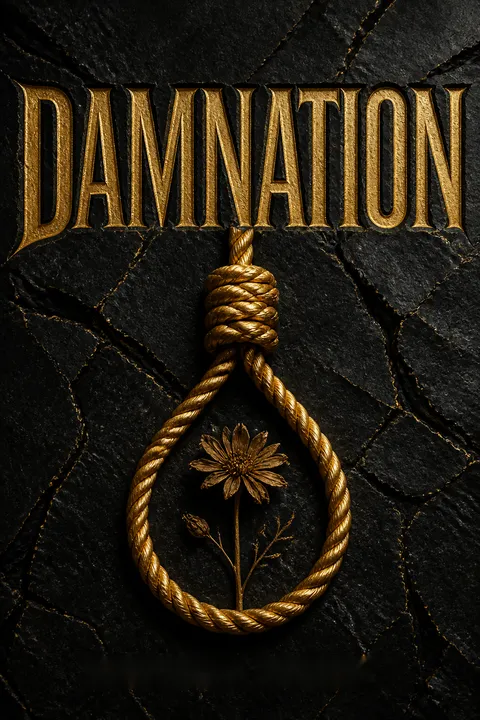

Plot Summary
Three Sides to Truth
The story opens with a challenge to the accepted narrative of the Salem Witch Trials, suggesting that the truth is more complex than the history books allow. The narrator, Thomas Putnam, hints at a darkness in Salem that is not what it seems, and that the hysteria of the witch trials did not end, but evolved. The reader is invited to witness a version of events that blurs the lines between victim and villain, innocence and guilt, and to question the motives and truths of all involved. This sets the stage for a tale of power, desire, and the consequences of fear and fanaticism.
Autumn's Discontent
Thomas Putnam, a wealthy landowner, feels the weight of his success and the emptiness of his marriage to Ann. His brother Edward and friend Reverend Parris provide companionship, but Thomas is restless, dissatisfied with his life and the hypocrisy of his community. The village of Salem is painted as a place where appearances matter more than reality, and where the seeds of suspicion and resentment are already sown. Thomas's gaze lingers on Sarah Good, a beggar woman, hinting at a forbidden attraction that will soon upend both their lives.
The Beggar and the Landowner
Sarah Good's life is marked by poverty, abuse, and the struggle to protect her daughter Dorothy from her husband William's violence. She survives by her wits and the secret knowledge of healing passed down from her mother, shared discreetly with Sarah Osborne and Tituba. When Thomas offers her money and kindness, a dangerous connection is forged. Their brief, charged encounters are fraught with longing and the threat of scandal, as both are trapped in marriages that offer no love or safety. The social order of Salem is fragile, and their growing bond threatens to shatter it.
Forbidden Moonlit Union
The tension between Thomas and Sarah erupts in a clandestine, passionate encounter by the creek. Both are acutely aware of the sin and danger of their adultery, yet neither can resist. Their union is depicted as both a transgression and a liberation, a moment of stolen joy in a world ruled by repression and fear. The secrecy of their affair is mirrored by the secrecy of Sarah's healing practices, and both are shadowed by the threat of exposure. Their love becomes a catalyst for the unraveling of their lives and the community around them.
Seeds of Damnation
As the affair continues, Sarah discovers she is pregnant—almost certainly with Thomas's child. The knowledge is both a blessing and a curse, deepening her vulnerability and her hope for escape. William's abuse intensifies, and Sarah's tenuous alliances in the village begin to crumble. Thomas dreams of a new life with Sarah and Dorothy, but the realities of their situation—and the rising tide of suspicion in Salem—make such dreams perilous. The seeds of damnation are sown not only in their personal choices but in the collective paranoia of the village.
Witchcraft Whispers
The arrest of Tituba for witchcraft ignites a wildfire of hysteria. The Parris girls' fits and accusations spread, and the village turns on itself. Sarah's healing is recast as witchcraft, and her association with Tituba and Osborne makes her a target. Thomas, torn between love and loyalty to his community, tries to protect Sarah but is swept up in the fervor. The machinery of accusation is arbitrary and relentless, and the line between justice and vengeance blurs. The personal becomes political, and no one is safe from suspicion.
The Hysteria Spreads
The trials escalate as more villagers are accused and arrested. Sarah and Dorothy are imprisoned, and Thomas's attempts to intervene are thwarted by his brother and the other men of Salem. The trials are a spectacle of humiliation and violence, with forced confessions, public examinations, and the stripping away of dignity. The logic of the witch hunt is circular and self-perpetuating: denial is proof of guilt, and innocence is impossible to prove. The community's fear and need for scapegoats override compassion and truth.
Shackles and Betrayal
In prison, Sarah endures deprivation, humiliation, and the slow erosion of hope. Thomas, wracked by guilt and doubt, distances himself, unable to reconcile his feelings for Sarah with his role in the community. Dorothy, too, is accused and imprisoned, her childhood innocence destroyed by the madness of the adults around her. The betrayal is not only personal but systemic: the very structures meant to protect have become instruments of torment. Sarah's resilience is tested as she faces abandonment by the man she loves and the society she once hoped to heal.
Trials and Torments
The trials become a theater of suffering, with Sarah and others subjected to relentless questioning, public shaming, and the threat of execution. The birth of Sarah's child, Mercy, in prison is a moment of fleeting hope, quickly extinguished by the baby's death from neglect and cold. Thomas's grief is real but impotent; his power is useless to save those he loves. The machinery of the trials grinds on, indifferent to truth or innocence, and the community's soul is poisoned by its own actions. The cost of fanaticism is measured in broken bodies and broken hearts.
The Gallows Await
As the executions begin, the reality of the witch hunt's brutality is laid bare. Sarah's final trial is a farce, her guilt predetermined. The hangings are public, ritualized, and meant to purge the community of evil, but instead reveal its capacity for cruelty and self-destruction. Thomas, now a hollow man, watches as Sarah is led to the gallows, her defiance and dignity intact even in the face of death. Her final words are a curse and a prophecy, a refusal to accept the narrative imposed upon her.
Mercy's Birth, Mercy's Death
The birth and death of Mercy, Sarah and Thomas's child, encapsulate the tragedy of their story. The child is both a symbol of forbidden love and the victim of a society that cannot tolerate difference or compassion. Thomas's grief is profound but ultimately powerless; he buries Mercy beneath the tree where he and Sarah once dreamed of a future together. The loss cements his transformation from lover to executioner, from man to instrument of the community's will. The cycle of violence and loss is complete.
The Final Noose
Sarah's execution is the climax of the narrative, a moment of both horror and catharsis. She faces death with courage, refusing to confess to a crime she did not commit. Her final words are a condemnation of her accusers and a warning of the blood yet to be spilled. Thomas, complicit and broken, is left with nothing but memories and regret. The community, having destroyed its scapegoats, is left to reckon with the emptiness and guilt that follow. The personal and the collective tragedies are inseparable.
The Brethren's Oath
In the aftermath of the trials, Thomas and the other men of Salem form the Brethren, a secret society dedicated to rooting out perceived evil and maintaining their power. The dissolution of the official court does not end the witch hunts; it merely drives them underground. The Brethren's oath is a commitment to vigilance, suspicion, and violence, justified by a warped sense of divine mission. The legacy of the trials is not healing or justice, but the perpetuation of fear and control.
Legacy of Ashes
Years later, Thomas Putnam III inherits his father's mantle and the leadership of the Brethren. The society has grown in power and reach, its rituals and ideology passed down through generations. The memory of the trials is preserved not as a warning, but as a foundation for further persecution. The new generation is more ruthless, more ambitious, and more convinced of its righteousness. The cycle of violence and scapegoating is institutionalized, and the hope for redemption is buried with the victims.
The Next Generation Rises
The final chapter shifts to the perspective of Thomas Putnam III, who reflects on his father's legacy and the future of the Brethren. The society's power is consolidated, its enemies identified, and its mission expanded. The lessons of the past are twisted into a justification for ongoing violence and oppression. The story ends with a chilling affirmation of the Brethren's purpose: death to witches, death to all who threaten their order. The tragedy of Salem is not a closed chapter, but an open wound, perpetuated by those who refuse to learn from it.
Analysis
"Damnation" is a searing reimagining of the Salem Witch Trials, using the lens of forbidden love and communal hysteria to explore the psychology of scapegoating, the dangers of fanaticism, and the enduring legacy of violence. The novel's greatest strength lies in its refusal to offer easy answers or clear villains; instead, it presents a world in which everyone is both victim and perpetrator, shaped by forces beyond their control. The affair between Thomas and Sarah is both a personal tragedy and a microcosm of the larger social collapse, illustrating how private desires and public fears become entangled. The narrative's focus on unreliable perspectives and the cyclical nature of violence serves as a warning against the dangers of certainty, conformity, and the institutionalization of fear. In a modern context, "Damnation" resonates as a critique of all societies that seek to preserve themselves through exclusion and violence, reminding us that the true evil often lies not in the accused, but in the accusers—and that the wounds of such histories are never fully healed.
Review Summary
Damnation is a prequel novella to the Gallows Hill trilogy set during the 1692 Salem Witch Trials. It follows the forbidden romance between Thomas Putnam, a wealthy businessman, and Sarah Good, a town healer accused of witchcraft. Readers praised the atmospheric storytelling, old English writing style, and emotional depth despite its short length. The book explains the origins of the Brethren secret society and features no happy ending. Reviewers consistently mentioned feeling rage and heartbreak over Sarah's fate, with many warning to check trigger warnings before reading.
People Also Read

Characters
Thomas Putnam
Thomas is a wealthy landowner whose dissatisfaction with his life and marriage leads him into a forbidden affair with Sarah Good. His longing for meaning and connection is genuine, but his inability to defy the expectations of his community and his own ambition ultimately make him an agent of the very violence he despises. Psychologically, Thomas is torn between desire and duty, love and fear, and his journey is one of increasing self-betrayal. His transformation from lover to executioner is both tragic and inevitable, shaped by the pressures of a society that demands conformity and punishes difference.
Sarah Good
Sarah is a beggar woman whose knowledge of healing and herbalism makes her both a lifeline for the desperate and a target for suspicion. Her relationship with Thomas is a rare source of joy and hope, but also her undoing. Sarah's strength lies in her refusal to betray her integrity, even in the face of torture, humiliation, and death. She is a victim of both personal and systemic violence, yet she maintains her dignity and compassion to the end. Her psychological resilience is remarkable, but her fate is sealed by the collective need for a scapegoat.
Ann Putnam
Ann is Thomas's wife, whose own frustrations and resentments fuel the hysteria of the trials. She is both a victim and a perpetrator, shaped by the limitations of her gender and the expectations of her society. Ann's relationship with Thomas is loveless and adversarial, and her influence over their children, especially young Ann, perpetuates the cycle of accusation and violence. Psychologically, Ann is driven by envy, fear, and a desperate need for control in a world that offers her little power.
Edward Putnam
Edward is Thomas's brother, a man whose loyalty is to his own interests and the preservation of the family's status. He is quick to join the witch hunt when it serves his purposes and is untroubled by the suffering of others. Edward's relationship with Thomas is competitive and fraught, and his role in the trials is that of an enforcer rather than a leader. Psychologically, Edward is shaped by the same fears and ambitions as Thomas, but without the burden of conscience.
William Good
William is Sarah's husband, a man destroyed by poverty, failure, and his own brutality. He is both a victim of the social order and its enforcer, taking out his frustrations on Sarah and Dorothy. William's role in the story is to illustrate the ways in which violence is both personal and systemic, and his psychological profile is one of self-loathing, impotence, and rage.
Dorothy Good
Dorothy is Sarah's young daughter, whose imprisonment and accusation as a witch highlight the cruelty and absurdity of the trials. She is a victim of both her father's abuse and the community's hysteria, and her suffering is a powerful indictment of the society that claims to protect its children. Dorothy's innocence and resilience are ultimately no match for the forces arrayed against her.
Tituba
Tituba is Reverend Parris's servant, whose knowledge of folk healing and rituals makes her the first target of the witch hunt. Her confession, whether coerced or strategic, sets the machinery of accusation in motion. Tituba's role is complex: she is both a victim and a catalyst, her difference and vulnerability exploited by those in power. Psychologically, Tituba is resourceful and pragmatic, but ultimately powerless to save herself or others.
Reverend Samuel Parris
Parris is the spiritual leader of Salem, whose sermons and accusations fuel the witch hunt. His need for control and his fear of disorder make him a driving force behind the trials. Parris's relationship with his daughter Betty and niece Abigail is fraught, and his inability to protect them from the consequences of his actions is a source of both guilt and denial. Psychologically, Parris is rigid, fearful, and ultimately destructive.
Sarah Osborne
Osborne is another woman accused of witchcraft, whose alliance with Sarah Good is based on mutual need rather than friendship. Her willingness to betray others to save herself is both understandable and damning, and her death in prison is a testament to the system's indifference to individual suffering. Osborne's psychological profile is one of desperation, pragmatism, and ultimately, resignation.
Thomas Putnam III
The son of Thomas Putnam, he represents the next generation of the Brethren. He is more calculating and less conflicted than his father, determined to expand the society's power and eradicate its enemies. Thomas III's psychological makeup is shaped by the legacy of violence and paranoia he inherits, and his vision for the future is one of perpetual vigilance and aggression. He is both a product and a perpetuator of the cycle of fear and scapegoating.
Plot Devices
Unreliable Narration and Shifting Perspectives
The novel employs multiple points of view—primarily Thomas and Sarah—to highlight the subjectivity of experience and the impossibility of a single, authoritative truth. The reader is constantly invited to question the motives and reliability of each narrator, and the shifting perspectives create a sense of instability and ambiguity. This device mirrors the uncertainty and paranoia of the witch trials themselves, where evidence is always suspect and reality is shaped by fear and desire.
Forbidden Love as Catalyst
The affair between Thomas and Sarah is both a personal rebellion and a symbol of the larger transgressions that the community seeks to punish. Their love is depicted as both redemptive and destructive, a force that exposes the hypocrisy and cruelty of Salem's moral code. The consequences of their union—pregnancy, betrayal, and ultimately death—drive the narrative and underscore the dangers of defying collective norms.
Witch Hunt as Social Mechanism
The witch trials are portrayed as a means for the powerful to maintain their authority and for the community to channel its anxieties and resentments. Accusation becomes a tool for settling scores, enforcing conformity, and eliminating the vulnerable. The logic of the witch hunt is self-perpetuating: the more people are accused, the more others must be accused to justify the process. This device exposes the ways in which societies manufacture enemies to preserve their own cohesion.
Foreshadowing and Prophecy
The narrative is laced with hints of the tragedy to come—Sarah's premonitions, Thomas's sense of impending doom, and the repeated references to the legacy of the trials. The story's structure, moving from the past to the future, reinforces the idea that the sins of Salem are never truly buried, but return in new forms. The final chapters, set years later, reveal that the cycle of violence and scapegoating continues, institutionalized in the Brethren.
Public Spectacle and Ritual
The trials, examinations, and executions are depicted as public rituals, designed to reinforce the community's values and hierarchies. The humiliation and suffering of the accused are not private tragedies but collective spectacles, meant to instruct and terrify. This device underscores the complicity of the entire community in the violence of the witch hunt, and the ways in which cruelty is normalized and sanctified.
About the Author
Other books by Katelyn Taylor



Download PDF
Download EPUB
.epub digital book format is ideal for reading ebooks on phones, tablets, and e-readers.








































